
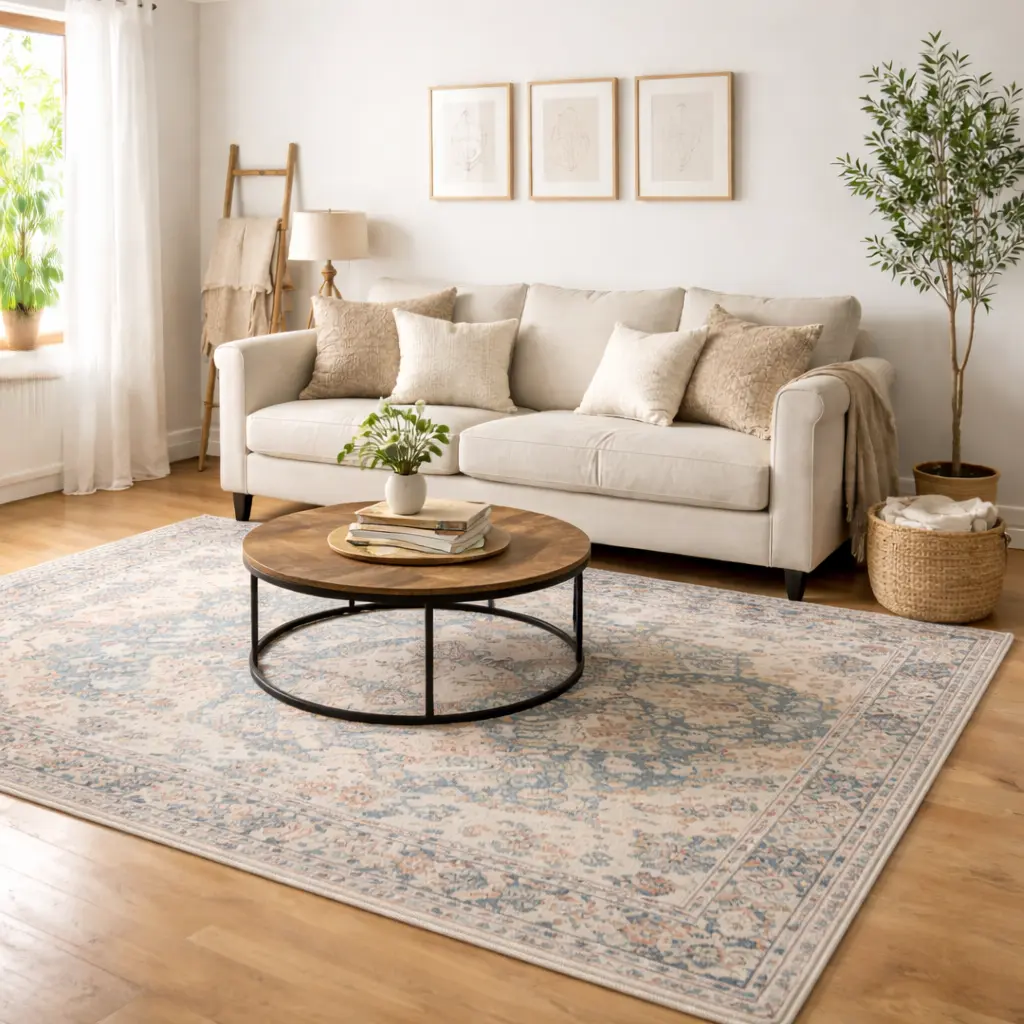
Best Area Rugs for Small Living Rooms in Apartments
By Emily | January 16, 2026
In a small living room, every design choice carries disproportionate weight. A single wrong decision – in furniture placement, color, or scale – can instantly make the space feel cramped and chaotic. Yet conversely, one strategic, intentional choice can transform the entire room, making it feel larger, more cohesive, and genuinely inviting. Area rugs are one of those transformative elements. The wrong rug can literally shrink your space. The right rug can anchor furniture, define functional zones, create visual flow, and make your living room appear both larger and more intentionally designed.
The mistake most apartment dwellers make when selecting rugs for small living rooms is choosing pieces that are too small, too dark, or positioned incorrectly. This breaks visual flow and makes the room feel fragmented rather than unified. They unconsciously reinforce the space’s limitations instead of strategically working with them. But understanding rug selection – the proportions, placement, color strategy, and material choices – allows you to leverage this single element to completely reshape how your small living room feels.
Choosing the best area rug for a small living room isn’t simply about aesthetic preference. It’s about understanding proportion, spatial dynamics, placement strategy, and how the rug interacts with your specific layout. It’s about using visual principles to make spaces feel larger while creating the warmth and coziness that apartments often lack. This article shares proven strategies from personal experience: how to choose the ideal rug size, which styles and colors genuinely expand small spaces, what mistakes undermine your efforts, and how to think about rugs as part of a larger design system.
You’ll discover specific approaches to color and pattern that create visual expansion, material choices that balance aesthetics with function, and styling techniques like layering that add genuine character without crowding. By the end, you’ll understand how to use an area rug not just as decoration, but as a powerful tool for making your small living room feel significantly larger, more organized, and genuinely premium.
Choose the Right Size
 Save it
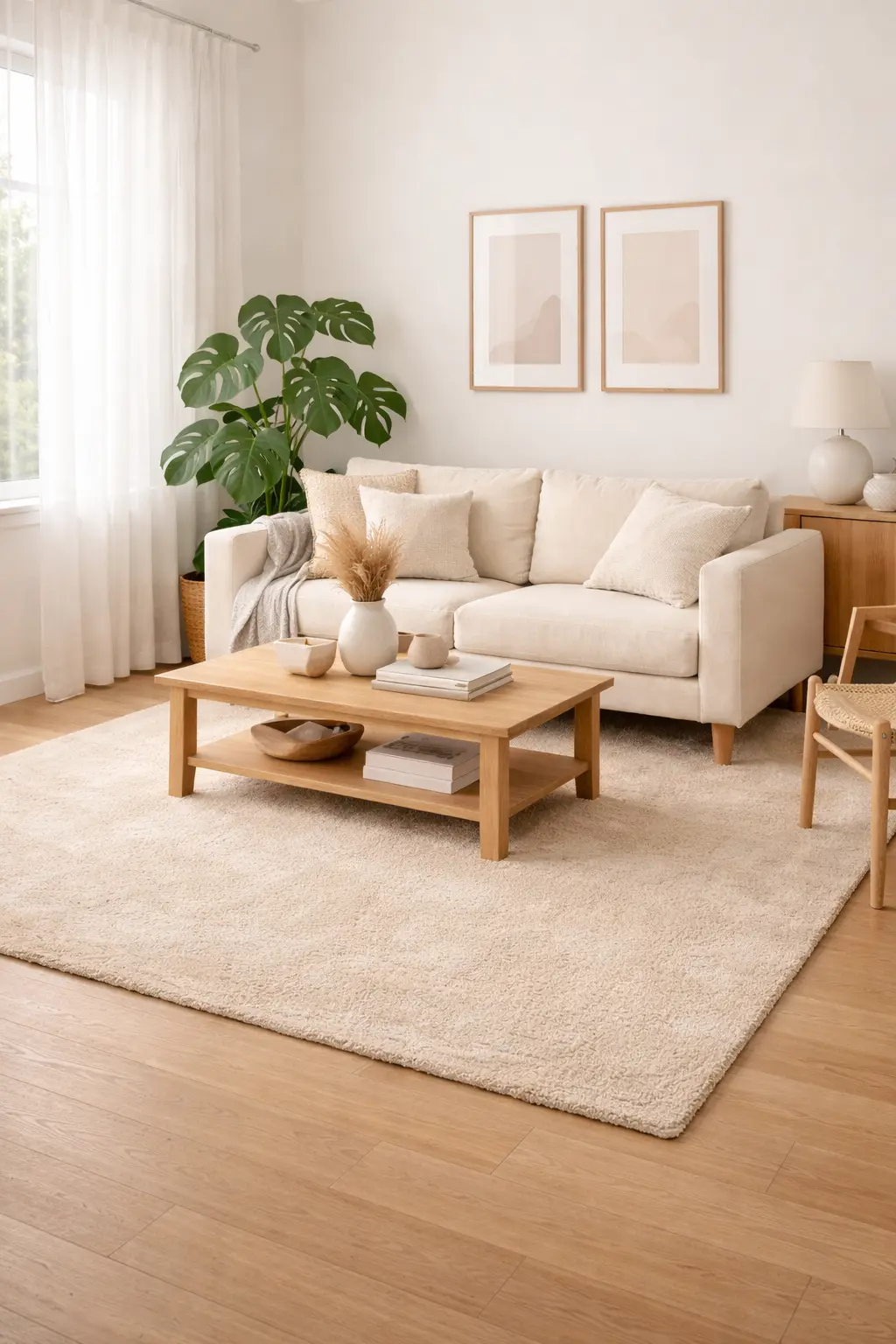
If you take only one principle from this article, let it be this: a rug that’s too small is the most common, most damaging mistake in small living room design. A 4′ x 6′ rug creates the psychological impression that your furniture is sitting on a tiny “island,” disconnected and floating. Instead of anchoring the space, an undersized rug fragments it. The visual flow breaks. The room feels smaller, not larger. The furniture arrangement appears accidental rather than intentional.
In small living rooms, 5′ x 8′ or 6′ x 9′ rugs usually work far better, depending on your specific furniture arrangement and how much seating you have. My rule, shaped by years of trial and error, is straightforward: the sofa should have at least its front two legs on the rug. This provides visual stability. The sofa doesn’t float; it has a grounded foundation. The coffee table should sit fully on the rug; when the coffee table straddles the rug’s edge, proportions look awkward and uncomfortable. Leave roughly 8 to 12 inches of visible floor around the rug’s perimeter. This provides a visual frame and breathing room for the composition. Without this border, the rug can feel like it’s consuming the room.
Many people hesitate to choose larger rugs for small spaces, fearing size will somehow “shrink” the room. This is the opposite of how spatial design actually works. A larger rug unifies the seating area into a cohesive zone. It defines the furniture grouping clearly. Paradoxically, this definition and unity actually make the space feel larger and more intentionally designed. A larger rug provides visual anchoring that small, scattered rugs cannot achieve. Size, chosen correctly, expands perception far more than it constrains it.
Use Visual Strategy to Expand Space
 Save it
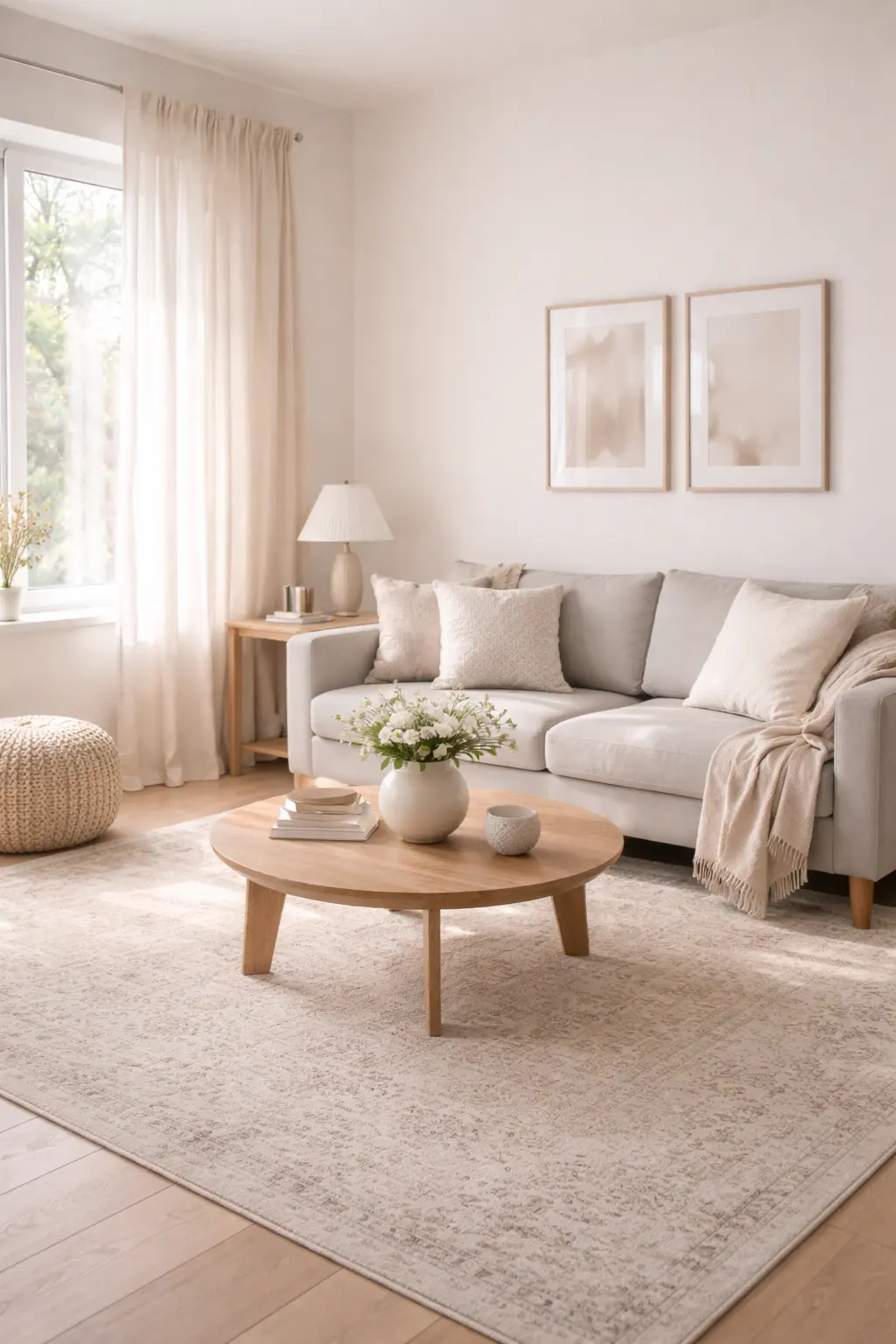
In a small living room, an area rug functions as far more than decoration – it’s a visual strategy tool. The rug’s color directly determines how much light the space appears to contain. The pattern affects the room’s visual dynamics and either creates calm or chaos. If your living room receives limited natural light, choosing a very dark rug base will further darken the space, making it feel smaller and more confined. Conversely, off-white, sand, warm beige, or light gray toned rugs reflect available light and immediately create the impression of more openness and airiness.
Here’s the critical insight: completely plain, featureless rugs can sometimes feel sterile and boring, while the wrong pattern creates visual noise that overwhelming small spaces. The sweet spot is subtly textured rugs with gentle, restrained patterns – pieces where the design doesn’t immediately shout but reveals itself upon closer inspection. A muted, vintage-inspired rug adds depth and character without creating visual chaos. A restrained geometric pattern provides modern visual interest while maintaining an airy, spacious feeling.
What to avoid in small spaces is high-contrast black-and-white patterns, crowded tiny motifs that feel chaotic, and very bold color blocks that segment the room visually. These approaches break up the space rather than unifying it. They emphasize limitations rather than minimizing them. The strategic goal with rug color and pattern in small spaces is always to bring calm, cohesion, and layering – never dominance or visual aggression. A well-chosen rug becomes a quiet anchor that makes everything else in the room feel more intentional and harmonious.
Select Quality Materials
 Save it
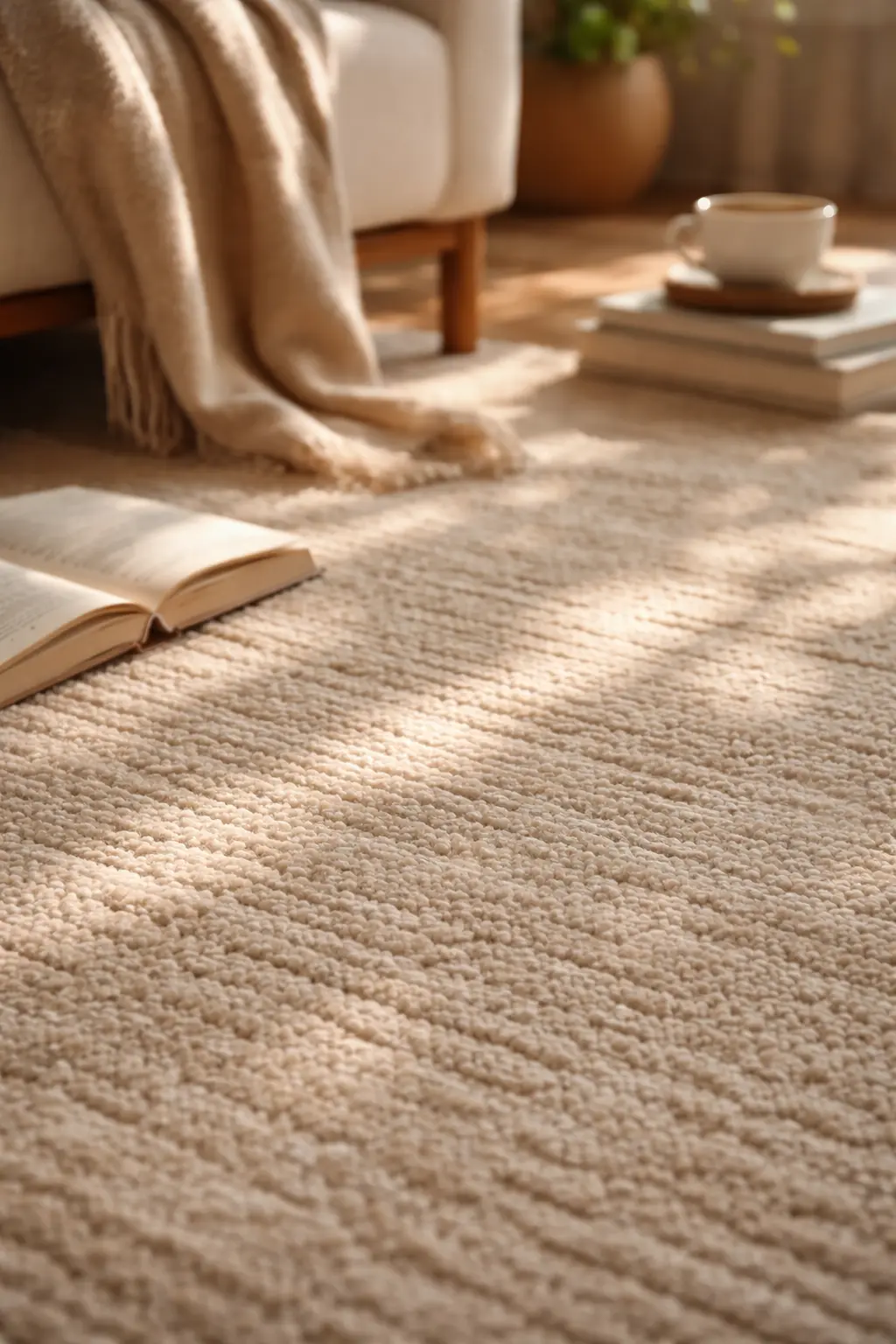
A rug in your home isn’t purely an aesthetic choice – it’s a functional element that affects daily life. Hard floors reflect sound, which can be particularly disturbing and amplified in small spaces where there’s less square footage to absorb noise. A high-quality area rug softens footsteps, absorbs ambient noise, warms up the physical space, and creates a more acoustically pleasant environment. The difference between a room with a rug and the same room without one – in terms of comfort and atmosphere – is genuinely noticeable.
Wool is a timeless choice, offering natural elegance, durability that improves with age, and inherent stain resistance. Polypropylene is practical and easy to clean, making it especially suitable for high-traffic areas or households with pets or children. Viscose blends add subtle sheen and luxury but require more delicate care. Pile height also significantly affects how a rug functions and feels. In a small living room, a very thick shaggy rug can feel heavy and visually overwhelming, while a medium-density weave looks more elegant and feels more refined underfoot. Always touch the rug before purchasing – texture matters as much as appearance, and the tactile experience is part of what makes a rug feel premium.
Long-term, a higher-quality rug doesn’t just last longer – it ages more gracefully. Premium rugs maintain their character over years. Budget rugs ripple, wear unevenly, and lose their visual appeal after months of use. This makes quality feel cheap and disappointing. A well-chosen, well-made rug becomes an investment that defines your living room’s atmosphere for years. You feel the quality difference every single day when you step on it, notice how it anchors your space, and appreciate how it contributes to your home’s overall feeling.
Use Shape Strategically
 Save it
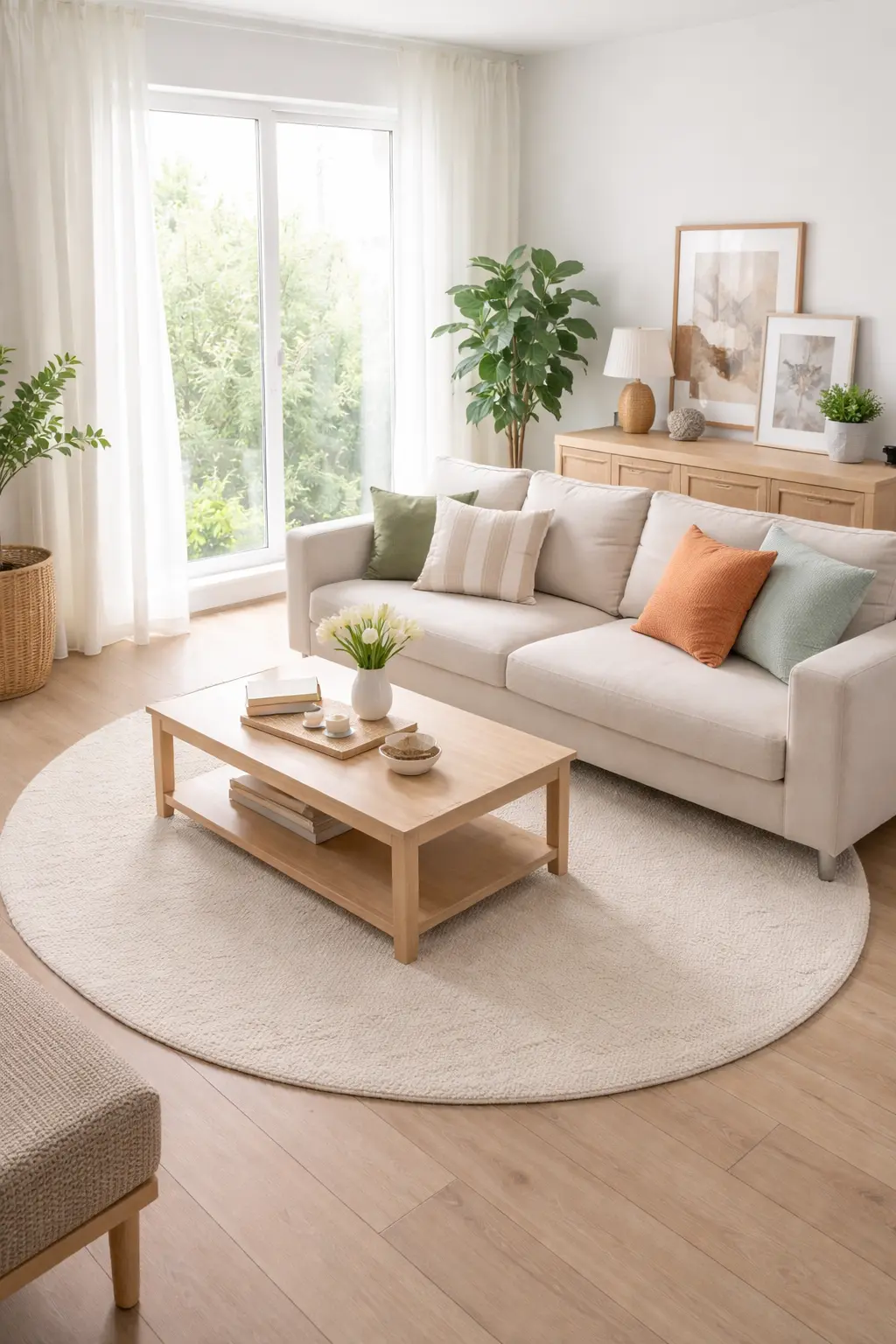
Most people automatically default to rectangular rugs, assuming they’re the “safe” choice. But in small living rooms, rug shape is a powerful visual tool that extends far beyond aesthetic preference. If your room has many straight lines a round rug powerfully softens the space and breaks visual rigidity. The curves of a round rug contrast beautifully with architectural and furniture angularity. A 5′ or 6′ diameter round rug placed under your small seating area doesn’t chop up the space – it creates a focal point while maintaining spatial flow. Oval shapes can work similarly if you prefer a more organic, less geometric feel.
In narrow living rooms with limited width, a longer 6′ x 9′ rectangular rug visually stretches the space. The rug’s orientation guides the eye horizontally, creating an impression of greater width. This demonstrates an important principle: rug shape isn’t merely aesthetic. It’s a spatial design tool that corrects proportional issues and guides how people perceive dimensions.
Shape becomes particularly powerful when you consider your specific room’s challenges. Does your room feel too boxy? A round rug softens this. Does it feel too narrow and compressed? A horizontal rectangular rug stretches it. Does it lack visual interest? An unexpected shape choice becomes a design statement. When shape is chosen strategically for your particular space and challenges, the rug becomes an active participant in solving spatial design problems rather than simply adding color.
Create Depth Through Layering
 Save it
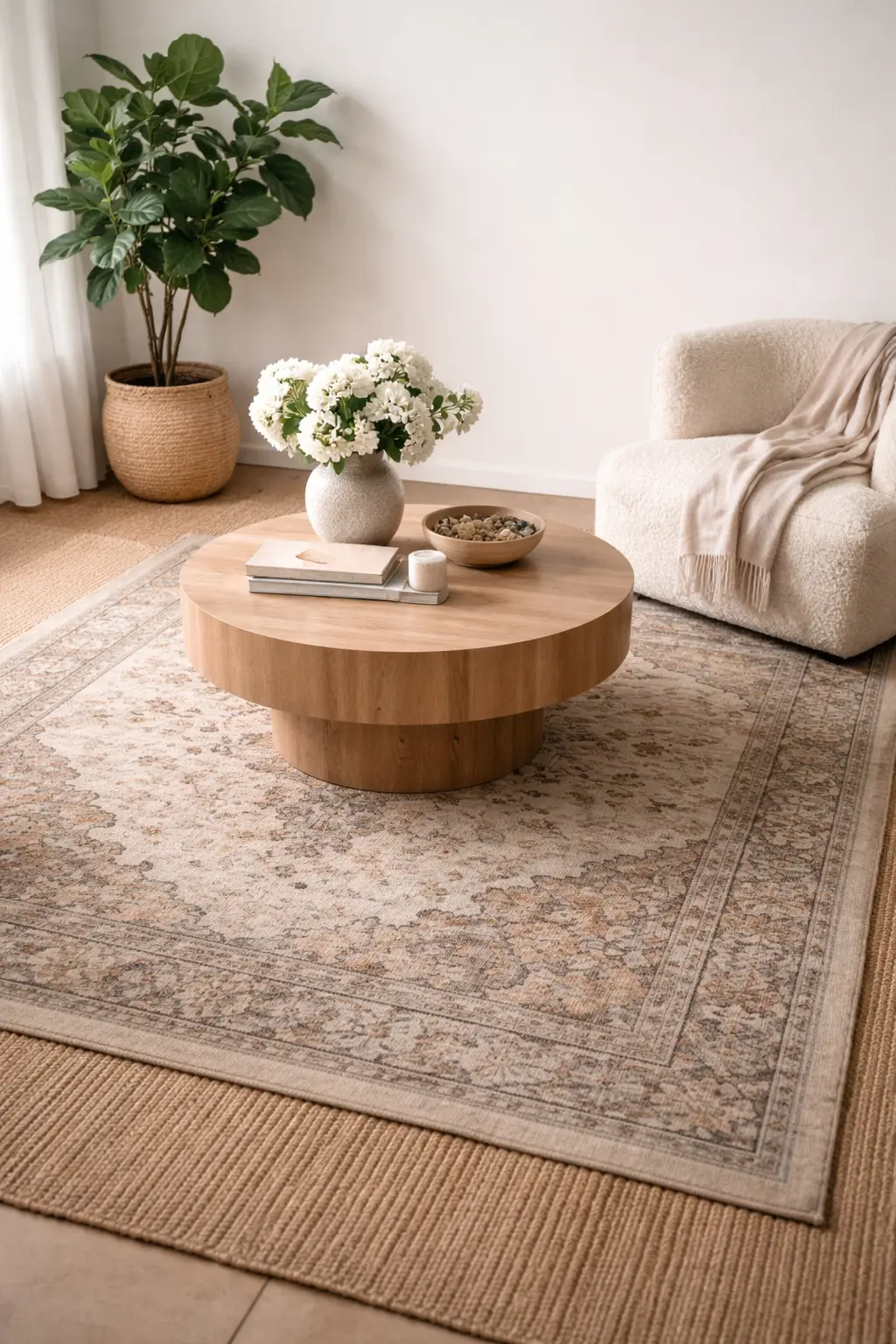
Layering is one of the strongest yet most underused design tools in small living rooms. Many people instinctively avoid layering, believing multiple rugs will overcrowd the space. The reality, when executed thoughtfully, is the opposite: layering creates depth, introduces texture, and communicates intentional design. A single large rug can feel flat. Layered rugs create visual interest and sophistication.
Start with a larger, neutral foundation rug – perhaps a 6′ x 9′ subtly woven or textured piece – to define the seating area and provide a stable foundation for your furniture. On top, introduce a smaller, more characterful piece – maybe a 4′ x 6′ vintage-inspired or lightly patterned rug that creates a focal point under your coffee table. The key principle is proportion: the top layer should always be smaller than the base, never completely covering it. Leave a visible border of the base rug showing. This intentional border communicates that layering is a deliberate design choice, not an accident or mistake.
Layering becomes truly powerful when you connect it with other room elements. Plants, for instance, respond beautifully to textured rugs. A large-leaved plant positioned at the rug’s corner softens the composition and provides organic contrast to geometric furniture and patterns. Layering creates this kind of visual dialogue – elements responding to each other, creating harmony.
As I’ve explored in detail in How to Make Any Room Feel Alive with Plants, plants and textured design elements together create atmosphere far more effectively than either element alone. Rugs and greenery aren’t just separate decorative choices – they’re architectural partners creating a cohesive, living environment.
Coordinate Proportions
 Save it
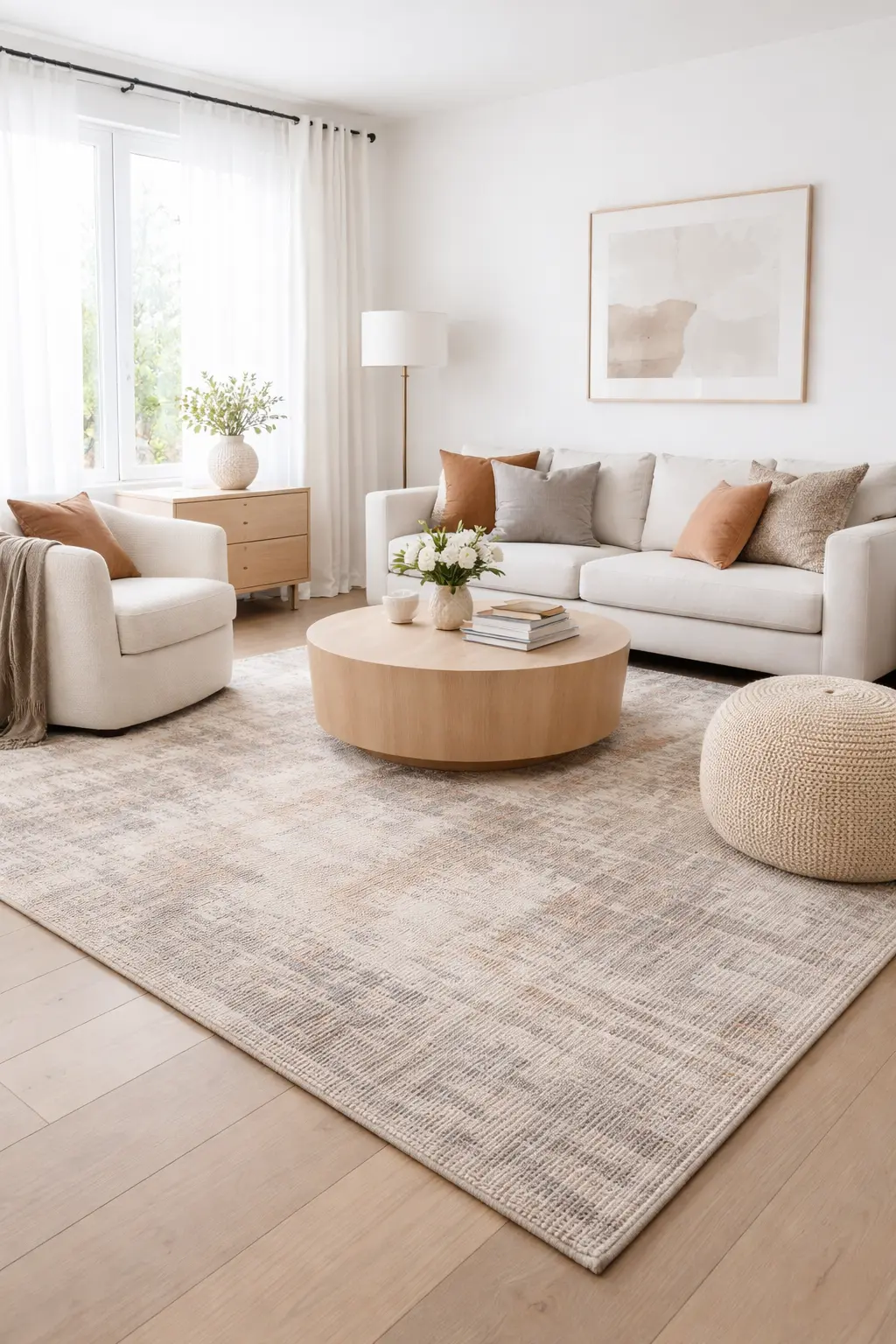
A rug works best when proportionate to surrounding furniture and the room itself. Size alone isn’t sufficient; balance matters deeply. Your coffee table shouldn’t get lost on the rug, but it also shouldn’t dominate. Ideally, it becomes a visual anchor while allowing the rug’s texture and color to shine around it. The same principle applies to armchairs, ottomans, and side tables. When the rug is too small relative to your furniture grouping, the space feels visually unstable and ungrounded.
Tone relationships are equally important. If a shade or undertone in your rug echoes a pillow, throw blanket, or upholstery, the living room feels more cohesive without appearing overdesigned or matchy. This kind of subtle color conversation between elements creates sophistication. The goal isn’t perfect color matching – it’s proportion and relationship. When every element responds thoughtfully to others, the space feels harmonious, intentional, and deliberately composed.
This fine-tuning often feels subtle when looking at individual decisions. But collectively, these proportional choices determine whether a room feels carefully designed or chaotic. A rug that’s too large for its furniture grouping looks wrong. A coffee table that dominates its rug looks wrong. A color choice that fights rather than harmonizes with surrounding elements looks wrong. Getting these proportions right – not perfectly, but thoughtfully – is what separates intentionally designed spaces from spaces that feel randomly assembled.
How to Elevate Your Space to Premium?
 Save it
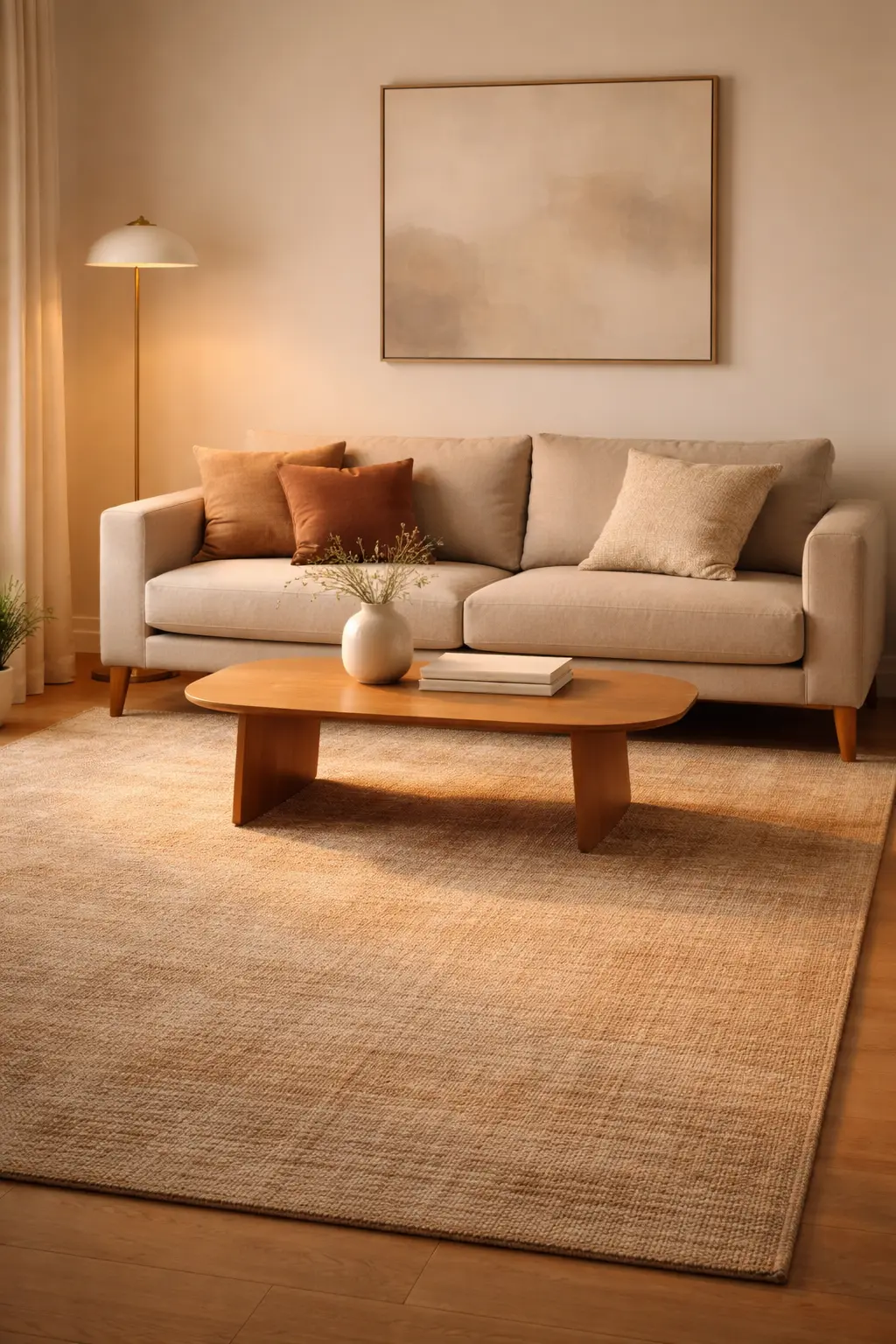
A rug works best when considered as part of a larger design system, not in isolation. Strategic color relationships matter. If your sofa is light-colored, a slightly deeper-toned rug provides visual stability and prevents the entire space from feeling washed out. If your sofa is dark, a lighter rug adds airiness and prevents the room from feeling cave-like. If you have warm wooden floors, choose a warm-toned rug that harmonizes with the wood rather than competing against it.
One of the most effective tricks for elevating small living rooms is texture layering combined with strategic sizing. Placing a smaller, characterful, perhaps patterned rug on top of a thinner, neutral natural base creates visual sophistication. This approach works especially well in minimalist spaces where you want to add character without visual overwhelm. The layering creates depth. The texture variation creates interest. The scale separation creates intentionality.
Understanding how your rug functions within your room’s complete design system – considering lighting, existing furniture colors, architectural elements, and other decorative choices – allows you to leverage the rug to its maximum effect. For a deeper exploration of how to create spaces that feel simultaneously cozy and elegantly designed, see How to Create a Cozy Living Room with Simple Design Tricks, which discusses how multiple elements work together to create atmosphere. Your rug is one powerful element in that system. When chosen and positioned strategically, it transforms your entire living room.
Common Mistakes
1. Choosing a Rug That’s Too Small
This is the most common mistake. Small rugs make spaces feel fragmented and smaller. The sofa and coffee table should be on the rug, not perched on its edges. Larger rugs actually make small spaces feel larger by unifying the seating area.
2. Selecting Dark Rugs in Low-Light Spaces
Dark rugs absorb light and make rooms feel smaller and darker. In apartments with limited natural light, light-toned rugs reflect available light and create airiness. Save dark rugs for naturally bright rooms.
3. Choosing High-Contrast or Busy Patterns
Bold black-and-white patterns and crowded motifs create visual chaos in small spaces. Choose subtle textures and muted patterns that add interest without overwhelming. Calm patterns support the feeling of spaciousness.
4. Neglecting Rug Quality and Materials
Budget rugs deteriorate quickly and never feel or look premium. Investing in quality wool, polypropylene, or quality blends pays dividends. A good rug lasts years and ages beautifully.
5. Ignoring How the Rug Coordinates With Furniture
A beautiful rug that clashes with your sofa color or doesn’t harmonize with your overall palette looks disconnected. The rug should feel like part of your room, not separate from it. Always consider existing colors and tones.
FAQ
What’s the ideal rug size for a small living room with a single seating area?
A 5′ x 8′ or 6′ x 9′ rug typically works well, depending on how much furniture you have. The key is ensuring the sofa’s front legs and the coffee table sit fully on the rug. If your space is under 150 square feet, 5′ x 8′ usually works. Larger spaces accommodate 6′ x 9′.
Can I use a round rug in a small living room?
Absolutely. A 5′ or 6′ diameter round rug works beautifully in small spaces, especially if the room has many angular furniture pieces. Round rugs soften rigid spaces and create focal points. They’re underused in small apartment design.
Should I layer rugs in a small space, or will that make it feel crowded?
Layering, when done thoughtfully with proper proportion, actually adds sophistication without crowding. The base rug should be larger and neutral; the top should be smaller with character. Leave a visible border so layering feels intentional.
Closing Thoughts
A small living room isn’t a compromise—it’s an opportunity to create a more characterful and intimate space through intentional choices. Every element carries weight and meaning, and the rug isn’t just an accessory: it’s the visual foundation that ties the furniture together, adds warmth to hard floors, reduces noise, and establishes a sense of proportion that makes the room feel thoughtful, premium, and harmonious.
Your small apartment living room has tremendous potential. A single, strategically chosen area rug can unlock that potential. The investment is modest but the transformation is significant – in how the space looks, how it feels, how it functions, and how much you genuinely enjoy spending time there. Choose your rug thoughtfully, position it with intention, and let it become the foundation upon which your entire living room design is built.
This post contains affiliate links. I may earn a small commission at no extra cost to you.
Get cozy inspiration delivered to your inbox.
✓ 14-page beautifully designed ebook
✓ Cozy decorating ideas
✓ Practical room-by-room inspiration
You’re in! 🎉
Thanks for joining the NestFlowHome community!
Your free ebook is already on its way to your inbox. If you don’t see it within a few minutes, please check your Promotions or Spam folder.
Join the NestFlowHome community for weekly decorating inspiration.

Timeless home decor ideas and slow living inspiration for a calm, beautiful life.