
From Simple to Stunning: Vase Decor Ideas You’ll Love
By Emily | September 27, 2025
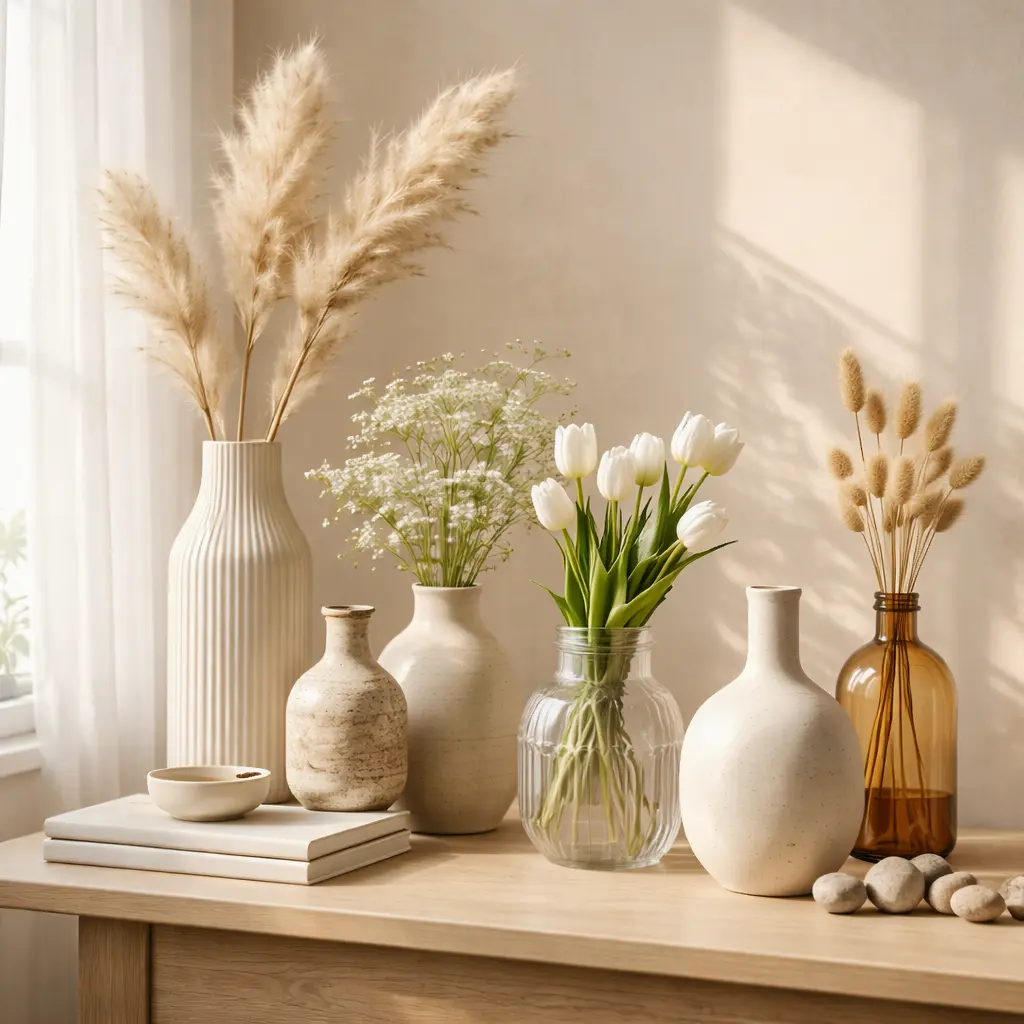
Vases are often overlooked in home design conversations, relegated to simple flower holders or overlooked accessories that don’t deserve serious design consideration. Yet vases are among the most powerful tools available for transforming a space. They’re sculptural objects that catch light, guide the eye, create focal points, and introduce both height and dimension into otherwise flat compositions. A single thoughtfully chosen vase can completely shift how a room feels and functions visually.
The beauty of vases lies in their versatility and dual nature. They’re functional objects – serving the practical purpose of holding flowers and stems – while simultaneously being purely decorative elements that work when completely empty. This duality makes vases incredibly flexible design tools that work across multiple aesthetics: modern minimalist, Scandinavian, bohemian, transitional, or eclectic styles. A vase that’s the right scale, texture, and color for your space becomes more than decoration. It becomes an anchor point around which other design elements organize themselves.
Many people hesitate to invest in decorative vases because they perceive them as frivolous or unnecessary. This misses their genuine power. A well-chosen vase creates visual interest without requiring the permanence of furniture purchases or wall renovations. It can be easily changed, updated seasonally, or swapped as your aesthetic evolves. The investment is modest, but the impact on how a space feels is profound and immediate.
In this article, you’ll discover seven distinct approaches to vase styling and placement – from creating focal points to building depth, from working with scale to embracing organic, imperfect beauty. These aren’t complicated techniques requiring special skills. They’re thoughtful, accessible strategies that transform how vases function in your spaces.
Whether you’re working with a small apartment or a sprawling home, modern minimalist aesthetic or maximalist eclectic style, there’s a vase approach here that will elevate your space.
Create a Focal Point with a Ceramic Vase Pair
 Save it
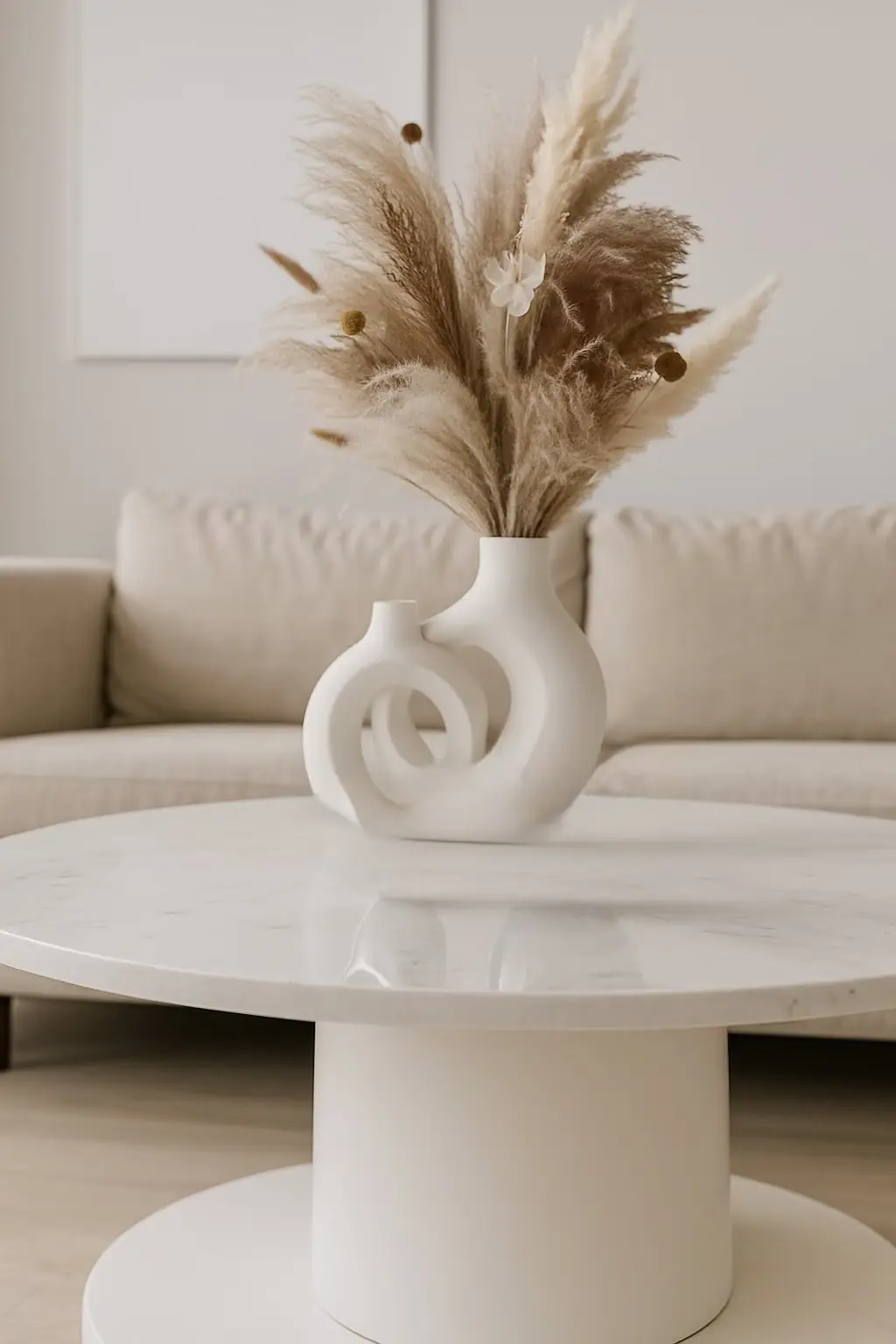
When a space lacks a clear focal point, every object competes for attention equally. Nothing feels anchored. The eye doesn’t know where to rest. In these moments, introducing a bold yet elegant element – such as a Ceramic Vase Set – provides exactly the visual anchor that transforms a scattered composition into something cohesive and intentional.
Clean, milky-white ceramic pieces work exceptionally well in modern and Scandinavian interiors precisely because they’re not loud or demanding. They’re clearly present and visible, but they don’t assault the senses. They whisper rather than shout. The beauty lies in this restraint. A pair of ceramic vases is more powerful than a single vase because it creates visual dialogue – almost as if the two pieces are communicating with one another, turning toward each other in conversation.
Placement matters tremendously. The instinct is often to center a pair on a surface like a coffee table. Resist this impulse. Instead, try positioning them along the table’s rule-of-thirds lines – not quite centered, but intentionally placed according to design principles that feel more natural to the human eye. This off-center placement feels more sophisticated and collected, as if you’ve made deliberate choices rather than defaulting to symmetry. When you add dried pampas grass or delicate, airy stems to the vases, the composition gains verticality without feeling heavy or overwhelming. The stems reach upward, drawing the eye upward, making the space feel taller and more generous.
A focal point doesn’t mean that everything in the room must revolve around it or that it demands constant attention. It simply means providing the eye with something to hold onto – an anchor point that grounds the composition. A ceramic pair like this accomplishes exactly that: quietly yet confidently bringing the entire space together. Visitors may not consciously register the vases, but they’ll feel the difference. The space feels more intentional, more designed, more cared-for.
Make a Statement with a Tall Floor Vase
 Save it
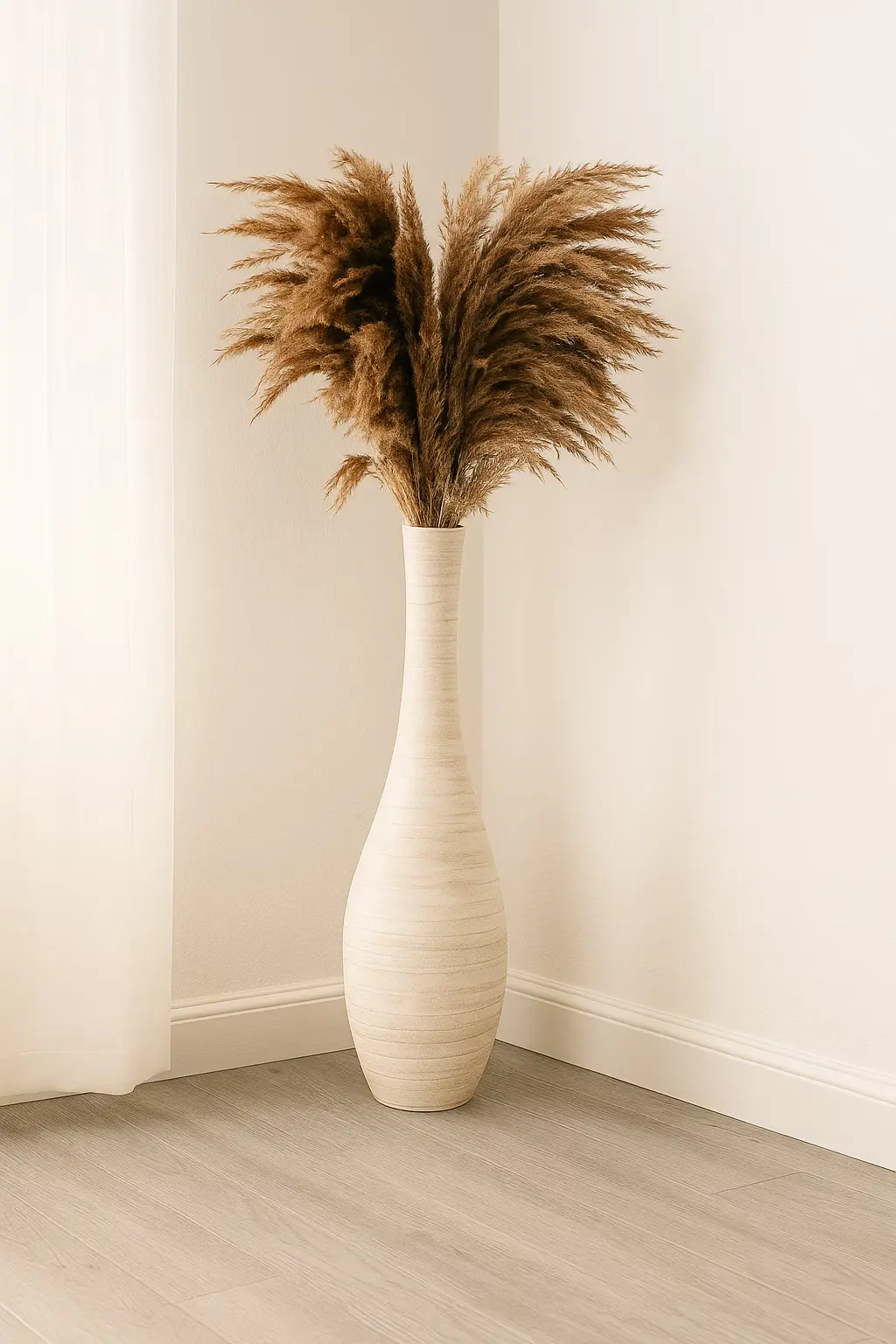
Large spaces demand generous gestures. When you have empty corners, high ceilings, or simply significant floor space that feels incomplete, undersizing your decor is a common mistake. Spaces this generous call for pieces with appropriate visual weight and scale. This is where a tall floor vase becomes invaluable – it immediately fills vertical space and commands attention without requiring extensive renovations or furniture purchases.
A 22-inch tall wood-look floor vase positioned in an empty corner works like architectural magic. It’s tall enough to be visually substantial. It’s present without being overwhelming. The wood-look finish coordinates with most interior aesthetics while maintaining warmth and natural character. If you place this piece in a corner, position an armchair, pouf, or small seating area beside it. Together, these create a triangular composition that feels visually stable and intentional. The eye follows the vase upward, then rests on the seating element beside it. This creates a natural gathering point – a zone within the larger room.
The critical design principle here is breathing room. Don’t push the vase directly against the wall. Give it space. Let it exist as a distinct sculptural object rather than merging with the wall behind it. This separation makes the scale even more impressive. When you fill the tall vase, choose long, curved branches that follow the vase’s height rather than stopping awkwardly at the midpoint. Willow branches, tall grasses, or bamboo-like stems work beautifully. The key is proportion: what you put inside should respect and complement the vase’s height and proportions.
The scale itself becomes a design statement. You don’t need to add additional decorative objects around a tall floor vase. The piece is sufficient on its own. It fills the space. It creates interest. It provides a focal point that grounds an entire corner. When scale is chosen thoughtfully and proportions are respected, a single tall vase can transform how an entire room feels and functions visually.
I write more about proportion in my article How to Create a Cozy Living Room with Simple Design Tricks, where I show through concrete examples how size transforms into atmosphere.
Introduce Sculptural Interest with a Geometric Floor Vase
 Save it
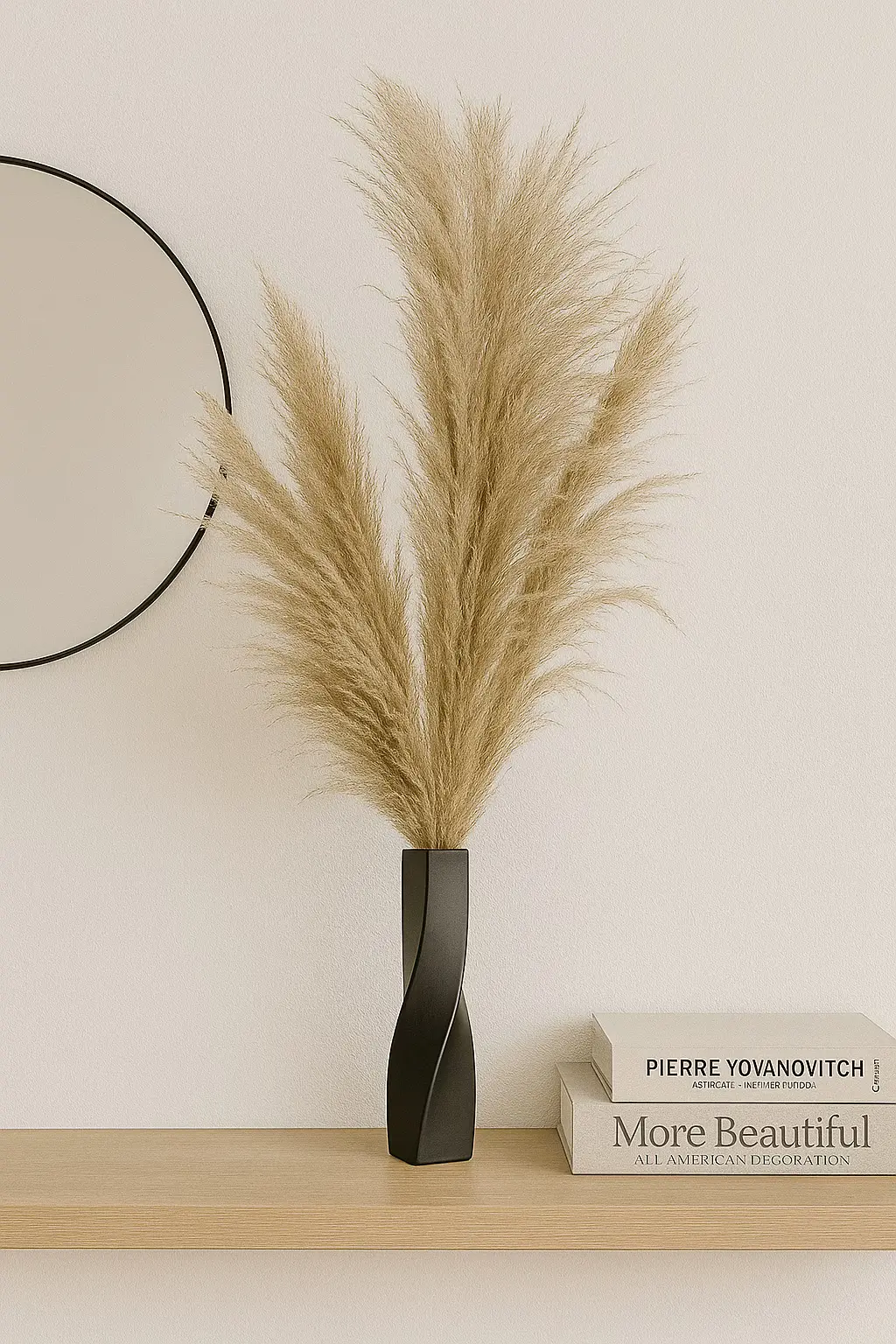
Beyond traditional cylindrical or round vases lies a world of sculptural possibilities. A twisted geometric flower vase immediately catches the eye and creates a sense of movement even when completely empty. This is the power of sculptural vases: they function as standalone art objects that don’t require stems, flowers, or any additional styling to be visually interesting.
Placing such a vase requires thoughtfulness about context. Near a console table, against a bookshelf, or in an empty corner where it can interact with the architectural lines of your room – these locations allow the vase’s sculptural form to shine. The geometric form contrasts beautifully with more organic, natural elements in the room. Unlike traditional shapes that blend into the background, geometric vases demand attention. They introduce a modern, almost architectural element that adds visual tension and interest without overwhelming the space if placement is considered.
When you do choose to style this vase, thoughtful balance is essential. Tall, wispy stems – pampas grass, dried branches, or long leafy greenery – work beautifully because the contrast between organic curves and the vase’s sharp geometry amplifies its sculptural impact. The geometry of the vase provides structure, while the organic stems provide softness. This tension creates visual dynamism that’s far more sophisticated than either element alone. You can also position the vase within a cluster alongside smaller ceramic or glass pieces, creating a layered vertical composition that feels curated and intentional.
Even empty, however, a sculptural geometric vase serves as a statement piece – a single focal point that naturally draws the eye and anchors a room. It tells visitors that you’ve made thoughtful aesthetic choices, that you appreciate design as more than purely functional. The piece becomes art, displayed prominently as such.
Add Depth with a Textured Vase
 Save it
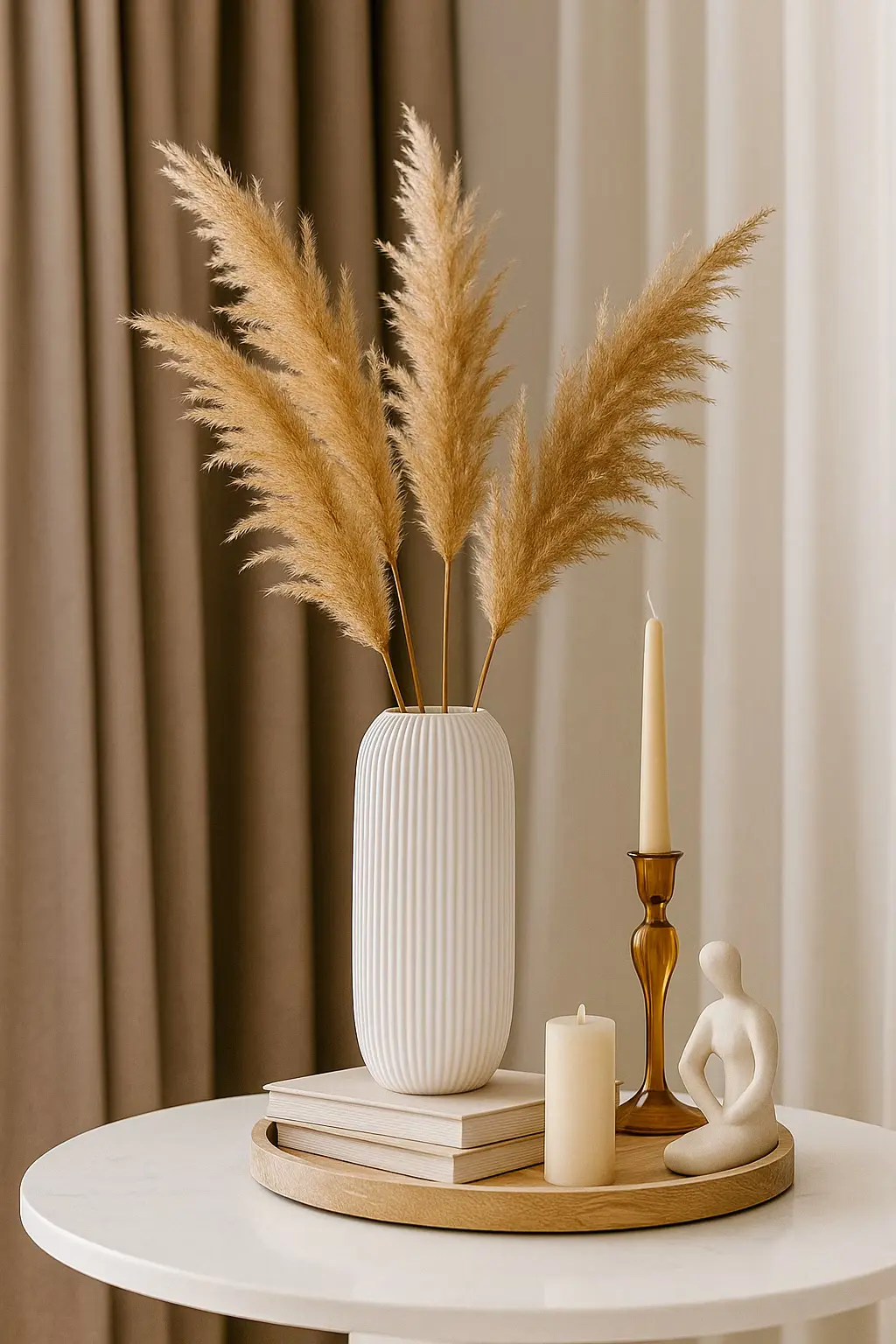
Smooth surfaces are undeniably elegant, but when every surface in a room is homogeneous – smooth, polished, uniform – the overall effect can quickly feel flat and one-dimensional. This is why working consciously with texture transforms how a space actually feels. A ribbed, tactile vase surface isn’t just decorative. It’s a sophisticated light-shaping tool that creates depth and visual interest through how light interacts with the surface.
In the morning, when natural light streams through windows, light gently glides across the grooves and ridges, creating subtle variations and movement on the surface. In the evening, when you rely on artificial lighting, lamplight casts deeper shadows in the grooves, creating dramatic effects. The result is a space that feels more alive and layered, even if you’ve maintained a restrained, minimalist color palette. The texture provides visual interest without color. The light interaction provides dynamism without pattern.
When using a textured piece like this, pay special attention to what goes inside. A beautiful 60-piece natural pampas grass bouquet is stunning, but only if the arrangement isn’t overstuffed. Less truly is more with textured vases. Let the stems stand airy and loose so the ribbed texture remains visible and continues to interact with light. If the arrangement is too dense, too crowded, the texture loses its design role and the entire composition feels heavy and cluttered. You’re essentially hiding the very feature that makes the vase special.
Position textured vases where they receive side lighting – on a bookshelf, a low console, or a table where light hits them at an angle. Place them against neutral backgrounds: beige walls, natural wood furniture, linen textiles. These backgrounds don’t compete with the vase’s texture; they allow the light-and-shadow play to shine. The goal isn’t to stand out loudly or demand attention. It’s to create subtle depth when you look directly at it – to provide visual interest that feels sophisticated and premium without being flashy or obvious.
Embrace Organic Beauty with a Whitewashed Terracotta Vase
 Save it
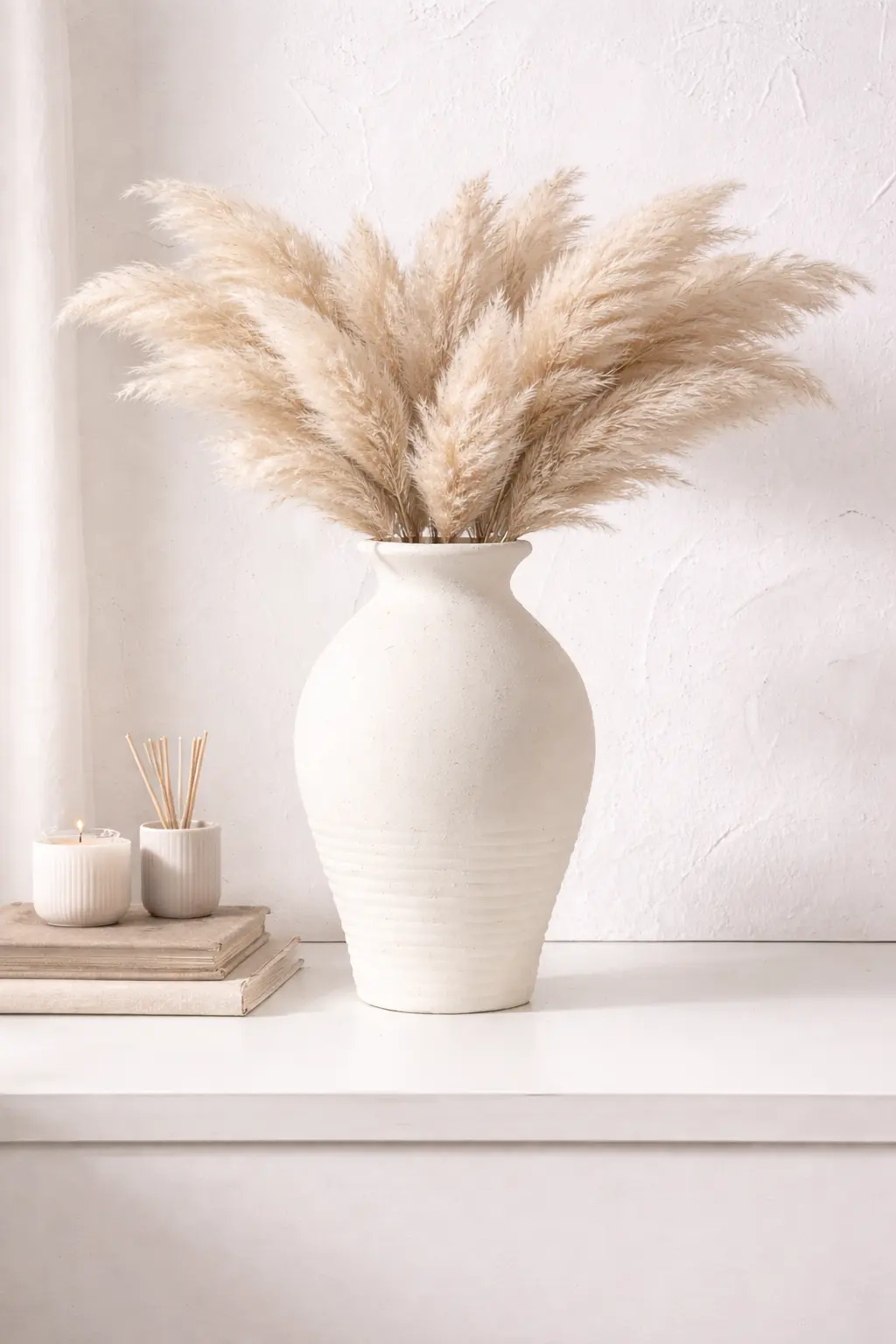
In recent years, design trends have shifted from pursuing perfection to celebrating character. Slightly irregular rims, handcrafted surfaces with visible imperfections, and natural, muted shades have replaced sterile uniformity. This shift reflects a deeper human craving: we want our spaces to feel warm, personal, and alive – not cold and manufactured. A whitewashed terracotta vase captures this mood exactly. It’s not sterile or cold. It feels like it has a story. It looks like it came from somewhere meaningful rather than a factory production line.
The threaded, rustic texture of whitewashed terracotta is especially beautiful in natural light. The imperfections catch light in unexpected ways. The color variations are subtle and organic. Placing such a piece on an open shelf or console where it isn’t compressed by other decorative items allows its character to shine. With a piece like this, patience is important – you have to let it breathe. Too many strong surrounding objects create visual noise that diminishes the vase’s impact. But when the environment is consciously edited and minimal, the vase becomes almost sculptural. It becomes something you notice and appreciate rather than something that blends into background clutter.
From a trend perspective, organic shapes and imperfect surfaces are far more timeless than pure modernism might suggest. These aren’t about one season or one trend cycle. They’re about bringing naturalness back into interiors that have become increasingly digital, sterile, and manufactured. In this world of screens and technological perfection, we increasingly crave objects that feel handmade, organic, and real. A whitewashed terracotta vase delivers exactly that psychological comfort. It makes a space feel more human, more connected to natural materials and traditions.
Style a Textured Boho Vase with Intention
 Save it
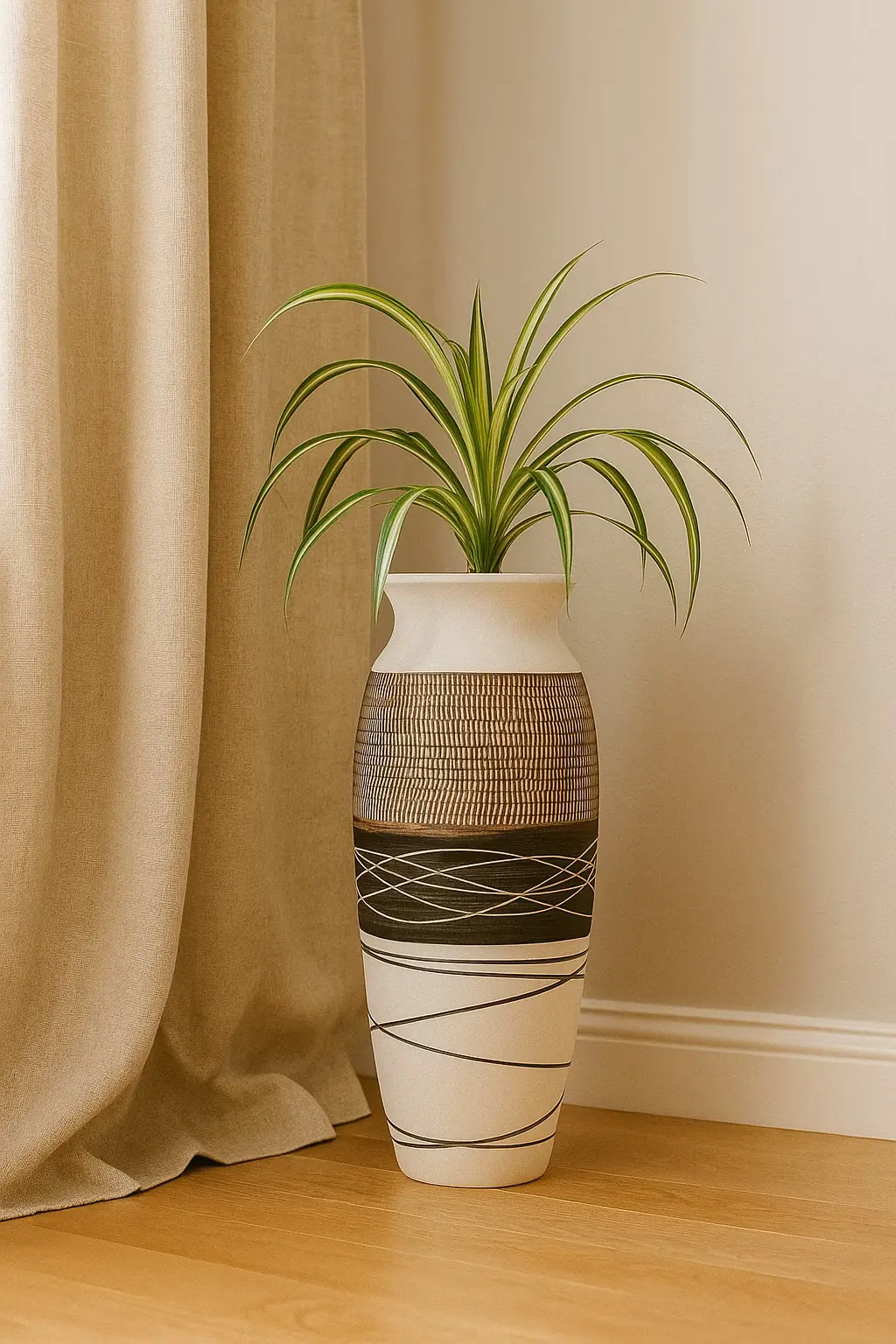
Some vase pieces aren’t background elements or supporting players. They’re quiet protagonists – objects significant enough to anchor a composition on their own. A tall boho textured vase, measuring around 12.6 inches, falls into this category. This height makes it ideal for fireplace mantels, console tables, or wider shelves where you need vertical emphasis without overwhelming scale. It’s substantial enough to be visually interesting, yet restrained enough to not dominate smaller spaces.
The textured boho surface works especially beautifully against a neutral, minimal backdrop. This is crucial: if there’s a mirror, artwork, or other focal point behind or near the vase, ensure the vase complements rather than competes with or blocks that focal point. The vase should enhance the overall composition, not fight for dominance. Positioning matters: place the boho vase slightly off-center rather than directly in the middle of a shelf or surface. This off-center placement feels more natural, more collected, more like a conscious design choice rather than a default centered arrangement.
When incorporating a boho textured vase into seasonal décor, avoid crowding it with additional elements. One or two seasonal branches or subtle greenery are sufficient. The piece itself provides enough visual interest. Overstuffing or surrounding it with too many other items dilutes its impact. This boho vase pairs beautifully with natural plants or dried arrangements. If you use fresh greenery, consider the curve and fall of the leaves – harmony emerges when they follow the vase’s proportions and flow. Think of the greenery as extending the vase’s visual language rather than introducing something entirely separate.
What makes this piece special is its ability to be both rustic and elegant simultaneously. It’s not overly modern or trendy. It’s not overly vintage or dated. It’s simply characterful enough to add a meaningful layer to a room without dominating or overwhelming. It tells visitors that you appreciate natural beauty and thoughtful curation.
This type pairs beautifully with natural plants or dried arrangements. If you use fresh greenery, consider the curve and fall of the leaves — harmony comes when they follow the vase’s proportions. I explore the relationship between plants and decor further in my article How to Make Any Room Feel Alive with Plants, where I show how to treat greenery and decor as one cohesive element rather than separate pieces.
Deeper Styling Advice
Start by assessing your space honestly. What corners feel empty? Where do you need vertical interest? Where is there awkward blank wall space that could use an anchor? These are your prime vase locations. Next, consider scale relative to your actual space. Measure heights and widths. Visualize how a vase will look in context, not just how it looks in a store.
Choose vases that coordinate with your existing color palette and aesthetic. You don’t need to match perfectly, but there should be visual harmony. Neutrals are safest for flexible spaces. Once you’ve selected vases, think about placement with intention. Don’t default to centering on surfaces – try rule-of-thirds positioning for more sophisticated results. Consider light: sculptural and textured vases deserve locations where light can interact with them effectively.
When arranging flowers or branches, start simple. Remove most of what you brought home – you likely have too much. Step back frequently to assess balance and proportion. The stems should feel airy, not cramped. The arrangement should complement the vase, not hide it. If you’re new to vase styling, start with tall, simple stems like pampas grass or branches. These are forgiving and always look beautiful.
Finally, treat vases as design pieces, not as temporary holders for flowers. Rearrange them seasonally. Try them in different locations. Observe how they affect each space. Notice how light interacts with them throughout the day. This active engagement with your vases deepens your appreciation and ensures they’re genuinely enhancing your spaces rather than existing as overlooked objects.
Common Mistakes to Avoid
1. Undersizing Vases for Your Space
The most common mistake is choosing vases too small for the spaces they occupy. Large rooms need substantial vases. Small vases disappear in big spaces, failing to create the impact they should. Measure your space and choose vases with appropriate visual weight and height.
2. Overcrowding Vases with Arrangements
Many people stuff vases completely full with flowers and stems, hiding the vase’s beauty itself. Remember: the vase is the star. Arrangements should complement it, not hide it. Leave space. Let arrangements be airy and loose. Less is genuinely more.
3. Ignoring Light Interaction
Textured and sculptural vases are chosen specifically because of how they interact with light. Placing them in corners without lighting wastes their potential. Position vases where light – natural or artificial – can play across their surfaces.
4. Overlooking Proportion and Scale
Pairing a delicate 6-inch vase with tall, heavy branches or oversized flower arrangements creates visual discord. Match the scale of arrangements to the vase’s proportions. What you put inside should respect the vase’s size.
5. Treating Vases as Afterthoughts
Many people buy vases without considering their actual space or how they’ll coordinate with existing décor. Choose vases intentionally, considering how they’ll work with your color palette, style, and the specific space they’ll occupy. This thoughtfulness pays dividends in impact and satisfaction.
Frequently Asked Questions
What size vase should I choose for my space?
Consider the room’s size and ceiling height. Small spaces work with 6-12 inch vases. Medium spaces accommodate 12-20 inch vases. Large spaces with high ceilings can handle 20+ inch floor vases. The vase should be visually substantial relative to the space but not overwhelming.
Can I leave vases empty, or do they need flowers?
Absolutely leave them empty if the vase itself is beautiful and sculptural. Many vases are designed to be appreciated as standalone objects. Empty vases often have more visual impact than those filled with mediocre arrangements.
How do I style a vase with dried flowers or branches?
Choose arrangements that respect the vase’s height and proportions. Stems should reach toward the vase’s top, not stop awkwardly at the midpoint. Vary heights for visual interest. Less is more – avoid overcrowding. Let stems be airy and loose.
What vase colors work with minimalist décor?
Neutral tones – whites, creams, soft grays, natural wood tones, and muted terracotta – work beautifully with minimalist spaces. These don’t compete with other design elements. You can introduce subtle color variation, but maintain restraint.
Conclusion
To me, a vase is not just decoration. It’s a tool for adding rhythm, depth, and character to a space. If you consciously choose shape, size, and material, your home will instantly feel more refined — without a full renovation.
Start with one vase. Choose it thoughtfully. Position it with intention. Observe how it transforms your space. Notice how light interacts with it. Let that first vase inspire you to continue building your vase collection deliberately and purposefully. Your home is waiting to benefit from the transformative power of these simple yet stunning objects.
Don’t be afraid to experiment. Move objects around, test new proportions, observe the light. Styling is a living process, not a final state.
Simple becomes stunning when your decisions are intentional. And believe me — everyone can feel that difference the moment they step into the room.
This post contains affiliate links. I may earn a small commission at no extra cost to you.
Get cozy inspiration delivered to your inbox.
✓ 14-page beautifully designed ebook
✓ Cozy decorating ideas
✓ Practical room-by-room inspiration
You’re in! 🎉
Thanks for joining the NestFlowHome community!
Your free ebook is already on its way to your inbox. If you don’t see it within a few minutes, please check your Promotions or Spam folder.
Join the NestFlowHome community for weekly decorating inspiration.

Timeless home decor ideas and slow living inspiration for a calm, beautiful life.