
How to Create a Cozy Living Room with Simple Design Tricks
By Emily | September 9, 2025
If your living room looks styled but still feels cold, something essential is missing. Cozy living rooms aren’t built by adding more furniture. They’re created through layering — texture, lighting, layout, and color working together. Without those layers, even a beautiful space can feel flat. Many cozy living room ideas focus on aesthetics alone. But comfort is about how the room supports relaxation and everyday life.
Here’s how to shift the atmosphere without a full redesign. In this article, you’ll discover simple design tricks that instantly make your living room feel warmer and more inviting. We’ll explore how to layer throws and pillows without clutter, how to use warm lighting strategically, how to anchor furniture with rugs, and how to introduce natural textures for depth.
You’ll also learn small layout adjustments that improve flow and make seating areas feel intentional rather than scattered.
First, we don’t add — we remove
 Save it
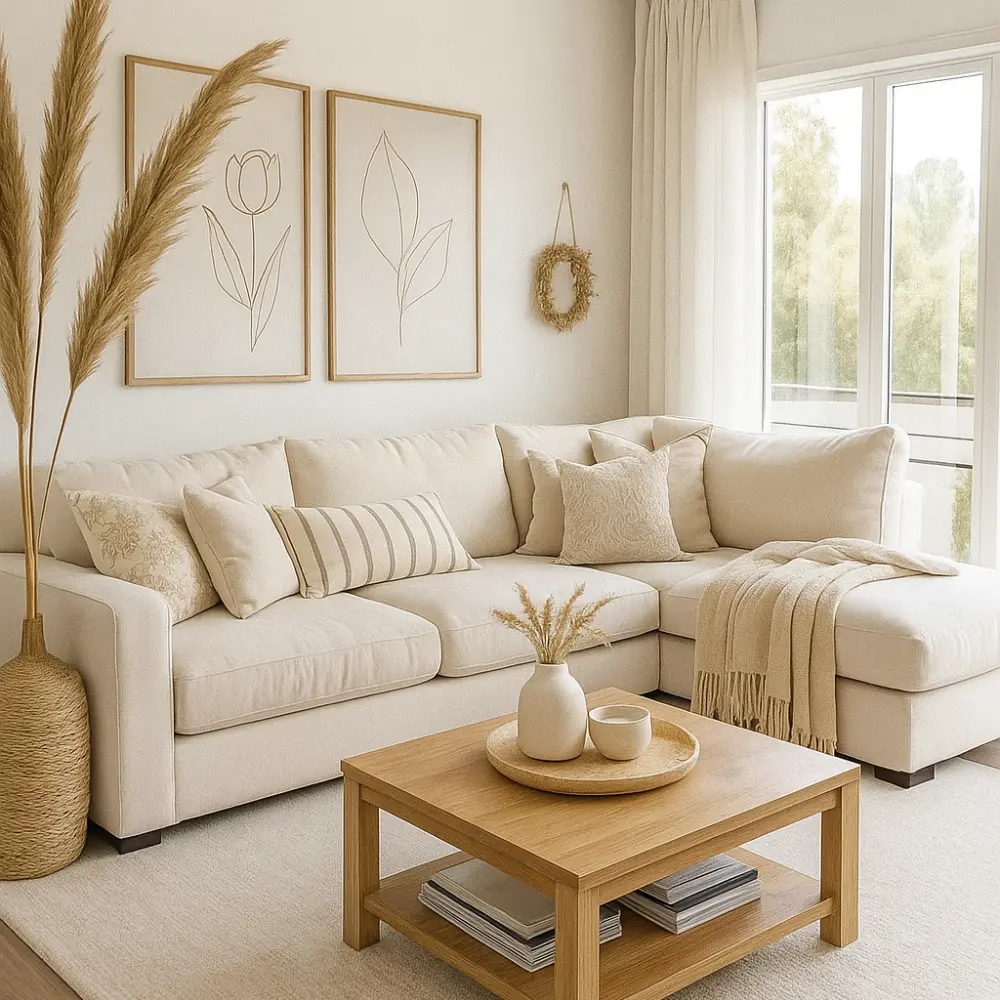
I know this isn’t the exciting part, but this is where everything is decided. The biggest enemy of coziness is visual overload. Not necessarily mess — but when too many things try to be seen at once. Your eyes can’t rest, and without realizing it, you start to feel more tense.
This is what I always suggest in moments like this: take a slow look around your living room and ask yourself one simple question:
Do I actually use this — or am I just used to it being here?
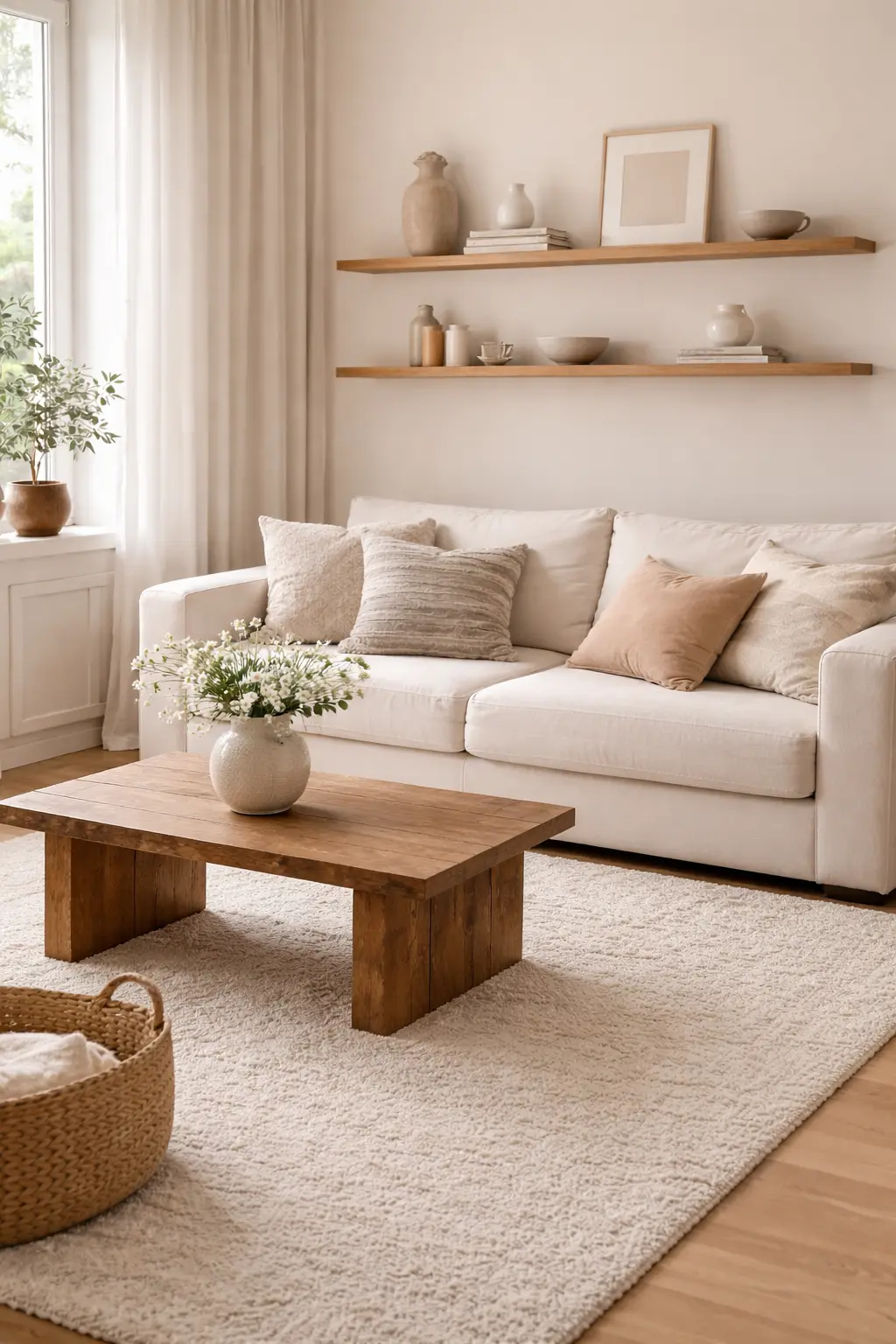
Shelves, coffee tables, the top of a sideboard — these are the most critical areas. When every surface is filled, there’s no room for air. And that air is exactly what creates calm.
You don’t have to put everything away. You just have to edit. What stays should have space around it. That’s how a living room becomes tidy without feeling sterile — intentional without feeling cold.
Warm textures — this is where the space starts to feel good
 Save it
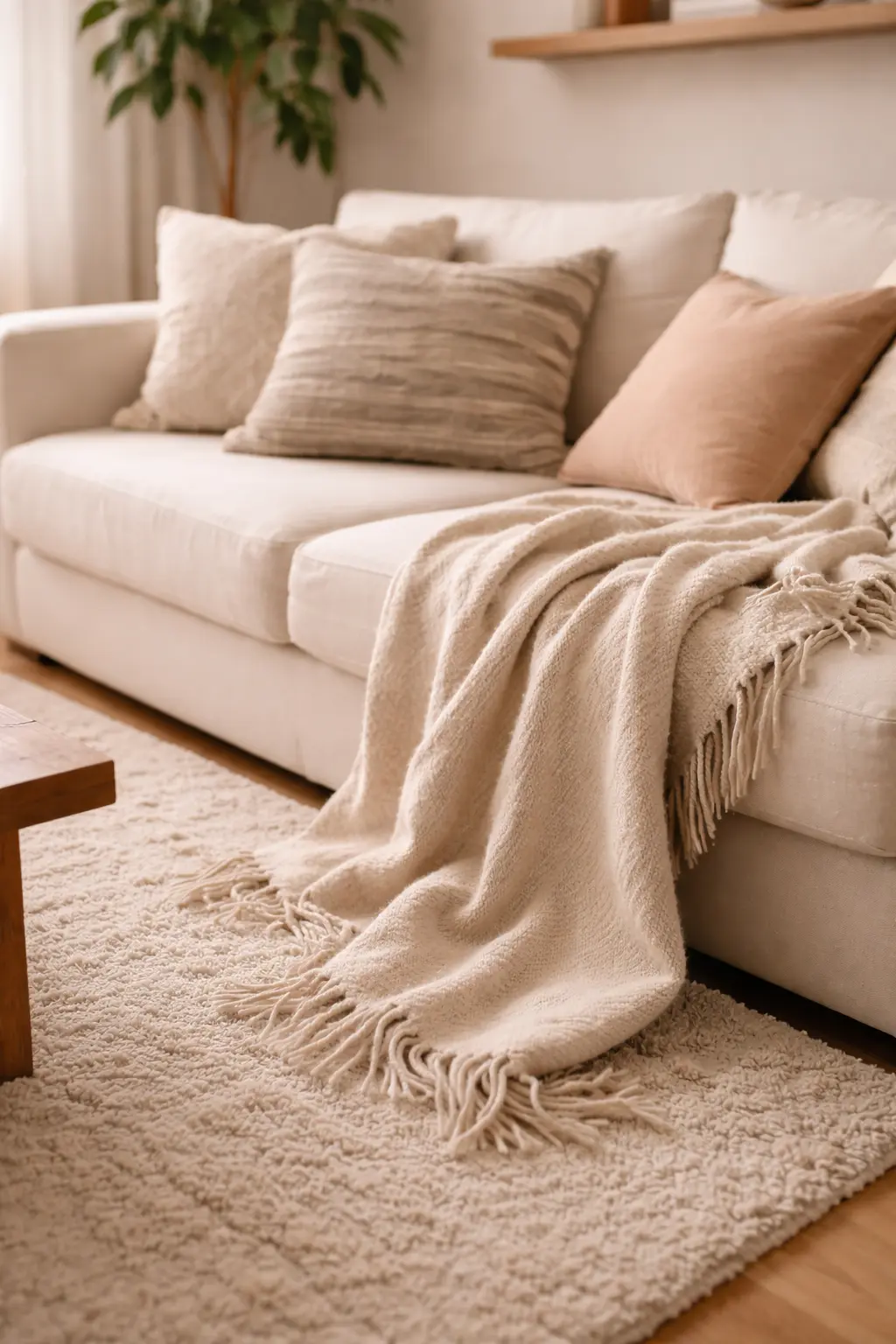
Coziness doesn’t start with your eyes — it starts with your body. When you look at your living room and imagine sitting down, how soft does it feel?, How inviting does it look?
Textures are the fastest way to change the atmosphere of a space. A sofa alone is rarely enough. What brings it to life are layered pillows in different fabrics, a casually draped throw, and a rug that visually pulls everything together.
The secret is layering. Not making everything match perfectly, but making it feel harmonious. Rough and soft surfaces, matte and plush materials playing off each other.
And yes — the rug is a key player here. If you’re unsure about the right size or material, I’ve written about this in detail in another article, and it’s worth reading before you choose. Because a well-chosen rug isn’t just decoration. It sets the emotional foundation of the room.
Lighting — the most underestimated element
 Save it
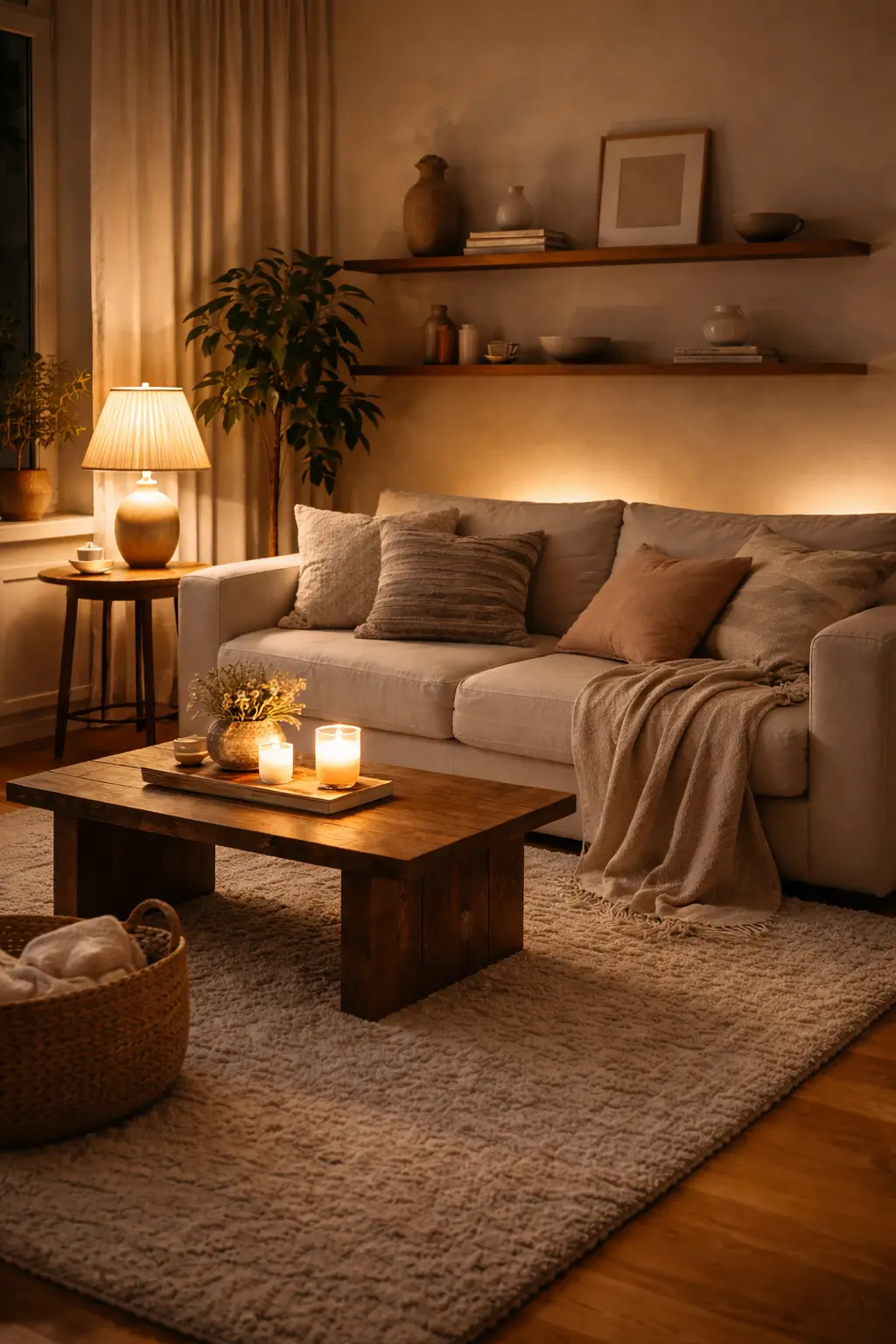
If you change just one thing in your living room, let it be the lighting.
Ceiling lights are practical, but they’re rarely inviting. A cozy living room is built with multiple light sources at different heights. A floor lamp next to the sofa. A table lamp in a corner. A warm reading light exactly where you actually use it. The color of the light matters just as much.
Cool, bluish light makes everything feel harsh — even the softest textiles. Warm-toned bulbs, on the other hand, slow the entire space down.
I’ve noticed that ever since I stopped turning on the “big light” in the evening, my nights have become calmer. Conversations feel different. Thoughts move more slowly. Even time itself feels softer.
Colors that don’t exhaust you
 Save it
If you’re constantly rearranging decor or never quite feel like the space is “done,” the color palette is often the problem. Too many colors. Too sharp. Too much contrast.
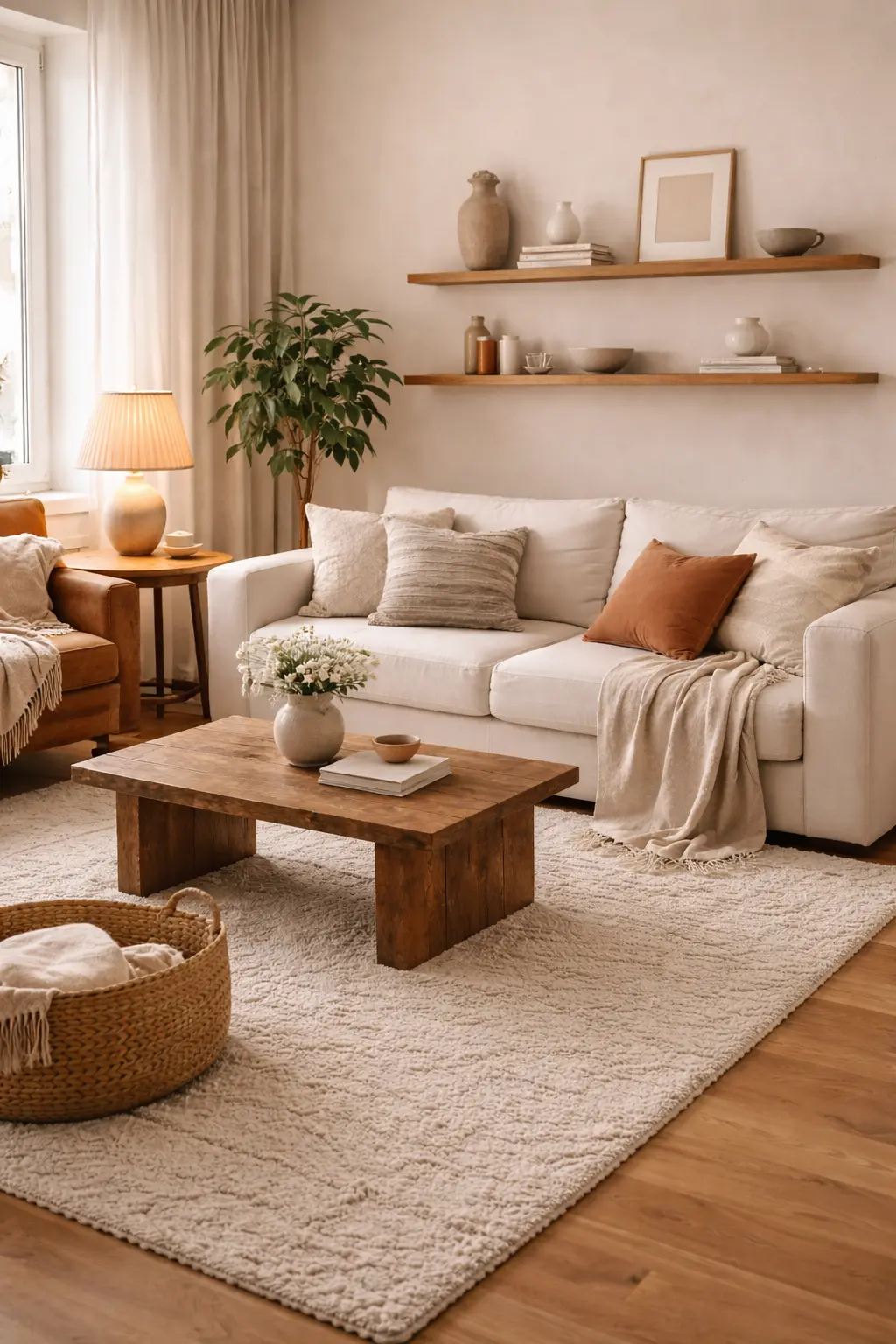
I personally love warm neutral bases: off-white, beige, warm gray. From there, you can add one or two deeper tones — olive, terracotta, tobacco brown, muted blue. Not all at once.
And don’t think only in terms of walls. Colors work together across textiles, furniture, and accessories. When these elements are in harmony, the living room naturally feels calmer.
Personal — but edited
 Save it
Your living room becomes truly cozy when there’s something of you in it.
Not a lot — just something real.
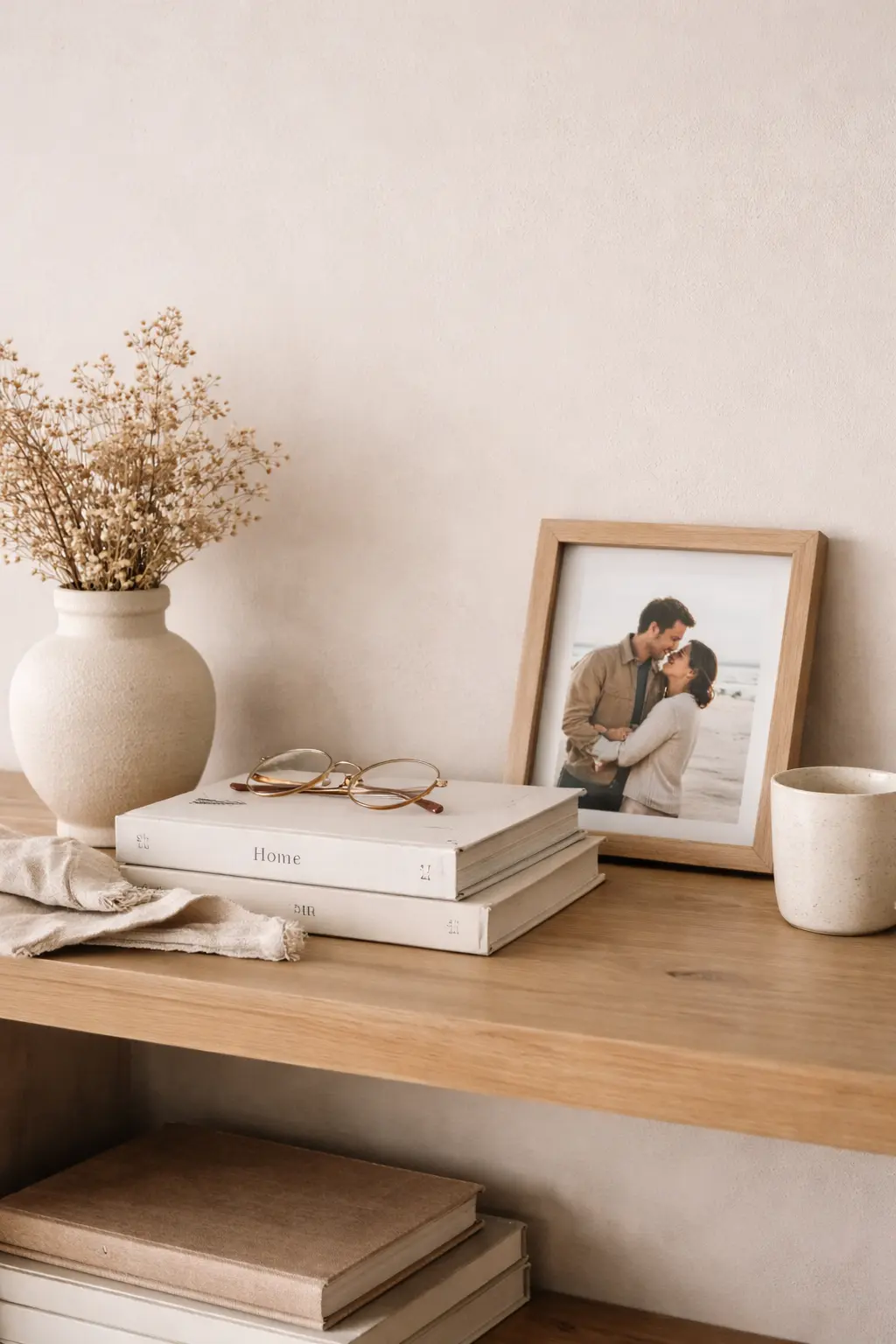
A book you’ve actually read. An object from a trip. A photo that holds a memory. These are the things that make a space feel alive, not just styled.
The key here is balance. Not every memory needs to be on display. But what is displayed should have room to breathe. Personal doesn’t mean cluttered — it means storytelling.
How to integrate objects naturally
 Save it
If space is limited but your ideas are big — whether it’s plants, lighting, or storage — smart solutions always work best.
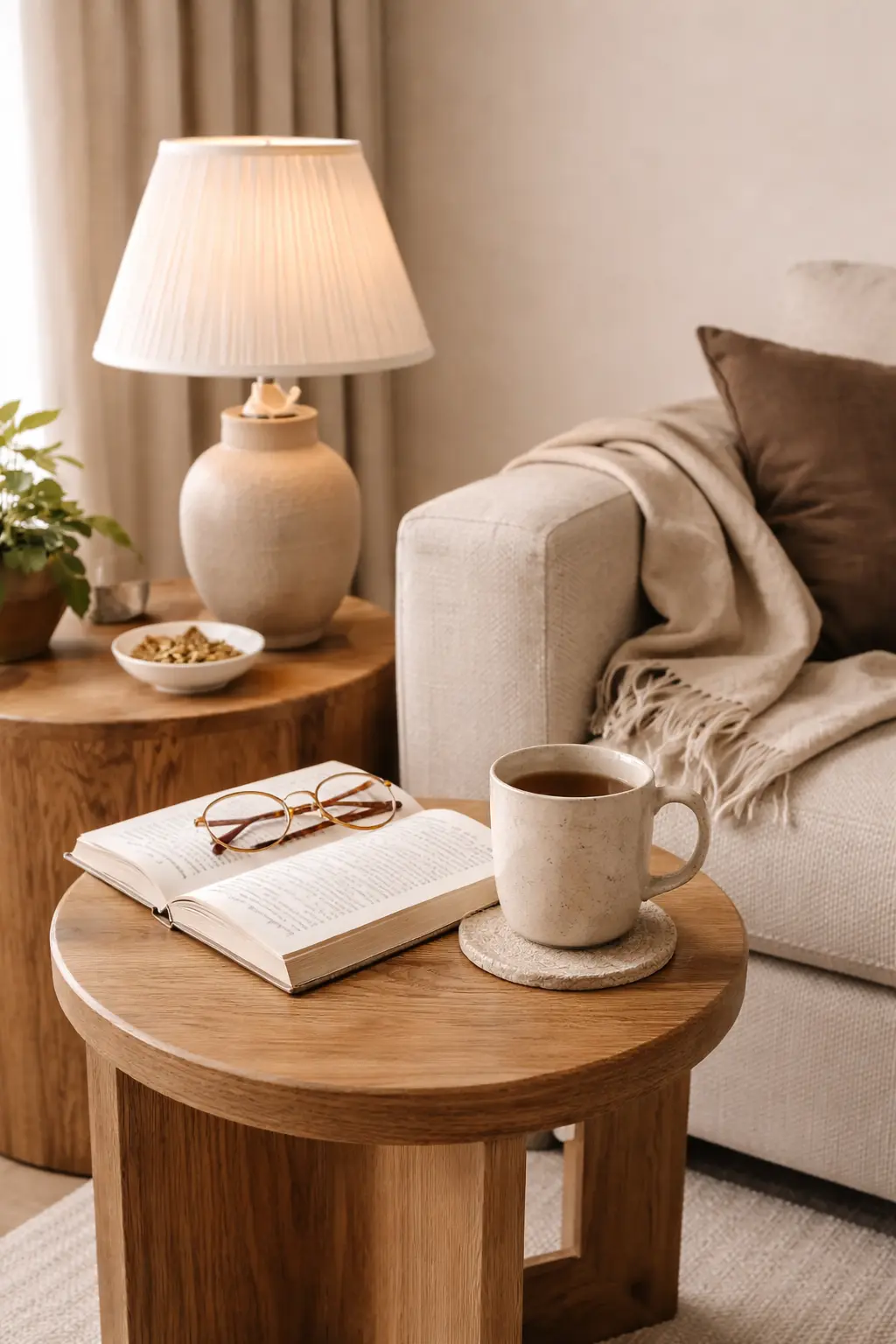
I’ve found that well-designed, multifunctional pieces don’t just save space; they also make the room feel visually calmer. A storage ottoman, a slim side table, a lightweight floor lamp often add far more than oversized furniture ever could.
When choosing furniture, ask yourself one simple question: How will I actually use this on a regular evening?
That answer tells you everything.
Common mistakes that kill coziness
1. Too many small decorative items
The “everything is cute” trap. Lots of tiny objects together create visual noise and steal the room’s calm. Fewer, stronger pieces work better.
2. Blindly following trends
Coziness isn’t a trend. What’s popular today may feel wrong in six months. Your comfort matters more.
3. Filling every wall
Walls need to breathe too. You don’t have to use every inch. Negative space is part of good design.
4. Furniture without function
If you never use it, it only takes up space — mentally, too. Cozy spaces are practical.
5. Overmixing colors
More than three or four main colors can make a living room feel chaotic. Harmony is key.
Frequently asked questions
How can I make my living room feel more expensive?
By using quality textiles, warm lighting, and intentional editing. Order and materials matter more than price.
What colors make a space feel calm?
Warm neutrals, earthy tones, and muted shades. Avoid strong contrasts on large surfaces.
How do I decorate without clutter?
Layer thoughtfully — then edit. Before adding anything new, ask: does this add, or does it take away?
Do these tips work in small living rooms too?
Absolutely. In small spaces, lighting, texture, and proportions matter even more.
Conclusion
A cozy living room doesn’t happen overnight. It’s a process — one that starts with paying attention to yourself, your habits, and how you actually use the space. You don’t have to change everything at once. Start with one step: a lamp, a rug, a small declutter.
Most importantly, don’t try to copy someone else’s living room. Cozy isn’t a style — it’s a state. That moment when you walk in and think, this feels good.
If you want to go further, this way of thinking works beautifully in other rooms too — the bedroom, the entryway. A space that supports you gives something back.
Allow yourself to slow down. Your living room can be the place where you finally arrive.


This post contains affiliate links. I may earn a small commission at no extra cost to you.