
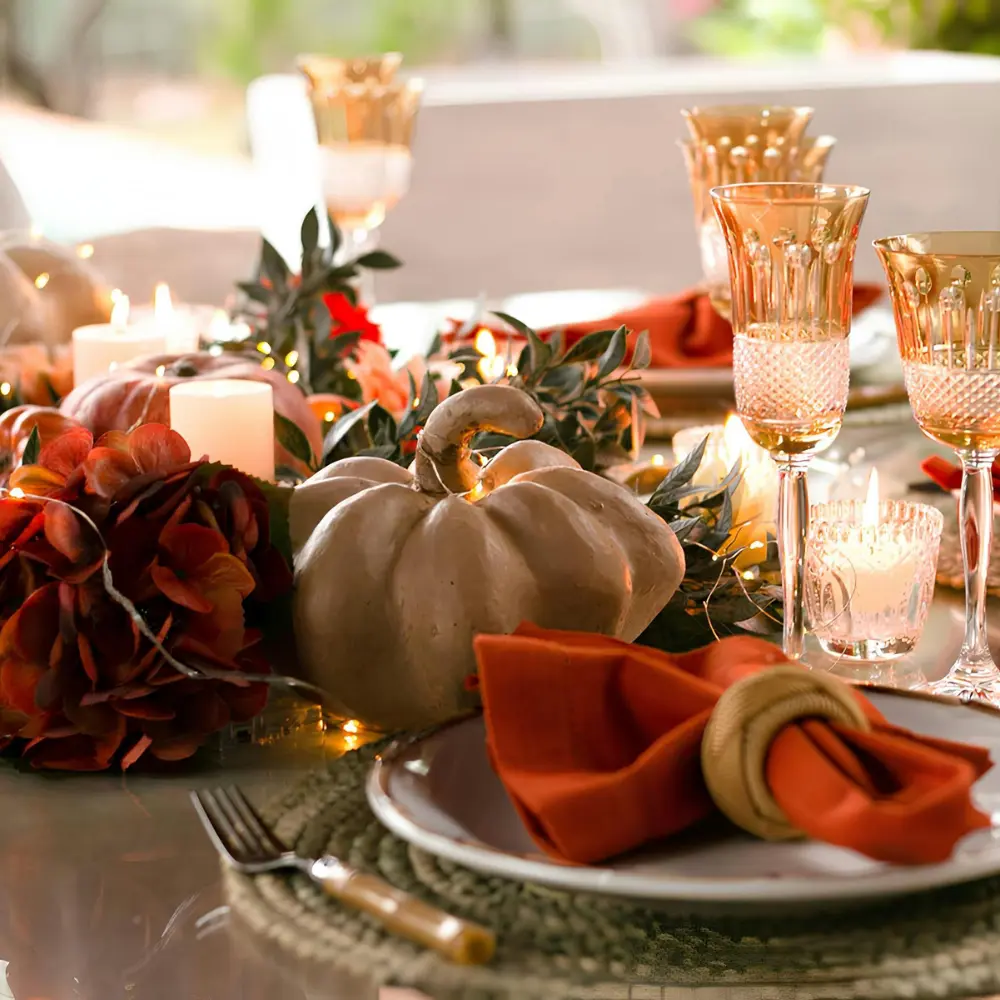
Beautiful Thanksgiving Tablescape Ideas You Can Copy Today
By Emily | December 3, 2025
The Thanksgiving table is where the holiday actually happens — not in the kitchen where the food is made, and not in the living room where guests gather before dinner, but at that specific moment when everyone sits down, looks at each other, and the world slows just enough to feel it. Yet every year, the same thing plays out: the morning of the dinner arrives, and the table gets assembled in a rush, the way things get assembled when there was never quite enough time to plan. It comes together — but not the way you imagined.
This article is for anyone who wants the Thanksgiving table to be more than functional. For anyone who has scrolled through Pinterest at images of candlelit, layered, breathtaking tablescapes and thought “I could never pull that off” — when the truth is, they absolutely could. It doesn’t require a florist’s training, an unlimited budget, or an entire day of styling. What it requires is a handful of guiding principles, a small amount of advance planning, and the kind of intentionality that separates a beautifully set table from a truly unforgettable one.
What follows is a practical, editorial approach to Thanksgiving table styling — grounded in real design thinking, tailored to both farmhouse and modern aesthetics, and honest about what actually works at a table that gets used rather than just photographed. You’ll find style-specific guidance, genuine product recommendations that earn their place, and the kind of specific, actionable advice that makes the difference between a table that’s pretty and one that makes your guests feel, the moment they sit down, that someone genuinely thought about them being there.
Because that’s what a great Thanksgiving table does. It doesn’t just look beautiful. It communicates something — and learning to make it do that, deliberately and consistently, is exactly what this article is about.
Build Your Tablescape Around a Color Story, Not a Theme
 Save it
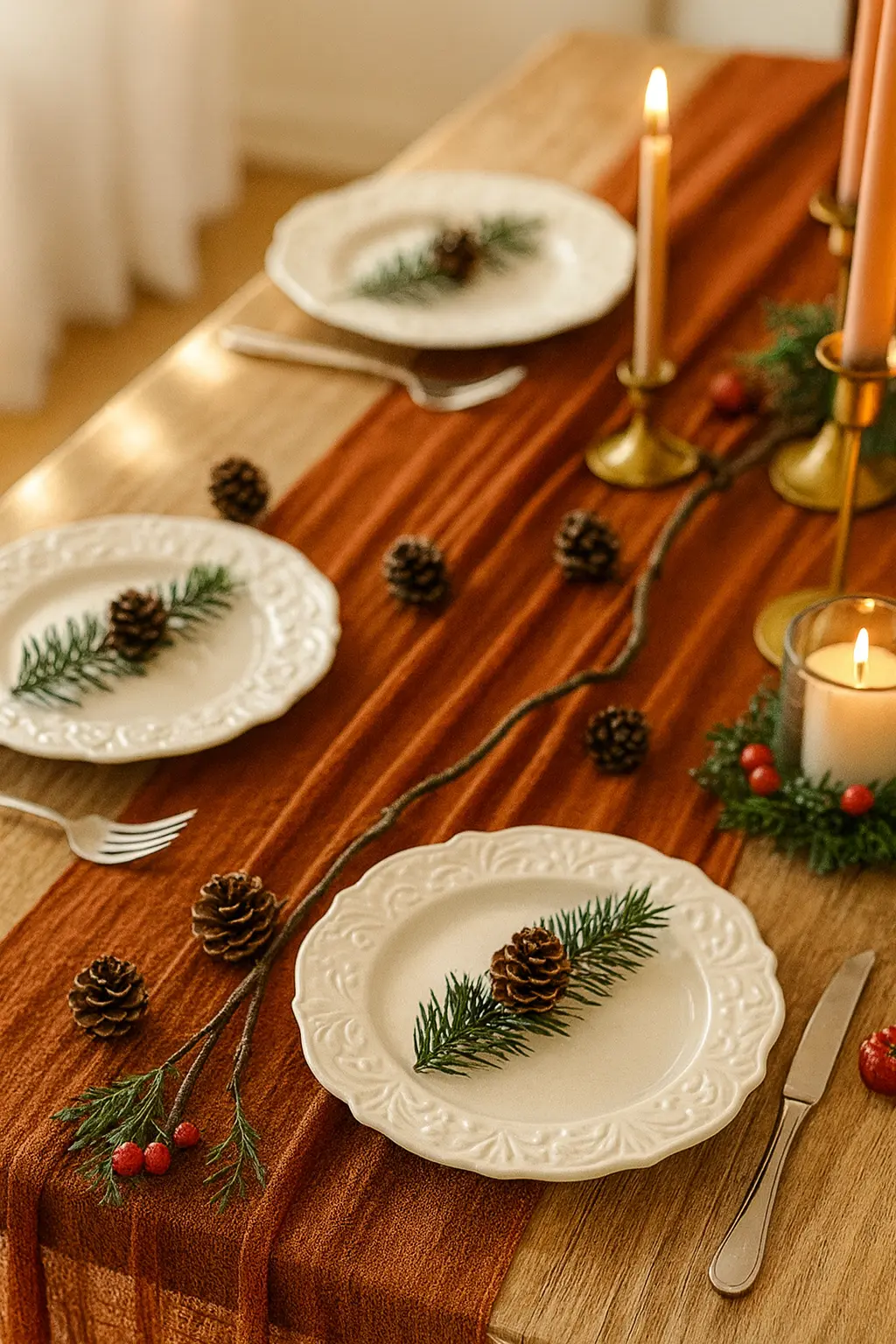
Most people begin planning their Thanksgiving table by choosing a theme. “Rustic Harvest.” “Modern Fall.” “Elegant Thanksgiving.” That impulse isn’t wrong — but a theme is broad and easily leads to a collection of thematically appropriate objects that don’t actually work together visually. A color story is more specific, more flexible, and ultimately far more powerful. It’s the single decision that ties every element of the table together — regardless of whether you’re mixing expensive and budget pieces, store-bought and handmade, or items from completely different aesthetic families.
Thanksgiving’s natural palette is rich and deeply autumnal: terracotta, burnt orange, rust red, mustard yellow, forest green, warm cream, deep brown. From this range, choose two or three colors to dominate and one neutral to bind them. Terracotta and mustard on a natural linen runner. Rust red and deep green on a cream linen base. Warm biscuit and aged bronze on a dark woven cloth. The palette determines the candle colors, the napkin fabric, the choice of botanicals, and even the undertone of the tableware.
What makes this approach genuinely effective is that it creates visual coherence without requiring everything to “match.” A unified color palette holds together objects that have never been in the same packaging — different textures in the same tones create a far richer final image than a matched set pulled from a single box. Matte ceramic alongside polished glass alongside raw linen alongside worn wood: different surfaces, same color story, extraordinary result.
Once the palette is decided, every subsequent purchasing and styling decision becomes automatic: does it fit the palette? If yes, yes. If not, no. A beautiful, fall thanksgiving table runner provides the entire composition’s grounding layer — the base onto which everything else is built, and one that comes out every year because neutral foundations never go out of season.
Layer Your Table Linens to Create Depth and Warmth
 Save it
The difference between a holiday table and an everyday table isn’t the decorations — it’s the layering. A plain white tablecloth is functional. That same cloth with a textured runner over it, structured placemats beneath each setting, and a napkin tied or folded with intention is an entirely different visual experience. Textile layers are what create the warmth of a Thanksgiving table — that quality of being dressed rather than merely set.
The foundational rule: at least three textile layers. The tablecloth or runner establishes the tone and the surface. Placemats give each setting its frame. The napkin, handled thoughtfully, functions as a styling element in its own right. Each layer should add something — texture, color depth, or material contrast — rather than simply repeating what’s beneath it.
Material choice matters as much as color. Linen is one of the most universally successful holiday textiles: natural, elegant, and more beautiful with every wash. For a rustic table, raw natural linen creates farmhouse atmosphere without feeling forced. For a modern setting, washed and softened linen delivers a matte, restrained elegance that reads as intentionally understated. For a minimalist concept, a single quality napkin in grey or cream, folded geometrically, is enough to make the whole setting feel resolved.
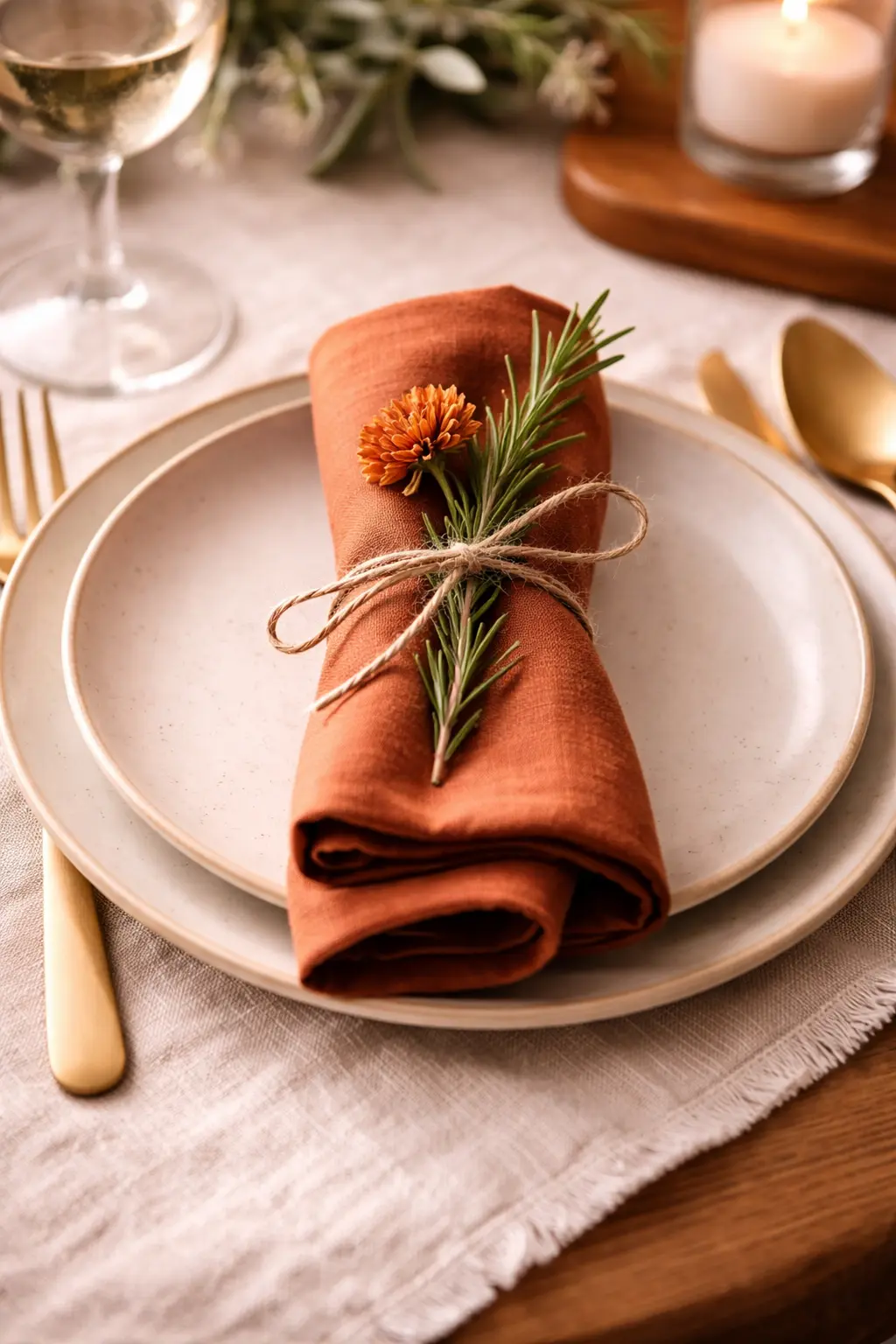
Napkin tying and folding is one of the simplest ways to make a table immediately feel more personal and considered. A sprig of rosemary or a small oak leaf tucked into a piece of natural twine wrapped around the napkin — these are the gestures that guests don’t necessarily articulate, but feel. They communicate that the table was assembled with them in mind. A quality set of washable linen napkins is one of the best long-term investments you can make for any holiday table — not a single-use decoration but a returning foundation that works with every palette and every style, year after year.
Create a Centerpiece That Doesn't Block the Conversation
 Save it
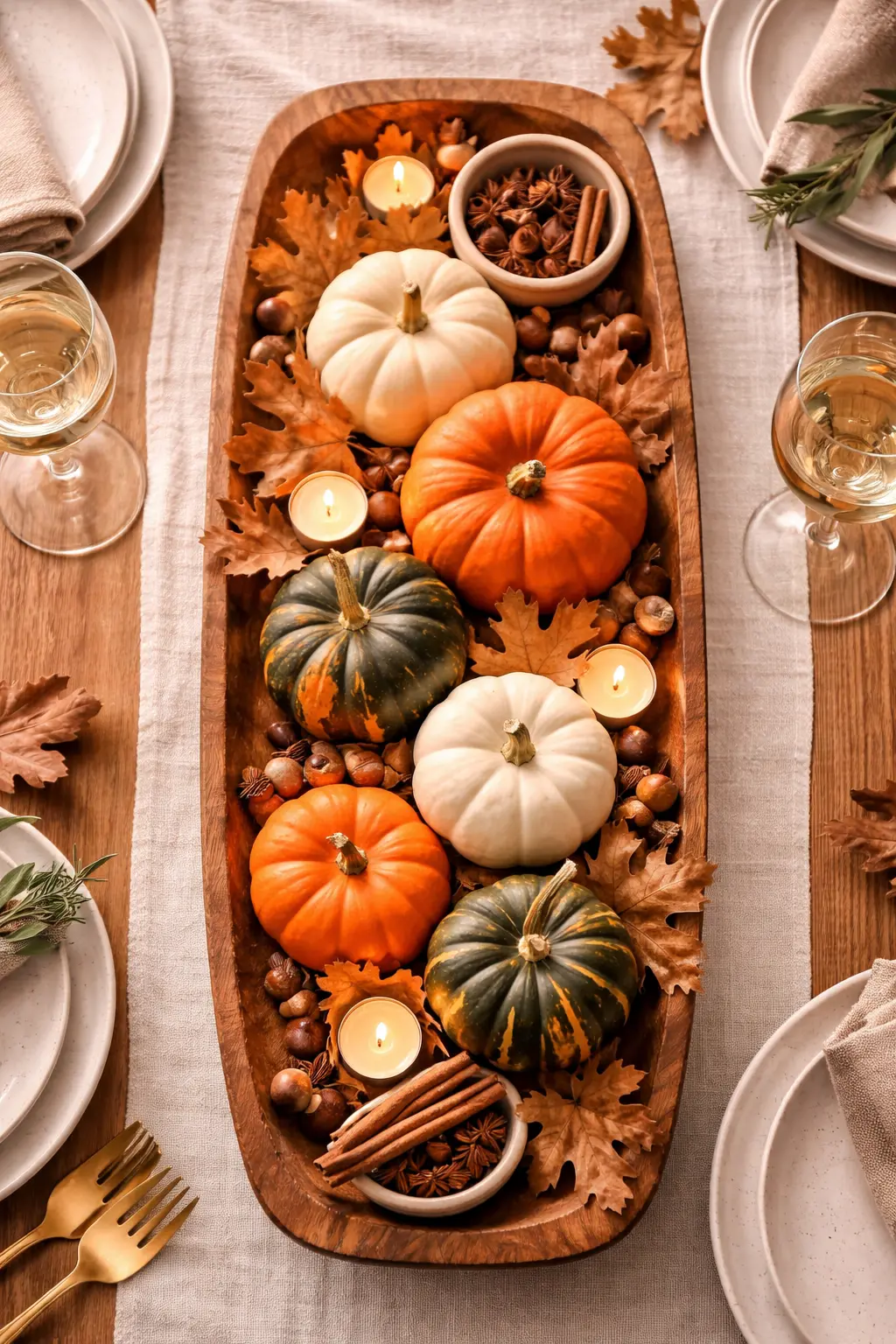
One of the most common mistakes on a Thanksgiving table is an oversized centerpiece. Beautiful, impressive — and a complete visual barrier between the people sitting on either side of it. Thanksgiving dinner is a communal event, and the table’s visual center should serve that, not obstruct it. The ideal centerpiece sits either well below eye level — roughly 25-30 cm tall — or well above it, in the case of a slim, architectural vase. Everything in the middle zone blocks sightlines between guests. Low, spreading arrangements — a flat tray or wide bowl holding gourds, foliage, botanicals, and candles — are among the most effective solutions: they’re visually rich and leave the space above the table completely open for conversation and eye contact.
Natural materials are the best raw ingredients for a Thanksgiving centerpiece. Not because they’re “on trend” but because they’re free or inexpensive, and because they carry the season’s atmosphere in a way no manufactured product can fully replicate. A flat wooden tray holding a grouping of small gourds in varied sizes and colors — orange, white, green — surrounded by scattered acorns, dried oak leaves, a few cinnamon sticks, and tea lights placed between them: this requires no floral training, costs very little, and is completely and effortlessly seasonal.
If you want to incorporate fresh flowers, think low and lush rather than tall and upright. Amber and burgundy chrysanthemums, cream or white anemones, dark-green eucalyptus sprigs: all of these sit beautifully in a low vessel and keep the visual weight at table level where it belongs. A wide, shallow wooden dough bowl is the perfect base for an improvised natural centerpiece — whatever you fill it with, the bowl itself reads as a décor element, and each year it can hold something different while the base remains the same.
Use Candlelight Strategically to Set the Mood of the Entire Table
 Save it
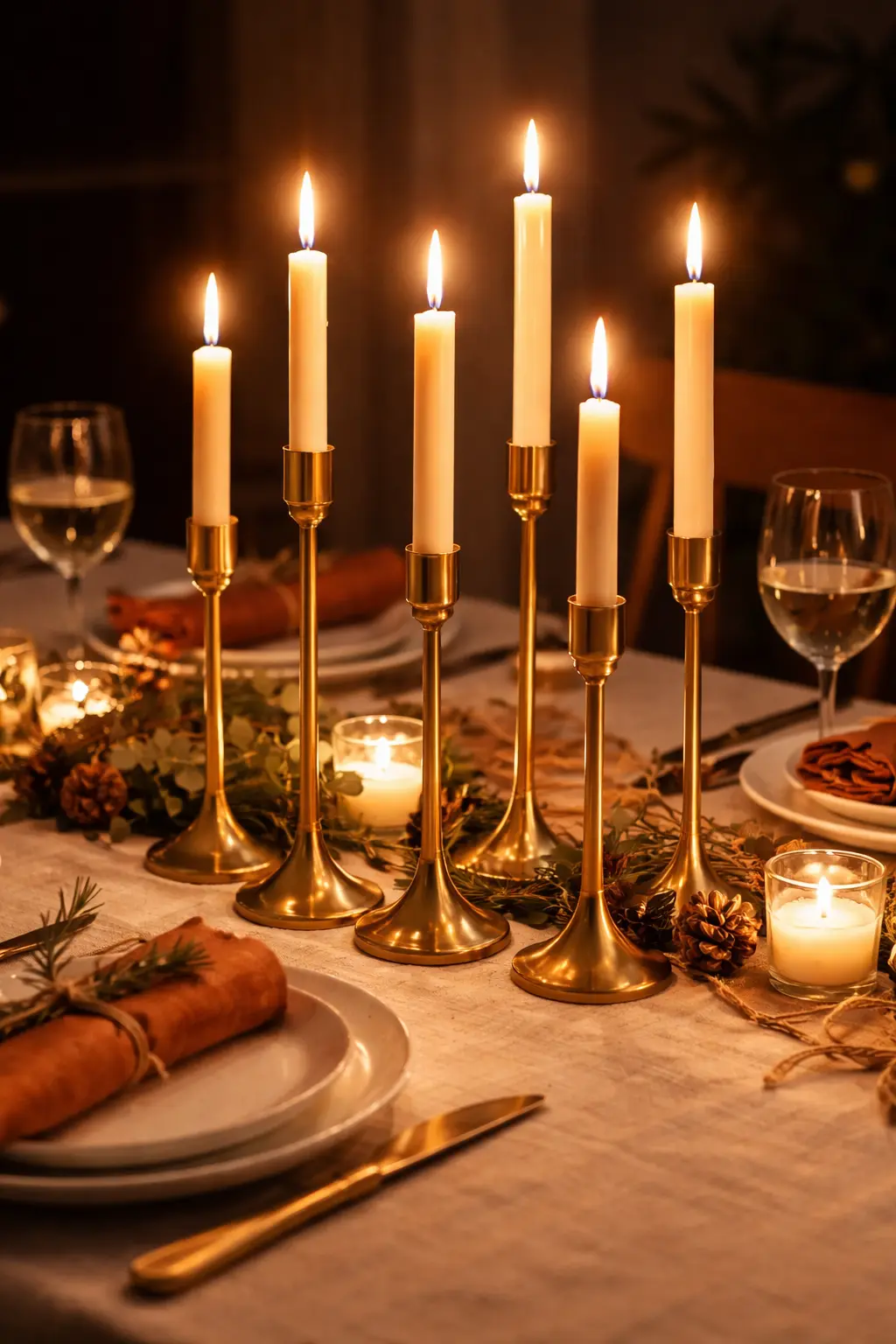
Candles are the only element on a holiday table that creates atmosphere rather than just appearance. With the right candlelight, even a simply set table becomes something magical. Without it — or with it handled poorly — even the most carefully styled table loses its warmth. Candles are not a decorative accessory. They are the table’s primary mood instrument. First rule: vary the heights. Identical pillar candles in a uniform row read as ceremonial rather than intimate. A mix of tall tapers, medium-height block candles, and low tea lights creates an organic, naturally evolved composition — one that looks gathered rather than arranged. This variation is achievable with the most basic glass holders and doesn’t require an expensive matching set.
Color is just as important as form. On a holiday table, avoid candles that are too vivid or heavily pigmented — they’re beautiful in daylight but aggressive by candlelight. Instead, choose cream, ivory, warm white, deep burgundy, or terracotta tones. These colors radiate warmth and don’t compete with the table’s other elements for visual attention. Scented candles at the dining table require care. What smells beautiful in the living room can become overwhelming in close proximity to food. If you want to bring scent into the space, choose something very subtle and natural — cinnamon, orange, sandalwood — and place it away from the table itself rather than directly on it.
Candlelight distribution is also a design decision: grouping candles toward the center of the table creates a radiating warmth that feels more intimate than spacing them evenly. Try it: light the candles, turn off the overhead light, and notice how different the table feels. That difference is the point. A set of gold candle holders in varied heights is one of the highest-return investments for any holiday table — not just for Thanksgiving but for every occasion throughout the year, bringing the same understated elegance every time they’re used.
Bring Nature Indoors with a Dried Botanical Centerpiece That Lasts All Season
 Save it
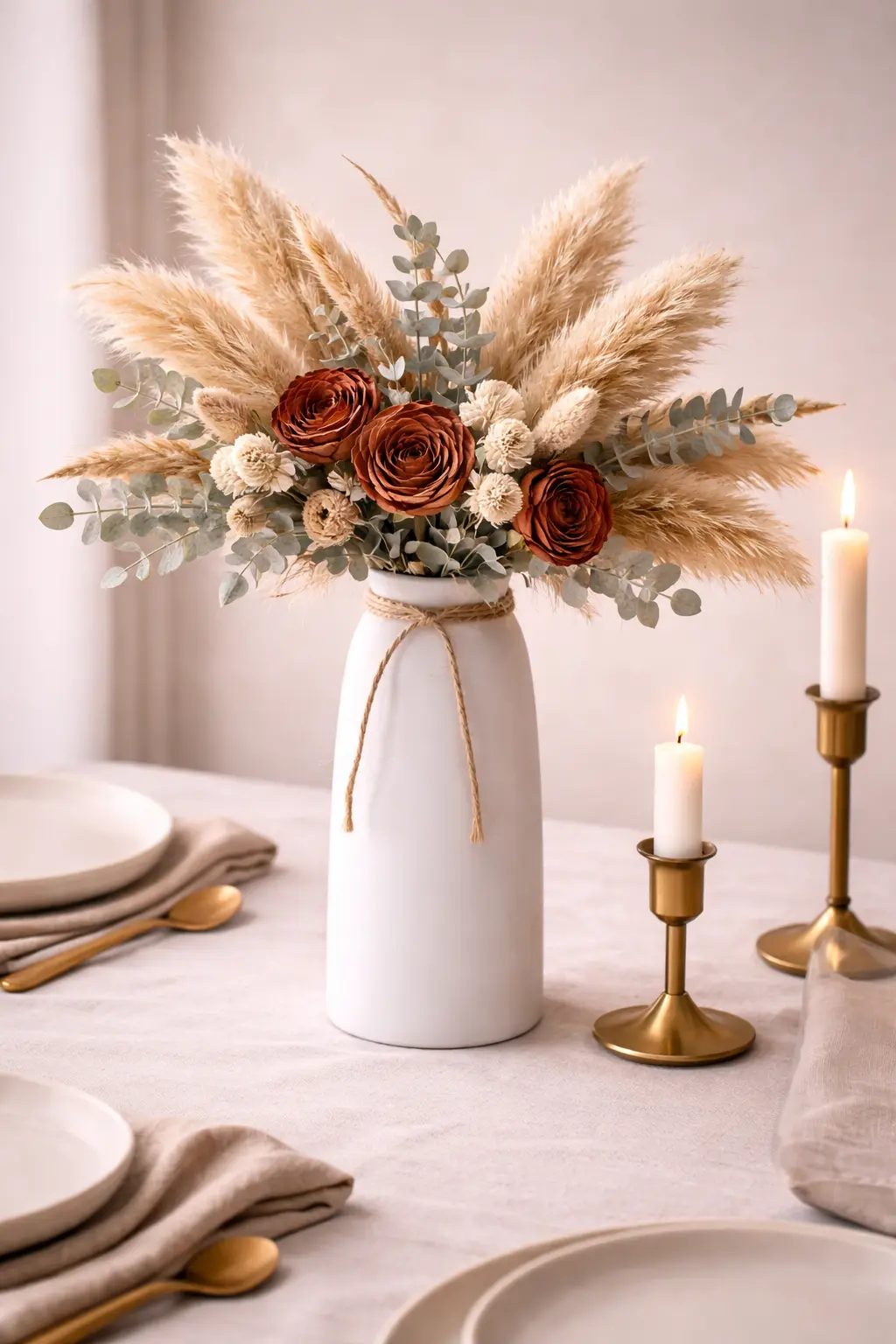
A Thanksgiving table’s most enduring element is one that doesn’t wilt by the end of dinner — or even by the end of the week. Dried botanical arrangements offer exactly this: the natural depth, texture, and warm tones of autumn without the need for fresh water, daily attention, or mid-week replacement. They don’t substitute for fresh flowers — they offer something different entirely. A richer, more layered, more patinated beauty that suits the mood of Thanksgiving far more naturally than any freshly cut arrangement ever could. Pampas grass is one of the most iconic dried botanicals — and for good reason. Its feathery, cream or blush-toned plumes are simultaneously romantic and organic, and in an autumn setting they bring a softness and depth that few other materials can replicate. Combined with dried autumn roses — in rust, terracotta, or deep burgundy tones — and eucalyptus leaves, whose silvery blue-grey quality makes them the perfect visual neutral, the result is a composition that works as a complete visual statement on its own.
A larger set combining pampas grass, dried autumn roses, and eucalyptus in a white ceramic vase offers something that most single-purpose centerpiece pieces don’t: genuine flexibility. The elements can be distributed across the table rather than concentrated in one spot — the main arrangement in the center, a few stems tucked into a napkin fold at each place setting, a small cluster on an entry table. That kind of versatility across an entire tablescape is what makes a product genuinely worth its price at a holiday dinner.
From a style perspective, this botanical combination works particularly well on a warm modern-romantic table: cream or ivory plates, bronze flatware, and the arrangement sitting low in a round ceramic vessel or on a flat wooden tray. It’s equally at home on a farmhouse table — especially when acorns and dried oak leaves are layered in around the base of the stems. The eucalyptus’s natural cool tone prevents the overall composition from reading as too dry or archival, keeping the arrangement alive-feeling even though every element in it has been preserved.
The other quality worth naming is longevity. A fresh flower centerpiece bought on Wednesday is beginning to fade by Friday. A dried botanical arrangement set out the week of Thanksgiving is still beautiful at Christmas — and can be stored and returned to the following year with no loss of quality. In a holiday context where time and budget are both finite, that durability is not a minor detail. It’s the whole argument.
Finish with Details That Guests Will Actually Notice
 Save it
At the end of setting a Thanksgiving table, there’s a final step that most people skip — not because they don’t know about it, but because they’re tired by the time they get there. And yet these finishing details are precisely what guests carry with them. Not the style of the plate, not the pattern of the runner — but the moment when they sit down and notice something that tells them someone thought about them before they arrived.
The categories of finishing detail:
Scent: The aroma of the table matters as much as its appearance. Fresh rosemary tucked into a napkin fold, dried orange slices around a cinnamon stick in the centerpiece, a clove-studded orange on a small dish: these discretely scent the table without competing with the food.
Light: Always light candles at least fifteen minutes before guests sit down. A freshly lit candle is not the same as one that has warmed for a quarter hour — the wax softens, the flame steadies, and the light becomes warmer and more diffuse. The difference is visible and felt.
Sound: A thoughtfully assembled autumn playlist — acoustic, warm, genuinely unobtrusive — adds an atmospheric layer to the evening that nobody can name but everybody senses. It’s the difference between a room that feels prepared and one that merely looks it.
Personal gesture: A small, personal element at each setting — a handwritten note, a tiny chocolate on the napkin, a small wrapped surprise under the plate. It doesn’t need to be significant. It needs to be intentional.
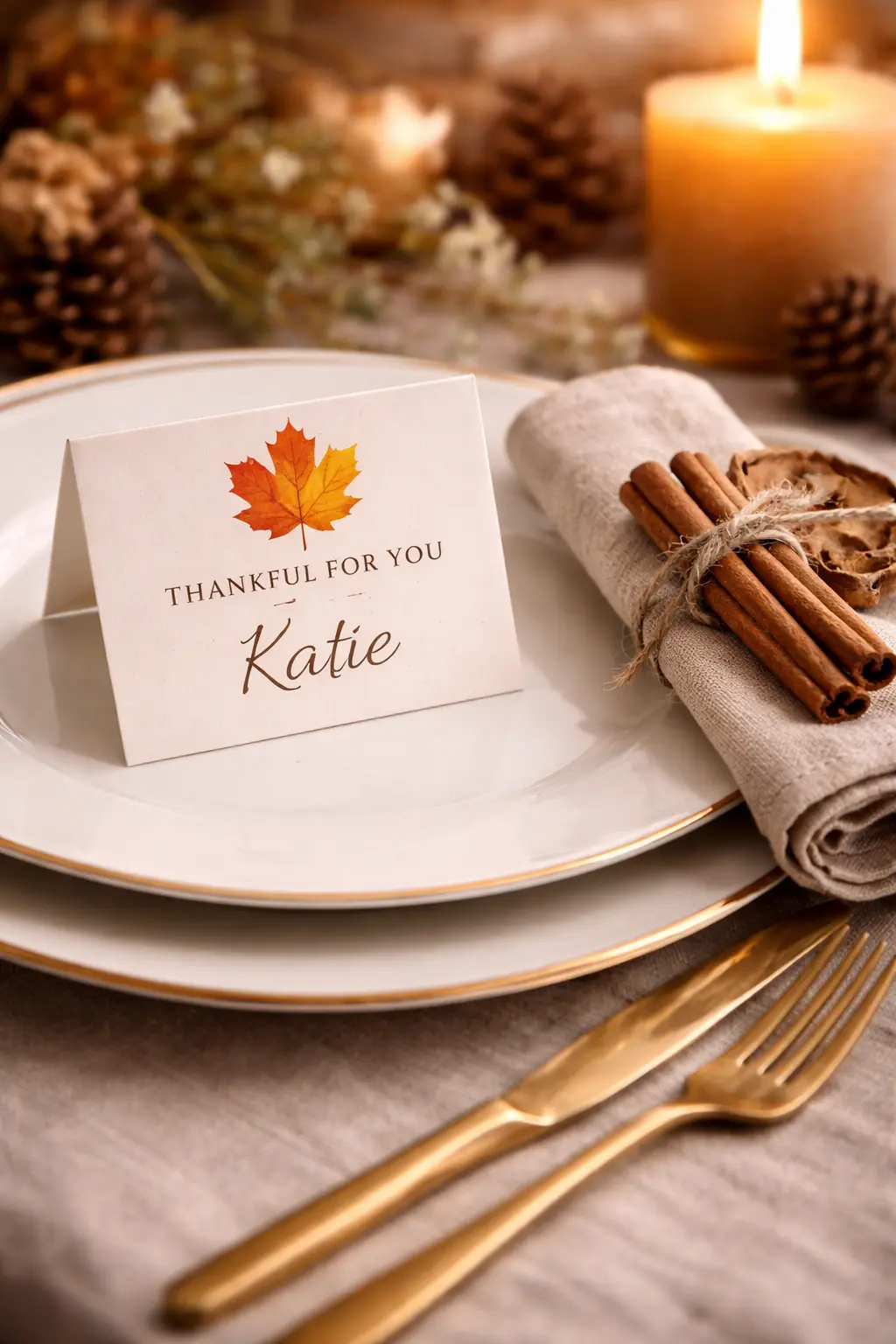
A set of table place name cards with natural twine is one of the simplest and most remembered finishing details — personal, seasonal, and the kind of small gesture that guests mention years later because it made them feel, in that moment, genuinely welcomed.
Helpful Tips That Actually Work
Most people leave the majority of their Thanksgiving table decisions to the final day — and that’s what most often prevents the table from becoming what they imagined. A few pieces of advice that prevent exactly this:
Photograph the table before anyone sits down. Not for social media — but because the camera sees what tired eyes have stopped noticing. If something bothers you in the photo, it bothers you in the room. It’s the fastest and most honest feedback available.
Test a week in advance. Set the table as a rehearsal — plates, napkins, centerpiece — and look at it in daylight and then again in the evening under artificial light. Candlelight produces a completely different image than natural light, and that difference cannot be fully imagined, only seen.
Leave space on the table. One of the most consistent mistakes is filling every available surface. Negative space — a clean stretch of table between arrangements — is not emptiness. It’s a design decision, and intentional emptiness reads as elegant rather than sparse.
Layer heights across the whole table, not just the centerpiece. The rule of height variation applies to the entire table composition: one or two tall elements (candles, a vase), medium elements (centerpiece objects), and low elements (place setting details) together create the layered, richly composed quality that distinguishes a holiday table from an everyday one.
Think about scent as a design layer. The table’s aroma is part of the holiday’s atmospheric experience. Fresh citrus, cinnamon, rosemary — these bring a natural, pleasing quality to the space without competing with the food’s own fragrance.
If you want to extend this same atmosphere — warmth, intention, seasonal beauty — through the whole house rather than just the dining table, my article How to Create a Cozy Living Room with Simple Design Tricks is worth reading alongside this one. The same principles that build a memorable Thanksgiving table apply, at a larger scale, to every room in the house.
Before the most common mistakes — one final thought: the best holiday table carries your voice. Not the most expensive one, not the most elaborately decorated one, but the one that says, in every detail, that someone sat down, thought carefully, and planned with love.
Common Mistakes to Avoid
1. Mixing too many styles at once.
A farmhouse runner, modern geometric placemats, a romantic floral centerpiece, and a contemporary plate — these elements don’t read as eclectic. They read as unresolved. Choose one visual language and apply it consistently. Departures only work when they’re intentional and within the same color palette.
2. An oversized or overcrowded centerpiece.
The more elements compete for attention in the center of the table, the harder it becomes to maintain visual focus — and the less room remains for serving dishes, glasses, and the food itself. A great centerpiece doesn’t demonstrate how much you have. It demonstrates how deliberately you chose.
3. Neglecting the glassware.
Glasses are one of the most visible elements on a table, and one of the most commonly overlooked. The height and form of wine and water glasses contribute significantly to the table’s overall visual quality — and a spotted or scratched glass immediately undermines everything the decoration has built. Always hold glasses to the light before setting them.
4. Unlit candles.
This is perhaps the smallest and most consequential mistake: the candles are beautifully arranged and then never lit, because “there wasn’t time” or “I didn’t want to deal with it.” An unlit candle is décor. A lit candle is atmosphere. These are not the same thing, and no amount of styling compensates for the absence of actual candlelight at an evening dinner table.
5. Last-minute table setting.
When the table is assembled in the thirty minutes before dinner, while the food is on the stove, guests are arriving, and children are asking questions — the table reflects that. Plan to have the base layer in place the evening before or the morning of: runner, placemats, flatware, glasses. The decorative elements can go on at the last moment if needed, but the foundation should never be rushed.
Frequently Asked Questions
How do I create a beautiful Thanksgiving table on a tight budget?
The most beautiful Thanksgiving tables are not the most expensive ones — they’re the most intentional. Foraged natural materials, white candles, one quality runner, and consistent napkins: these elements deliver maximum visual impact at minimum cost. Focus your investment on the palette and the layering — both of which cost nothing — and let the simplicity of the arrangement do the work.
When should I set the Thanksgiving table?
The base layer — runner, placemats, flatware, glasses, napkins — ideally goes down the evening before. The decorative elements and centerpiece are best arranged the morning or early afternoon of the dinner, when you still have time and energy to step back and assess. Light the candles fifteen minutes before guests sit down.
What size runner do I need for a table that seats 6-8?
The ideal runner length is approximately 30-45 cm longer than the table itself — allowing 15-20 cm of drape at each end. In width, 30-35 cm keeps the runner visually dominant without covering the placemats, which should remain visible as a distinct layer.
How do I make the table feel personal for a larger group?
Handwritten name cards at every setting, a small personal element at each place (a mini gourd, a small chocolate, a single dried flower), and a deliberately considered seating plan — these are the gestures that make a table for twelve feel as intimate as a table for four.
Final Thoughts
The Thanksgiving table doesn’t need to be perfect. It needs to be memorable. It needs to communicate, to every person who sits down, that someone thought about their being there before the day arrived. That intention — expressed through color, texture, candlelight, and the smallest personal detail — is what separates a holiday table from an ordinary one.
The principles in this article aren’t complicated techniques. They’re a way of thinking: palette before theme, function before decoration, depth before volume, and always, the guest before the aesthetics. When those priorities are in place, the table builds itself almost naturally — because every decision has a clear answer.
Start today. Choose your palette. Decide on your style. Source the one or two anchor pieces around which everything else will be arranged. The foraged leaves, the candles, the handwritten names — those come together on the day itself. But the best Thanksgiving tables are never born in a last-minute rush. They begin in a quiet moment, when someone sits down, imagines who will be there, and plans with that person in mind.
That’s the table worth building. And now you know exactly how.
This post contains affiliate links. I may earn a small commission at no extra cost to you.
Get cozy inspiration delivered to your inbox.
✓ 14-page beautifully designed ebook
✓ Cozy decorating ideas
✓ Practical room-by-room inspiration
You’re in! 🎉
Thanks for joining the NestFlowHome community!
Your free ebook is already on its way to your inbox. If you don’t see it within a few minutes, please check your Promotions or Spam folder.
Join the NestFlowHome community for weekly decorating inspiration.

Timeless home decor ideas and slow living inspiration for a calm, beautiful life.