
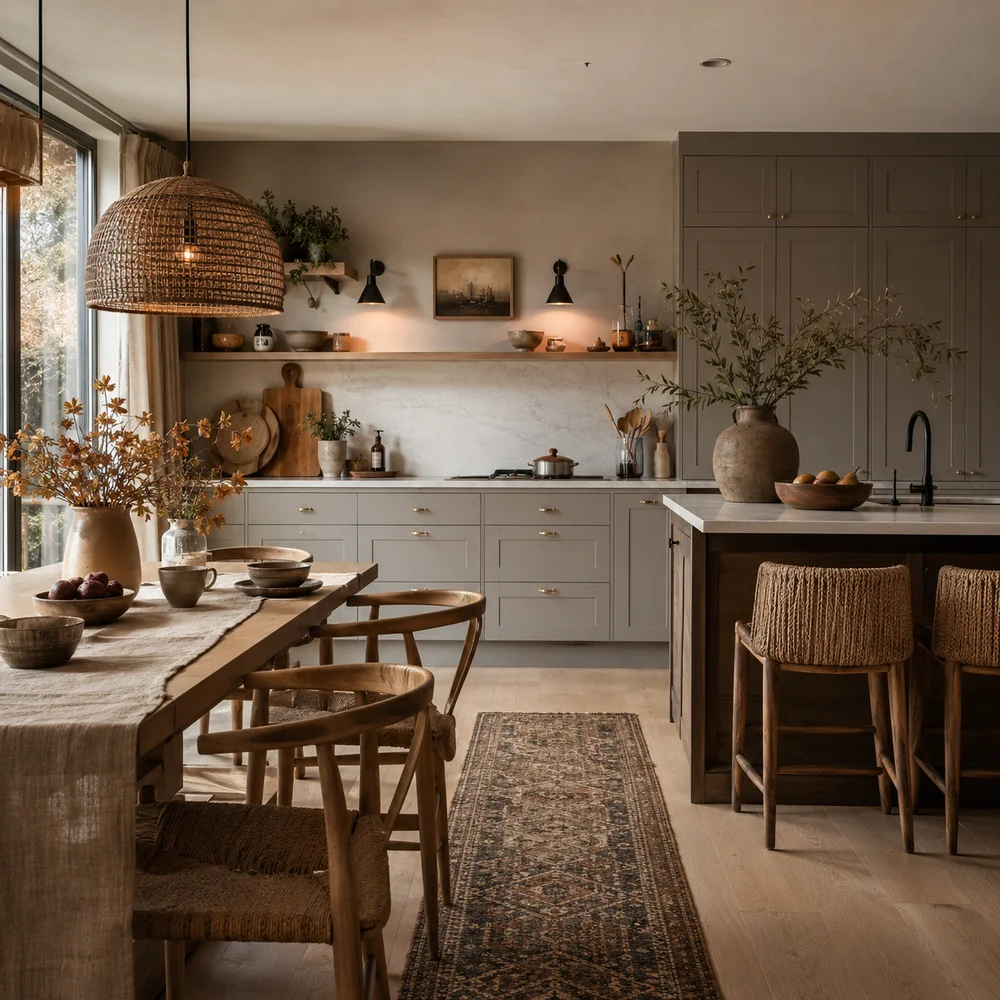
How to Style a Cozy Neutral Kitchen on Any Budget
By Emily | August 17, 2026
There’s a particular kind of kitchen that photographs perfectly and feels like nothing at all. White cabinets, pale countertop, a single pendant doing its best to look intentional, everything correct and none of it warm. You’ve probably stood in one, maybe even built one, and wondered why a room that follows every rule still doesn’t invite you to linger past the point of necessity. The gap isn’t taste. It’s temperature, and not the kind measured in undertones.
Coziness in a kitchen isn’t a color. It’s a stack of small sensory decisions, the weight of a towel, the color a bulb throws across a countertop at seven in the morning, whether anything in the room is soft enough to touch without thinking about it, and every one of those decisions has a version that costs almost nothing and a version that costs considerably more. That’s the part most kitchen advice skips. It either assumes a full renovation budget or offers a single cheap trick and calls the problem solved, when the truth is that warmth gets built in layers, and each layer has an entry point at every price.
This isn’t a color formula, and it isn’t an organizing system. It’s a room-by-room, layer-by-layer answer to a specific and common problem: a neutral kitchen that reads as correct but feels like a waiting room. Each section ahead names one lever, the cheapest way to pull it, and the version worth saving for when you’re ready to commit further. By the end, you’ll have a genuine map of where your next dollar, or your next free Saturday afternoon, does the most for how the room actually feels to stand in.
1. Why a Neutral Kitchen Doesn't Have to Feel Cold
 Save it
Neutral and cold get treated as synonyms so often that most people stop questioning the pairing, but they’re solving entirely different problems. Neutral describes a palette: low-saturation whites, warm or cool grays, soft taupes, colors chosen for restraint rather than statement. Cold describes an experience: a room that feels clinical, under-touched, more like a display than a place someone cooks dinner. A kitchen can be both neutral and warm at once, and plenty of the most-saved kitchens on Pinterest right now prove exactly that; the palette stays quiet while everything else in the room does the emotional work.
What actually causes the cold feeling almost never traces back to the wall color. It traces back to an absence: no soft textures anywhere within reach, lighting that’s uniformly bright rather than layered, hard surfaces meeting hard surfaces with nothing in between to break the sightline. Strip those away and a warm-toned kitchen can feel just as clinical as a stark white one. Add them back, and a genuinely cool-toned neutral kitchen, dove gray cabinets, a pale quartz counter, can feel deeply inviting without a single wall repainted.
That reframing matters because it changes where you spend effort. If you already dialed in your undertones and proportions the way Simple Kitchen Color Palettes That Work in Any Home lays out, you’re not starting over. You’re adding a layer on top of a palette that was already doing its job correctly. The color was never the problem; it was simply incomplete, waiting for the sensory layer that turns a correctly painted room into one that actually feels good to be in.
Before any of the specific fixes ahead, it helps to sit with your kitchen for a few minutes at the time of day you use it most and ask what’s missing, not what’s wrong. Is it too bright and flat, with no shadow anywhere. Is every surface hard, tile, stone, glass, metal, with nothing soft to rest your eyes on. Is the room silent of any personal object, purely functional. Naming the actual gap, rather than reaching for a generic fix, is what makes the next ten sections land instead of becoming one more layer of decoration on top of the real issue.
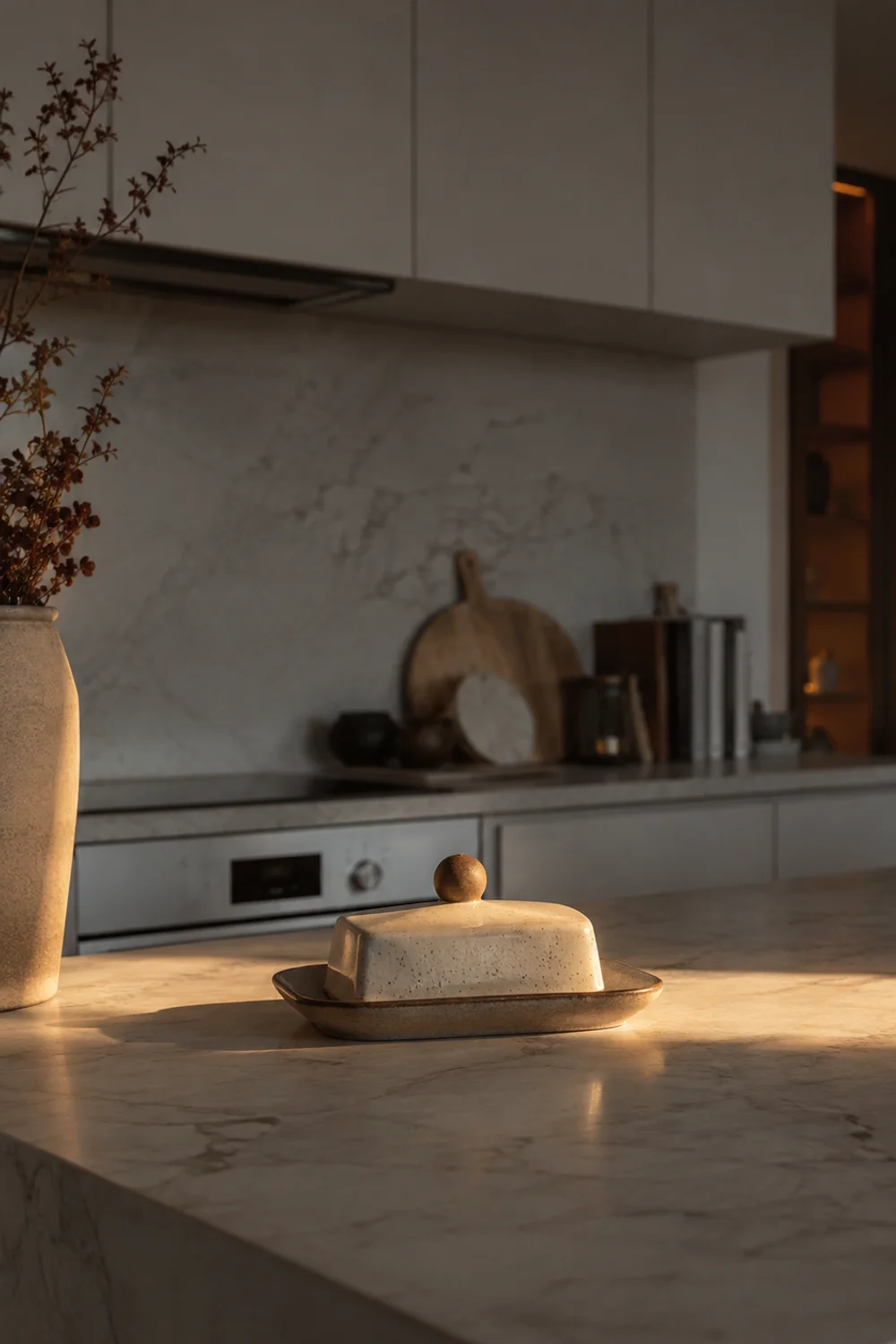
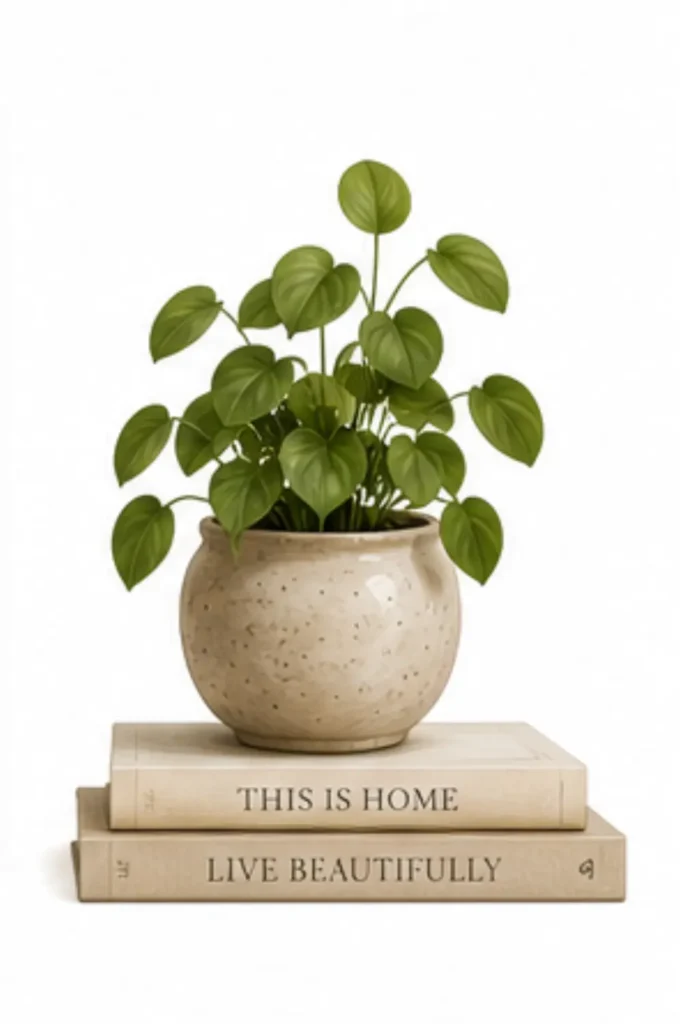
It’s worth starting small enough that the exercise itself feels low-stakes. A single warm, handmade object left out on an open counter, something you’d otherwise keep tucked away in a cabinet, is often enough to prove the theory before you commit to anything larger.
Notice how differently the room reads with even that one small, tactile object in view; that shift, in miniature, is exactly what the rest of this article scales up.
2. The Cheapest Lever: Warming Up Your Light Temperature
 Save it
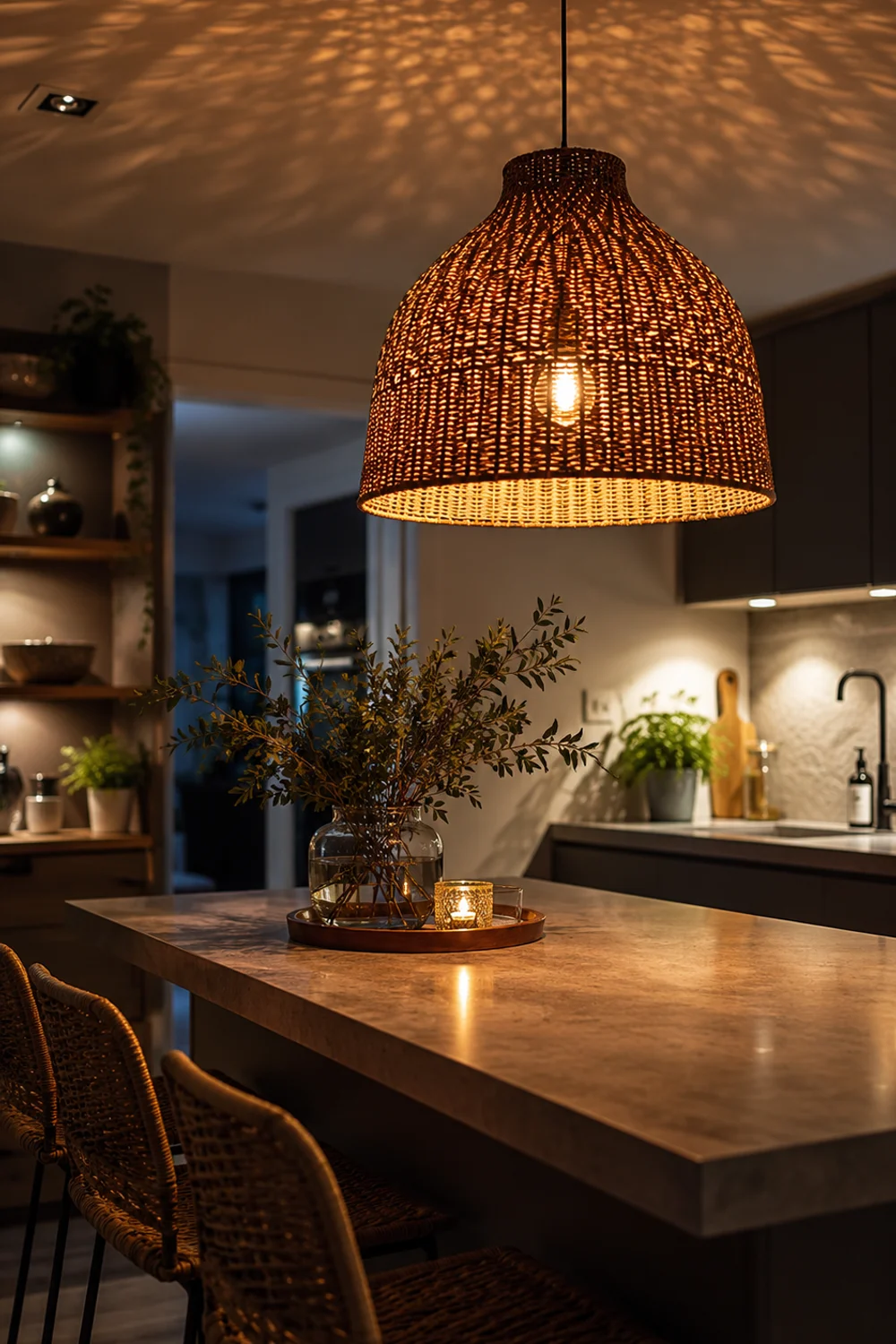
If you fix exactly one thing in this entire article and nothing else, make it this. Light color temperature, measured in kelvins, does more to determine whether a room feels cozy or clinical than almost any material choice, and it’s also the fastest and least expensive lever available to you. A kitchen lit at 4000K or above, the crisp, slightly blue-white light common in builder-grade fixtures, will read as cold no matter what color the cabinets are. Drop that same room to 2700K, and the identical cabinets, the identical countertop, suddenly look like they belong in a different, warmer photograph.
The free version costs you nothing but a few minutes: check the bulbs you already have. Most screw-in bulbs list their Kelvin rating right on the packaging or base, and if yours read 4000K or 5000K, that alone may be the single biggest reason your neutral kitchen feels sterile. Swapping to 2700K bulbs in your existing fixtures is often a five-dollar fix per bulb and an immediate, visible shift by that evening.
The low-cost swap layer adds a second light source rather than replacing your only one. Overhead lighting alone, no matter how warm the bulb, tends to flatten a room; it’s the single uniform source that reads as clinical, not just the color temperature. A plug-in sconce, a small lamp on an open shelf, even battery-powered puck lights under a cabinet, breaks that uniformity and adds the kind of pooled, uneven light that reads as lived-in rather than showroom-lit.
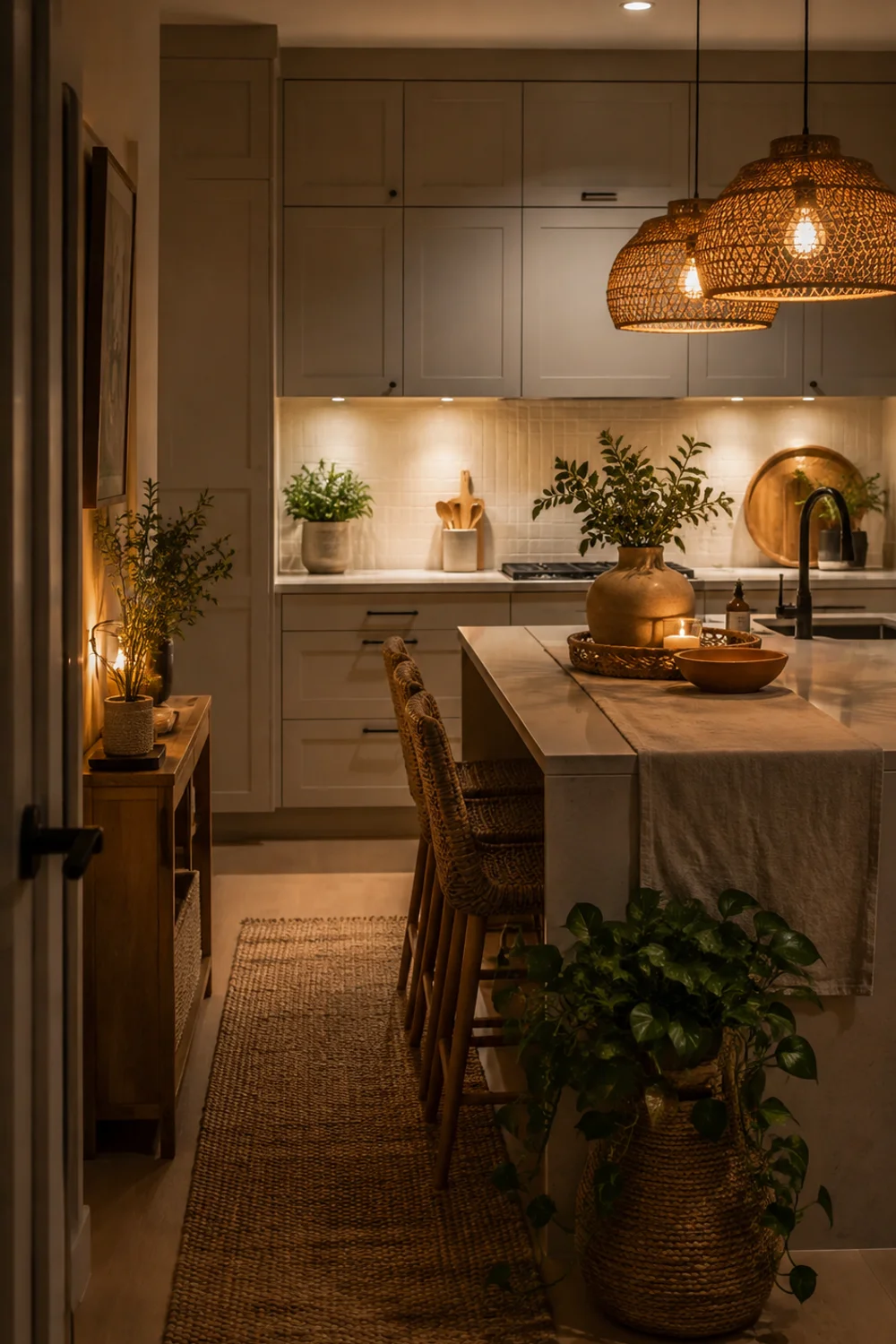
For the splurge tier, a genuinely warm, textural fixture like a woven rattan pendant does two jobs at once: it throws dappled, warm-toned light through its shade, and it introduces a natural material and a handmade silhouette into a room that might otherwise be all hard edges. Hung over an island or a breakfast nook, it becomes the room’s one clear focal point, the kind of fixture people notice in a photograph before they notice anything else in the frame.
3. Textiles: The Fastest, Lowest-Cost Way to Add Warmth
 Save it
No category of change delivers more visible coziness per dollar than textiles, and no category is easier to get wrong by skipping the step that makes it work. Before you add a single soft object to a kitchen, the surfaces need room to hold it. A crowded counter absorbs a new towel or runner without anyone noticing it’s there; a genuinely clear one lets that same object read as a deliberate styling choice rather than one more thing competing for attention. If your counters are already buried, How to Create a Clutter-Free Kitchen You Actually Enjoy is worth working through first, since every textile layer in this section depends on having somewhere quiet to land.
Once there’s room, the free tier is simply rotation: pull whatever soft, warm-toned textiles already exist elsewhere in your home, a linen napkin, a woven placemat, a small throw from another room, and bring them into the kitchen for a week. You’ll know almost immediately whether the room responds to that kind of softness, before spending anything to find out.
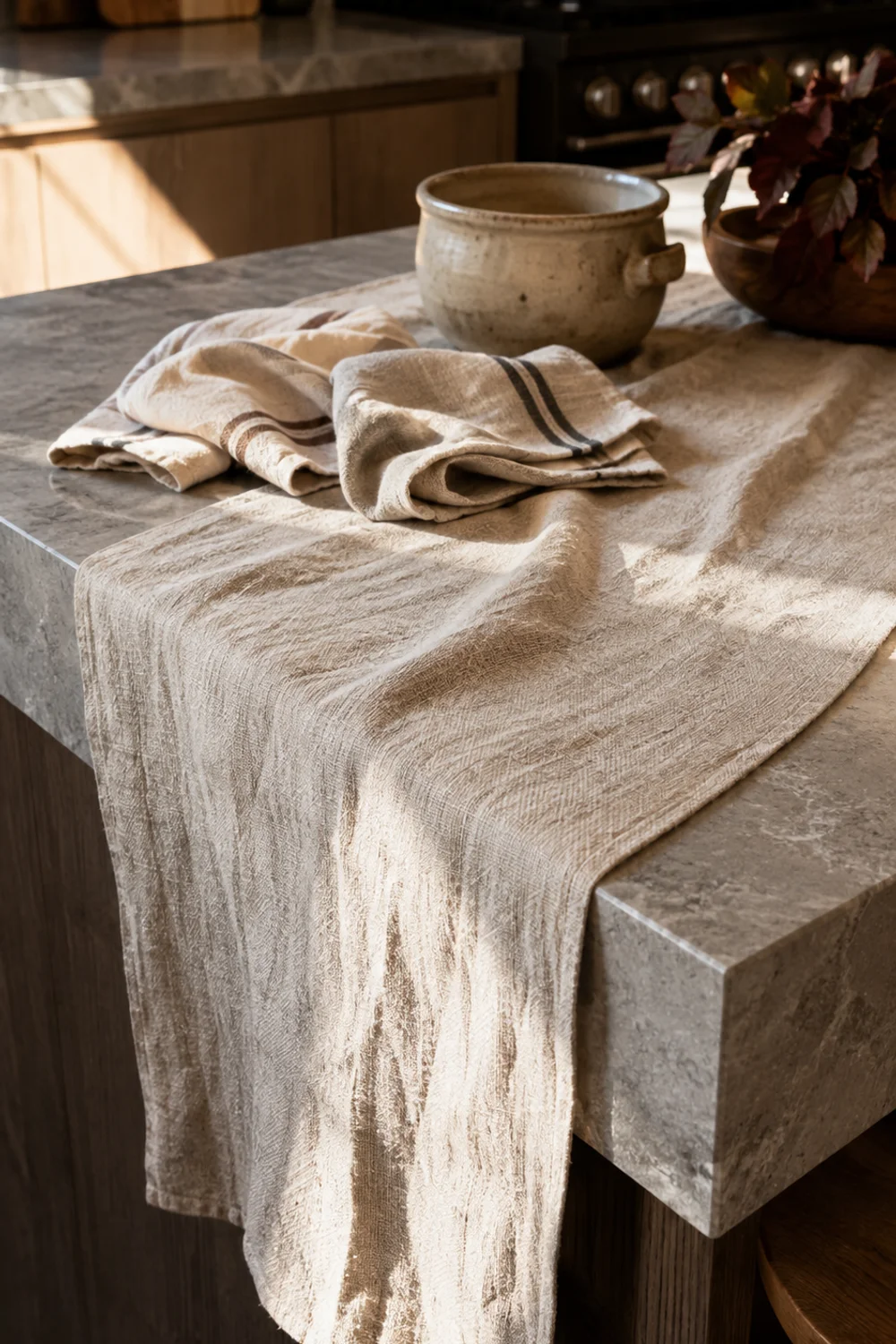
The low-cost swap is a genuinely new textile chosen specifically for the kitchen rather than borrowed. A textured cotton or linen table runner across an island or breakfast table softens the hard line of stone or laminate underneath it in a way paint never will, and it’s inexpensive enough to change seasonally without a second thought.
Drape it slightly askew rather than perfectly centered; a runner squared to the exact edges of a counter reads as staged, while one that falls naturally suggests someone actually uses the space it’s covering.
For the splurge tier, think beyond a single runner toward a coordinated textile system: a matching towel set, a runner, and cushions on any kitchen seating, all pulling from the same warm, muted palette without matching exactly. That level of intention is what separates a kitchen with one nice towel from one that reads as genuinely, consistently warm the moment you walk in, and it’s a considerably smaller investment than almost anything else on this list capable of producing that effect.
4. Bringing In Wood and Warm Materials Against Cool Cabinetry
 Save it
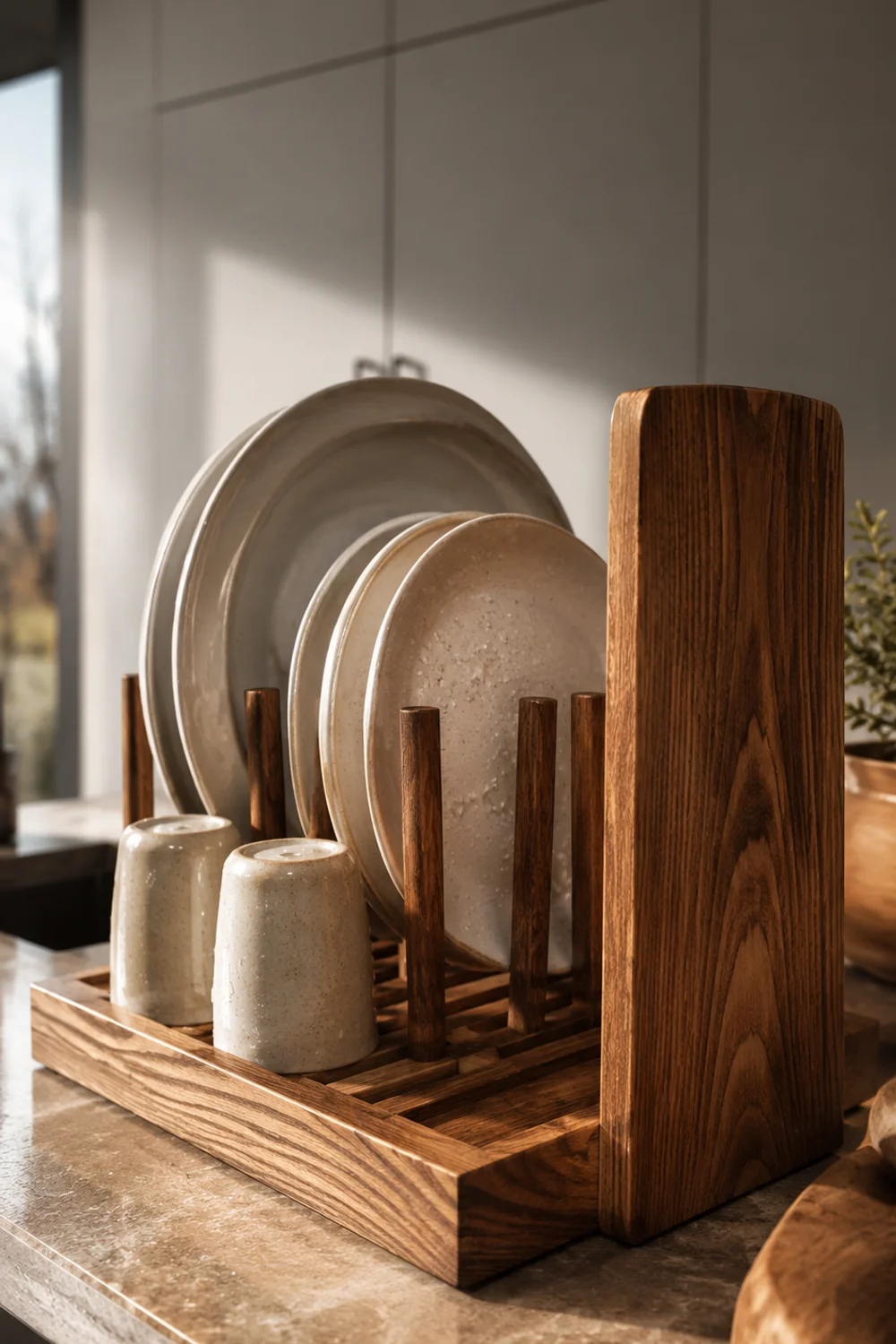
Cool-toned cabinetry, whether that’s a true white, a dove gray, or a pale greige, needs a material counterweight or it starts to read as sterile no matter how well the color itself was chosen. Wood does that job better than almost anything else, because it carries visible grain, natural variation, and a warmth that no painted surface can fake. The trick is that you don’t need to replace a single cabinet to get the effect.
The free version starts with what you already own. Walk through your kitchen and count the wood objects currently visible: a cutting board, a spoon, a bowl. If the answer is one or none, you’ve likely found a real source of the coldness, and the fix costs nothing but rearranging what’s already in a drawer onto a countertop where it can actually be seen.
The low-cost swap introduces one new, genuinely warm wood object chosen specifically to sit in view rather than hide in a cabinet. A solid wood dish rack does this unusually well, because unlike a cutting board that gets used and put away, a dish rack sits out permanently by function, which means the warmth it introduces is constant rather than occasional.
Position it somewhere it catches morning light rather than tucked into a dim corner; wood grain needs light to actually read as warm rather than simply brown.
For the splurge tier, this is where a genuinely architectural wood element earns its cost: open shelving in a warm-toned wood, a wood hood surround, or a substantial butcher-block insert set into a stone counter. These are the choices that show up in the kitchens people save and return to, precisely because the warmth isn’t an accessory sitting on top of a cool room, it’s built into a fixed surface the room can’t be photographed without.
5. Softening the Window: Curtains, Not Just Blinds
 Save it
Kitchen windows get treated as purely functional far more often than windows in any other room, left bare or covered with a hard roller blind that does the job of blocking light and nothing else. That’s a missed layer, because a window is one of the largest surfaces in most kitchens, and a bare or hard-treated one reads as unfinished in exactly the way an unstyled shelf does.
The free tier here is simply removing what isn’t working: a dated or overly clinical blind, a window left entirely bare, and seeing how the room feels with nothing there at all for a few days before adding anything new. Sometimes the absence itself is the problem, and noticing that clarifies what to look for next.
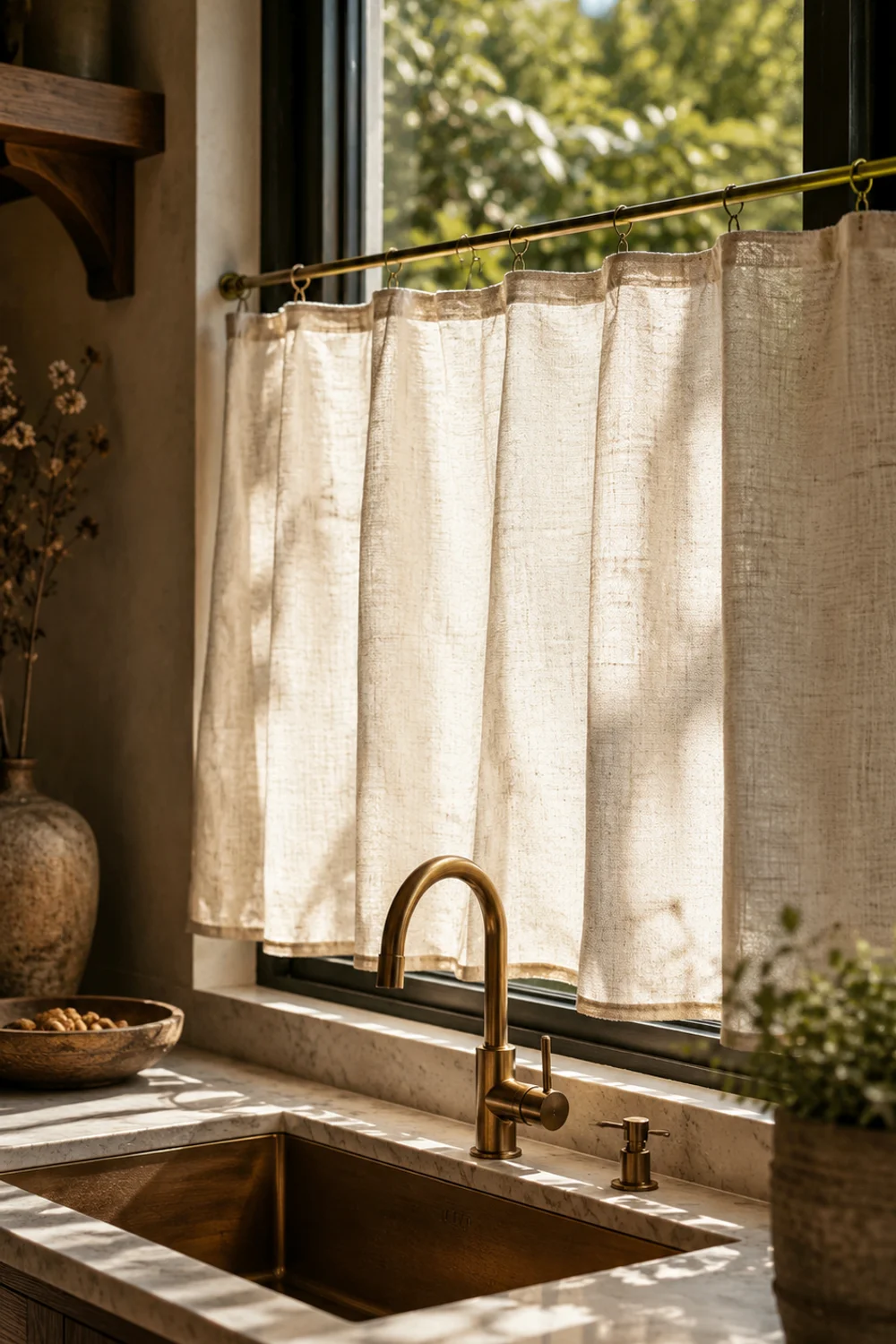
The low-cost swap is a simple, unlined linen curtain hung on a slim rod, kept short enough to clear a counter or sink if the window sits above one. Unlike a full blackout drape meant for a bedroom, a kitchen curtain’s job is softness and light diffusion, not room-darkening, which means an inexpensive, lightweight linen panel does the job completely.
Hang it on a simple brass or matte black rod set close to the window frame rather than wide of it; a kitchen curtain reads best when it looks like a considered accent, not a full drapery statement borrowed from another room.
The splurge tier layers a second treatment behind or alongside the curtain: a woven wood shade for texture and daytime privacy, paired with the linen panel for softness in the evening. Two layers working together, one textural and structured, one soft and loose, is what gives a window real depth instead of a single flat treatment, and it’s the same principle hotel kitchens and high-end rentals rely on to make a purely functional window feel finished.
6. Displayed Ceramics and Stoneware That Soften Hard Surfaces
 Save it
A kitchen built from stone, tile, and steel is a room made almost entirely of hard, reflective surfaces, and hard surfaces read as cold regardless of their color because they offer nothing for the eye to settle into. Ceramics and stoneware solve this specific problem better than almost any other category, because their surfaces absorb light rather than bounce it, and their slight imperfections read as handmade rather than manufactured.
This is a different approach from the rule-of-three, tightly grouped vignettes that guides used elsewhere; The Secret to Beautiful Yet Functional Kitchen Counter Decor treats counter styling as a composition problem to be arranged and balanced, whereas warmth here comes from a few honest, used-daily objects left visible rather than a curated cluster assembled for a photograph.
The free tier is, once again, an audit of what you already own. A ceramic mixing bowl usually lives in a cabinet; leaving it out on the counter, even briefly, changes the room’s texture without spending a cent. The same goes for a stoneware mug or bowl set that gets used daily anyway.
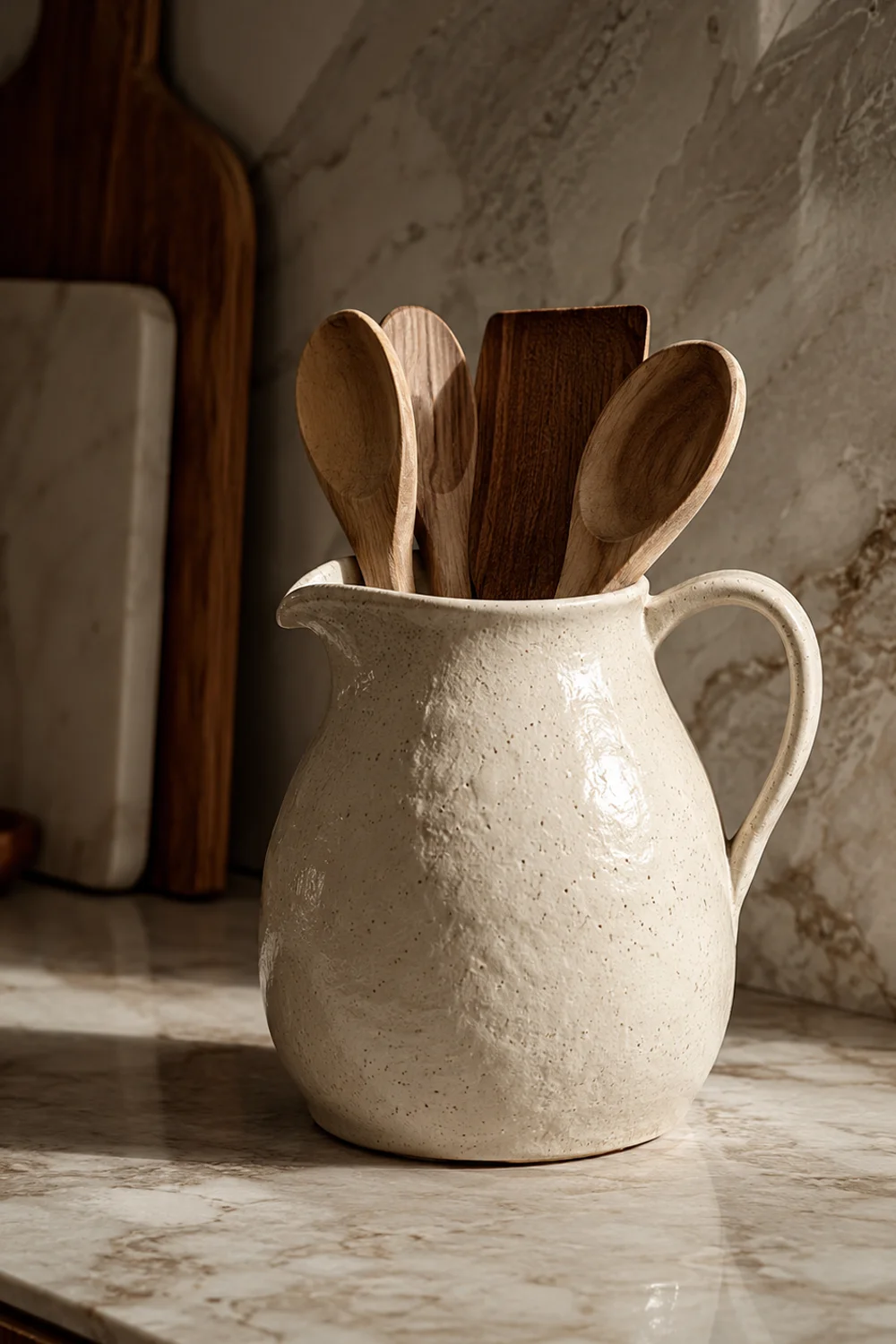
The low-cost swap is a single, well-chosen stoneware piece meant to live permanently in view rather than in a cabinet.
Use it for something real, water on the counter, wooden spoons and spatulas standing upright, rather than as pure decoration; a functional object left out reads as lived-in in a way a purely decorative one never quite manages.
The splurge tier is a small, considered collection: three or four pieces in the same glaze family but different shapes, built up slowly rather than bought as a matching set. That slight variation in shape while staying consistent in tone and material is what separates a kitchen that looks intentionally collected from one that looks like it ordered a set off a single page, gathered over seasons rather than in a single afternoon of shopping.
7. The Rug Underfoot: A Kitchen's Most Overlooked Cozy Layer
 Save it
Ask someone to name every soft surface in their kitchen and a rug rarely makes the list, largely because kitchens have historically been treated as too wet, too high-traffic, or too prone to spills to bother. That reasoning made more sense before washable, low-pile options became widely available, and skipping the floor layer entirely means skipping one of the largest surfaces in the room, one that sits directly beneath your feet every single time you’re standing at the counter or the sink.
The free tier tests the theory before committing to it: borrow a small rug from another room, a bath mat even, and stand on it at the sink or stove for a day or two. The physical difference, warmth underfoot instead of cold tile or stone, tends to be immediate and obvious in a way that’s hard to predict from a photograph alone.
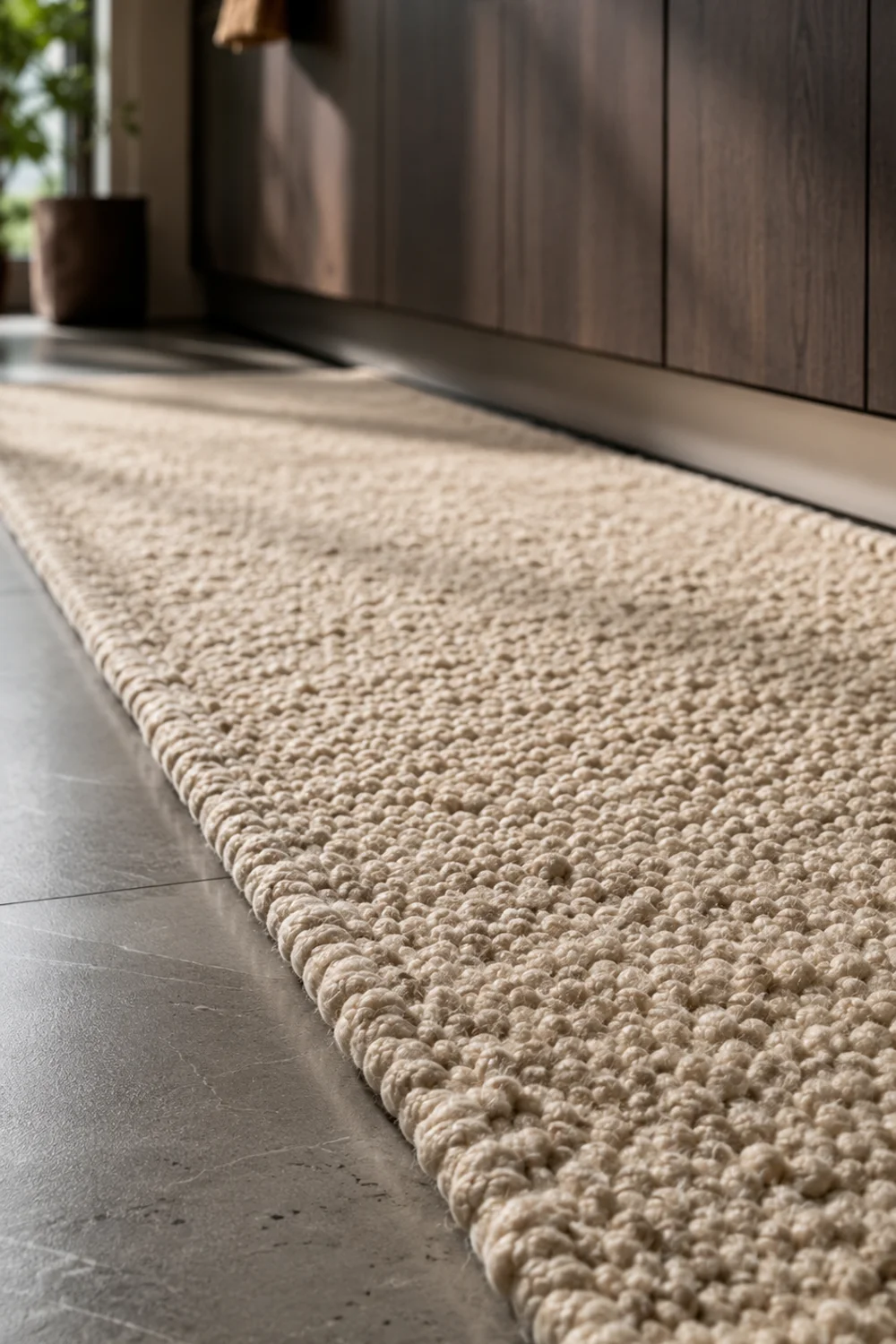
The low-cost swap is a genuinely kitchen-appropriate runner rug, low-pile enough to wipe clean and thin enough not to become a tripping hazard at a cabinet edge, placed at the spot where you actually stand most, typically the sink or the main prep run rather than the center of the floor.
Size it to the actual standing zone rather than the full length of the counter run; a rug that’s too long reads as an afterthought dragged from another room, while one sized precisely to where you work reads as considered.
The splurge tier is a genuinely substantial wool or wool-blend rug with real pile depth, chosen and cared for the way you’d treat a living room rug rather than a disposable kitchen mat. It costs more and asks for more maintenance, but the payoff, a floor that’s genuinely soft and warm underfoot rather than merely less cold, is a difference you feel with every barefoot morning in the room.
8. Hardware and Fixtures: The Low-Cost Swap With Outsized Impact
 Save it
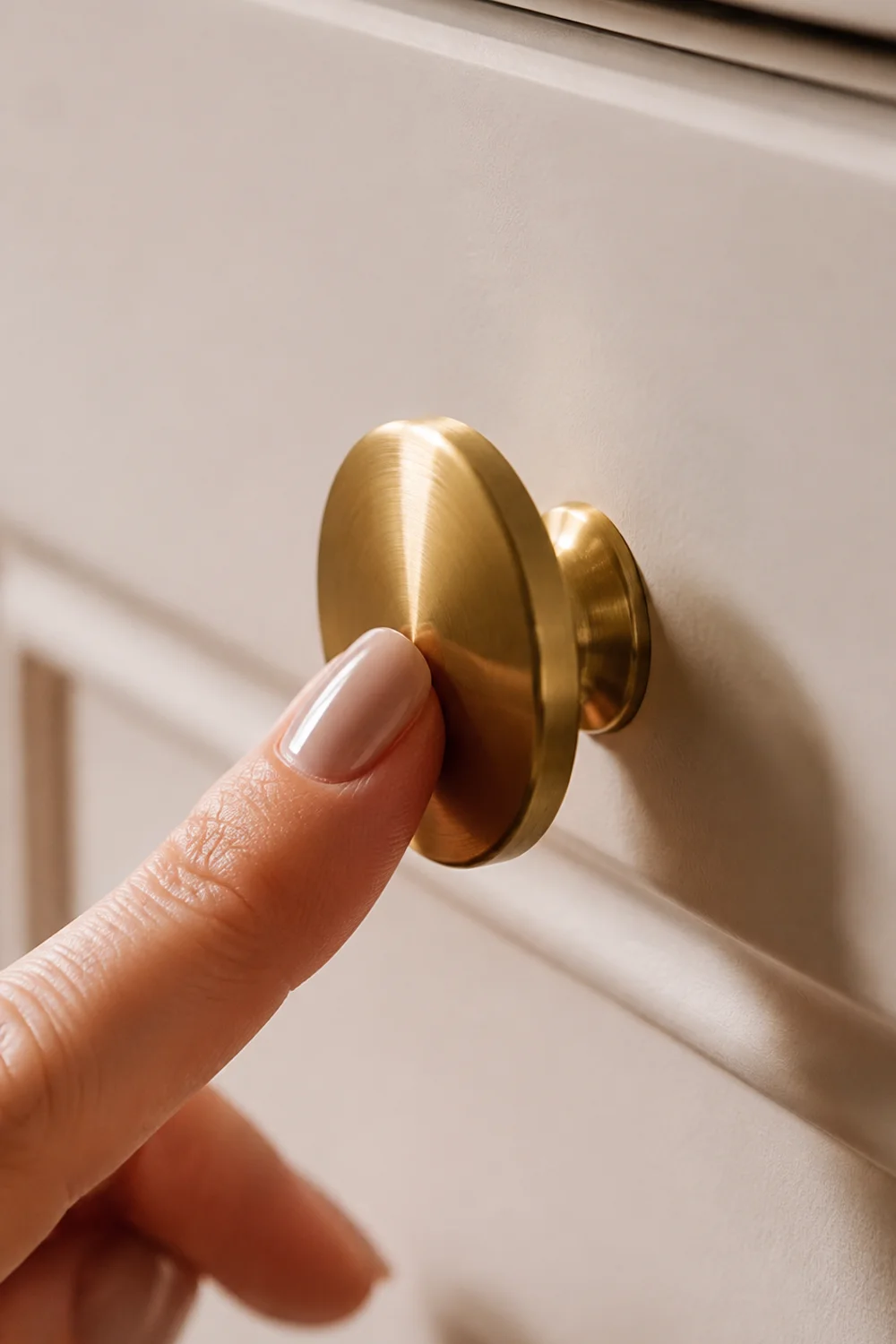
Hardware is one of the few changes in a kitchen that delivers a full visual shift for the cost and effort of an afternoon with a screwdriver, and it’s routinely underestimated because a single knob or pull looks insignificant in isolation. Multiply that single piece by every cabinet and drawer in the room, though, and hardware finish becomes one of the largest connected surfaces of metal a kitchen has, right alongside the faucet and any visible light fixtures.
Where a cooler, more minimal approach to a kitchen counter, the kind 15 Minimalist Kitchen Counter Styling Ideas You’ll Love pushes toward, treats a single consistent finish as a way to remove visual noise entirely, the goal here is different: choosing a warm finish specifically because warmth, not neutrality, is the point.
The free tier costs nothing but soap and water: clean your existing hardware thoroughly. Cooking grease and dust dull a finish’s warmth more than people expect, and hardware that looks dated is sometimes simply hardware that hasn’t been cleaned in longer than anyone wants to admit. A finish restored to its actual shine can buy you months before a full swap feels necessary at all.
The low-cost swap is a full hardware change to a genuinely warm metal finish, chosen deliberately rather than defaulting to whatever finish happened to be cheapest at the hardware store.
A screwdriver and an afternoon is usually the entire cost of installation beyond the hardware itself, which makes this one of the highest-impact-per-dollar changes available in the whole kitchen, warm or cool palette alike. Keep the old hardware in a drawer rather than discarding it; renters in particular will want it back before moving out.
The splurge tier extends the same warm-metal logic to your faucet and any exposed light fixtures, so the warmth reads as one coordinated decision rather than a single warm knob surrounded by cooler-toned fixtures elsewhere in the room. Consistency across every visible piece of metal is what makes the choice feel intentional rather than partial, the kind of detail a guest registers without ever consciously naming it.
9. Creating a Seat: Why a Cozy Kitchen Invites You to Linger
 Save it
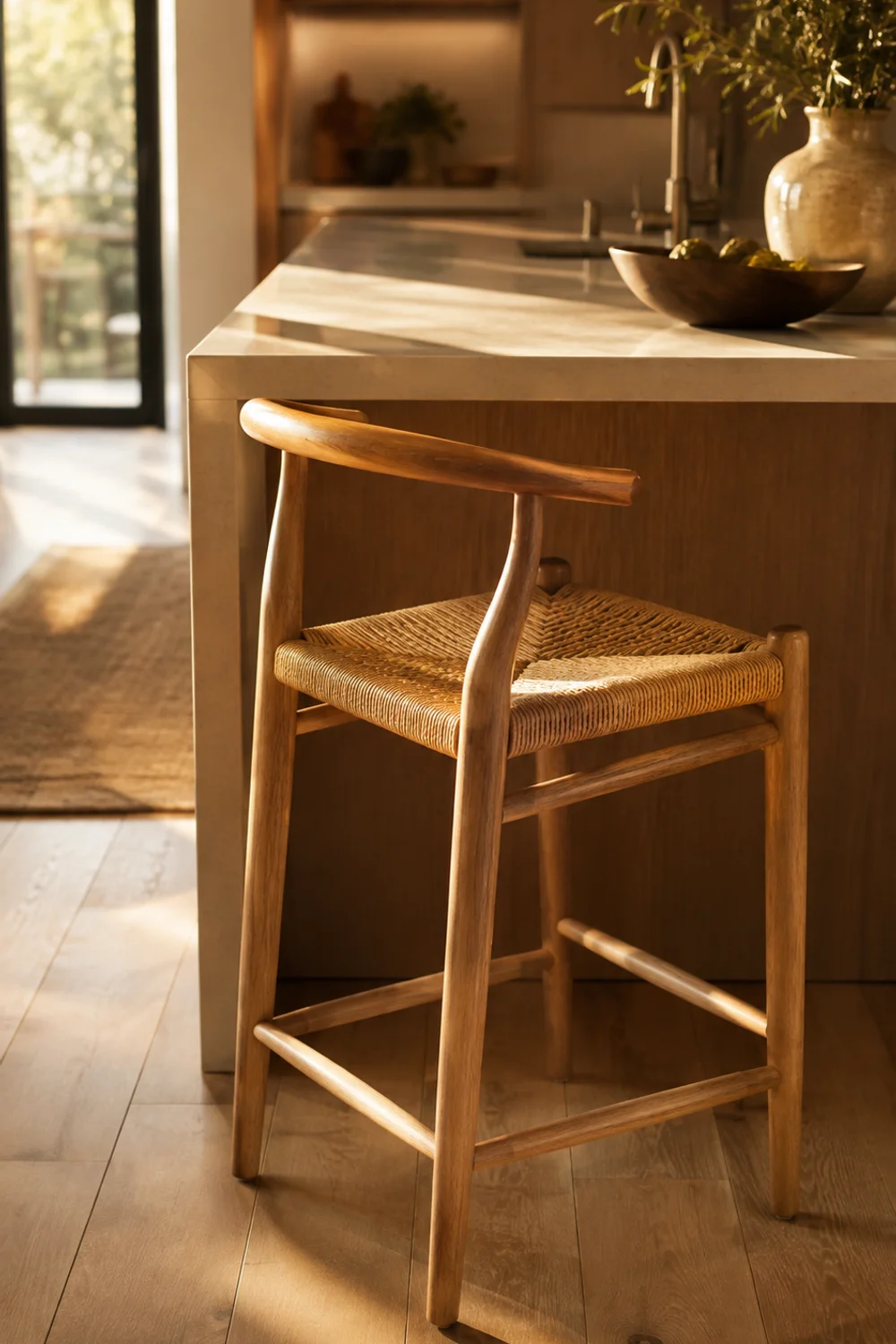
A kitchen without anywhere to sit is a kitchen designed purely for transit, somewhere you pass through on the way to the table rather than a room worth staying in. Seating changes that math entirely, and it doesn’t require an island or a full built-in banquette to do it. A single well-placed stool near a counter, a window, or an open stretch of floor signals that the room is meant to be occupied, not just used.
Space constraints are the usual objection, and they’re worth taking seriously rather than dismissing; a kitchen genuinely too tight for a fixed seat benefits from the kind of flexible, foldaway thinking Modern Kitchen Decor Ideas for Small Spaces to Copy Now covers, where furniture earns its place by disappearing when it isn’t needed rather than by being ruled out entirely.
The free tier repurposes a chair that already exists elsewhere in the house, pulled into the kitchen for a week to test whether the spot you have in mind actually gets used before buying anything new for it.
The low-cost swap is a genuinely warm, textural stool, something with a woven or natural-material seat rather than cold metal or hard plastic, placed at a counter edge or in an underused corner.
Angle it slightly toward the room rather than squared to the counter; a stool angled outward reads as an invitation to sit and talk, while one pushed flush against the edge reads as purely functional, there for balance while reaching a high shelf and nothing more.
The splurge tier is a genuine seating moment, a small banquette, a proper breakfast nook, or a pair of upholstered stools built for actually lingering rather than a quick perch. This is the tier that turns a kitchen from a room you cook in into a room you spend an unplanned hour in on a Sunday morning, coffee in hand, no particular task underway.
10. Greenery and Organic Texture, Chosen for Warmth Not Decoration
 Save it
Living, growing things do something no manufactured object can: they change slightly day to day, which reads to the eye as evidence that a room is genuinely inhabited rather than staged for a single photograph. A kitchen with nothing organic in it, no plant, no visible produce, no natural fiber texture, tends to feel suspended in time, correct but strangely static.
The free tier is simply visibility: if you already keep herbs, fruit, or produce in the kitchen, make sure at least some of it is out where it can be seen rather than sealed inside a drawer or opaque container. A bowl of lemons on a counter does real, immediate work that no purchase can replicate, and it costs nothing beyond moving something you already own six inches into view.
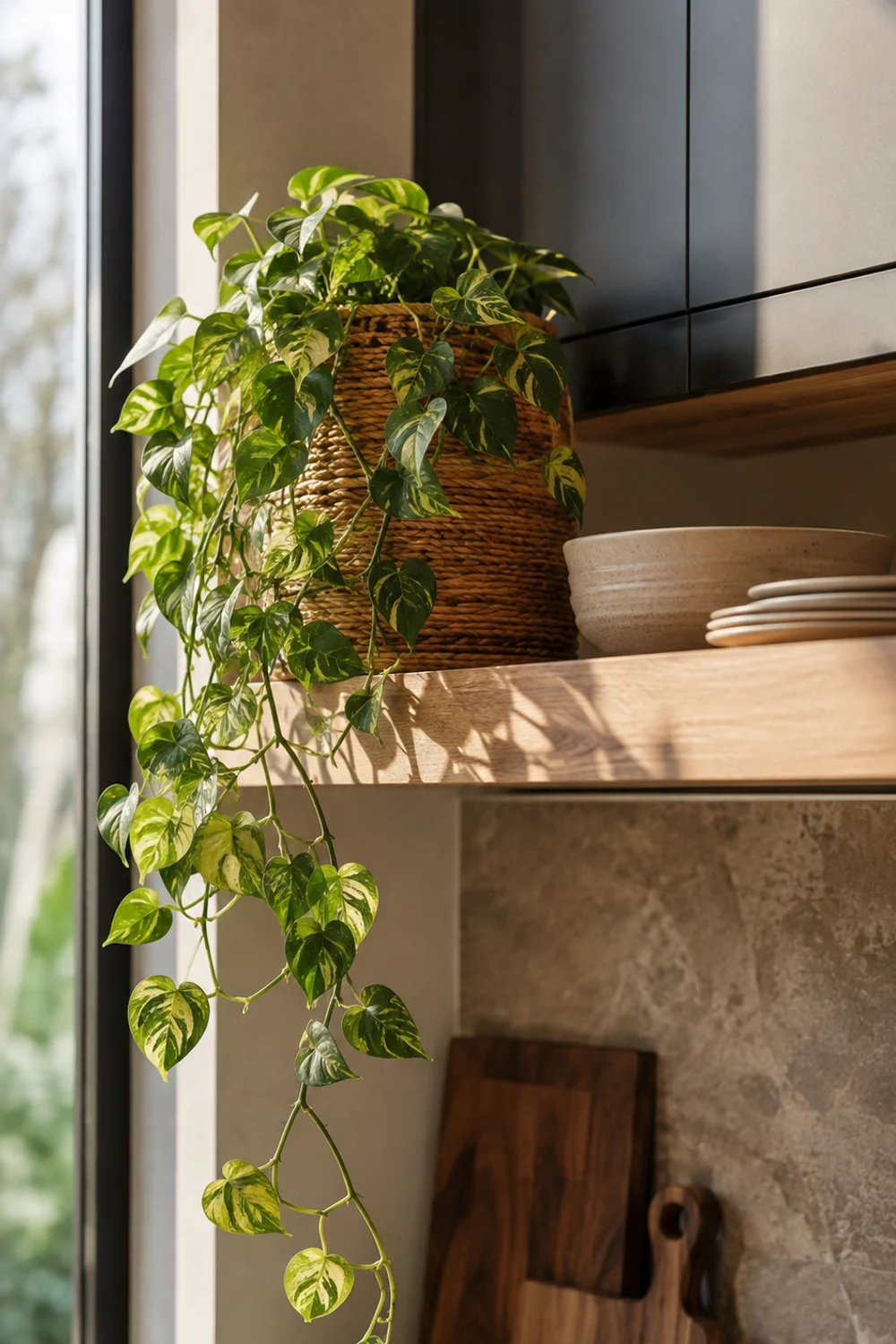
The low-cost swap introduces one genuinely living plant, chosen for a spot with real light rather than the darkest corner available, since a dying plant undercuts the entire warmth argument faster than an empty counter would have.
Hang it where its leaves can trail down an open shelf edge or beside a window rather than sitting stiffly upright; the trailing, slightly unruly shape is what reads as organic rather than arranged.
The splurge tier commits to a small collection across the room, a trailing plant near the window, a sturdier upright variety on a shelf, and a few sprigs of something fresh, herbs or a small seasonal branch, kept in a vase near where you cook. Spread across a few zones instead of concentrated in one, greenery stops reading as a single decorative gesture and starts reading as a genuine, ongoing part of how the room lives. Rotating which sprig or stem sits in the vase as the seasons change keeps that one small zone from ever going stale, at almost no ongoing cost.
11. Building Your Cozy Kitchen in Three Budget Tiers
 Save it
Every section above works as a standalone fix, but the real transformation happens when you treat them as a sequence rather than a menu to pick from once. Start with the free tier across every category, light bulbs checked, textiles rotated in from elsewhere, wood objects pulled out of drawers, before spending a single dollar. That pass alone resolves a surprising percentage of what makes a neutral kitchen feel cold, because most of the coldness comes from absence, not from anything actively wrong.
Once the free tier is exhausted, move to the low-cost swaps in the order that matches your actual budget and patience, not necessarily the order they appear in this article. Someone who cooks constantly might prioritize the stoneware and textile layers first, since those get touched daily; someone who entertains more than they cook might start with lighting and seating instead, since those shape how a guest experiences the room within the first thirty seconds of walking in.
A small, functional object like this one is a useful gauge for the whole approach: inexpensive, genuinely used rather than purely decorative, and warm in material without asking for a renovation-level commitment.
The splurge tier isn’t a requirement, and treating it as one misses the entire point of this framework. Some of the kitchens that read as the coziest online have never touched a single splurge-tier item; they simply did every free and low-cost layer thoroughly and consistently, rather than doing one splurge item and calling the room finished. Coziness is cumulative. It rewards a kitchen where five or six small, considered layers are working together far more than one where a single expensive fixture is carrying the entire emotional weight of the room alone, quietly failing at the job no single object was ever meant to do by itself.
Common Mistakes
1. Fixing the palette again instead of the missing layer
The instinct when a neutral kitchen feels cold is often to repaint, to second-guess a color choice that was never actually the problem. Coldness usually comes from an absence of texture, light layering, and organic material, not from the wrong shade of white. Repainting a room that already has a sound palette wastes both money and the chance to fix what’s actually causing the feeling.
2. Treating every fix as an all-or-nothing renovation
It’s easy to assume coziness requires new cabinetry, a new floor, or a full remodel, and that assumption is exactly what keeps people stuck with a kitchen they don’t love. Almost every lever in this article has a free or near-free entry point. Skipping straight to the idea of a renovation, then abandoning the project because the renovation isn’t affordable right now, throws away every smaller win along the way.
3. Adding warmth in one category and stopping
A single warm pendant light in an otherwise hard, textureless kitchen reads as a nice fixture rather than a warm room, because one layer isn’t enough to shift the overall feeling. Coziness is cumulative across categories, light, textile, material, and living elements together, not a single hero purchase expected to carry the whole effect on its own.
4. Choosing a dying or struggling plant over no plant at all
A wilting, half-dead plant undercuts a room’s warmth faster than having no plant does, because it reads as neglect rather than life. Before adding greenery, be honest about the actual light in the spot you have in mind, and choose a plant suited to it rather than the one that looked best in the store.
5. Over-styling instead of using what already gets touched daily
Objects that get handled and used regularly, a mug, a wooden spoon, a favorite bowl, read as warmer than identical objects placed purely for display, because daily use leaves visible, honest signs of a life happening in the room. Styling a kitchen entirely with untouched decorative objects can end up feeling just as staged as the cold, empty version it was meant to replace.
Frequently Asked Questions
What’s the single fastest way to make a neutral kitchen feel cozier without spending money?
Check your light bulbs’ color temperature first. A kitchen lit at 4000K or higher will read as clinical regardless of palette or styling, and swapping to warm 2700K bulbs in your existing fixtures is a same-day, near-free change that most people notice immediately.
Do I need to add color to make a neutral kitchen feel warm?
No. Warmth comes from texture, light temperature, natural material, and organic elements far more than it comes from hue. A kitchen can stay fully neutral in palette and still feel deeply cozy once those sensory layers are in place.
How much should I budget for a meaningful change if I can only do one tier?
The low-cost swap tier in each section is designed to be the most efficient use of a limited budget; most single swaps cost well under a large purchase and deliver a visible, immediate shift. Doing the low-cost tier across two or three categories tends to outperform a single expensive splurge item done alone.
Is a rug really worth adding to a kitchen?
Yes, particularly at the spot where you stand most, usually the sink or the main prep area. A washable, low-pile runner rug solves the practical concerns that historically kept rugs out of kitchens while still delivering real warmth underfoot.
How do I know if my kitchen needs more light layering or more texture first?
Stand in the room at the time of day you use it most and notice what’s missing rather than what’s wrong. A room that feels flat and shadowless usually needs light layering first; a room that feels sterile despite good lighting usually needs texture and organic material more urgently.
Final Thoughts
A cozy kitchen was never actually about the palette, and it was never strictly about the budget either, even though both get blamed constantly. It’s about how many of the small sensory layers, light, texture, material, life, are actually present in the room, and whether they’re working together instead of standing in isolation. A neutral kitchen with warm light, one soft textile, a few honest wood and ceramic objects, and something living on a shelf will consistently feel warmer than an expensive kitchen missing all four, no matter what the paint color says on the can.
Start with the free tier and actually finish it before reaching for your wallet. Notice what changes, and let that tell you where your next dollar genuinely belongs rather than guessing. The kitchens that read as effortlessly cozy were rarely finished in a single weekend or a single purchase; they were layered in gradually, each addition chosen because it solved something specific rather than because it looked good in a photograph. Your kitchen doesn’t need a bigger budget to feel warm. It needs the next layer, whichever one you’re actually missing right now.
This post contains affiliate links. I may earn a small commission at no extra cost to you.
Get cozy inspiration delivered to your inbox.
✓ 14-page beautifully designed ebook
✓ Cozy decorating ideas
✓ Practical room-by-room inspiration
You’re in! 🎉
Thanks for joining the NestFlowHome community!
Your free ebook is already on its way to your inbox. If you don’t see it within a few minutes, please check your Promotions or Spam folder.
Join the NestFlowHome community for weekly decorating inspiration.

Timeless home decor ideas and slow living inspiration for a calm, beautiful life.