

15 Layered Bedding Ideas That Look Like a Luxury Hotel You Will Absolutely Love
By Emily | July 21, 2026
There is a particular stillness to a hotel bed that has nothing to do with the sheets themselves. You notice it before you’ve touched anything — the way the light falls across it in a single unbroken plane, the way the pillows rise in a deliberate cascade instead of a pile, the way the whole thing looks assembled rather than simply made. Most people walk into that room, take a photo, and leave convinced the secret is a better duvet. It isn’t. A hotel bed is not one good product wearing a crown; it is a small, exact system, built in a specific order, with proportions that were decided on before a single thread count was chosen.
That distinction matters because it changes what you actually need to do at home. You do not need to spend more. You need to spend correctly, and in sequence — because a $40 throw placed with real intention will outperform a $400 duvet stacked without any logic at all. Housekeeping teams in luxury properties don’t improvise this. They follow a build, the same way a chef follows a plate spec, and the result reads as effortless precisely because nothing about it was left to chance.
This is a walk through that build, piece by piece — the order layers go down in, the math behind why a duvet looks generous instead of skimpy, the pillow counts that actually work in a real bedroom, and the small technical choices that separate a bed that photographs well from one that simply feels right to fall into. None of it requires a renovation. Most of it requires undoing habits you didn’t know you’d picked up — buying the top layer first, matching everything too exactly, skipping the layer nobody sees. By the end, you’ll have a system you can rebuild in ten minutes every time you change the sheets, not a look you have to re-engineer from a magazine photo.
1. Build From the Bottom, Not the Top
 Save it
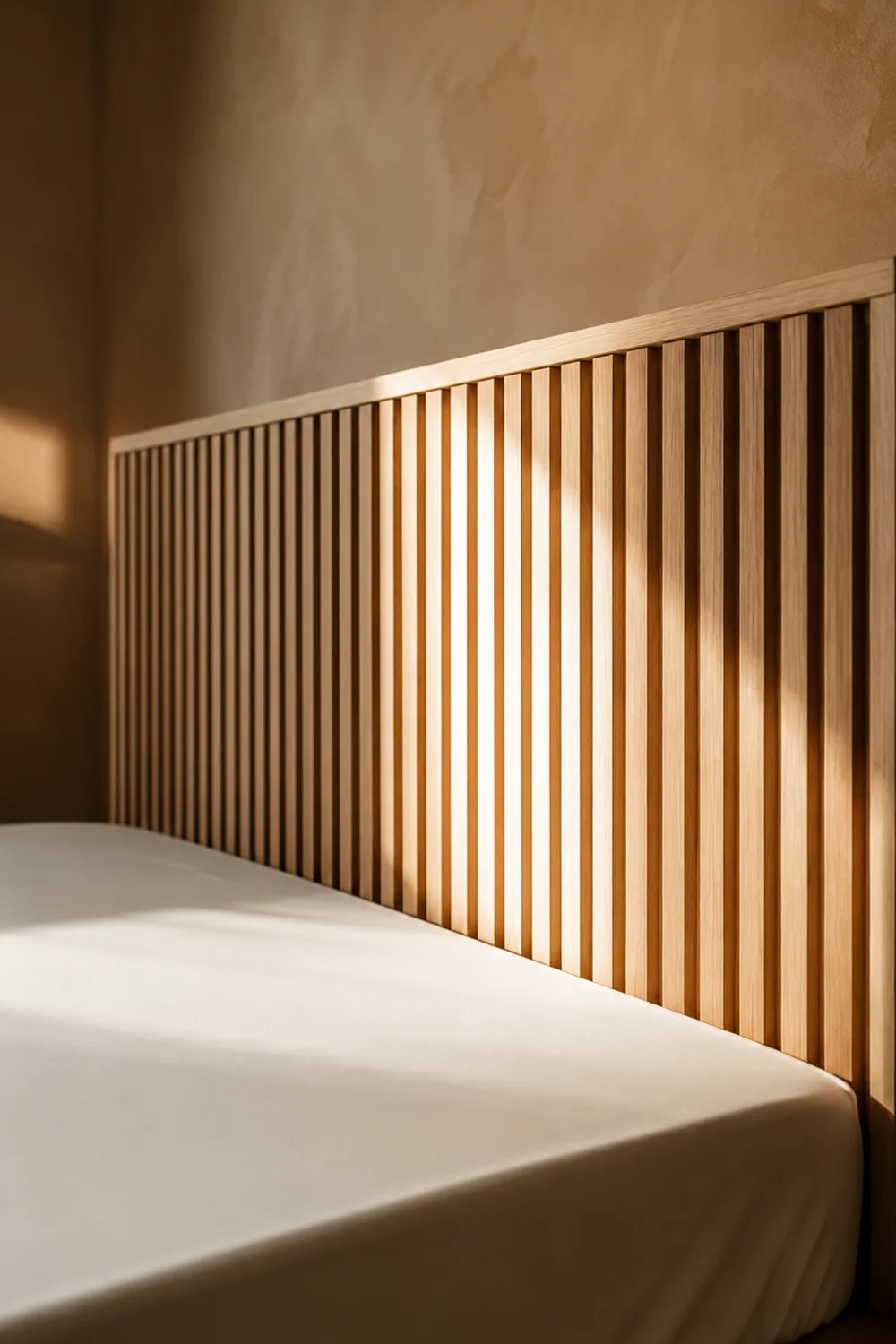
Almost everyone shops for a bed backwards. They fall in love with a duvet cover in a store and build everything else around it, which means the one component that actually determines how the bed looks and feels — the fitted sheet, the mattress protector, the foundation — gets whatever was already in the closet. Hotels do the opposite. The base layer is chosen first because everything stacked on top of it depends on how it behaves: how taut it stays through a full night of movement, how it takes a crease, how much bulk it adds before the visible layers even begin.
Start with a fitted sheet that disappears — a smooth, low-bulk weave that sits flat under everything else rather than adding its own texture to the stack. If your base layer wrinkles or bunches, no amount of styling above it will read as crisp, because you’re building a precise structure on an uneven foundation, and every layer above it will inherit that same unevenness. This is also where a real headboard-to-mattress relationship starts to matter: a solid frame that holds the mattress at the correct height changes how every layer above it drapes and falls, and a frame with any flex or sag will telegraph straight up through even the best-chosen bedding.
Think of the base the way you’d think of a canvas before painting — invisible in the final image, but the reason everything above it sits the way it does. Once that foundation is flat, taut, and quiet, you’re free to layer with confidence, because you’re not fighting a lumpy starting point every time you smooth a duvet over it. This single change — choosing the base layer deliberately instead of defaulting to whatever’s on hand — is the one habit that makes every other idea on this list actually work, and it’s also the cheapest fix on the entire list, since a well-fitted sheet costs a fraction of what a new duvet does.
2. The Fill Weight Is Doing More Work Than the Color

 Save it
People describe hotel duvets as “fluffy,” but fluffiness isn’t a fabric quality — it’s a fill measurement. A duvet’s loft, the height it holds when nothing is pressing down on it, comes from fill power and fill weight working together, not from the cover fabric or the color you chose. A thin, low-fill insert stuffed into a beautiful cover will always look flat under photography and feel thin against your hand, no matter how expensive the shell fabric was or how many threads per square inch the packaging advertised.
High fill power means each cluster of down traps more air per ounce, so you get loft without the heaviness of a low-grade fill piled on to compensate. This is why a well-made hotel duvet can look enormous and cloud-like while still draping softly instead of sitting like a slab across the mattress. If you’ve already invested in a Calming Bedroom Ideas That Define the Best Wellness Design Inspiration approach to your room, this is where that thinking pays off in the bedding itself — loft and warmth aren’t just visual, they’re thermoregulating, and a properly filled insert keeps you at a stable temperature through the night instead of trapping heat unevenly in dense, low-quality pockets that leave some parts of the bed too warm and others too thin.
Buy the insert as its own decision, separate from the cover. This is counterintuitive if you’ve always bought duvets as a single boxed set, but it’s the single biggest lever in this entire list. A great cover on a mediocre insert photographs like a flat sheet with a pattern on it. A great insert under a plain white cover photographs like a cloud. Choose accordingly, and resist the urge to judge a duvet by the cover pattern alone — ask about the fill specification before anything else, the same way you’d ask about a mattress’s coil count rather than just its cover fabric.
3. Why Hotels Still Use a Top Sheet
 Save it
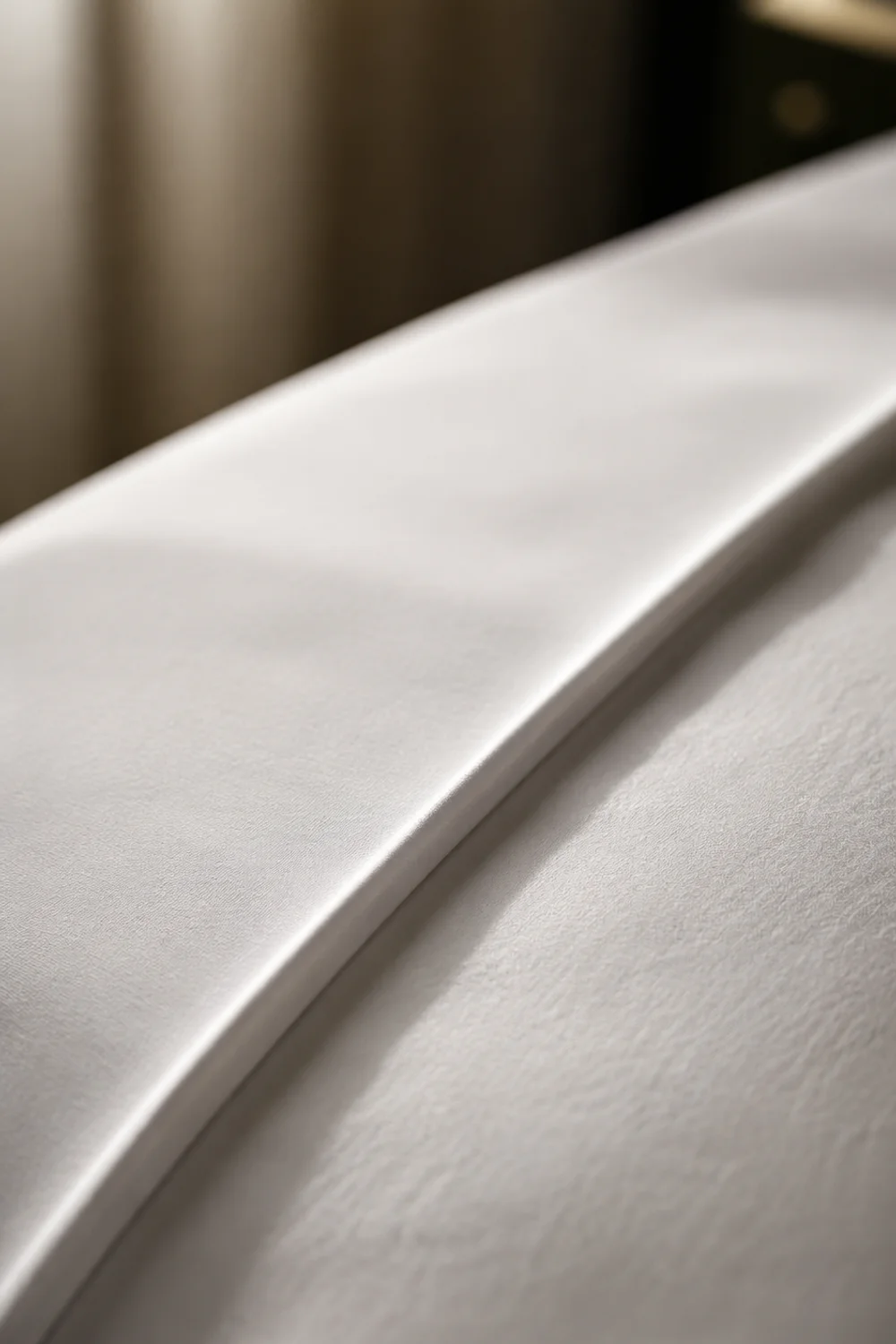
The flat sheet is the layer most home beds have quietly abandoned, and it’s also the layer doing the most invisible work in a hotel build. It sits directly against your skin, between you and the duvet insert, which means the duvet cover itself rarely needs washing as often — it’s protected from oils, sweat, and daily wear by a layer that’s far cheaper and faster to launder. But the styling reason matters just as much as the hygiene one: a crisp top sheet folded down over the duvet creates a clean horizontal band of contrast a few inches below the pillows, a visual pause that keeps the whole bed from reading as one undifferentiated mass of fabric stacked on top of itself.
The fold matters as much as the sheet itself. A generous crisp fold-down band, roughly six to eight inches, turned back over the top edge of the duvet, gives your eye a place to land before it travels down the rest of the bed. Too narrow and it disappears into the duvet line entirely; too wide and it starts competing with the duvet for visual weight, undermining the very contrast it’s meant to create. Iron or steam this fold specifically — it’s the single most visible crease in the entire composition, sitting right at eye level when you walk into the room, and a soft, uneven fold-down undoes the crispness of everything layered beneath it.
If you’ve skipped the top sheet for years because it felt like an extra step, treat this as the one habit worth reinstating first. It costs a single sheet and five extra seconds of folding each time you make the bed, and it’s the difference between a bed that looks intentionally built and one that looks like a duvet was simply thrown on after a long day.
4. The Proportion Math Nobody Talks About

 Save it
A duvet that looks generous instead of skimpy comes down to a measurement most people never check: overhang. This is how far the duvet drapes past the edge of the mattress on each side, and it’s the single fastest way to tell a styled bed from an unstyled one in a photograph, before you even notice the pillows or the color palette. Too little overhang and the mattress edges peek through, breaking the clean line hotels are so careful to protect. The right amount makes the bed look substantial without swallowing the frame entirely or dragging on the floor.
Aim for a drop of roughly twelve to sixteen inches past the mattress edge on the sides, and enough length to fully clear the foot of the bed with a soft fold rather than a taut stretch that pulls the whole duvet flat and lifeless. This is exactly the kind of detail that separates a merely cozy bedroom from one that reads as deliberately composed — the same instinct behind the How to Recreate the Cozy Bedroom Trends Everyone Is Saving in 2026 approach to volume and texture, where generous proportions read as intentional, not accidental or oversized by mistake.
A quilted coverlet folded across the lower third of the bed, sitting on top of the duvet, is one of the fastest ways to add this proportional depth without buying an oversized duvet insert you don’t actually need for warmth. Fold it so roughly a third of the mattress length is covered, letting its own edge drop straight down rather than tucking under — the visible drop is the point, not something to hide beneath the mattress. Measure once against your specific bed before you buy; a duvet sized for a different mattress depth will never achieve this proportion no matter how you style it afterward.
Mattress height throws off this math more than people expect. A tall pillow-top mattress on a deep frame needs a duvet sized generously beyond the standard chart, or the overhang that looked correct on paper will barely clear the sides once it’s actually in place. Measure from the top of the mattress to the floor, not just the mattress dimensions themselves, before deciding on a size — a duvet bought for width alone will still look thin if the depth of your setup wasn’t part of the calculation from the start.
5. The Pillow Count Formula That Actually Works
 Save it
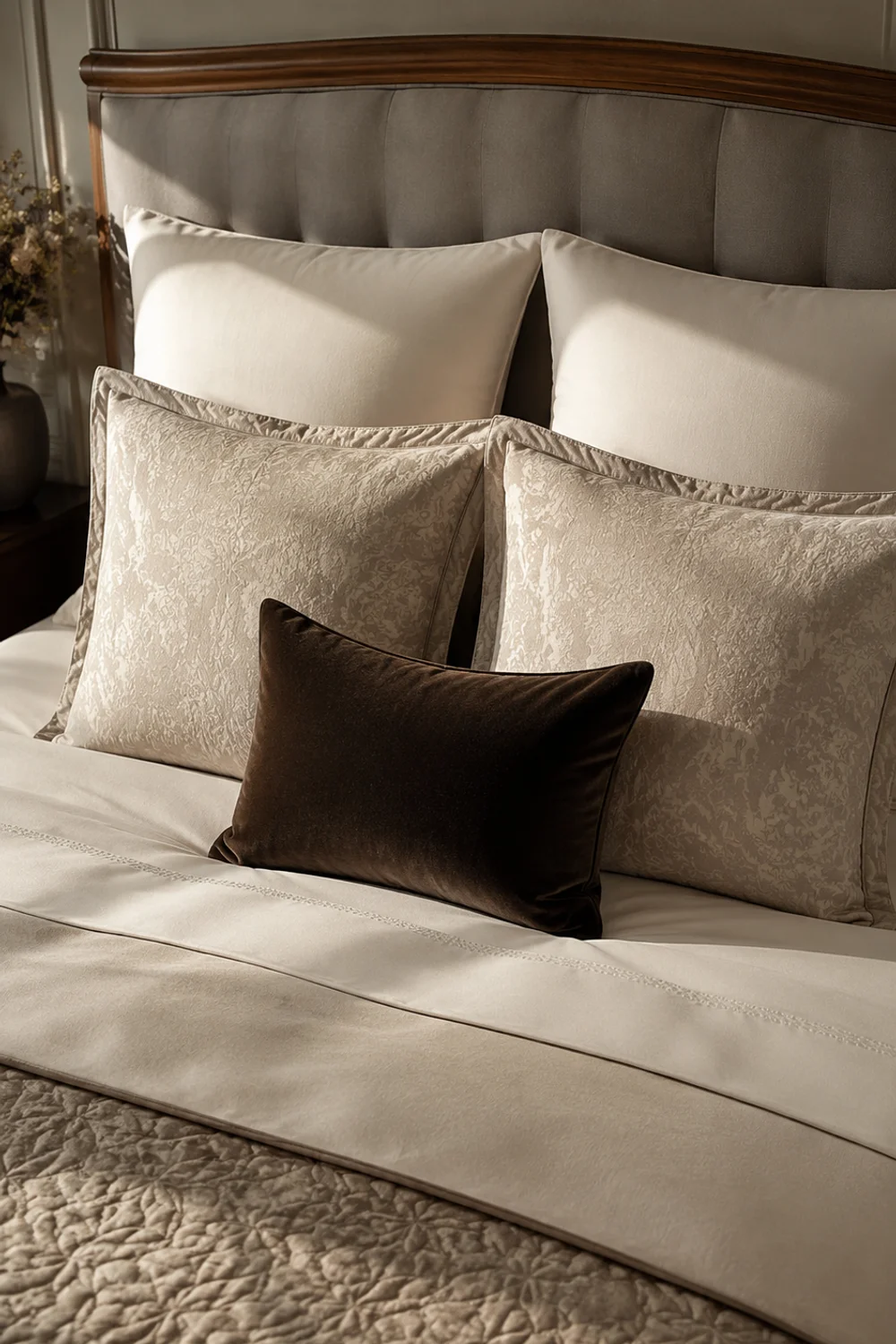
Pillow piles either read as luxurious or chaotic, and the difference is almost entirely mathematical. Hotels build in graduated tiers: the largest, plainest pillows go flat against the headboard, a mid-size decorative layer sits in front of those, and a single smaller accent pillow — never more than one — sits at the very front, slightly off-center. Symmetry in the back tiers, a single deliberate break in symmetry at the front. That combination is what reads as curated instead of simply stacked as high as the shelf would allow.
For a queen or king bed, two sleeping pillows against the headboard, two mid-size euro shams layered in front, and one accent pillow is the formula that scales best in an actual bedroom — enough visual height without requiring you to relocate six or seven pillows onto a chair every single night before bed and back again every morning.
If you’re building this for a shared bed, this is also where the two-sided symmetry actually matters for daily life, not just photos — a build that reads as How to Create Romantic Bedroom Decor Without Looking Overdone treats both sides of the bed as equally considered, which means the pillow tiers should mirror exactly from left to right, not favor whoever tends to style the bed each morning while the other person’s side gets whatever pillows are left over. Uneven pillow counts on either side are one of the fastest ways to make an otherwise well-built bed look unbalanced in photographs, even when every individual pillow is beautiful on its own.
Fabric choice within the formula matters too. Keep the back tier in a single plain material so it reads as structure rather than pattern, save any print or embroidery for the mid-size shams where it has room to be noticed, and let the single accent pillow at the front be the one place you take a genuine risk — a bold color, an unexpected texture, a shape that breaks from the rest. One deliberate outlier reads as curated. Three or four competing patterns fighting for attention across the same stack just reads as busy, no matter how well each individual piece was chosen on its own.
6. The Foot-of-the-Bed Roll, Done Right

 Save it
The tri-fold throw at the foot of the bed has become shorthand for “hotel bed” in a lot of Pinterest imagery, but most home versions get the mechanics wrong — the roll ends up too thin, too centered, or draped instead of folded, which undercuts the whole point of including it at all. The roll isn’t decoration for its own sake. It exists to break the long uninterrupted plane of the duvet with a horizontal line of contrasting texture, and to give your feet somewhere to push the bedding without disturbing the rest of the build when you get in at night.
The fold itself should sit roughly a third of the way up from the foot of the bed, in a tri-fold or loose roll rather than a flat drape, and it should extend slightly past both edges of the mattress rather than stopping short of them. A throw that’s too narrow just looks like a forgotten blanket left at the foot of the bed instead of a considered, deliberate layer that belongs there.
Choose a noticeably heavier knit than anything else on the bed for this layer — the contrast in weight is what makes it register as a separate, intentional element rather than an extension of the duvet underneath it. A thin throw folded at the foot just reads as an afterthought pulled from a closet shelf; a substantial one, folded with real structure, reads as the final, considered stroke that finishes the whole composition.
There’s a second, more practical reason this layer exists that has nothing to do with photographs. It’s the piece you actually reach for on a cold night without disturbing the rest of the bed, and the one you fold back down again in the morning without having to remake anything underneath it. That’s part of why the roll needs enough structure to hold its shape through nightly use — a throw too flimsy to hold a fold will need re-styling every single day, while a substantial one bounces back into place after being pulled off and refolded in seconds.
7. Layer by Value, Not by Color Matching
 Save it
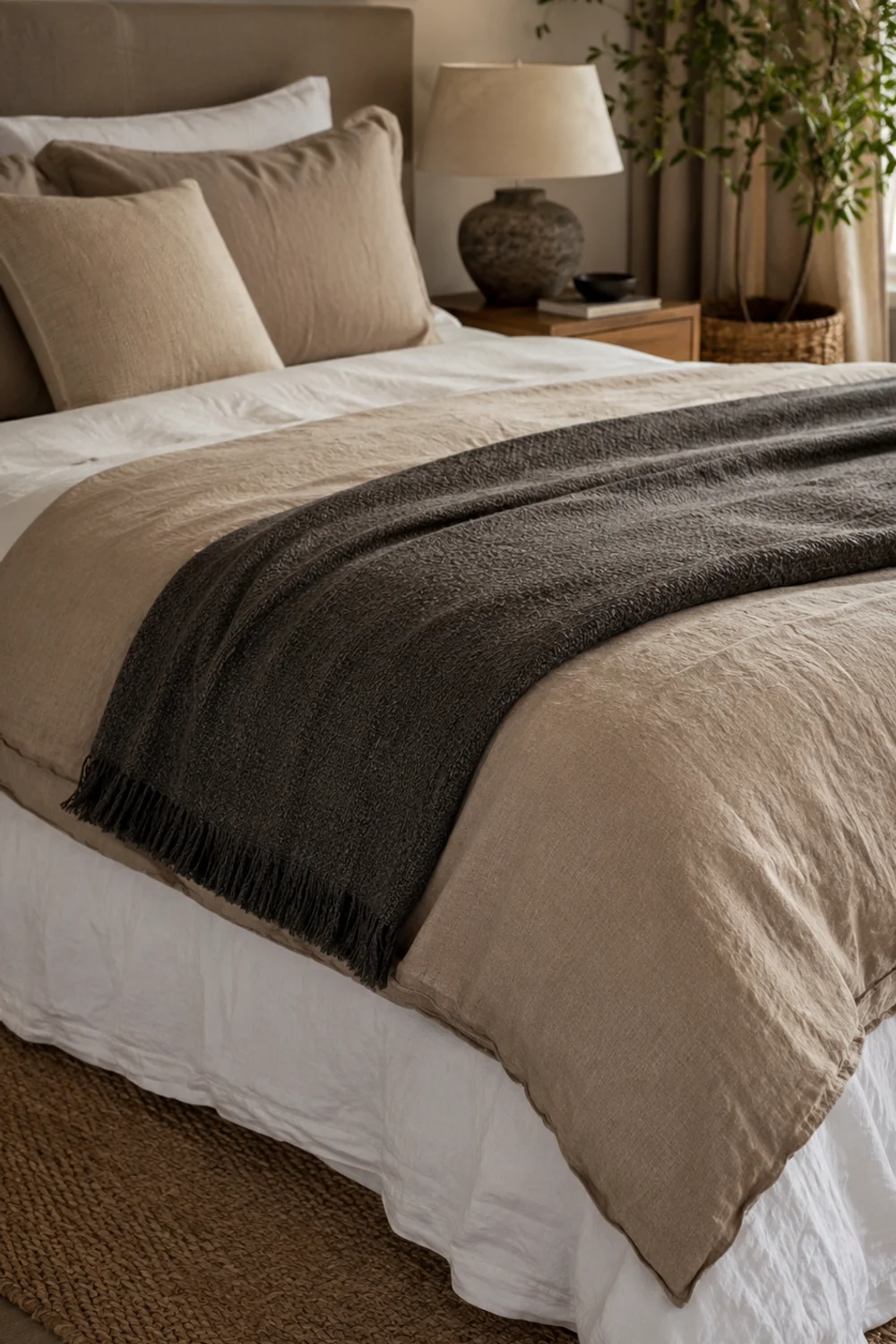
The instinct to match every textile exactly — same beige duvet, same beige sheets, same beige throw — is what makes so many “neutral” beds look flat and lifeless in person, even when every individual piece is beautiful on its own hanger. Hotels build in tonal value instead: light, medium, and dark versions of a related palette, layered so your eye reads depth even before it registers color at all.
A crisp white or ivory base, a mid-tone duvet cover, and a deeper accent throw or pillow creates a gradient your eye reads as dimensional rather than a flat wash of one shade repeated four times across every visible surface. This is the same underlying logic behind How to Create Warm Neutral Bedroom Ideas That Will Never Go Out of Style — that a tonal gradient reads as intentional depth, where an exact color match reads as an accident of shopping the same collection page in one sitting.
Test this before you commit to a full set: photograph your current bedding in black and white on your phone. If everything blends into one flat gray field with no visible separation between layers, you’re matching too closely and losing the depth a value range would otherwise give you for free. If you can clearly see where one layer ends and the next begins, your value range is already doing its job, and you can build the rest of the room around that same principle.
If you already own a fully matched set and aren’t ready to replace it, you don’t need to start over. Introduce a single darker layer — a folded throw, one accent pillow — in a tone from the same family but two or three shades deeper than everything else, and leave the rest of the set exactly as it is. That one addition does most of the work a full re-layer would accomplish, because your eye only needs one point of contrast to read the whole arrangement as intentional rather than accidental.
8. Texture Is the Real Luxury Signal, Not Thread Count

%20actually%20reads%20as%20luxurious.%20Pin%20this%20texture-layering%20tip.) Save it
Save it
Thread count gets treated like the single metric that determines quality, but a hotel bed’s sense of luxury actually comes from texture stratification — the deliberate move from smooth to nubbly to soft as your hand travels from the sheet up through the top layers of the build. A bed built entirely from smooth sateen, however high the thread count printed on the packaging, reads as flat and one-dimensional next to a bed that moves through several different textures within the same tonal family.
Start smooth at skin level, move to something with visible weave or quilting in the middle layers, and finish with something genuinely textured — a bouclé throw, a nubby wool blanket, a waffle weave — at the very top of the stack. This mirrors the same material logic behind 14 Earthy Bedroom Decor Inspiration Ideas Every Cozy Home Actually Needs Right Now, where texture does the work color usually gets credit for, giving a room genuine dimension without adding a single new hue to the palette you’ve already chosen.
Run your hand across the finished bed from the headboard to the foot before you call it done. If every layer feels roughly the same under your palm, the bed will photograph as flat no matter how expensive the individual pieces were or how carefully the colors were chosen. You want to feel the transition from one texture to the next, not just see it from across the room.
This is also why two heavily textured pieces sitting directly next to each other can cancel each other out rather than compounding. A bouclé throw folded right next to a densely quilted matelassé coverlet competes for the same visual register instead of building toward it — put a smooth or lightly textured layer between them, even a single flat-woven cushion, so each texture gets a moment to register on its own before the next one arrives.
9. Coverlet or Duvet — The Decision Nobody Actually Makes on Purpose

 Save it
Most people default to a duvet because it’s what they’ve always used, without ever weighing it against a coverlet, and the two actually solve genuinely different problems. A duvet is a warmth layer with a removable cover, built around an insulating fill. A coverlet is a lightweight, quilted top layer with no insulating fill at all — closer to a substantial bedspread than a blanket. Hotels frequently use both together specifically because neither one alone can do what the pair accomplishes when they’re layered correctly.
The duvet handles temperature and the enveloping, cloud-like loft you feel when you get into bed. The coverlet, folded over the top third or draped the full length depending on the season, handles the finished, tucked-in look a duvet alone rarely achieves on its own — because a coverlet’s lighter weight lets it take a sharper, flatter fold than a fully lofted duvet ever will, no matter how carefully you smooth it.
If you sleep hot, or share a bed with someone whose temperature needs differ from yours, separating these two functions rather than relying on one heavy duvet to do both jobs solves a problem most people have just learned to live with — kicking off the one blanket you own because it’s simultaneously too warm and the only thing keeping the bed looking finished. A rectangular lumbar pillow tucked in front of the main stack adds a low horizontal line that echoes the coverlet’s own flat fold, tying the two layers together visually.
In warmer climates or during summer months, some hotels drop the duvet from the daytime build entirely and let the coverlet stand on its own over the top sheet, with the duvet reintroduced only at turndown service in the evening. You can borrow that same logic at home without any staff involved — fold the duvet away during the day in warmer weather and let the coverlet alone carry the finished look, then bring the duvet back out at night if the room cools down once the sun goes down.
10. The Hospital Corner Isn't Just for Show
 Save it
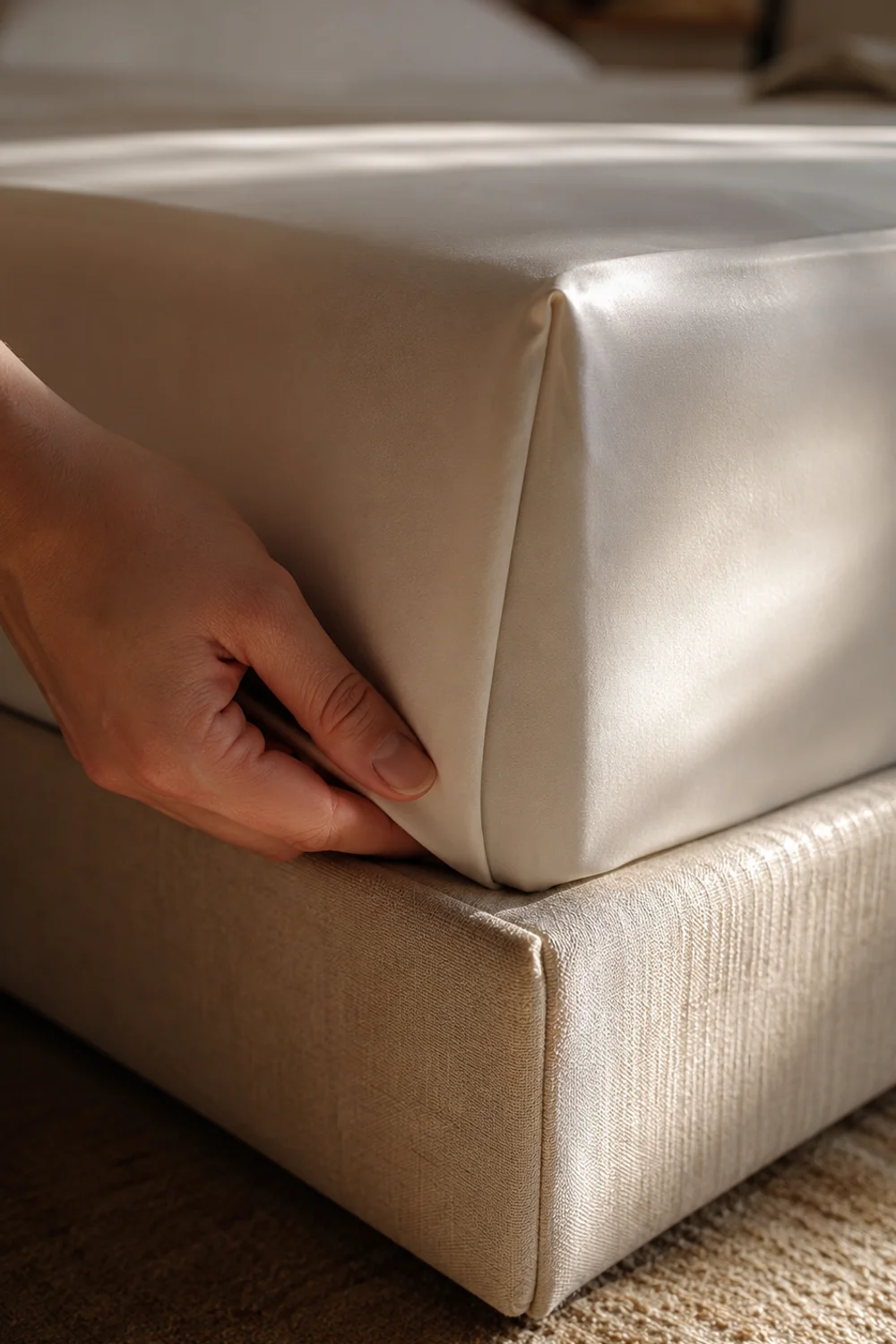
The tight, mitred corner on a fitted or flat sheet has a reputation as an old-fashioned military habit, but it’s still standard practice in luxury housekeeping for a genuinely practical reason: it keeps the base layer taut through a full night of movement, which means the layers above it stay aligned instead of slowly sliding into a rumpled heap by morning. A loosely tucked sheet doesn’t just look less crisp on day one — it actively degrades the whole system faster, requiring you to re-smooth every layer above it far sooner than a properly tucked base would.
To fold one, tuck the sheet fully under the mattress at the foot, lift the hanging side fabric into a triangular point, tuck the point under against the mattress, then drop and tuck the remaining flap flush against the frame. It takes under a minute once you’ve done it twice, and it’s the difference between a base layer that holds its shape all week and one you’re refighting every single morning before you’ve even had coffee.
Steam with fabric steamer, rather than iron, the visible fold lines on your top sheet and pillowcases before you make the bed — it removes packaging creases in seconds without the risk of scorching delicate fibers, and it’s a five-minute habit that makes every other layer above it look sharper by comparison, even on pieces you didn’t specifically press yourself.
Deep-pocket fitted sheets make the whole corner technique easier to execute cleanly. A shallow pocket forces you to stretch the fabric to reach the mattress edge, which pulls the corner taut in a way that looks strained rather than crisp and tends to pop loose by the second night. Check your mattress depth, including any topper, before buying — a sheet with two or three extra inches of pocket depth gives you enough slack to fold a clean hospital corner without fighting the fabric the entire time.
11. What Hides Underneath Matters More Than You Think
 Save it
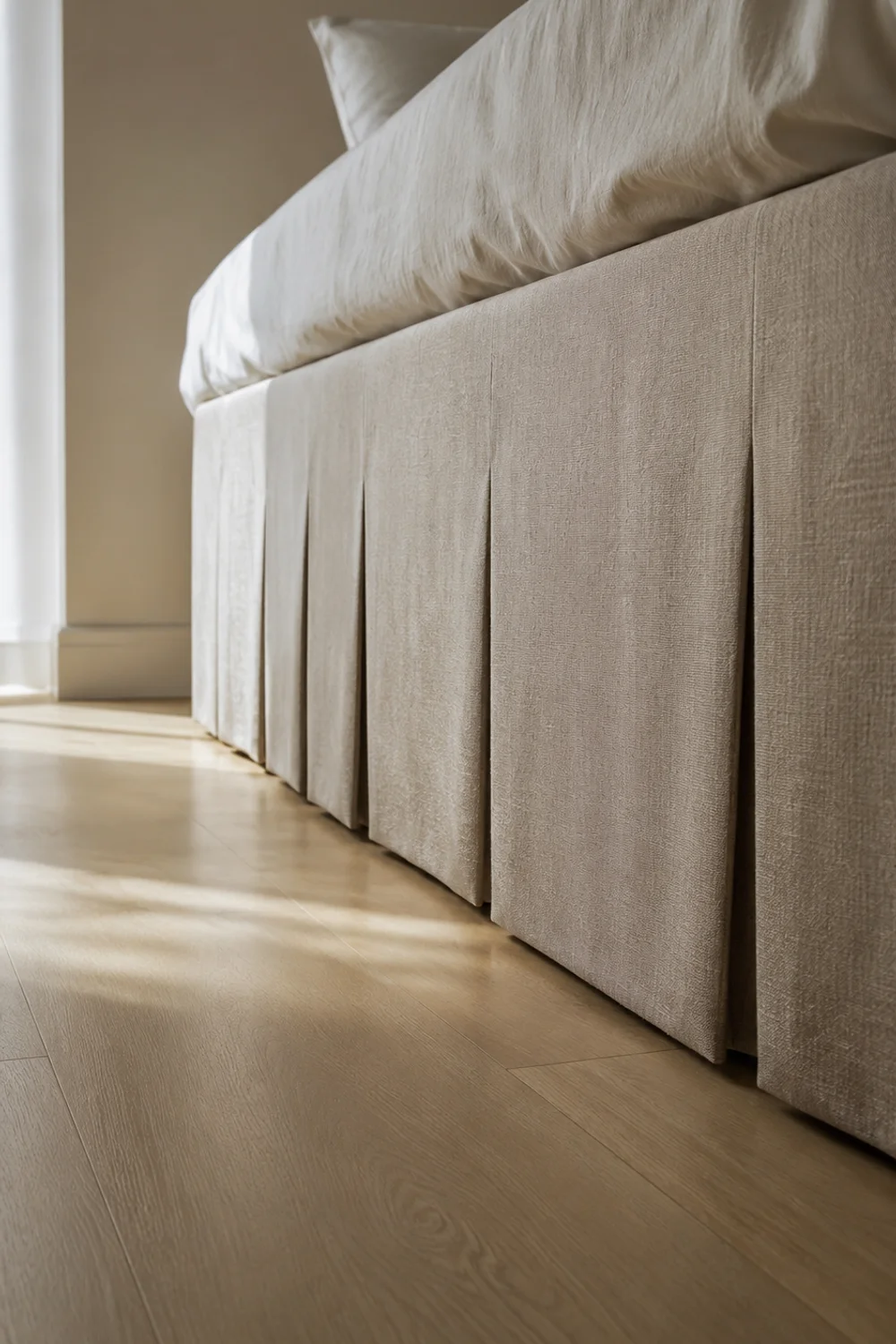
An otherwise perfect bed can be undone entirely by what’s visible beneath the frame — a mismatched box spring, storage bins, or bare metal legs pull the eye downward and break the clean, floating quality hotels are so careful to protect at every level of the room. This is the layer most home builds skip entirely, because it’s the least glamorous and the easiest to forget once the pillows are arranged and the throw is folded just right.
A tailored skirt with structured corners closes that gap completely, creating an unbroken vertical line from mattress edge to floor on every visible side of the bed. This is the same restraint-driven logic running through a Scandinavian Cozy Bedroom Inspiration Ideas Worth Copying Right Now build, where what you conceal matters as much as what you display — a clean base is what lets an elaborate top-of-bed styling moment actually read as elegant instead of cluttered by everything happening underneath it.
Choose a boxed pleat over a gathered ruffle if your room already leans toward clean lines elsewhere — the structured corners read as tailored rather than fussy, and they won’t compete with a headboard or nightstand styling that’s already doing its own quiet work in the rest of the room. Measure the drop to the floor precisely; a skirt that’s even an inch short will undo the unbroken line you’re trying to create.
If your bed sits on a platform frame with no visible gap underneath, you can skip this layer entirely — the concealment problem simply doesn’t exist for you, and adding a skirt in that case only introduces a seam where none is needed. But if you’re using the space beneath a taller frame for genuine storage, the skirt earns its place twice over: it hides the boxes and off-season linens from view while still letting you access them, which is exactly the kind of quiet, dual-purpose thinking hotels apply to every layer that isn’t purely decorative.
12. Let the Pillow Shapes Echo the Headboard
 Save it
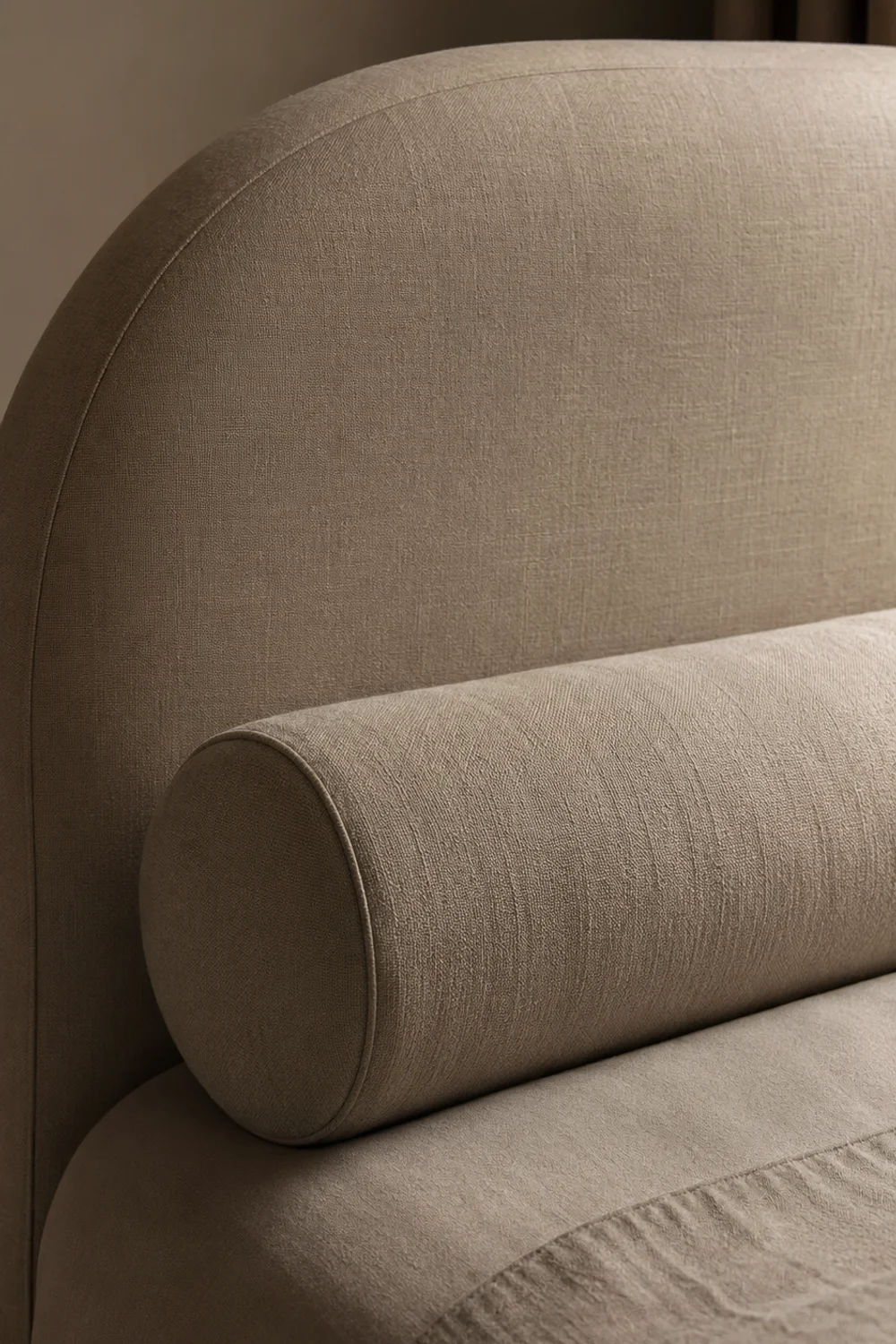
One detail that separates an intentional bed from a merely well-stocked one is whether the pillow shapes have any relationship to the headboard behind them. A curved, upholstered headboard against a bed built entirely from square, sharp-edged pillows creates a subtle visual argument the eye never quite resolves, even if it can’t articulate why the arrangement feels slightly off. Hotels avoid this by threading at least one rounded or bolster-shaped element through the pillow arrangement whenever the headboard itself has any curve or softness to it.
A single cylindrical bolster, placed horizontally in front of the main pillow stack, does this without requiring you to rebuild the whole arrangement around a theme. It picks up a curved line from the headboard and repeats it lower in the composition, which is a small enough gesture that it reads as considered rather than matchy or overly styled. If your headboard is a flat, angular panel instead, skip the bolster and let your accent pillow’s placement do that same connective work — offset rather than centered, echoing the panel’s edges instead of its curves, so the relationship between headboard and pillows still exists even without a rounded shape in the mix.
This same echo works through fabric as well as shape, and it’s worth considering both. An upholstered headboard in a nubby bouclé or textured linen gives you a material to pick up somewhere in the pillow stack — not matched exactly, which would tip into matchy territory, but referenced once in a single sham or the bolster itself. A hard-surfaced headboard in wood or cane doesn’t offer that same material cue, which is exactly why the shape relationship matters more when there’s no fabric to lean on; a rounded bolster in front of a cane headboard does the connective work that a textured pillow would otherwise handle automatically. Either path works, but pick one deliberately rather than leaving the headboard and the pillow stack to coexist without any relationship at all.
13. Build a Seasonal Weight System, Not a Seasonal Wardrobe
 Save it
Most people treat seasonal bedding changes as a full replacement — new duvet, new sheets, new everything — twice a year, which is both expensive and, more importantly, entirely unnecessary. Hotels rotate weight, not identity. The same base palette and proportions stay in place all year; what changes is the loft of the insert and the density of the top throw layer, nothing more.
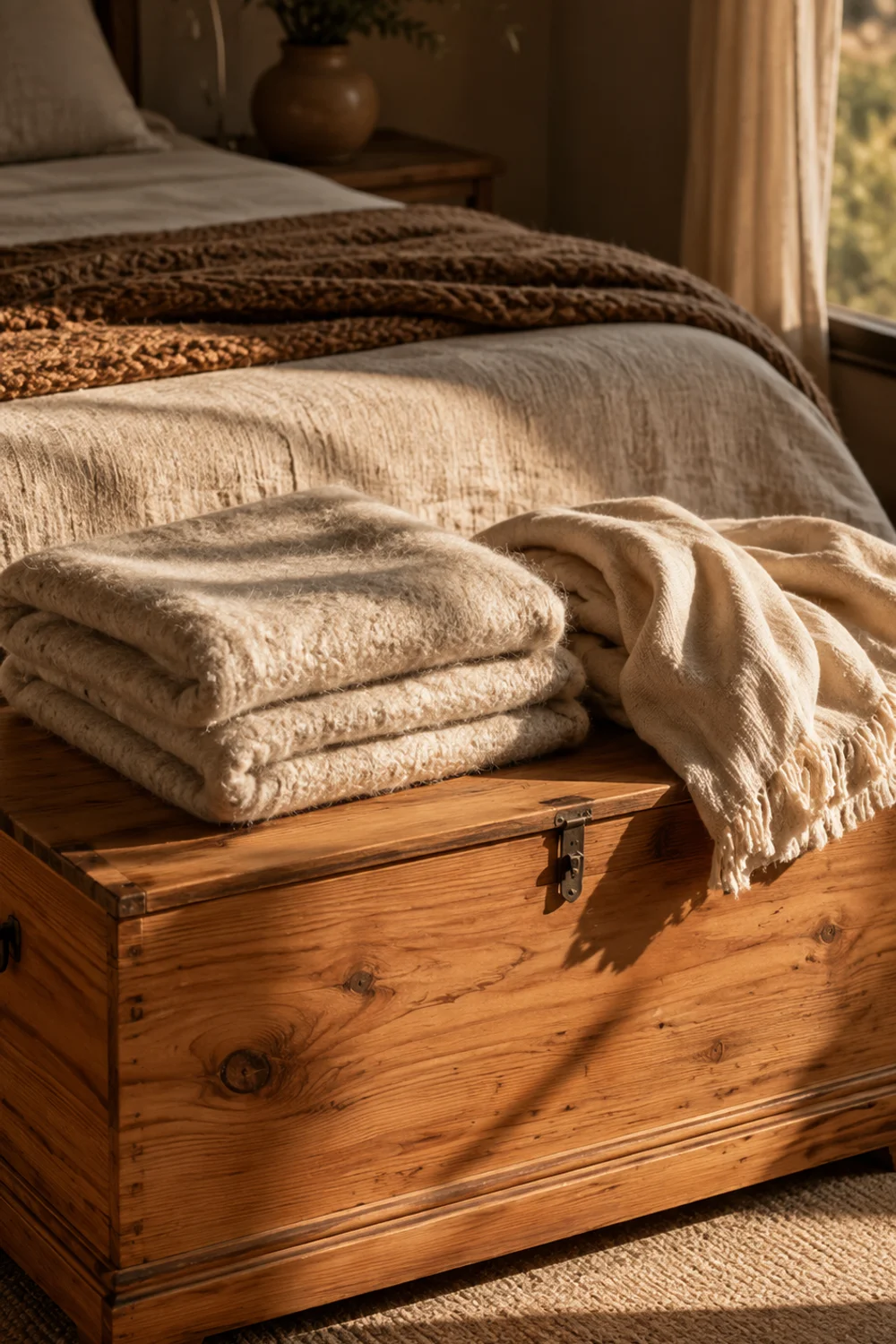
A lighter-weight insert and a single cotton throw carry a room through warmer months; swapping in a higher-loft insert and a heavier wool or cable-knit throw for winter keeps the exact same visual system intact while genuinely changing how warm the bed actually feels to sleep in. This means the styling work you’ve already done — proportions, pillow tiers, tonal layering — never has to be rebuilt from scratch each season the way a full bedding wardrobe would require.
Store the off-season layers somewhere with actual airflow rather than a sealed plastic bin, which traps moisture against natural fibers and can leave them smelling stale by the time you unpack them again. A cedar storage chest at the foot of the bed does double duty — it’s furniture during the season it’s not holding linens, and it naturally deters moths from wool and down fill sitting in storage for months at a time.
As a rough guide, a fill weight in the lighter range suits a room that rarely drops below room temperature overnight, while the heavier range is worth reserving for genuinely cold months rather than defaulting to it year-round out of habit. Rotate the insert itself twice a year rather than the whole duvet system, and keep the cover you already own in place across both — a single well-chosen cover works with either weight of insert inside it, which means the only thing changing between seasons is exactly the layer that needs to change, and nothing else.
14. The Structural Trick Behind Every Perfectly Full Sham
 Save it
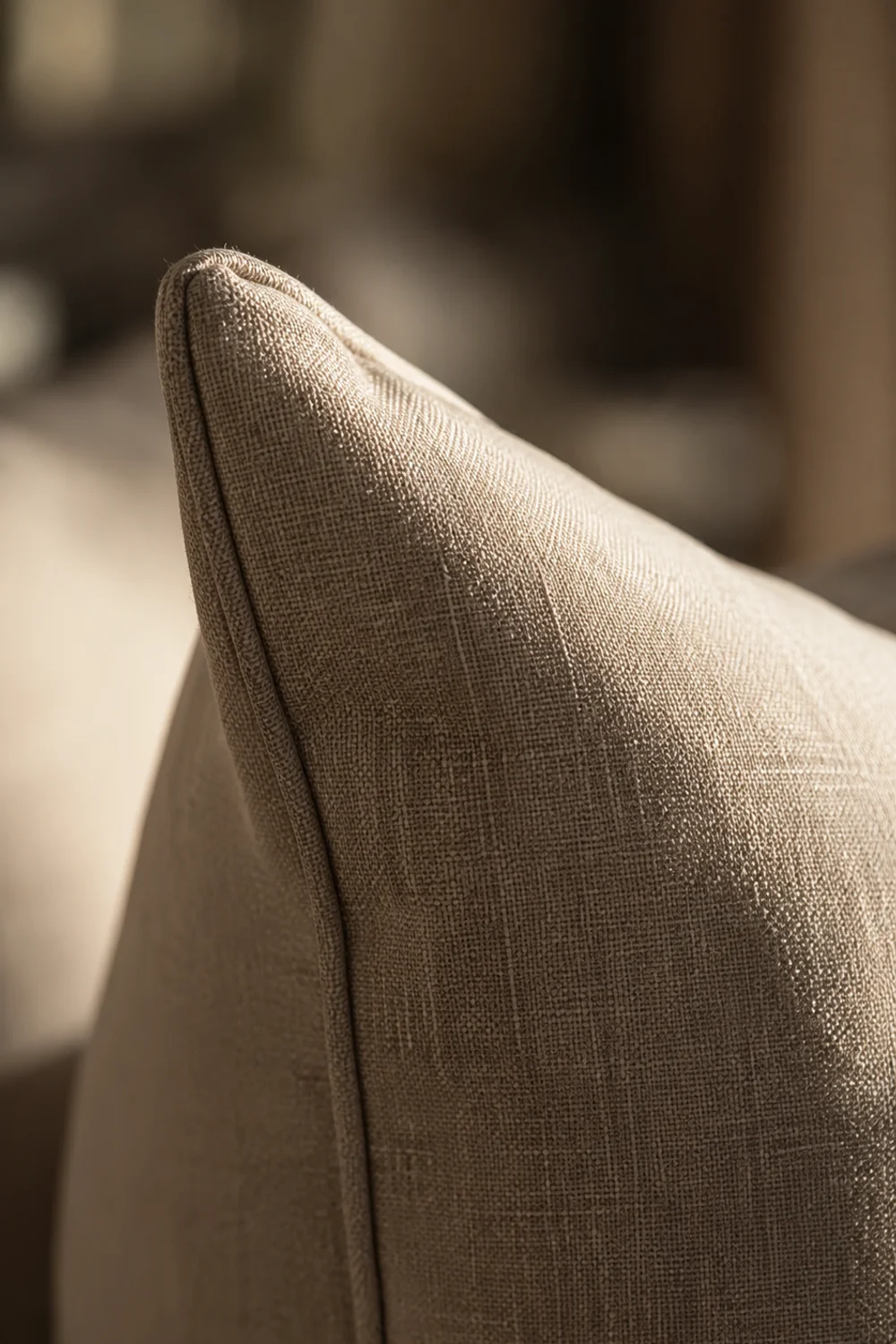
Euro shams that look collapsed or half-empty are one of the most common failure points in an otherwise well-built bed, and it’s almost never the fabric’s fault. It’s the insert. A sham designed for a 26-inch cover needs an insert cut slightly larger — closer to 28 inches — so the fabric has to work to contain it, which is exactly what creates that structured, slightly domed silhouette instead of a soft, sagging square that looks tired by midday.
This is a purely technical fix, not a styling one, and it’s the single fastest upgrade on this entire list if your pillow arrangement already has the right proportions but still looks slightly deflated in photographs no matter how you fluff it. Oversize the insert relative to the cover on every sham in the stack, and the entire back tier of pillows will hold its shape through a full day of use instead of flattening the moment anyone sits against the headboard to read.
You can spot an undersized insert before you even buy the sham cover, if you know what to look for. Press a hand flat into the corner of a filled pillow at the store or when it arrives — a well-matched, slightly oversized insert resists and springs back immediately, holding its shape through the corner and the edge alike. An undersized one collapses under the same light pressure and takes a visible beat to recover, which is exactly the behavior that reads as tired and flat once the sham is out of the box and sitting on the bed for a full week of daily use. Fluffing a poorly matched insert can disguise the problem for a day or two, but it will always sag back to the same collapsed shape by evening, because fluffing changes the surface, not the underlying volume of fill actually inside it.
15. The One Deliberately Imperfect Detail

 Save it
A bed built with total, mechanical precision in every single layer starts to feel less like a retreat and more like a showroom display — and hotels, for all their exacting standards, almost always leave one small, human imperfection somewhere in the build. A corner of the throw left slightly askew instead of perfectly squared. A single pillow turned a few degrees off-axis from its neighbors. One fold that’s soft instead of crisp, left that way on purpose.
This isn’t sloppiness — it’s a deliberate signal that the bed is meant to be used, not just photographed for a listing. Tuck a small cedar sachet set discreetly between the folded layers at the foot of the bed; it does quiet, practical work keeping the linens fresh both in storage and on the bed itself, and it’s the kind of detail no one consciously notices but that keeps the whole build from tipping into sterile. Choose exactly one place in your finished bed to leave slightly, intentionally undone, and stop there — more than one imperfection starts to look like carelessness instead of restraint. The goal is a bed that looks composed by someone who lives in the room, not assembled by someone who’s never actually slept in it.
It’s worth naming why this final step matters after fourteen sections of precise measurements and deliberate technique: a system this exact can tip into feeling clinical if every single decision is followed to the letter, every single time. The imperfection isn’t a failure of the method — it’s the last step of it, the same way a chef plates a dish with one element slightly off-grid rather than in a perfectly measured row. Once you’ve built the system enough times that the order becomes automatic, you’ll find yourself choosing where to leave that one loose thread almost without thinking about it, which is exactly the point where the whole build stops feeling like a formula and starts feeling like a habit.
Common Mistakes
1. Buying the duvet cover before the insert
Most people choose their bedding by falling in love with a pattern or color on a duvet cover, then working backward to find any insert that fits inside it. This means the one component that actually determines how the bed looks and feels — the fill weight and loft of the insert — becomes an afterthought instead of the foundation of the whole build. Choose the insert’s fill power first, then shop covers to fit the level of loft you’ve already committed to, rather than the other way around.
2. Matching every textile to the exact same shade
A bed built from four or five pieces in precisely the same tone reads as flat rather than cohesive, because there’s no tonal contrast for your eye to use in reading depth. The instinct to “match” is understandable, but a genuinely well-built bed relies on a value range — light, medium, and dark within one family — rather than a single repeated shade across every layer of the composition.
3. Skipping the top sheet entirely
Dropping the flat sheet feels like it saves a step, but it removes both a hygiene layer that protects your duvet cover from nightly wear and the crisp fold-down band that gives the top of the bed its clean horizontal line. Reinstating this one habit changes the finished look more than almost any other single adjustment on this entire list, and it costs almost nothing to try.
4. Ignoring duvet overhang and proportion
An undersized duvet that barely clears the mattress edges will always look thin and under-built, regardless of how expensive the fabric is or how soft it feels to the touch. Measure the drop on the sides and the length at the foot before you buy, rather than assuming a standard size will automatically look generous on your specific mattress and frame combination.
5. Treating pillows as a pile instead of graduated tiers
Pillows thrown on in whatever order they land create visual noise instead of visual height. A hotel-style arrangement works because it’s built in deliberate tiers — largest and plainest at the back, decorative shams in the middle, one accent piece at the front — not because more pillows were simply added to the stack until it looked full.
Frequently Asked Questions
How many pillows should actually be on a queen or king bed?
For most real bedrooms, two sleeping pillows, two mid-size euro shams, and one smaller accent pillow is the range that reads as full without becoming unmanageable every night. Hotels often use more for photography, but that count assumes no one is actually removing and replacing them daily, which isn’t realistic for a bed you actually sleep in and reset every morning.
Do I need both a duvet and a coverlet, or is that excessive?
They solve different problems rather than duplicating each other. The duvet provides warmth through its fill; the coverlet provides the crisp, tucked, finished silhouette a duvet alone doesn’t always achieve, especially at higher loft levels where the fabric wants to puff rather than lie flat. Using both isn’t excess — it’s the same reason hotels rarely rely on a duvet by itself, even in warmer climates.
What fill power should I actually look for in a duvet insert?
Higher fill power numbers indicate more loft per ounce of fill, which is what creates that substantial, cloud-like appearance without excessive weight pressing down on you overnight. For a genuinely hotel-style look and feel, look for the higher end of what’s available within your budget rather than compensating for a lower fill power with a heavier overall fill weight, which adds bulk without adding the loft you’re actually after.
How often should the whole system actually be washed?
The base layer — fitted sheet and top sheet — should be washed weekly, since it sits directly against your skin every night. Duvet covers, shams, and throws can be washed far less often precisely because the top sheet is protecting them from direct contact, which is one of the quieter practical reasons this entire layered system exists in the first place, beyond how it happens to look.
Is this look achievable on a real budget, or does it require expensive bedding?
The system matters more than the price point of any individual piece in it. A correctly proportioned, well-ordered stack built from mid-range pieces will consistently outperform an expensive duvet thrown on with no structure underneath it. Prioritize the insert’s fill quality and the base layer’s fit first — those two decisions carry more visual weight than any single luxury item layered on top of an otherwise unconsidered build.
Final Thoughts
None of this requires a bedroom renovation or a bedding budget that rivals a small hotel’s linen closet. What it requires is sequence — choosing the base layer with the same care you’d give the visible one, understanding that fill weight is doing more visual work than color ever will, and accepting that the small, unglamorous decisions, a taut corner, an oversized sham insert, a steamed fold, are what a duvet cover alone can never fake no matter how much it costs.
Build it once, in order, and you’ll find the whole system takes less time to recreate each week than it took to read through the reasoning behind it. Start with the base layer this weekend, add one new layer at a time rather than replacing everything at once, and let the proportions do the work the price tag usually gets credit for. That’s the real difference between a bed that was assembled and one that was actually built — and it’s the only trick a hotel housekeeping team ever really has.
This post contains affiliate links. I may earn a small commission at no extra cost to you.

Get cozy inspiration delivered to your inbox.
✓ 14-page beautifully designed ebook
✓ Cozy decorating ideas
✓ Practical room-by-room inspiration
You’re in! 🎉
Thanks for joining the NestFlowHome community!
Your free ebook is already on its way to your inbox. If you don’t see it within a few minutes, please check your Promotions or Spam folder.
Join the NestFlowHome community for weekly decorating inspiration.

Timeless home decor ideas and slow living inspiration for a calm, beautiful life.