
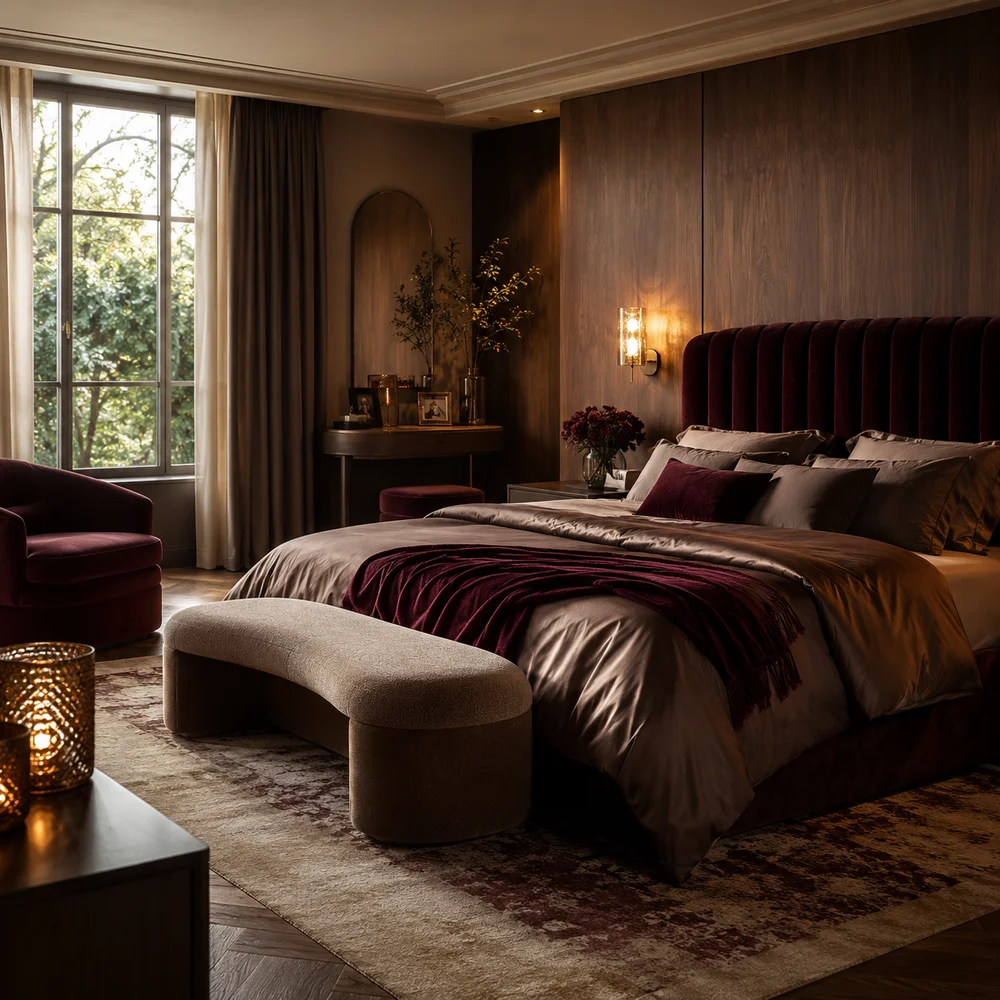
How to Create Romantic Bedroom Decor Without Looking Overdone
By Emily | July 17, 2026
There’s a specific kind of bedroom that announces itself before you’re even through the door — string lights bunched over the headboard, a throw pillow embroidered with a cursive word, three shades of pink competing for the same wall. It photographs like romance. It rarely feels like it. Somewhere between the mood board and the finished room, the intention gets lost, replaced by a costume version of intimacy that looks staged the moment two people actually try to live in it.
Real romantic atmosphere doesn’t announce itself. It works on the body before the eye understands why — the low angle of a lamp, the give of a blanket against skin, the particular hush of a room where nothing hums or blinks. These aren’t accidents, and they aren’t the same thing as decoration. They’re decisions about proximity, temperature, texture, and shadow, made with enough restraint that the room never has to explain what it’s for.
That’s the gap most romantic bedroom advice never addresses: the difference between a room dressed in the symbols of romance and a room built to produce the feeling itself. One relies on props — hearts, roses, red velvet, candles lit once for a photograph and never again. The other relies on mechanics that keep working long after the styling shoot ends. What follows is a room built the second way: desaturated instead of saturated, shadowed instead of shadowless, arranged for two instead of photographed for one. None of it needs a single heart-shaped object to read as unmistakably romantic — which, if you’ve ever lived in a bedroom that tried too hard, might be the most reassuring sentence in this entire piece.
1. The Color Rule: Trade Literal Red and Pink for Desaturated Warmth
 Save it
The fastest way to make a bedroom feel like a Valentine’s Day display rather than a place you actually want to be touched is saturation. Pure red, bubblegum pink, glossy burgundy — these colors read as symbols before they read as atmosphere, because the eye has been trained by decades of greeting cards and gift wrap to file them under “occasion,” not “everyday.” A room dressed in them looks like it’s performing romance for an audience rather than holding it quietly for two people.
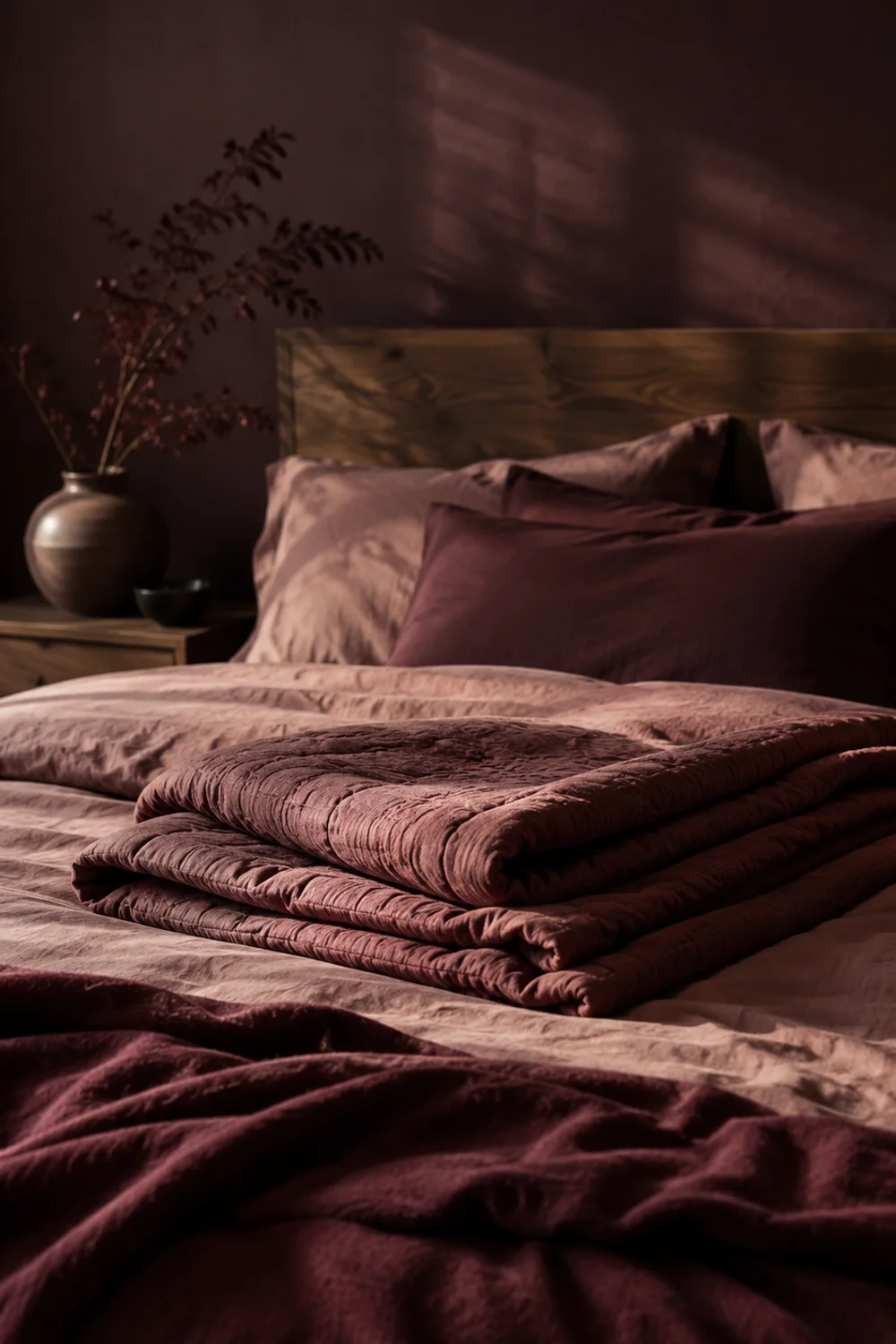
The fix isn’t to avoid warmth. It’s to lower the saturation until the color stops announcing itself and starts behaving like light. Dusty rose instead of bubblegum pink. Aged wine instead of fire-engine red. Clay-plum, warm umber, faded terracotta-blush — tones that sit closer to skin and wood than to packaging. These colors share a quality that matters more than hue: they were all, at some point, mixed with grey. That grey is what keeps a warm color from reading as a costume.
This isn’t the same argument How to Create Warm Neutral Bedroom Ideas That Will Never Go Out of Style makes for undertone discipline in a neutral room — there, the goal is longevity through restraint. Here, the goal is heat without cliché, which means you can and should go deeper into color than a warm-neutral room ever would. A wine-toned accent wall, a plum velvet headboard, clay-colored bedding — these hold real saturation, just never the primary, unmixed version of the color.
Test every fabric and paint chip against skin tone, not against a swatch card in isolation. Colors that flatter skin under warm light are, almost without exception, the desaturated versions of themselves. If a color makes a face look sallow or the room look like a stage set, it’s too pure. Mute it one step further and the entire room stops performing and starts working.
2. Designing for Shadow, Not Just Light

 Save it
Most bedroom lighting advice pushes toward evenness — light every corner, eliminate dark pockets, brighten the whole room to a comfortable, shelter-bright level. That advice is correct for almost every room in the house and wrong for this one. A romantic bedroom needs deliberate darkness as much as it needs light, because shadow is what gives a room depth, privacy, and a sense that not everything is on display at once.
The mechanism here isn’t a dimmer switch behaving like a candle — that’s a cozy-room trick, and it treats light as a single dial to turn down. This is different: it’s about where light physically reaches and where it deliberately doesn’t. Instead of one central source lighting the whole room evenly, use two or three small, low sources — below eye height, never overhead — and let the space between them go genuinely dark. A pool of amber light on one nightstand. A second pool near a chair across the room. A wide, unlit gap between them that the eye has to cross. Scandinavian Cozy Bedroom Inspiration Ideas Worth Copying Right Now treats light almost entirely as a structural, calm-producing tool — flooding a room evenly to keep it feeling open and clear-headed. A romantic bedroom asks light to do the opposite job: to create edges, pull focus toward two or three specific points, and let the rest of the room recede. A plug-in wall sconce with a low-glare amber glass shade
does this without a single hardwired change — mount it below shoulder height, angle the shade downward, and the light stays contained instead of spreading into the ceiling.
No visible bulb should ever be part of the view. The moment you can see the light source itself rather than just its glow, the spell breaks and the room reads as under-lit rather than intentionally shadowed. Shades, glass diffusers, or a source tucked behind an object all solve this in seconds.
Pay attention to what the shadow actually falls on. Light angled across a textured surface — a plaster wall, a woven headboard, rumpled bedding — throws small, moving shadows that make the room feel alive rather than simply dim. Light angled across a flat, glossy surface just looks underpowered. The same bulb, the same wattage, produces two completely different emotional results depending on what it’s allowed to touch on its way to the wall.
3. Skin-First Materials

 Save it
Interior photography rewards texture that reads well from six feet away — a nubby weave, a visible slub, a pattern with contrast. A romantic bedroom is judged from an inch away, in the dark, by touch. That’s a completely different design brief, and most bedding and upholstery choices are never made with it in mind.
Choose fabric for how it behaves against bare skin, not how it photographs. Brushed cotton sateen has a faint sheen and a cool-then-warm hand-feel that most people register as luxurious without being able to say why. Dense, low-pile velvet — on a headboard, a bench seat, a single throw — gives resistance and warmth at once. A faux fur throw folded at the foot of the bed adds a texture your hand seeks out unconsciously. None of these need to coordinate perfectly with each other; they need to feel good enough that touching them becomes part of how you use the room, not just how you look at it.
A brushed cotton sateen sheet set in a deep, muted wine tone does two jobs simultaneously — it satisfies the color rule from earlier and puts the most skin-contact surface in the room on its best tactile behavior. This is where 14 Earthy Bedroom Decor Inspiration Ideas Every Cozy Home Actually Needs Right Now and this room diverge most clearly: the earthy argument prizes rough, honest, unrefined texture for its grounding weight. A romantic bedroom prizes the opposite end of the tactile spectrum — smoothness, drape, and a slight indulgence that reads as considered rather than raw.
Avoid anything with a rough finish near the areas skin actually touches — coarse linen sheets, stiff jacquard coverlets, scratchy wool throws directly against the arm. Save the coarser materials, if you want them at all, for objects you look at rather than lie against.
There’s a temperature dimension here too, and it’s easy to miss. Sateen and velvet both hold warmth close to the body, which reads as intimate in a way that cool, crisp linen — however beautiful — simply doesn’t. That’s not a criticism of linen; it’s a different sensory promise, better suited to a room chasing airiness than one chasing closeness. Choose the fiber that matches the feeling you’re actually building, not the one that photographs best on a styled bed.
4. Built for Two
 Save it
Walk into most bedrooms and you can tell, within a few seconds, that the room was arranged by one person imagining themselves in it — a single reading chair angled toward the window, one nightstand noticeably more “finished” than the other, a bench at the foot of the bed sized for sitting to put on shoes, not for sitting together. None of this is wrong for a bedroom in general. It just isn’t built for two, and a romantic bedroom has to be.
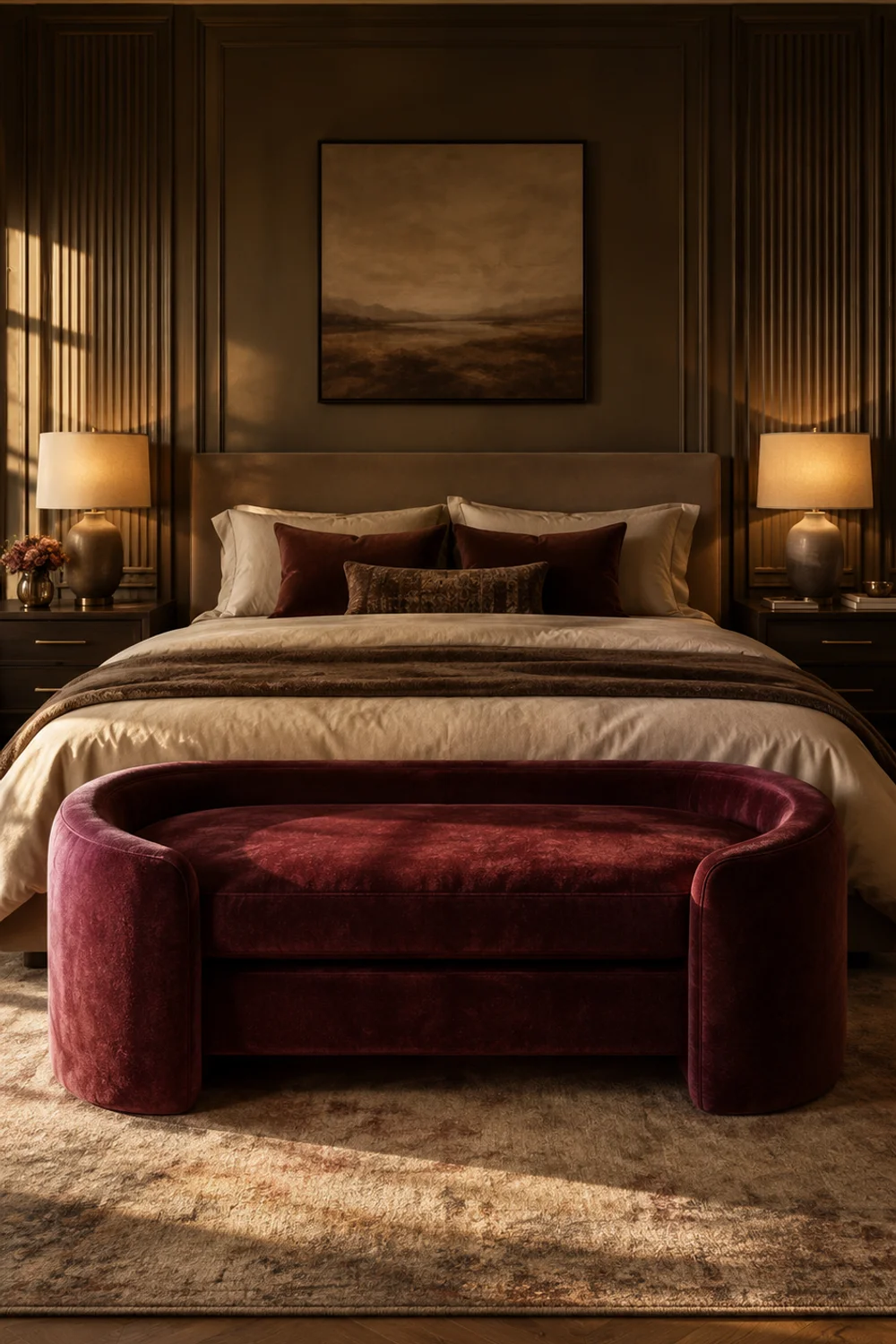
Symmetry is the fastest signal the eye reads as “shared.” Matching — not identical, but visually balanced — nightstands on either side of the bed. Two lamps of equal presence, not one statement lamp and one afterthought. A small stack of books on each side rather than a single stack claiming the whole surface. None of this requires spending twice as much; it requires making sure neither side of the bed reads as the guest side.
Seating does the same work at a different scale. A single armchair, however beautiful, seats one person and implicitly excuses the other from the room. A low, curved two-seat bench at the foot of the bed or under the window changes the physical grammar of the space — it assumes two bodies will occupy it, side by side, close enough to touch. A curved bench upholstered in dense velvet softens the room’s silhouette while quietly making this exact point.
Shared surfaces matter too — a single tray or table where both people can set down a phone, a glass, a book, rather than each person retreating to their own separate zone. A room that keeps finding small ways to physically close the distance between two people will feel romantic even before anyone notices why.
Even traffic flow plays a part. A bedroom laid out so that reaching your own side of the bed means walking around the other person’s — rather than each having a clear, independent path — forces small, constant moments of proximity that a wide, efficient layout quietly eliminates. This isn’t about making the room impractical. It’s about not over-optimizing for solo efficiency in a space that’s supposed to belong to two people at once.
5. The Sound of the Room
 Save it
Most advice about bedroom sound is really about eliminating it — white noise machines, sealed doors, acoustic panels, all in service of an undisturbed night’s sleep. That’s the right goal for a wellness-focused bedroom. It’s the wrong goal here. A romantic bedroom doesn’t need silence. It needs a sound the two of you chose on purpose, which is an entirely different design problem than removing the sounds neither of you chose.
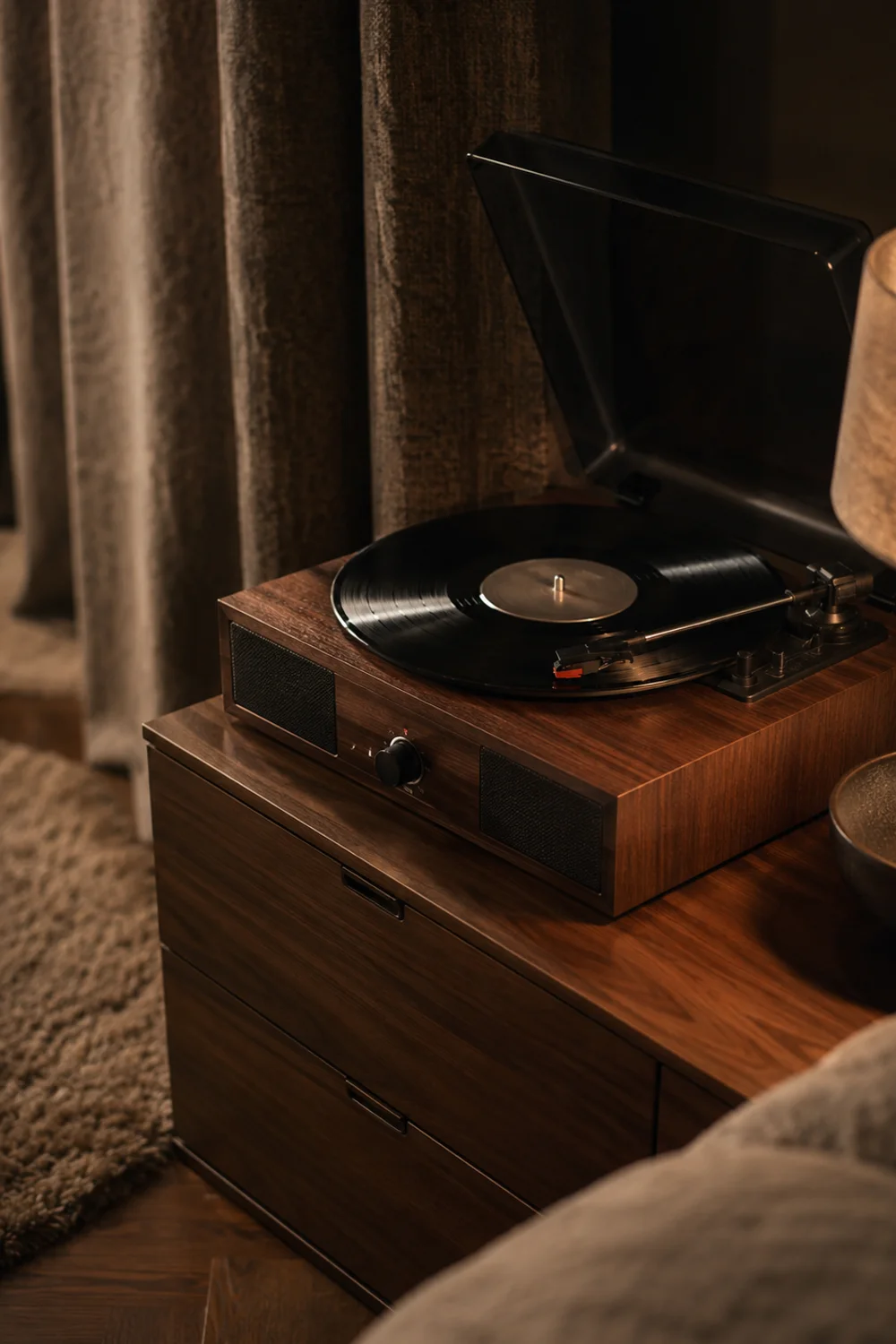
This is closer to a ritual than a specification. A small turntable or compact speaker in a corner, playing something specific rather than an algorithmic playlist, turns the room into a place with its own soundtrack instead of a place that’s merely quiet. The act of choosing a record together, or building a short list of songs that only get played in this one room, gives the space a kind of private ceremony that generic ambient noise can’t replicate. Calming Bedroom Ideas That Define the Best Wellness Design Inspiration treats sound as a problem to be engineered away — acoustic sealing, white noise, silence as the ideal end state. Here, sound is added deliberately, not stripped out.
A compact record player with built-in speakers in a warm walnut finish sits comfortably on a low dresser or shelf without requiring a dedicated sound system, and its physical presence — a visible object with a ritual attached to using it — does more atmospheric work than a hidden smart speaker ever could. The friction of choosing a record and setting the needle down is part of the point; effortless is not the same as romantic.
Keep the rest of the room’s sound profile soft enough that this one chosen source can actually be heard — heavy curtains, a rug underfoot, nothing that hums or clicks in the background. The goal isn’t a silent room. It’s a room where the only sound that matters is the one you picked.
6. Personal Objects as the Real Aphrodisiac
 Save it
Generic romantic decor reaches for symbols that mean nothing about the two specific people living in the room — a mass-produced “love” sign, faux flowers in a vase nobody chose, a print of two silhouettes embracing at sunset. These objects could belong to anyone. That’s precisely why they don’t work: desire responds to specificity, not to a symbol borrowed from a catalog.
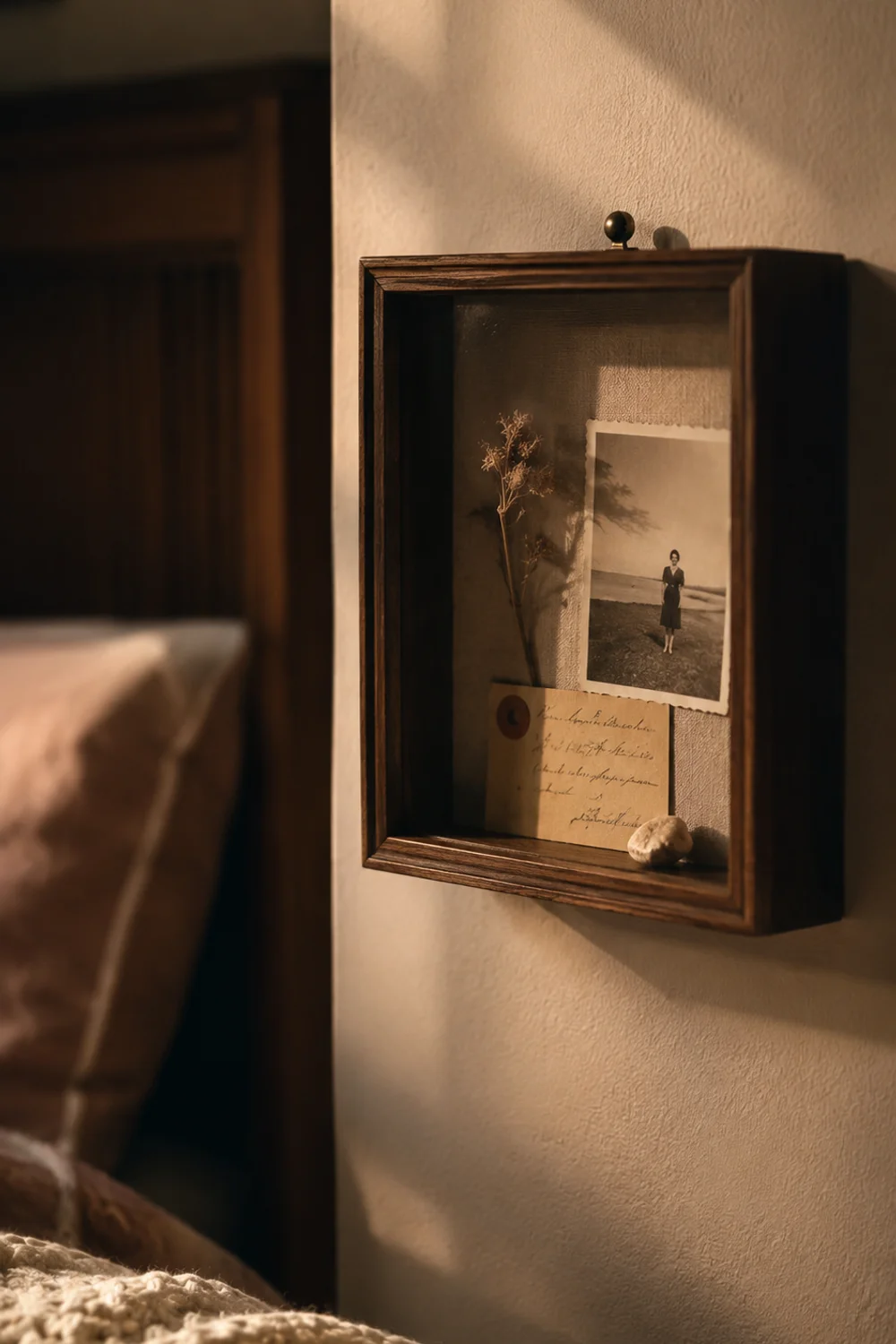
The objects that actually read as romantic are the ones that could only exist in this particular relationship. A photograph, reframed and printed larger than a phone screen ever allows, taken on a day that mattered. A small object with genuine provenance — a ticket stub, a pressed flower from somewhere specific, a piece of jewelry with a story — displayed rather than tucked in a drawer. A short stack of books that trace how two reading tastes have influenced each other over time. None of these need to be expensive or curated to look “designed.” They need to be true.
A small framed shadow box, mounted on the wall beside the bed, gives shared keepsakes somewhere to live in plain sight instead of scattered across a dresser top or hidden away entirely. Group three or four objects inside it rather than one — the accumulation of small specific things reads as a relationship’s actual texture, in a way a single dramatic object never quite manages.
Edit ruthlessly, but edit toward meaning, not toward minimalism for its own sake. A wall with fifteen photographs starts to feel like a shrine rather than a room; a wall with three, chosen carefully, feels like a story someone is willing to tell. The goal isn’t fewer objects. It’s objects that couldn’t belong to any other bedroom but this one.
Resist the urge to buy the meaning instead of finding it. A store-bought sign that reads “always and forever” is still a symbol wearing the costume of a personal object — it didn’t come from your life, and no amount of careful placement changes that. If you genuinely don’t have a specific object yet, it’s better to leave the wall empty for now than to fill it with something that only pretends to be personal.
7. The Bedding Architecture of Closeness
 Save it
Most bedding advice is aesthetic — thread count, color coordination, how the folded corner of a duvet looks in a photograph. None of it asks the more basic question: how does this bedding actually behave when two bodies with different temperature needs are sharing it at three in the morning? A romantic bedroom has to answer that question before it answers any styling one, because nothing kills intimacy faster than a nightly tug-of-war over a single shared duvet.
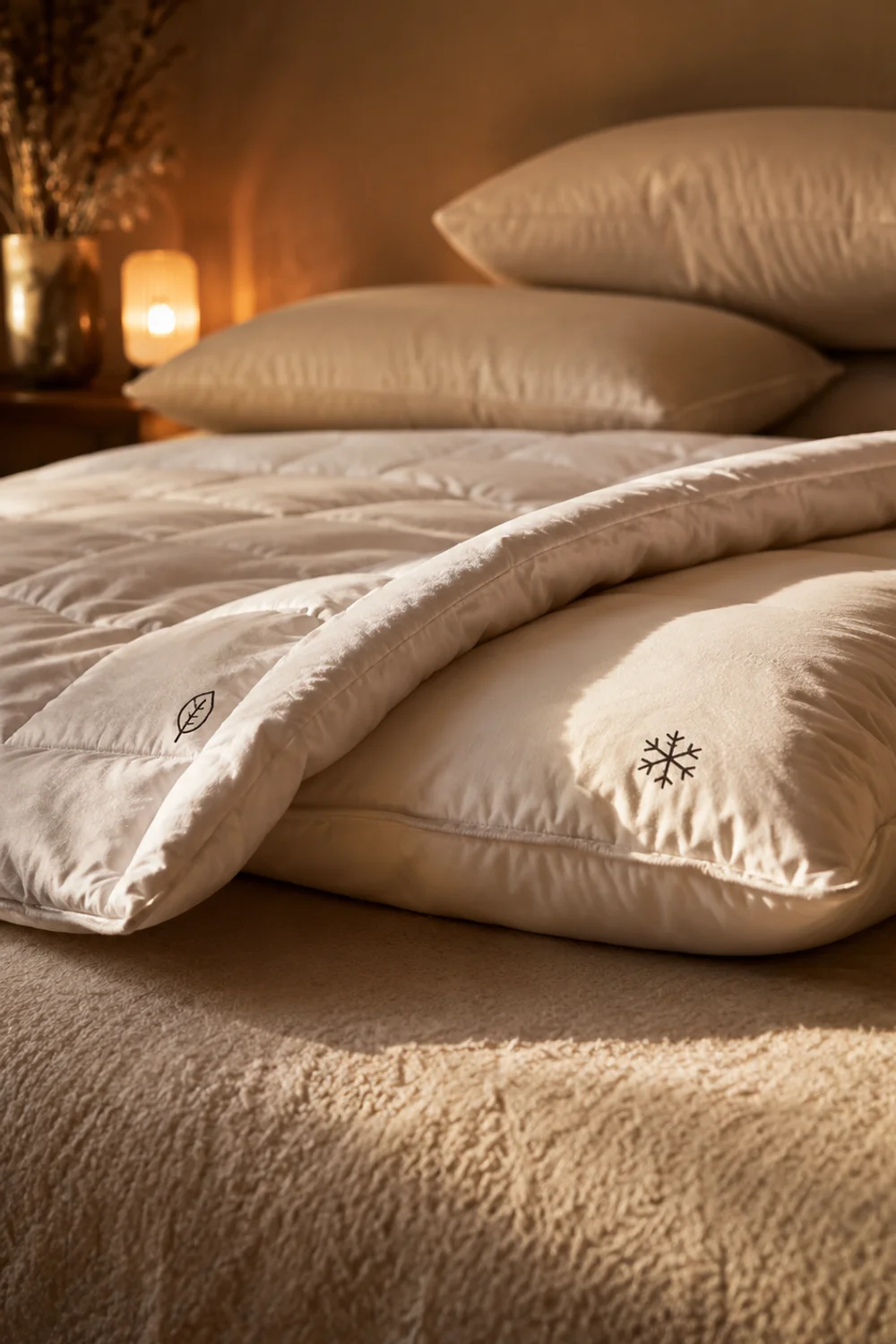
The most overlooked fix is also the simplest: a duvet insert built with two independently zoned halves, so each side of the bed can run warmer or cooler without either person stealing the other’s covers or waking up sweating through the night. A dual-zone duvet insert, split into separate fill sections under one shared cover solves a genuinely functional problem while still presenting as a single, seamless piece of bedding from the outside — nobody has to know the two halves are doing different jobs underneath.
Layering matters just as much as the insert itself. A flat sheet loose enough to move with two bodies rather than tucked hospital-tight. A lightweight blanket folded at the foot of the bed for whoever runs cold, rather than a single heavy top layer that assumes identical preferences. Pillows in a mix of heights so each person can find their own without either being handed the “wrong” one by default.
This is bedding designed around use, not just appearance — the difference between a bed that looks perfectly composed in a photograph and one that actually holds two people comfortably enough that neither wants to leave it. Get this right and the room’s romance survives well past the first night; get it wrong and no amount of styling upstairs will compensate for what’s happening under the covers.
8. Where the Two Get Ready
 Save it
Most bedrooms treat getting dressed as solitary, utilitarian time — a closet in one corner, a mirror wherever it fits, no real thought given to two people occupying that process at once. But getting ready together is one of the most consistently intimate rituals a couple has, and a room that gives it no dedicated space is quietly wasting one of its best opportunities for closeness.
This doesn’t require a full dressing room. A small shared surface near the closet — wide enough for two people to stand at simultaneously, without one having to wait for the other to finish — turns a rushed morning routine into something closer to a shared moment. Luxury Walk-In Closet Inspiration Ideas You Will Absolutely Love treats the closet itself as a fully designed room; this is a smaller, more modest version of that same idea, scaled to fit inside the bedroom rather than requiring a separate space.
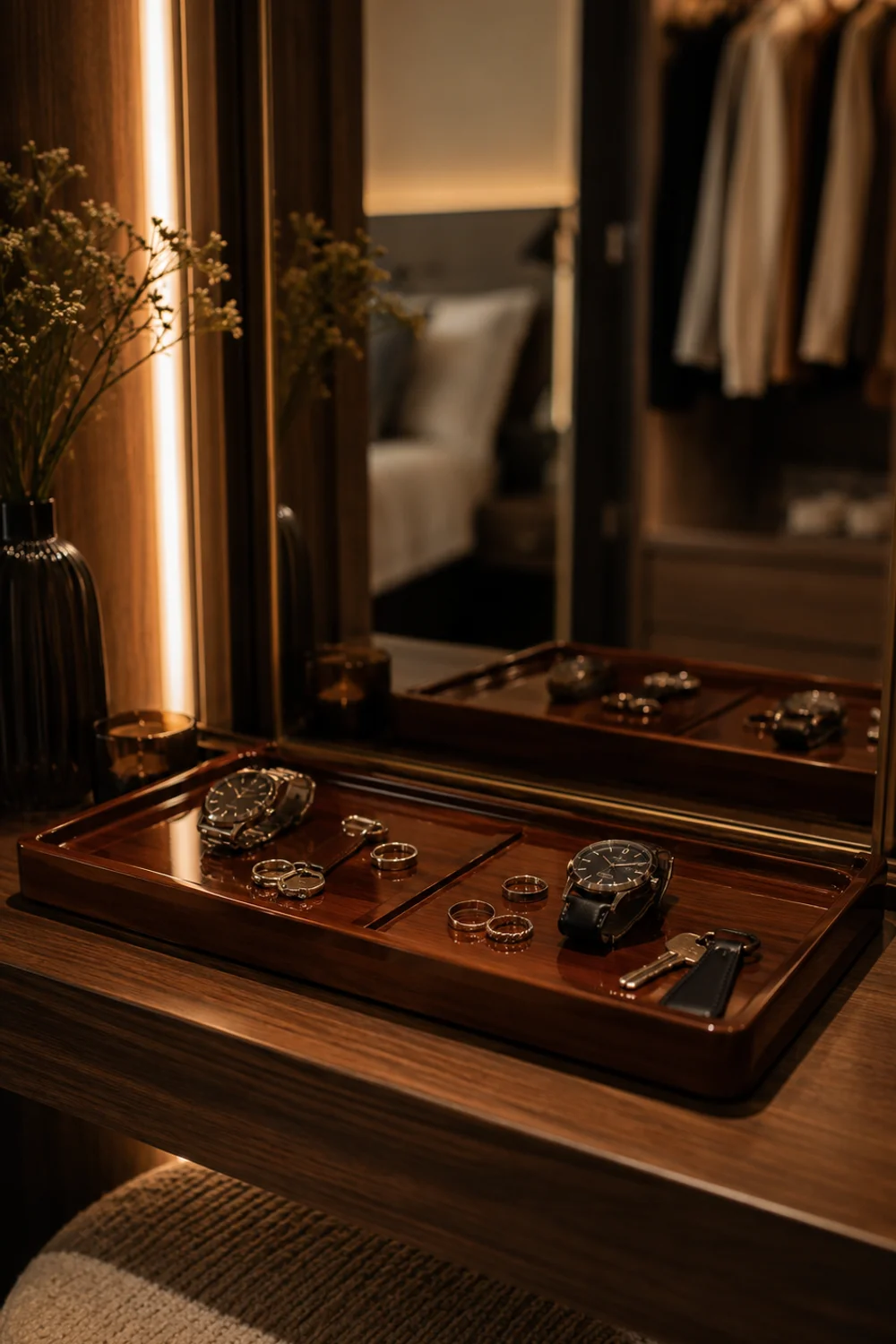
A lacquered wood catchall tray with two compartments, sized for two sets of daily essentials gives each person a designated spot for watches, rings, and pocket items without one person’s things slowly colonizing the entire surface — a small structural choice that prevents a real and common source of daily friction.
Watch how you actually use the space for a week before deciding what it needs. Some couples want a bench to sit on together while getting dressed; others want two full-length mirrors angled slightly apart rather than one shared. There’s no single correct layout — the only requirement is that it accommodates two people moving through the same routine at the same time, rather than politely taking turns in a space built for one.
Lighting deserves a second mention here, specific to this ritual rather than the room overall: a warm, flattering light near the dressing area — angled to avoid harsh overhead shadow on the face — makes the process of getting dressed together feel considered rather than merely functional. It’s a small addition, but it’s the difference between a corner that feels like a utility station and one that feels like it belongs to the same room as everything else you’ve built.
9. The Threshold Rule
 Save it
Every bedroom has a moment of transition — the point where the hallway ends and the private room begins — and most bedrooms do nothing to mark it. The door swings the same way it does for a linen closet. There’s no sensory shift, no cue that says *this space operates under different rules than the rest of the house*. A romantic bedroom benefits enormously from making that threshold feel deliberate.
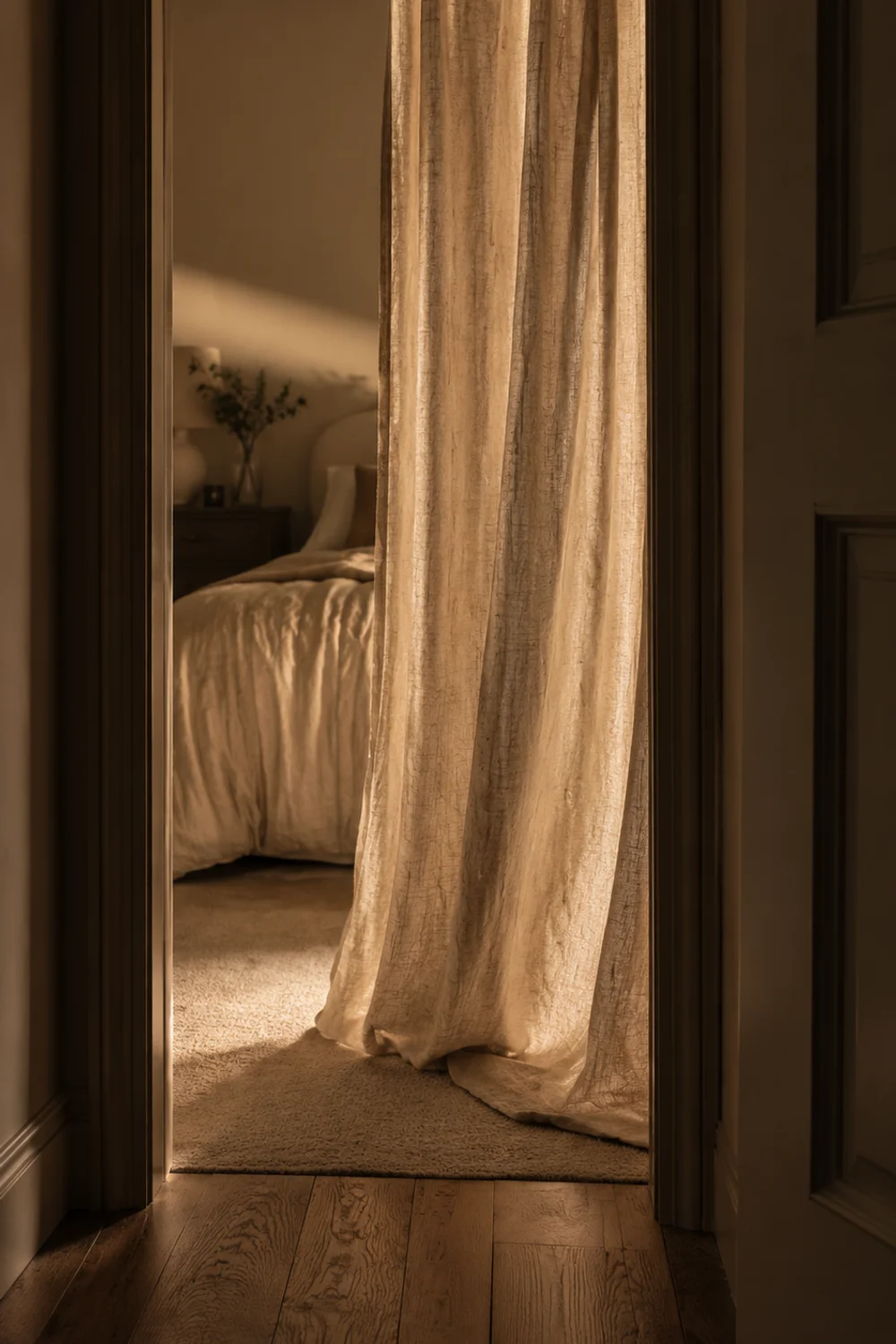
This isn’t about a sign or a symbol. It’s about weight, material, and sound. A door that closes with a substantial, satisfying latch rather than a hollow click. A heavy fabric panel hung just inside the doorway, which has to be physically parted to enter — the small resistance of moving through fabric registers, almost subconsciously, as crossing into somewhere private. A change underfoot, even a single rug placed just past the threshold, gives the body a cue that the floor itself has changed.
A heavy linen curtain panel mounted just inside the bedroom door does this without any construction — it adds both a visual and physical barrier that has to be crossed on purpose, softening sound from the hallway in the process. The slight formality of parting a curtain to enter a room is a small, almost theatrical gesture, and theatrical, used this sparingly, works entirely in the room’s favor.
The threshold should be the one place in this entire room where a small flourish is allowed to be obvious. Everywhere else, the goal has been restraint and mechanism over symbol. Here, at the exact point of entry, a deliberate, slightly ceremonial gesture sets the tone for everything that follows it — which is precisely why it should be the only place you allow yourself one.
Even something as small as a change in floor sound helps. Hardwood in the hallway giving way to a soft rug just past the door means the last few footsteps into the room are quieter than the ones that led up to it — a subtle, almost cinematic cue that you’ve arrived somewhere the volume of the rest of the house doesn’t reach.
Common Mistakes
1. Reaching for literal romantic symbols first
Hearts, roses, cursive signage, and Valentine’s-red accents are the first instinct for most people trying to make a bedroom feel romantic, and they’re almost always the reason the room ends up looking staged instead of felt. These objects communicate the idea of romance to a visitor rather than producing the feeling for the people who live there. If a design choice would look identical in a greeting card aisle, it’s a symbol, not a mechanism, and it belongs on the list of things to remove rather than add.
2. Lighting the entire room evenly
An instinct toward brightness — flooding every corner so nothing feels dim or unfinished — quietly destroys the sense of shadow and privacy a romantic bedroom depends on. A perfectly, evenly lit bedroom reads as a hotel room, not an intimate one. Uneven, deliberately placed light with real dark space between sources does more atmospheric work than any amount of additional brightness.
3. Styling for one person’s taste only
It’s common for one partner to unconsciously design the room around their own preferences — their reading chair, their side of the closet fully finished, their nightstand noticeably more considered than the other’s. The room then quietly communicates an imbalance every single day, which works directly against the closeness it’s supposed to support. Every major decision benefits from a genuine check-in with both people living there.
4. Relying entirely on candles for atmosphere
Candles are lovely for an evening and impractical as a room’s only atmospheric strategy — nobody wants to light and extinguish six candles every night, and an unlit candle collection reads as clutter rather than ambiance. Build the room’s actual lighting plan around fixtures that create the same warm, low quality of light without requiring an open flame, and let candles remain an occasional addition rather than the foundation.
5. Treating the bed as the only surface that matters
It’s easy to pour every romantic decision into the bed itself — the headboard, the bedding, the pillows — while leaving the rest of the room as an afterthought. A single beautifully styled bed surrounded by a generic, under-considered room breaks the atmosphere the moment anyone looks past the mattress. The seating, the lighting, the threshold, and the surfaces around the bed all need the same level of intention as the bed itself.
Frequently Asked Questions
What’s the single fastest change to make a bedroom feel more romantic without a full redesign?
Swap the room’s primary light source for something lower, warmer, and positioned below eye height — a single well-placed amber-toned lamp or sconce, with the overhead light turned off entirely, changes the emotional register of a room faster than almost any other single change. It costs little, takes an afternoon, and immediately shifts the room away from “functional” and toward “intentional.”
How do you make a small bedroom feel romantic without it becoming cluttered?
Shrink the number of objects, not the ambition of the room. A small bedroom can absolutely support deliberate shadow, desaturated color, and considered materials — it just can’t support all of the ideas in this article at once. Choose two or three mechanisms that matter most to you, execute them fully, and leave the rest of the room quieter than you might otherwise want to.
Is it possible to do this on a tight budget?
Yes, and arguably it’s easier — the mechanisms that matter most here are lighting placement, color choice, and editing what’s already in the room, none of which require new furniture. A secondhand lamp with the right bulb color temperature, existing bedding dyed or swapped for a more muted tone, and a genuine edit of what’s currently displayed will move a room further than an expensive but poorly placed purchase.
How often should the “romantic” elements of a bedroom be refreshed or changed?
Rarely, and that’s part of the point. A room built on mechanism rather than trend doesn’t need seasonal refreshing the way a purely decorative room does — the lighting logic, the color restraint, and the material choices hold up because they were never dependent on a passing aesthetic. Personal, specific objects can rotate as your relationship does; the underlying structure shouldn’t need to.
Final Thoughts
A romantic bedroom was never really about decoration — or not primarily. It’s about a room willing to do quiet, unglamorous work in service of two people feeling close to each other, night after night, long after any styling effort has faded from memory.
The mechanics matter more than the symbols. Shadow instead of even brightness. Desaturated warmth instead of literal red. Materials chosen for touch rather than photographs. Furniture arranged for two rather than for one. None of it needs to announce itself, and that’s precisely why it works — a room that has to explain its own romance usually isn’t succeeding at creating it.
Start with one change. The lighting, the bedding, the threshold. Notice what shifts. The rest of the room will tell you, gradually, what it still needs — and what it never did.
There’s no finish line here, and that’s the appeal of building a room this way. A trend-driven romantic bedroom eventually looks dated and has to be redone; a room built on mechanism — shadow, warmth, proximity, specificity — simply keeps doing its job, quietly, for as long as you’re both living in it.
This post contains affiliate links. I may earn a small commission at no extra cost to you.
READ FOR THE NEXT STEP?
KEEP READING
Continue with another helpful idea.

Japandi Bedroom Ideas You Will Absolutely Love and Need to Try in 2026
SHOP MY FINDS
Discover my favorite products for this place
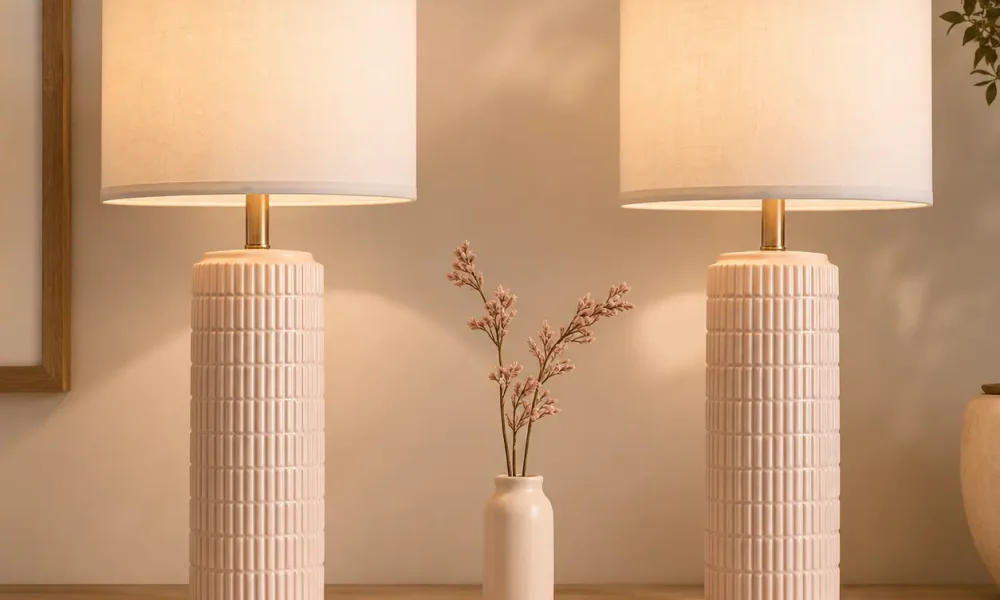
My Favorite Bedroom Finds
GET THE PLANNER
Get the planner guide and make it easier.
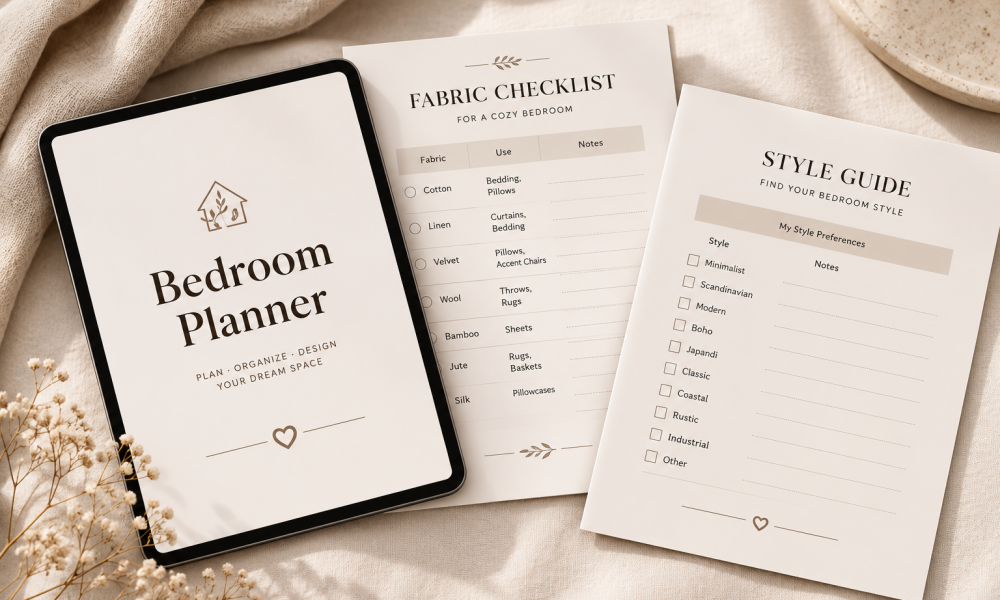
The Ultimate Bedroom Planner
Get cozy inspiration delivered to your inbox.
✓ 14-page beautifully designed ebook
✓ Cozy decorating ideas
✓ Practical room-by-room inspiration
You’re in! 🎉
Thanks for joining the NestFlowHome community!
Your free ebook is already on its way to your inbox. If you don’t see it within a few minutes, please check your Promotions or Spam folder.
Join the NestFlowHome community for weekly decorating inspiration.

Timeless home decor ideas and slow living inspiration for a calm, beautiful life.