
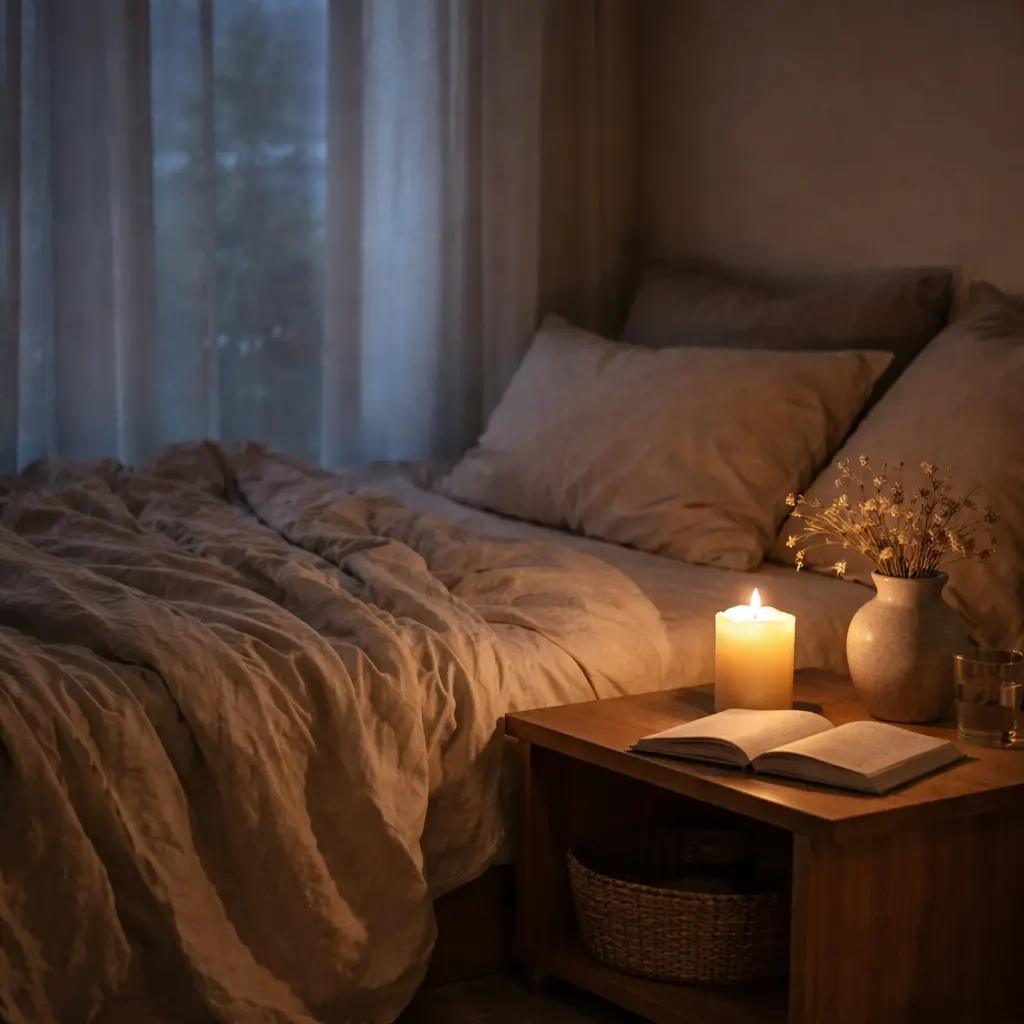
Slow Living Night Rituals for Better Sleep and Inner Calm
By Emily | April 20, 2026
It’s 9 p.m. and your brain is still racing. Instead of winding down, you’re running through tomorrow’s to-dos, revisiting today’s mistakes, and stressing about not being able to sleep again. Your body is tired, but your mind can’t shut down. It’s not because you’re in a bad shape, it’s because modern life has no transitions. There are no gates, no thresholds. Just a sharp shift from being fully on to being “I should be sleeping now.” And your nervous system says, no, thank you.
Evening rituals are not the same as routines. Routines are mechanical—steps you repeat to “make it happen.” Rituals are intentional—moments you consciously experience because they have meaning. Routines are about efficiency. Rituals are about presence. And it’s precisely this difference that makes evening rituals not only improve the quality of your sleep, but also change your entire outlook on life.
This article is about how to consciously slow down, how to create sensory experiences that signal to your body that there is peace now. You’ll learn why small, repetitive gestures—a cup of tea, lighting a candle, silence—are important, and how they build into a ritual that slowly transforms your nervous system. It’s not about being perfect. It’s about living consciously, slowly, in the last hours of the evening, so that your body and mind can finally find peace.
1. Understand the Difference Between Routine and Ritual
 Save it
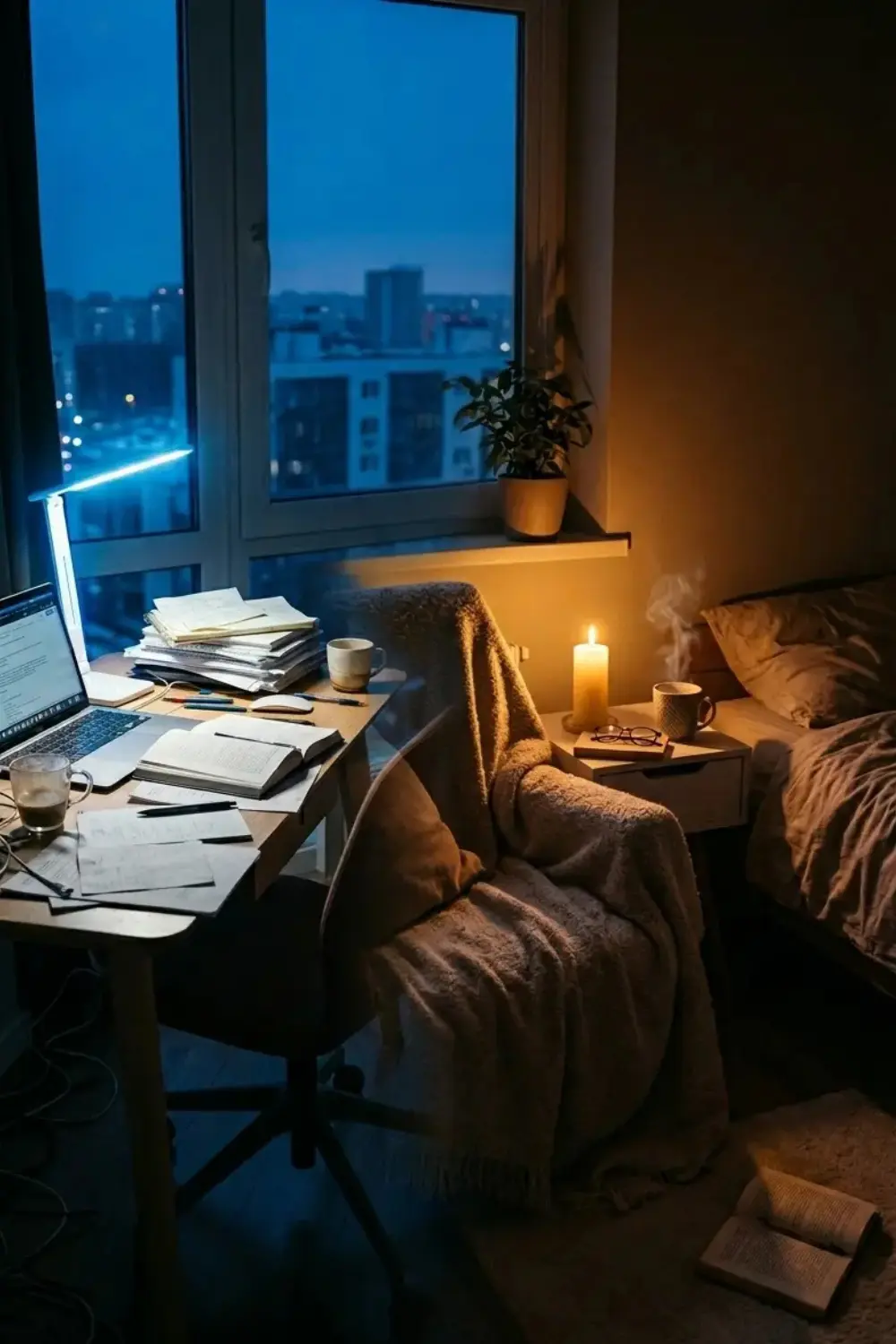
Many people confuse the two, but they are fundamentally different. A routine is goal-oriented: a series of steps you take to achieve something. You brush your teeth because you don’t want cavities. You set an alarm because you don’t want to wake up late. They are useful, but they are cold. They have no presence, no emotional weight. They are just tasks. A ritual, on the other hand, is symbolic. It is not about what you do, but how and why. When you light a candle in the evening, it is not for lighting – you have electricity. It is because the flame, the warm light, the scent are telling your body: the rush of the day is over, it is time to calm down. It is a deliberate gesture that carries meaning.
A routine can be efficient, but it can be draining. You are running around, and your mind is elsewhere. A ritual slows you down. It stops you. It makes you present. And that’s what your nervous system needs. Not another “to-do” list, but moments when you simply are, and that’s enough.
When you start to distinguish routines from rituals, you realize that not everything needs to be made into a ritual. But the things that support calmness – making tea, writing in a journal, dimming the lights – are worth doing consciously, slowly, with presence. Because then they don’t just happen, they work for you. They reshape your nervous system, they condition it for sleep.
2. Dim the Lights as the First Sensory Signal
 Save it
The first and perhaps easiest thing you can do is gradually reduce the intensity of the light in the evening. This is not only about not damaging your melatonin production. It is also about giving your body a sensory signal: the day is slowly fading, night is approaching.
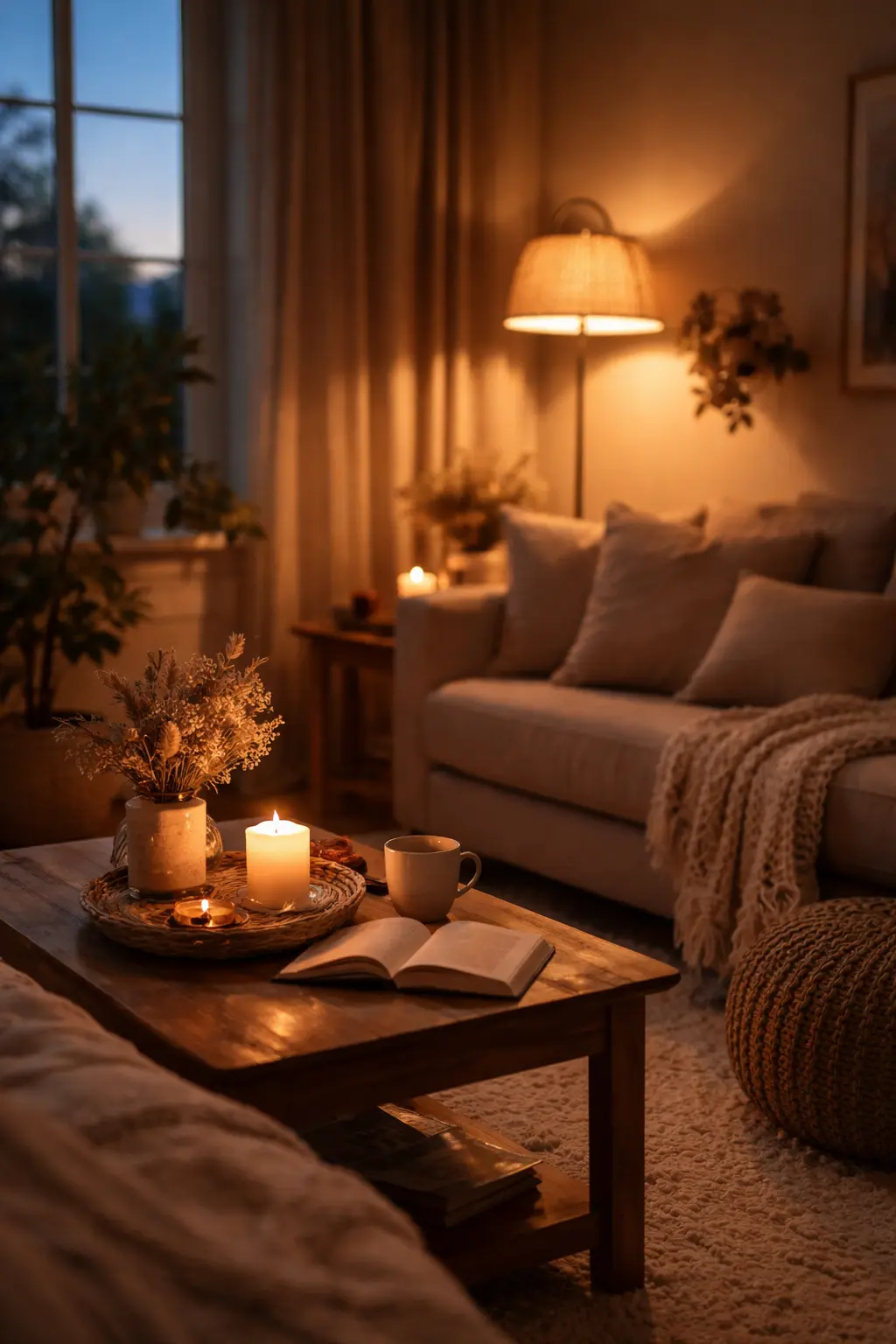
Don’t turn off all the lights at once, and don’t jump from bright overhead lighting to complete darkness. Let it be gradual. First, turn off the overhead light, leaving only a floor lamp or table lamp. Then later, when it’s almost bedtime, dim that too. You can use dimmable lights, which you control with a remote control or an app, so you don’t have to get up, but you can slowly lower the light.
Warm-toned light – orange, yellowish – is much more conducive to relaxation than cold white. If you have the opportunity, use candles too. Not because it’s “evocative,” but because the flame is a slow, pulsating light that has a hypnotic effect. Just a few minutes of silence staring at a candle flame – the mind automatically slows down.
This simple change – dimming the lights after 8 p.m. – is one of the most effective ways to get your nervous system to understand that the end of the day is approaching. And it doesn’t cost anything. Just paying attention.
3. Brew Tea as a Ritual, Not Just a Drink

 Save it
Tea is not calming because it has chamomile or lavender in it. It is calming because of how you make it and how you drink it. If you rush to boil some water, throw in a filter, and make a phone call, that is not a ritual. That is routine. And it will not calm you down. But if you make your tea at the same time every night, with the same cup, with the same movement, your nervous system will learn that this is the moment when we slow down. Boil the water and stand there quietly. Listen to the sound of the kettle. Pour the tea – it can be a simple chamomile, it can be lavender, it can be anything that calms you. Watch it as it steams.
Hold the cup with both hands, feel its warmth. Don’t drink it quickly. Sip it slowly, paying attention to each sip. Feel the warm liquid go down your throat, down into your stomach. It’s this mindful presence that changes the entire experience. The tea itself is just a drink. But the ritual you build around it is an anchor that brings you back to the same place every night: peace.
If you want to dive deeper into how to build a healthy nighttime routine—which then incorporates these rituals—read my article [The Ultimate Healthy Night Routine for Better Sleep and Productivity].
4. Create a Journal Practice That Externalizes Your Mind
 Save it
One of the biggest obstacles to sleep at night is that your mind can’t stop. Your thoughts are racing – what did you say wrong today, what do you need to do tomorrow, what are you afraid of, what are you worried about. And as long as they are in your head, you can’t calm down.
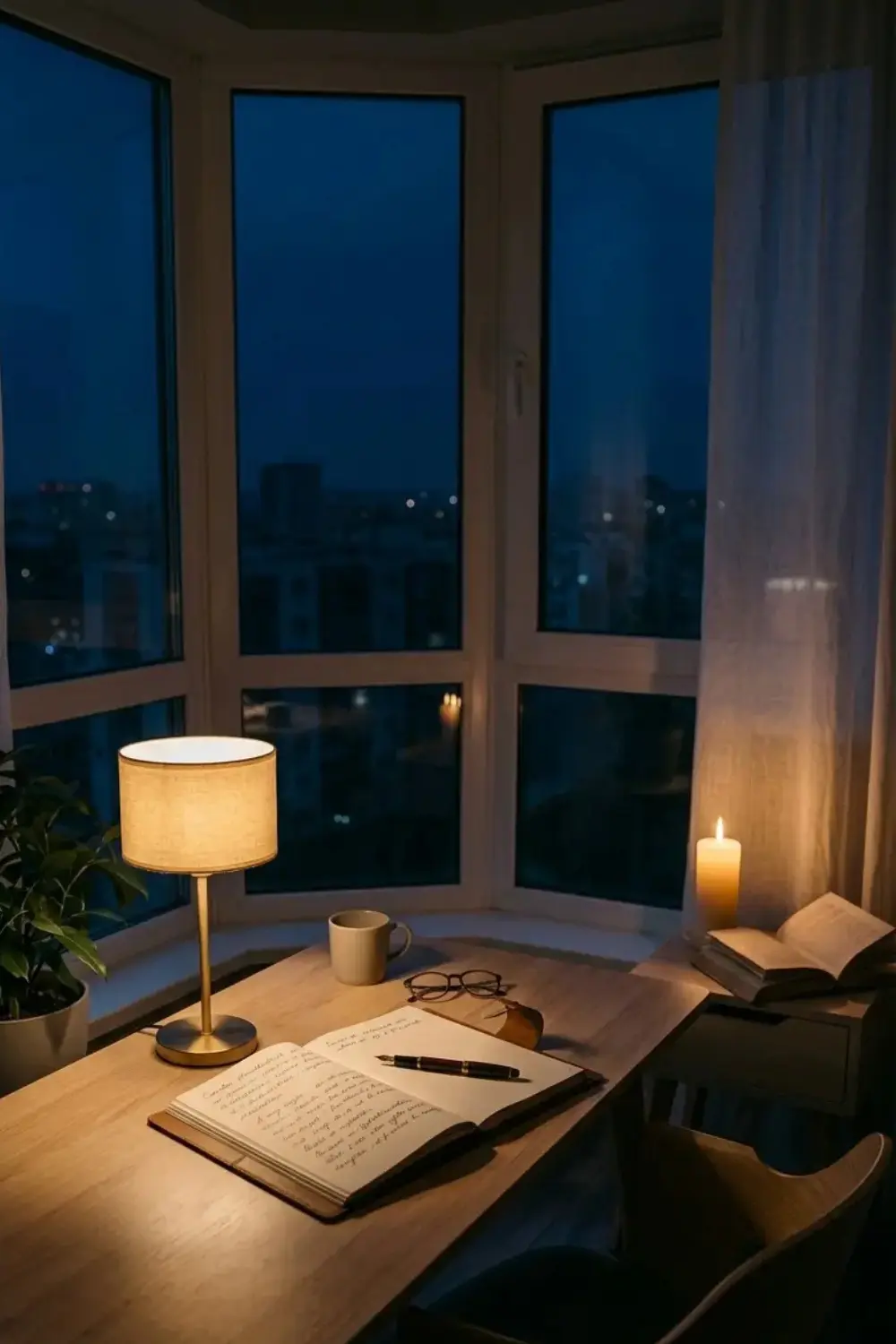
Journaling is not a diary in the sense that you write down what happened today. It is a process in which you take the thoughts out of your mind and put them on paper. This allows your brain to let them go – it knows that you won’t forget them because you wrote them down. It doesn’t have to be structured. It doesn’t have to be pretty. You simply sit down with a blank notebook and write. You can write down what stressed you out today. You can write down what you are afraid of tomorrow. You can write down what you are grateful for – this is especially effective because it shifts your mind from problems to positives. But whatever is on your mind can go in. The important thing is that it’s out there.
When you do it regularly—at the same time, with the same pen, in the same place every night—it becomes a ritual. It’s not just “I’m writing something,” it’s “this is my moment to let go of the day.” And your nervous system learns that when I do this, I don’t have to think about it anymore. Then sleep can come.
If you’re interested in how to create a calming bathroom environment that’s even more conducive to evening relaxation, check out my article [Feeling Stressed? Here’s How to Build a Relaxing Bathroom Retreat].
5. Use Scent Intentionally to Anchor the Evening
 Save it
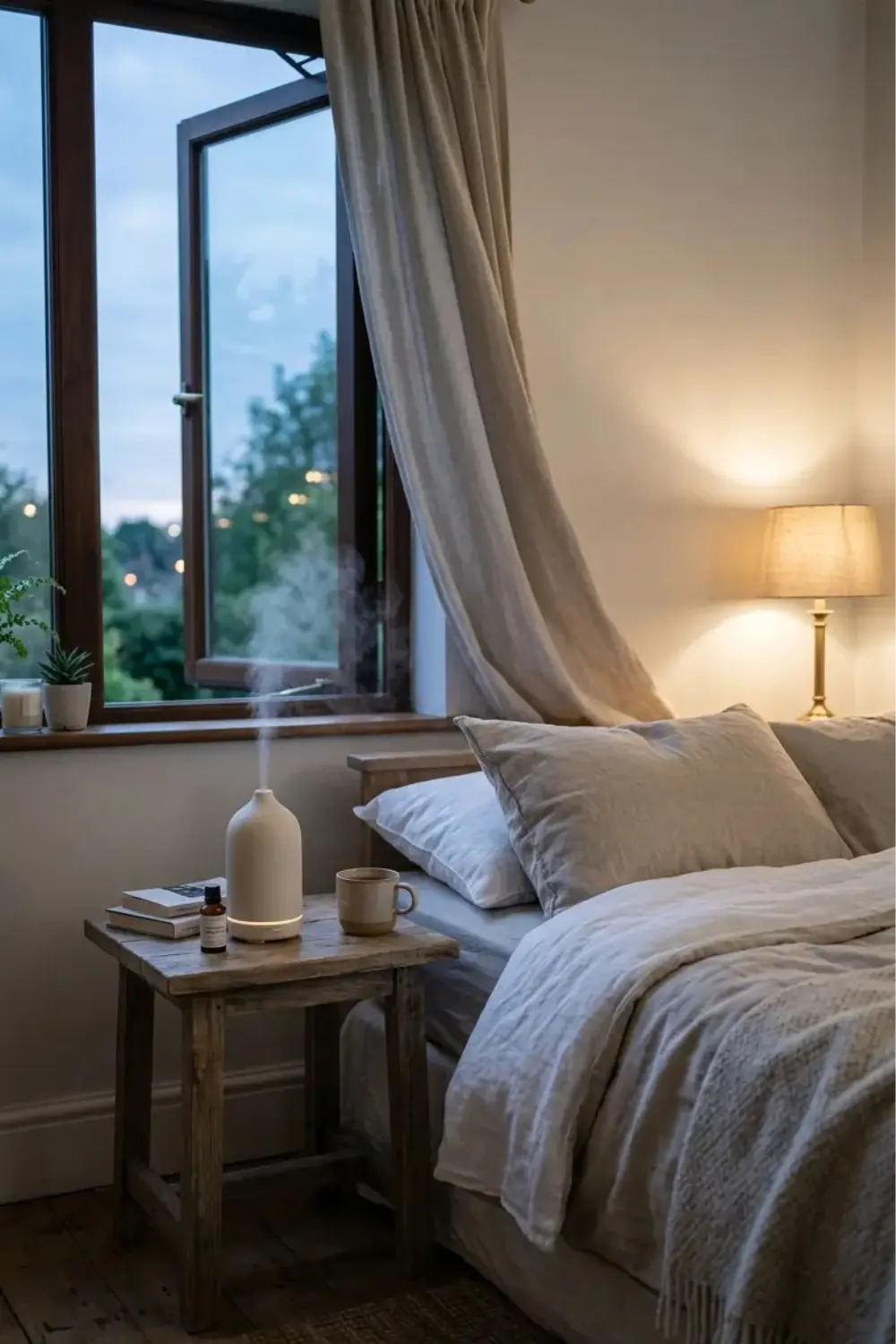
Scent is one of the most powerful sensory triggers, directly connected to your limbic system – the emotional center of your brain. This is why a scent can instantly evoke a memory or completely change your mood. And that’s why it’s worth consciously using scents in your evening ritual.
But it’s not like you’re packing random stuff and hoping one of them helps. Scent really works when it’s consistent. If you smell the same scent every night – be it lavender, chamomile, sandalwood, whatever – your brain will eventually associate that scent with sleep. It’s a conditioned response. You’re teaching your body that when I smell that, it’s time for sleep. You can use an aromatherapy diffuser with a few drops of essential oil, or simply a pillow spray. But do it consistently. Don’t switch out new scents every week, because then the association will never form. Choose one, stick with it for at least a few weeks, and let your brain learn the pattern.
The strength of the scent also matters. Don’t make it too intense. If you can specifically “feel” everything, it’s distracting, not calming. The goal is to have a subtle background, barely noticeable, but still present. Like a soft whisper, not a shout.
But don’t just keep the scent in your bedroom. If you light a candle or turn on the vaporizer after 9 p.m., that’s a signal to you: from now on, we’re slowly moving towards sleep.
6. Build in Silence, Not Just Background Noise
 Save it
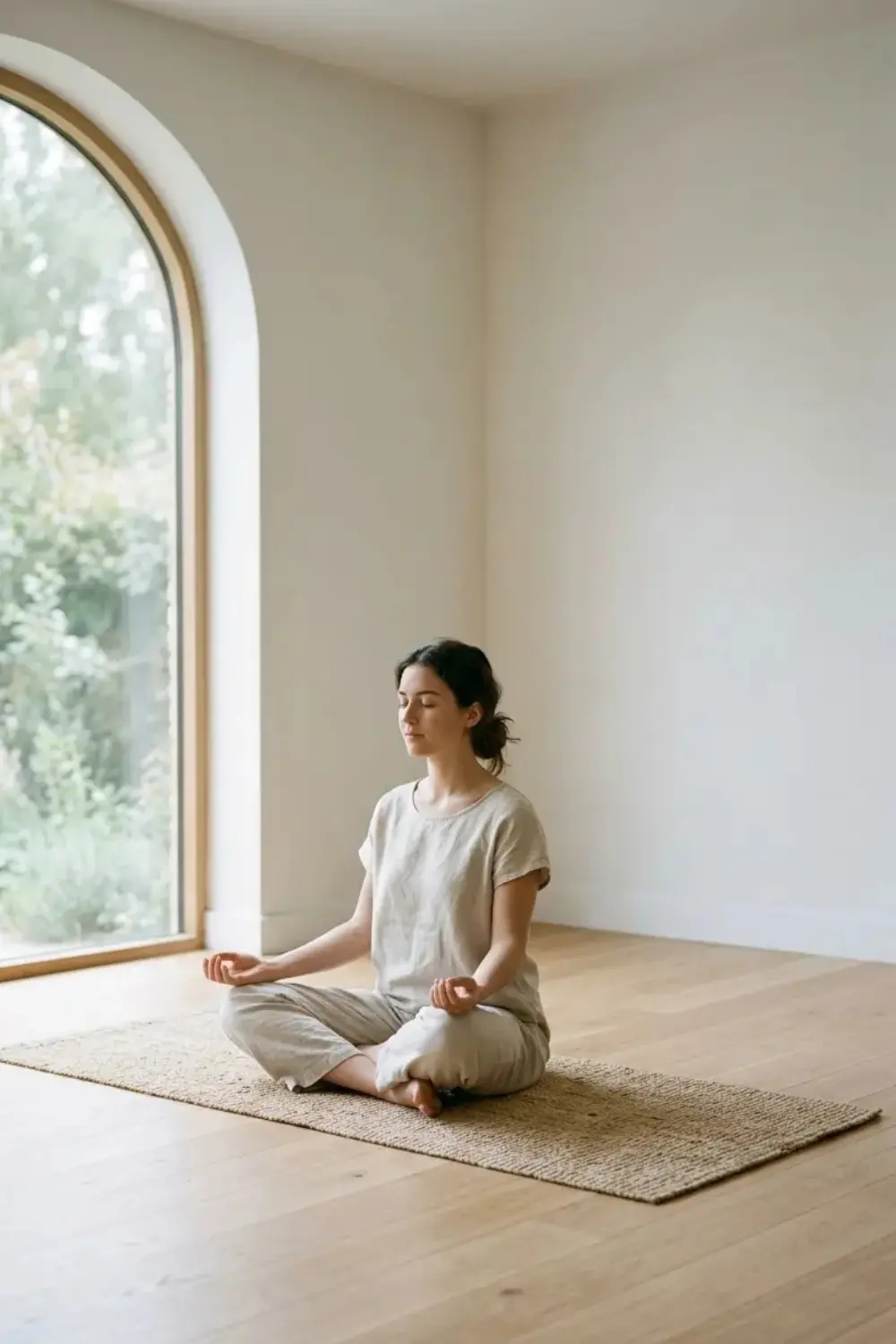
Silence is not a lack. Silence is a choice. And it’s one of the most powerful sensory experiences we can give our troubled nervous systems. We live in noise all day long – traffic, meetings, music, notifications, conversations. Our brains are constantly filtering, processing, reacting. And there’s never a real break.
In the evening, when you have the opportunity, don’t replace the external noise with background noise. Don’t turn on the TV “just because.” Don’t start a podcast just because you “need something.” Allow yourself to be quiet. Or at least calm. If complete silence makes you nervous – and for many people it does because it’s unusual – then it can be a soft, unstructured sound of nature. Rain, the ocean, the forest. But not narration, not music that captivates you. Just background that doesn’t demand attention.
Silence teaches your mind that it’s okay to do nothing. It’s okay to just sit. Just breathe. Just be. And that’s what most of us have forgotten. We think we need to fill every moment with some input. But the nervous system doesn’t work that way. The nervous system needs empty space to process, to organize, to regenerate.
So in the evening, when you’ve turned off work, screens, tasks, try to let go of the background noise. Sit quietly. Breathe. Listen to the sound of your body. It’s going to be uncomfortable at first. But after a few days, it starts to feel natural. And then you realize: I missed that.
7. Stretch or Move Gently to Release the Day From Your Body

 Save it
Your body carries the stress of the day. Your shoulders are contracted, your jaw is clenched, your stomach is tense. And until you release this physical tension, your mind can’t calm down either, because it’s constantly receiving signals from your body: there’s danger, there’s tension, it’s not safe. Evening stretching or gentle movement is not a workout. It’s not a performance. It’s not about how much you can bend or how much you can hold. It’s about slowly, consciously going through your body and gently opening up any areas – where you feel pain, tension. If you want to delve deeper into the correct execution of yoga poses, read my article on the [10 Best Yoga Poses for Better Posture at Home].
You don’t need a yoga certificate. You don’t need to know any technique. Just lie down on the floor or on your bed and move in a way that feels comfortable. Neck circles. Shoulders up and down. Hip openings. Lower back stretches. Leg openings. Slowly. Breathing. Paying attention to your body’s responses.
I spend ten to fifteen minutes every night doing this, with soft music or silence. There’s no order, no rules. Just let your body tell you what it needs. And when you’re done, you feel like something has let go. Not completely, but a little. And that’s enough to bring you closer to sleep. If you want a dedicated space for this—a yoga mat or a soft rug in your bedroom—that helps make it a ritual. But it’s not necessary. Just do it consistently, at the same time every night.
8. Set Boundaries With Screens and Stimulation
 Save it
Screens are one of the biggest obstacles to sleep at night. But not because they emit blue light—although that’s a problem. It’s because they constantly stimulate your brain. Every scroll, every video, every notification gives you a little dopamine boost, and your body stays in this quasi-alert, waiting state.
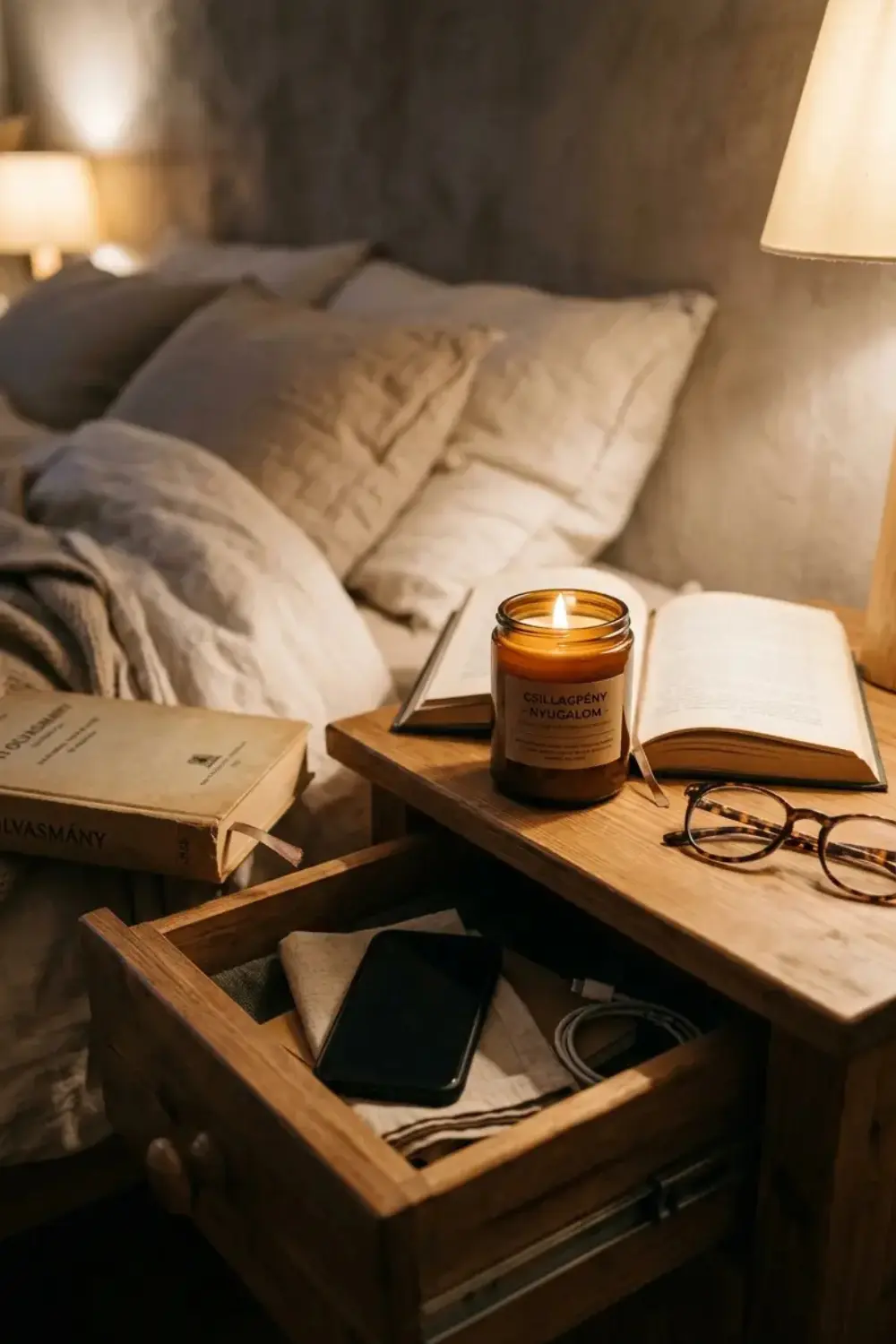
If you’re serious about your evening rituals, you have to decide where to draw the line. For me, digital sunset is 9 p.m. My phone goes in a drawer with the volume turned off, my laptop closes. It’s not a hard and fast rule—if there’s something urgent, I’ll check it. But it’s rare. Because I’ve learned that nothing is so urgent that it’s worth sacrificing your sleep.
It’s going to feel weird at first. You’re going to miss it. You’re going to feel like you’re missing out on something. But after a week, you’re going to realize that you’re not missing out on anything. In fact, you’re being present in something that’s much more important: your own evening, your own peace of mind.
If that feels too radical, start small. Let’s say you go to bed at midnight. Then don’t check social media, the news, or emails after 10 p.m. You can read an e-book, listen to a podcast – but don’t scroll. Don’t let the algorithm guide you. And stimulation isn’t just digital. Loud music, tense conversations, emotionally charged content – all of these things can hinder your ability to wind down. In the evening, choose soft, slow, peaceful things. This isn’t boredom. This is mindfulness.
9. Honor the Small, Repetitive Gestures
 Save it
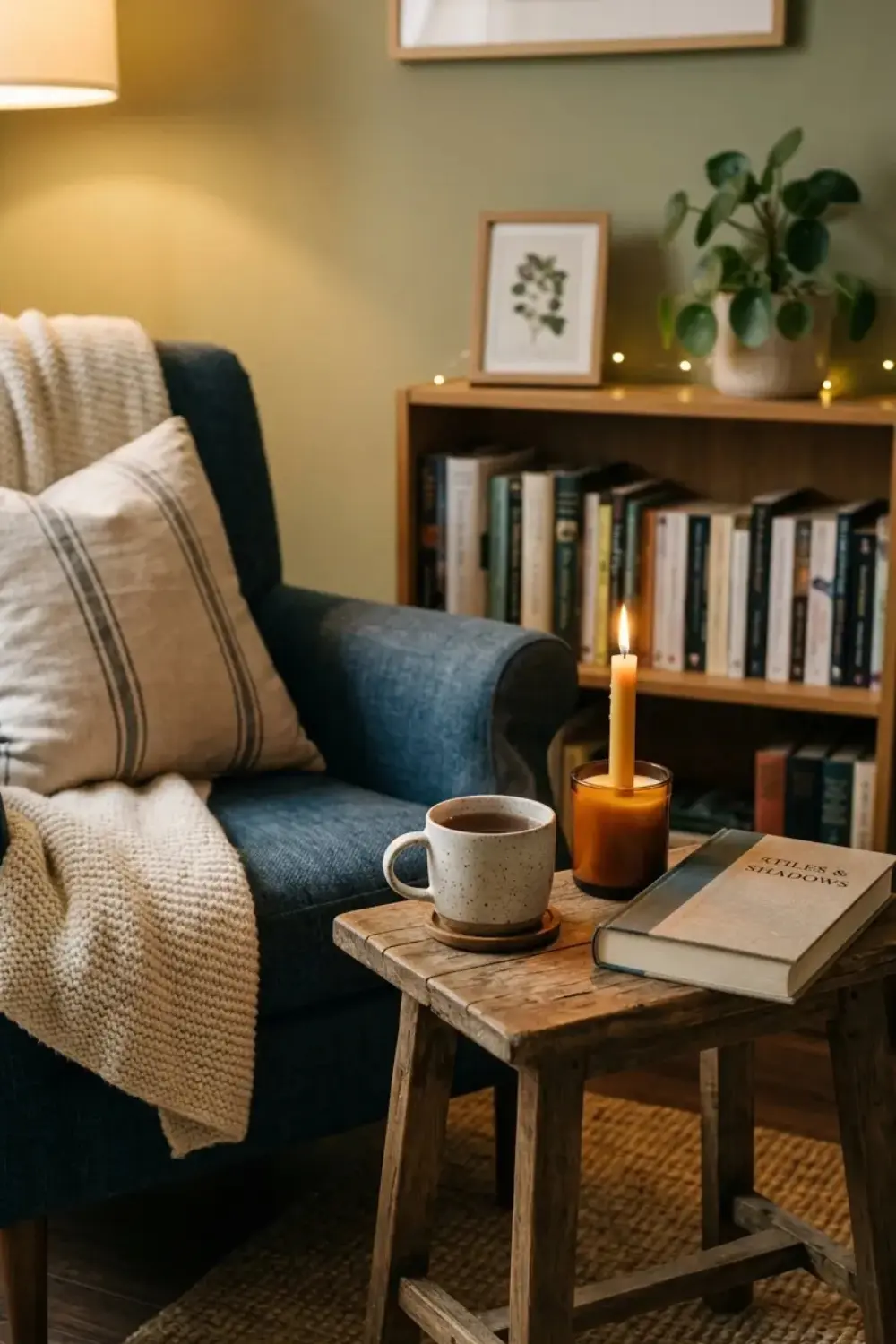
Slow living is not about slowing down everything. It is about consciously slowing down certain things and letting them have meaning. Making a cup of tea can be a mechanical task. Or it can be a ritual where you are present, where you feel, where you pause. Repetitive gestures – the same tea every night, the same cup, the same place where you sit – these are what condition your nervous system. The brain loves patterns, and if it sees the same sequence every night, over time it will automatically know: now we are going to calm down.
This is not boredom. This is security. Predictability means: no surprises, no danger, everything is fine. And that is exactly what the nervous system craves: system, security, predictability.
So don’t think of rituals as “the same boring thing all the time”. Think of them as anchors. Points you can return to, no matter how chaotic your day has been. And as the weeks go by, these small gestures—lighting a candle, pouring tea, opening a journal—will become so powerful that a single movement will be enough to calm your body.
That’s the real power of rituals. It’s not what you do. It’s that you do it consistently, and that you give it meaning and weight.
10. Create a Gratitude Pause Before Sleep

 Save it
The brain is naturally biased towards negativity – it’s an evolutionary defense. But if you go to bed at night with that – your worries, your fears, your problems – it’s going to poison your sleep. Your brain will work on them at night, and you’ll wake up feeling worse the next day. A gratitude pause is a simple gesture: before you go to bed, you stop and think of three things you’re grateful for today. They don’t have to be big things. It could be your morning coffee. It could be someone smiling at you. It could be that your day wasn’t a disaster. Anything.
This shifts your mind from problems to values. And your nervous system responds to that – when you feel gratitude, it’s a safe, positive state that brings peace. It doesn’t have to be a deep spiritual experience. It’s just a moment when you realize: there’s something good, not just bad.
I do this in writing, as part of journaling. Or it can be just in your mind, lying in bed. The key is to be aware. Don’t just run through it – feel it. Take a few seconds to notice each thing. This practice is backed by a lot of research – gratitude reduces anxiety, improves sleep quality, increases overall well-being. But it doesn’t work because you “think positively”, it works because it actually reshapes the way your brain works.
Micro-Rituals for Time-Constrained Evenings
If you don’t feel like you have time for an hour-long evening ritual, build micro-rituals. These are only two to three minutes each, but they act as anchors just like the longer versions. The key is consistency, not length.
A micro-ritual could be lighting a candle and watching the flame for thirty seconds. It could be pouring tea and holding the cup in both hands until it’s cool enough to drink. It could be taking three deep breaths before you go to bed. It could be writing down a sentence about what went well today.
These are little things. But if you do the same little things every night, in the same order, your nervous system learns the pattern. And as the weeks go by, these micro-moments will carry as much weight as a much longer ritual.
If you have more time—on weekends, on days off—then expand it. But stick to micro-rituals during the week. Don’t feel like “I’m either doing it all or nothing.” The point is regularity, not perfection.
And another version: if you live in a couple or family, build shared rituals. Maybe at nine o’clock in the evening everyone turns off their phones and spends ten minutes in silence – everyone doing their own thing. Or it could be a joint tea ceremony. Or a joint breathing exercise. Shared rituals not only help individuals, but also strengthen relationships because they bring people into a common space, without being present.
And finally: don’t give up if you miss one night. A ritual is not fragile – missing one day doesn’t destroy it. Continue the next day. What matters is that you stay consistent from weekend to weekend, month to month, not that every single day is perfect.
Common Mistakes to Avoid
One of the biggest mistakes is overcomplicating it. You incorporate ten different elements—candles, tea, journaling, stretching, breathwork, reading, listening to music—and when you can’t fit them all into your evening, you stress that you’re “not doing it right.” This is the exact opposite of what it should be. The goal of a ritual is to be peaceful, not another to-do list.
Another mistake is to be too rigid about it. If you don’t get it right one night, you feel like you’ve “screwed it” and give up. But a ritual is not a law, it’s a support. If you miss tea one night, that’s okay. Do the breathwork. If that’s missed, light the candle. Anything that signals: I’m disconnecting from the day.
A lot of people also make the mistake of copying someone else’s ritual. They see someone on Instagram meditating, doing yoga, journaling, and they think: I need that too. But if you hate yoga, it won’t work. A ritual is effective if it makes sense to you, if it’s calming to you. Don’t copy someone else’s – build your own.
Some people expect results too soon. After a week, they say: “it doesn’t work, I don’t sleep better”. But ritual is conditioning. Your nervous system needs time to learn the pattern. At least two to three weeks before your brain recognizes: this sequence = sleep time. If you give up too early, it never got to where it starts to work.
And finally: the expectation that the ritual will “solve” everything. That if you do it, your sleep will be perfect immediately, all stress will disappear. But ritual is not a panacea. Support. It helps, but it doesn’t replace everything. If you are deeply anxious, if you are chronically sleep deprived, if there are serious problems in your life, then ritual alone will not solve everything. But it can be part of a larger solution.
Frequently Asked Questions
What is the difference between a routine and a ritual?
A routine is mechanical – steps you take to achieve something. A ritual is intentional – moments you consciously experience because they have meaning. A routine is about efficiency, a ritual is about presence. A routine is about purpose, a ritual is about process. Both have their place, but you need rituals to wind down in the evening, not just routines.
How long does it take to develop a functioning evening ritual?
It usually takes two to three weeks to condition your nervous system. It will be unusual for the first few days, maybe uncomfortable. Then it will gradually become natural. And after three to four weeks, it will become automatic. Then you don’t have to think about it anymore – your body will simply know: this is when we wind down.
How many elements should I incorporate into my evening ritual?
Start with two or three. It could be a candle, a cup of tea, a breathing exercise. Once this becomes a regular practice, expand it if you feel like it. But don’t try to do ten things at once—that’s overwhelming. The power of a ritual is in the consistency, not the quantity.
What do I do if I don’t feel calmer after my rituals?
First, give yourself time. You may not see any dramatic changes in the first week. But if after two or three weeks you still feel like it’s not having any effect, then take a look: are you really present during it, or are you just going through the motions? Rituals work not because of what you do, but because of how you do them. If you’re on your phone or your mind is elsewhere, it’s not a ritual, it’s a routine.
Final Thoughts
Slow living evening rituals are not just another productivity hack. They’re not about “resting more efficiently.” They’re about relearning that rest is not a luxury, it’s a necessity. And you don’t need special circumstances to be at peace—just a few moments every night to stop, slow down, and be present.
Your nervous system can’t suddenly switch from full activity to deep rest. It needs a transition. A cue. A ritual that tells it: we’re safe now, we can let go of the day. And when you practice these rituals consistently—not perfectly, but regularly—your nervous system learns the pattern. And over time, it becomes automatic.
Don’t expect a miracle to happen the first night. Don’t expect to do every step perfectly. Start simple. Pick one or two things—a candle, a cup of tea, a breathing exercise—and do them every night. Let them have meaning. Don’t rush it. Don’t expect it to “work” right away. Just be present.
As the weeks go by, you’ll find that these small, repetitive gestures become anchors. Points you can return to no matter how chaotic your day has been. And your sleep will improve not because you’re “doing everything right,” but because your body feels like it has a safe, predictable space to wind down in each night. Start tonight. Light a candle, pour yourself some tea, take three deep breaths. And let that be enough.
This post contains affiliate links. I may earn a small commission at no extra cost to you.
Get cozy inspiration delivered to your inbox.
✓ 14-page beautifully designed ebook
✓ Cozy decorating ideas
✓ Practical room-by-room inspiration
You’re in! 🎉
Thanks for joining the NestFlowHome community!
Your free ebook is already on its way to your inbox. If you don’t see it within a few minutes, please check your Promotions or Spam folder.
Join the NestFlowHome community for weekly decorating inspiration.

Timeless home decor ideas and slow living inspiration for a calm, beautiful life.