
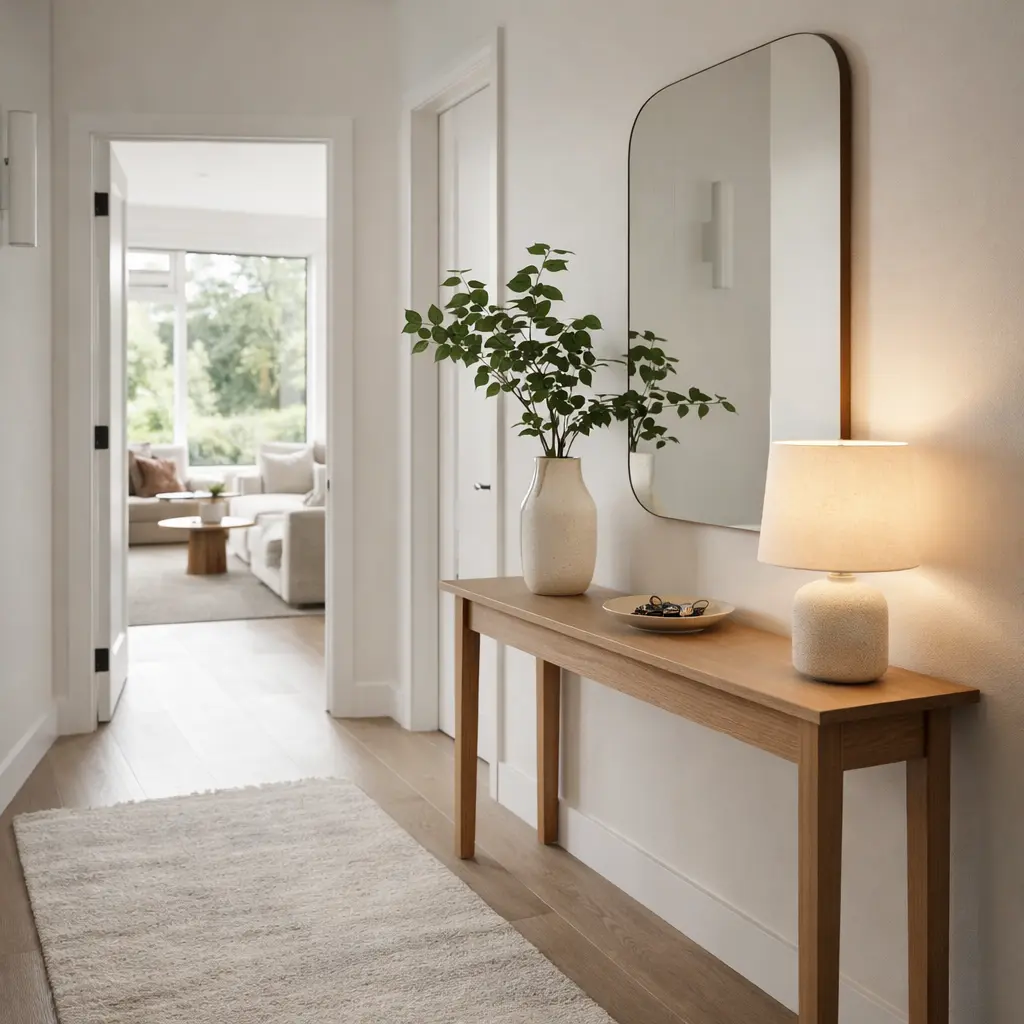
9 Entryway Ideas That Make Your Home Feel More Welcoming
By Emily | March 11, 2026
Your entryway is one of the most underestimated spaces in your home. It’s the place that greets you every single day when you return home – sometimes after long, exhausting hours away. It’s the first impression your guests receive, the visual and emotional threshold between the outside world and your private sanctuary. Yet many people treat their entryway as an afterthought, a space that’s merely functional, lacking personality and purpose.
A well-designed entryway is far more than just a place to store coats and shoes. It’s a powerful tool that shapes your entire experience of home. It sets the tone for how you feel when you arrive, how quickly you can transition from the chaos of the day to the calm of your personal space, and how welcome your guests feel the moment they step inside. A thoughtfully designed entryway helps you organize the daily objects that would otherwise create visual clutter elsewhere in your home. It establishes a sense of order before entering your living spaces. It makes your entire home feel calmer, more intentional, and more curated.
Many people believe that creating a stylish and functional entryway requires extensive renovations, a large floor plan, or a significant budget. The truth, however, is far more encouraging: several thoughtful design decisions and intentional choices are often enough to transform a simple hallway or small corner into a stylish, welcoming reception area that actually works. You don’t need a dramatic overhaul. You need clarity about what serves you, what makes you feel good, and how to layer those elements thoughtfully.
The ideas in this article will help you create an entryway that’s more organized, brighter, genuinely more inviting, and deeply functional. These aren’t complicated solutions. They’re strategic choices that work together as a system to transform a space into something you actively want to spend time in – something that welcomes you home.
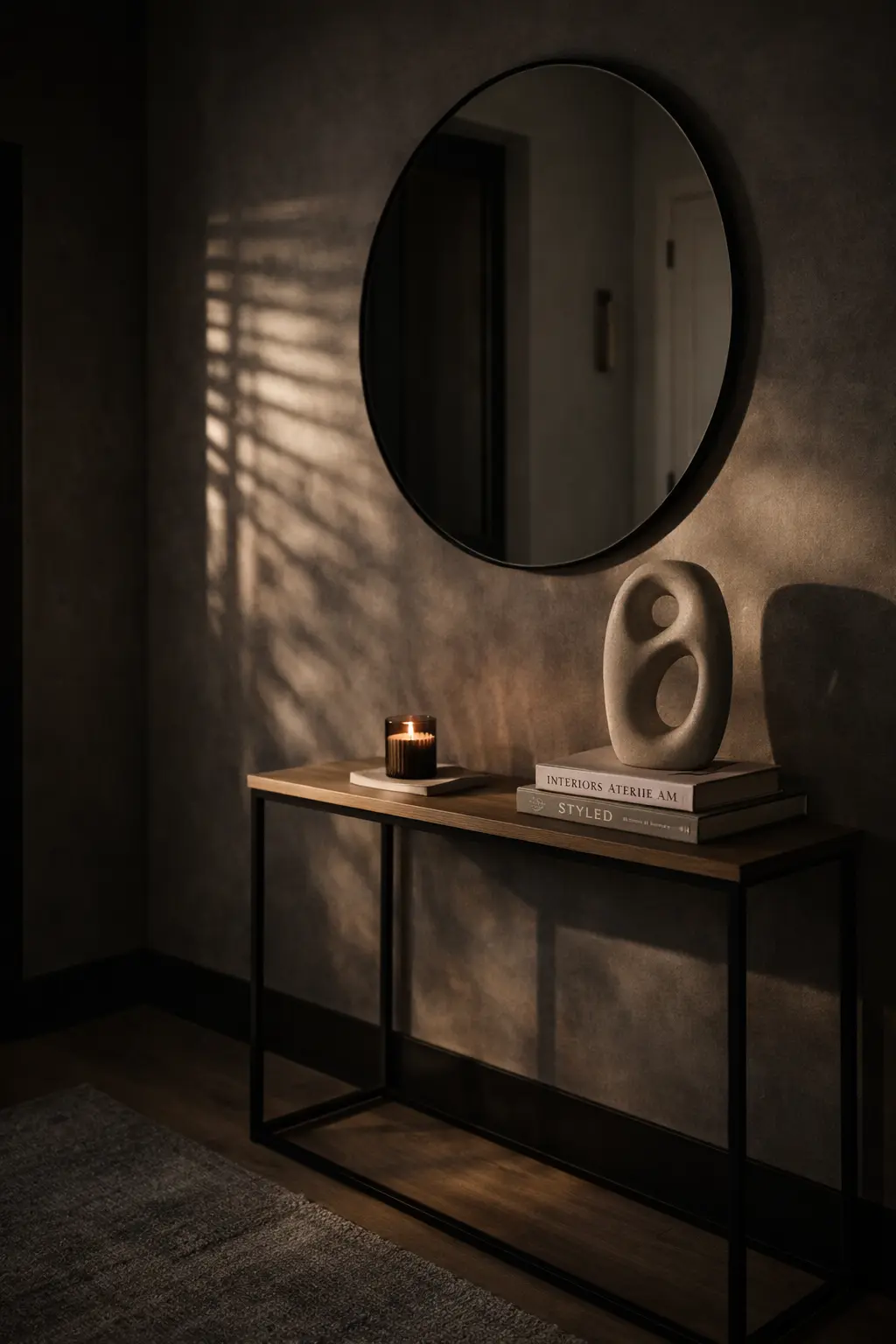
1. Create a Statement Entryway with a Console Table
 Save it
A console table is one of the most classic and versatile elements in entryway design. It serves multiple purposes simultaneously: it creates a decorative focal point that immediately draws the eye, provides a practical surface for daily objects, and establishes a sense of intentional design. Your keys, sunglasses, mail, a small decorative tray – these everyday items find a comfortable home on a console table, creating order instead of chaos.
The beauty of console tables lies in their versatility across different space sizes. Narrow console tables work exceptionally well in smaller entryways because they provide structure and visual interest without consuming valuable floor space. In larger entryways, wider tables create a more substantial presence. The styling on top matters tremendously. A fresh vase of flowers immediately introduces color and natural beauty. A scented candle adds warmth and a welcoming aroma. A small plant brings life and freshness. These elements transform your console from a functional storage piece into a curated composition.
For even more practicality, consider console tables featuring drawers or lower shelves. These hidden storage options keep smaller items – charging cables, sunscreen, notepads – organized and out of sight, maintaining visual clarity. The top surface remains uncluttered and thoughtfully styled, while functionality increases dramatically.
When choosing a console table, consider materials that coordinate with your existing home aesthetic. Natural wood brings warmth. Metal frames introduce modern sophistication. The right console table becomes the anchor point of your entire entryway, everything else organized around it.
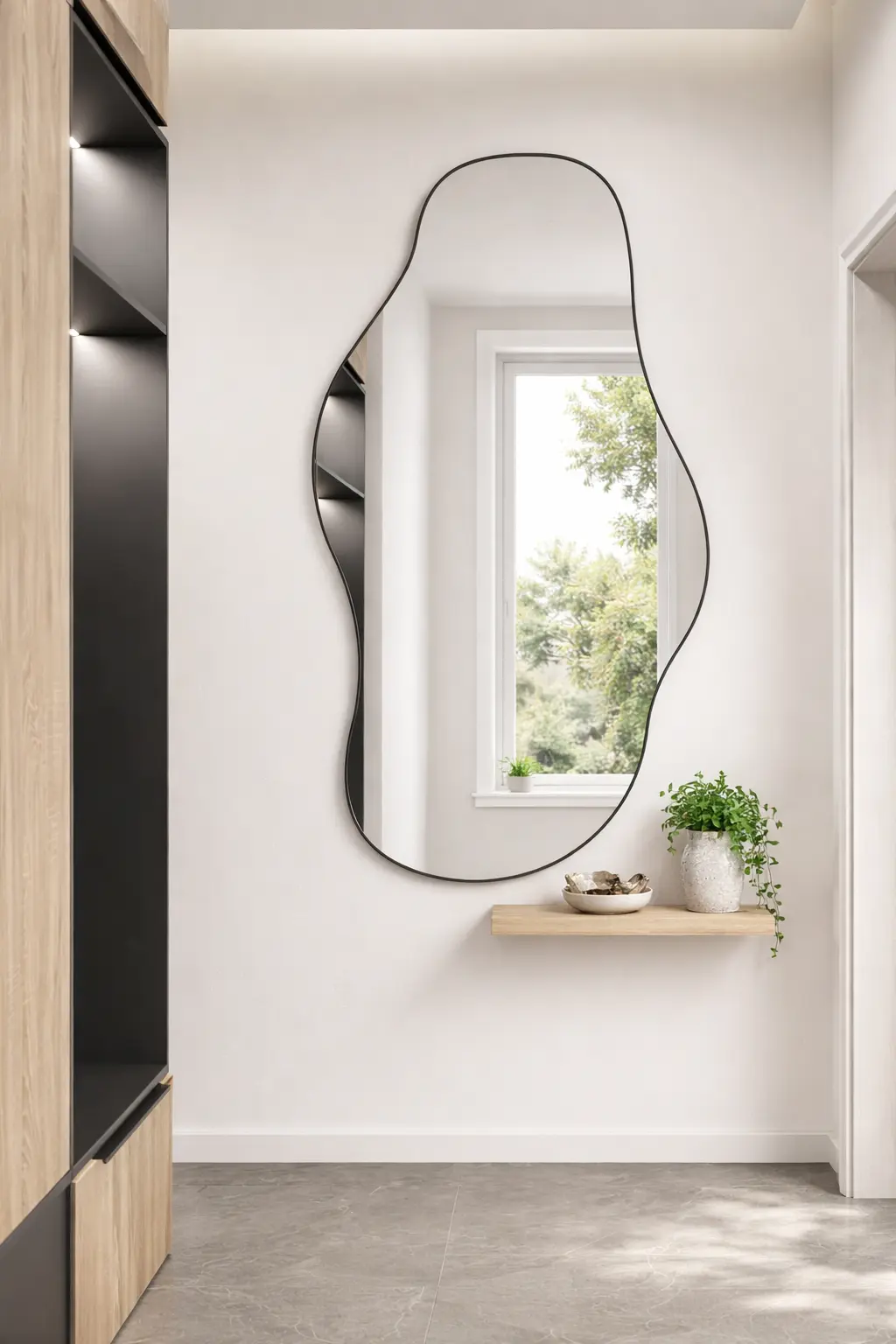
2. Brighten the Space with a Large Mirror
 Save it
A large mirror is one of the simplest yet most transformative additions to any entryway. It accomplishes multiple things: it reflects light, making spaces feel larger and brighter – particularly valuable in entryways that naturally receive minimal natural light. It provides practical function, allowing you to check your appearance before leaving home. And it serves a powerful psychological purpose: mirrors create a sense of openness and expansion that makes even small spaces feel more generous.
Positioning matters significantly. A mirror hung above a console table creates a classic, elegant composition that feels intentional and curated. The frame style dramatically affects the overall aesthetic. A minimalist black frame introduces modern sophistication. A brushed brass or gold frame adds luxury and warmth. A natural wood frame creates a softer, more organic, cottage-like feeling. Each choice communicates something different about the space and your design preferences.
Beyond aesthetic considerations, mirrors serve functional purposes that shouldn’t be overlooked. They reflect available light – whether natural or artificial – making the entryway feel brighter and more inviting. In entryways with limited natural light, a mirror can be the difference between a space that feels dim and unwelcoming versus one that feels bright and energized. Consider the mirror’s size relative to your wall space. An oversized mirror creates drama and visual impact. A more modest-sized mirror maintains balance. The reflection it creates should feel intentional rather than accidental. When positioned thoughtfully, a mirror transforms both the physical space and how you psychologically experience it each time you arrive home.
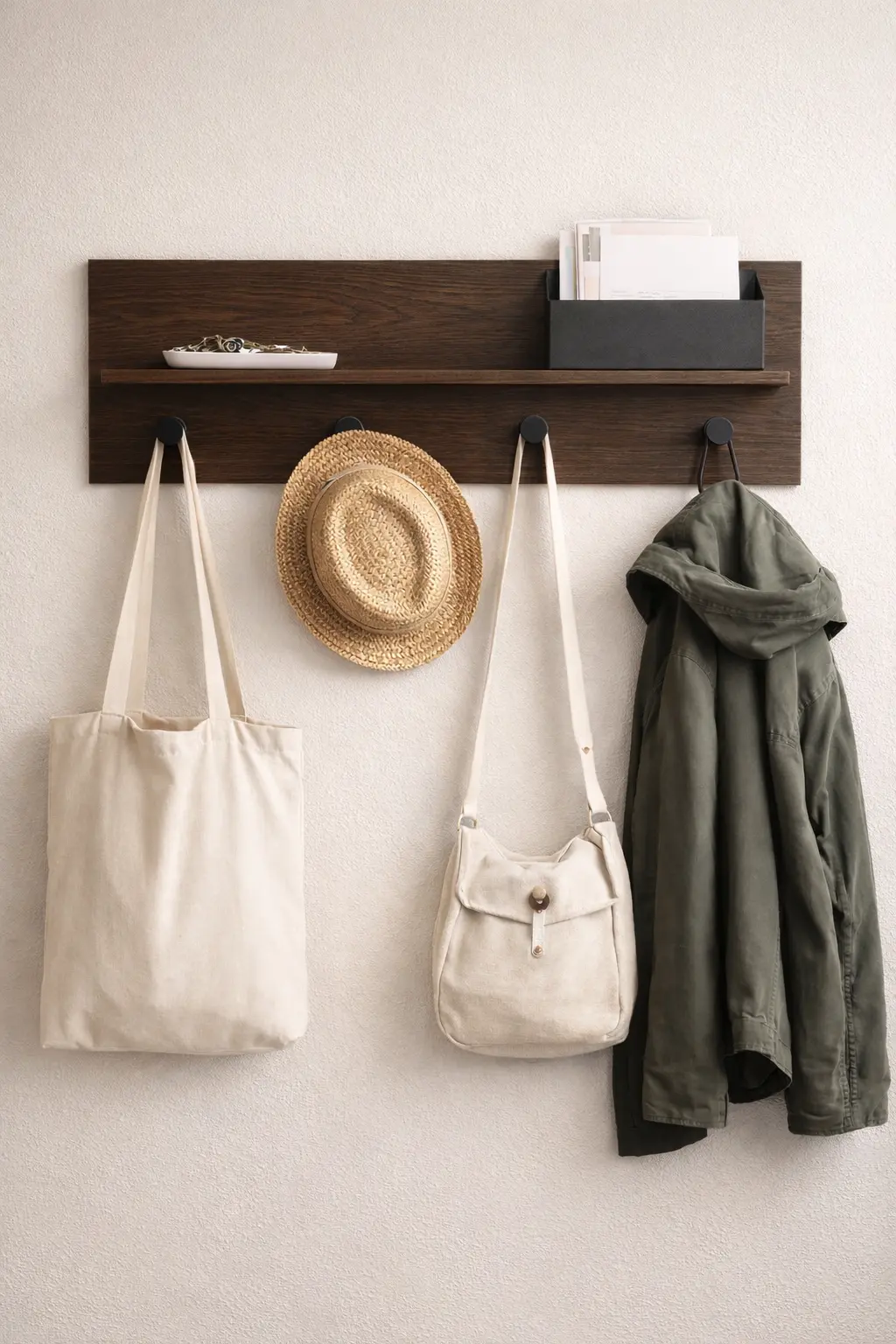
3. Build a Practical Drop Zone for Everyday Essentials
 Save it
One of the most important functions of a well-designed entryway is organizing the everyday objects that would otherwise scatter throughout your home, creating visual clutter and mental chaos. Without a designated system, keys get lost, mail piles up, bags land on chairs, and your entire home gradually feels less controlled. A well-planned “drop zone” prevents this accumulation entirely, maintaining order and calm throughout your space.
A drop zone can take many forms depending on your space and lifestyle. A decorative tray on your console table creates a designated landing spot for keys, glasses, and small items. A wall-mounted key organizer keeps keys accessible and visible rather than lost in drawers. A small wooden or woven box organizes mail and papers. A combination of these elements works even better – different categories have designated homes. When everything has a specific place, the visual impression shifts from chaotic to controlled. Your brain registers order instead of disorder, which affects your psychological state as you enter your home.
The key principle here is visibility and accessibility. Items stored in your drop zone should be items you actually use regularly and need to access quickly. Everything else belongs in closed storage – under a bench, behind doors, or in a closet. This distinction between what’s visible and what’s hidden is crucial. Your drop zone should feel like a curated display of daily necessities, not a catch-all for every random item that enters your home.
When this system works well, you notice it immediately: less time searching for keys, fewer items piling up, a sense of control and order that affects your entire home experience.
4. Add a Bench for Comfort and Function
 Save it
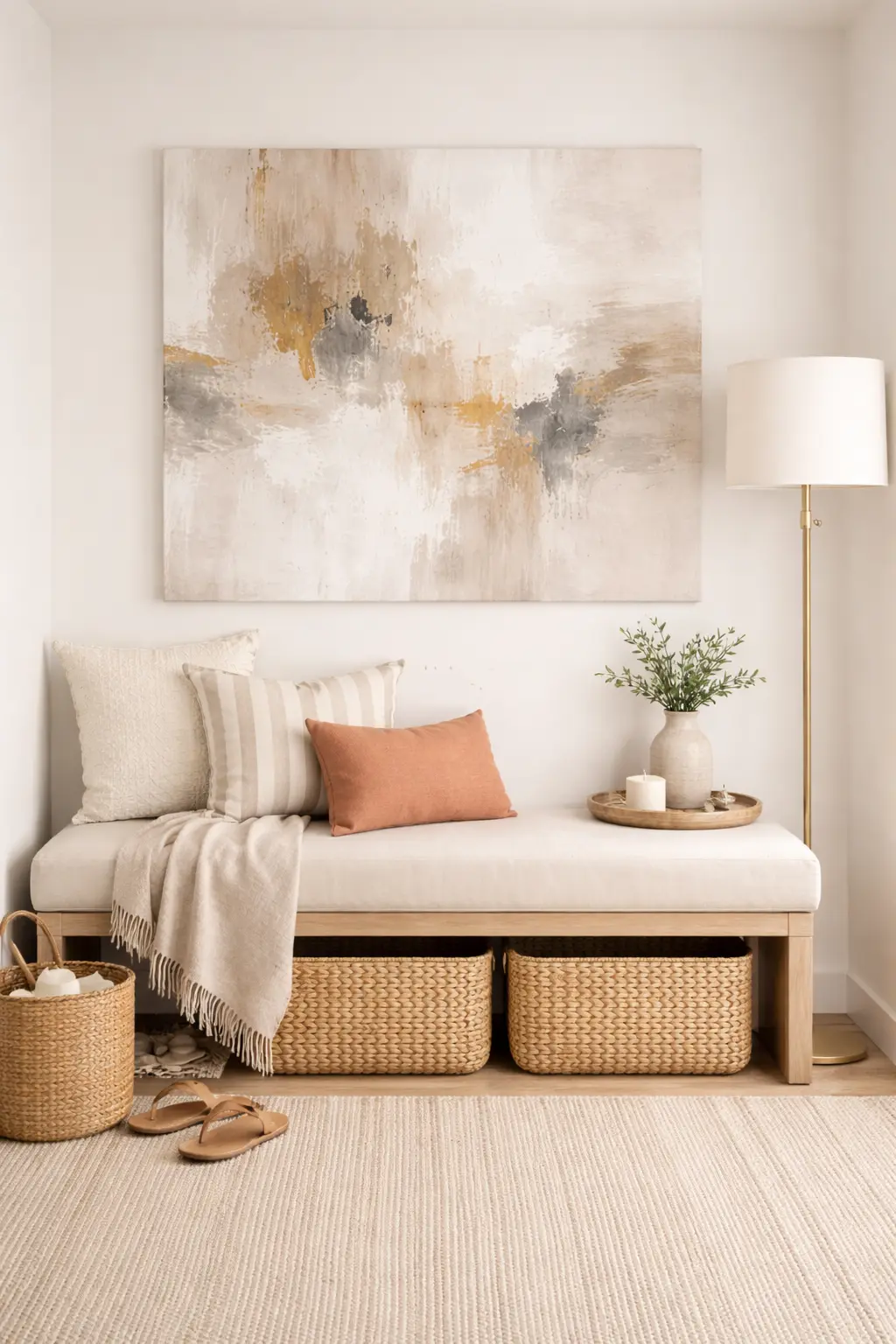
A bench serves both practical and aesthetic purposes in an entryway – it’s one of those rare furniture pieces that genuinely improves function while enhancing design. A bench provides comfortable seating while putting on or removing shoes, eliminating the awkward balance-on-one-foot situation that many people experience. It creates a sense of welcome and hospitality for guests. And visually, it adds coziness and layering that makes an entryway feel like a designed space rather than a mere transition zone.
The storage potential of a bench shouldn’t be overlooked. Beneath the seating surface, you can position woven baskets for shoe storage, keeping footwear organized and out of sight while remaining accessible. This hidden storage is far more elegant than shoes scattered on the floor or lined up against walls. A soft cushion or throw blanket draped over the bench adds comfort and warmth, making it inviting. The cushion also introduces tactile texture that makes the space feel more residential and less purely functional.
When selecting a bench, consider both style and scale. A slim, wooden bench maintains minimalist elegance. An upholstered bench introduces softness and comfort. An industrial metal frame creates modern attitude. The choice should coordinate with your entryway’s overall aesthetic while serving your practical needs. A bench in the right location – typically in the main entryway or along a wall – becomes both a functional asset and a design statement that immediately elevates how the entire space feels.
5. Introduce Natural Texture with Baskets
 Save it
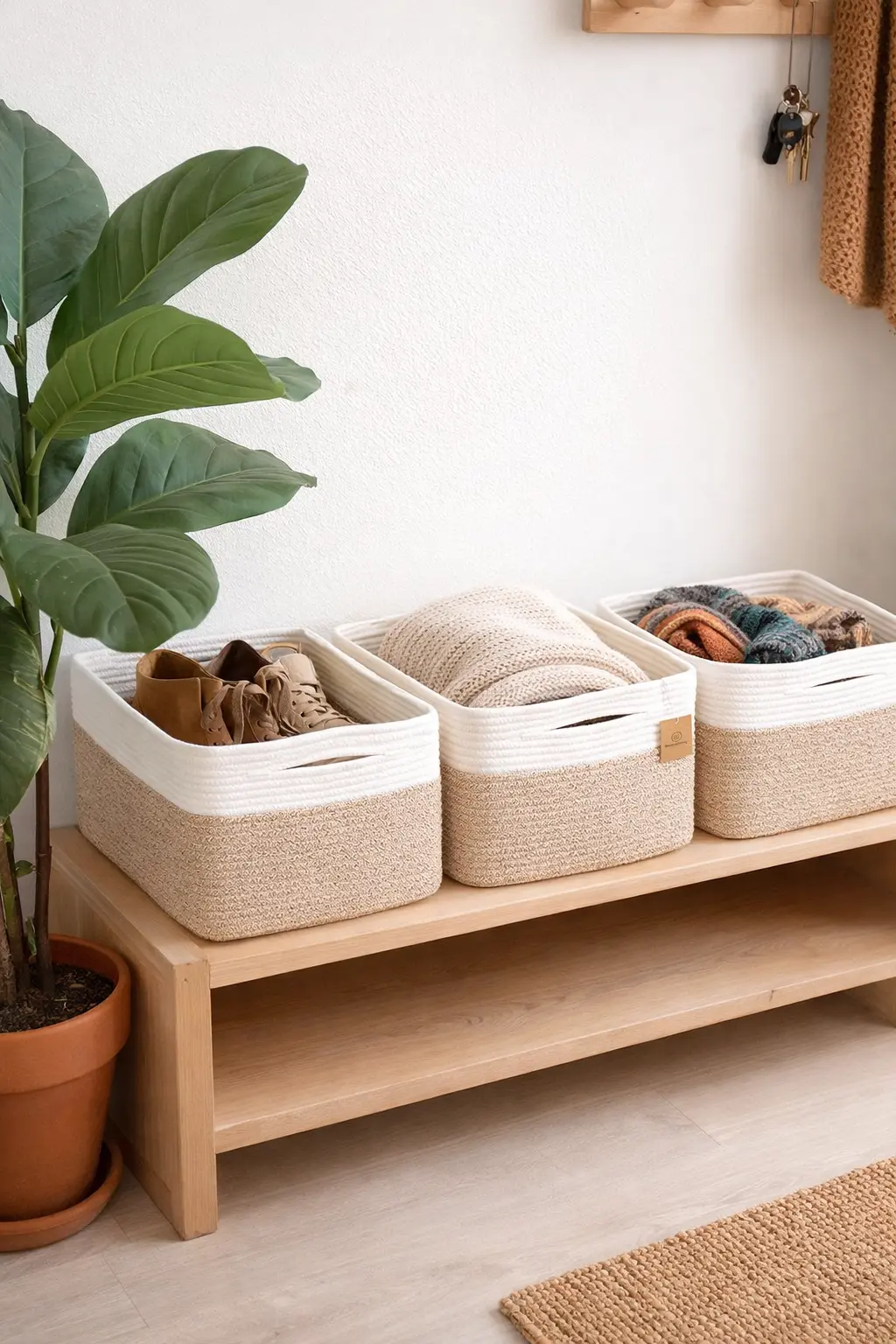
Woven baskets are simultaneously practical storage solutions and decorative design elements. They solve organizational challenges while introducing natural texture and warmth to your entryway. Baskets keep shoes contained and organized, prevent scarves from tumbling out of drawers, and provide attractive homes for the miscellaneous items that accumulate near an entryway. The natural materials – wicker, jute, rattan – bring organic warmth to any space.
The beauty of baskets lies in their visual softness. Hard furniture and architectural lines dominate most entryways. Baskets introduce curved forms and natural materials that create visual relief. They work particularly well in minimalist or Scandinavian-styled entryways, where natural materials are fundamental to the aesthetic. You can stack baskets under a bench or console table, use them as under-shelf storage, or position them against walls as sculptural elements. Each placement serves a function while contributing to the overall composition.
Consider the scale, material, and color of baskets relative to your space. Larger baskets ground a space and make bold statements. Smaller baskets work in limited areas and prevent visual overwhelm. Light-colored baskets brighten spaces and create openness. Darker baskets add grounding weight. The weave pattern also matters – a tight weave presents a finished appearance, while looser weaves introduce more visual texture.
When baskets are chosen thoughtfully and positioned with intention, they become more than storage. They become part of your design narrative, contributing to the feeling of warmth and welcome that defines a truly inviting entryway.
6. Use Wall Hooks to Keep Coats Organized
 Save it
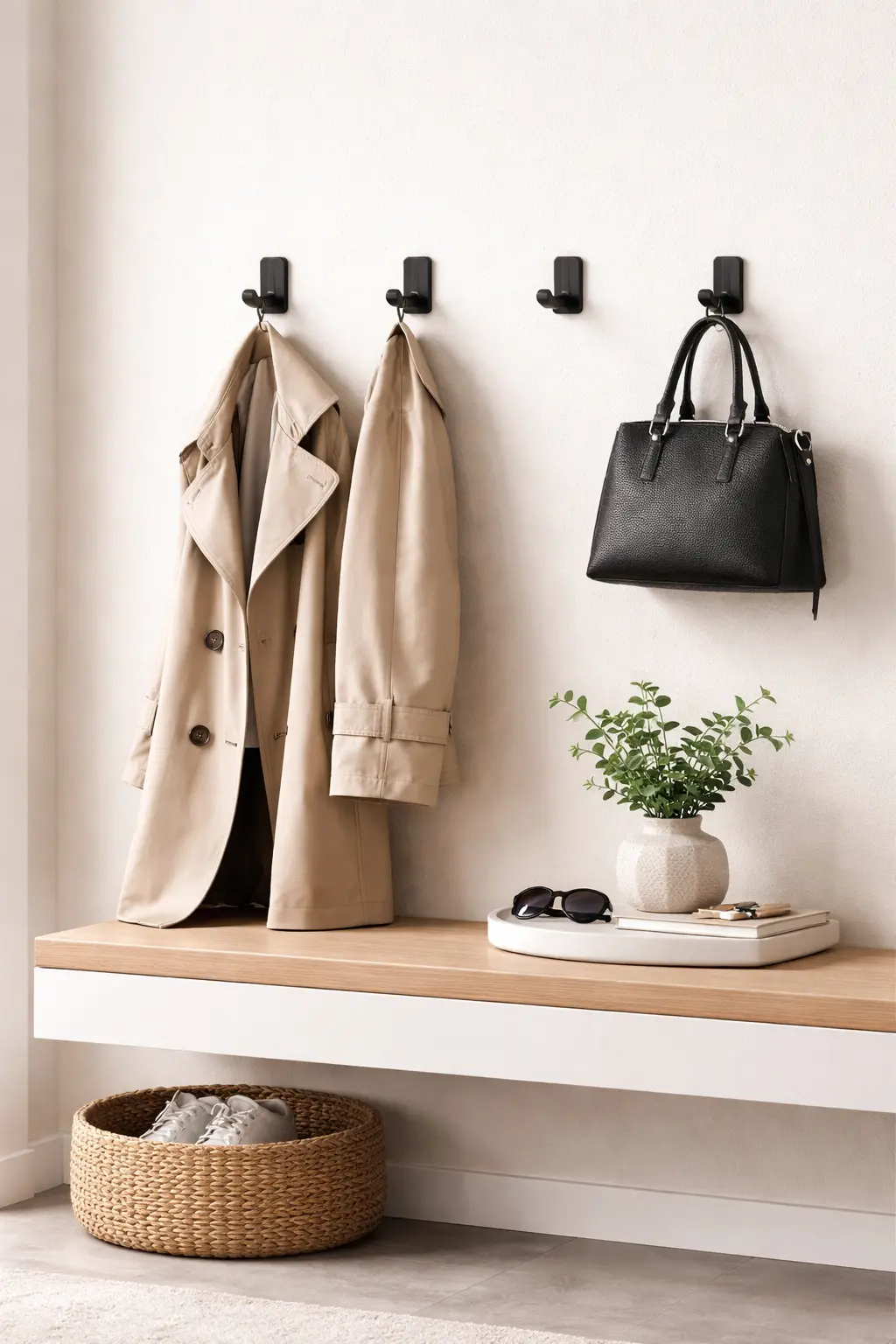
Wall-mounted hooks represent one of the simplest yet most effective storage solutions for entryways. They require no floor space, no furniture footprint, yet solve significant organizational challenges. Coats, bags, hats, scarves – all the daily items that need to be both accessible and organized – find homes on hooks. This accessibility is crucial: items you can easily grab are items you actually use, while items stored away tend to be forgotten.
The simplicity of hooks can be deceptive. They’re not just functional; they can be genuinely beautiful design elements. Decorative hooks in brass, wood, or ceramic can introduce color, texture, and personality to your entryway walls. A row of hooks in coordinating styles creates visual rhythm and intentional design. Mixing hook styles – perhaps one ceramic, one brass, one wooden – introduces sophistication through variation. The key is consistency: hooks should feel coordinated rather than random, suggesting intentional choice rather than haphazard collection.
Positioning matters practically and aesthetically. Hooks positioned at a comfortable height for regular users are actually functional. Hooks positioned at varying heights create visual interest and accommodate different items. Three to five hooks typically provide sufficient organization without creating clutter. When combined with other entryway elements – a console table, mirror, bench, or rug – hooks become part of a cohesive system that feels designed and complete.
A well-organized hook arrangement transforms coats from clutter into architectural elements that define your entryway’s character.
7. Add Lighting to Create a Warm Atmosphere
 Save it
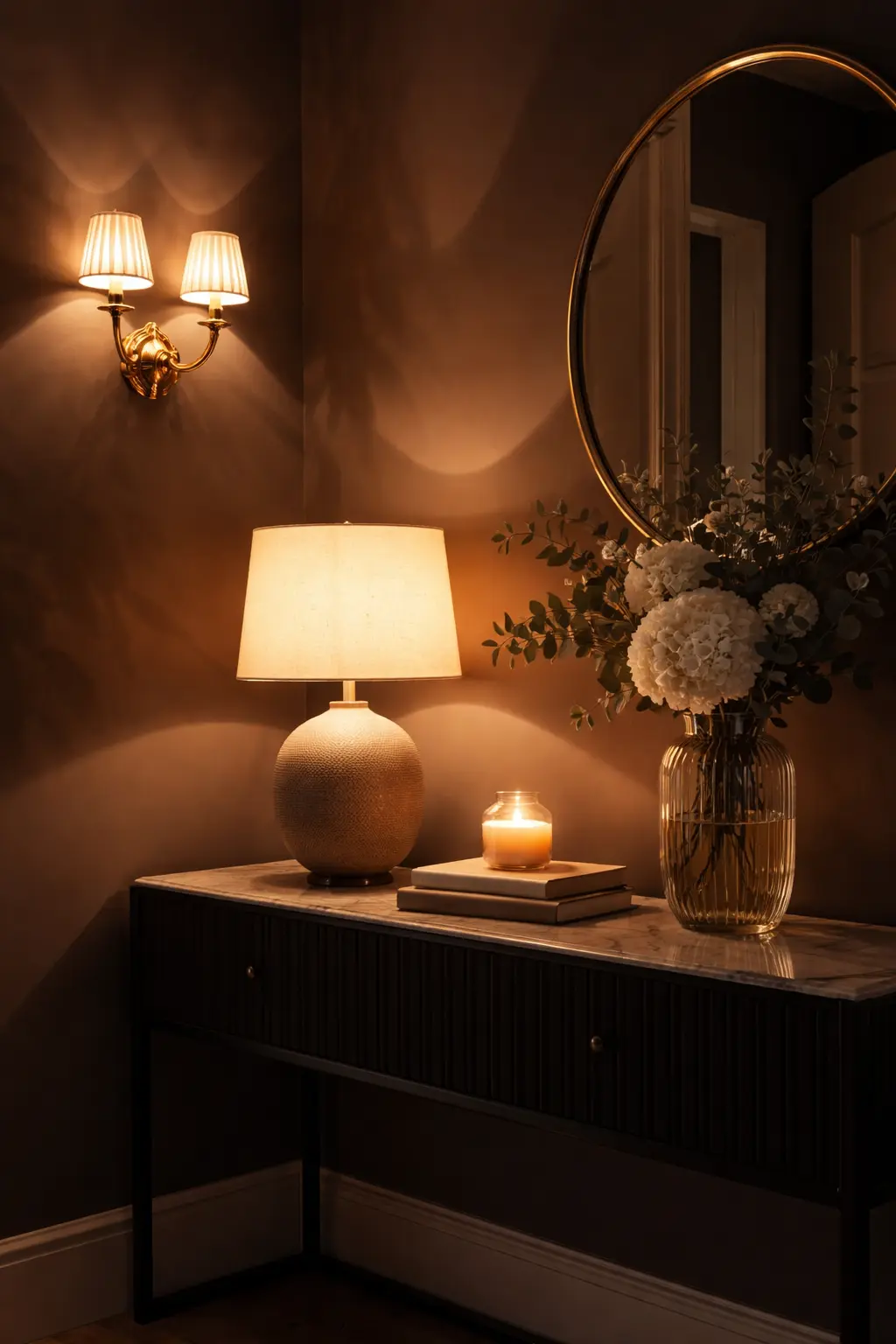
Entryway lighting is often overlooked, relegated to whatever overhead fixture was installed with the building. Yet lighting profoundly affects the atmosphere of a space and your psychological response to it. Warm, welcoming light makes an entryway feel inviting and sophisticated. Poor or harsh lighting makes the same space feel cold and uninviting, regardless of other design choices. Prioritizing quality lighting is one of the highest-impact investments you can make in your entryway.
Layered lighting works better than a single overhead fixture. A warm, dimmable overhead light provides general illumination. A smaller table lamp on a console table introduces intimate, task-specific light that highlights your styling. A wall-mounted sconce flanking a mirror creates elegant, flattering illumination. The color temperature of your bulbs matters as much as the fixtures themselves. Warm-toned bulbs (2700K or warmer) create inviting, comfortable light. Cool-toned bulbs feel harsh and institutional. For an entryway, warm light is non-negotiable.
Consider how light interacts with other elements. Light reflecting off a mirror multiplies its impact. Warm light highlighting a console table’s styling makes that composition feel intentional and beautiful. Soft light coming from a corner creates ambient warmth that surrounds you as you enter.
When lighting is thoughtfully designed, your entryway becomes genuinely inviting – a space that makes you pause and appreciate its beauty rather than rush through it. This emotional experience is what separates an ordinary entryway from one that makes you feel genuinely welcomed home.
8. Define the Entryway with a Rug
 Save it
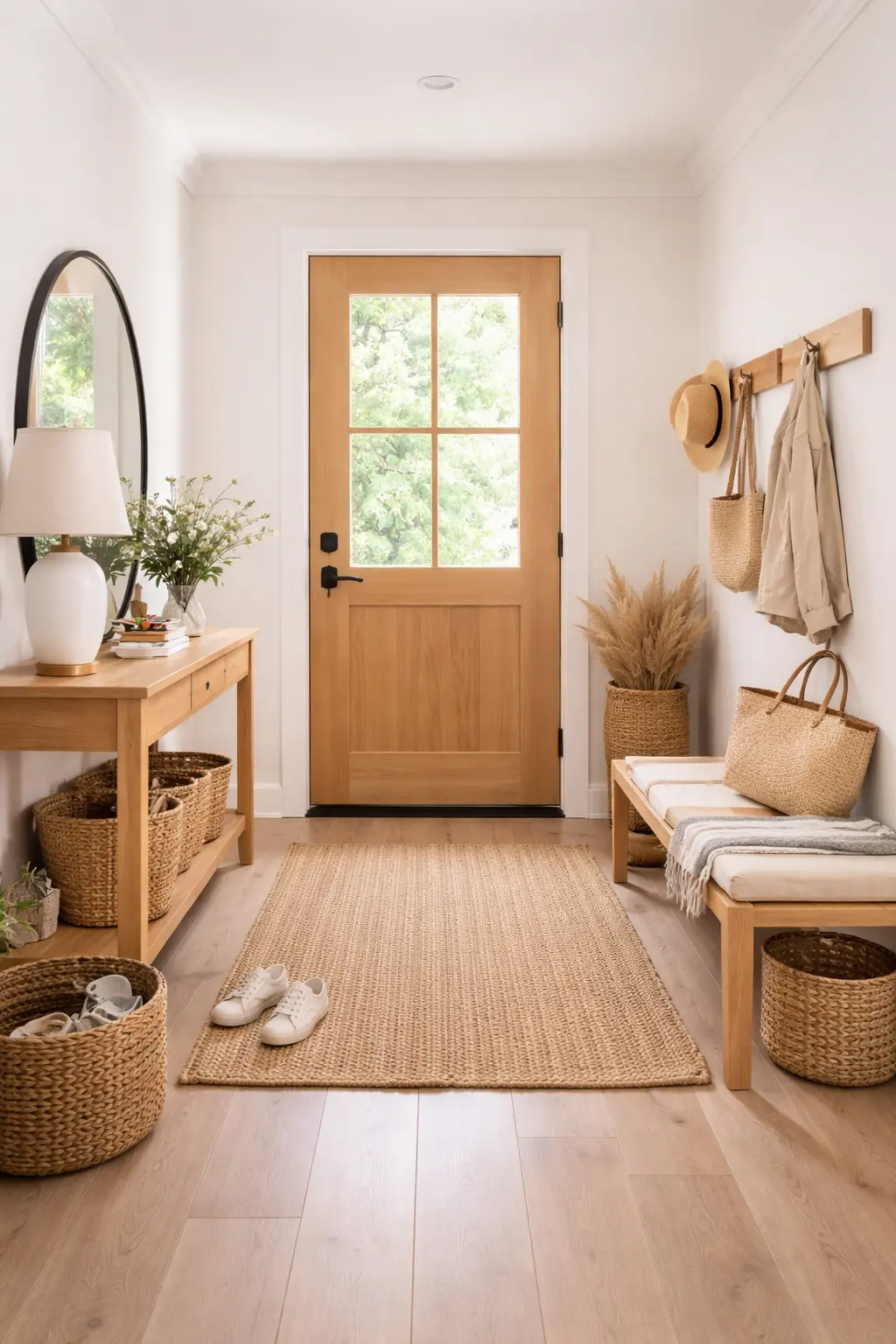
A rug visually defines an entryway, particularly important in open floor plans where entryway and living spaces blend together without clear demarcation. A well-chosen rug creates a “landing zone” that psychologically and visually separates the entryway from adjacent spaces. It grounds the entryway furniture – console table, bench, mirror – into a cohesive composition. It adds color, texture, and warmth that hard flooring alone cannot provide.
The practical considerations are equally important. Entryway rugs require durable materials that withstand daily foot traffic, dirt from shoes, and regular vacuuming. Natural fiber rugs like jute or wool work well, as do synthetic options designed for high-traffic areas. Size matters: the rug should be large enough to feel intentional and anchor your furniture, but not so large that it extends into adjacent rooms. A typical entryway rug measures 3×5 feet or 4×6 feet, large enough to define space without overwhelming.
Color and pattern choice depend on your aesthetic and practical needs. Neutral tones show dirt less visibly, important in an entryway where shoes track in outdoor debris. Patterned rugs hide soil better than solids while adding visual interest. The rug’s style should coordinate with your overall entryway design – a natural jute rug complements minimalist spaces, while patterned rugs work in more eclectic designs. When a rug is chosen carefully and positioned intentionally, it becomes the foundation upon which your entire entryway design builds. Everything else – furniture, accessories, lighting – arranges itself around this anchor element.
For more ideas on how to use foundational design elements effectively throughout your home, explore Best Area Rugs for Small Living Rooms in Apartments, which discusses how strategic choices create cohesion across spaces.
9. Bring Life into the Space with Plants
 Save it
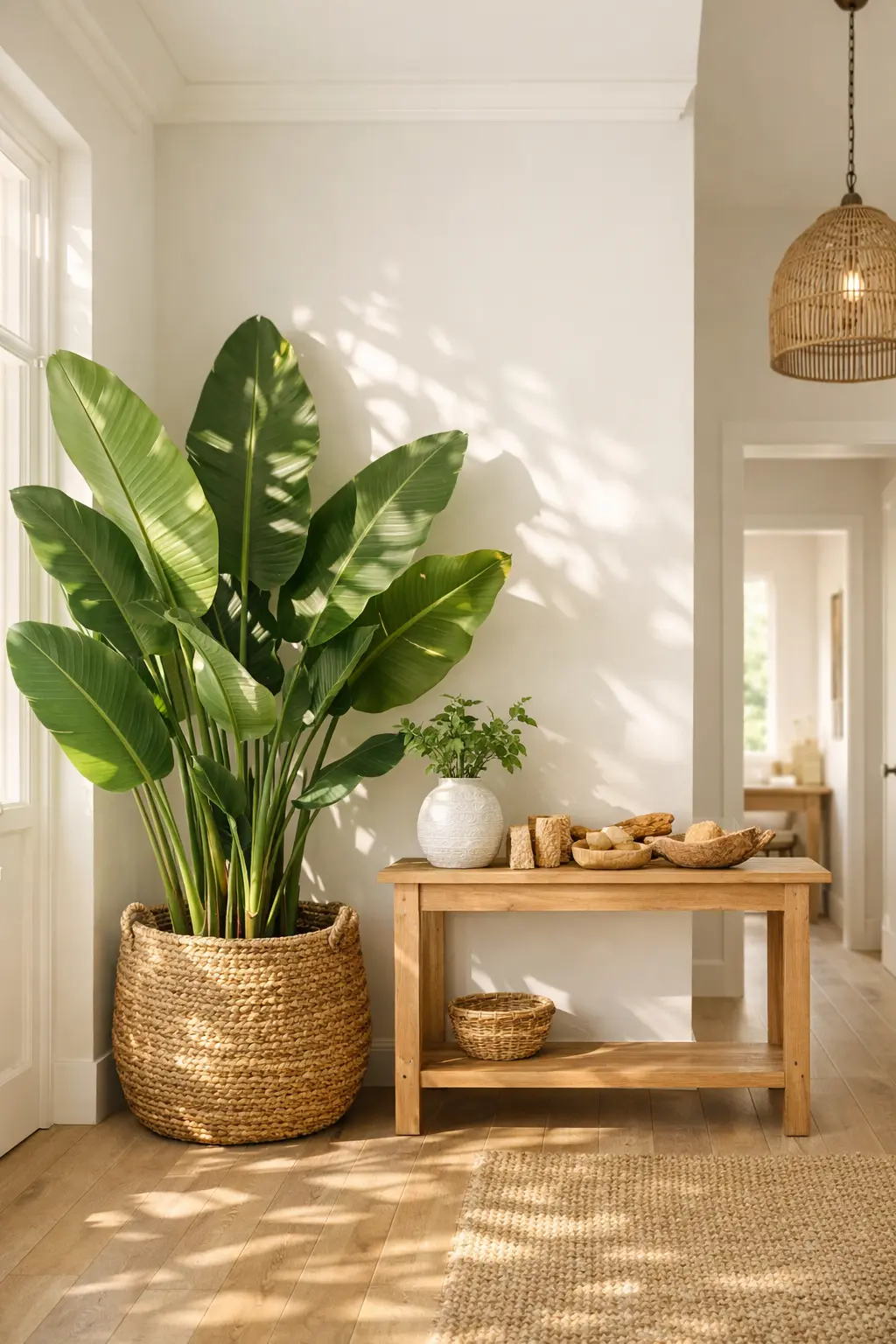
Plants immediately infuse an entryway with vitality and warmth that no other design element can replicate. A small plant positioned on a console table brings freshness and organic beauty. A taller plant in a corner adds vertical interest and makes the space feel more generous. Green elements soften the hard lines of furniture and architectural elements, creating a more welcoming, natural atmosphere. Plants also improve air quality, literally making the entryway feel fresher.
The beauty of using plants in entryways is their psychological impact. Humans are naturally drawn to living things. A green plant in your entryway creates an immediate sense of life and vitality. It signals that this space is cared for, tended to, intentional. Even a small plant communicates care and attention. The right plant choice matters – select varieties that thrive in your specific light conditions. A bright entryway can accommodate sun-loving plants. A dim entryway requires shade-tolerant varieties like Pothos or Snake Plant. When you choose plants that actually thrive in your space, they remain beautiful and healthy, continuously reinforcing the sense of welcome and care.
Positioning plants thoughtfully multiplies their impact. A tall plant in a dark corner brightens and energizes that area. A trailing plant on a high shelf softens edges. A clustered group of small plants on a console table creates visual interest and layering. The pot choice matters as much as the plant itself – a beautiful ceramic or woven container elevates the entire composition. Plants represent ongoing commitment to your space – they grow, change seasonally, and require attention. This living element transforms an entryway from static decoration into something genuinely alive and welcoming.
If you’re curious how to make it aesthetically harmonious, check How to Make Any Room Feel Alive with Plants for creating clean yet warm surfaces.
Practical Tips and Useful Advice
Start by evaluating your entryway’s actual function. What items do you need to store or access regularly? What light does it receive? How much floor space do you have? Honest answers to these questions guide every subsequent design choice. Next, establish a color palette. Choose a neutral base – your wall, floor, and rug colors – then add warmth through wood tones and natural materials. Finally, select your anchor piece – typically a console table or bench – and build around it.
Invest in these elements in order of impact: quality lighting first, then a suitable rug to define space, then a console table or bench for function and focus, then a mirror for light reflection and practical function. Add accessories and styling afterward – plants, baskets, decorative objects. This staged approach prevents overcrowding and ensures each new element genuinely improves the space rather than adding unnecessary clutter.
Create a simple storage system: a designated spot for keys, a basket for shoes, a tray for mail, hooks for coats. When everything has a specific home, maintaining organization becomes effortless. Establish a weekly five-minute reset ritual where you return items to their designated places. This maintenance prevents gradual accumulation of chaos.
Finally, step back and observe your entryway through a visitor’s eyes. What’s the first impression? Does it feel welcoming? Is it organized? Does it reflect care? Adjust based on honest assessment. Your entryway should feel like an intentional welcome, not an oversight or afterthought.
Common Mistakes to Avoid
1. Overcrowding with Too Much Decoration
The biggest mistake is filling an entryway with excessive decor, believing more is better. This creates visual overwhelm and chaos rather than welcome. Choose fewer, more meaningful pieces. Let them breathe. Editing is more powerful than accumulation.
2. Ignoring Practical Storage Needs
A beautiful entryway that doesn’t actually store your daily items is merely decorative. Ensure your design includes functional solutions for keys, shoes, mail, and bags. Form must follow function, or your design fails practically.
3. Neglecting Lighting Quality
Many entryways suffer from poor lighting – either too harsh overhead lights or insufficient illumination. Invest in warm, layered lighting. This single change dramatically improves how the space feels and functions.
4. Choosing Furniture Larger Than the Space
An oversized console table, bench, or mirror can overwhelm a small entryway, making it feel cramped. Choose furniture scaled appropriately to your actual space. Sometimes smaller, well-edited pieces work better than larger statement pieces.
5. Forgetting About Maintenance and Durability
Entryway rugs get dirty. Surfaces accumulate dust and fingerprints. Choose materials that are easy to maintain and clean. Beautiful designs that require excessive maintenance become frustrating rather than enjoyable.
Frequently Asked Questions
How much space do I need for an effective entryway design?
Even small spaces – as little as a 3×4 foot area – can be beautifully designed. The key is choosing appropriately-scaled furniture and elements. A narrow console table, a modest mirror, and a small rug work in tight spaces. Focus on quality and intention rather than quantity.
What if my entryway gets very little natural light
Use mirrors to reflect available light. Choose light-colored rugs, furniture, and walls to brighten the space. Add warm artificial lighting – table lamps and wall sconces work better than harsh overhead lights. Light-colored baskets and accessories also help. Plants that tolerate low light, like Pothos and Snake Plants, work beautifully.
Can I create an entryway in an open floor plan without a separate hallway
Absolutely. Use a rug to define the entryway area and visually separate it from adjacent spaces. Position furniture to create a contained zone. Lighting and plants can further delineate the space. The visual boundaries created by these elements function similarly to walls.
What’s the best rug material for a high-traffic entryway?
Durable synthetic blends, natural fibers like jute or wool, or specifically marketed high-traffic rugs work best. Look for tight weaves and stain-resistant options. Avoid delicate or light-colored rugs unless you’re committed to frequent cleaning.
Final Thoughts
Your entryway is far more important than it might initially seem. It’s not merely a functional space for storing coats and shoes. It’s the threshold between the outside world and your personal sanctuary. It’s the first impression guests receive. It’s the space that greets you every single day when you arrive home, often after long hours away. How this space feels profoundly affects your entire home experience and your emotional state upon arrival.
A well-designed entryway – one that’s organized, beautiful, intentional, and functional – transforms your daily experience. You arrive home to calm and order rather than chaos. You find what you need quickly. Your guests immediately feel welcomed. Your entire home benefits from this sense of entry and transition.
The ideas presented here work together as a system. No single element alone transforms a space, but combined thoughtfully, they create something genuinely welcoming and functional. Your entryway is waiting to become what you’ve been imagining: a space that makes you feel truly welcomed home, that tells your guests they’re entering somewhere cared-for and intentional, and that supports your daily life through organization and beauty.
This post contains affiliate links. I may earn a small commission at no extra cost to you.
Get cozy inspiration delivered to your inbox.
✓ 14-page beautifully designed ebook
✓ Cozy decorating ideas
✓ Practical room-by-room inspiration
You’re in! 🎉
Thanks for joining the NestFlowHome community!
Your free ebook is already on its way to your inbox. If you don’t see it within a few minutes, please check your Promotions or Spam folder.
Join the NestFlowHome community for weekly decorating inspiration.

Timeless home decor ideas and slow living inspiration for a calm, beautiful life.