
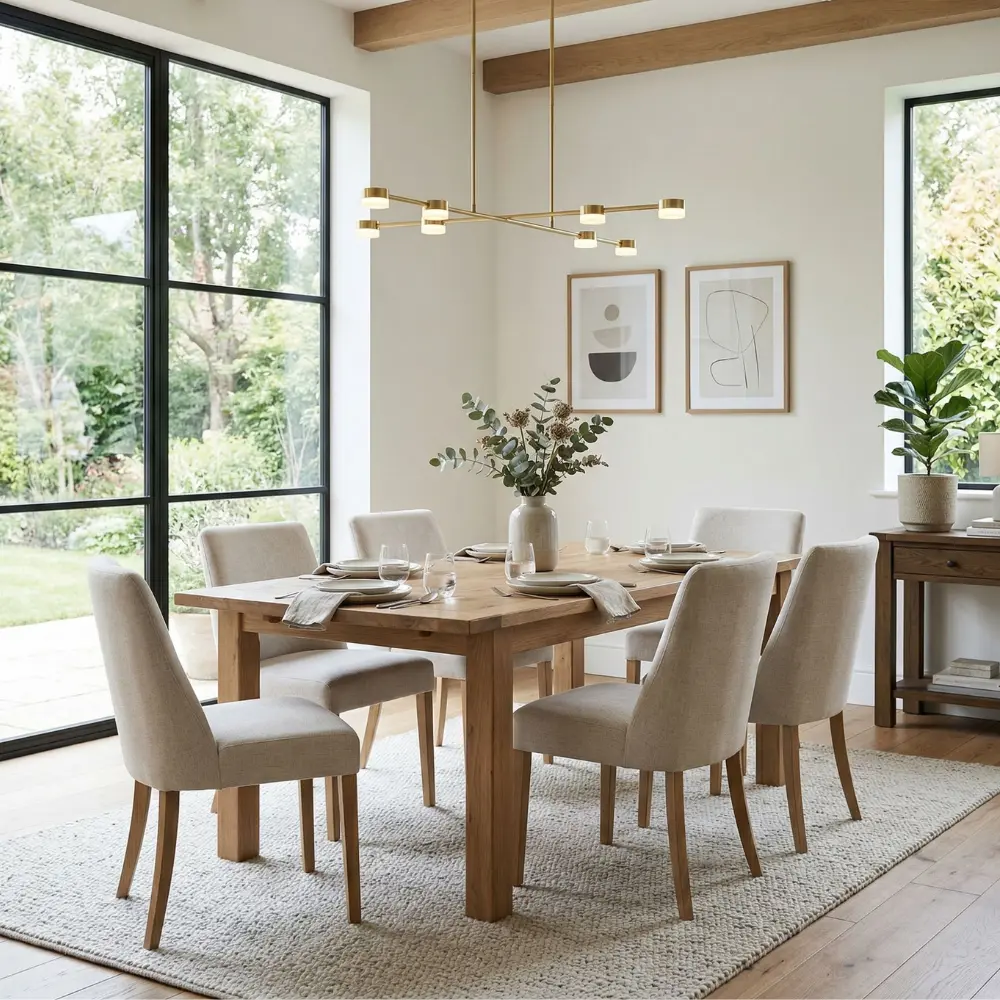
Top Dining Room Layout Ideas for Functional and Elegant Interiors
By Emily | April 11, 2026
You know the first thing your guests notice when they walk into a dining room? It’s not the gorgeous chandelier, not the carefully chosen chairs—it’s how comfortable the energy of the space feels. A bad layout can instantly make an otherwise beautiful room feel awkward: people bump into chairs, serving becomes a hassle, and somehow everyone feels cramped instead of relaxed. Yet the dining room should do exactly the opposite: this is where the family gathers, where dinners with friends come alive, where the small rituals of daily life unfold.
Over the years, I’ve learned that a functional and elegant dining room layout isn’t magic—it’s a matter of thoughtful design. It’s not about following the latest trends or buying expensive furniture, but about understanding how the space works, the logic of movement, and the nuances of human behavior. In this article, I’m going to show you how to design your dining room so it’s not just beautiful, but actually works. I’ll share the proven methods I’ve learned over the years—about spacing, furniture proportions, lighting, and the details that transform a space into something both gorgeous and usable. Step by step, I’ll walk you through finding the layout that fits your life, your home, and your habits.
Whether you’re working with a formal dining room, an open-plan kitchen-dining combo, or a compact nook, the principles remain the same: understand the space, respect the flow, layer the function, and add personality.
Let’s dive in.
1. Start with the Space: Assess Your Real Possibilities
 Save it
Before you choose any furniture or plan any layout, stop for a moment and take a clear look at what the space is giving you. I’m not just talking about measuring the width and length of the room, but understanding the character of the space. Where is the window, where is the door, which direction does the light come from, is there a corner that naturally feels more intimate or protected? These details determine how your dining room will live.
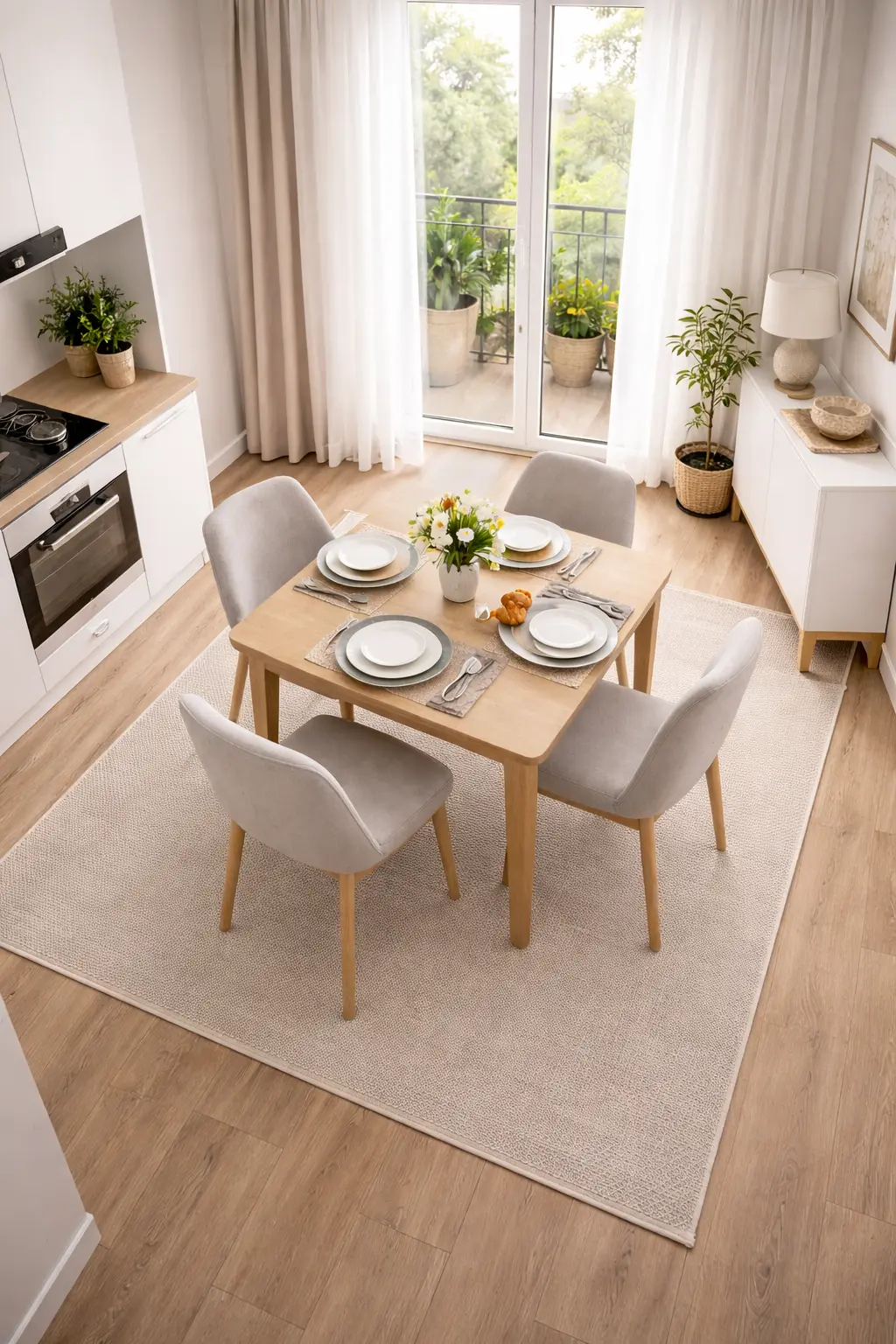
Start by mapping the traffic patterns. How will people move through the room? From the kitchen to the table, from the table to the back patio door, from the hallway to the living room. These pathways need to be clear and unobstructed—you need at least 35.43 to 39.37 inches of free space for someone to pass comfortably. If the table is too close to the door, or a chair is constantly in the way, the entire space becomes frustrating.
Then consider the natural focal points. The dining table is always a central element, but it’s not always best placed in the geometric center of the room. Sometimes it’s better to orient it toward a window so natural light illuminates the table setting in the morning, or pull it near a wall so a large artwork or shelf system behind it creates a backdrop.
If you’re working with an open floor plan—which is pretty much standard these days—zoning is your friend. A well-placed rug (ideally one that’s at least 60-70 centimeters larger than the table on all sides so chairs stay on it even when pulled out) visually separates the dining area from the living room or kitchen. This simple trick is invaluable: a soft, quality rug not only defines the space, but also reduces noise and warms the atmosphere.
2. Table Placement: Proportion and Breathing Room
 Save it
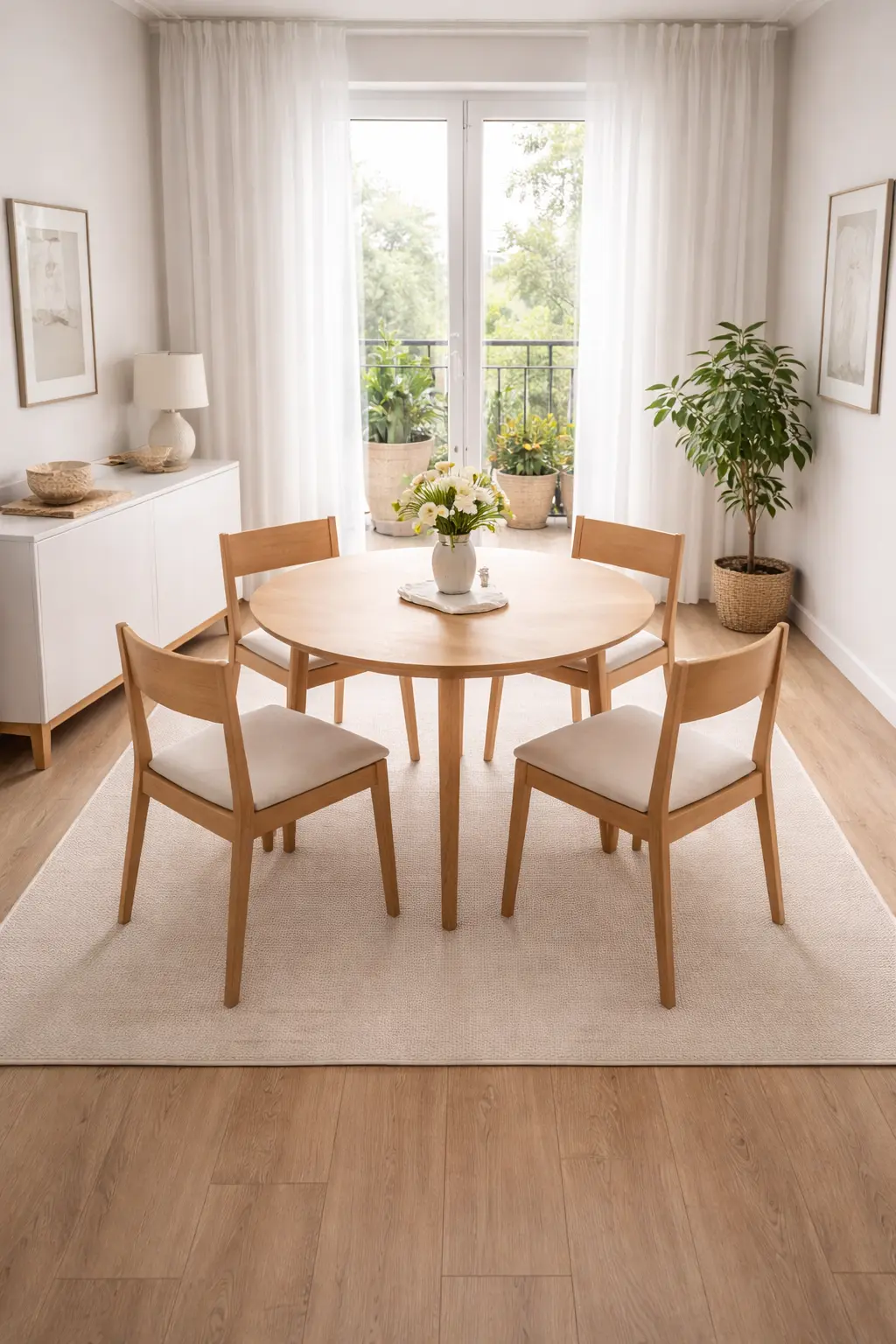
The position of the table is the heart of the dining room layout, and the most common mistake is either choosing a table that’s too large for the space or placing it in a way that makes the proportions feel tight. The ideal? When there’s at least 35.43 to 47.24 inches of free space around the table on all sides. This ensures guests can comfortably pull out a chair, stand up, and someone can walk behind them without disturbing everyone.
The shape of the table is just as important as the size. Rectangular tables are classic and work beautifully in elongated spaces—especially if you often host guests, because they can easily be extended. Round tables, on the other hand, appear smaller than the space they actually occupy and place every guest equidistant from each other, which creates more intimate conversations. They work particularly well in square rooms.
If space is tight, think about a compact but smart solution. A smaller round table can work wonders: cozy and intimate on weekdays, but easily accommodating a larger group when needed. Also, a table for 6 people is not a disadvantage, if you are hosting guests, this is the right choice
And here’s what people rarely talk about: table height also matters. The standard 29.53 to 29.92 inches is a good starting point, but if you’re using taller or shorter chairs, check that seated guests’ knees fit comfortably under the tabletop and their arms rest at a natural angle on the table. This might seem like a small thing, but over the course of a long dinner, these minor discomforts amplify.
3. Chairs and Seating: Balancing Comfort and Style
 Save it
Chair selection is one of the most delicate points because this is where aesthetics meet functionality. A beautiful chair that’s uncomfortable isn’t decor—it’s a problem. Your guests will only linger happily at the table if they feel good, and that won’t last beyond an hour if the chair is too hard, too narrow, or doesn’t support the back properly.
When choosing chairs, think about how often and how long they’ll be used. If you only dine in the dining room occasionally, a lighter, slimmer chair can work. But if you eat breakfast and dinner there every day, or even work there sometimes, comfort is a priority. Look for chairs with slightly curved, anatomical backrests, and if you really use them a lot, consider padded seats.
Armchairs add elegance to the space, but be careful: they take up more room than you’d think. It’s worth placing them only at the head of the table, or skipping them entirely if you’re working with a small space. A clever trick: place armchairs at both ends, and armless chairs on the sides, so you preserve a formal feel but save space.
And if you want a truly dynamic dining room: mix the styles. Not every chair needs to be identical—in fact, combining a couple of different models makes the space more interesting and personal. Just make sure the seat height and table relationship is identical for every chair, or the whole thing becomes jarring.
4. Lighting: Atmosphere You Can Control
 Save it
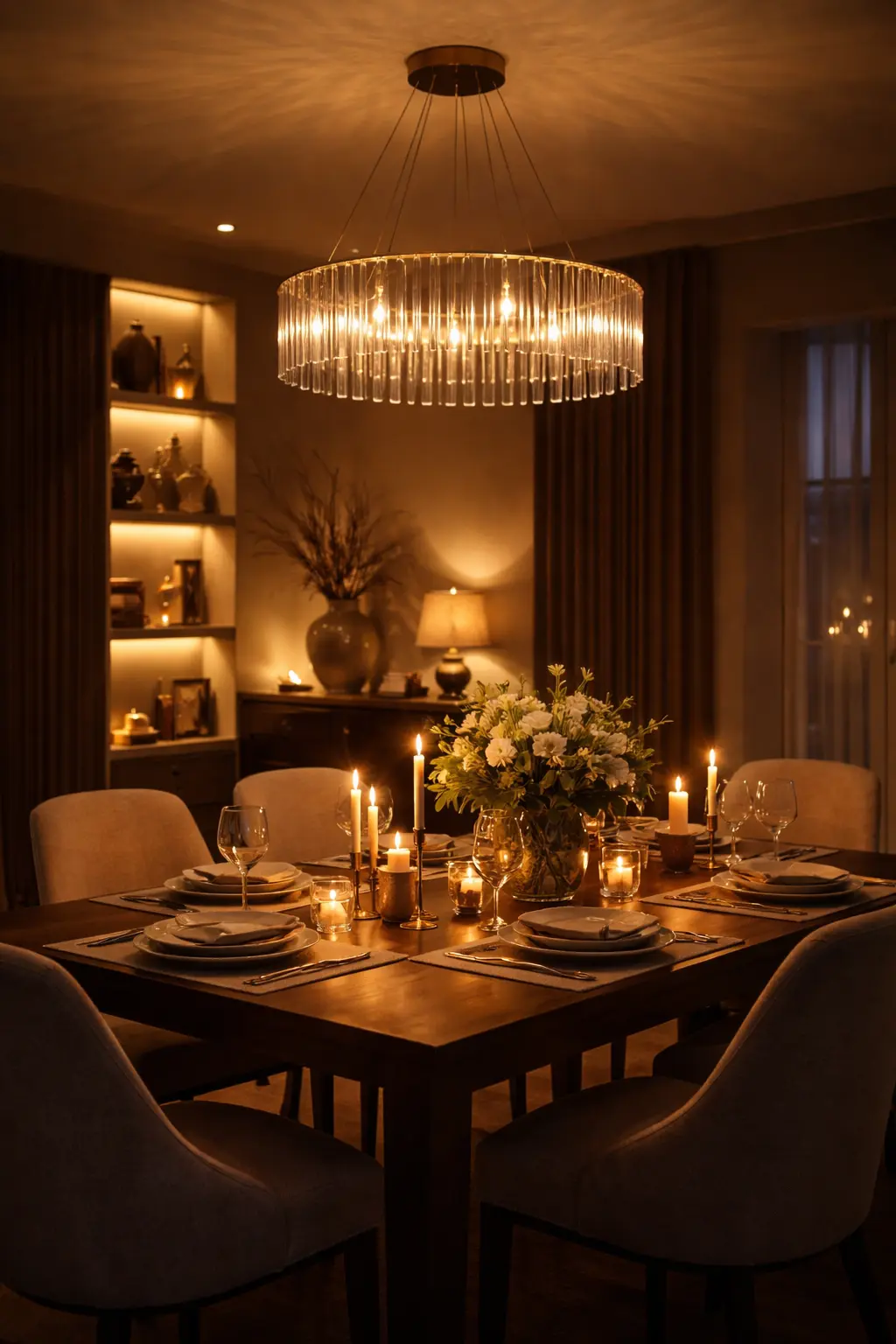
Lighting is what brings a room to life. Without it, even the most beautiful dining table looks flat and lifeless. The good news: with a thoughtful lighting plan, you can completely transform the mood of the space—and you don’t need to call an electrician or redesign everything. A chandelier or pendant lights above the dining table aren’t just practical—they provide a visual anchor point. The rule is simple: the bottom of the fixture should be about 29.53–33.46 inches above the tabletop. This way it doesn’t cut into the sightline, but it’s close enough to provide intimate, focused light. And don’t forget to install a dimmer switch—this is the accessory that transforms the mood with a single click from a weekday breakfast to a romantic dinner.
But don’t stop there. The dining room needs layered lighting: beyond the pendant, add wall sconces or floor lamps in the corners of the room. These provide the soft, indirect light that completes the space. If you have a buffet or china cabinet, a small LED strip under the shelves highlights objects and makes the whole installation feel magical.
Natural light is also not to be overlooked. If you have a window in the dining room, don’t cover it completely with heavy, dark curtains. A light, sheer fabric preserves your privacy but lets the light through. And if your window faces south or west, you’ll get beautiful warm light flooding the space in the afternoons—take advantage of it.
5. Storage and Function: Invisible Assistance
 Save it
Many people think the dining room doesn’t need storage—but it’s actually the opposite. A well-designed storage system isn’t just practical, it also gives you the opportunity to make the space feel personal and organized. You don’t need massive furniture dominating the wall—a few thoughtful pieces are enough.
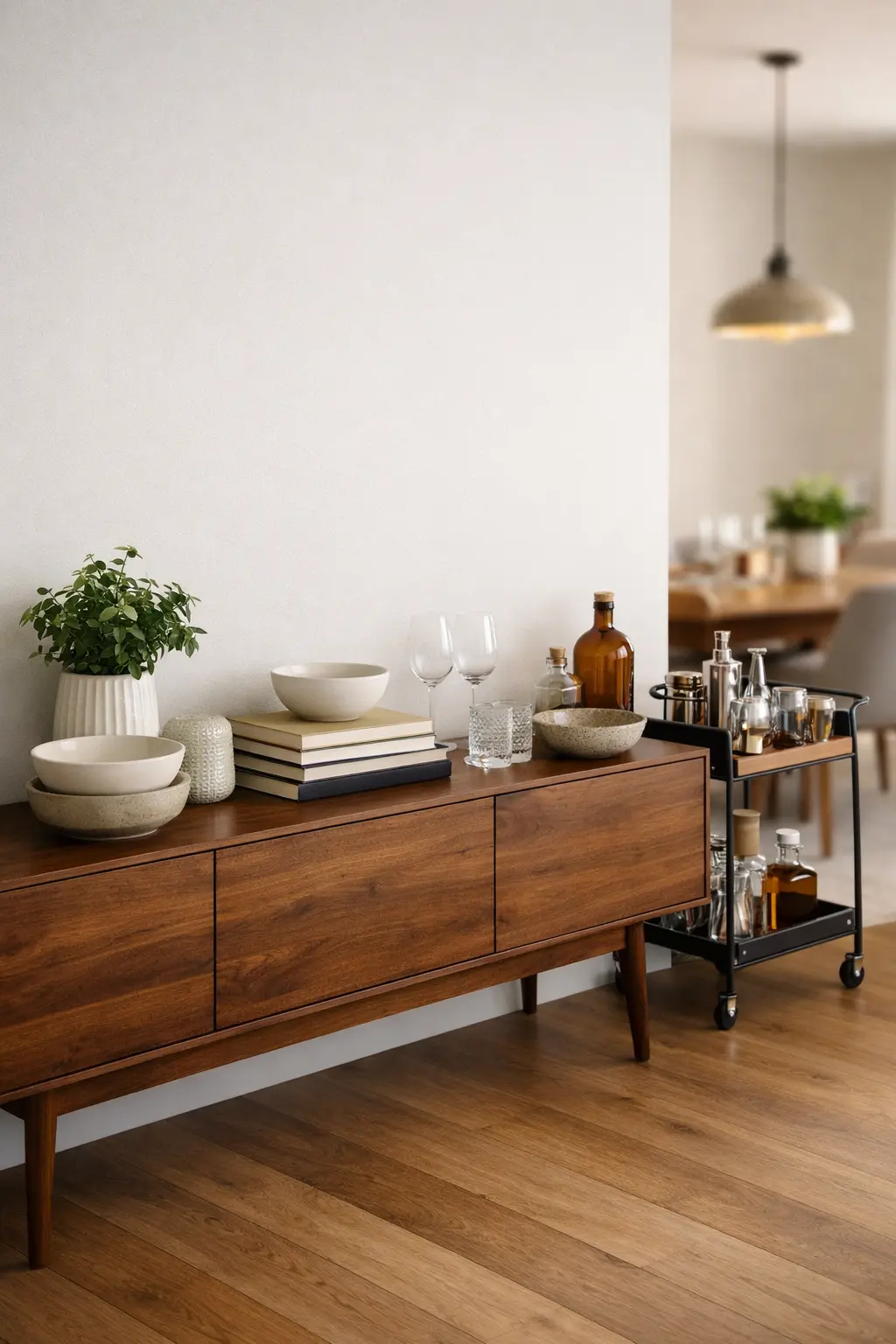
A buffet or credenza is ideal for the dining room: storing dinnerware, linens, candles, drinks, but also providing a surface where you can display decorative objects. A longer, low buffet doesn’t visually overwhelm the space but adds incredible functionality. Choose a piece with legs—this makes it optically lighter than if it were a solid block.
If there’s no room for a buffet, think about wall shelves or floating storage. A well-composed shelf system isn’t just practical, it can be a work of art: place books, beautiful plates, glassware, small plants on it. If you want more inspiration on how to bring the dining room to life with wall-mounted elements, check out my article [Wall Art Ideas That Make Your Home Feel Finished]—it’s full of ideas that work perfectly in dining spaces too.
And a pro tip: the mobile cart. A slim, elegant bar cart isn’t just stylish, it’s incredibly practical. You can use it for storing drinks, but also as extra serving surface when guests come over. When you don’t need it, you can roll it into a corner.
6. Texture and Layering: The Details That Add Depth
 Save it
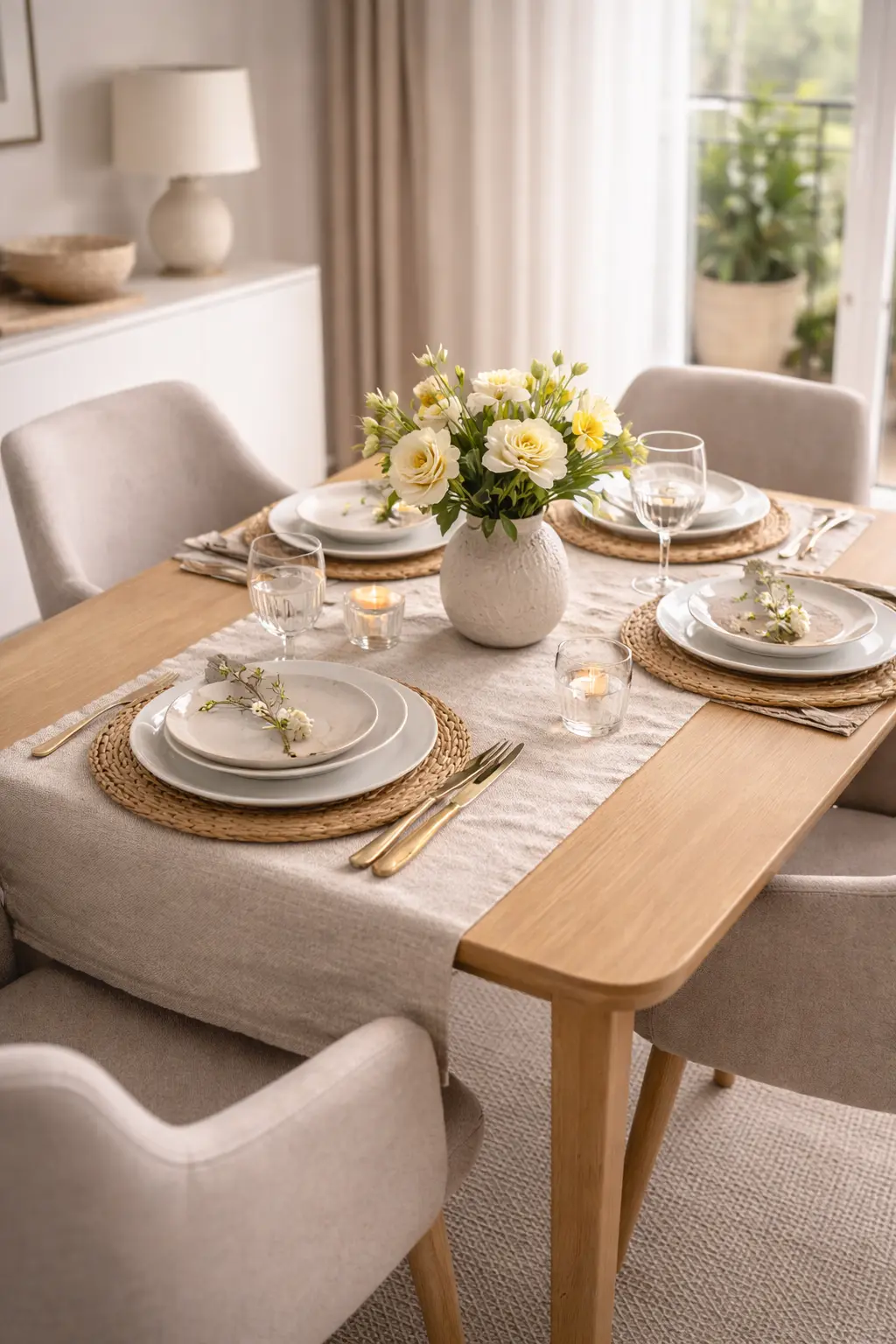
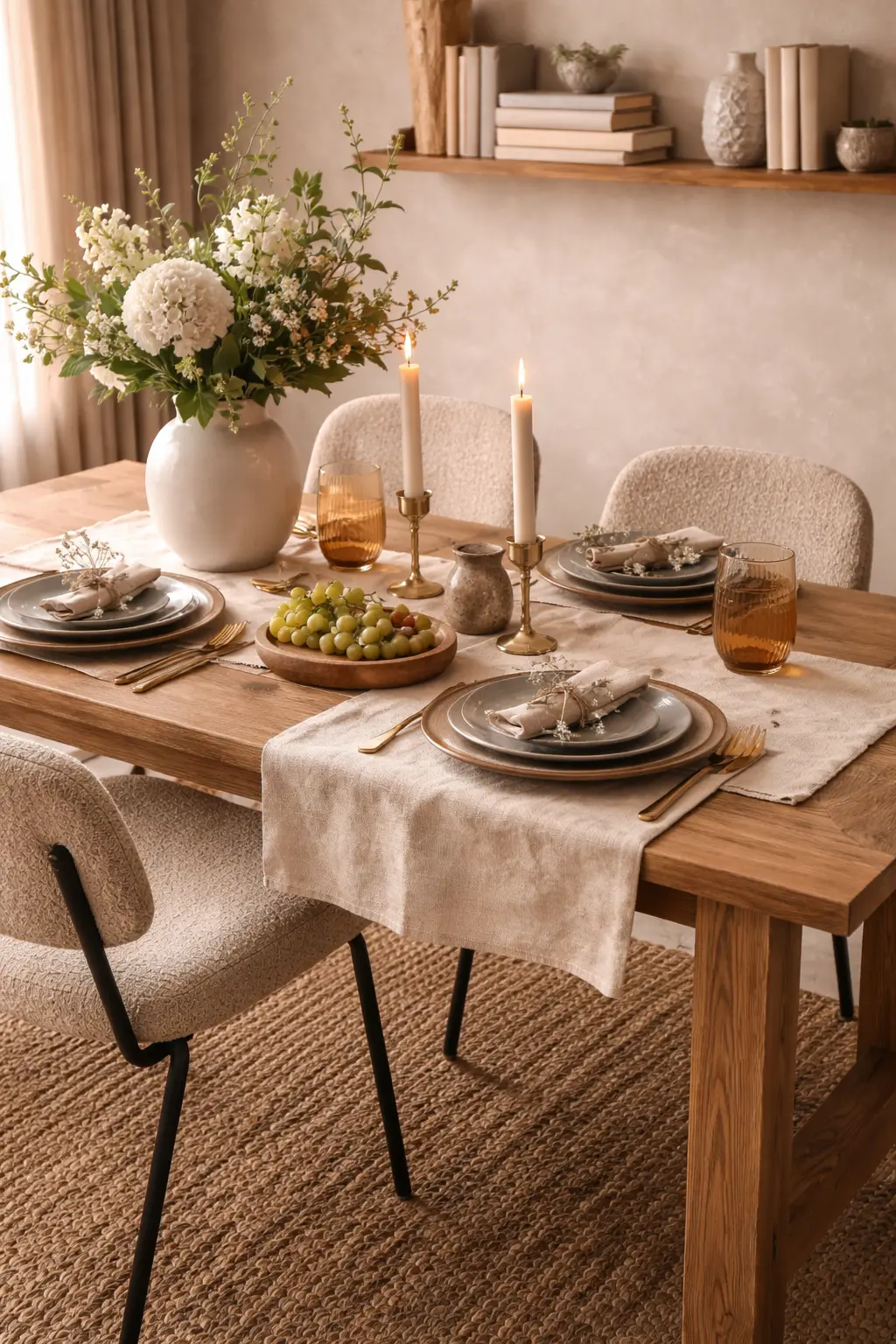
You can easily recognize a flat, one-dimensional dining room: everything is monochrome, every surface is smooth, everything is made of the same material. It might be tidy, but it will never feel truly warm or alive. The secret: texture, layer, mix materials. Just like a well-composed outfit isn’t made of just one color, but a combination of different textiles and surfaces. Start with the chairs: if you have a wood table, try upholstered or leather chairs. If you’re using a modern table with metal legs, a warm, natural material chair (rattan, oak, walnut) balances the coldness. Contrasts work—and they make the space exciting.
Textiles also play a huge role. A well-chosen table runner, fabric placemats, cloth napkins—these are small things, but they add so much. Look for natural materials: linen, wool, cotton. These aren’t just more beautiful, they feel pleasant to the touch, and over time they develop a patina that only gets better.
And don’t be afraid of wood, metal, glass, and ceramic in the same space. A glass-top table with metal legs, wooden chairs, ceramic plates, and candleholders—this combination works if you compose it consciously. The key: keep the color palette unified, and the texture variation won’t be jarring, but enriching.
If you want to hear more about how to bring natural textures into your home, especially with plants, it’s worth reading my article [How to Make Any Room Feel Alive with Plants]—it’s full of ideas on how to bring the dining room to life with small green accents.
7. Zoning in Open Spaces: How to Separate the Dining Area
 Save it
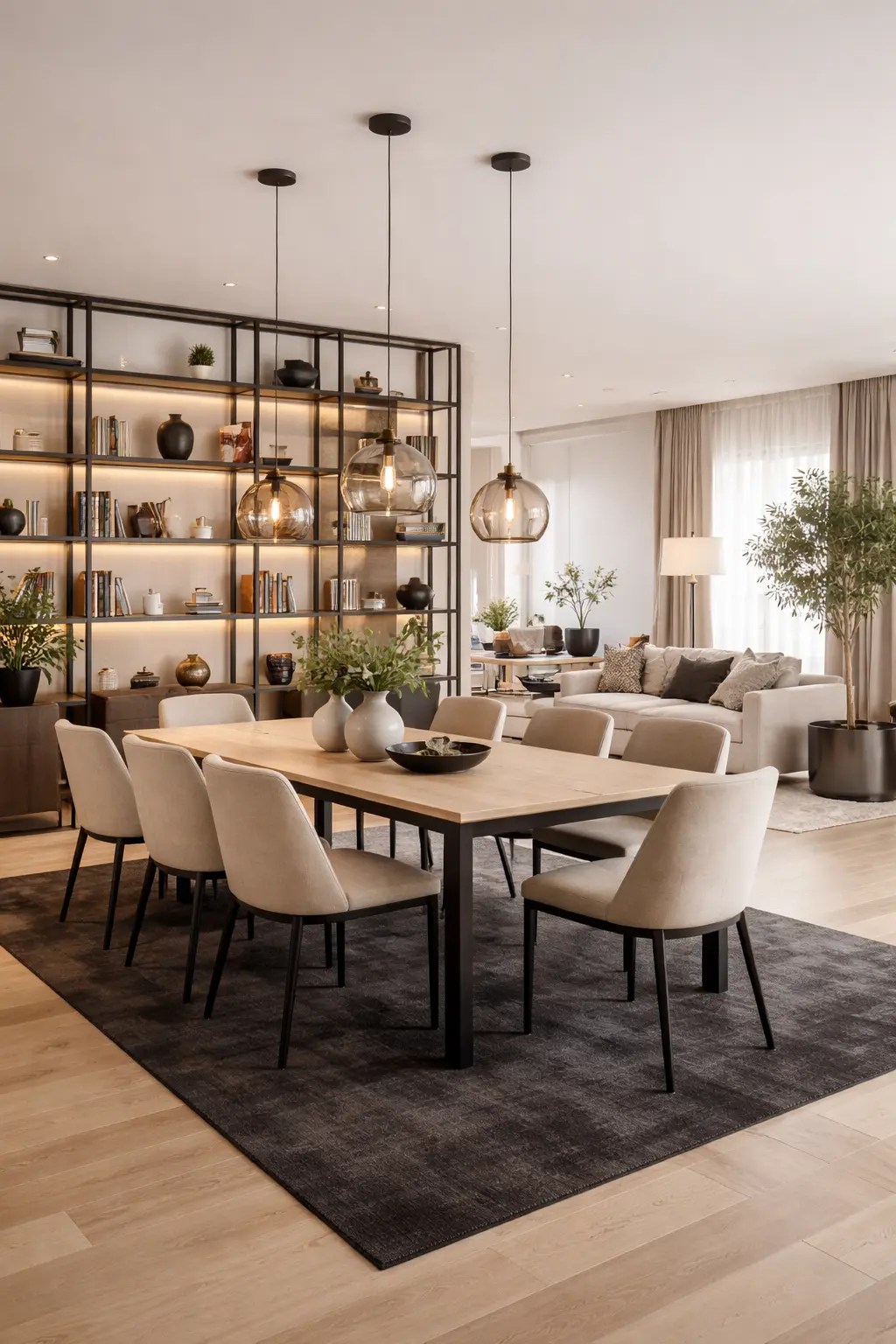
Open floor plan homes are beautiful, but they present a challenge: how do you create distinct functions without putting up walls? The dining area needs to feel like a separate zone, even if it’s physically open to the living room or kitchen. The rug is the first tool. I mentioned it earlier, but this is where it really pays off: a well-chosen rug defines the boundaries. It’s important that it’s large enough—if it’s too small, it looks like the table is just thrown on top, not harmoniously placed. Choose a pattern or color that differs from the living room or kitchen flooring, so the space instantly separates.
The second tool is lighting. If the living room has different types of lamps than the dining room, it helps distinguish the functions. The chandelier above the dining table clearly defines the zone, while the living room lamps create a different mood.
And the third is furniture as visual boundaries. A shelf system, a console table, or even a low buffet behind the dining table builds a visual wall without closing off the space. This is a subtle but effective way to maintain openness while defining territories.
If you really want a more pronounced separation, think about a light, transparent room divider: a metal-framed glass wall, wooden lattice, or even a curtain rail with finer textiles. These are flexible: you can use them when needed and pull them aside when you don’t.
8. Decoration: Personal Touches That Bring the Space to Life
 Save it
The technical side of the dining room layout—dimensions, proportions, traffic patterns—is done. But what truly makes the space special is personal character, the decoration. This is where you have the opportunity to show through the space who you are, what you love, what aesthetic world you enjoy living in.
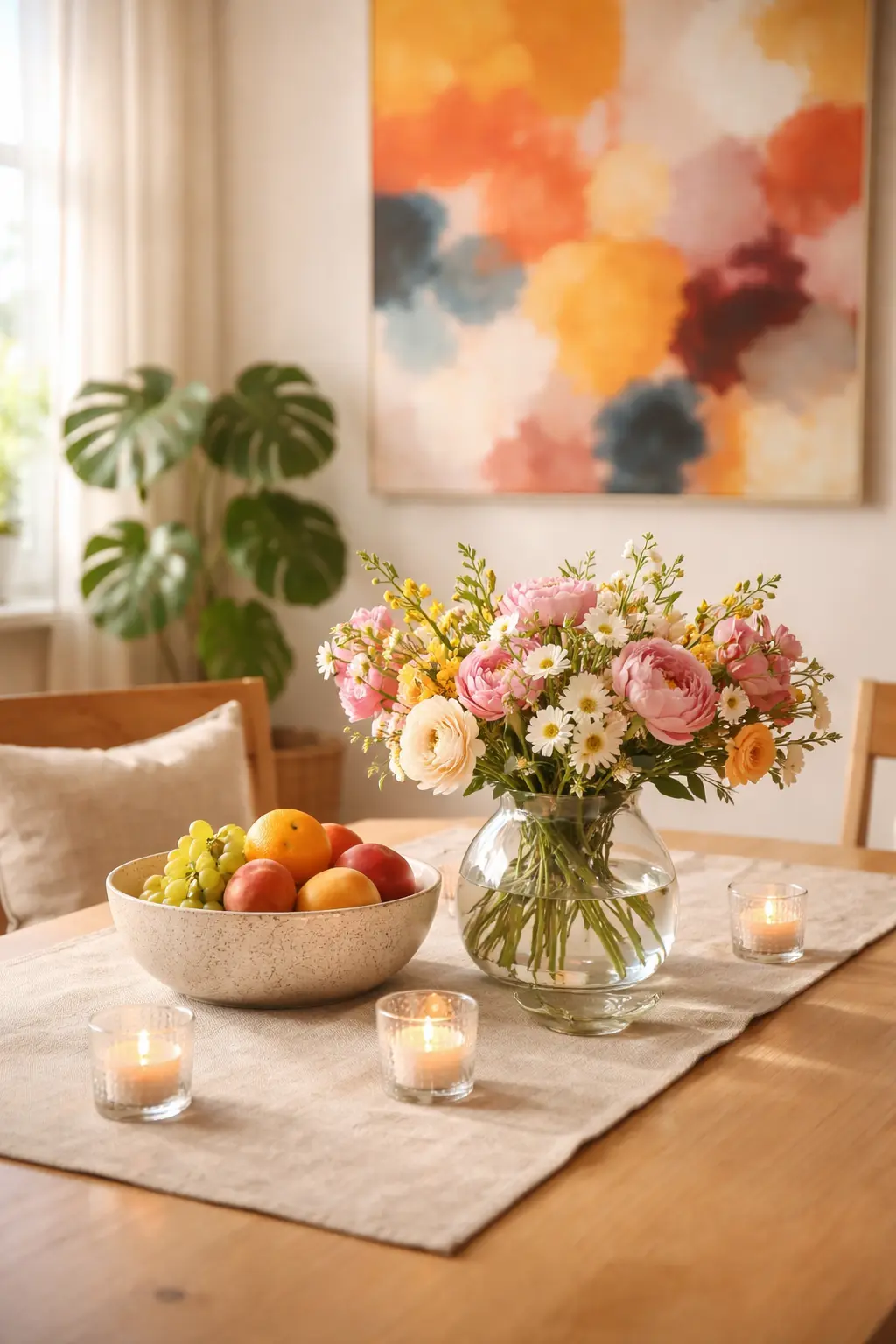
The center of the table—the centerpiece—isn’t just important when hosting guests. A permanent but changeable decoration on the table brings life and focus. It could be a simple ceramic bowl with fresh fruit, a glass holder with candles, a low vase with seasonal flowers. The point: don’t make it too tall, don’t block the sightline.
The walls are tools too. A large, bold artwork behind the table or a gallery wall with smaller frames makes the dining room incredibly personal. But be careful: proportions matter here too. A too-small picture on a large wall gets lost, a too-large picture on a small wall is oppressive. The ideal: the picture or frame grouping should be about two-thirds the width of the table.
And don’t forget to bring in a little greenery. A living plant in the dining room works wonders: fresh air, vibrant color, natural texture. If the space is low or light is scarce, choose a plant that can tolerate it (e.g., a classic palm or a snake plant)—these are hardy and beautiful. If you have enough light, a larger-leafed plant like a monstera can be a real statement piece placed in the corner.
9. Flexibility: The Dining Room Layout That Adapts
 Save it
The best dining room layouts are the ones that adapt to your life—not the other way around. A rigid, static space might look beautiful in photos, but in reality, it’s frustrating if it can’t change when you need it to.
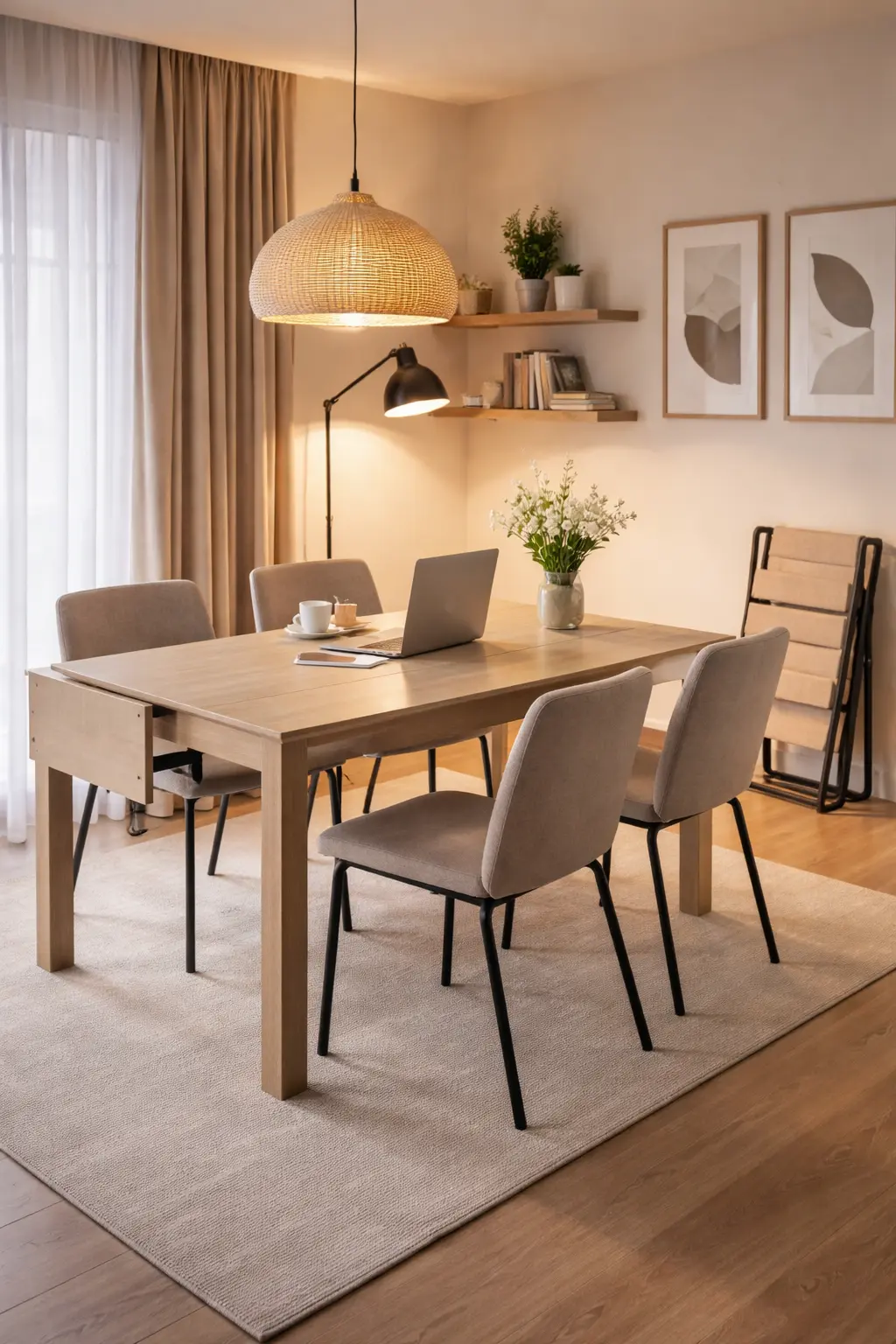
Think modularly. An extendable table, plus extra chairs you store in the pantry and pull out for larger gatherings—this is a practical approach. But a movable buffet, a lightweight shelf system, or even a rug you swap out for different occasions works the same way.
Lighting can be flexible too. If the lamps are dimmable, you instantly switch moods: from work mode to dinner party, from weekday breakfast to Sunday brunch. And if you have a few battery-powered lamps, you can move those around as needed.
And finally, think about multi-functional use. Your dining room doesn’t have to just be for eating. It might be a home workspace, a hobby corner, a family game area. If you design this variability into the layout—for example, by freeing up space around the table when there’s no dinner, or setting up an extra lamp as a workspace—then your dining room won’t be a static museum piece, but a living, breathing space.
Common Mistakes to Avoid When Designing a Dining Room Layout
1. Choosing a table that’s too large for the space:
I know, a grand, large table is tempting—especially if you love hosting guests. But if the table is too close to the walls or furniture, the space instantly becomes claustrophobic. There’s not enough room to pull out chairs, to move, to breathe. And then the whole dining experience becomes stressful instead of pleasant. The rule of thumb: leave at least 90 centimeters of free space on all sides, but if you can, go for 120. This is especially important if you’re using armchairs, because they take up even more room.
2. Poor lighting:
I often see people stop at a gorgeous chandelier and think they’re done. But a single light source is never enough. It’s either too strong and everything is overexposed and flat, or too weak and the whole dining table is dark and oppressive. The trick: layering. The chandelier provides the focus, but you need indirect light sources too—wall sconces, floor lamps, LED strips under shelves. And once again: put the main light on a dimmer. This one switch changes the whole mood, and you can literally use the space differently every day.
3. Ignoring proportions:
It’s not enough if the table fits in the space—it also needs to be proportional. A tiny, small table in a huge room gets lost and looks pitiful. A too-large table in a tight space is oppressive. The same goes for chairs, the chandelier, the rug. If all elements are well-proportioned to each other and the space, there’s harmony. If not, something will always feel off, even if you can’t quite articulate what.
4. Rug size:
This seems like a small thing, but it has a dramatic effect. If the rug is too small and the chairs don’t fit on it when pulled out, the whole layout becomes tense. Plus, it doesn’t work visually—it looks like the table is “floating” in the room rather than harmoniously sitting in the center of the space. The ideal rug is at least 60-70 centimeters larger than the table dimensions in all directions, so chairs remain stably on the rug even when pulled out.
5. Decoration without function:
I see this everywhere: people load up the dining table with candles, decorative objects, large vases—and then when they actually want to eat, there’s no room for the plates. The dining table isn’t decor, it’s a functional item. The centerpiece is beautiful, but it should be practical: easily removable or low and compact so it doesn’t interfere with setting the table and conversation. And if you want permanent decorations, put them on the buffet, shelves, or walls instead.
Frequently Asked Questions
How do I make a dining room feel cozy with cold, modern furniture?
Modern style doesn’t have to be sterile. Bring in warm textures: soft rug, natural wood elements, textile materials (linen runner, wool seat cushions). Layer the lighting so not everything is too sharp and white—use warm-toned bulbs and add indirect light sources. And don’t be afraid of personal touches: a living plant, a handmade ceramic bowl, a vintage candleholder—all of these warm the space without ruining the modern lines.
What chairs should I choose if I have small children?
In this case, functionality is more important than perfect aesthetics. Look for chairs that are easy to clean—metal or wood-framed chairs with washable cushions are ideal. Avoid light, smooth upholstery—instead choose darker, patterned, or easily removable seat covers. And important: choose a chair height that’s safe for kids too—don’t go too high or wobbly.
Do I need a rug under the dining table if I have hardwood floors?
Not mandatory, but definitely recommended. A rug not only visually defines the space, but also reduces noise (especially important if you live in an open floor plan), protects the floor from chair scraping, and makes the space warmer and more intimate. Just make sure it’s large enough—chairs should remain on the rug even when pulled out.
How do I design a dining room in an open space with the living room?
The most important tool is zoning: a good rug that goes only under the dining table instantly separates the area. Use different lighting solutions—pendant light above the dining table, while the living room has floor lamps or spotlights. If possible, place a buffet or shelf system behind the dining table, which creates a visual wall without closing off the space. And if you want a stronger separation, think about an open shelf or transparent room divider—these maintain openness but make the boundaries clear.
Final Thoughts
Your dining room is so much more than a place where you eat. It’s the space where your family gathers at the end of each day, where evenings with friends come alive, where Sunday breakfasts slowly stretch out, where the kids do homework while you bake beside them. It’s the heart of your home—and it deserves to not just be beautiful, but to truly work.
Remember, there’s no perfect template that everyone should follow. The best dining room layout is the one that fits you, your family, your habits, and your room. Start by observing how the space lives—then transform it in small steps, test, refine. Give yourself time to experiment, don’t be afraid to move furniture around, swap decorations, try new solutions.
And if something doesn’t work, don’t take it as a tragedy. Every mistake is a learning opportunity—that’s how we figured out the difference between a well-sized rug and one that’s too small, or how much a dimmer switch matters. Be patient with yourself, trust your instincts, and enjoy the process. Because a truly great dining room isn’t born overnight—it’s slowly, lovingly, carefully shaped into something that serves you for years to come.
This post contains affiliate links. I may earn a small commission at no extra cost to you.
Get cozy inspiration delivered to your inbox.
✓ 14-page beautifully designed ebook
✓ Cozy decorating ideas
✓ Practical room-by-room inspiration
You’re in! 🎉
Thanks for joining the NestFlowHome community!
Your free ebook is already on its way to your inbox. If you don’t see it within a few minutes, please check your Promotions or Spam folder.
Join the NestFlowHome community for weekly decorating inspiration.

Timeless home decor ideas and slow living inspiration for a calm, beautiful life.