
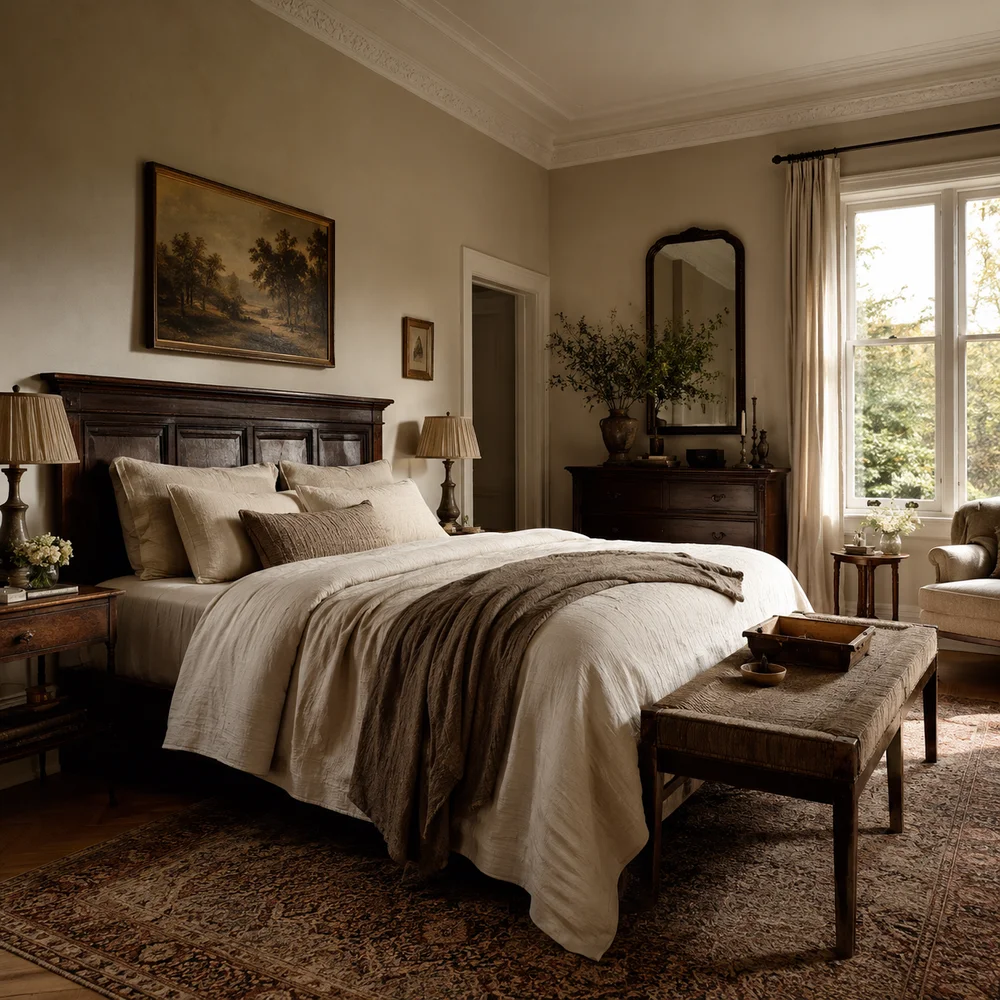
The Best Vintage-Inspired Bedroom Decor You Will See Everywhere
By Emily | July 24, 2026
Walk into any bedroom that feels effortlessly collected — the kind you see saved thousands of times on Pinterest — and you’ll notice something curious. It’s rarely the newest piece in the room that catches your eye. It’s the one with a little wear, a little history, something that looks like it was found rather than bought. That’s the pull of vintage-inspired decor, and most people get it wrong by chasing a look instead of understanding why it works.
The mistake isn’t loving old things. It’s assuming vintage means cluttered, fussy, or costume-like. Done well, vintage-inspired decor is quieter than that. It’s one honest piece of furniture with real grain and real age, placed with restraint, allowed to be the thing your eye lands on instead of competing with six other trends in the same room.
In this guide, you’ll find ten specific, tested ways to bring that lived-in, collected feeling into a bedroom — not through costume-department styling, but through real materials, real proportions, and pieces that earn their place. Each idea solves a specific visual problem: flatness, sterility, a room that feels furnished rather than lived in.
Read through all ten before choosing. Some ideas work best as a single statement; others are meant to be layered together. Pick two or three that genuinely fit your space and your budget, rather than trying to do everything at once — restraint is what separates vintage-inspired from vintage-overwhelmed.
1. The Salvaged Trunk at the Foot of the Bed

 Save it
Most bedrooms end at the foot of the bed with nothing but empty floor or, worse, a laundry pile. A salvaged steamer trunk or an old blanket chest fills that gap with function and history at once. Unlike a manufactured storage bench, a real trunk carries dents, brass corner guards, and a lid that doesn’t close perfectly flush — details that read as authentic rather than staged, and that no amount of factory distressing quite replicates.
The mechanism here is about weight and story working together. A trunk sits low and solid, anchoring the foot of the bed the way a rug anchors a seating area. Inside, it holds off-season blankets or spare pillows, which means the piece is never purely decorative — it’s doing real work, which is part of why it feels intentional rather than staged for a photograph.
Not every trunk needs to be a genuine antique. Reproduction trunks with aged leather straps and forged hardware achieve a similar effect at a fraction of the hunting-and-refinishing effort, and they’re a reasonable substitute if you can’t find or don’t want to restore an original. The key is avoiding anything with a glossy, uniform finish — that reads costume rather than collected.
Picture a small guest room with a plain platform bed and bare floor at its foot. Adding a weathered trunk there — lid slightly rounded, hardware tarnished — gives the eye somewhere to land besides the mattress edge, and instantly suggests the room belongs to someone who travels, collects, or simply pays attention to detail. It becomes the one object a visitor asks about.
If storage is genuinely tight rather than just aesthetically bare, this same instinct scales down well; The Best Aesthetic Closet Storage Ideas for Small Bedrooms covers how to extend that same collected, functional-object mindset into a compact closet without it feeling like storage-for-storage’s-sake.
2. Chalky Milk-Paint Patina on Furniture
 Save it
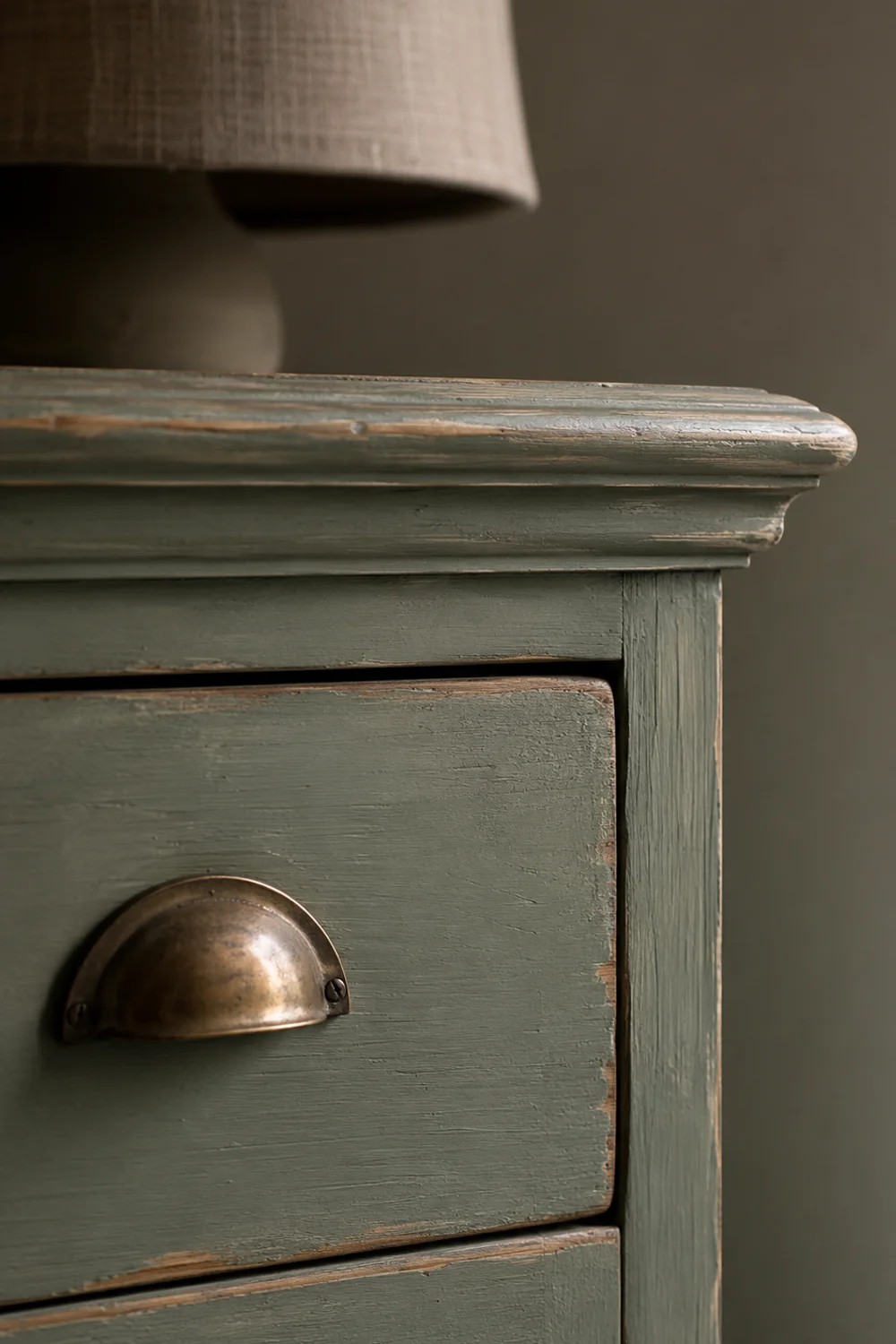
New furniture, even well-made furniture, often has a flatness to its finish — a uniform sheen that reads as fresh off the showroom floor no matter how classic the silhouette. Milk-paint patina solves this by giving a dresser, nightstand, or headboard frame a chalky, matte surface that looks like it has been touched, bumped, and repainted over decades, even on a piece built last year.
The technique works because milk paint bonds unevenly with wood, especially at corners and edges where hands naturally rest. Layering two coats in slightly different tones, then sanding back the high points, exposes glimpses of the underlying color exactly where real wear would occur — door pulls, drawer fronts, the top edge of a headboard. This isn’t random distressing; it follows the logic of how furniture actually ages through use.
You don’t need to refinish an entire bedroom set to get the effect. A single chalk-painted dresser against otherwise unfinished pieces reads as a deliberate mix rather than a full theme commitment, and it’s forgiving of small imperfections, which makes it one of the more approachable DIY finishes for someone without refinishing experience.
Consider a plain pine dresser bought unfinished from a home store. Painted in a soft sage-green milk paint, then lightly sanded at the drawer edges and knobs, it stops looking like flat-pack furniture and starts looking like something passed down. Paired with mismatched original brass pulls, the transformation costs a weekend and a few dollars in paint rather than a trip to an antique dealer.
This is a good reminder that vintage character often comes from process, not price. A patina finish costs less than most new furniture, yet it does more to break up a room’s sterility than almost any single purchase — proof that the “vintage” feeling is frequently a technique rather than a shopping list.
3. The Amber and Depression Glass Lamp
 Save it
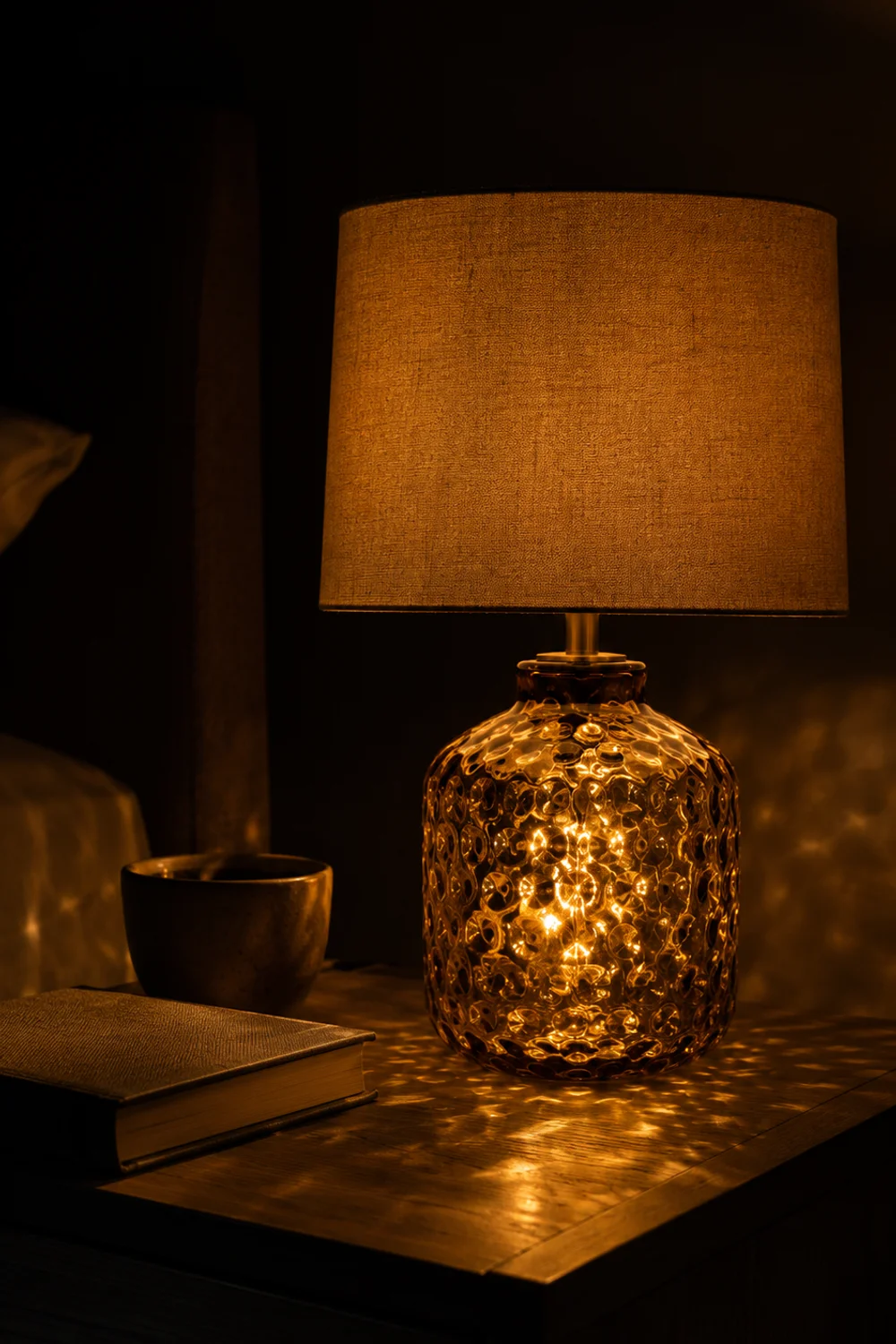
A lamp is one of the easiest places to introduce vintage character because it’s small, affordable, and doesn’t require committing to a whole piece of furniture. Depression glass and amber pressed-glass lamp bases carry a warm, slightly imperfect glow that modern ceramic or metal bases rarely replicate — tiny air bubbles and mold seams in the glass catch light in a way that feels handmade rather than manufactured.
The visual mechanism is refraction. Pressed glass isn’t perfectly clear; it has ripples and facets that scatter light unevenly across the nightstand surface, creating small pools of amber or green rather than one even glow. That imperfection is exactly what reads as old — a flawless glass base looks like it came from a big-box store regardless of its actual age.
If sourcing genuine Depression glass feels like too much of a hunt, reproduction lamps using pressed amber or honey-toned glass achieve a comparable warmth without requiring a trip to an estate sale. Pair the base with a simple linen or pleated paper shade rather than anything modern and geometric, since a contemporary shade on a vintage base tends to cancel out the effect entirely.
Bulb choice matters here too, more than most people expect. A cool-white LED flattens the glass’s texture and makes even genuine Depression glass look plasticky, erasing the exact warmth you bought it for. A warm-toned bulb, closer to old incandescent color temperature, is what actually activates the amber tones and lets the ripples in the glass throw those small, uneven pools of light the way they’re supposed to.
Imagine a nightstand that currently holds a plain black metal lamp — functional, forgettable. Swapping only the base for a honey-toned pressed-glass one, keeping the same simple shade, changes the entire mood of that corner of the room without touching anything else. It’s the kind of single swap that visitors notice without being able to say exactly why.
Small objects like this matter because a bedroom is built from dozens of tiny decisions, not one big one. A vintage-feeling lamp base doesn’t announce itself, but it quietly removes the generic, catalog-furnished feeling that flat, modern materials tend to introduce into a room.
4. A Gallery Wall of Mismatched Antique Frames
 Save it
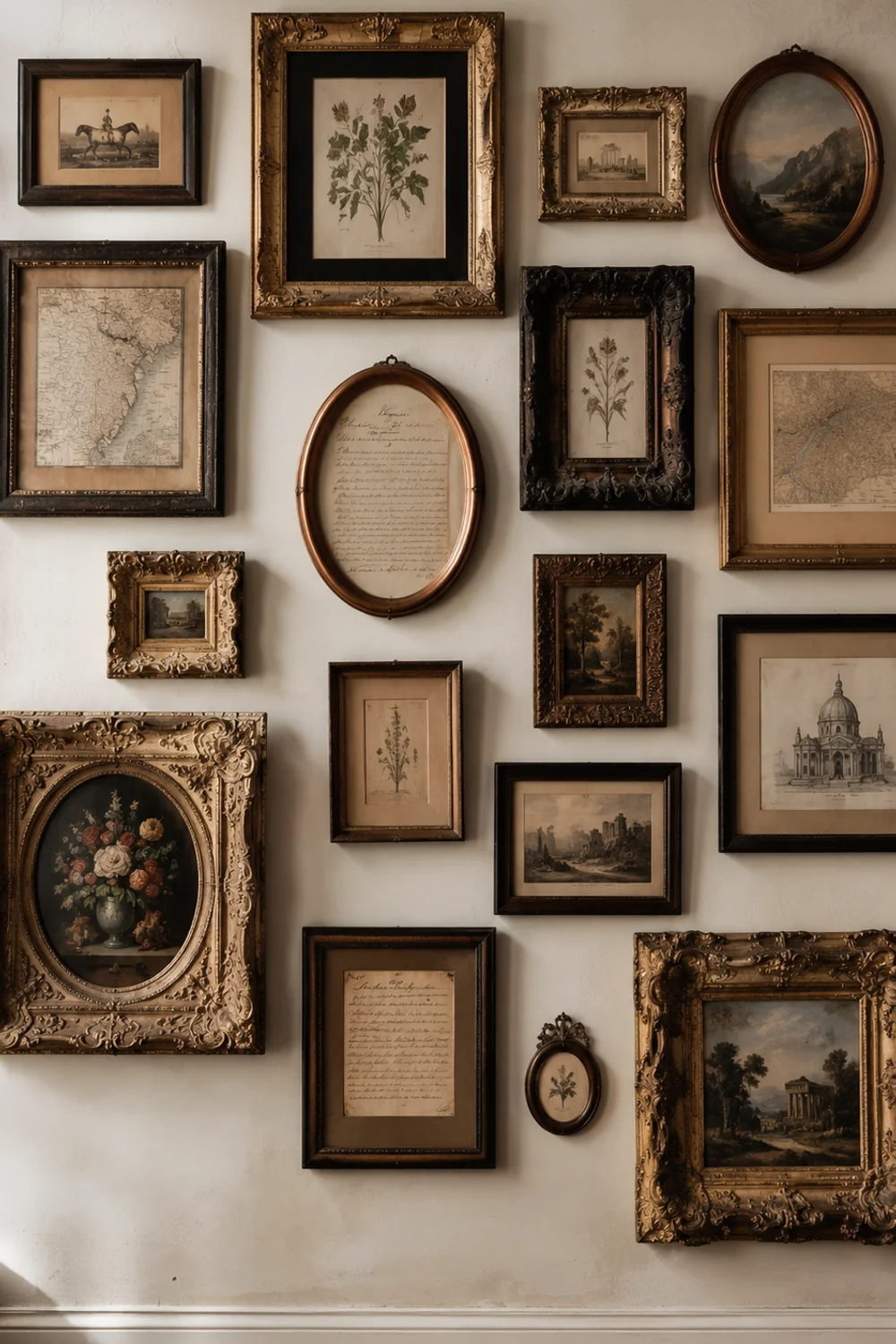
Modern gallery walls tend toward uniformity — identical black frames, evenly spaced, holding coordinated prints. A mismatched antique frame wall does the opposite on purpose. Ornate gilt, chipped gesso, dark wood with carved detailing, and simple oval frames are grouped together, each holding something different: a botanical study, an old map fragment, a hand-lettered page. The variety is the point, not a flaw to correct.
This works because true collections are never uniform. A family that gathered frames over decades wouldn’t have matching hardware or identical proportions, so a deliberately mismatched arrangement borrows the visual logic of genuine accumulation rather than a single retail purchase. The frames themselves become the art, with whatever they hold acting as a secondary layer.
The safest starting point is choosing frames within a loose tonal family — gold, aged brass, and dark wood together, rather than gold next to bright chrome — so the mismatch reads as curated rather than accidental. Thrifted frames often need nothing more than a light cleaning; resist the urge to strip or repaint them, since the existing patina is exactly what you’re paying for.
Think of a plain bedroom wall currently holding one large, modern framed print. Replacing it with eight to twelve mismatched antique frames of varying sizes, arranged with generous breathing room between them, turns a flat wall into the room’s clear focal point — and unlike a single statement piece, it keeps rewarding a second and third look as guests notice different frames.
Before any nails go into the wall, trace each frame onto kraft paper, cut out the shapes, and tape the paper templates up in your intended layout. This lets you shift spacing, swap positions, and step back to judge the balance of large and small frames without committing to a pattern of holes you’ll regret. Once the paper arrangement feels right, hang the frames in that exact sequence, starting from the largest anchor piece and working outward — it’s a small extra step, but it’s what keeps an intentionally chaotic wall from actually looking chaotic once it’s finished.
A wall like this pairs naturally with a softer emotional register elsewhere in the room; How to Create Romantic Bedroom Decor Without Looking Overdone explores how to keep an intimate mood restrained rather than tipping into greeting-card sentimentality, which matters once a wall this visually rich is already doing a lot of the room’s storytelling work.
5. The Overdyed, Sun-Faded Turkish Rug
 Save it
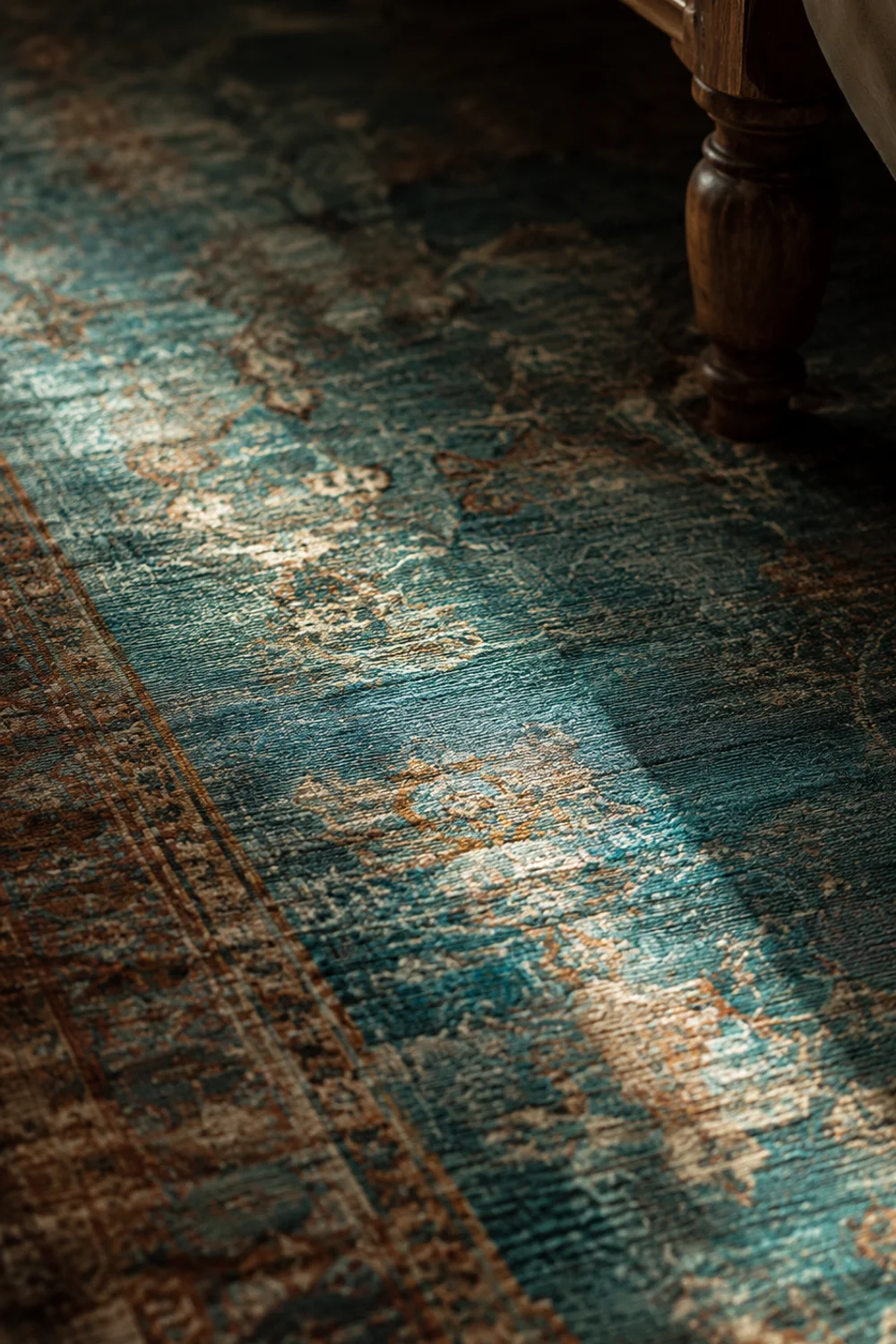
A brand-new rug, however well-made, has a uniformity to its color that a genuinely old rug never has. Overdyed Turkish and Persian-style rugs — pieces that have been redyed over a faded original pattern — carry a softened, slightly mottled color field where the underlying motif still ghosts through. That layered fading is the visual signature of a rug that has actually lived under furniture and sunlight for years.
The technique behind overdyeing involves saturating an already-worn vintage rug with a new, often bolder color, which the old fibers absorb unevenly. The result is a rug where a faded rose or indigo pattern shows faintly beneath a deeper current color — a depth effect that a rug woven and dyed in a single modern process cannot fake, no matter how it’s marketed. Wear patterns compound this effect: the edges and high-traffic center of an authentically overdyed piece often take dye slightly differently than the protected corners, so you get subtle color variation that mimics decades of foot traffic and sun exposure, rather than the flat, edge-to-edge consistency of a rug dyed all at once.
Genuine overdyed vintage rugs vary widely in price depending on age and provenance, but well-made reproductions using similar layered-dye techniques on new wool are a realistic option for most bedrooms. Look specifically for pieces where the manufacturer describes a hand-finished overdye process, since machine-printed imitations tend to have a flat, single-tone surface that misses the point entirely. If you’re shopping online rather than in person, ask for a close-up photo of the rug’s underside — the back of a true overdyed piece usually shows the ghost pattern just as clearly as the front, while a printed imitation often reveals plain, undyed backing that gives away the shortcut immediately.
Picture a bedroom currently anchored by a solid oatmeal rug — pleasant, but interchangeable with a thousand other bedrooms. Swapping it for an overdyed rug in a deep rust or muted indigo, with its faint ghosted pattern still visible underneath, gives the floor a sense of age and depth that changes how every other object in the room reads, including furniture that hasn’t moved at all.
If your palette leans toward soft, warm tones elsewhere in the room, How to Create Warm Neutral Bedroom Ideas That Will Never Go Out of Style is worth reading alongside this idea, since an overdyed rug in a muted rust or clay tone slots naturally into a warm neutral scheme without introducing a jarring color shift.
6. A Crystal Chandelier as Sculptural Centerpiece
 Save it
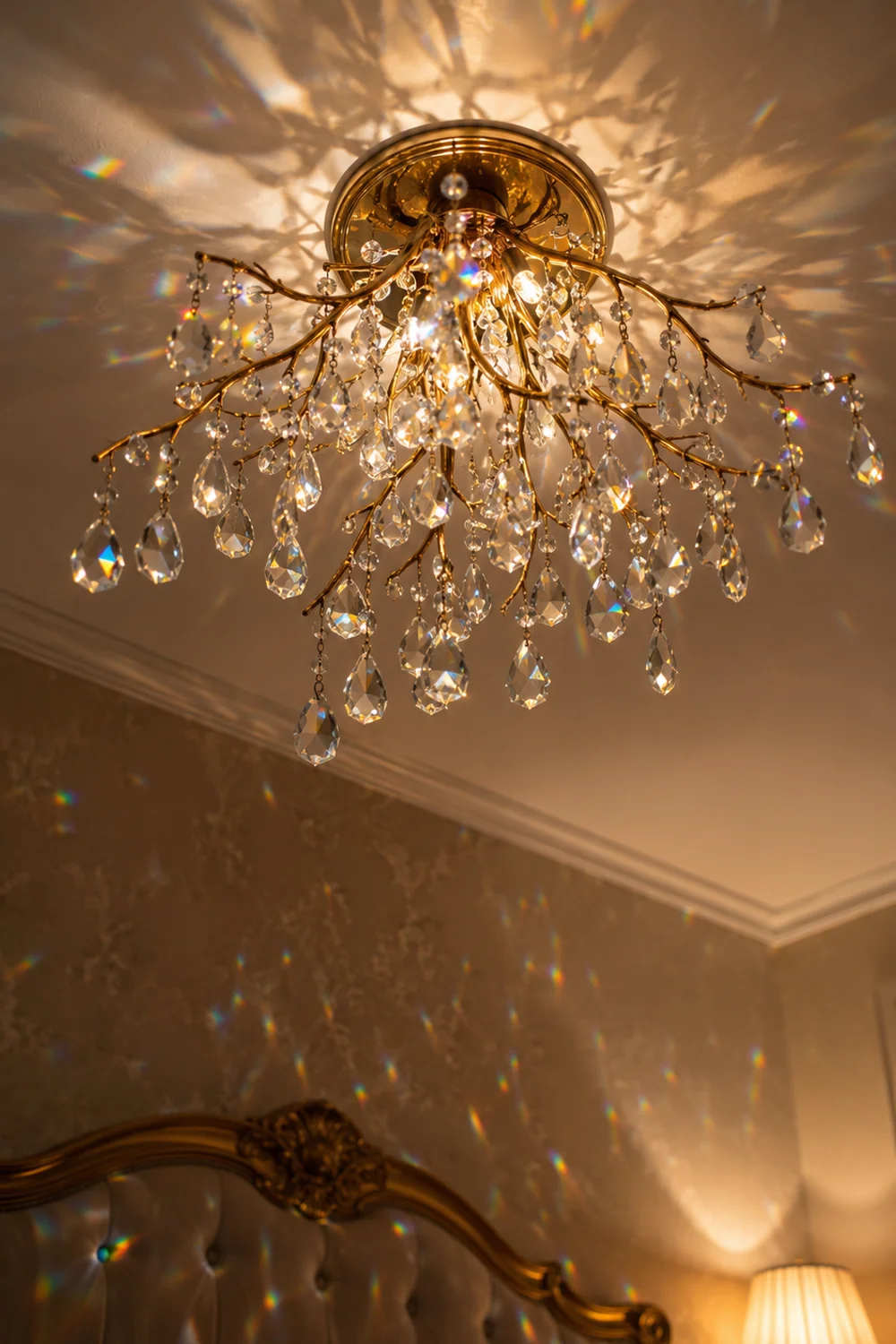
Most bedroom light fixtures are chosen for function first — a flush mount that clears the ceiling, a simple pendant that doesn’t distract. A vintage-style crystal chandelier, even a small one, flips that priority. It’s chosen to be looked at, not just used, and its presence alone signals that the room was designed rather than simply equipped.
The effect comes from how faceted crystal interacts with ambient light throughout the day, not just when illuminated. Even switched off, cut-glass prisms catch daylight and scatter small refractions across the ceiling and walls — a kind of passive, ever-shifting decoration that a flat glass or metal fixture simply cannot produce. It’s sculpture first, light source second.
Scale is the detail most people get wrong. A chandelier proportioned for a formal dining room will overwhelm a bedroom, while one sized correctly — roughly two-thirds the width of a nightstand pairing, hung low enough to feel intimate rather than institutional — reads as a considered heirloom rather than an oversized statement piece dropped in without thought.
Ceiling height changes the calculation more than most people expect. In a room with eight-foot ceilings, a hanging chandelier with a long chain or rod can eat up headroom fast, making the fixture feel like an obstacle rather than an ornament. The workaround isn’t to abandon the idea — it’s to look for a semi-flush version with a short drop, which keeps the faceted crystal and the light-scattering effect while sitting close enough to the ceiling that no one has to duck near the bed.
Consider a bedroom currently lit by a plain flush-mount fixture original to the house. Replacing it with a modest, aged-brass chandelier with clear crystal drops — hung a foot or so lower than the flush mount sat — turns the ceiling itself into a focal point, something almost no other bedroom on the block is likely to have done.
Because lighting choices affect far more than mood in a bedroom, it’s worth reading Bedroom Lighting Ideas That Define the Best Environment for Better Sleep alongside this idea, so a decorative centerpiece like a chandelier is balanced with practical, lower fixtures for actual nighttime use rather than replacing them entirely.
7. The Vintage Ceramic Washstand Vignette
 Save it
Before built-in plumbing, every bedroom had a washstand — a small table holding a ceramic pitcher and basin for washing up. That vignette has almost entirely disappeared from modern bedrooms, which is exactly why reviving it, even purely decoratively, reads as distinctly vintage rather than generically old-fashioned. It’s a specific historical ritual object, not a vague gesture at “antique style.”
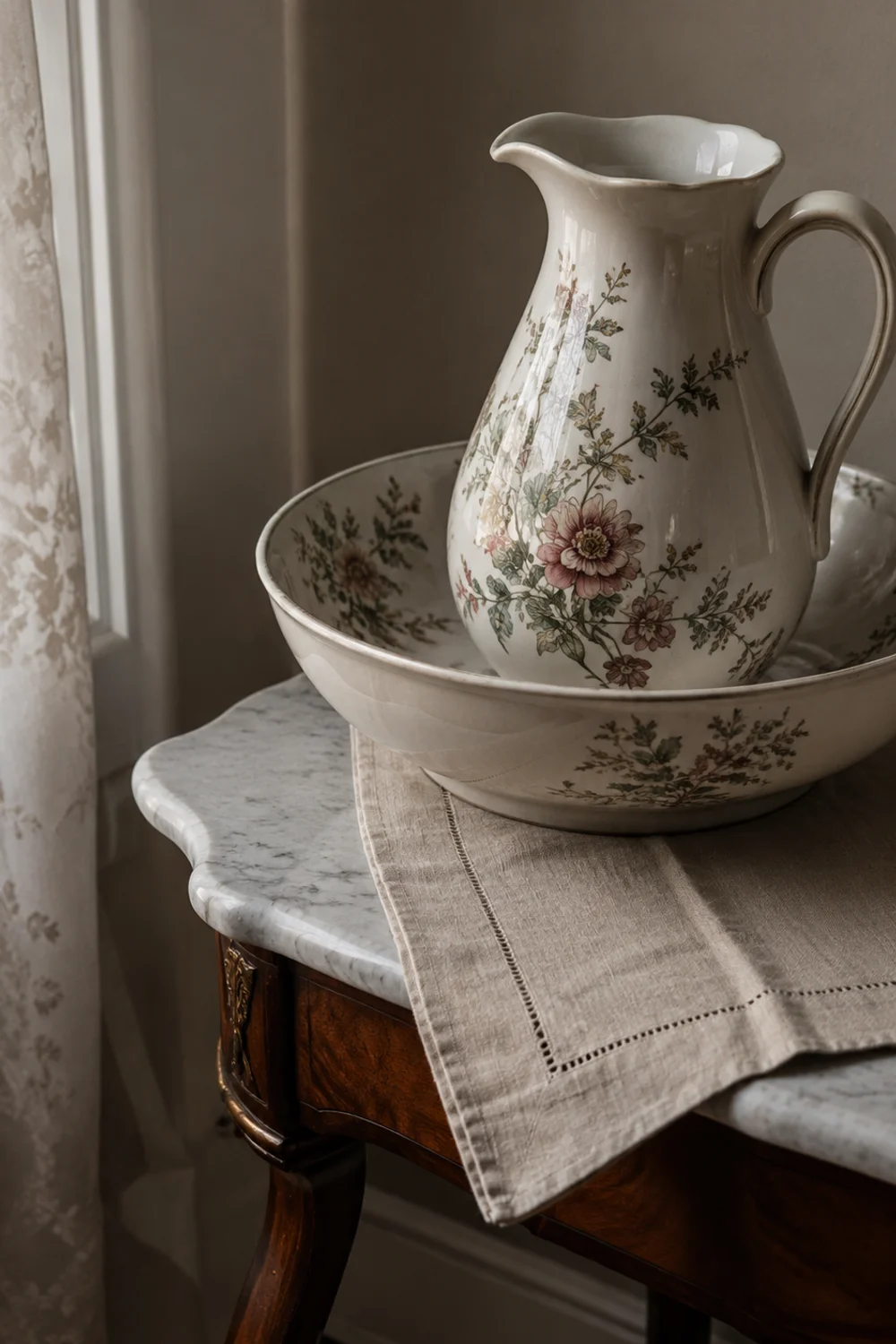
The visual logic depends on grouping, not a single object. A hand-painted ceramic pitcher paired with its matching basin, set on a small marble-topped or simple wood side table, creates a still-life moment that a single decorative vase can’t replicate. The pairing implies use and purpose, even though the pieces are purely ornamental in a modern bedroom.
Genuine antique washstand vase can be surprisingly affordable at estate sales precisely because they’re no longer functional, which makes them one of the more accessible entry points into real vintage collecting. If sourcing a matched original set proves difficult, a reproduction pitcher-and-basin pairing in a similar floral transferware pattern achieves nearly the same effect.
Picture a small unused corner of a bedroom, perhaps beside a window, currently holding nothing but a plain lamp. Adding a narrow vintage side table topped with a floral ceramic pitcher and basin fills that corner with a quiet, specific story — something a guest is likely to linger over rather than glance past, because it’s clearly not a mass-produced decorative object.
One detail that separates a convincing vignette from a staged one is what sits underneath the basin. A thin linen runner or a hand-embroidered doily beneath the pitcher and basin does double duty — it protects an antique tabletop from moisture rings if the basin is ever filled with water for effect, and it visually grounds the grouping so the pieces don’t look like they’ve been set down mid-move. Skip the runner entirely and the vignette can start to feel provisional, like it hasn’t quite settled into the room yet.
8. Fringed and Tasseled Textile Trim

 Save it
Contemporary bedding tends toward clean, unadorned edges — a flat hem, a simple piped border at most. Passementerie trim — the fringes, tassels, and braided edging historically used on curtains, cushions, and bed skirts — reintroduces a level of finishing detail that most modern textiles have quietly abandoned, and it’s one of the fastest ways to make existing bedding read as older and more considered.
The technique is additive rather than a full replacement. A plain throw pillow gains an entirely different character with a hand-knotted fringe sewn along its seam; a flat curtain panel gains weight and movement with a simple bullion trim along its lower edge. The trim catches shadow and movement in a way a flat hem never will, which is much of why it reads as tactile and old rather than sterile.
Trim doesn’t need to appear on every textile in the room to register. One fringed lumbar pillow or a single trimmed curtain panel is often more effective than trim on every soft surface, since restraint keeps the detail feeling like a deliberate accent rather than a costume choice applied indiscriminately across the whole room.
Color choice matters more than most people expect going in. A fringe cut in the same tone as the base fabric — cream trim on a cream pillow, for instance — reads as quiet texture, almost like a shadow line, and suits a room that’s otherwise restrained. A contrasting fringe, on the other hand, turns the same pillow into a visible object with its own presence, which works best when there’s already one other saturated or patterned element nearby to keep it from looking like the only decision made in the room.
Imagine a simple linen curtain panel, currently ending in a plain hem. Adding a few inches of tasseled fringe along the bottom edge changes how the whole panel moves in a breeze and how it looks pooling slightly on the floor — a small, inexpensive alteration that makes an otherwise ordinary curtain look like it was sourced from an estate rather than a big-box store.
For a fuller picture of how trims and textures interact with the rest of the bed itself, 15 Layered Bedding Ideas That Look Like a Luxury Hotel You Will Absolutely Love is worth reading in tandem, since a fringed accent pillow needs the right supporting layers around it to read as intentional rather than out of place.
9. The Vintage Writing Desk as a Personal Corner
 Save it
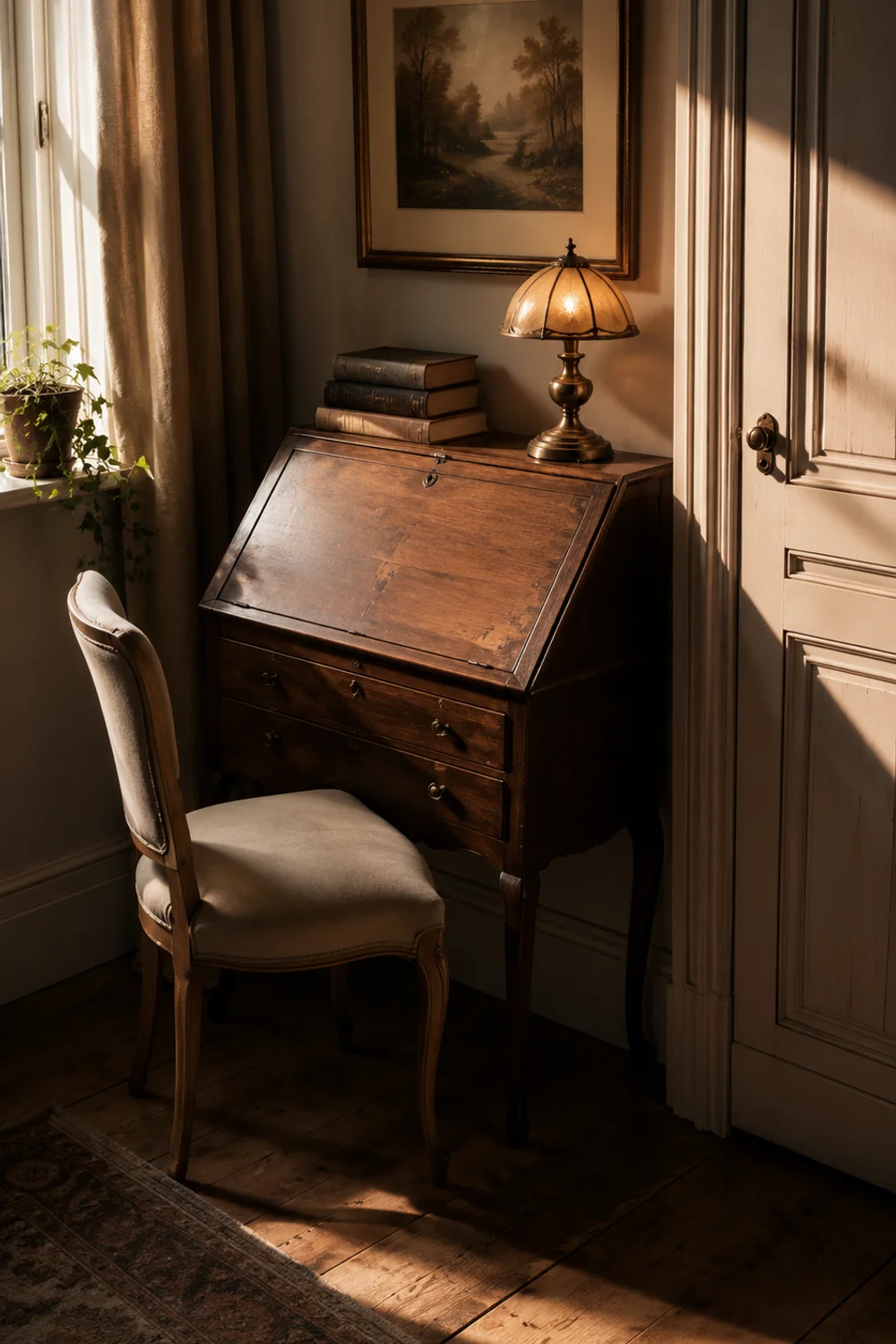
Most bedrooms treat every surface as either bed or storage, leaving no room for a genuinely personal activity zone. A small antique writing desk or secretary bureau tucked into an underused corner reintroduces a use that vintage bedrooms took for granted — a place to write letters, keep a journal, or simply set down a cup of coffee — and that specific, human function is part of what makes the piece feel authentic rather than decorative filler.
The mechanism is really about scale and imperfection working together. A genuine antique writing desk is rarely a perfect rectangle; drop-front lids, curved legs, and slightly uneven drawer fronts are common, and those irregularities are what separate it visually from a flat-pack desk. Even unused for actual writing, the desk’s form alone introduces a silhouette that modern furniture rarely offers.
Condition matters less than most people assume. A desk with a slightly sticky drawer or a scuffed writing surface is often more convincing than one that’s been fully restored to showroom condition — light wear signals genuine age, while a flawless refinish can accidentally make an authentic antique look like a modern reproduction instead. There’s a line, though: a faint water ring on the drop-front lid reads as history, but a warped or delaminating veneer reads as damage, and it’s worth checking the surface under raking light before buying so the piece earns its place rather than becoming something you quietly regret.
Picture an awkward, unused corner between a window and the closet door — too small for a chair, too large to ignore. A narrow drop-front writing desk fits neatly there, holding a stack of books and a small lamp, transforming dead space into the one corner of the room that feels genuinely personal rather than simply furnished to fill square footage. If floor space allows even a few extra inches, a slim slipper chair pulled up to the desk turns the corner from a display vignette into somewhere you’d actually sit for ten quiet minutes with a coffee before the day starts.
Since a desk like this often sits near where clothes and accessories are staged for the day, Luxury Walk-In Closet Inspiration Ideas You Will Absolutely Love pairs naturally here, offering ideas for the adjacent dressing routine that a vintage writing corner quietly supports without needing to compete with it for attention.
10. Salvaged Architectural Fragments as Wall Art
 Save it
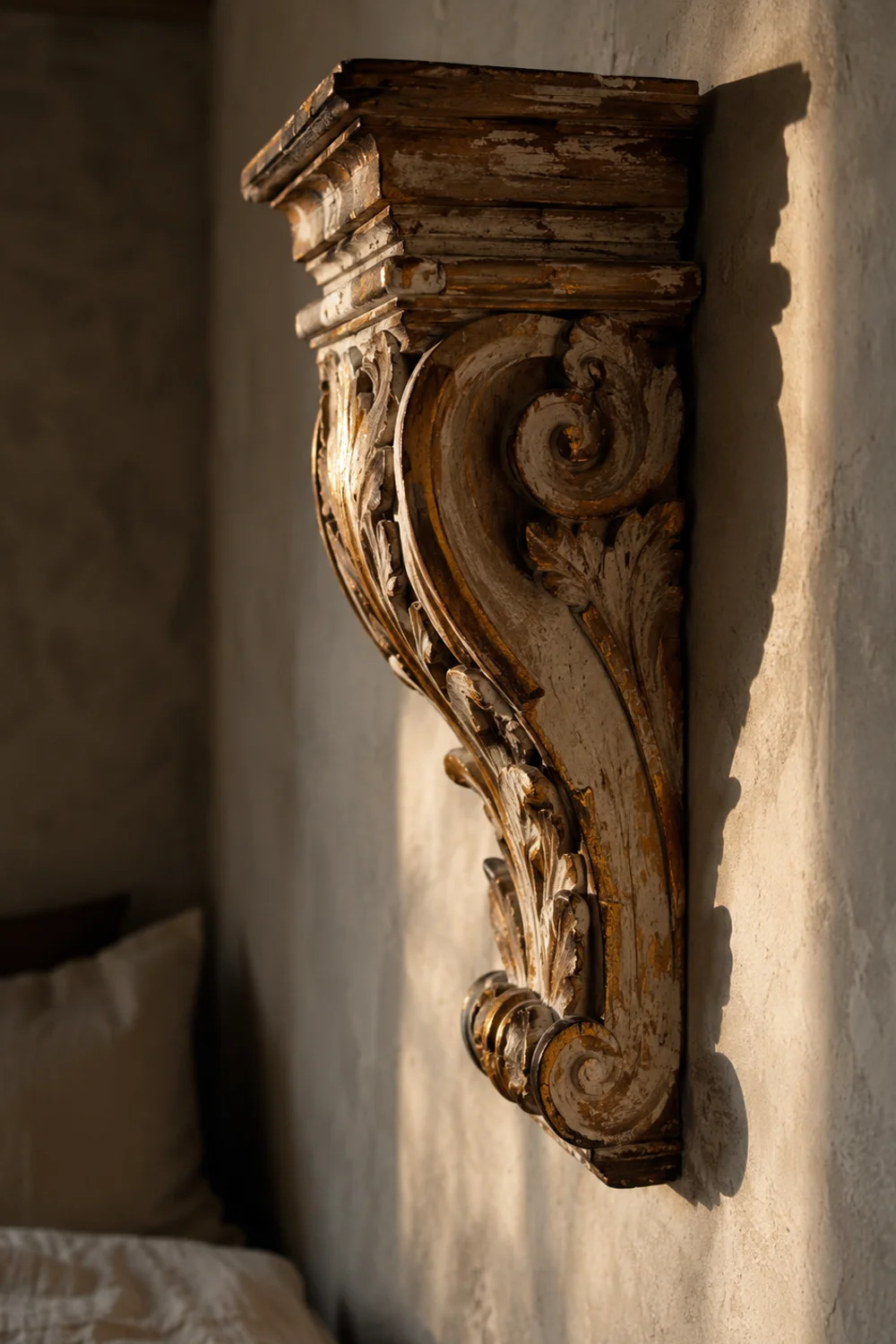
Framed prints are the default choice for bedroom walls, but salvaged architectural fragments — a section of carved corbel, an old shutter panel, a fragment of decorative iron gate, a reclaimed ceiling medallion — offer a three-dimensional alternative that most bedrooms never consider. These pieces carry genuine structural history, which gives them a weight and authenticity that a printed image, however well-chosen, simply can’t replicate.
The visual mechanism is depth and shadow. A flat framed print sits parallel to the wall with no real relief, while a mounted architectural fragment casts its own shadow, shifting subtly as the light in the room changes throughout the day. That built-in dimensionality is part of why a single fragment often reads as more substantial than an entire arrangement of flat prints.
Sourcing doesn’t require an architectural salvage yard, though those are ideal. Reclaimed builders often sell individual pieces — a carved wood bracket, a section of decorative tin ceiling — inexpensively, since they’re considered scraps of a larger renovation rather than standalone objects. A single fragment, cleaned but not over-restored, is usually enough for one wall. Pieces that still carry layers of old paint, water staining, or worn gilding are often the better find, not the worse one — that patina is evidence the object actually did its original job for decades, and stripping it back to raw wood or bare metal erases the very history that made it worth hanging in the first place.
Mounting matters more here than with a lightweight print. Most fragments are dense, uneven, and heavier on one side than the other, so a simple nail or adhesive strip won’t hold; a discreet French cleat or a bracket rated well above the piece’s apparent weight keeps it secure and level without requiring visible hardware across the face of the object.
Consider a bedroom wall above the headboard currently holding a plain, mass-produced canvas print. Replacing it with a single salvaged corbel or a fragment of an old iron gate, mounted simply on a discreet bracket, gives that wall genuine sculptural presence — the kind of object that makes a room look assembled by someone with a real point of view rather than furnished from a single catalog order.
Used sparingly, one fragment says more than several matching prints ever could, which is really the underlying lesson across every idea in this guide — vintage character comes from a few honest, specific objects, not from filling every surface with a nod to the past.
Common Mistakes to Avoid
1. Buying reproduction pieces that look too new
Vintage-inspired only works if the wear looks earned. A “distressed” finish applied in perfectly even patterns, or hardware with a uniform dark patina straight from the factory, reads as costume rather than collected. If you’re buying reproductions, look for pieces with irregular, asymmetrical wear rather than a repeated pattern.
2. Mixing too many eras and styles at once
One antique dresser, one vintage rug, and one gallery wall of mismatched frames can coexist beautifully. Five different “vintage” statement pieces competing for attention in the same room usually collapses into visual noise rather than a coherent, collected feeling. Choose two or three ideas from this guide and let them breathe.
3. Restoring pieces too thoroughly
A fully refinished antique often loses the very quality that made it desirable in the first place. Stripping, sanding, and repainting an old trunk or desk back to a flawless finish frequently makes it look like a modern reproduction instead of the genuine article it actually is.
4. Ignoring scale
A chandelier sized for a formal dining room, or a trunk large enough to double as a coffee table, will overwhelm an average bedroom. Vintage pieces were often built for different room proportions than today’s bedrooms, so measuring carefully before buying matters more than it does with modern furniture.
5. Treating vintage as purely decorative
The strongest pieces in this guide — the trunk, the writing desk, the washstand vignette — all had a genuine original function. A vintage object that still does something, even symbolically, reads as more authentic than one that exists purely to look old on a shelf.
Frequently Asked Questions
Do I need genuine antiques, or are reproductions acceptable?
Reproductions are entirely acceptable, and often more practical, as long as they’re chosen carefully. Look for pieces with irregular wear patterns, natural materials like solid wood or real glass, and finishes described as hand-applied rather than machine-uniform. A well-made reproduction with authentic-feeling imperfections will read better than a genuine antique in poor condition.
How many vintage pieces should one bedroom include?
Two to four meaningful pieces are usually enough for a full bedroom — perhaps one furniture piece, one textile element, and one small vignette or wall treatment. Filling every surface with vintage objects tends to tip a room from “collected over time” into “themed,” which undercuts the effortless quality that makes this style appealing in the first place.
Where can I actually find genuine vintage pieces?
Estate sales, architectural salvage yards, and local antique malls typically offer better prices and more unique pieces than curated vintage boutiques, which mark up significantly for the sourcing work already done. Online estate-sale platforms have also made it easier to search by category and location without needing to travel to browse in person.
Will vintage-inspired decor clash with more modern furniture I already own?
Generally not, if the pairing is deliberate rather than accidental. A single antique piece against a backdrop of simple, unfussy modern furniture often looks more sophisticated than an entirely vintage room, because the contrast highlights the character of the older piece instead of letting it blend into a matching set.
Final Thoughts
Vintage-inspired bedroom decor isn’t really about age at all — it’s about honesty in materials and restraint in how much you show at once. A single trunk, a genuinely faded rug, one gallery wall of mismatched frames: each idea in this guide works because it earns its place rather than performing a theme.
The pieces that succeed longest in a room are usually the ones with real function behind them, even decorative function. A washstand vignette, a writing desk, a trunk that actually holds blankets — these read as lived-in precisely because they still do something, rather than existing only to look old.
Start with one idea from this list, the one that solves an actual gap in your current room, and let it sit before adding another. The rooms that feel effortlessly collected were rarely finished in a weekend — and that patience is, itself, part of the vintage story.
This post contains affiliate links. I may earn a small commission at no extra cost to you.
READ FOR THE NEXT STEP?
KEEP READING
Continue with another helpful idea.

Bedroom Lighting Ideas That Define the Best Environment for Better Sleep
SHOP MY FINDS
Discover my favorite products for this place
My Favorite Bedroom Finds
GET THE PLANNER
Get the planner guide and make it easier.
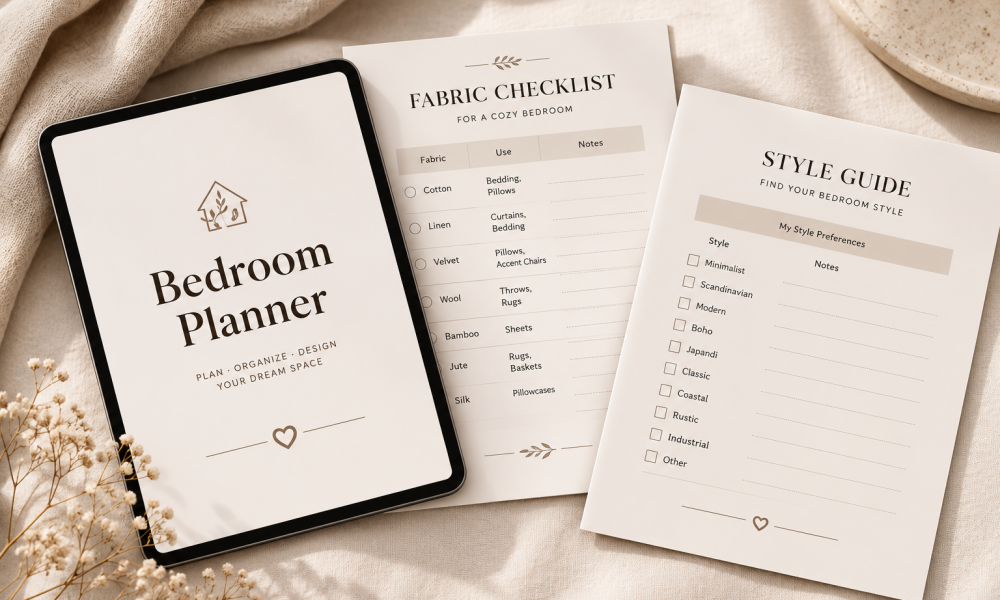
The Ultimate Bedroom Planner
Get cozy inspiration delivered to your inbox.
✓ 14-page beautifully designed ebook
✓ Cozy decorating ideas
✓ Practical room-by-room inspiration
You’re in! 🎉
Thanks for joining the NestFlowHome community!
Your free ebook is already on its way to your inbox. If you don’t see it within a few minutes, please check your Promotions or Spam folder.
Join the NestFlowHome community for weekly decorating inspiration.

Timeless home decor ideas and slow living inspiration for a calm, beautiful life.