
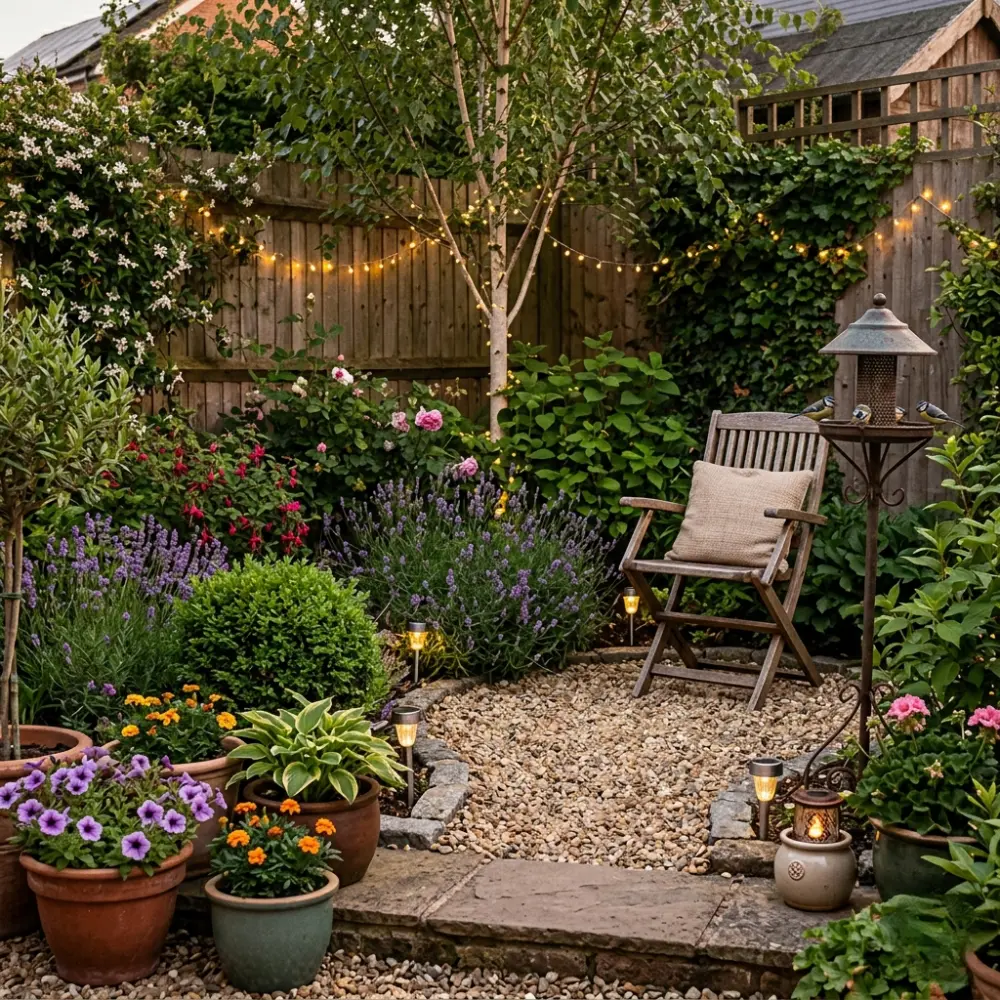
How to Transform a Small Backyard into a Beautiful Garden
By Emily | May 04, 2026
Remember that feeling when you first stepped into your place, looked out at the backyard, and thought: “This is… just a patch of grass”? Maybe concrete slabs, maybe a few dried-up shrubs, maybe nothing at all. And it’s still sitting there, unused, while you daydream about what it could be – a real sanctuary where you could have your morning coffee, read your book in the evening, or simply breathe after a long day.
The truth is, a small backyard isn’t a limitation – it’s one of the biggest design challenges and opportunities you’ll ever get. Because when space is tight, every decision counts. Every plant, every stone, every splash of color. And that’s exactly what makes it exciting. In this article, I’m not going to tell you to “plant some flowers and buy furniture.”
Instead, I’ll walk you through the mindset that transforms a cramped, lifeless yard into a place you actually want to spend time in. You’ll learn how to think in zones, how to use vertical space, how to choose plants that stay beautiful across seasons, and how to avoid those classic mistakes that make most small gardens feel chaotic. If you’ve ever thought your yard was too small to matter – get ready to change your mind.
1. Think in Zones, Not Just "Garden"
 Save it
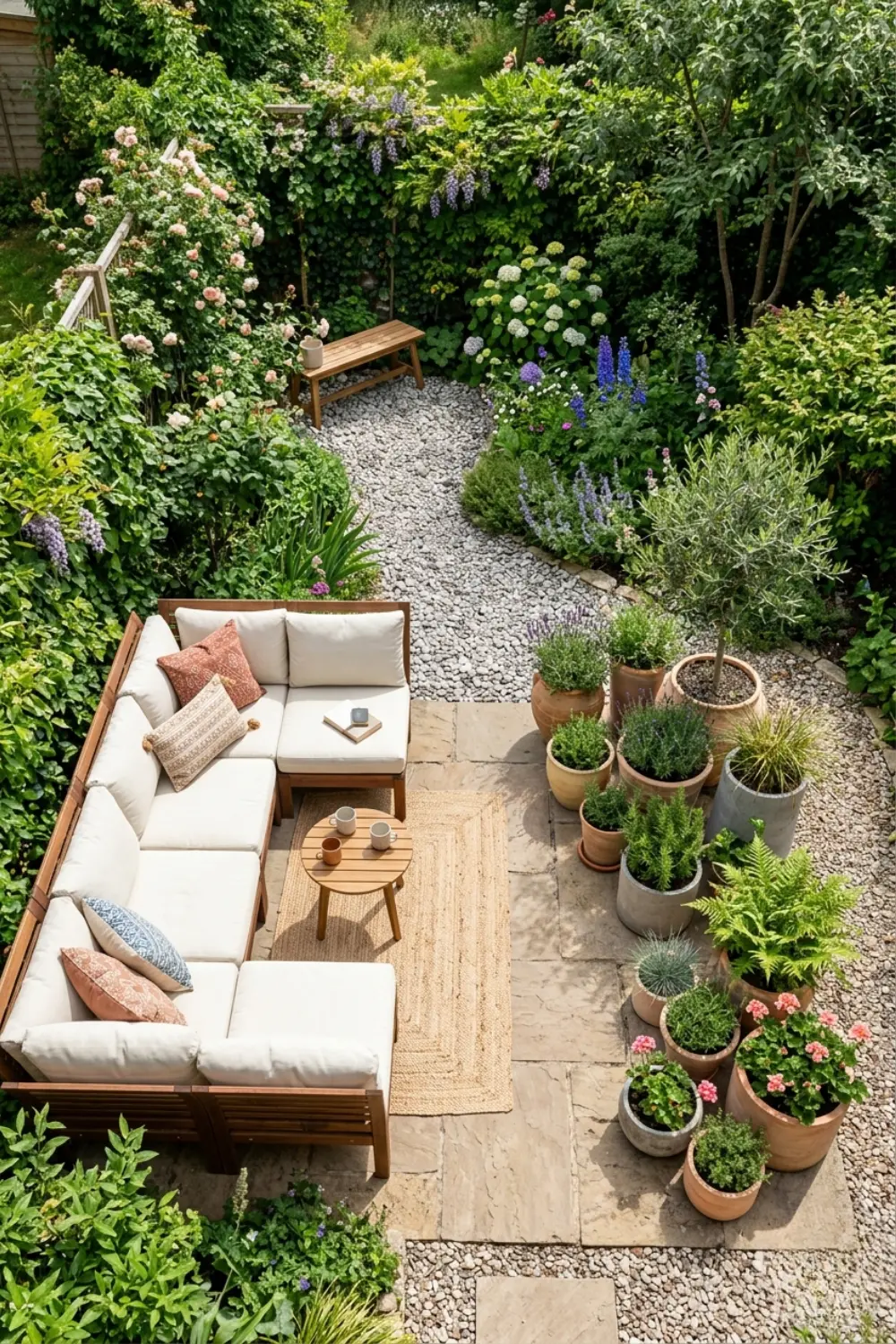
The biggest mistake you can make with a small yard is treating it like one continuous space. It’s not. Even if you only have 200 square feet, you can carve out a seating corner, a “green nook,” and a pathway – and that alone changes the entire feel. When I first looked at my own little concrete yard, I thought: “There’s no room for anything.” Then I started sketching on paper: where does the sun hit in the afternoon? Which corner could I sit in without staring into the neighbor’s windows? Where could there be a little “wild” section to soften the hard lines? Suddenly, three distinct functional areas emerged.
This isn’t complicated, but it has to be intentional. Start by observing when and how you use the yard. If you have coffee in the mornings, that zone should be close to the kitchen door. If you want to relax in the evenings, see where the shade falls. In a good small garden, every square foot has a role. Don’t try to cram everything in – instead, decide that one or two things will work really well. You might give up the big dining table, but in return you get an intimate little corner seat with cushions (a solid outdoor loveseat with weather-resistant cushioning, for instance, can be a great choice). And between zones, you don’t need walls or fences – a low row of plants, a gravel path, or even just a color change in the paving is enough.
2. Use Vertical Space – This Is Your Secret Weapon
 Save it
When space is limited, don’t think about the ground – think upward. This is where a lot of people stop, because they don’t know where to start – but vertical gardening is one of the most powerful tools for creating dramatic change. Imagine: instead of putting every flower on the ground, you train them up a wooden lattice, a wall, or even an old ladder you painted. Suddenly there’s depth, visual interest, and best of all: it doesn’t take up floor space.
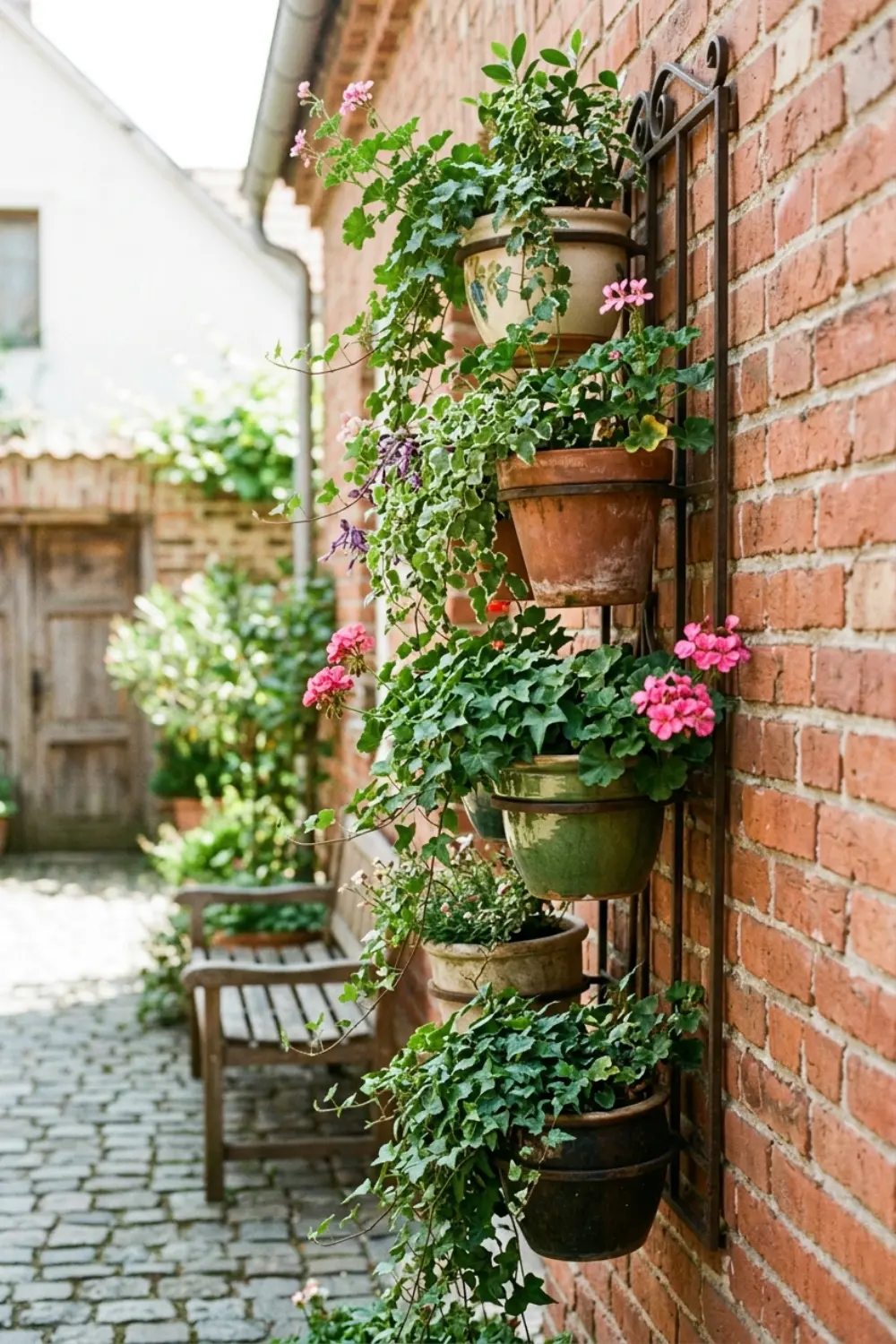
For me, one of the biggest breakthroughs was when I mounted a simple metal wall-mounted planter rack (the kind with multiple tiers stacked vertically) onto the brick wall. It held six pots, and suddenly the whole yard felt more “built.” It didn’t require a big investment, just a good drill and a little courage. Vertical structures aren’t just practical – they also optically stretch the space. Your eye moves upward, and the yard feels taller.
What’s worth trying: climbing plants you can train. Ivy, Virginia creeper, or if you want flowers, climbing roses or sweet peas. These colonize vertical surfaces and give the feeling that the garden has been there for years. And if you don’t have a wall to plant against? Set up a wooden trellis or even a metal arbor-like structure (a curved, rust-resistant steel support is a perfect choice here). This becomes the backbone that gives structure and anchors the plants.
3. Introduce a Focal Point – Have Something That "Catches" the Eye
 Save it
Every good garden has a point where your eye stops. It could be a small fountain, a distinctive pot, a wooden bench, or even a painted wall. This is what gives structure, and what makes the garden not just “green clutter” but something intentional. When I first heard this advice, I thought it was too pretentious – but then I tried it, and now in every garden I see, this is the first thing I look for.
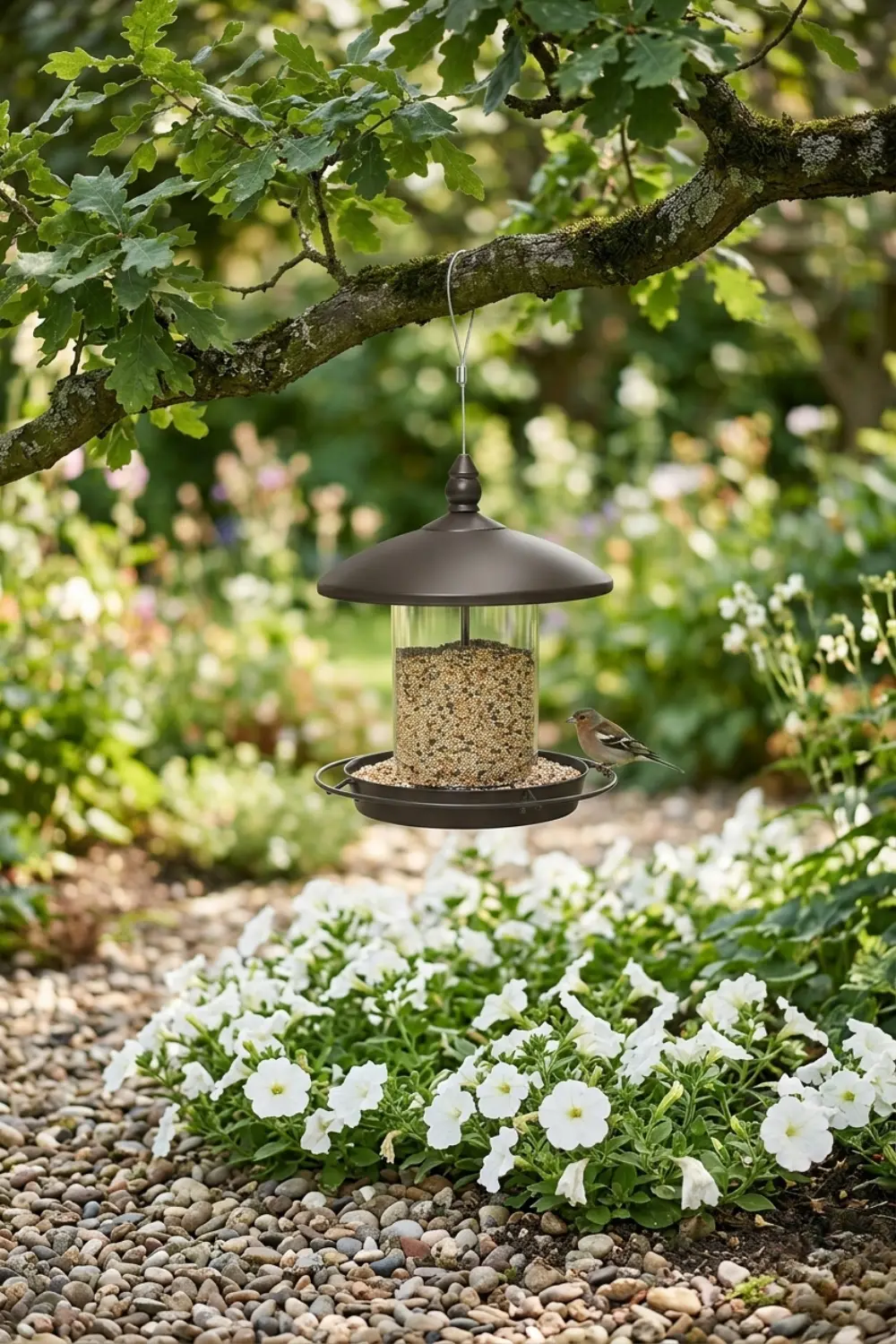
For me, it was a metal bird feeder that made the breakthrough. Because it was taller than anything else in the yard, it immediately drew the eye. And from that point on, everything else organized around it – the flowers, the gravel, the little path. If you’re stuck for ideas, think: a sculpture? A large, colorful pot? A small DIY “water mirror” (a bowl of water surrounded by stones)? Or simply a nice bench tucked to the side (for instance, an antiqued-looking wooden bench that doesn’t take much space but has character)?
The trick is not to have too many focal points. One or two is enough. If you emphasize everything, nothing stands out. Think of it like a photograph – you need a main subject, and everything else works for that.
4. Play with Light in the Evenings – This Is What Creates Real Atmosphere
 Save it
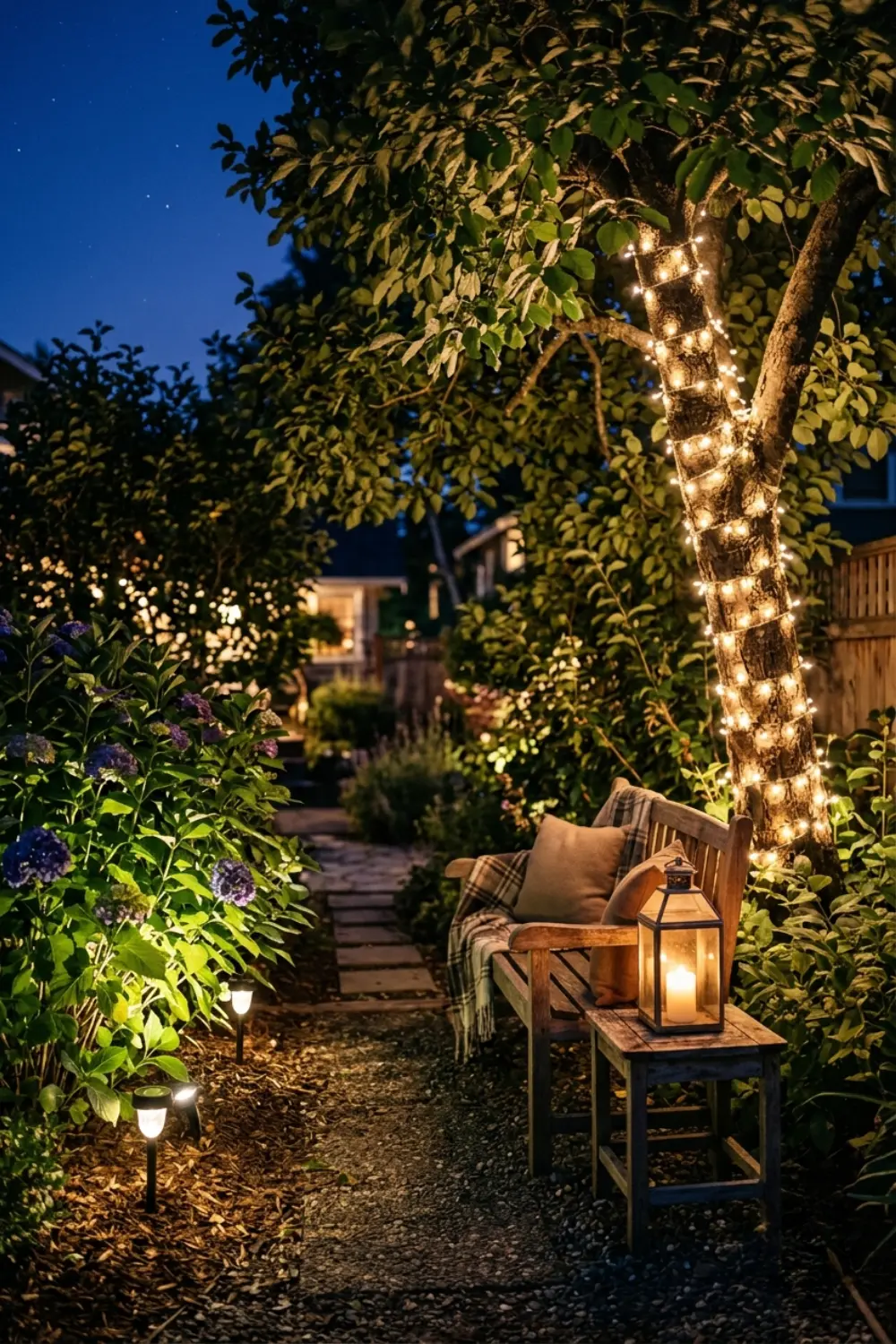
Your garden doesn’t end when the sun goes down. In fact, it often becomes truly magical when the lights come on. And I’m not talking about huge floodlights here, but small, hidden light sources that highlight plants, textures, corners. A good small garden at night is like going to the theater – everything is intentionally lit, and it completely changes the atmosphere.
What worked for me: solar lights. No hassle with cables, and if it rains, you don’t have to worry. You hide one or two at the base of bushes to light the leaves from below – that uplight effect is brutally beautiful. A string of LED lights (warm white, not cold!) wrapped around a tree or draped over a pergola instantly gives a bistro vibe. And if you have a focal point (like that bird feeder), aim a light at it too – it should be visible at night, even when you’re looking out from inside.
Don’t overdo it – you don’t need lights flashing in every corner, just a few well-placed sources. The goal is to make the garden usable at night, not just during the day.
5. Layer Your Plants – Low in Front, Tall in Back
 Save it
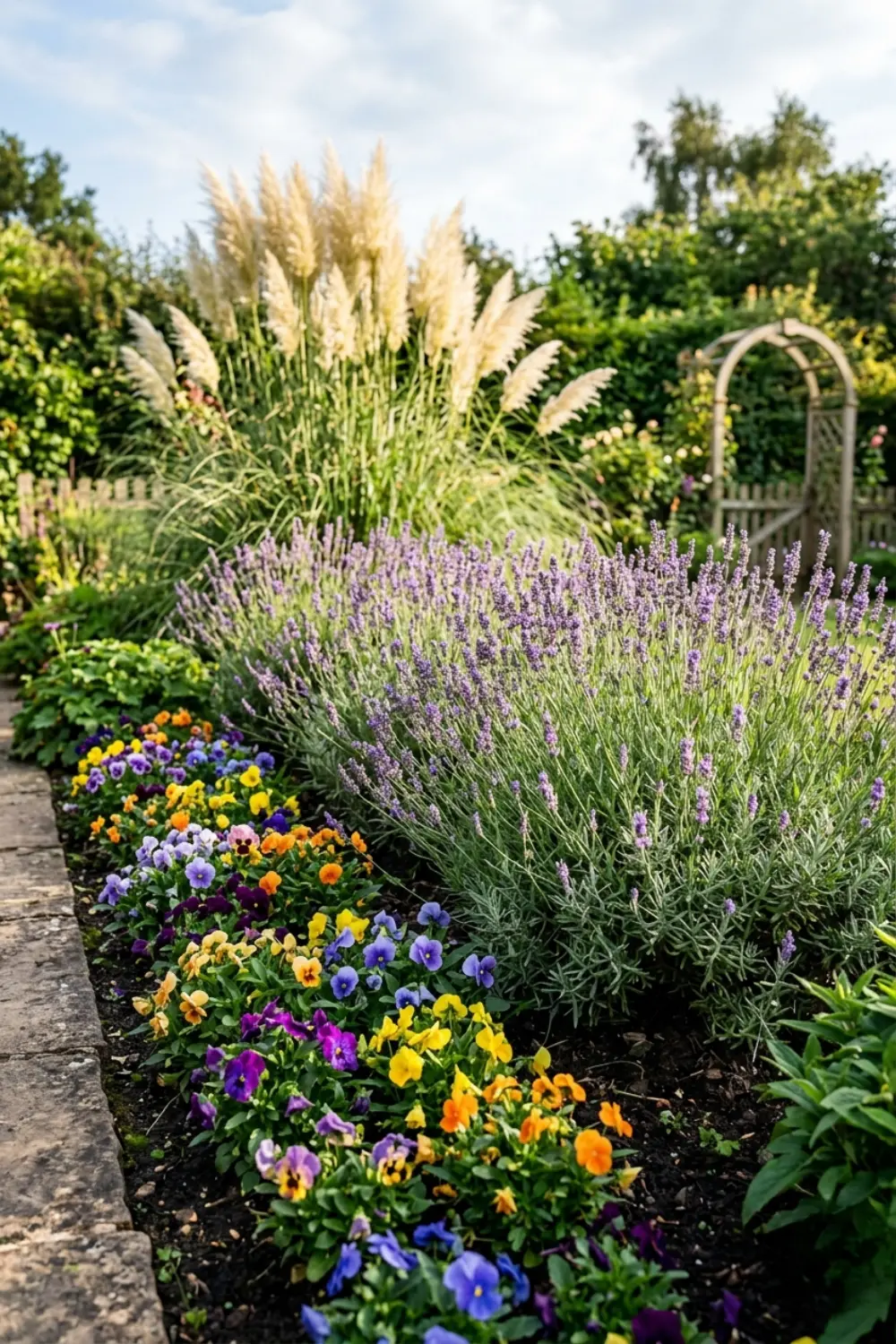
This is almost like a group photo: if everyone’s the same height, it’s boring. Same with a garden – you need depth, you need rhythm. What you do: plant low flowers or ground covers in front, medium shrubs in the middle, and tall ones in back. So when you glance at it, there’s “background,” “mid-ground,” and “foreground,” and this is visually much richer than if all the plants were the same size.
This became clear to me when I once saw an example in a gardening magazine. In the back row, tall grasses (like pampas grass) or a small tree (Japanese maple), in the middle, medium-height shrubs (lavender, hydrangea), and in front, tiny flowers (pansies, begonias). And as I looked, I realized: this isn’t random – it’s completely intentional construction.
If your garden is really small, this is even more important, because every square foot needs to maximize its visual potential. A good tip: use containers at different heights. A taller raised planter in back, a medium one in the middle, and a low one in front. You can layer with just three pots.
6. Add Texture – Not Just Green
 Save it
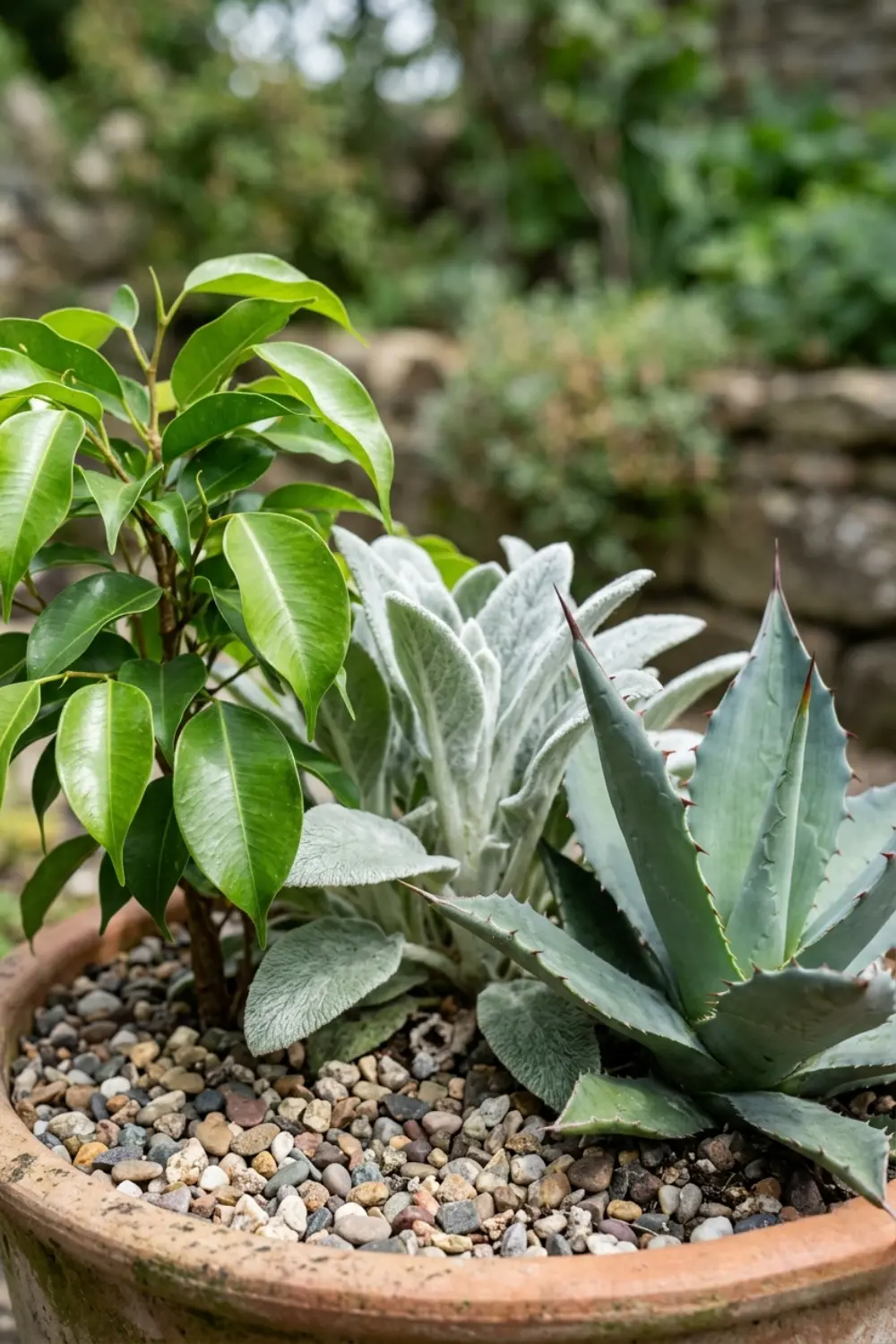
A lot of small gardens look “flat” because every plant is the same. All green, all foliage, all similar. But if you combine different textures – smoothness, roughness, shine, matte – suddenly there’s dynamics. A glossy-leaved ficus next to a woolly lamb’s ear plant (Stachys), a sharp, pointy agave next to a soft fern. This contrast is what brings a garden to life.
Start by selecting one or two “statement” plants with strong texture – this could be a succulent, a grass (that moves in the wind), or a large-leaved banana palm (if you have space and warm climate). These will be your character pieces. Then plant the smoother, calmer things around them. For example, gravel next to an agave, soft green ferns next to a hydrangea.
This kind of layering and texture mixing is what makes a garden not look “planted” but “grown up,” as if it’s been there for years. And here’s where another tool comes in: mulch. It’s not just practical (prevents weeds), but also works as a visual element. A fine bark mulch (or if you want a more modern effect, stone gravel) frames the plants and unifies the whole picture.
7. Use a Mirror or Shiny Surface – Optical Trick That Makes Space Look Bigger
 Save it
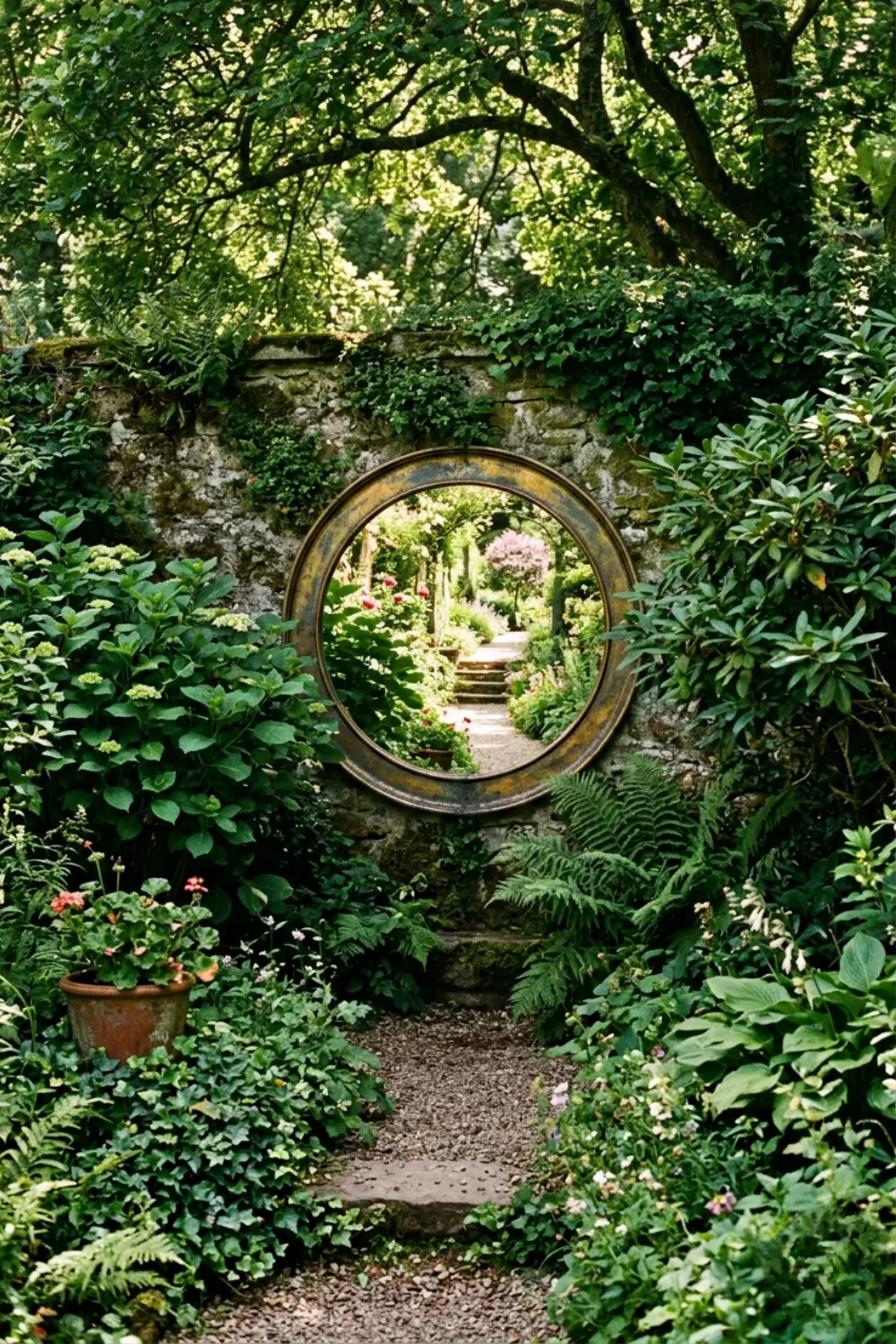
This might sound strange, but one of the coolest tools you can use in a small garden: a mirror. Of course, not as big as the one in your bathroom, but a weather-resistant outdoor version that you mount on the fence or wall. When you glance at it, it creates the impression that there’s another section behind the garden – even though you know there isn’t, it still gives a space-expanding feeling.
What’s important: don’t put it in full sun because it’ll blind you, and not where it’s constantly exposed to rain (it’ll rust). A shady corner, behind bushes, or under a little arch is perfect. When I first put one up, my family thought you could see through to the neighbor’s – and that’s exactly the point. Optical illusion that works.
If you don’t want a mirror, try shiny surfaces: metal planters, glass panels, or even a little water (a shallow dish with stones). These all reflect light, and visually open up the garden.
8. Integrate Seating – Not Just Decoration, But Function
 Save it
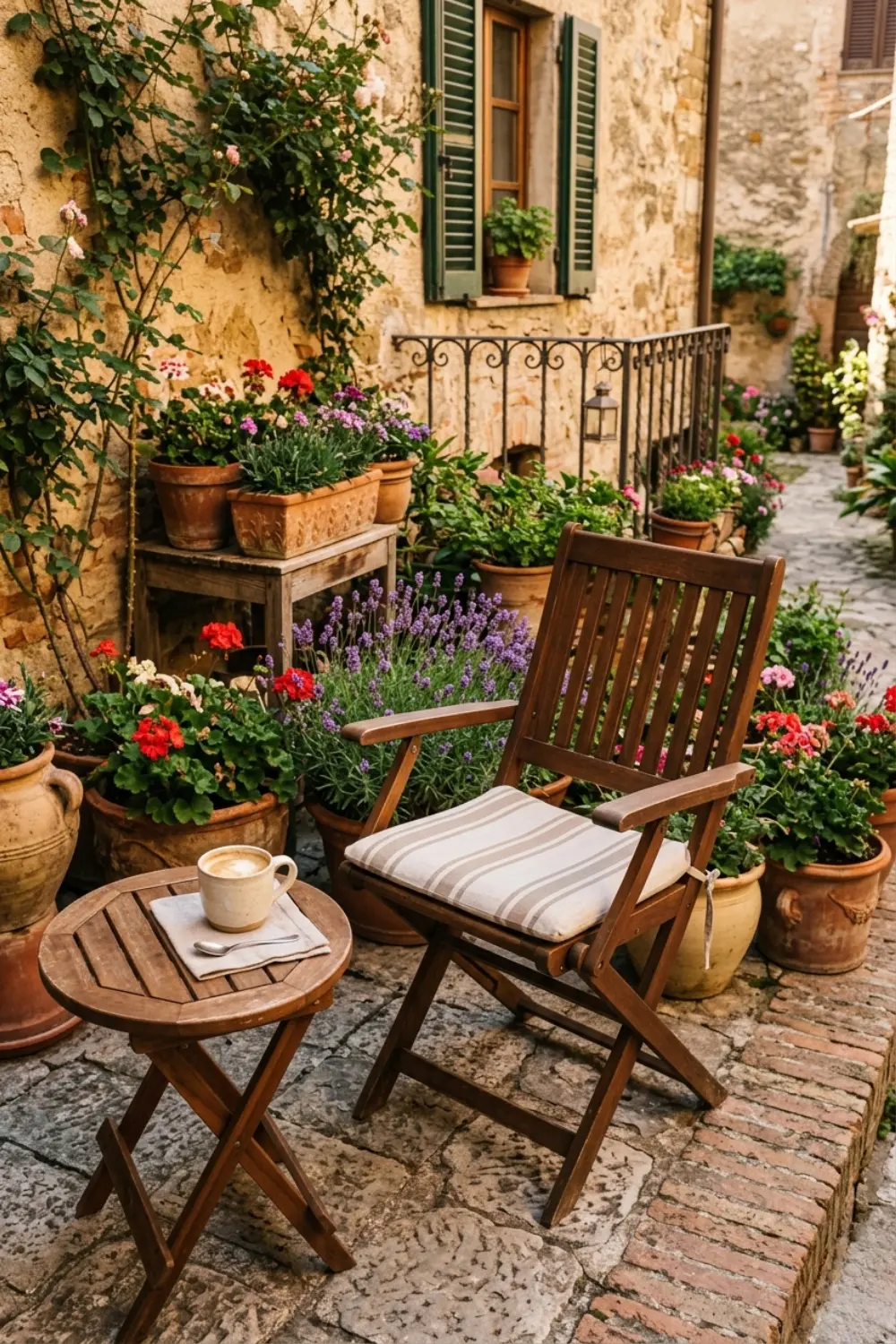
A garden is only a living space if you actually use it. And for that, you need somewhere to sit. You don’t need a big patio set – a small bench, a chair, or even a large, flat stone will do. But have something. Because if you don’t, the yard stays just “scenery,” not your sanctuary.
For me, a foldable wooden chair worked (think of it like a terrace chair that fits in a small space, and when you’re not using it, you can push it aside). It doesn’t take much room, but when I sit out with it in the evening, coffee in hand, it’s no longer “the yard” – it’s “your garden.” This is a small but crucial difference. If you have space, a small bench is also perfect – choose one that’s weather-resistant (like a solid outdoor bench that doesn’t fade and doesn’t need to be brought in for winter).
And here’s where style comes in too: if you want a modern garden, choose clean-lined metal seating. If rustic, a wooden bench, maybe stone. If minimalist, a large flat stone with a cushion. Seating isn’t just function, it’s a design element too – choose something that fits the mood of your garden.
9. Play with Colors – But Not Too Many
 for a polished, professional look. Learn how restraint makes your garden shine. Pin this color tip!) Save it
Save it
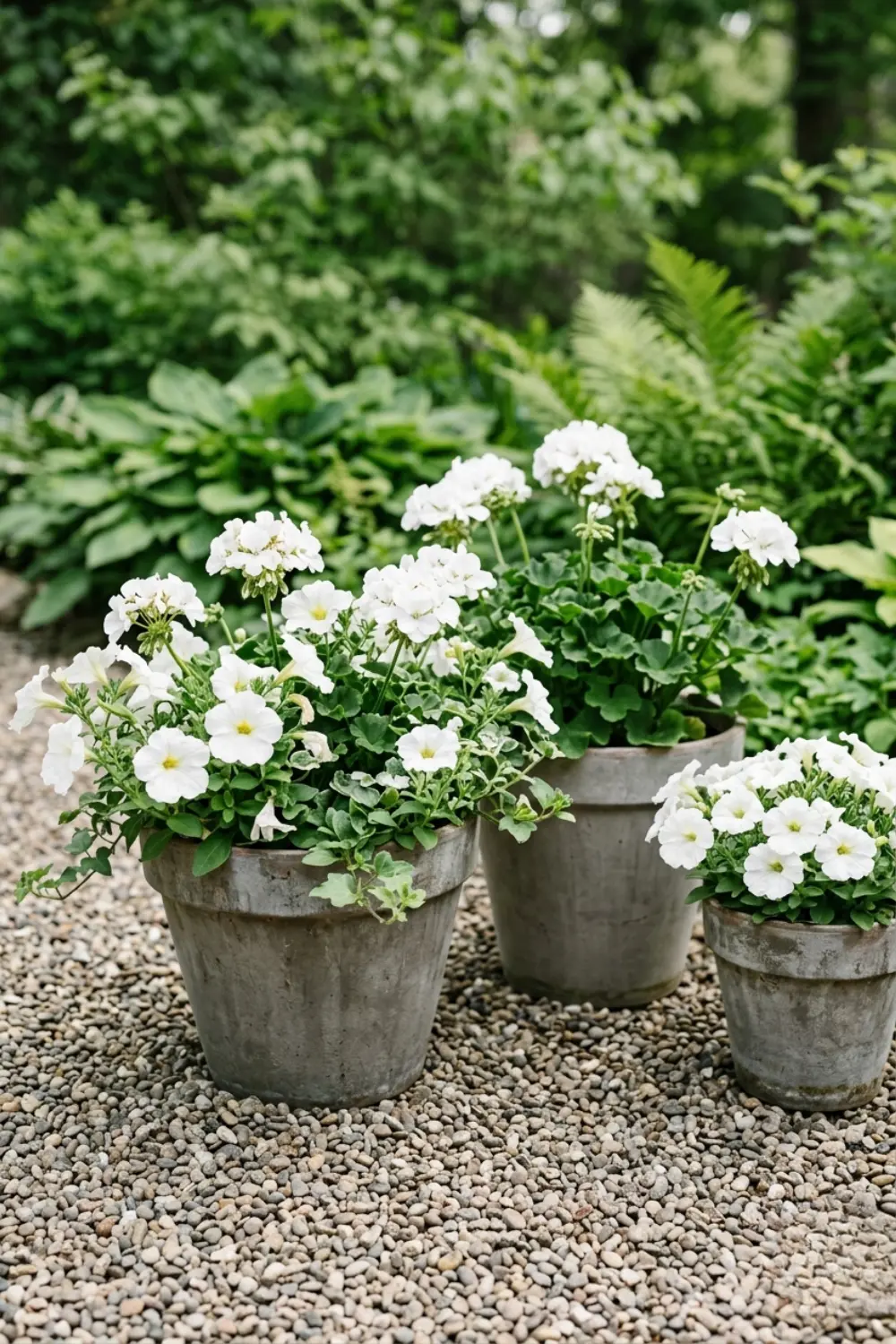
A lot of small gardens look chaotic because there are too many colors at once. Pink, red, orange, purple, yellow – and nothing comes together. Instead, choose one or two main colors and work with those. For example, white-green, or purple-silver, or yellow-gray. This coherence is what makes a garden look “pulled together,” not random.
For me, the white-green combo worked. White flowers (geraniums, petunias), green leaves, gray stones. Simple, clean, and the eye never gets bored. If you want more color, add an “accent” color – like deep purple lavender or yellow daffodils. But no more.
Another thing worth considering: the color of the pots. If every pot is a different color, that’s chaotic too. Instead, pick one or two base materials (like terracotta and gray concrete) and work with those. Unity = professionalism.
10. Maintain Regularly, But Don't Be a Perfectionist
 keeps everything thriving. Save this for stress-free gardening!) Save it
Save it
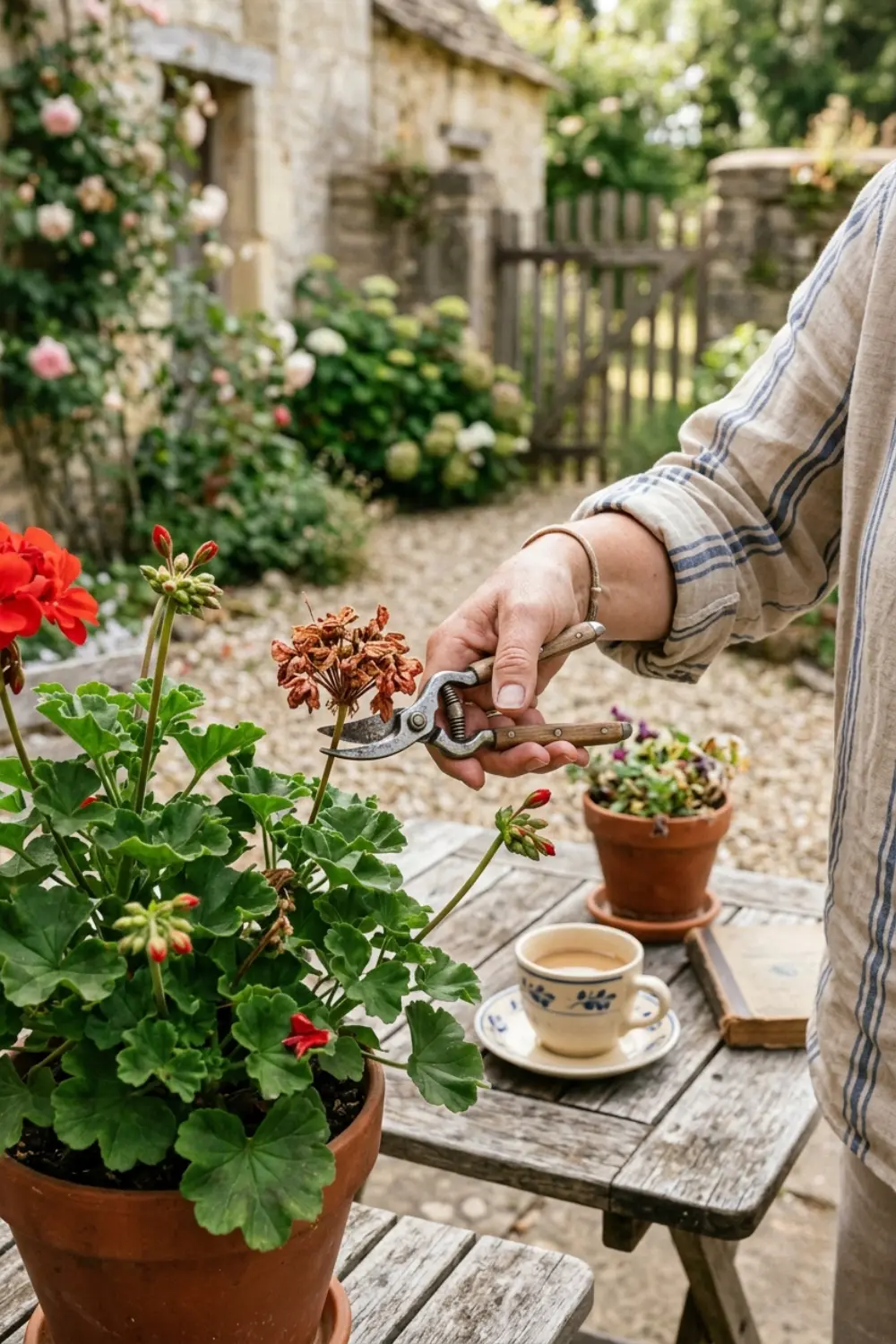
A garden isn’t “done” – it’s a living thing you’re constantly shaping. But that doesn’t mean you have to spend every weekend there. What I learned: spend 20 minutes on it weekly rather than once a month in a panic trying to fix everything. Regular, small maintenance (watering, weeding, cutting off dead flowers) is what keeps the garden looking good.
And don’t be a perfectionist. The beautiful part of a garden is that it’s alive – sometimes a plant wilts, sometimes it overgrows something, sometimes it brings a surprise (a wildflower pops up that you didn’t plant). This is all part of it. If you worry too much about everything being “perfect,” you lose the enjoyment factor.
What I suggest: set up a weekly routine. Sunday morning, coffee in hand, walk around the garden, see who needs water, what’s overgrown, what needs trimming. Ten minutes, done. And this is also your “zen” time – not work, but rest.
Useful Tips – How to Adapt to Your Needs
If space is small but dreams are big
Don’t try to fit everything in. Decide what’s most important – relaxation, hobby, visual beauty? – and focus on that. Better to have one thing perfect than five half-done.
If you’re renting
Use pots and mobile solutions. Everything you plant should be movable – so you can take it with you when you move. For vertical structures, choose ones you don’t have to drill in (like freestanding trellises).
If you have kids
Leave a little “wild” area where they can dig and play. A small sandy corner or a box of soil works wonders. The garden shouldn’t just be a “no-go” zone, but a play space too.
If you’re on a budget
Start small – a few pots, some seeds, and build gradually. A garden doesn’t happen in a day, and you don’t have to buy everything at once. The best gardens are those that grow slowly, lovingly, over time.
Now let’s move on to the mistakes that cause most small gardens to fail before they even have a chance to thrive.
Common Mistakes to Avoid
1. Trying to do too much at once
This is mistake number one. You see Pinterest images, magazines, and think: “I want a fountain, a pavilion, a pool, a lawn area, flower beds, and a little kitchen garden section too.” And when you try to cram all of that into a 150-square-foot yard, it’s chaos. Overcrowded, dysfunctional, visually exhausting. What to learn: choose two or three main elements and do them well. Better to have one perfect seating corner and a stunning plant wall than ten half-finished projects.
2. Choosing plants that are too large
So many people buy plants that are cute and small in the store – then a year later they’re huge and taking over the entire yard. Before you buy anything, check how big it’ll be when mature. If the label says “5-6 feet,” that’s not small-garden size. Choose compact varieties, slow growers, or trim regularly to keep them under control.
3. Not thinking about watering
In a small garden, you easily forget that some plants need daily watering – and if you go away for a week in summer, when you come back, everything’s wilted. Either get an irrigation system (even a simple drip setup), or choose drought-tolerant plants (succulents, lavender, rosemary). Don’t try for a tropical jungle if you don’t have time for it.
4. Forgetting about the soil
Many people just toss flowers into the ground without checking what the soil is like. If it’s clay, it drains poorly and plants drown. If it’s sandy, it doesn’t hold water and everything dries out. Add compost, nutrients, improve the structure. This is the difference between a beautiful garden and a wilting one.
5. Only planting annuals
You start over every year. You spend money every year. You work every year. Instead, build a backbone of perennials and evergreens, and only supplement with seasonal plants. Much more sustainable, much less work.
Frequently Asked Questions
How long does it take to transform my garden?
Depends on how much you want. If you’re just planting and arranging pots, a weekend. If you want paving, benches, trellises, a few weeks. But the point is: you don’t have to do everything at once. Build gradually and enjoy the journey.
How much does a small garden transformation cost?
If you’re smart about it, you can start with $150-$300 – basic plants, a couple structural elements, soil improvement. If you go deeper (lighting, furniture, special plants), it could be $1,000-$1,500. But you don’t have to do it all upfront – start with the most important and expand as you go.
What plants should I start with if I’m a beginner?
Forgiving ones. Succulents (cacti, hens-and-chicks), lavender, rosemary, geraniums. These all survive if you forget to water them or if the soil isn’t perfect. Later, as you learn, you can experiment with more sensitive species.
How do I keep the garden clean in winter?
In late fall, cut back perennials, rake up all fallen leaves (you can compost them), and protect frost-sensitive plants (covers, plastic sheeting). You rarely need to water in winter, but occasionally check that there’s no ice in the pots (if there is, break a hole so it can drain). If you have mulch, it helps retain soil warmth.
Final Thoughts
Your garden won’t be perfect from day one. It won’t look like the magazines. And you know what? It doesn’t have to. The most beautiful gardens are those that grow slowly, over time, through mistakes. That are a little wild, a little unexpected, and shaped by you to fit your own needs. Don’t give up if your first flower wilts. Don’t stress if the neighbor’s garden looks better. Try, learn, experiment.
Start by walking out to your yard – now, today – and seeing what’s there. Then pick one or two things from this article that resonate with you. Maybe the vertical structure, maybe the focal point, maybe the lighting. Try it. See what happens. Your garden isn’t a project you finish once. It’s a constantly evolving, living space that grows with you. And that’s the most beautiful part.
This post contains affiliate links. I may earn a small commission at no extra cost to you.
Get cozy inspiration delivered to your inbox.
✓ 14-page beautifully designed ebook
✓ Cozy decorating ideas
✓ Practical room-by-room inspiration
You’re in! 🎉
Thanks for joining the NestFlowHome community!
Your free ebook is already on its way to your inbox. If you don’t see it within a few minutes, please check your Promotions or Spam folder.
Join the NestFlowHome community for weekly decorating inspiration.

Timeless home decor ideas and slow living inspiration for a calm, beautiful life.