
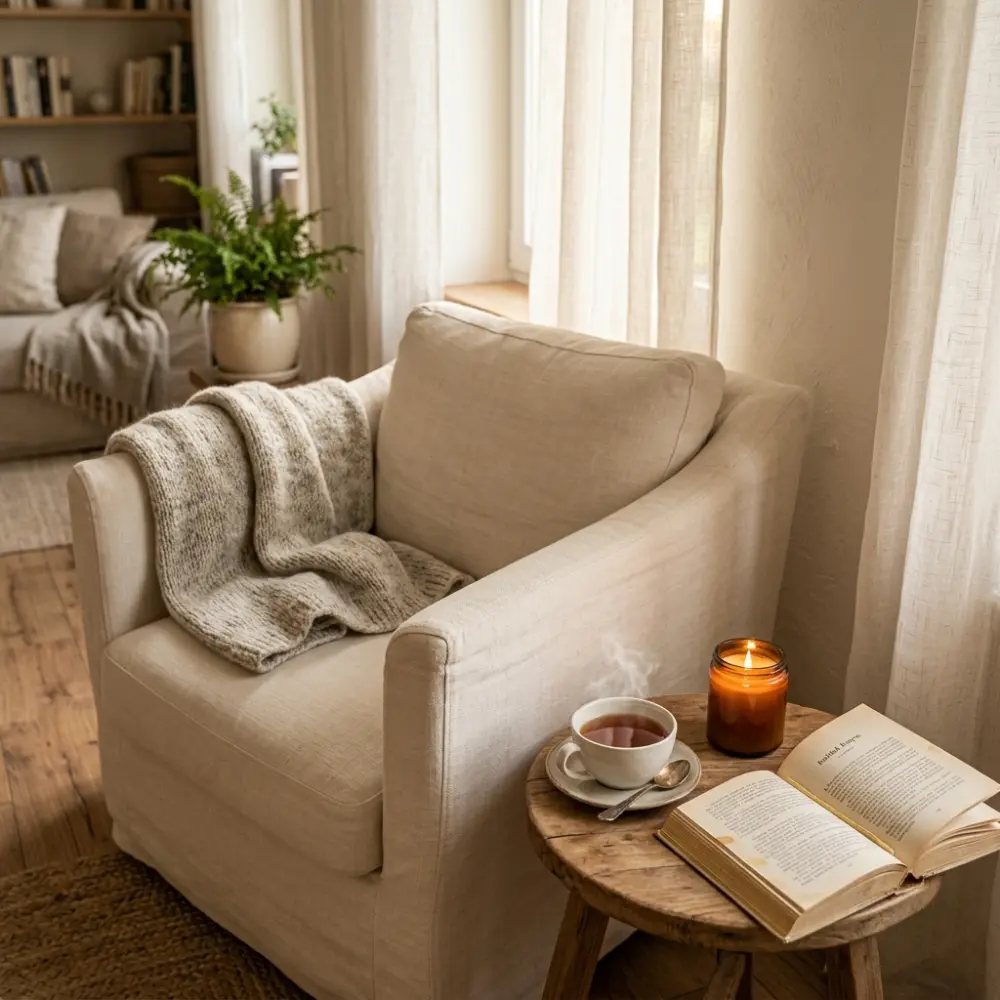
8 Daily Habits to Relax After Work and Recharge Your Energy
By Emily | May 01, 2026
You keep the laptop open until late, but your mind checked out hours ago — yet somehow, you still can’t stop? That ten minutes you promised yourself for rest always slides into another email, a quick tidying session, or sitting on the couch while mentally scrolling through tomorrow’s to-do list. The line between work and rest has blurred, and instead of recharging, you’re just getting more drained. This happens because we never learned how to switch off consciously — and your body, your brain, keeps running like an engine stuck in gear.
This post’s about teaching you how to build simple, doable habits that actually work because they align with your body’s and mind’s real needs, not some idealized #selfcare Instagram feed. If you’re tired of being tired even after “resting,” stay with me.
I’ll show you how to turn the post-work hours into genuine recharge time — with visual harmony, sensory cues, and small, intentional steps that truly help you shift gears.
1. Create a Physical Ritual That Signals the Workday Is Over
 Save it
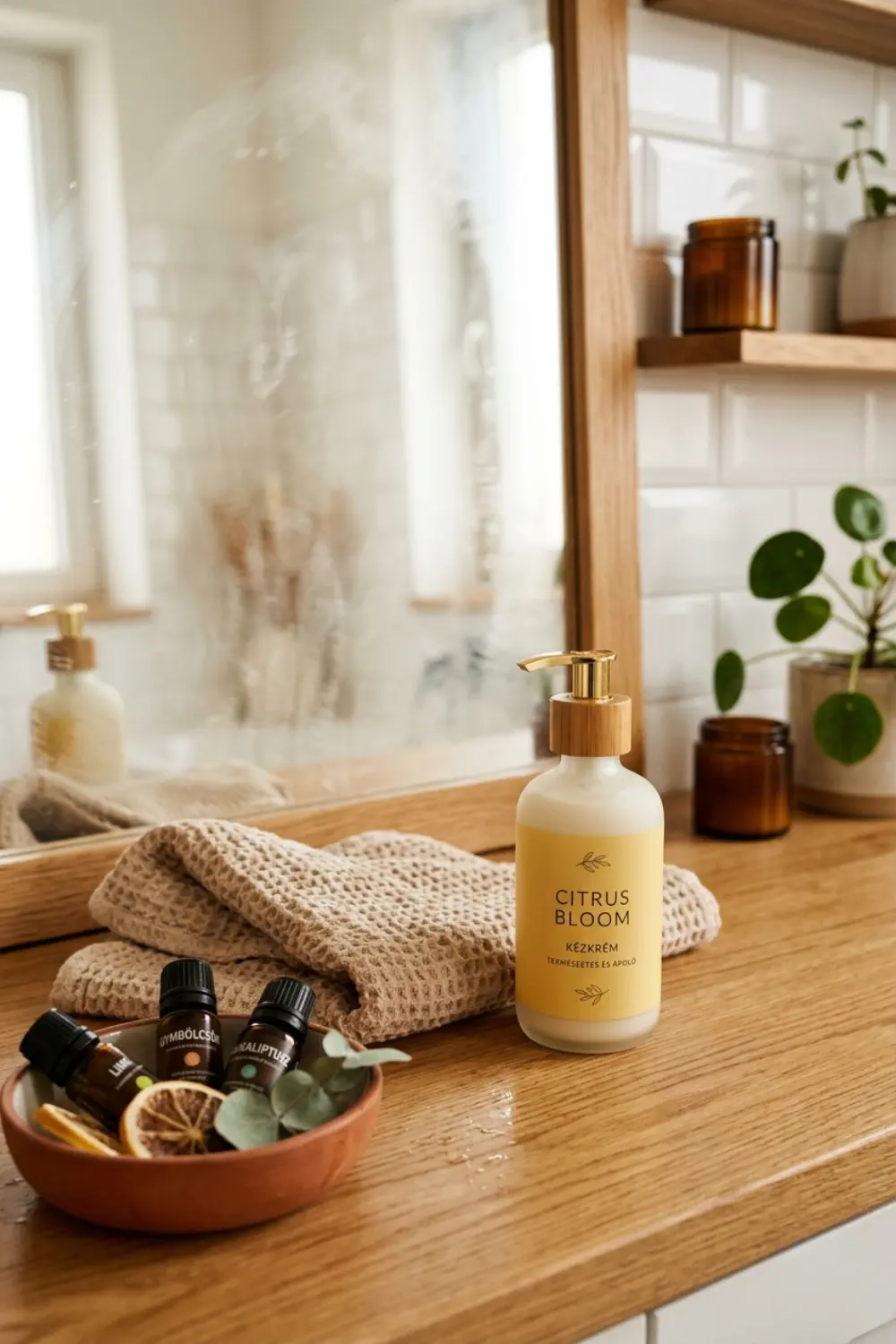
Your body doesn’t understand “I’m home now.” If you work from home, the boundary is even more blurred. You need a physical signal that tells your brain: work ends here, your time begins now. It can be a simple gesture — always in the same order. Change your clothes, even if just into sweatpants. Not what you worked in. Wash your face with cold water, or wipe it with a facial spray — your skin feels the change, and your body shifts with it. Spritz a scent on yourself, a light body spray or hand cream (that is NOT what you use during work). Scent is one of the strongest memory triggers, so if you use the same one every day after work, your brain starts to link it with the feeling: I’m resting now.
For example, I always use a fresh citrus hand cream after work, and the moment I put it on my hands, I feel my shoulders drop. This isn’t placebo. This is conditioning — Pavlov’s dog, except you’re the dog, and you’re in control. The key is not to skip this part. Many people think that because they’re “already home,” it’s pointless to bother with these things. But that’s exactly the problem. Your brain sees no difference if you don’t give it a physical signal. And then at 10 PM, it’ll still be churning through what else needs doing.
2. Set a Sensory Boundary in Your Space
 Save it
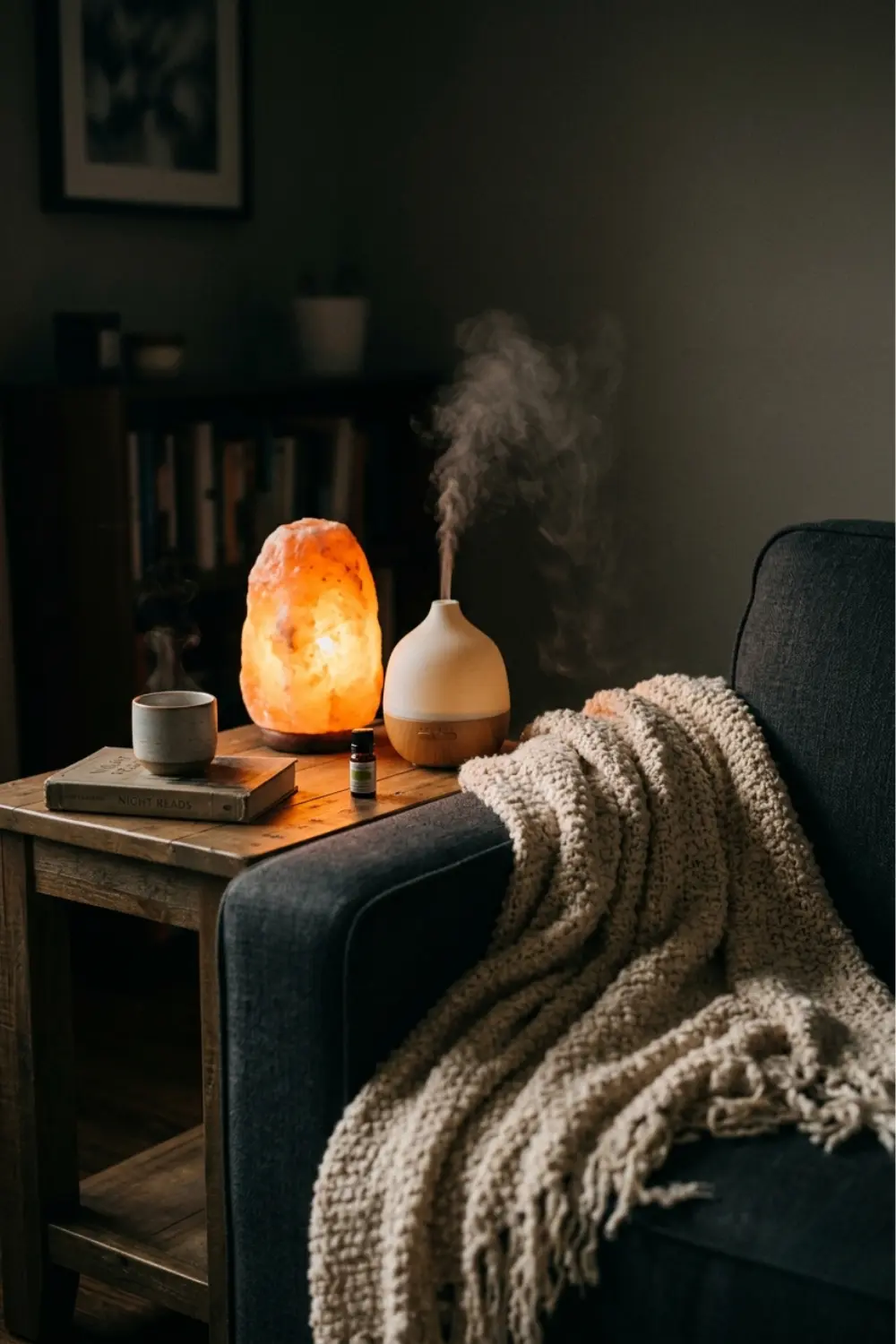
If you work and rest in the same spot, your brain gets confused. Even if you don’t have a separate office, you need to create a sensory dividing line. This isn’t about moving houses — it’s about manipulating your space so your body perceives: this is a different space now. Switch to a different light. If you lit from overhead during work, now use a warm, low-positioned lamp (not just décor, it genuinely changes light quality and has a calming effect). If it was silent before, now play soft music, nature sounds, or any background noise that is NOT what you listened to while working.
For instance, I never listen to lo-fi while working, but I always put it on afterward. My brain knows: this is the sound of rest. Use texture too. Pull out a soft blanket you only use at night. Toss it on the couch. This softness, the scent, the light — together they send a sensory message: things are different now. You don’t need to spend a lot. But if you’re consistent, your body starts recognizing the pattern and automatically shifts. This is what luxury hotels do: they create a sensory experience that separates “out there” from “in here.” You can do it at home too.
3. Move — But Not Exercise, Release
 Save it
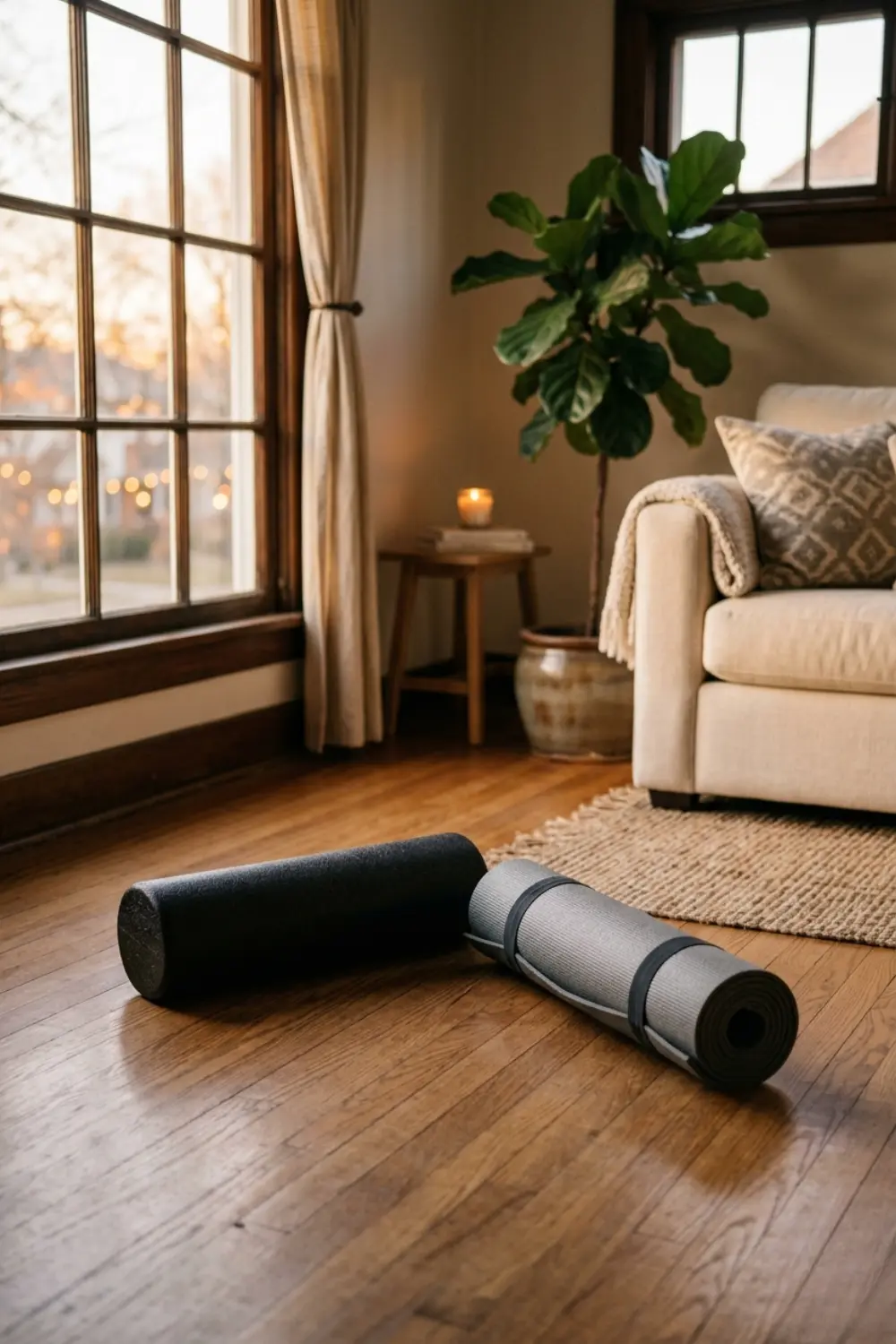
Many people think you need to rest after work, so they sit down and wonder why they’re still tense. Your body sat all day, hunched, shoulders tight. It doesn’t need rest — it needs movement. But not intense exercise, rather releasing, flowing motion. Stretch while breathing. You don’t need yoga, just spend five minutes slowly, very consciously stretching while taking deep breaths. Or walk. Not running, but a slow, aimless stroll — outside, if possible. Your body wants to release the tension, but if you exercise aggressively, you just reactivate the stress response.
Another method I love: shake it off, literally. Stand up, shake yourself like a dog shaking off water. Sounds silly? Sure. But it works. Your body physically releases accumulated tension, and your brain perceives: okay, we’re safe now, we can power down. If you need a tool to help with this — a light massage roller is perfect. You don’t need to spend hours with it; in five minutes, you roll over your back, your thighs, and you feel the tension dissolve.
4. Turn Off the Screen and Give Yourself Analog Input

 Save it
Your brain got digital noise all day. Email, meetings, notifications, blue light. If you immediately reach for your phone, Netflix, TikTok after work, you’re not resting — you’re just swapping one screen for another. Your brain can’t shift because it’s the same kind of stimulation. You need analog input — something that activates your brain differently. Read. Not news, but something that takes you away. A novel, an essay, anything that’s not work material. Pick up a pen and write. A journal, random thoughts, anything. Handwriting activates a different part of your brain than typing, and it genuinely has a calming effect.
Or just sit and do nothing. Really. This is the hardest. But if you can sit for five minutes with just a cup of tea, no screen, no music — your brain starts to settle. It’ll feel uncomfortable at first. You’ll immediately want to check your phone. But if you practice this daily, in a few days you’ll notice your body craves this five minutes. As I explained in Slow Living Night Rituals for Better Sleep and Inner Calm: slowing down isn’t laziness, it’s a conscious choice to recharge yourself.
5. Return to Your Body's Physical Needs — Hunger, Thirst, Fatigue

 Save it
During work, you suppress your body’s signals. You don’t drink enough, skip lunch, or snack randomly. After work, your first task should be: what does my body want now? Am I hungry, but what do I actually want to eat? Not what I can eat quickly, but what my body truly craves. Am I thirsty? Drink a big glass of water, slowly, consciously. Are you tired? Then don’t have more coffee — lie down for ten minutes. Yes, really. Set a timer and just lie down. Not to sleep, just to lie.
Most people skip this part because we feel we “don’t have time” to rest. But if you don’t listen to your body’s basic signals, your brain keeps sending stress signals: something’s wrong. And then you won’t be able to rest, even if you want to. For example, I always drink a big glass of water after work, slowly, standing by the window. This is the five minutes when my body reconnects with what is now — not what was or what will be. If you’re hungry, make something simple but something that truly feels good. Don’t order if you can help it — the making itself is therapy. Chopping, cooking, your hands moving — all help you step out of your head and return to your body.
6. Use the Psychology of Scents, Lights, and Textures
 Save it
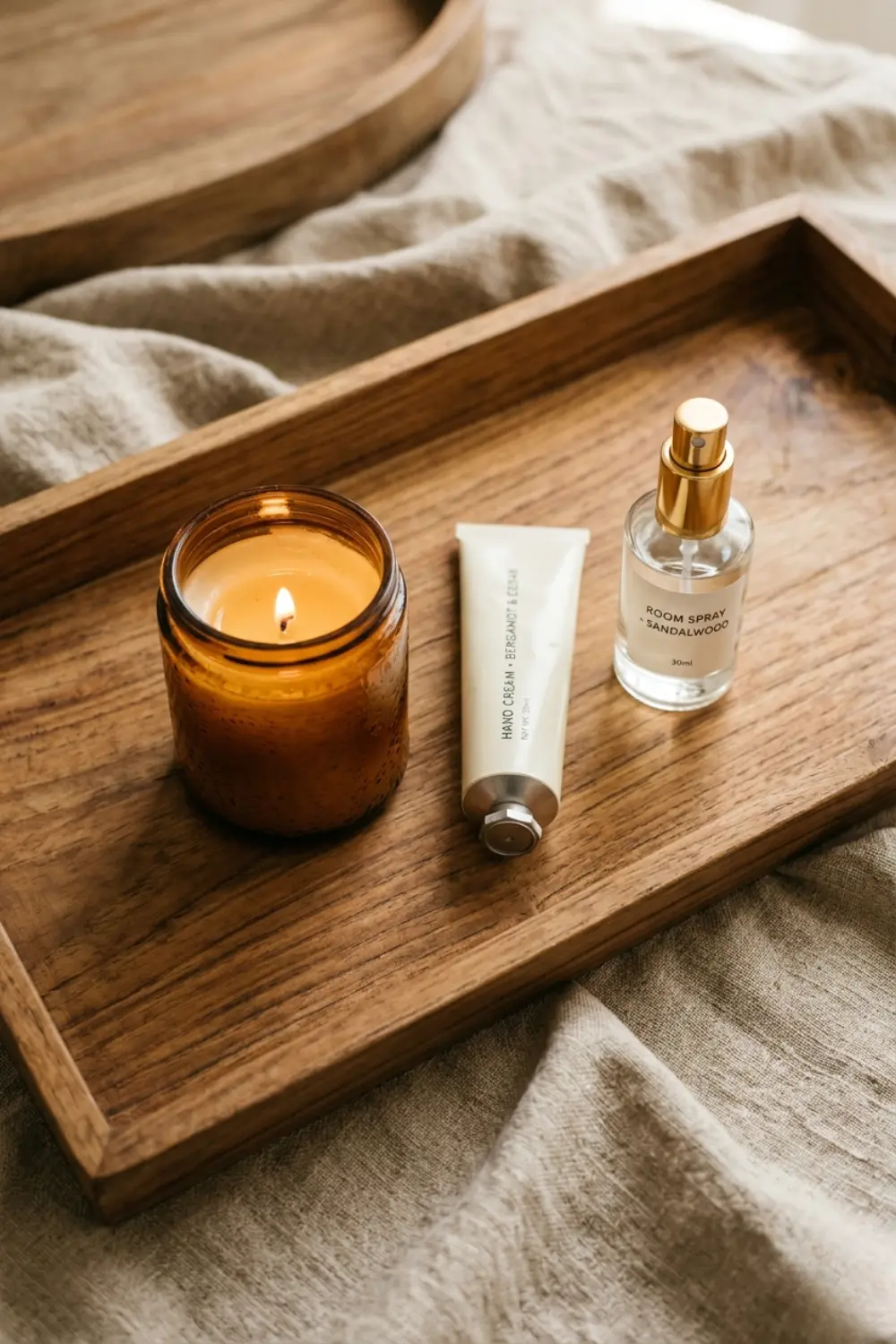
The environment you’re in sends direct messages to your brain. If it’s chaotic, cluttered, harsh-lit — your brain will feel that way too. Invest in a few small things that change the mood of the space, and with it, your state. Light a candle. Not because it’s Instagram-worthy, but because scent genuinely reduces cortisol levels. Set warm, dimmed lighting — not that cold, sharp LED you worked under. Put in front of you a texture that feels good to touch — a soft pillow, a warm mug, anything that gives pleasant touch.
This isn’t woo-woo — it’s neuropsychology. Your sensory inputs send signals to your brain, and your brain responds to them. If you get warm, soft, pleasant inputs, your brain sets itself accordingly. If cold, sharp, hard ones — differently. You control what you “feed” into your brain.
A good idea: put together a small “end of the day” tray — with everything you need: candle, hand cream, tea, book. That way you don’t have to search, everything’s there, and with this gesture, you also reinforce the ritual.
7. Socialize, or the Opposite — Choose Consciously
 Save it
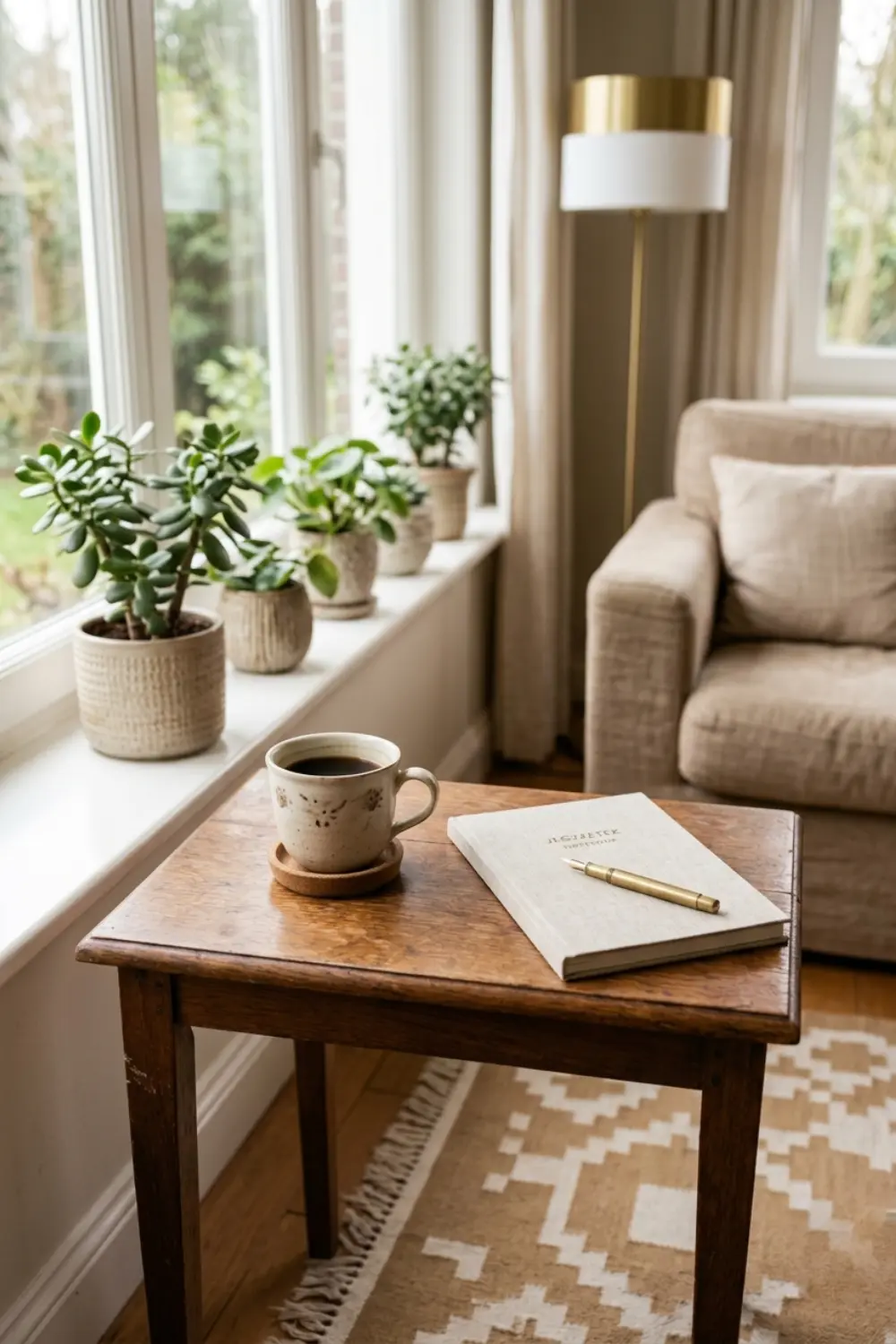
There are days when you need people, and days when you need solitude. The problem is that many people default to one mode without asking themselves: what do I actually need right now? If you’ve been in meetings all day, with people, your brain might crave silence, solitude. But if you worked alone all day, talking to a friend might recharge you. Don’t be on autopilot. Decide consciously: do I want to talk to someone now, or do I want to be alone?
If you socialize, do it with quality. Don’t just scroll Instagram while seemingly chatting. Call someone — voice, not text. Or go somewhere in person. If you want to be alone, then truly be alone — not with your phone half-off, but so no one disturbs you. Both have their place, but if you do it randomly, neither will recharge you. As I wrote in How to Build a 5AM Morning Routine That Actually Works: awareness lies in asking yourself what you need, not in automatically doing the same thing every day.
8. Close Loops — Prepare Your Brain for Tomorrow
 Save it
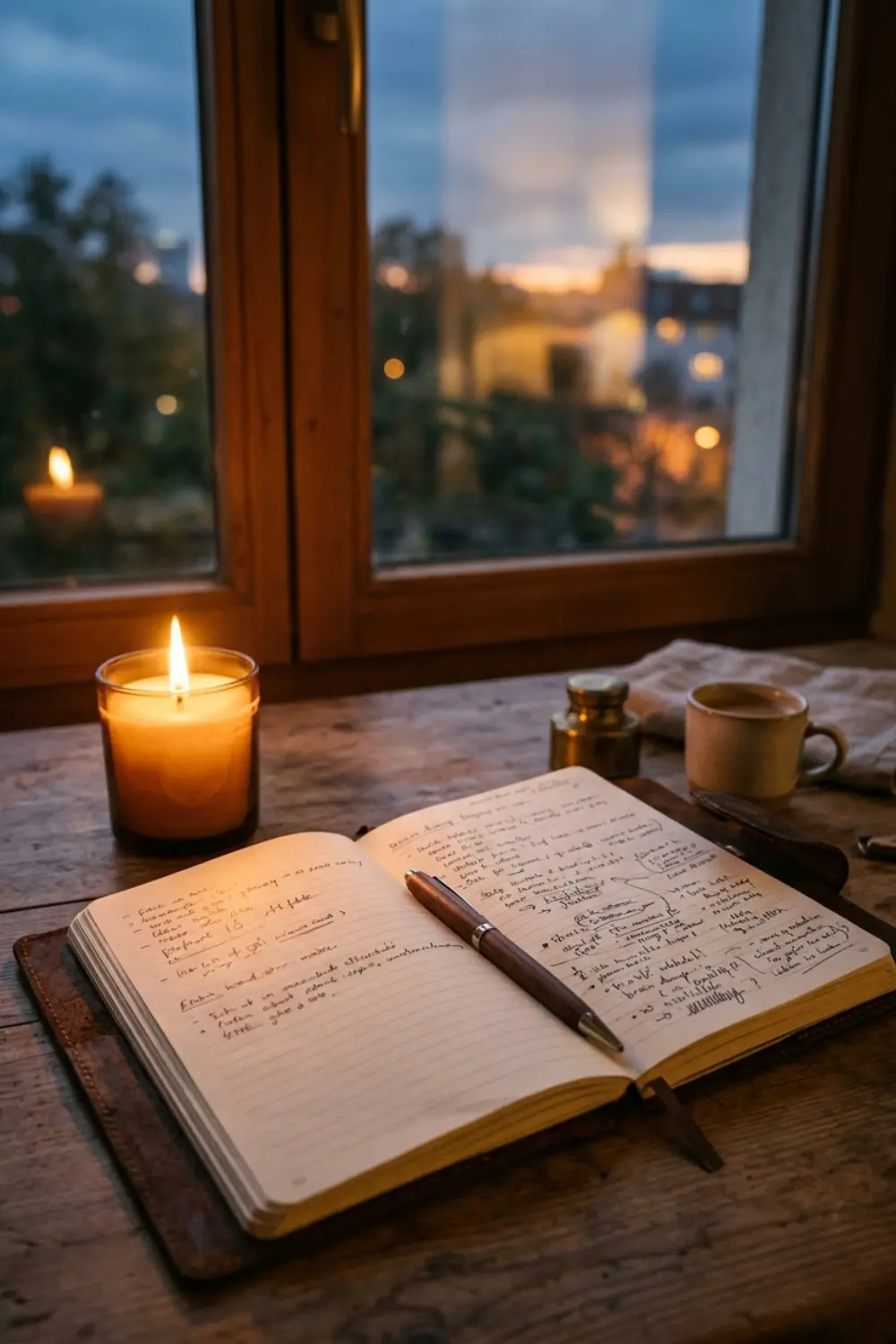
Your brain won’t rest if there are open loops in it. “I have to send that email,” “I need to do that thing” — these sit in your head and won’t let you settle. Before you fully switch to rest mode, spend five minutes writing these down. I’m not saying to do them — just write them down. Brain dump. Get out every thought, task, worry you’re carrying. With this, your brain gets the message: okay, this is written down, I don’t have to remember it, I’ll deal with it tomorrow.
Then write down what tomorrow’s first three things will be. Not your entire to-do list, just three things. With this, your brain knows: alright, there’s a plan, I don’t need to worry about this now. And then you can truly let go. I do this every night in a simple notebook, and I’ve noticed I sleep much better because tomorrow’s day isn’t swirling in my head. As I write in Small Daily Habits That Lead to Big Life Changes: small, consistent actions accumulate and, over time, transform your life. This is one of those.
Helpful Tips: What to Do If You Don't Have a Separate Home Office
I know many people live, work, and rest in the same space. There’s no separate room, no door to close. But it can still work. The key: physically change the space. After work, put away the laptop — don’t have it visible. Put it in a drawer, a bag, anything, but don’t have it in front of you. Switch chairs — if you can, move to the couch or a different chair. If you sit in the same place, your brain doesn’t perceive the change. Lay down a textile — a blanket, a pillow, anything that signals: this is a different space now.
If you live in a small apartment, use mobile solutions. A folding tea table can be your evening tea spot that you don’t use during work. An aroma diffuser gives instant mood shift. Headphones that block out noise if you don’t have a quiet corner. The point: don’t think “I don’t have the space for this,” because space isn’t fixed. You shape it with small gestures, and the brain responds to that.
Common Mistakes to Avoid
1. Overcomplicating and Setting Too High Expectations
The biggest mistake I’ve seen — many people think they need the “perfect” evening routine. Meditation, yoga, journaling, bath, skincare, reading — and if they don’t do all of it, they give up entirely. Don’t do this. Start small. One thing you do every day. That’s enough. You don’t need a two-hour routine for it to work. In fact, if you pack too much in, that becomes stress too, and then you achieve the opposite.
2. Replacing Screen Time with Screen Time
Many people think if they “rest” after work, it’s TikTok, Instagram, Netflix. But this isn’t rest. It’s just a different kind of cognitive load. Your brain is still bombarded with visual stimuli, algorithm-driven content, dopamine spikes. It’s not recharging, just getting tired in a different form. If you’re truly resting, do something analog, anything not on a screen.
3. Ignoring Physical Signals
You say you’re “consciously” switching to rest mode, but you’re in the same clothes, same light, sitting in the same spot, same music playing. Your brain doesn’t understand what changed. You need a physical signal. If you don’t give it, it won’t be able to switch, even if you want it to. This isn’t optional. If you take one thing from this article: change something physically when you shift. Anything.
4. “I’ll Do It Tomorrow” Postponement Mentality
You say, “I’m tired today, I’ll do it properly tomorrow.” But tomorrow you’ll be tired too, and you’ll postpone again. Rest isn’t a luxury you give yourself when you’ve earned it. You need it every day, even when you feel you don’t have time. If you don’t, you’ll burn out. It’s not a question of if, but how long you can hold out. As I emphasized in How to Create a Wellness Room for a Stress Free Lifestyle: wellness isn’t extra, it’s a basic need.
Frequently Asked Questions
How long does it take for these habits to truly become routine?
On average, between 21-66 days, but it’s individual. The key is consistency, not perfection. If you skip a day, it’s fine — continue the next day. The brain recognizes the pattern, not the one-off event. If you do 5 out of 5 days a week, that sticks. Don’t give up if it feels awkward at first.
What if I have no energy at all to build a routine?
That’s exactly why you need it. When you resist it the most, that’s when you need it most. Don’t think of it as investing energy — think of it as getting energy back. Start with just one thing. A hand cream after work. Lighting a candle. A glass of water. That’s it. In a week, you add one more. You don’t need to do everything at once.
Does this work if I work shifts?
Yes, but you need to adapt. The point isn’t that it’s “evening,” but that it’s AFTER work, whatever the time. If you get home at 6 AM, you take the same steps — physical signal, space shift, sensory input. The brain doesn’t look at the clock, it looks at the pattern. If you do the same steps after every shift, it’ll work the same way.
What if I live with kids/family and don’t have my own time?
Even more important to do something small. Ten minutes in the bathroom, door closed. Five minutes in the car before going in. Two minutes taking deep breaths. Don’t say “I don’t have time” — find time, because if you don’t, your reserves will run out, and then you can’t be present for anyone. It’s not selfish to spend time on yourself, it’s responsibility.
Do I have to buy products for this to work?
No. Products help, but they’re not mandatory. Instead of a candle, you can light the kitchen candle. Instead of a soft blanket, pull out a sweater. A tea cup you already have at home. The point isn’t the object, but the gesture — that you give yourself the attention to consciously shift. But if you can invest in a few small things that enhance this experience, do it. But don’t let it hinge on that.
Conclusion
You know what’s funny? We think if we work hard, we deserve rest — but then when the time comes, we don’t know how. We were never taught. They taught us to be more productive, faster, more efficient, but no one explained how to truly switch off. And then you sit there in the evening, exhausted but not rested, because your brain is still spinning, your body still tense, and you feel something’s wrong. But there’s a solution. It’s not complicated, not expensive, not time-consuming. It just needs to be conscious. These eight habits aren’t obligations you check off — they’re small gestures you give yourself to guide yourself between work and rest. So you don’t just exist, but truly recharge.
You don’t need to do everything at once. Pick one. Start with what feels easiest. Do it for a week. Feel how it changes your energy. Then add one more. Slowly. Consistently. Over time, these habits will come automatically — you won’t have to force them, you’ll look forward to them, because your body will know: this is when I finally get to relax. You deserve to not just “survive” after work, but truly feel good. To not fall into bed burned out, but recharged, calm. Grab that hand cream, light that candle, turn off that screen — and allow yourself to finally just breathe.
This post contains affiliate links. I may earn a small commission at no extra cost to you.
Get cozy inspiration delivered to your inbox.
✓ 14-page beautifully designed ebook
✓ Cozy decorating ideas
✓ Practical room-by-room inspiration
You’re in! 🎉
Thanks for joining the NestFlowHome community!
Your free ebook is already on its way to your inbox. If you don’t see it within a few minutes, please check your Promotions or Spam folder.
Join the NestFlowHome community for weekly decorating inspiration.

Timeless home decor ideas and slow living inspiration for a calm, beautiful life.