
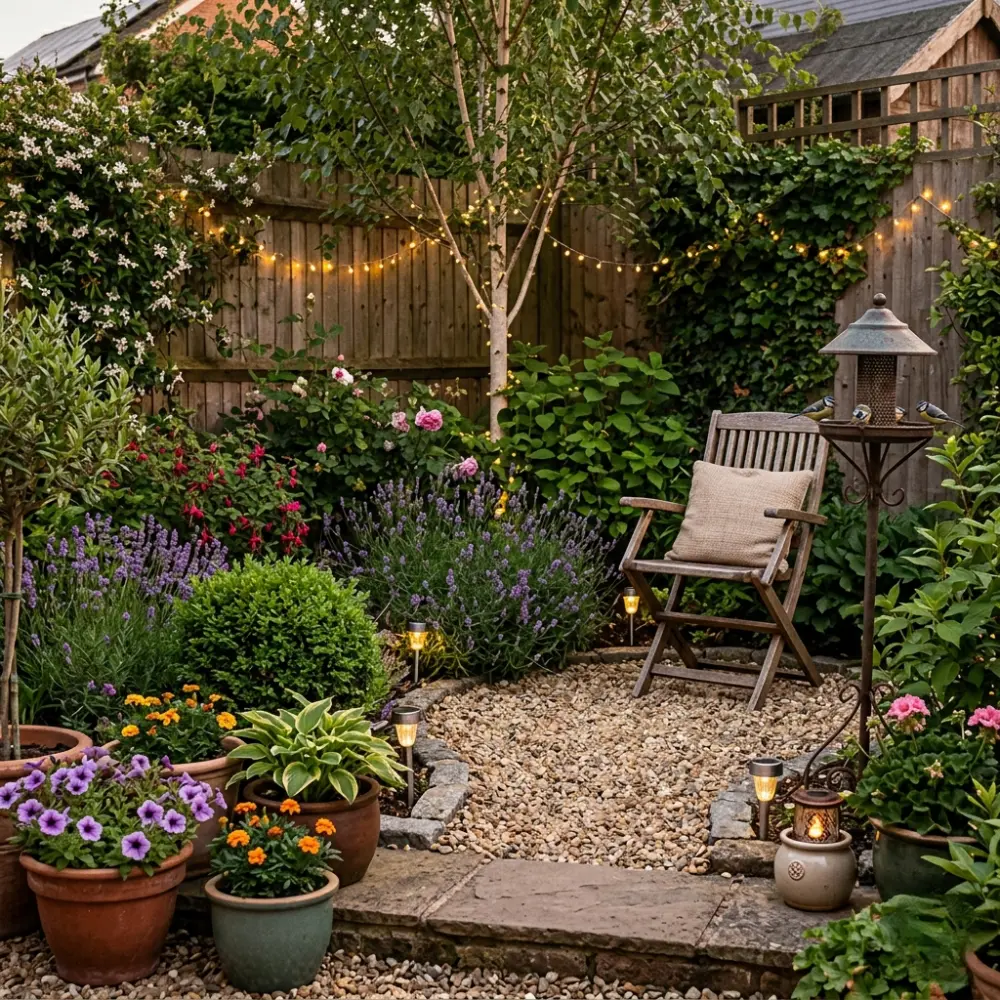
How to Design a Stylish Balcony for Modern Outdoor Living
By Emily | May 06, 2026
I have a balcony, but I never use it—I hear this all the time, and I know why. Because most balconies look like a patio that was abandoned mid-project. A plastic chair, a dying plant, maybe an old drying rack. Nothing that invites. Nothing that says, “Come out here, have your morning coffee, or your evening wine.” And that’s the problem—it’s not that the space is small. It’s that it’s not a space, just a surface.
Most balconies are dead zones because people treat them like extra storage or a transitional area. But if you look at how the best apartments use their balconies, you realize: it’s not about square footage. It’s about what you feel when you step outside. A well-designed balcony extends your living room, your bedroom, or whatever it connects to. And in that sense, it’s more valuable than any interior room—because it’s outside, but it’s yours.
In this article, I’m not going to show you a catalog of “buy a table and a chair.” Instead, I’m going to teach you how to think about your balcony as a livable space you actually use—not just photograph for Instagram. You’ll learn why zoning matters more than decoration, how lighting changes the entire mood, and why one well-chosen texture is worth more than ten random throw pillows. You don’t need a big budget—just intention. Let’s start.
1. Define What Your Balcony's Role Is—Don't Just Decorate It
 Save it
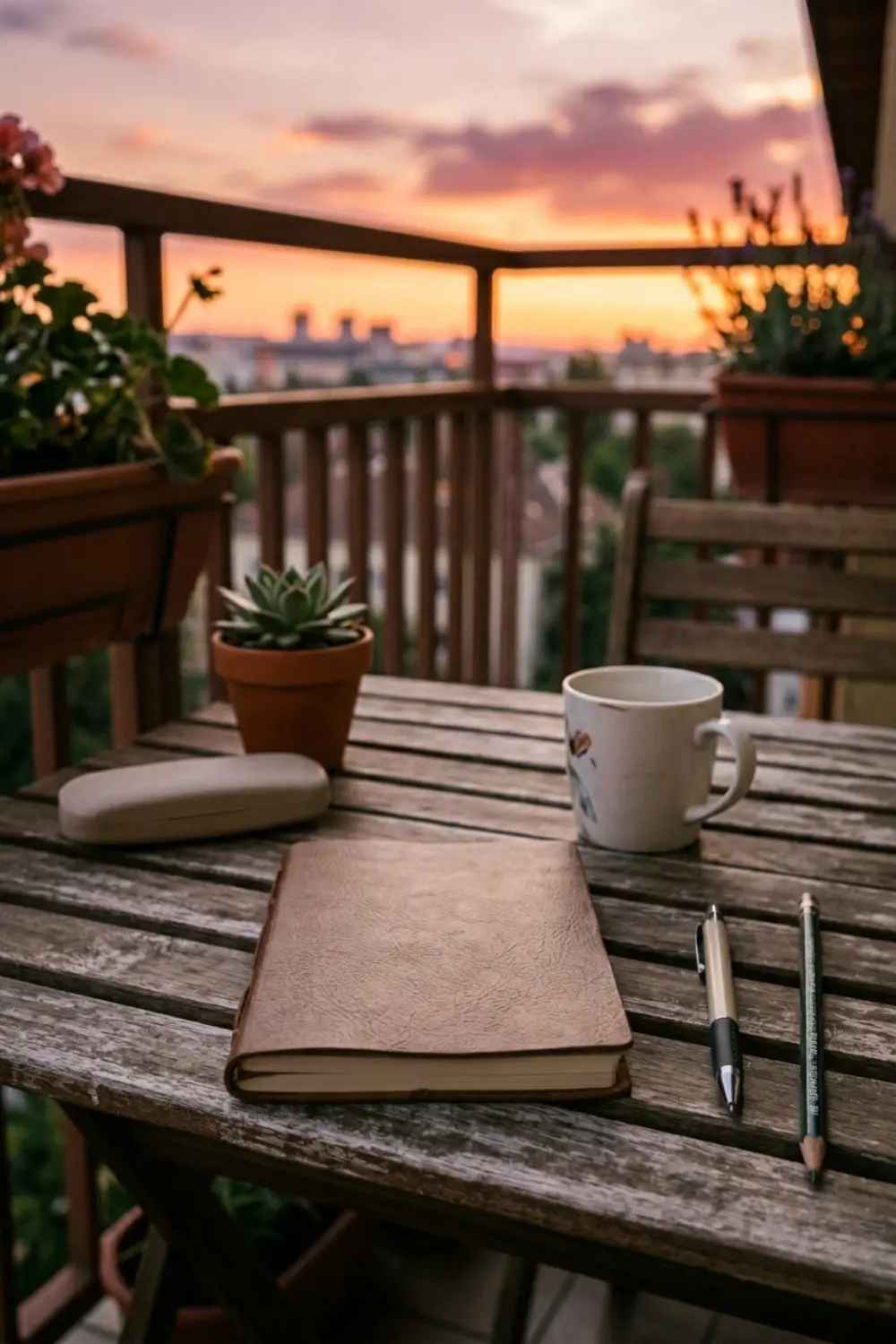
Before you buy anything, sit down and think: what do you want to use this space for? This sounds obvious, but most people skip this step, and that’s why balconies look haphazard. If you want it as a morning coffee spot, you need different things than if you’re reading there at night. If you want to grow plants, that’s different again from just wanting a glass of wine behind a sunset.
I’ve found that the best balconies serve one main function—and everything else is secondary. For example, mine is an “evening refuge.” That means the furniture, lighting, plants—everything is optimized for being comfortable, intimate, and quiet between 7-10 PM. I don’t try to use it during the day (because the sun is brutal), and I don’t try to have breakfast there (because there’s no shade). This clarity—one role, done well.
If you can’t decide, think back: when did you want to go out to your balcony but something held you back? Maybe it was too hot. Maybe there was nowhere comfortable to sit. Maybe you felt too exposed. These obstacles—solve them, and you’ll find your role. Too hot: shade. Nowhere to sit: quality seating. Too exposed: privacy screening with plants or panels.
This step matters because it protects you from buying random things that look good in the store but never cohere at home. If you know the role, every decision gets easier.
2. 2. Start With the Floor—It Sets the Foundation for the Entire Space
 Save it
Most balconies are concrete or ugly tile, and that’s the first thing you see when you step out. And it’s what immediately determines whether the balcony feels like an “unfinished project” or a “complete space.” The floor is the foundation—literally and visually.
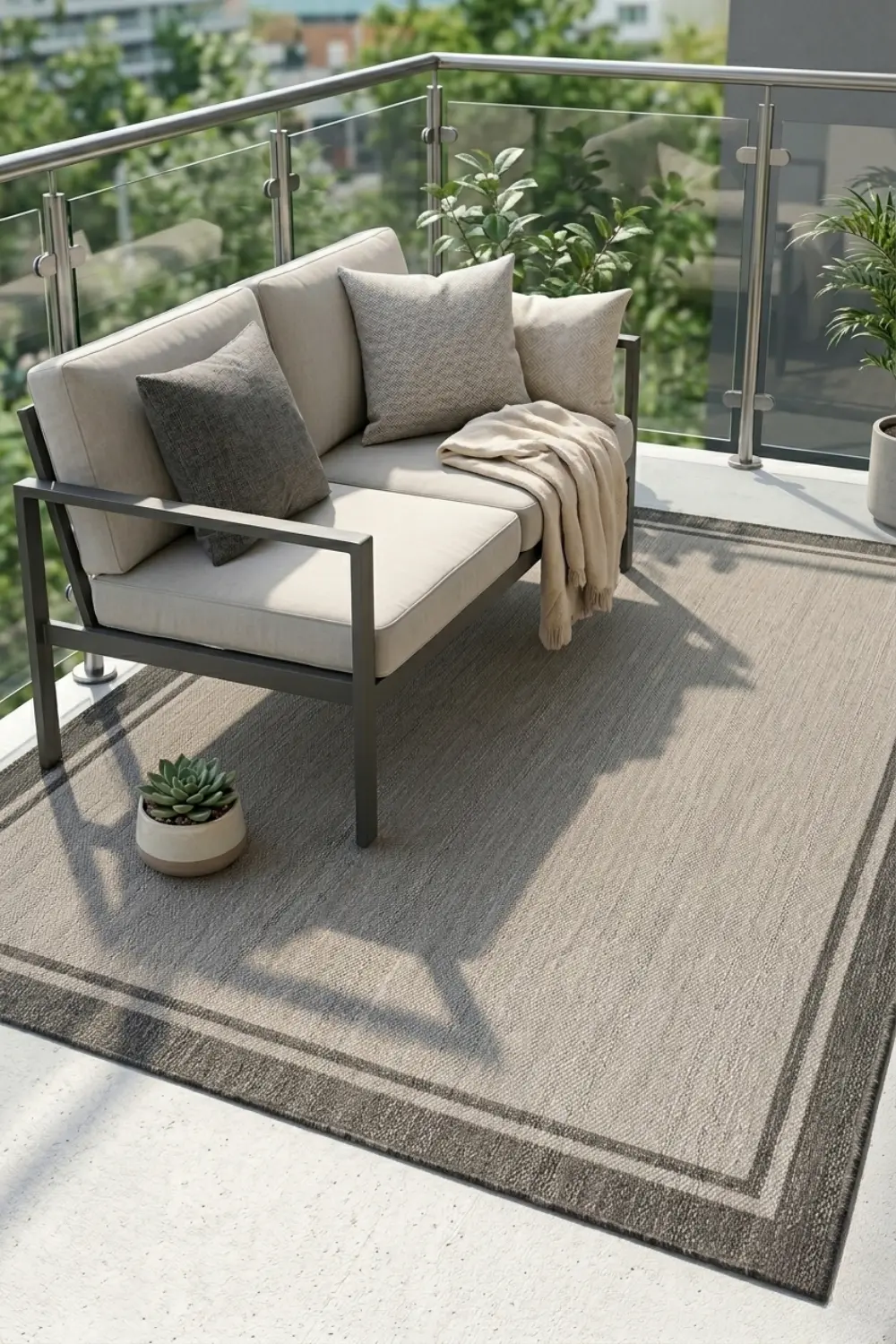
The simplest, quickest fix is an outdoor rug. Don’t underestimate this. A good outdoor rug gives instant warmth, defines the “usable” area, and hides the ugly concrete surface. But—and this is important—don’t buy one that’s too “patterned” or too colorful. Neutrals—beige, gray, black-and-white geometric—are always better because they don’t compete with plants, pillows, and other decor.
Rug size is also critical. If it’s too small, it looks like you accidentally left it there. If it’s too big, it visually shrinks the balcony. Ideal: big enough that furniture legs fit on it, but not covering the entire balcony. Leave 11.81 to 15.75 inches of clear space between the rug edge and the balcony edge.
If you don’t want a rug (because, say, it gets rained on), consider click-together wood tiles or composite decking. These don’t require adhesive, you just snap them together, and you get an instant “wood floor” feel. But they’re pricier and not as easily swappable as a rug.
The point: don’t let the original floor show. Cover it with something that feels intentional, not random.
3. Choose Seating Based on Your Balcony's Size, Not Your Eye
 Save it
This is where most people fail. They walk into IKEA, see a gorgeous outdoor sofa, buy it—then realize it doesn’t fit on the balcony, or if it does, there’s no room for anything else. Choosing seating isn’t about what you like—it’s about what fitsso you can still breathe beside it.
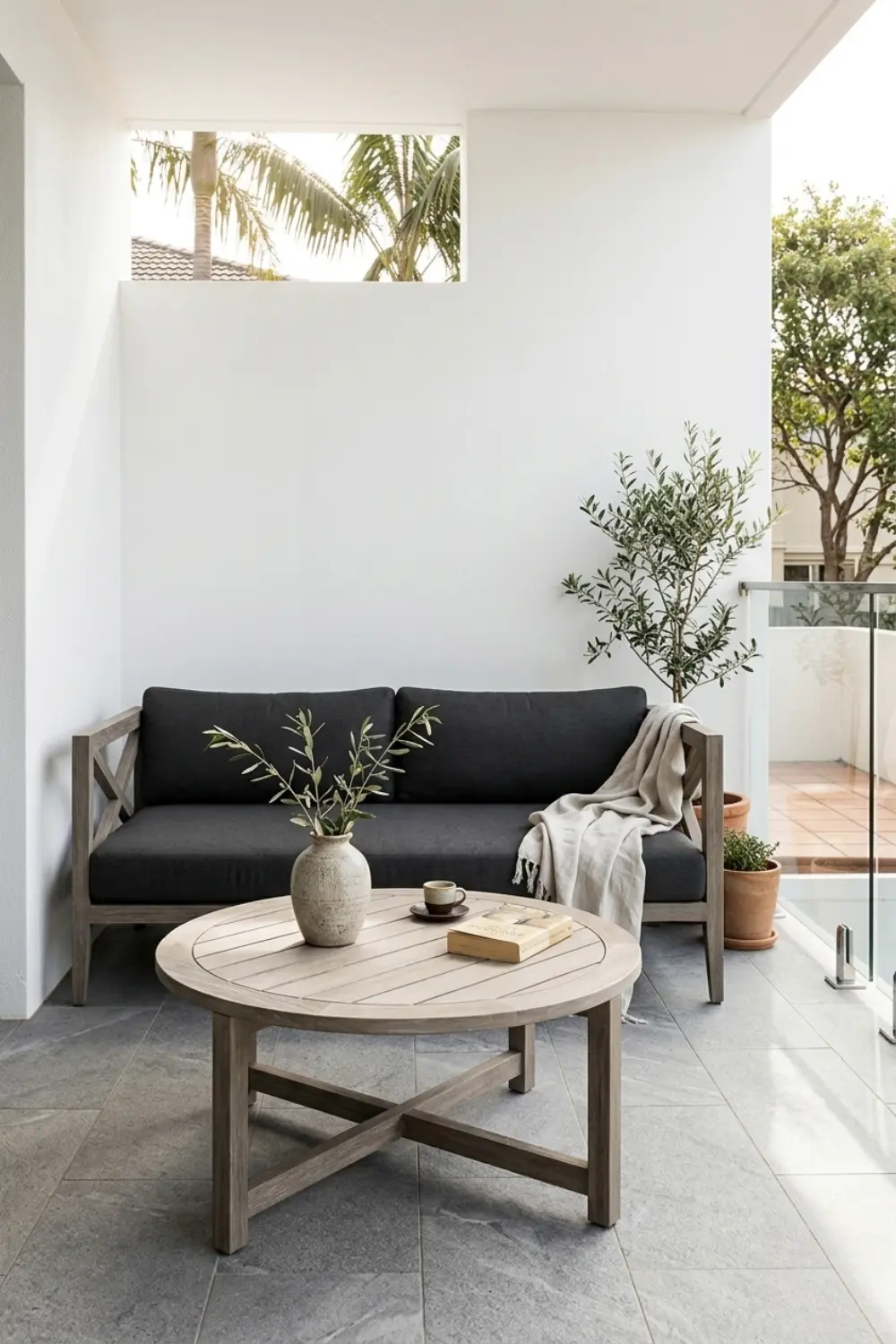
If you have a small balcony (say, 59.06 to 78.74 inches wide), forget a sofa. Seriously. Instead, choose compact armchair-style chairs (search for: “compact outdoor lounge chair”) that you can place facing each other or at an angle. Between them, a small table. This formation leaves more movement space and doesn’t visually crush the area.
If you have a medium balcony (98.4 to 118.1 inches wide), then a two-seater loveseat could work. But—and this is key—choose narrow-armed or armless pieces. Wide-armed furniture is visually huge and eats up space. Slim lines feel airier.
Height matters too. Furniture that’s too low (like those modern “lounge” outdoor sets) can be uncomfortable for long sitting. Ideal seat height: about 15.75 to 17.72 inches. High enough that you can sit and stand comfortably, but not as high as a dining chair.
And important: always leave at least 23.62 of free space between furniture and the balcony edge so you can move without sidling.
4. Add Pillows and Textiles—But Not Randomly
 Save it
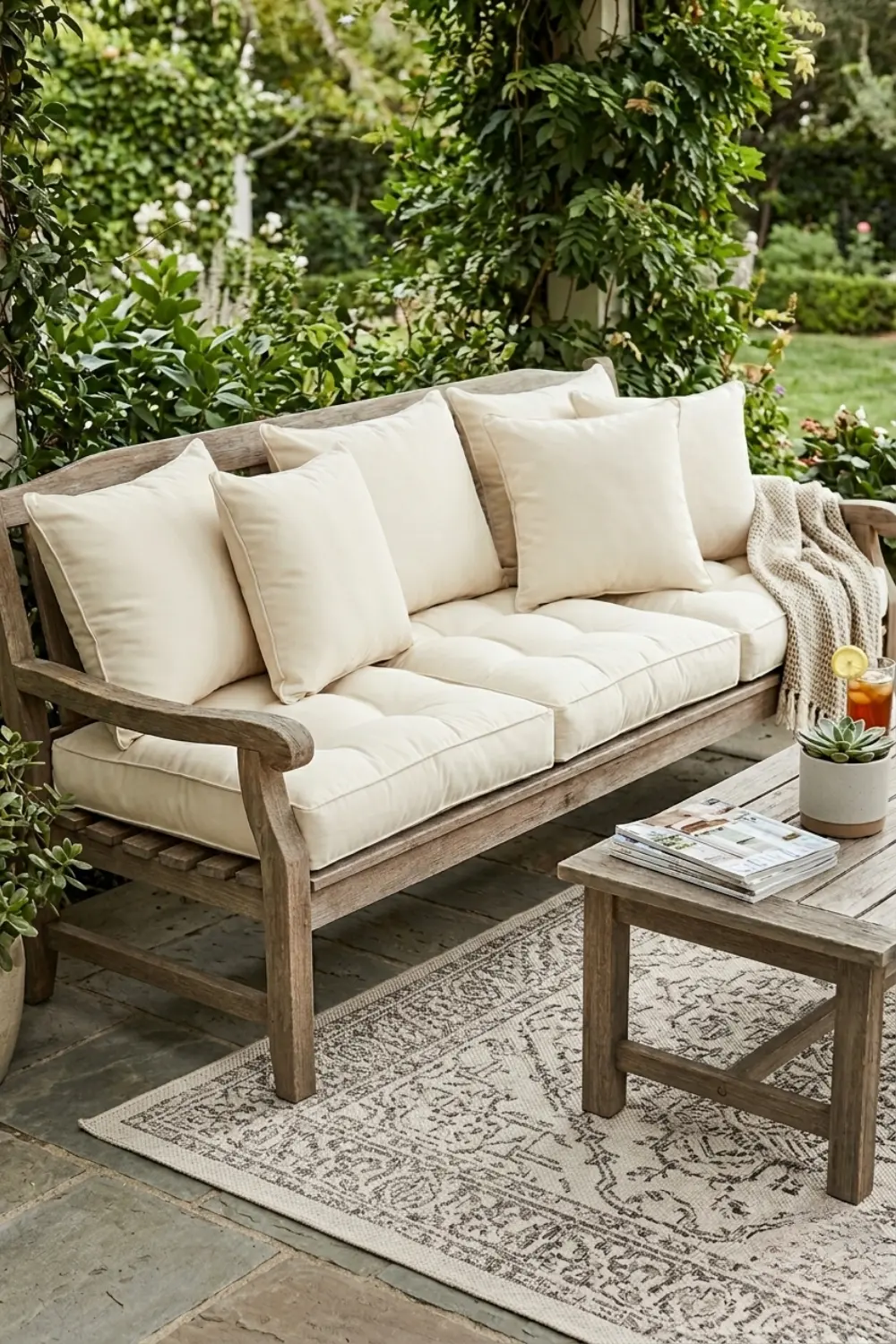
Pillows are what make balcony furniture comfortable and livable—but only if you choose them well. A random pile of pillows isn’t comfortable, just messy. Coordinated, well-placed pillows: that’s styling.
First: buy outdoor pillows. Not indoor ones. Outdoor pillows are made from waterproof or water-resistant materials, with UV-stable dyes, and they don’t mildew after the first rain. They’re pricier, but they last. Indoor pillows fall apart in weeks outside.
Colors: don’t try to “match everything.” That feels too sterile. Instead, pick a base color (like gray or beige) and add an accent color in smaller doses (like terracotta, mustard, or dark green). Pattern is fine, but not too much—if every pillow is patterned, it’s visual chaos. Rather: two solid pillows + one patterned. This gives balance.
Size matters. Large pillows (19.7 x 19.7 inches) are more comfortable as back support, small pillows (11.81 to 15.75 inches) are good for decoration. But don’t use only small pillows—they don’t give enough support, and you’ll feel like you’re sitting in a display, not on comfortable furniture.
And here’s a trick you see in style magazines: don’t place pillows evenly on both sides. One side can have three pillows, the other two. This asymmetry—it’s what makes it feel “human,” not showroom decor.
5. Use Plants in Layers, Not Just a Row
 Save it
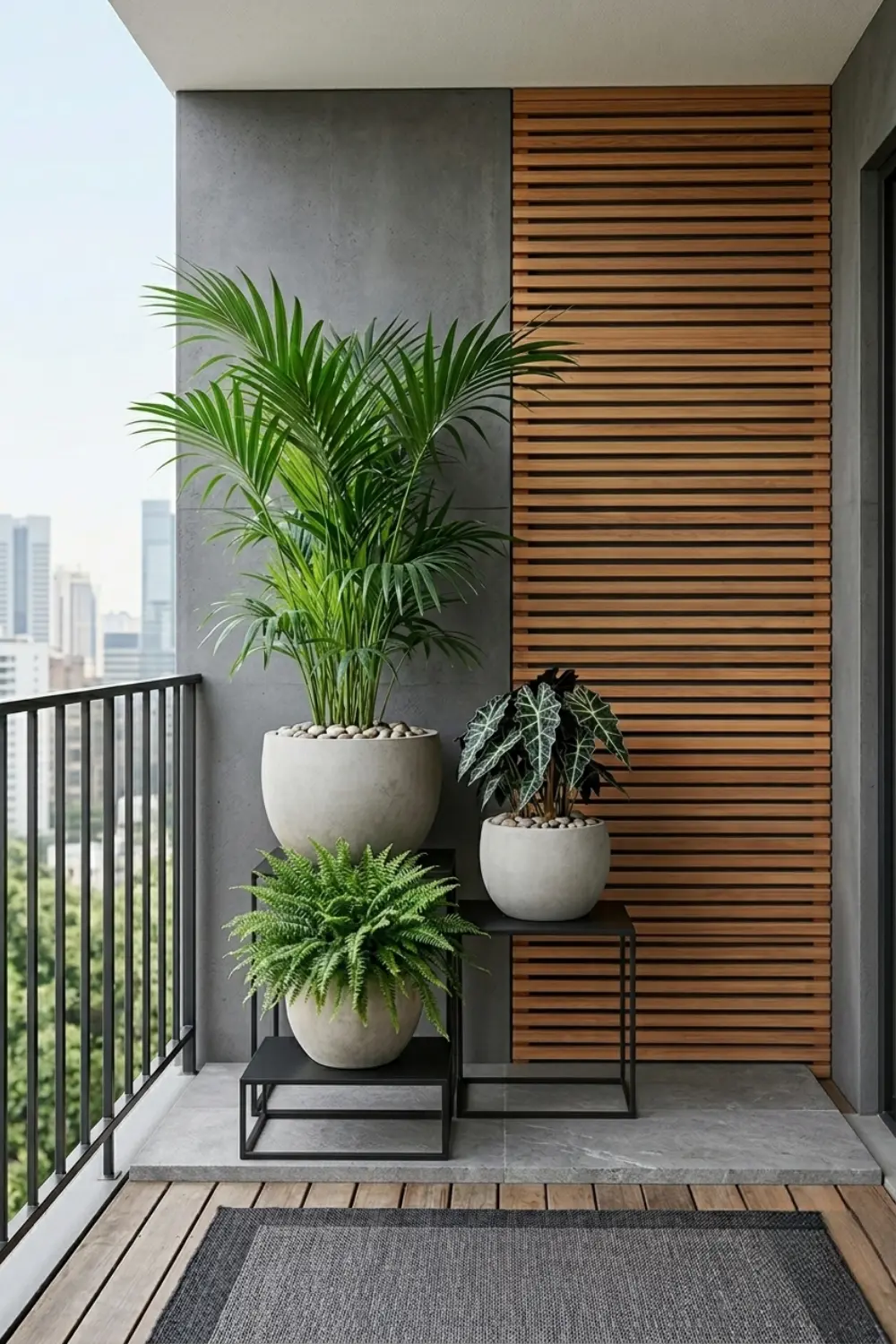
Plants are the soul of a balcony—but only if they don’t look like a garden center shelf. Most people buy a few pots, set them in a row along the railing, and done. This is boring and gives zero depth.
Instead, think in layers. This means placing plants at different heights—ground level, mid-level, and high level. For example: planters set of 3 (a large floor planter, mid-level a plant and a small one) on a stand or small table, and high up a hanging plant or wall mount. These three levels are visually richer than five same-height planters side by side.
In plant selection, also have variety—not just flowers. Combine different leaf types: broad leaves (like monstera, if your climate is warm), narrow leaves (grasses), and trailing plants (like ivy). This gives textural differences, which is much more interesting than just “red flower, pink flower, white flower.”
And here’s the big tip: don’t fill everything with plants. Let there be empty space too. If every inch is green, it’s overcrowded. The goal: plants are part of the space, they don’t flood it.
And if you’re afraid you can’t maintain living plants (because, say, you’re away a lot, or there isn’t enough light), then choose drought-tolerant plants—succulents, cacti, rosemary—that survive if you occasionally forget to water them. If you’re interested in how to create a truly livable, beautiful green space even in smaller areas, check this out: [How to Transform a Small Backyard into a Beautiful Garden]—many ideas from there translate to balconies too.
6. Lighting Is What Makes Your Balcony Livable in the Evening
 Save it
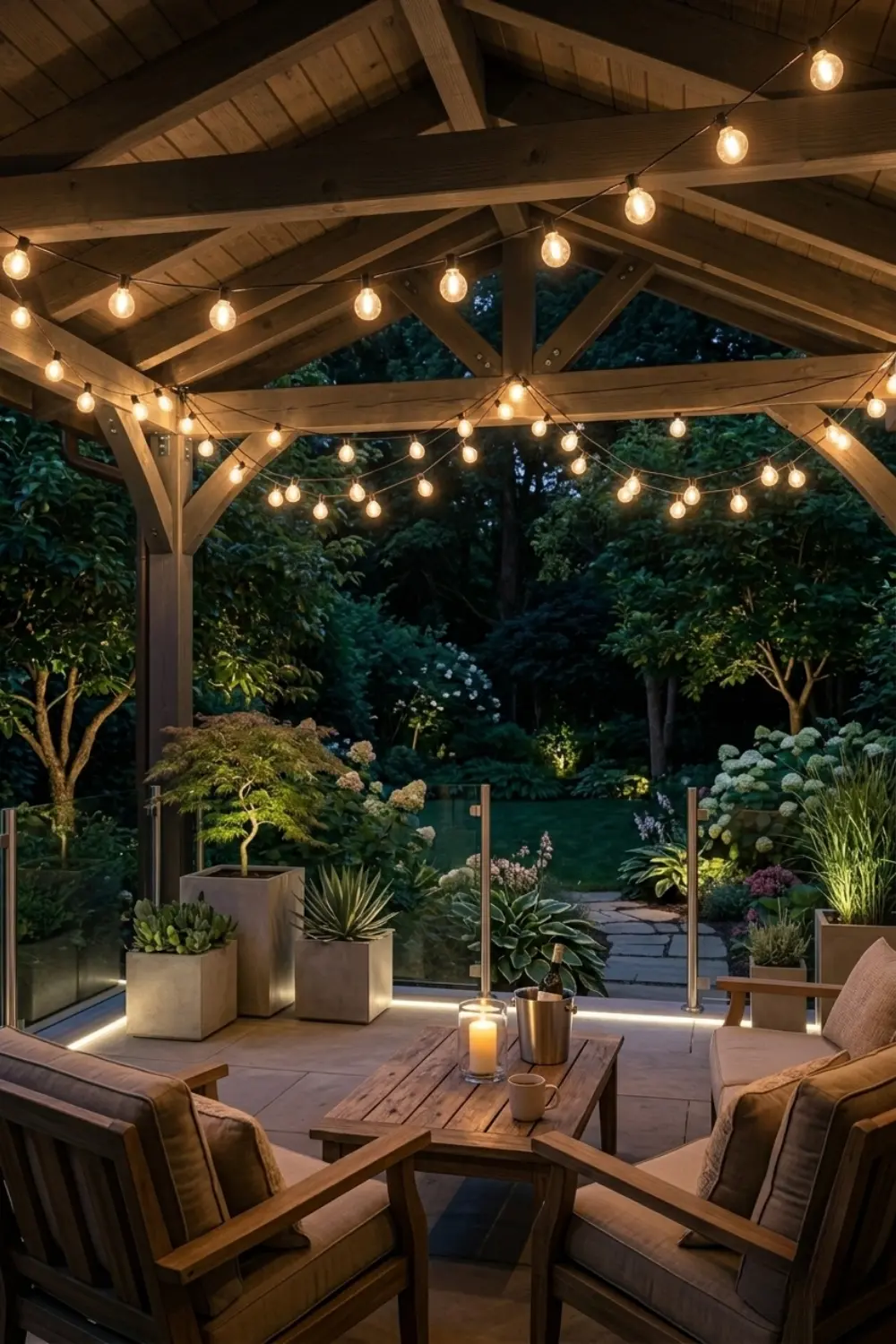
During the day, every balcony looks good—there’s natural light, there’s a view. But at night? That’s when you find out whether you’ll actually sit outside or just go back inside because it’s dark and uninviting.
Outdoor lighting serves two main purposes: functional (so you can see) and mood-setting. But most people only do one—usually functional (one strong overhead light), and then they wonder why the balcony isn’t inviting at night.
Instead, layer multiple light sources at different heights. For example: string lights along the top of the balcony or along the railing, a table LED candle or lamp in the center, and maybe one or two small solar lights among the plants. Together, these give soft, warm, inviting light—not harsh, cold “street lamp” effect.
String lights are key here. But—and this is important—don’t buy colored or blinking lights. Choose warm white (2700K-3000K) LED, which gives comfortable, calming light. Cool white LED (4000K+) looks like hospital lighting and completely kills the mood.
Placement matters too. Don’t just hang the string in a straight line—let it drape naturally, have a bit of “messiness.” This is more organic than if you stretched it out with engineering precision.
And if you have a power outlet nearby, it’s better than solar—because solar lights are often not strong enough and drain quickly. But if you don’t have an outlet, good-quality solar works too—just choose battery-operated versions, not the cheap transformer stuff.
7. Create Privacy—Don't Feel On Display
 Save it
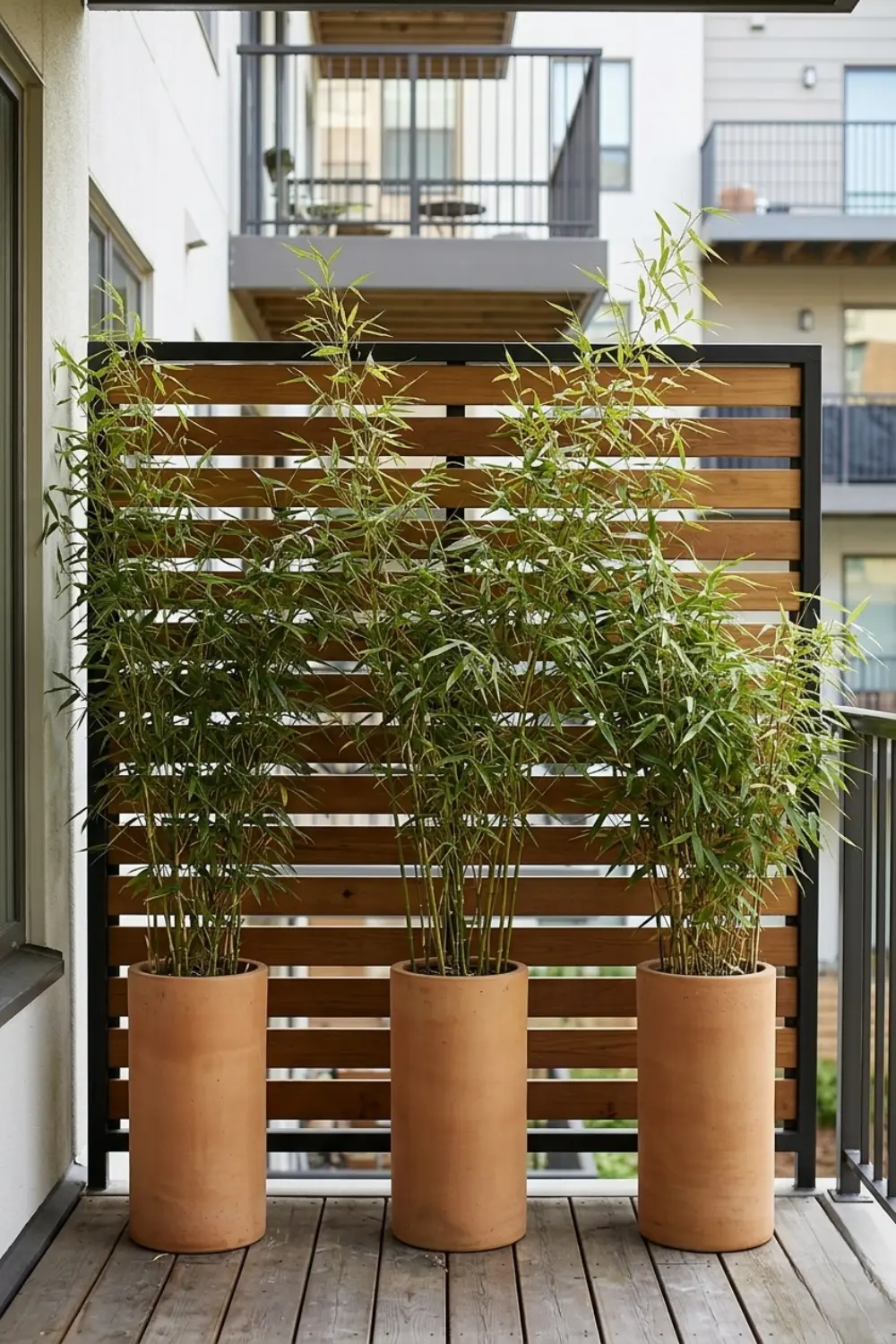
One of the biggest reasons people don’t use their balconies: they feel like everyone sees them. Especially in urban settings where the neighbor’s balcony is 78.74 inches away, or the street looks up at you. This is uncomfortable and instinctively holds you back from really living there.
The solution: privacy screening. And this doesn’t mean building a huge, solid wall—but strategically blocking the view from where it bothers you.
One of the best methods: tall plants on the most exposed side. A row of bamboo (in planters), tall grasses, or a trellis with climbing vines. These aren’t solid walls but permeable filters—you see the light, the sky, but the neighbor doesn’t see you directly.
Another option: outdoor privacy screen or panel system. These install easily, don’t require permanent attachment, and if you move, you can take them with you. Choose natural materials—wood, reed, bamboo—not plastic, because that looks cheap.
And here’s a nuance: don’t close every side. Only where you actually feel disturbed. If you cut off the view from everywhere, the balcony becomes claustrophobic. The goal: protection, not bunker.
8. Add a Small Table—Because You Need Somewhere to Put Things
 Save it
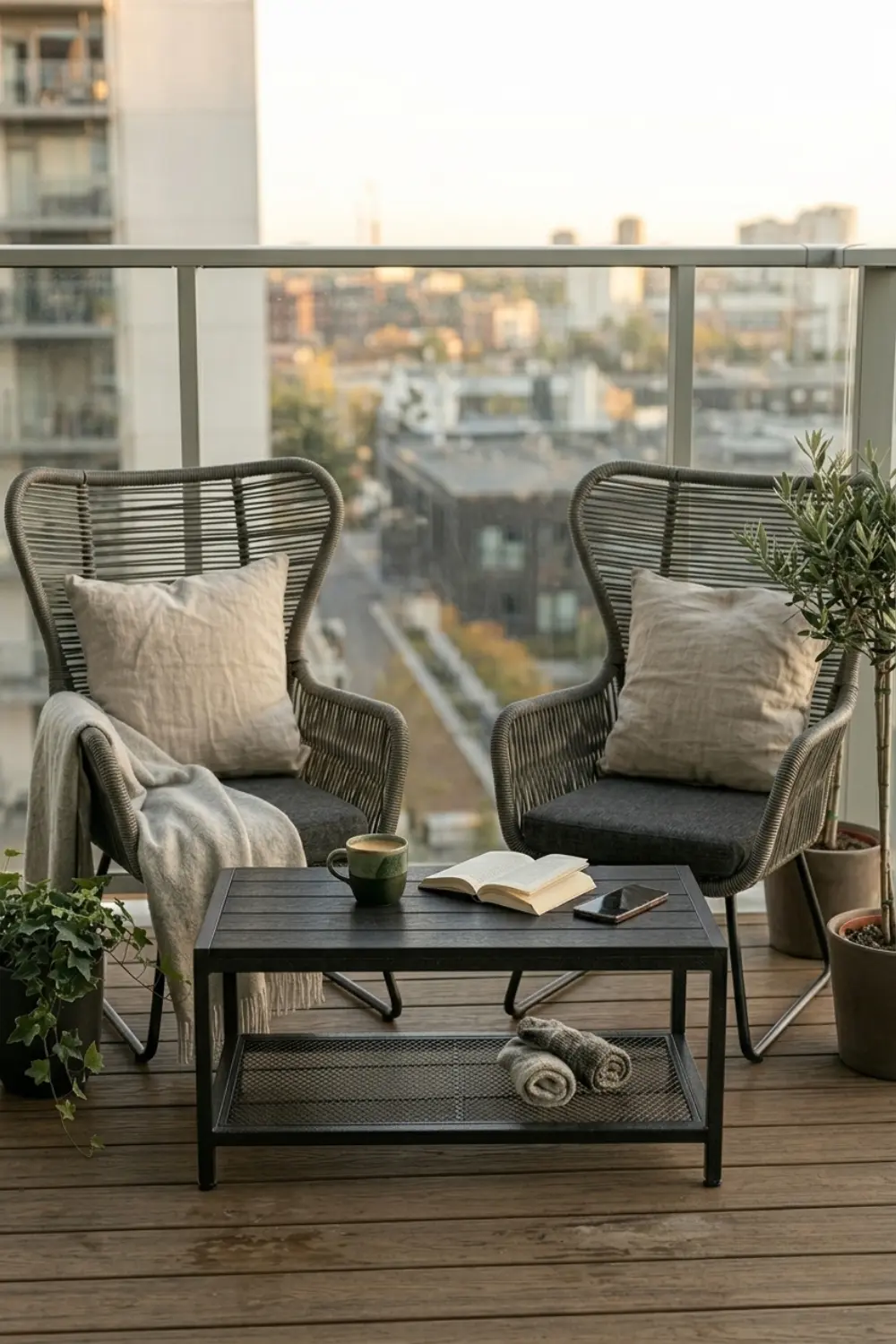
This sounds trivial, but tons of balconies are unusable because there’s nowhere to put the coffee, the book, the phone. People sit outside in a chair, holding the glass in their hand, and after 10 minutes they get tired and go back inside.
A small side table or coffee table—this is what makes the space functional. But—and this is the important part—don’t choose too big a table. Big tables steal movement space and visually crowd small balconies.
Instead, choose a narrow, tall side table (about 15.75 to 19.69 inches high, 11.81 to 15.75 inches diameter)—just enough for a cup, a book, and a phone to fit. If there’s room for a central coffee table too, it should be low, and preferably transparent or open frame (glass, metal), not solid wood block—because that’s visually heavy.
Material: metal or metal-wood combo works best outdoors. Pure wood patinas beautifully but requires maintenance. Metal is more durable, but it heats up in the sun—so if your balcony is sunny, choose a light color (white, beige), not black metal, because that can be scorching hot.
And if your balcony is really tiny, consider a foldable table—that you open when you use it and fold against the wall when you don’t. This maximizes movement space while giving function when needed.
9. Use Textures—Not Just Colors
 Save it
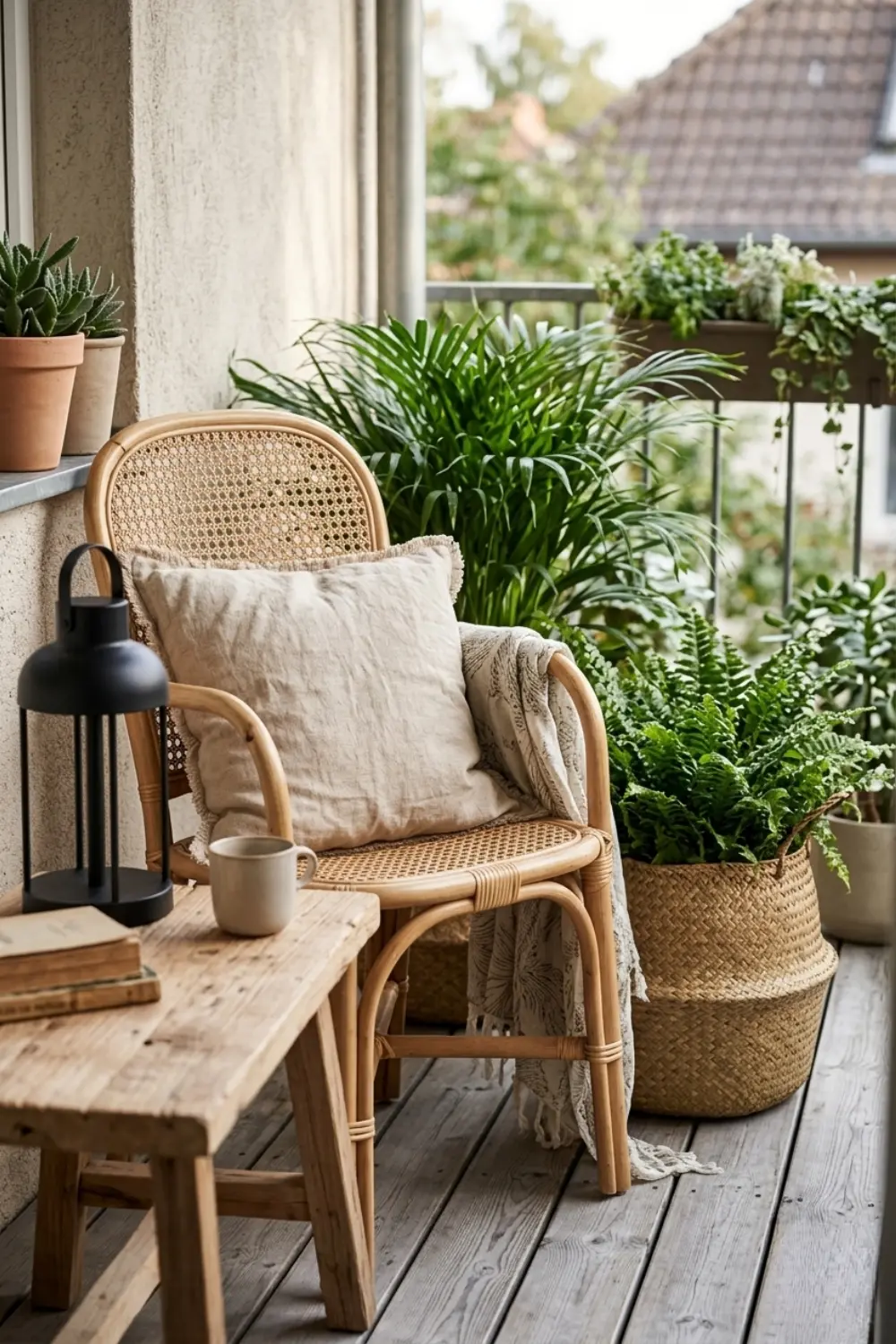
Most people think in colors when decorating—”what color should the pillow, the rug be?”. But texture is what gives depth. And on balconies—especially small balconies—texture matters more than color.
Why? Because if everything is smooth (metal chair, smooth pillow, smooth pot), the space is visually flat. No interest. But if you combine textures—woven basket, linen pillow, raw wood table, metal lamp, ceramic planter—you get the layered, rich feel that makes a space feel finished.
Woven materials (rattan, reed, seagrass) work especially well on balconies because they warm the space without being too “rustic.” A woven planter, a woven seat, or even a woven doormat—all add tactile visual interest.
Metal makes things colder—but that’s not bad. If you already have lots of warm texture (wood, woven), a metal element balances it so it’s not too “cottage-y.” A matte black metal plant stand, a bronze candle holder, or a steel table—all work.
Soft textiles (pillows, rug, maybe a throw blanket) give comfort. But don’t just be “soft”—choose different weave fabrics. A rough linen pillow + a smooth velvet pillow + a light cotton blanket: this is textural mix, not monotony.
10. Add Sounds—Water, Wind, or Music
 Save it
A balcony isn’t just a visual experience—it’s auditory too. And this is what most people completely ignore. But if your balcony faces a noisy street, or you hear the neighbor, it constantly distracts you, and you’ll never truly relax there. The solution is add intentional sounds that suppress or mask unwanted noises. Not completely—but enough that they’re not dominant.
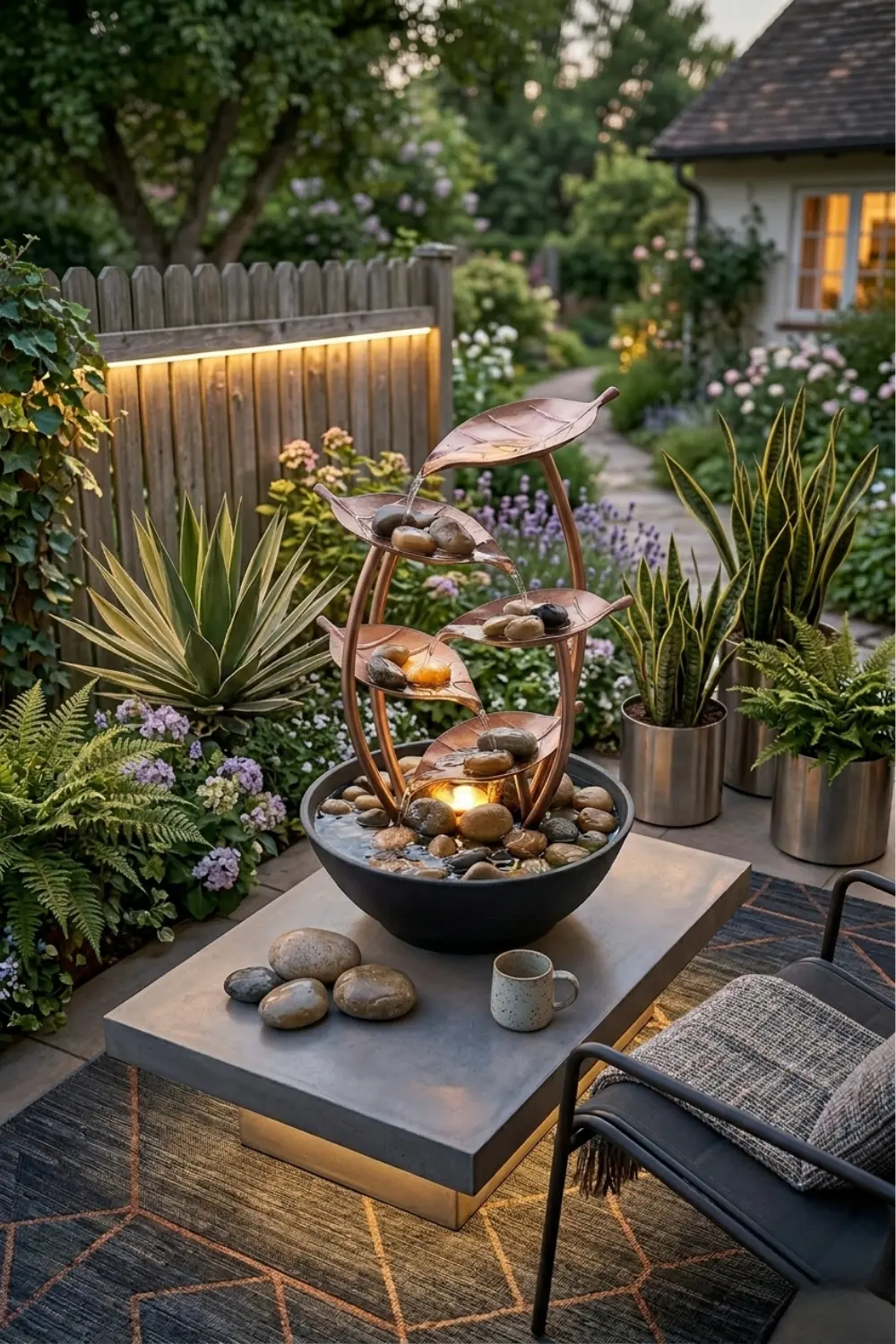
One of the best methods: a small fountain or water feature where water trickles. The sound of water has something soothing—our brain perceives it as “natural noise,” and it helps suppress traffic or neighbor sounds. A small tabletop fountain can be enough—you don’t need a huge thing.
If you don’t want water (because it freezes in winter, or requires power), a wind chime also works. But choose one with a deep sound, not sharp tinkling. Deep gong sounds are calming, high chimes are annoying.
Or simply: a small portable Bluetooth speaker playing background music or nature sounds (birdsong, rain, ocean). This might be “cheating,” but it works. And if you’re sitting outside in the evening, a soft jazz or acoustic playlist adds a lot to the mood.
This small layer—the sound—is what turns a “looks good” balcony into a “feels good” balcony. And if you’re interested in how to build similar calming elements into your daily routine, here’s inspiration: [8 Daily Habits to Relax After Work and Recharge Your Energy].
11. Use Mirrors or Reflective Surfaces If Your Balcony Is Dark
 Save it
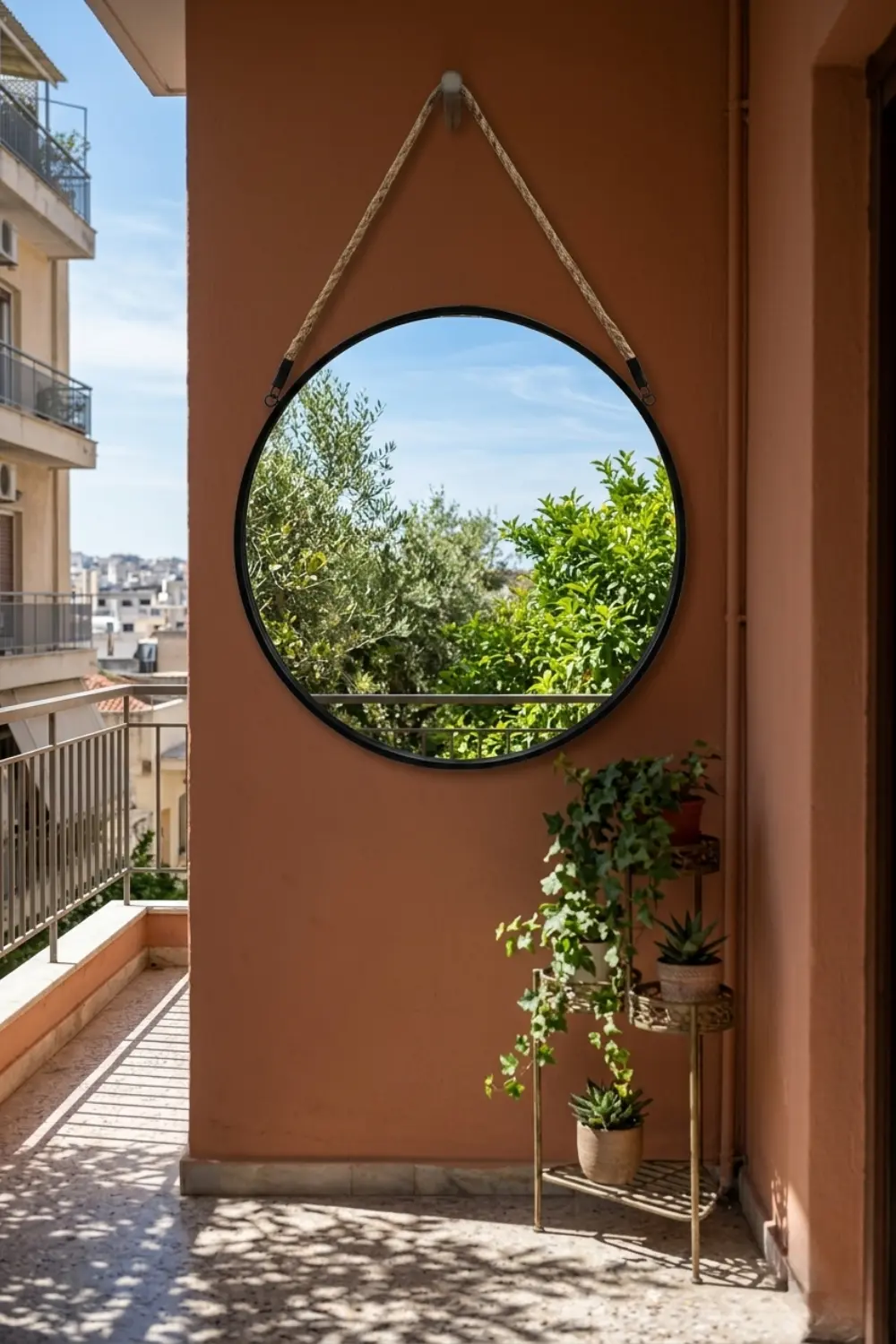
If your balcony is shaded, or faces north and never gets direct sunlight, it’s hard to make it lively. But there’s an optical trick that helps: reflective surfaces. An outdoor mirror on the wall—especially if you place it to reflect any available light—visually opens and brightens the space. The mirror doubles the visible space and still reflects some light even when there isn’t much.
But—and many people mess this up—don’t put the mirror where it only reflects a wall. That’s boring. Position it so it reflects greenery, sky, or an interesting part—this gives depth.
Metal surfaces also reflect light—a metal table, metal plant stand, or metal lamp—all contribute. Don’t overdo it (too much metal can feel cold), but one or two reflective elements enliven darker spaces.
And if there’s no room for a mirror, a large glass vase or glass candle holder also gives some light refraction and reflection—all of which helps keep the space from feeling suffocatingly dark.
12. Add a Scent Element—Candle, Incense, or Fragrant Plant
 Save it
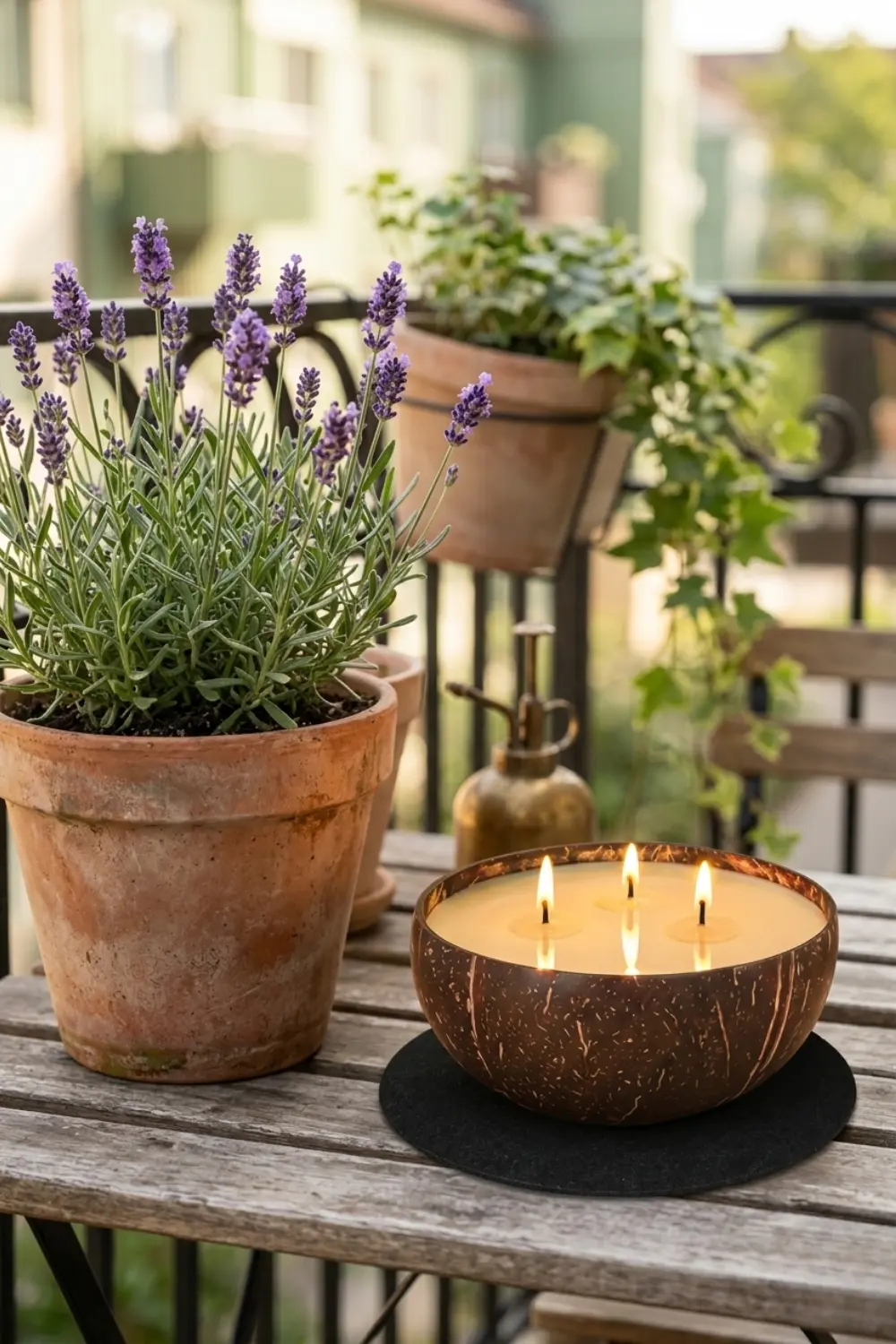
The full balcony experience—visual, auditory, and olfactory. And scent is what almost nobody plans, but it’s what makes you remember a space. The simplest is a citronella candle—this gives both light, scent, and keeps mosquitoes away. Or a small outdoor incense stand burning sandalwood or lavender incense—this is calming and atmospheric.
But the best long-term solution: living fragrant plants. Lavender, rosemary, mint, jasmine—all smell wonderful, and when you touch or pass them, they release their fragrance. Jasmine is especially beautiful in the evening—when it opens, it fills the entire balcony with its scent.
Don’t use overly strong, artificial air freshener—outdoors that feels fake. The balcony is outside—let natural elements provide scent, not chemical sprays.
13. Don't Forget Shading—Or You Won't Sit Outside During the Day
 Save it
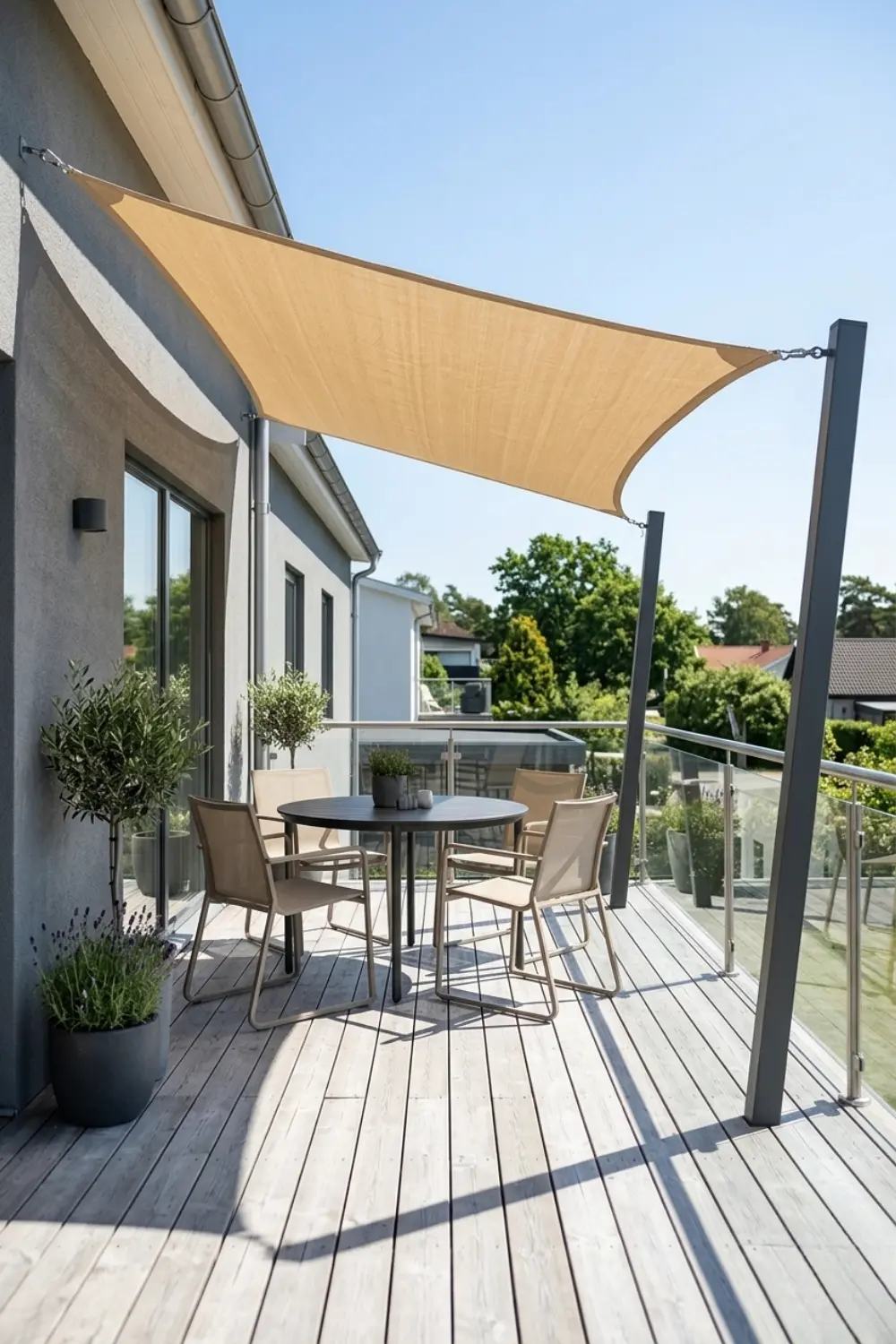
If your balcony faces south or west and has no shade, it’ll be unusable during summer days. Too hot, too bright, uncomfortable. And then you’ll say again: “I have a balcony, but I never use it.” Shading isn’t optional—it’s fundamental. And there are several ways.
Best is an umbrella or shade sail. The umbrella is more mobile, the shade sail more permanent, but both work. The shade sail is especially good if you can attach it to the wall and railing—it’s stable, doesn’t blow away in wind, and has modern, clean lines.
If you can’t attach anything (because it’s rented), consider a standing umbrella with a heavy base. This doesn’t require fixing and you take it with you if you move.
Another option: plant shading—a trellis with climbing vines, or tall plants on the sunny side. This is beautiful, natural shade, though it takes years to fill in.
Useful Tips: Small vs Large Balcony Version
If you have a small balcony (47.244 inches wide):
Don’t try to cram everything in. Choose one main function—say “reading nook” or “morning coffee spot”—and build around it. One or two compact chairs, a small table, 2-3 plants—that’s it. Don’t put any large furniture because it visually crushes the space. Use vertical storage—wall shelf, hanging planter—to keep the floor free. The rug should be small, just under the seating area. Place plants at different heights—one on the floor, one on a stand, one hanging. This gives depth. Colors should be light—white, beige, pale gray—because this optically opens. A dark balcony in a small space feels even smaller.
If you have a large balcony (118.11 inches wide):
Here the challenge isn’t space but not making it empty. Zone—divide into different functional areas. For example: seating zone + plant zone + small dining corner. Use multiple rugs too—each zone has its own rug, this visually separates them. Don’t just put one giant table in the middle—that’s boring. Rather, multiple smaller elements that give richness. Don’t scatter plants evenly but group them—create “plant corners” where 4-5 plants are together, and other parts have nothing. This is far more dramatic than the scattered approach. And don’t be afraid to use larger furniture—a big sofa, a larger table—because on a big balcony, too-small furniture gets lost.
Okay, now you know how to build out the balcony—but what should you not do? Let’s look at the most common mistakes that ruin the balcony’s mood, even if you do everything else right.
Common Mistakes to Avoid
1. Too much furniture, zero movement space
The most common mistake is people trying to turn the balcony into a “mini living room” and stuffing it with furniture. Sofa, armchair, table, side table, plant stand—and in the end it’s impossible to move. The balcony isn’t a living room. It’s smaller. And if there isn’t at least 23.62 inches of free movement space between furniture and railing, the whole thing feels closed in, claustrophobic. Less furniture but better quality—that’s the rule. Two comfortable chairs are always better than four cramped, uncomfortable ones.
2. Not accounting for weather
Many people decorate as if the balcony were indoors—indoor pillows, paper decorations, painted wood furniture that isn’t waterproof. Then the first rain comes and everything gets ruined. The balcony is outside—choose waterproof, UV-resistant materials. Outdoor pillows, aluminum or synthetic rattan furniture, porcelain or metal planters—not paper, not wood that isn’t treated. If it’s not designed for outdoors, don’t put it out.
3. No storage—everything exposed to weather
If there’s nowhere to pack away pillows, candles, small decor when it rains or gets cold, then you either bring everything inside (and then what’s the point of having it out?), or you leave it and it gets ruined. A small waterproof storage box, or a cabinet designed for outdoors—this saves a lot of hassle. Don’t leave every decor element permanently outside—only what’s truly weatherproof.
4. Too dark at night because there’s no lighting
During the day, every balcony is usable—there’s light. But at night? If there’s no lighting, you just go back inside. One strong ceiling light isn’t enough—that’s hospital-like. You need soft, warm, layered lighting—string lights, candles, table LED lamps. This is what makes the balcony inviting at night too, not just during the day.
5. Everything crammed along the railing, zero depth
Many people only place plants, furniture along the railing—in a line. This is flat, boring. Instead, bring things into the space—place items against the back wall too, in the middle too. This gives depth. If everything is just along the railing, the rest of the space is wasted and the whole thing feels shallow.
Frequently Asked Questions
How do I make my balcony comfortable in a small space?
On a small balcony, the minimalist approach is best. Don’t try to do everything—choose one or two main elements and do them well. Two compact chairs, a small table, a few well-placed plants—that’s enough. Use vertical storage (wall shelves, hanging plants) to keep the floor free. Light colors—white, beige, pale gray—optically open. And always leave at least 23.62 inches of free space for movement.
What plants should I choose for my balcony?
This depends on how much light you have. If your balcony is sunny (south, west), choose drought-tolerant plants—lavender, rosemary, succulents. If it’s shady (north, east), choose shade-tolerant plants—fern, hosta, ivy. And don’t forget to layer—place them at different heights (floor, stand, hanging) to give depth.
How do I make my balcony private if I feel exposed?
Use strategic plants—tall bamboo, grasses, climbing vines on trellis—from the sides where you feel bothered. Don’t close off everything—that makes it claustrophobic. Another option: outdoor privacy screen or panel (wood, reed, bamboo) that’s not a solid wall but a permeable filter. Don’t choose plastic—it looks cheap.
How do I maintain my balcony?
Weekly, sweep leaves and dust. Monthly, wipe down furniture with a cloth. Water plants regularly (depends on type). Bring pillows in when it rains—or use waterproof covers. In winter—if it’s cold—store non-winter furniture, pillows indoors. In spring, refresh—new plants, new pillows if the old ones are worn.
Final Thoughts
Look, a balcony isn’t about how big it is or how much money you put into it. It’s about whether you use it. And if you don’t, then something’s wrong with the setup—not the space.
What you’ve learned in this article isn’t just about styling—it’s about how to think of your balcony as a livable space, not a decorating project. That functionality matters more than decoration. That lighting changes whether you use it at night too. That privacy is what makes you dare to go out. That seating size matters more than style. That layering plants gives depth. That the floor sets the foundation. And that personal elements—a book, a photo, an object—are what make it yours, not just a catalog copy.
You don’t have to do everything at once. Start with basics: floor, seating, lighting. Then add plants. Then textures. Then personal things. This is a process, not a one-time project.
And when you’re done—or at least done enough that it’s usable—go out. Have a coffee there. Read a chapter. Watch the sunset. Because the balcony isn’t about looking nice. It’s about being in you. About breathing. About stepping out of the apartment without having to leave.
Go, and make it livable. You deserve it.
This post contains affiliate links. I may earn a small commission at no extra cost to you.
Get cozy inspiration delivered to your inbox.
✓ 14-page beautifully designed ebook
✓ Cozy decorating ideas
✓ Practical room-by-room inspiration
You’re in! 🎉
Thanks for joining the NestFlowHome community!
Your free ebook is already on its way to your inbox. If you don’t see it within a few minutes, please check your Promotions or Spam folder.
Join the NestFlowHome community for weekly decorating inspiration.

Timeless home decor ideas and slow living inspiration for a calm, beautiful life.