
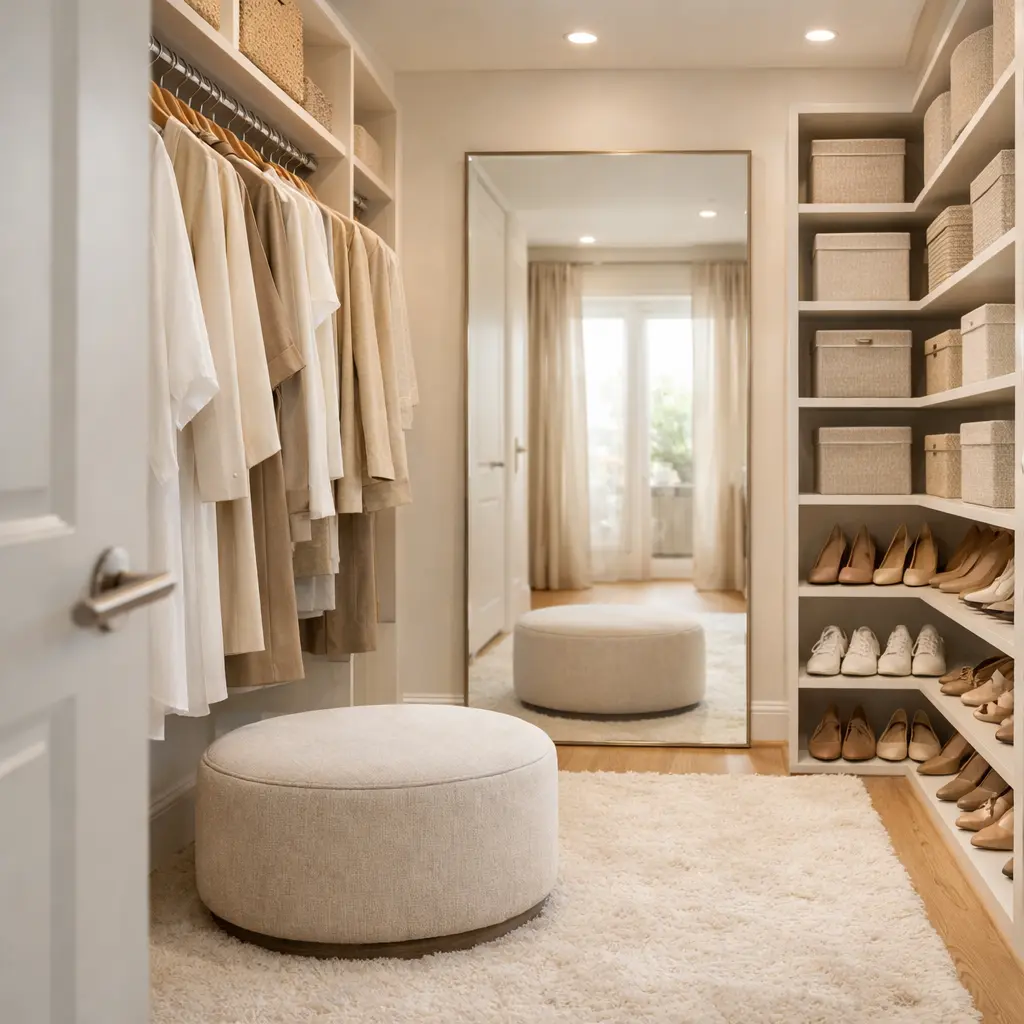
Closet Organization Ideas You’ll Fall in Love With
By Emily | July 2, 2025
I remember that morning clearly when I opened my closet door, and my very first thought was: I have nothing to wear — even though the hangers were practically bending under the weight. The clothes were there. The shelves were full. Boxes were stacked on top of each other. And yet, the entire space created tension inside me. The problem wasn’t the quantity. It was that my closet wasn’t working with me.
One afternoon, I took everything out. Not to become a minimalist — but to understand what I truly needed and how the space could support my everyday life. What I learned that day completely changed my morning routine.
Since then, closet organization hasn’t been about tidying up. It’s been about intentional space design. I’ve gathered solutions that are genuinely easy to fall in love with. Not because they’re dramatic. But because they work.
Let me show you how I think about it.
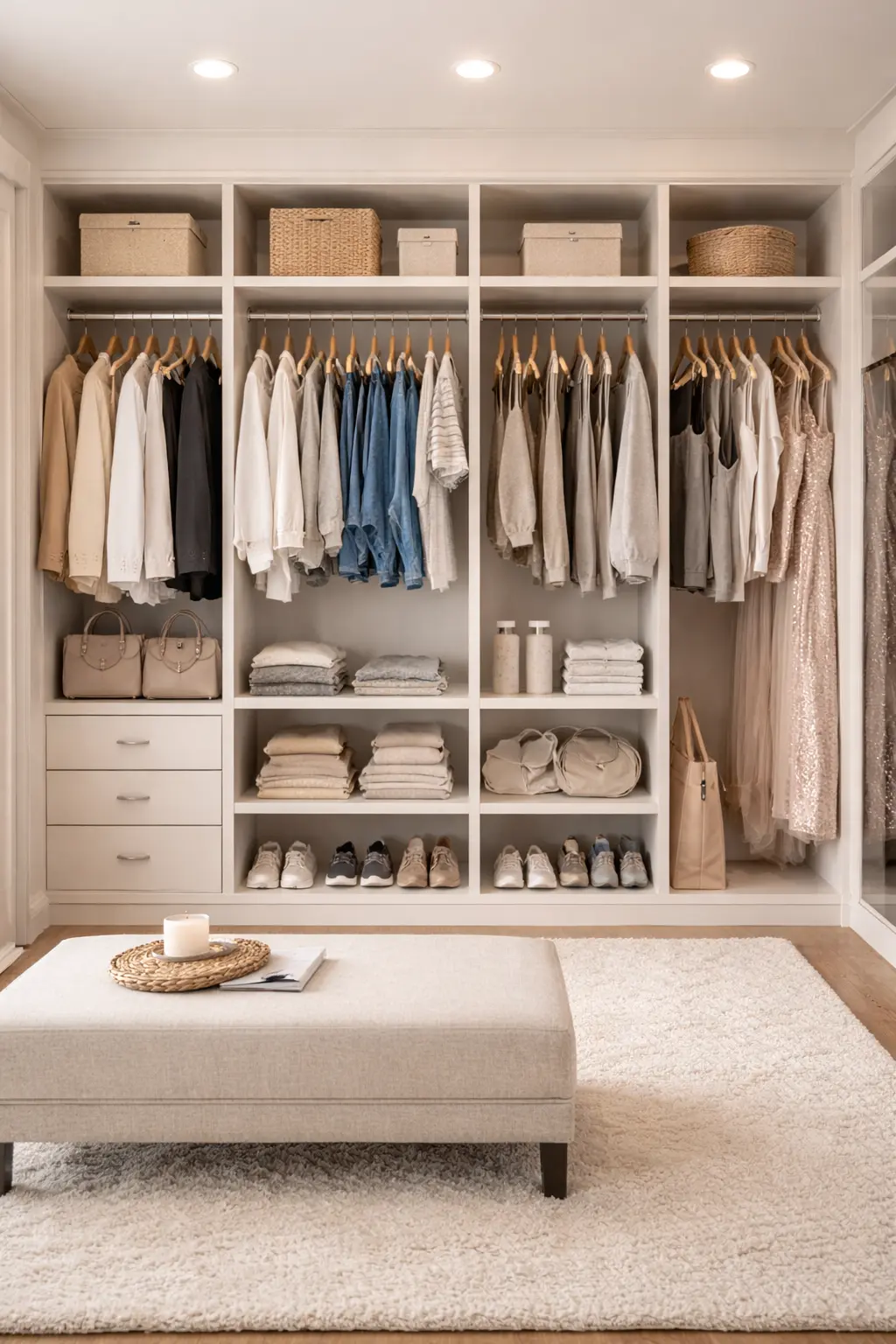
Think in Zones, Not Shelves
 Save it
For a long time, I saw my closet as a series of stacked surfaces. Top shelf. Middle shelf. Bottom shelf. But when I started thinking in terms of function, everything became simpler — and much more personal.
My work wardrobe got its own zone. Weekend pieces had another. Workout clothes had a third. Special occasion outfits were given a slightly separate section of their own. When clothes are organized not just by type but by life situation, choosing what to wear becomes faster and more intuitive.
In the morning, I don’t search. I simply reach into the zone that belongs to that day. It sounds small, but it frees up an incredible amount of mental energy.
A closet isn’t a storage unit. It’s a visual map of your daily life — and when it’s structured well, it quietly supports you.
Give Your Hangers Space — and Unity
 Save it
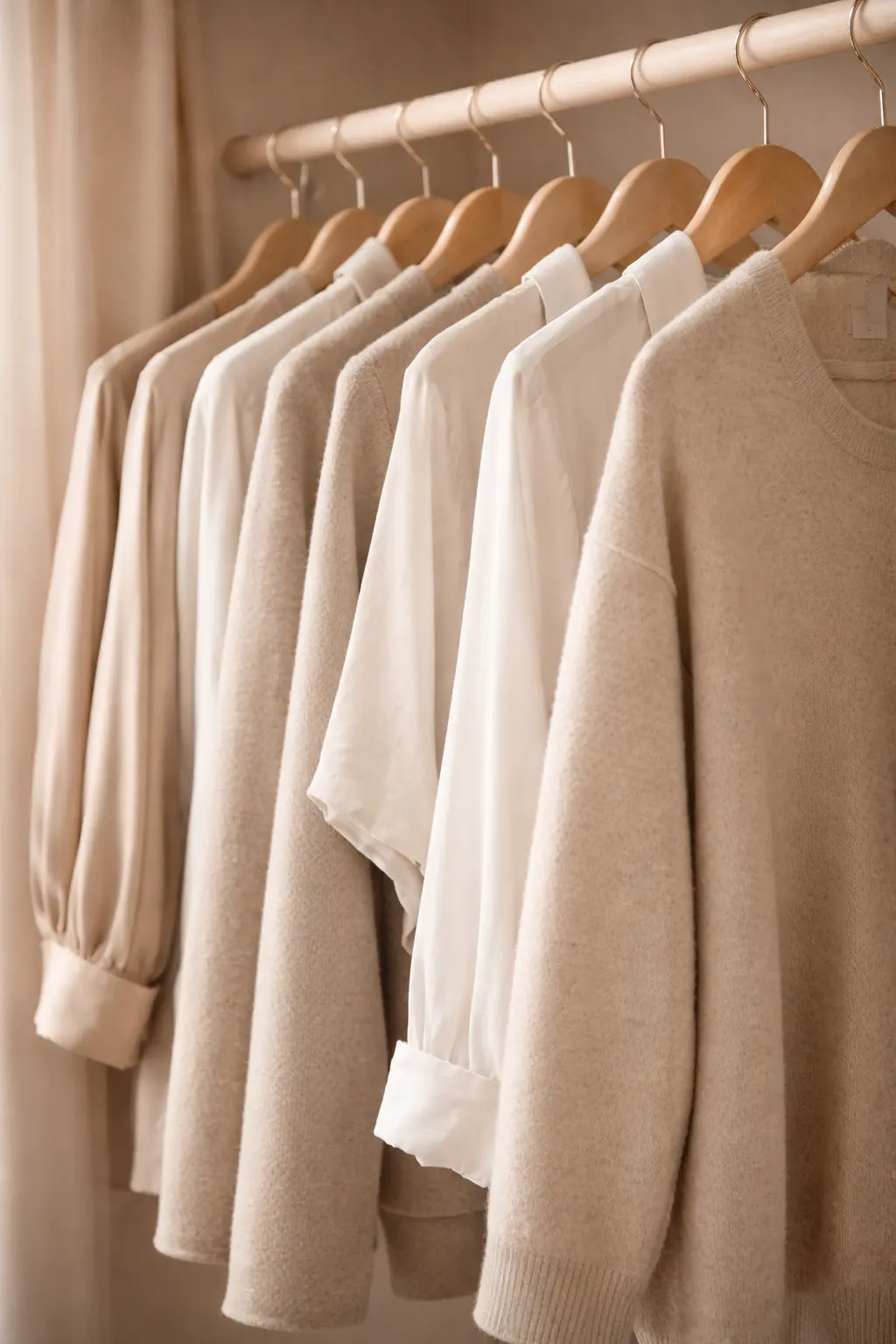
There was a time when every millimeter counted. Hangers pushed tightly together. Fabrics sliding into each other. Blouses wrinkling. The closet was full — but the visual felt overwhelming. The turning point came when I changed two things at once. I gave the clothes breathing room, and I replaced my mismatched hangers with matching ones.
At first, leaving a few centimeters of “empty space” felt wasteful. But when clothes aren’t pressed against each other, fabrics fall more beautifully, wrinkle less, and every piece becomes visible. Decisions come from clarity, not chaos.
Matching hangers create surprising visual calm. Different shapes and colors add visual noise — even when the clothes themselves are organized. When every hanger shares the same tone and form, the entire closet instantly feels more harmonious.
You don’t need a minimalist wardrobe. Just space and unity. Together, those two already create a premium feel.
Use the Lower Closet Area with Pull-Out Systems
 Save it
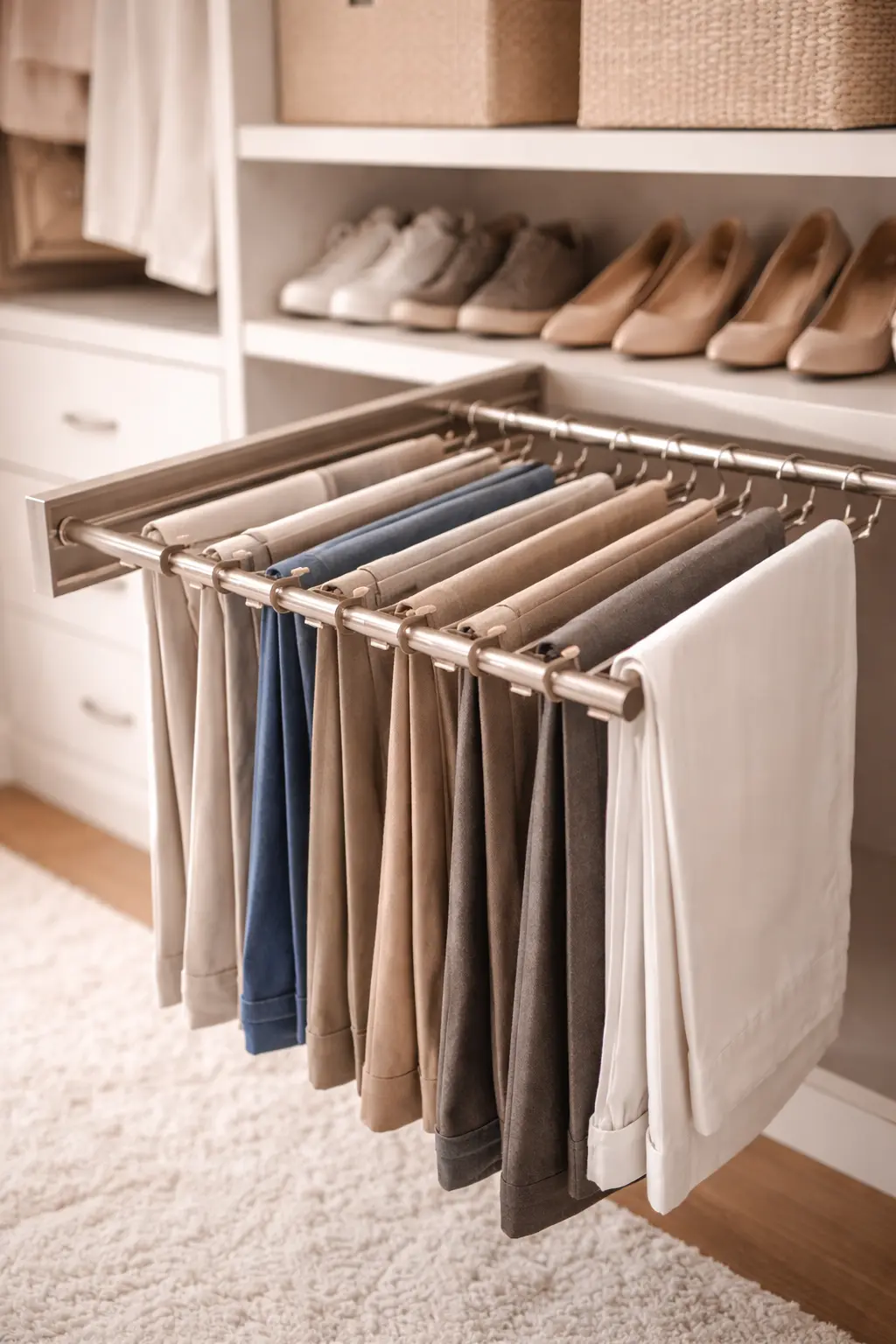
One of the most common mistakes is leaving the bottom of the closet underused or chaotic. Shoes pile up there. Long garments hide everything. You simply don’t see what’s happening below.
When I installed a pull-out pant rack in the lower section, it opened up an entirely new dimension. Pants no longer sat folded on top of each other or crowded onto hangers. They hung side by side, clearly visible. With one smooth motion, the entire unit slides out — and you instantly see every option.
The same works for skirts or even scarves.
Multi-level, space-saving hanging systems also free up significant room without making the space feel crowded. The key is visibility: don’t cram in more clothes — use the space more intelligently.
Create Visual Calm on Shelves with Smart Storage Boxes
 Save it
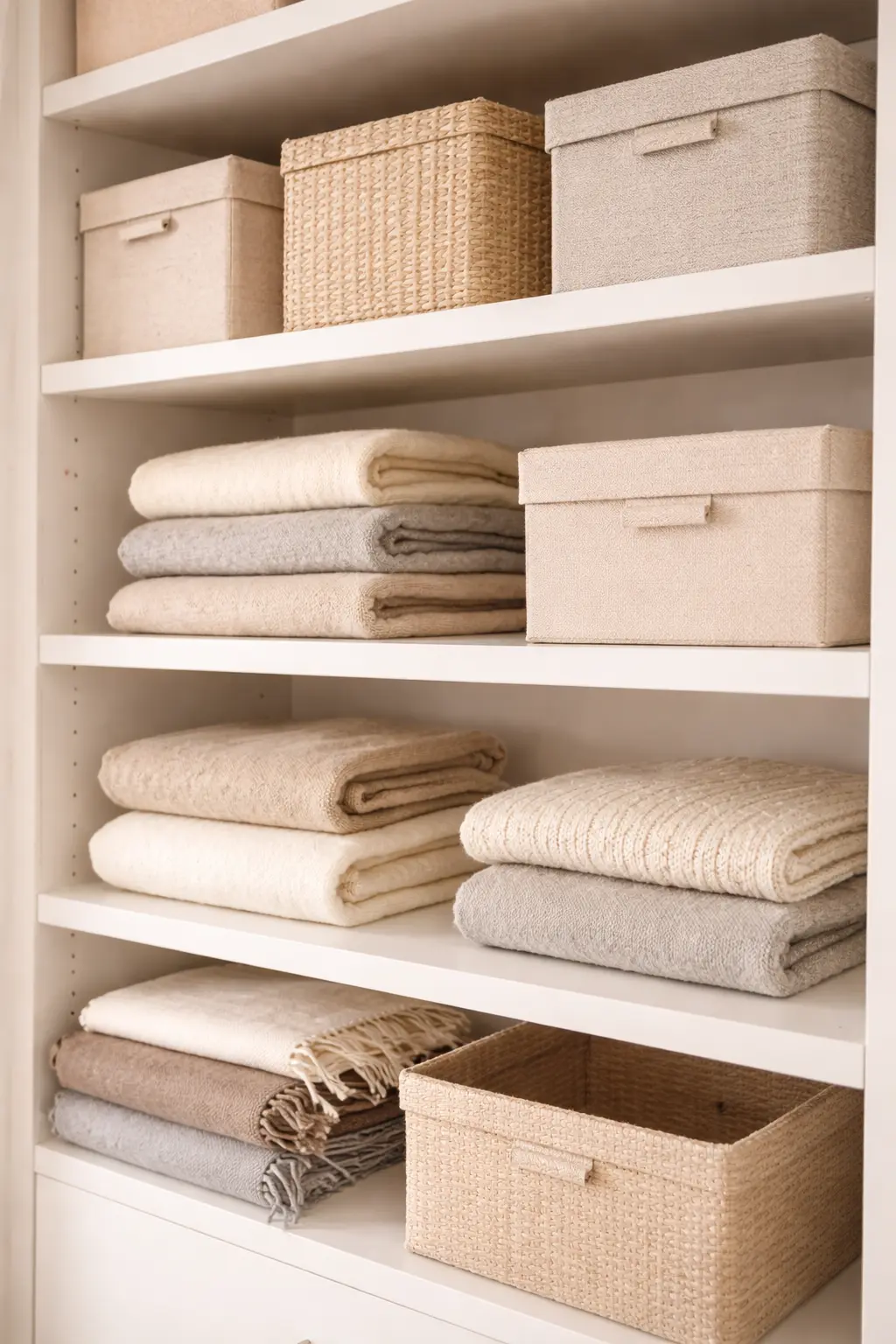
Closet shelves often look like organized chaos: neatly folded sweaters that still slide over each other; scarves that are simply “there”; small accessories that disappear among everything else.
The first time I added collapsible storage boxes to my shelves, the entire look changed. These cube-shaped containers don’t just create practical compartments for easily slouching sweaters or scarves — they also paint a clean, structured picture for the eye.
Similar boxes help you:
- Give each clothing category a defined home
- Prevent shelves from looking like cluttered piles
- Store off-season pieces neatly while keeping them accessible
You don’t always have to keep the boxes fully opened — when not in use, you can fold them down so they don’t take up unnecessary space. Use them for sweaters, scarves, underwear, or rarely worn accessories.
Think Vertically
 Save it
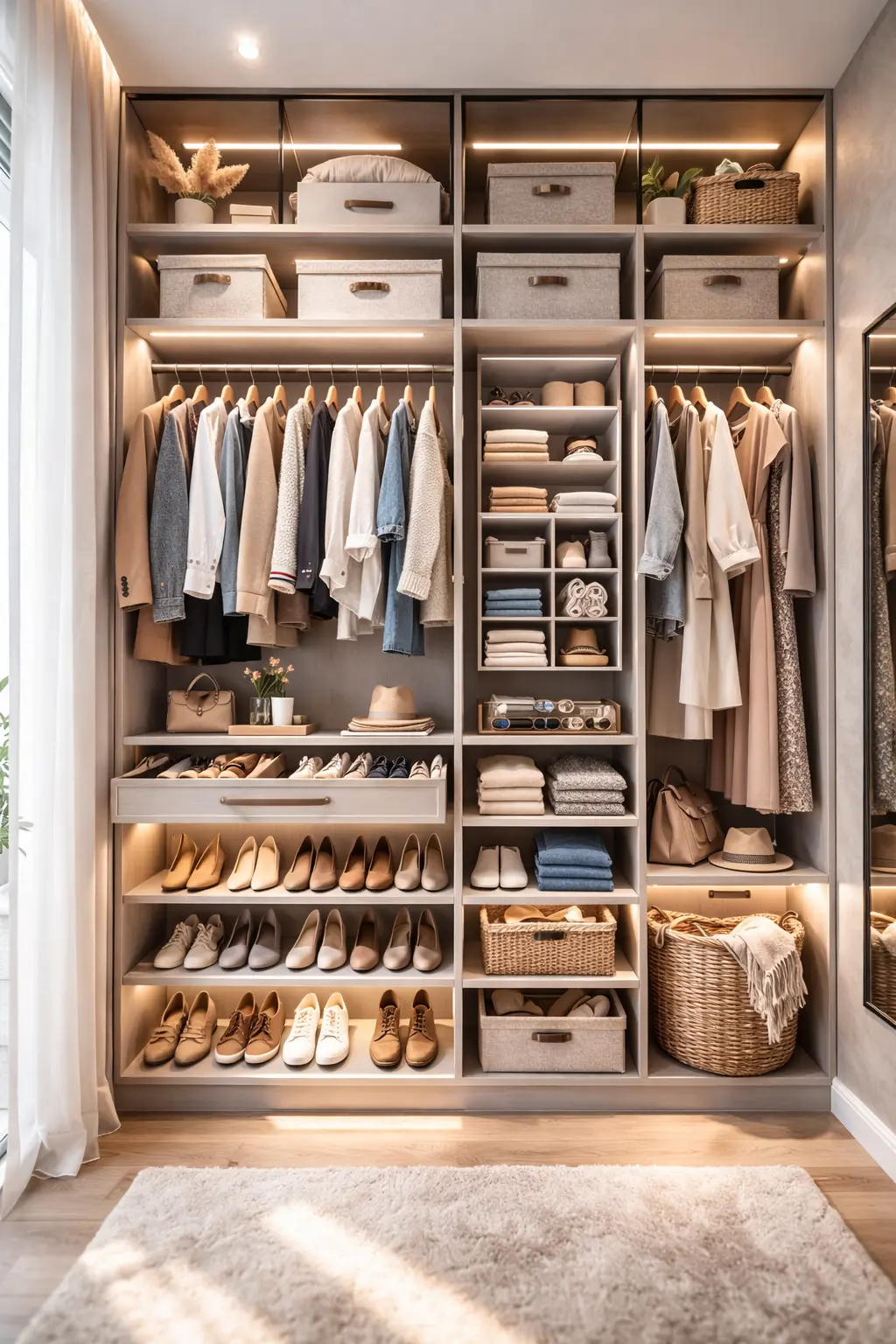
In most closets, height remains unused. Yet using vertical space intentionally is one of the most effective ways to create order. Hanging organizers, multi-tier shoe racks, shelf dividers, or pull-out baskets help you stop thinking only horizontally. Higher areas are ideal for rarely used pieces or seasonal accessories.
When I started planning upward, the lower shelves were instantly freed. Shoes stopped stacking. Bags weren’t crushed together. Folded sweaters stopped collapsing with every movement.
The space didn’t get bigger. It just became more structured. And you feel that every single morning.
Give Accessories the Place They Deserve
 Save it
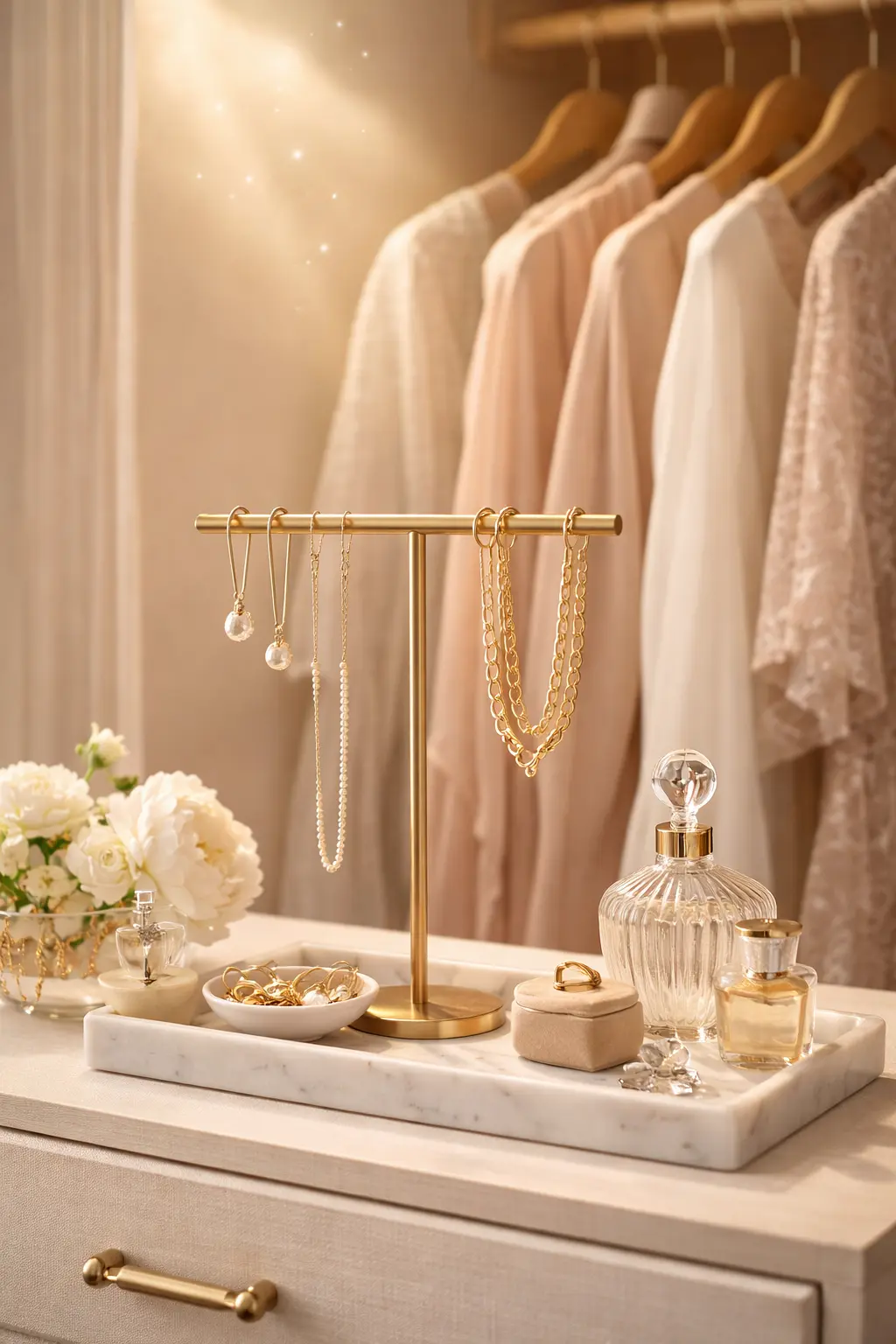
Closets often focus on clothes — yet accessories are what truly create character. The belt that adds structure to a dress. The scarf that brings color to a monochrome outfit. The jewelry that frames your entire look. And yet, these are the pieces that get lost the easiest.
Chains tangled at the bottom of a drawer, earrings knotted together, belts thrown on top of each other. When accessories aren’t visible, you use them less. Not because you don’t love them — but because they’re not at eye level.
For me, the turning point was a jewelry and accessory stand. The kind with multiple levels of hooks, bars, and small surfaces. It doesn’t take up much space, yet it makes the entire collection visible.
The advantage isn’t just that everything stays organized. It’s that your options become visible. Necklaces don’t tangle. Earrings stay in pairs.
And perhaps most importantly: choosing becomes faster. Getting dressed in the morning becomes a decision — not a search.
Turn Your Closet into an Experience with Lighting and Details
 Save it
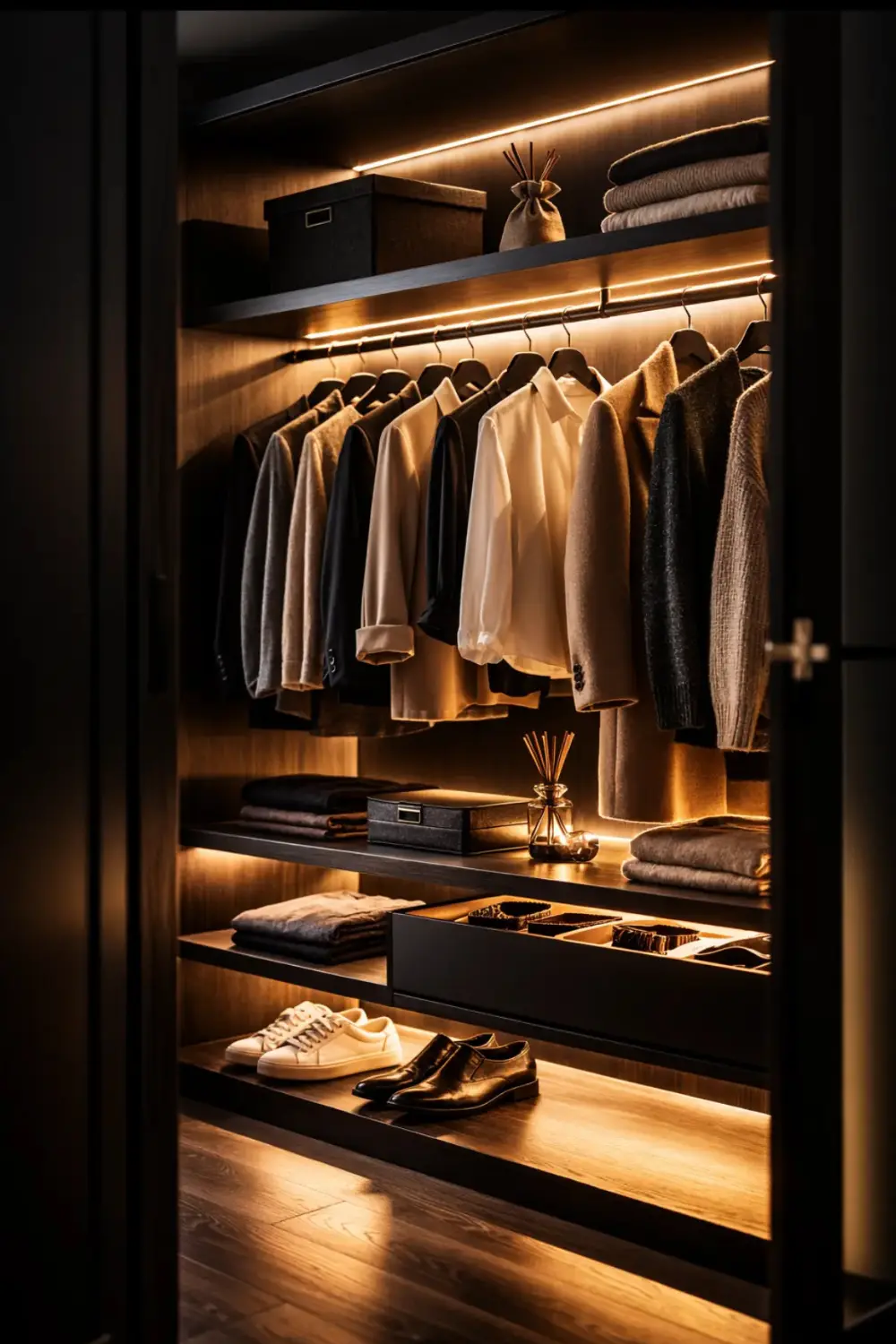
A closet isn’t just functional. It can be an experience. One of the biggest changes came when I installed warm, motion-sensor LED lighting inside. When the door opens, a soft, even glow illuminates the clothes. No searching. No color distortion. The entire space feels instantly more premium.
A subtle scent solution or fabric freshener also adds to the experience. When your closet smells fresh and is beautifully lit, getting ready in the morning feels less rushed — more like a ritual.
This is the moment where you can thoughtfully add a well-chosen product: quality LED closet lighting, elegant garment bags, modular organizers, or a refined scent solution.
A closet can be practical. But it can also be inspiring.
Why Does an Organized Closet Change Your Day?
Your closet is one of the first spaces you interact with every morning. If it’s chaotic, your start feels rushed. If it’s clear, decisions feel easier.
An organized space isn’t just aesthetic. It creates mental clarity. Fewer micro-decisions. Less unnecessary stress.
When your clothes are well organized, getting dressed stops being a task — and becomes an experience.
Common Mistakes to Avoid
1. Buying too many organizers without a plan
Think first. Too many storage solutions alone don’t create order.
2. Hiding everything in closed boxes
If you don’t see it, you forget it. Visibility is key.
3. Mixing seasons
Winter sweaters and summer dresses together only create visual overload. Refresh seasonally.
4. Folding without function
Don’t just fold beautifully — fold for accessibility.
5. Never revisiting your system
Life changes. Your closet should adapt too.
Frequently Asked Questions
How do I start if everything feels chaotic?
Don’t buy organizers first. Take everything out and categorize. Decide what you wear regularly, what’s seasonal, and what’s simply taking up space. Structure always comes before tools. Once the system is clear, you can choose storage solutions intentionally.
How do I maintain order long term?
Maintenance is key. Once a month, do a quick reset: return misplaced pieces, refresh for seasonal changes, review accessories. A system stays functional when you fine-tune it regularly.
What’s the most common mistake in closet organization?
Creating a system that’s too complicated. If putting something away takes multiple steps, you won’t maintain it. The ideal system is intuitive. Everything returns to its place in one easy motion.
Do these principles work in small closets?
Especially there. In small spaces, zoning, vertical thinking, and visual unity matter even more. Limited space isn’t a disadvantage — it’s an opportunity to organize more intentionally.
Final Thoughts
Closet organization isn’t about perfection. It’s not about turning every piece into part of a minimalist capsule wardrobe. It’s about creating a space that supports who you are. A thoughtfully designed closet gives you quiet confidence in the morning. No searching. No compromise.
If you open your door now and it feels overwhelming, start with one zone. One shelf. One row of hangers. Order doesn’t happen overnight.
But when it starts working, you’ll feel the difference every single morning.



This post contains affiliate links. I may earn a small commission at no extra cost to you.