
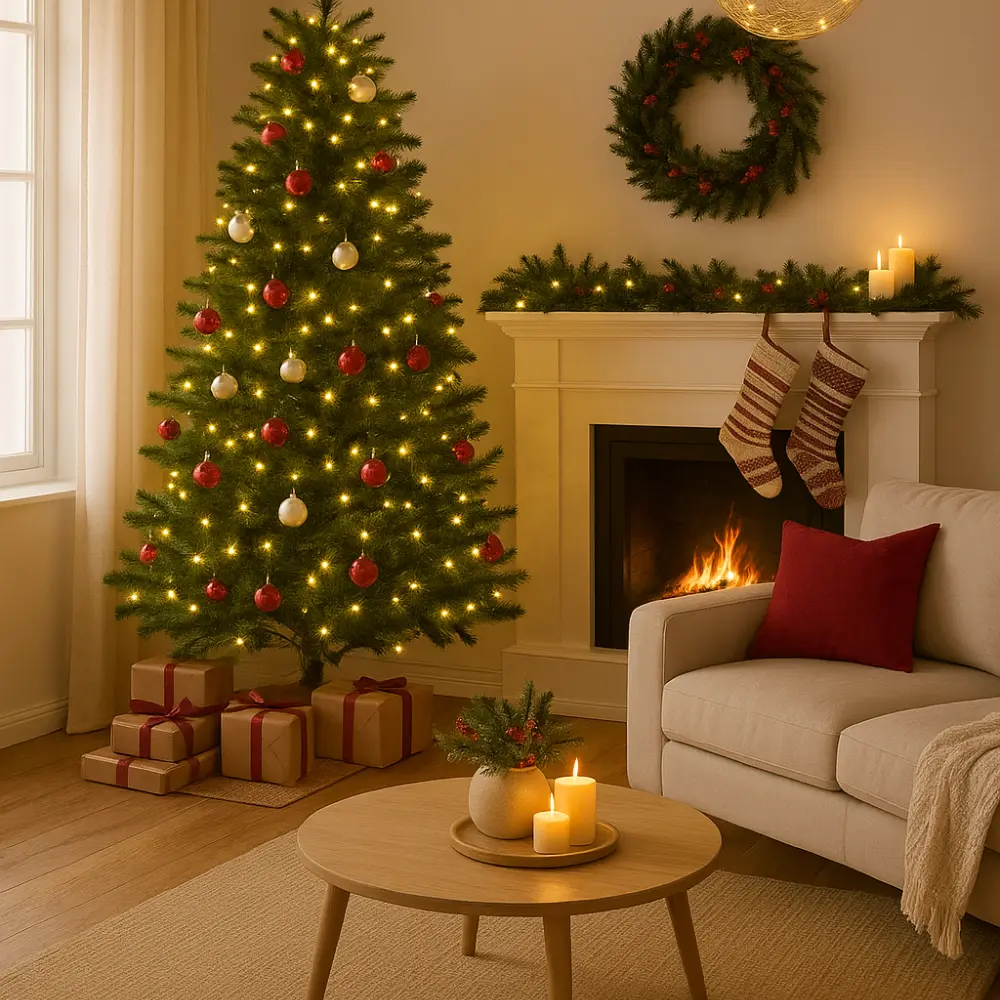
Simple but Stunning Christmas Decorations You’ll Fall in Love With
By Emily | October 08, 2025
Opening the first box of Christmas decorations always brings up the same question: how do I create a festive atmosphere that doesn’t look cheap but doesn’t require spending a small fortune either? For years I struggled with this dilemma – stores are filled with either plastic kitsch or designer pieces whose price tags made me quietly put them back on the shelf. Then I realized the secret isn’t in expensive decorations but in thoughtful curation and the strategic placement of a few well-chosen elements.
This article is for you if you want your home to feel festive, warm, and welcoming without looking at your bank statement in late December with regret. If you’re tired of Pinterest-perfect but impossible-to-achieve inspirations and crave real, workable ideas, you’re in the right place. It’s not about quantity – it’s about how to build a visually coherent, elegant decoration that reflects your home.
In the following pages, I’ll walk you through the fundamentals of Christmas decorating – from the front door through the living room to the windows. I’ll show you how to choose a color palette, how to combine natural and artificial elements, and how to light your spaces so your whole home glows without feeling cluttered. My goal isn’t for you to reproduce a catalog image, but to confidently shape the festive atmosphere according to your own taste.
1. Create an Entrance That Celebrates Before Opening the Door
 Save it
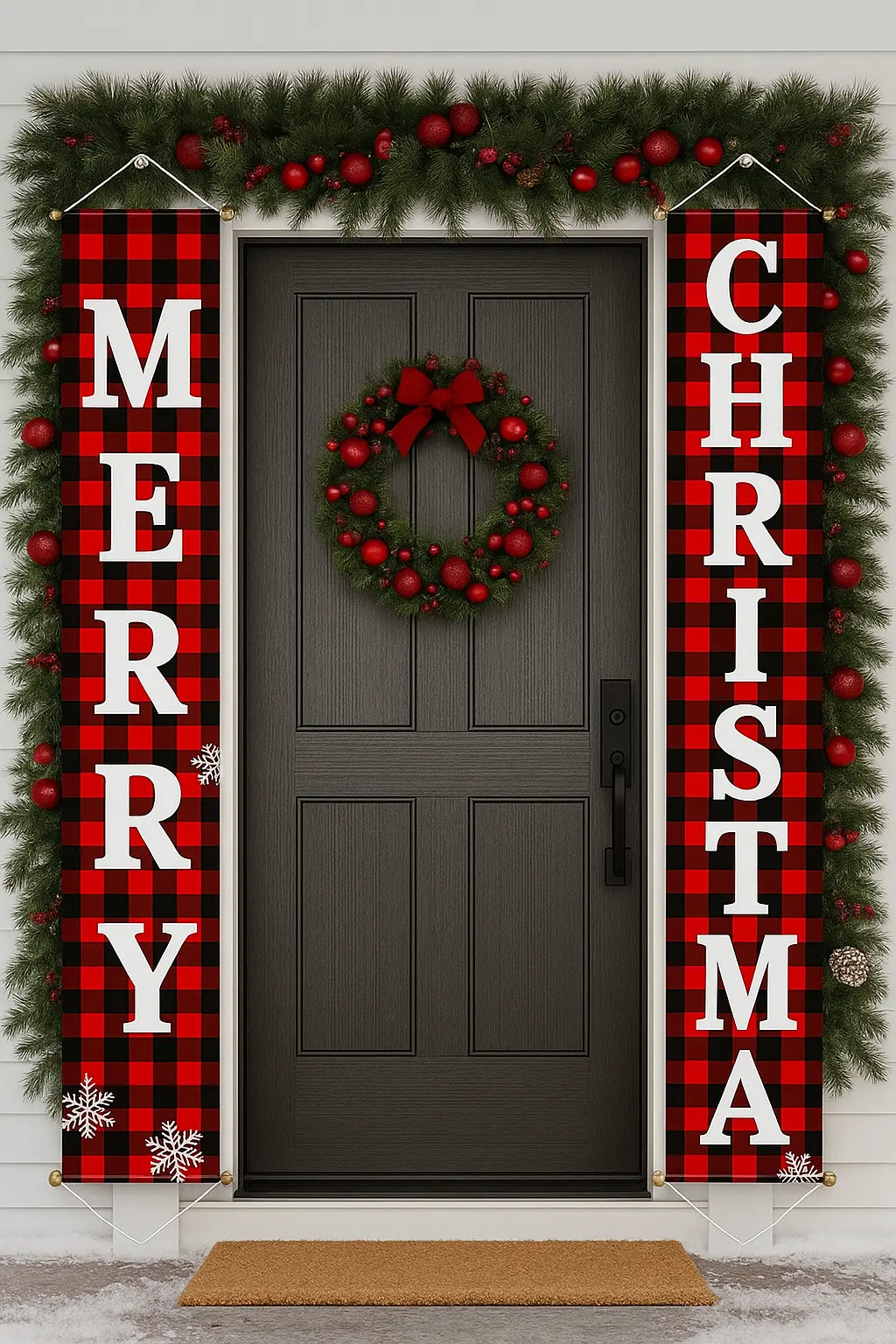
First impressions matter – and at Christmas, this is especially true. When your guests turn onto your street, stand before your door, or when you simply come home after a long day, your entrance is what immediately sets the tone. A thoughtful, elegant exterior decoration not only earns approving glances from neighbors but reminds you every single time you walk in that the celebration has already begun.
The key to porch decoration is utilizing vertical elements. A well-designed door banner that runs from nearly ceiling to floor creates immediate theatrical impact without occupying a single square centimeter of walking space. The red-black plaid pattern is a timeless classic – simultaneously rustic and elegant, working perfectly whether you have a modern city apartment or a countryside home. What really matters: the text should be readable from a distance, and the material needs to withstand weather because December doesn’t spare decorations.
A quality porch banner solves this problem – the thick material doesn’t crinkle in the wind, the colors don’t fade from rain, and installation is simple. The trick is not to think only about the door frame: if there’s room, place low planters with pine branches beside the banner, or a simple doormat that continues the color scheme. This way your entrance isn’t a single decoration but a thoughtful composition that gradually welcomes guests into the celebration.
2. Make Bows That Become the True Stars
 Save it
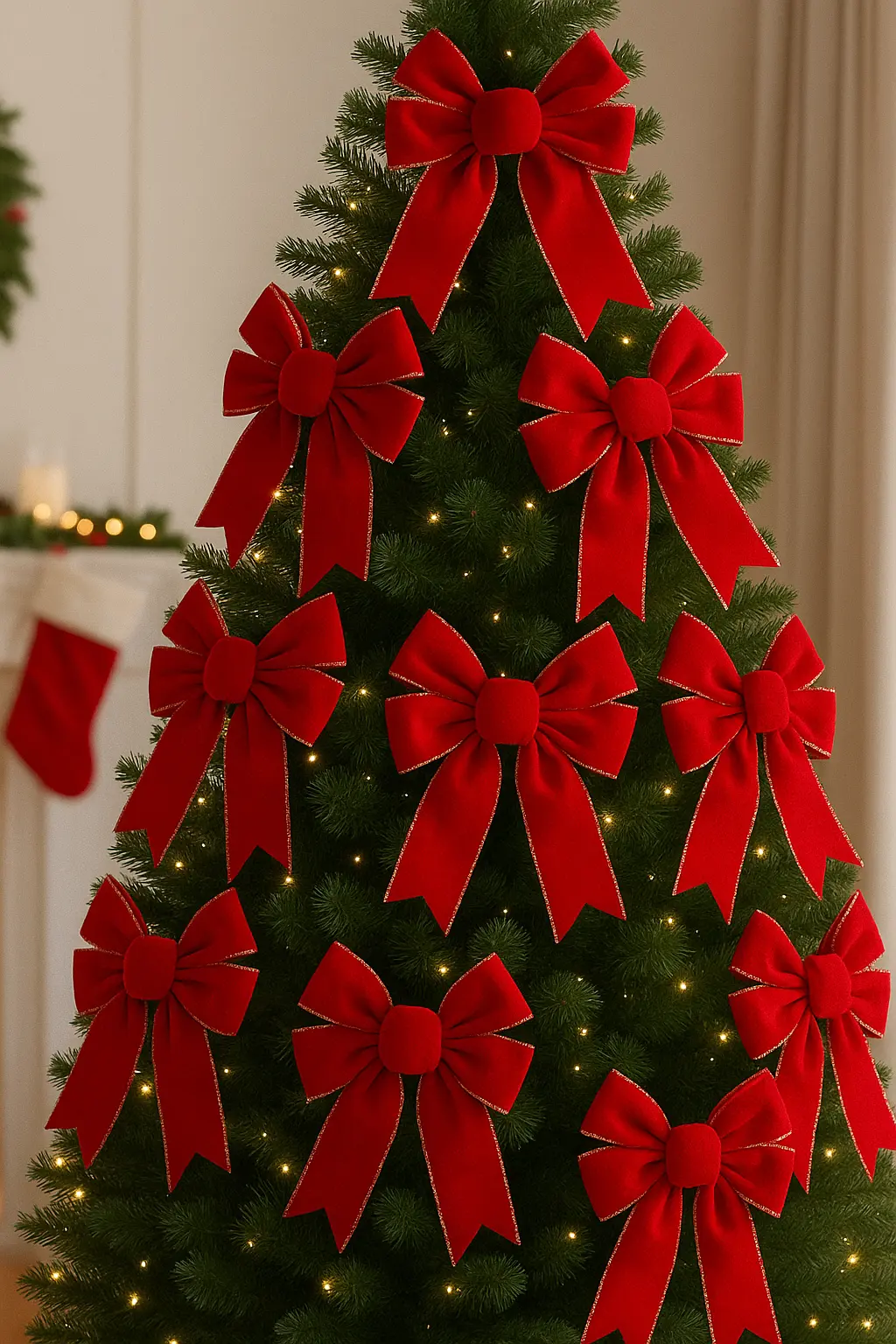
The bow is Christmas decoration’s oldest and most versatile element – yet one of the most frequently botched. Too small, too flat, too cheap-looking, or placed in the wrong spot. But a well-chosen, large-scale bow instantly transforms a simple wreath into a stunning statement piece, a bare tree into an elegant centerpiece, an empty door into something festive.
The secret lies in size and texture. Small bows made from smooth ribbon disappear before our eyes – they add no visual weight, don’t attract attention. In contrast, a large velvet bow with gold trim immediately becomes a focal point. Velvet’s matte glow photographs beautifully too, which isn’t negligible in the social media age.
When planning a bow for a wreath, choose one that comprises at least one-third of the wreath’s diameter. A 60-centimeter wreath needs a 20-25 centimeter bow – large enough to add character but not overwhelm other elements. Bows for tree toppers follow different rules: here, bigger is always better because it must be proportional to the tree’s height. On a two-meter tree, a 30-centimeter bow finally gets the attention it deserves.
For color selection, stay within your base palette: if your decoration is red-gold, the bow should be red-gold. If green-white is your base, the bow follows suit. The eclectic, everything-mixed approach rarely works – coherence gives a much more elegant result.
3. Create Garlands That Bring Spaces to Life
 Save it
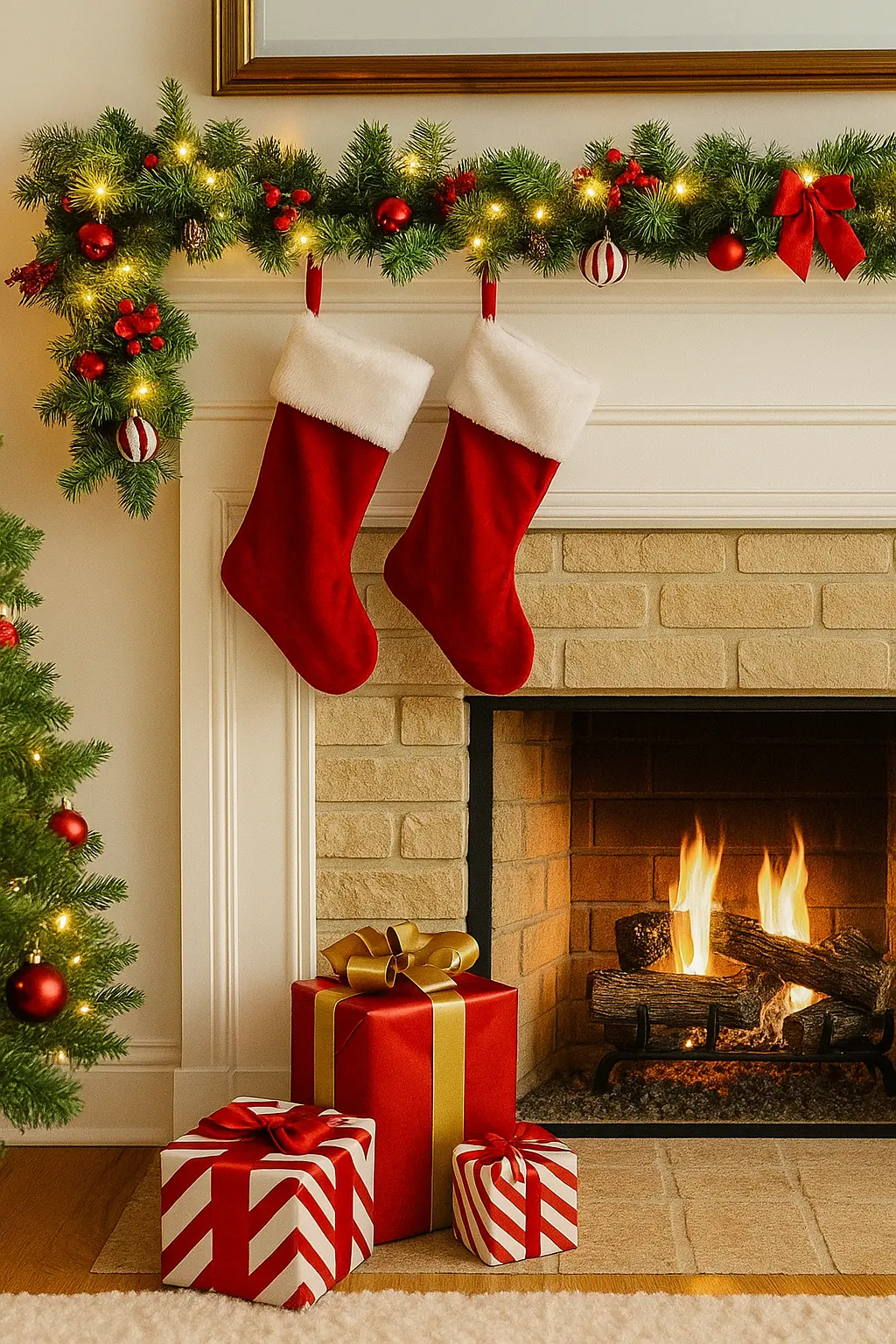
The garland is the decorative element that connects standalone decorations and creates a unified, encompassing atmosphere. A well-placed garland on the mantel, staircase railing, or around the door frame creates the feeling that the entire space was decorated thoughtfully and professionally – even if this is actually your only major investment.
In the world of garlands, you need to make two fundamental decisions: natural or artificial, and lit or unlit. Natural garlands – fresh pine, cedar, eucalyptus – smell wonderful and are organically beautiful, but within two weeks they start drying out and continuously shed needles. If you don’t want to vacuum around your fireplace every other day, a quality artificial garland is a lifesaving choice.
The truly impactful garlands are multi-layered: alongside the green base, they comprise pinecones, red berries, small ornament balls, and – what makes the biggest difference – integrated LED lights. A pre-assembled garland saves hours of crafting and guarantees an even, professional effect. The 50 warm white LEDs don’t just shine at night – they add subtle sparkle to the whole composition during daytime too.
Garland placement is at least as important as the garland itself. On a mantel, let it naturally wave with a gentle droop in the middle – don’t stretch it straight. On a staircase railing, wrap it loosely, not tightly. Around a door frame, secure it at the top corners and let it flow down the sides. A natural, gravity-following arrangement is always more elegant than painfully symmetrical.
4. Build Your Decor Foundation with Artificial Pine Branches
 Save it
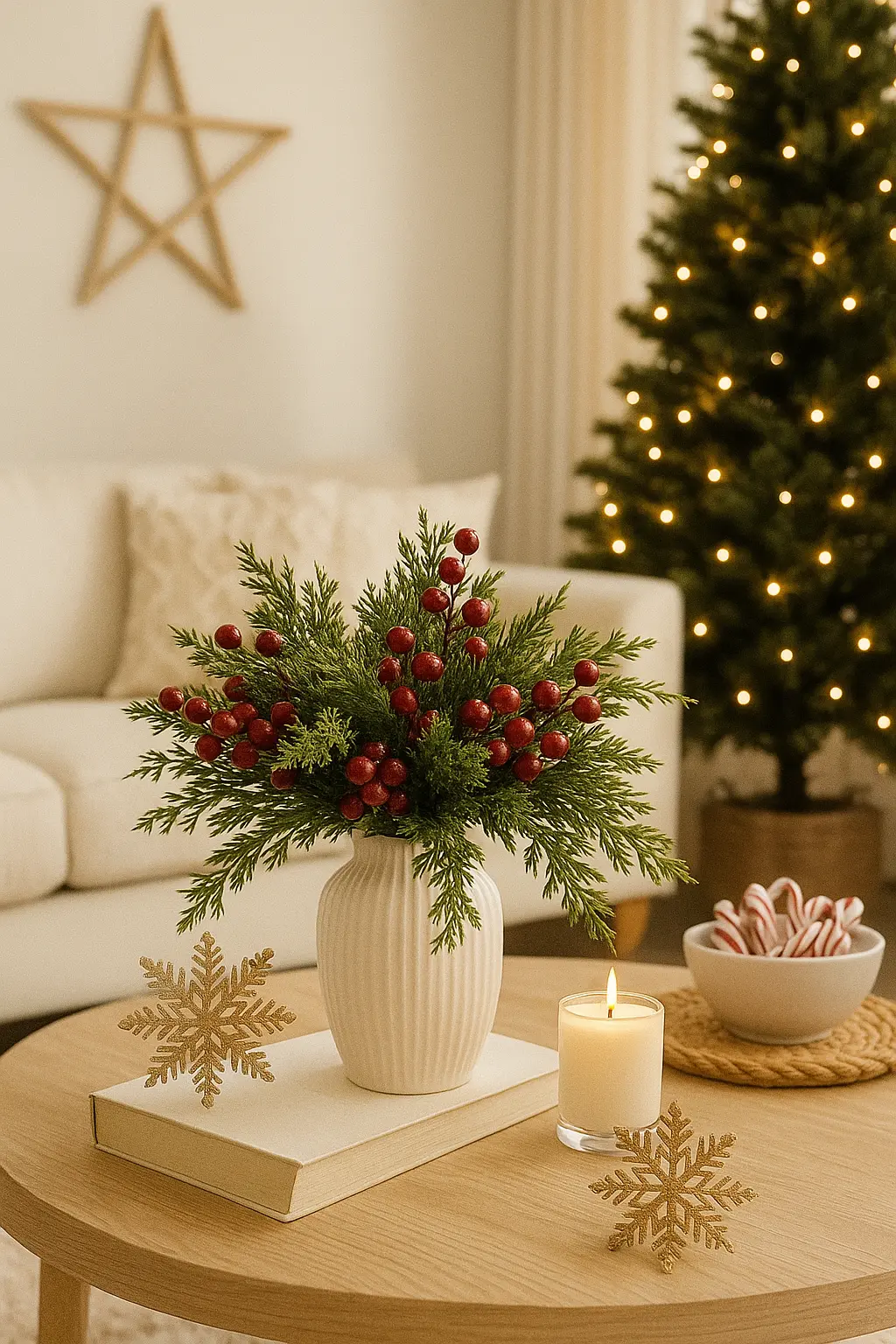
There’s a category in Christmas decoration we rarely discuss, yet it forms the basis of most stunning DIY projects: artificial pine branches. These are the elements from which you can build your own wreath, fill an empty vase, tuck into garlands for fuller effect, or simply scatter across the holiday table to create a natural backdrop for candles.
The biggest advantage of quality artificial pine branches is that they arrive pre-combined – red berries already adorn the green pine stems, so you don’t have to search separately for matching elements. The 45-piece pack is enough for a complete table decoration, two or three smaller vase compositions, and garland enhancement.
Be creative with placement: a bookshelf corner, top of a sideboard, bathroom shelf – pine branches work anywhere you want to sneak in some festive spirit. They create the best effect in unexpected places: set beside a wine bottle, placed next to the entryway key hook, or simply laid on the nightstand.
The real trick is never using these branches alone – always combine them with other elements. Five pine branches in a vase by themselves look sparse. But add some dried eucalyptus, a few berry-laden stems, and one or two pinecone branches, and suddenly you have a complex, layered composition that looks like a professional florist made it.
5. Create Light-Up Letters for a Modern Holiday Look
 Save it
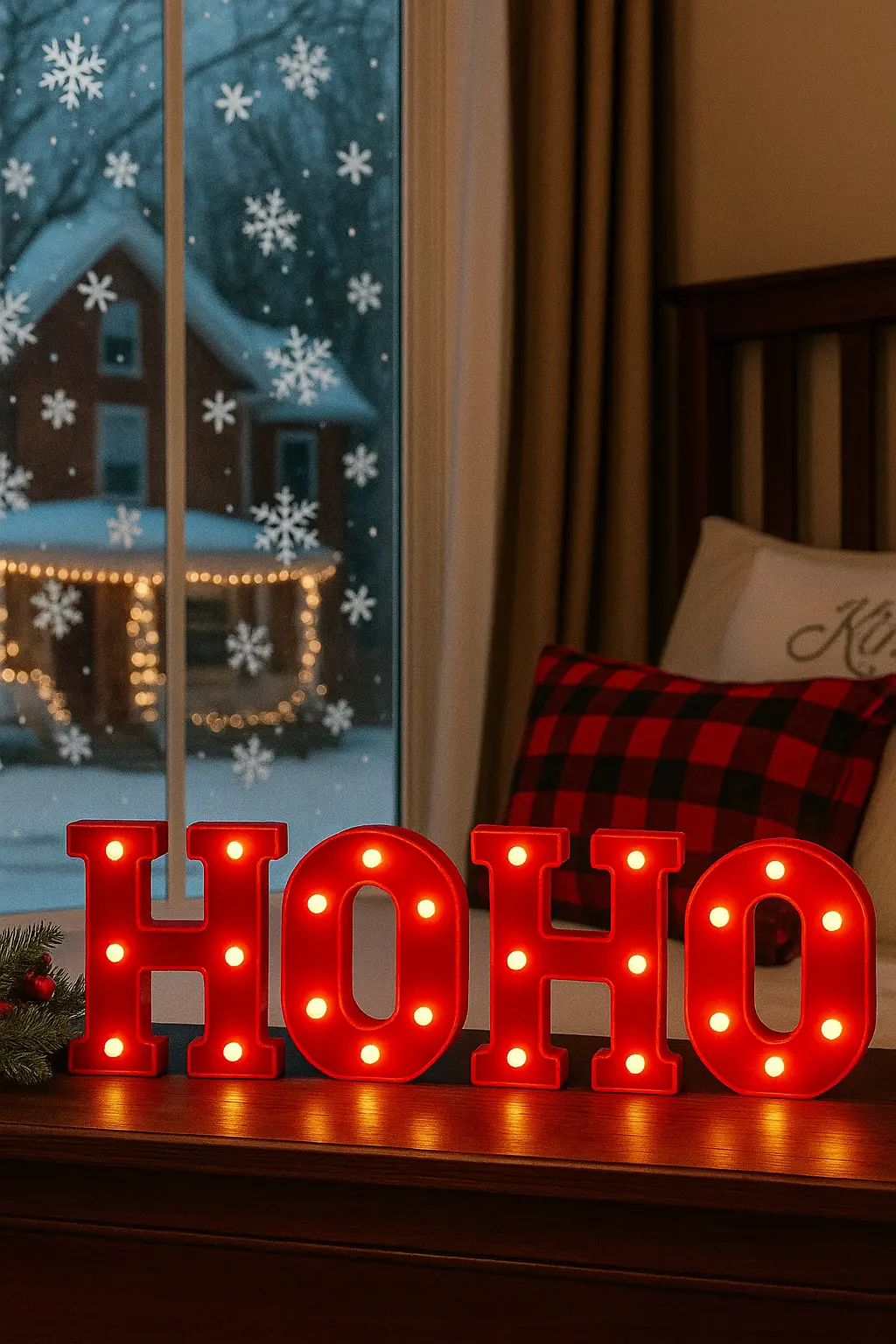
Traditional Christmas decorations – wreaths, garlands, ornaments – are eternal classics, but modern homes sometimes need something more playful, more characterful. Light-up letter decorations fill exactly this role: they merge festive atmosphere with contemporary design and allow for a touch of personal humor.
An LED light-up letter decoration is battery-powered, meaning you can place it anywhere – no outlet needed, no ugly cables. The warm white LED light creates pleasant ambiance in the evening, and during daytime the letters remain decorative on their own. Best spots: center of the mantel, bookshelf, entryway console table, or even the nightstand – so the first thing you see after the alarm is a reminder of the holiday.
Light-up letters should be surrounded by other decorations but not crowded. A small pine branch composition placed to the side, one or two ornament balls, perhaps a candle – but let the letters remain the main focus. The goal is for the eye to travel there immediately, not get lost in details.
The “HOHOHO” sign isn’t just a decoration – it’s a mood, a smile, a moment when your guests first see it and grin. This type of decoration works perfectly in spaces where classic Christmas decor would seem too serious or heavy: on a modern apartment shelf, a home office desk, an apartment windowsill.
6. Set Up a Light-Up Deer Family for Your Yard
 Save it
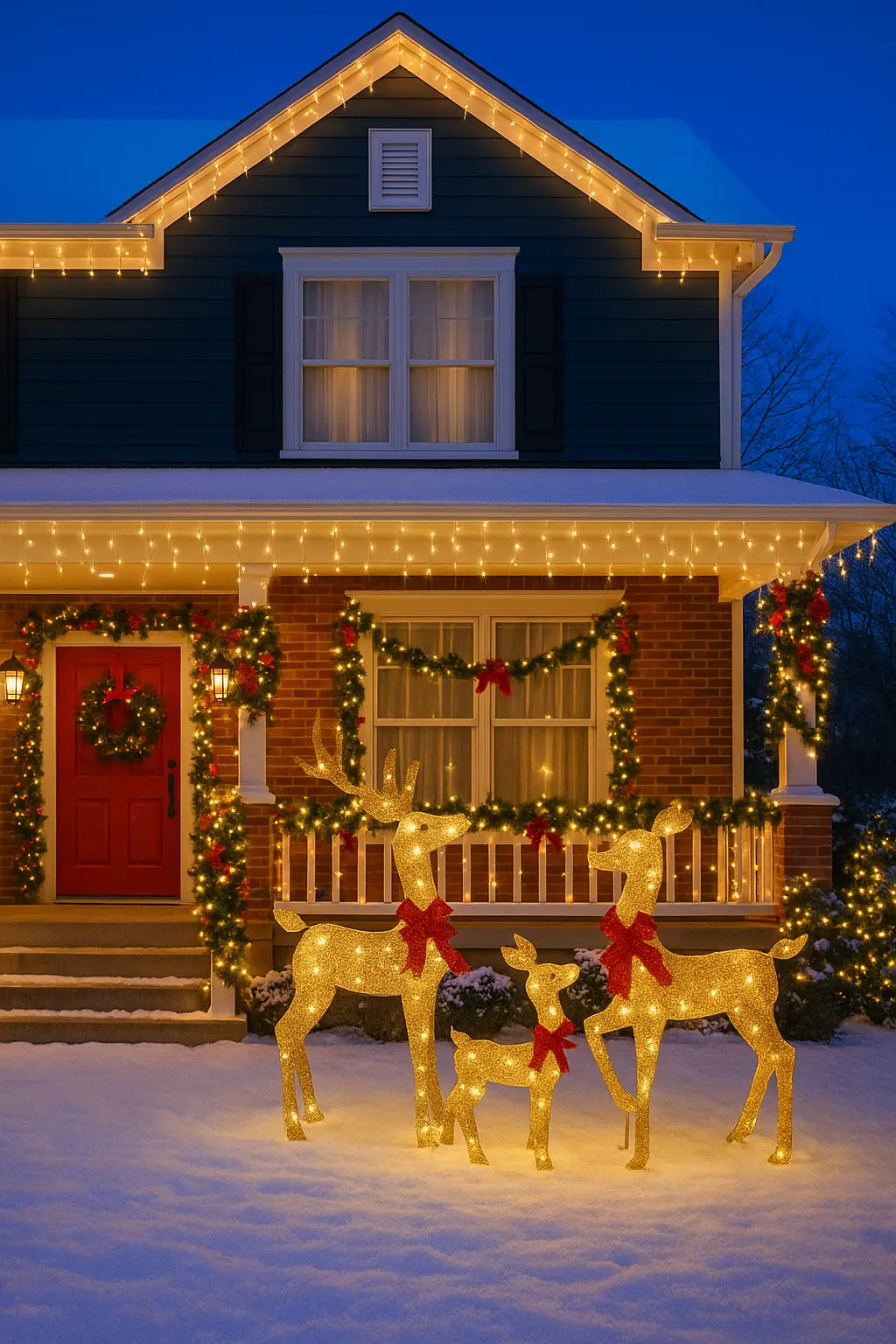
The pinnacle of outdoor decoration is when the entire house – not just the entrance – becomes festive. Light-up garden figures have belonged to Christmas classics for decades, but quality varies enormously. The wrong choice looks plastic, cheap, and topples in the second windstorm. The right choice creates a complete experience that every evening when you come home makes you feel like you’re living in a Christmas movie.
An LED light-up deer family set with warm gold light looks magical at night, especially if fresh snow covers the garden. The 145 LEDs are sufficient for the figures to be clearly visible in darkness but not so strong they create a blinking amusement park effect. The included stakes and zip ties help the figures stand stable even in stronger winds. This isn’t a single statue you place somewhere and you’re done – it’s a composition you can arrange in the yard, split on either side of the entrance, or grouped at a highlighted garden point.
When positioning, think about sightlines: where does a person look when pulling into the driveway? What’s visible from the street? The best position is usually on the house-facing side, where the background is formed by house windows or the entrance. The deer family is sufficient on its own – no need to crowd other figures around them.
7. Use Window Clings to Instantly Create Holiday Mood
 Save it
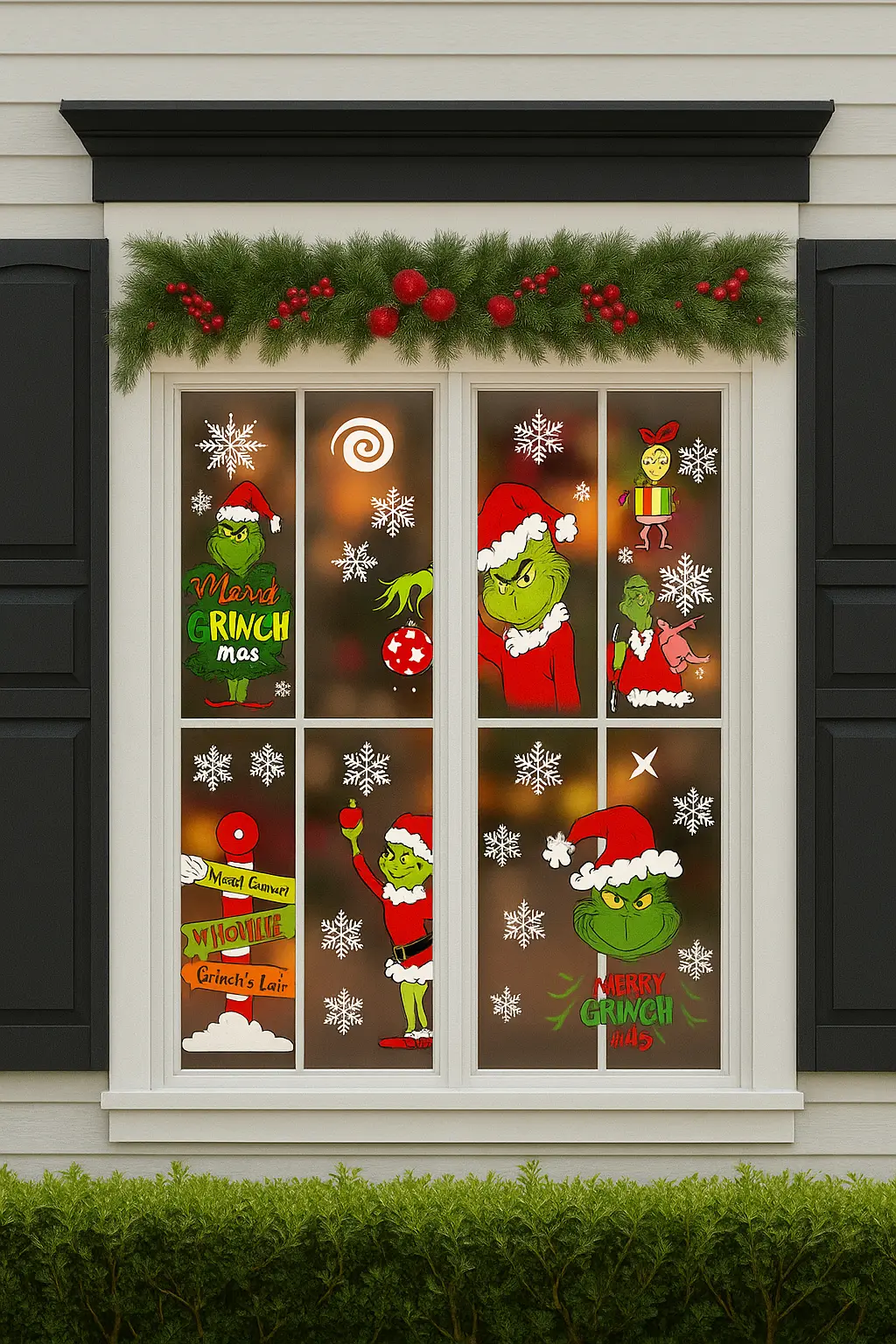
Windows are Christmas decoration’s most frequently neglected areas, yet they offer huge surface area – and work in both directions. From outside, window clings glowing in evening light radiate warm, welcoming atmosphere. From inside, every time you look out the window, the festive pattern reminds you this is a special season.
Window clings’ enormous advantage is that they apply in seconds and remove without a trace – no adhesive residue, no scratches, no drilling. This is especially important for renters or those who don’t want windows burdened with decoration year-round. Static cling stickers simply adhere to smooth glass surfaces and in January can be removed in moments.
A quality window cling set contains various sizes and patterns – snowflakes, stars, Christmas motifs – so you can vary and combine according to your taste. The ten-sheet set is enough for all windows in an average apartment or for one large window surface richly decorated.
When applying, be playful: you don’t need to arrange snowflakes symmetrically like on graph paper. A more natural, scattered arrangement creates a much more lifelike effect, as if snow were actually falling outside. Place larger elements in the lower corners of windows, smaller ones scattered upward – this visual hierarchy is much more elegant than even distribution.
8. Install LED Ladder Lights as an Unexpected Feature
 Save it
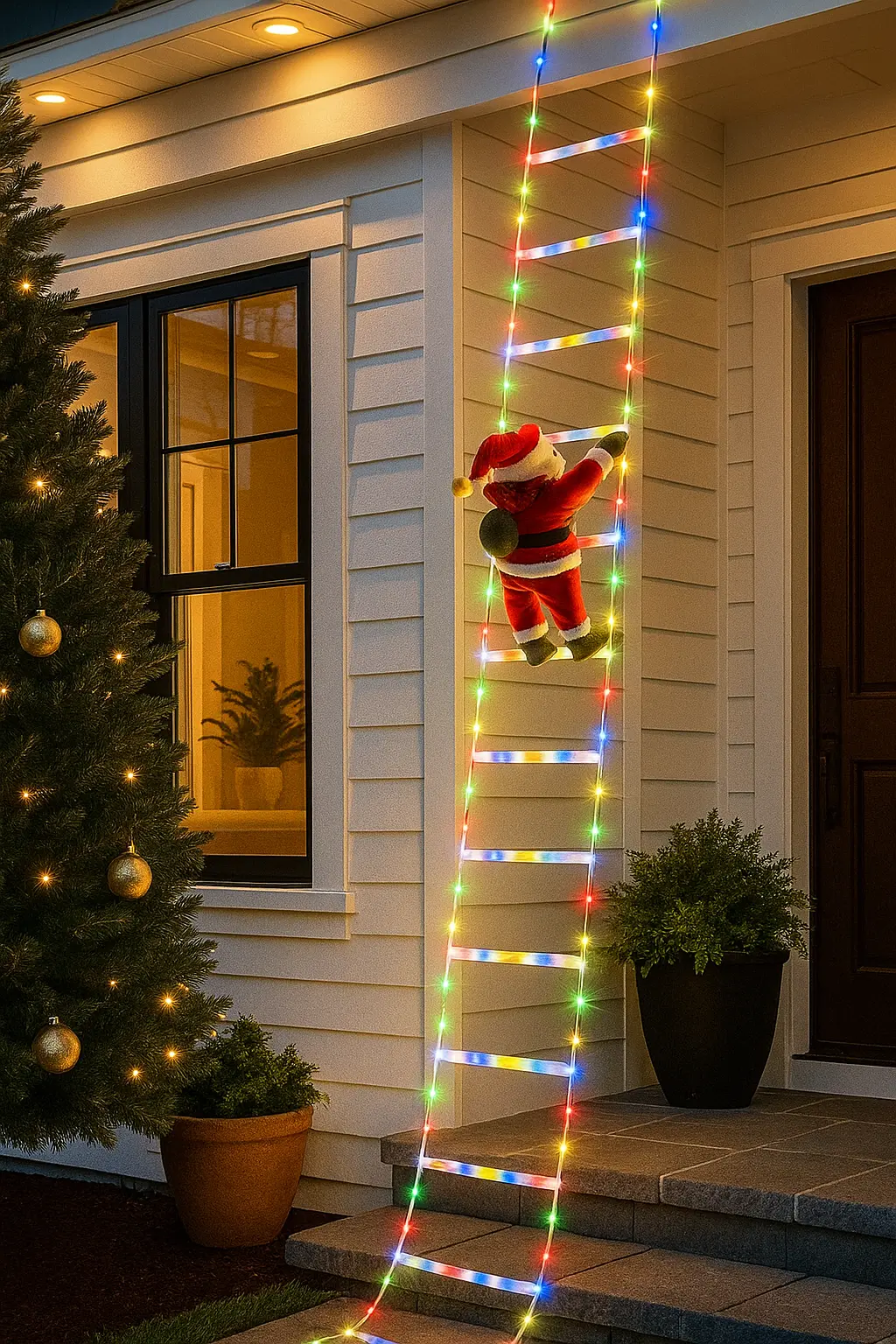
If there’s one decorative element guaranteed to generate conversation among your guests, it’s the LED Santa ladder. This decoration breaks expectations – it’s not traditional, you haven’t seen it at every third house, yet it immediately creates Christmas atmosphere. The ladder with a Santa figure climbing up among the light strings is simultaneously playful and elegant.
The best spot for this decoration is the wall – either inside on the living room or entryway wall, or outside beside the entrance. The three-meter height is sufficient to be characterful but not excessive. The real magic happens at night when the colored LEDs light up and the ladder becomes a continuously glowing focal point in the space.
An LED ladder decoration is suitable for both indoor and outdoor use, giving flexibility in placement. The multicolor version creates a more playful, child-friendly mood, while a warm white version gives a more elegant, adult appearance. The choice depends on your home and family’s dynamic.
The ladder works on its own, but looks even better when surrounded by some greenery – one or two pine branches placed at the ladder’s base, or a small garland section at the top. The goal isn’t to hide the ladder but to integrate it with your other decorations so you get a unified picture.
Principles of Successful Christmas Decoration
Gathering decorations is just the beginning – the end result depends on how you put everything together. Over the years I’ve learned that the most stunning Christmas homes aren’t those with the most decorations but those where every element is consciously placed and together they tell a story.
The first and most important rule: choose a color palette and stick to it. Classic red-green-gold always works, modern white-silver-blue is elegant and restrained, rustic natural-red-brown is warm and homey. Whichever you choose, be consistent – let every decoration draw from this palette, and the result will automatically be harmonious.
The second rule: work in layers. Start with large elements (garlands, light-up figures), continue with medium elements (bows, pine branch compositions), and finish with small details (window clings, light-up letters). This layered approach adds depth to your decoration and creates a much richer effect than staying on a single level.
The third: light changes everything. The best daytime decorations can become boring at night, and vice versa. Think about both times: during the day, textures and colors dominate; at night, lights and sparkle take over. LED elements help here because they’re decorative by day and glow by night.
Before diving into shopping and decorating, it’s worth knowing the most common pitfalls that can ruin even the most carefully planned Christmas decoration.
Common Mistakes to Avoid
1. Too much all at once
Maximalism rarely works in Christmas decoration. When you stuff every surface, every corner, every window with decorations, the eye can’t rest, and the overall effect isn’t elegant but chaotic. Good decoration breathes – there are empty surfaces, negative spaces where the eye can rest before wandering to the next focal point. If you try to show everything at once, ultimately nothing stands out.
2. Inconsistent color scheme
One of the most common mistakes is that decoration builds year after year, piece by piece, and ultimately creates a chaotic color jumble. Red bow on the door, blue snowflakes in the window, pink garland on the mantel, gold and silver gift boxes under the tree – all together this isn’t harmonious but distracting. Choose two or three colors and stick with them consistently across every element.
3. Neglected lighting
Christmas lighting isn’t just about wrapping string lights around the tree. Lights create mood – and bad lights create bad mood. Bluish-white LEDs give a cold, clinical feeling; blinking programs recall a disco rather than a cozy home. Warm white light is almost always the better choice for home environments, and static, non-blinking mode is more elegant.
4. Poor quality core pieces
I know it’s tempting to choose the cheapest garland or most affordable artificial tree, but the quality of core pieces determines the overall effect of your entire decoration. A cheap garland hangs flat, its leaves are shiny and plastic-looking, and it falls apart after a year. It’s worth investing in main elements and saving on accessories instead.
5. Ignoring weather
For outdoor decorations, this is critical. What looks beautiful in the living room can be destroyed outside after the first rain. Window clings, ladders, light-up figures – all have separate markings for where they can be used. Indoor-quality decoration fades, gets waterlogged, and looks ragged after a few weeks of outdoor use. Always check product information before buying.
Frequently Asked Questions
How do I choose a color palette for Christmas decoration?
Start from your home’s existing color scheme. If your living room is warm-toned – beige, brown, terracotta – the red-gold-natural palette fits naturally. If your scheme is cooler and modern – grey, white, blue – the silver-white-blue palette is an elegant choice. The third option is full contrast: if your home is neutral year-round, at Christmas you can bring in intense colors – this creates a surprising and festive effect. Most importantly: whichever you choose, stick with it throughout.
How do I avoid my decoration looking cheap?
Quality core pieces are key – one good garland and a few lush bows are worth more than ten cheap trinkets. Avoid shiny, obviously plastic surfaces; choose matte, textured materials instead (velvet, canvas, wood). For lights, warm white is always more elegant than cold white or colorful blinking. And most importantly: negative space is your friend – don’t try to fill every centimeter; let your chosen pieces shine.
When should I start Christmas decorating?
The traditional answer: the first Sunday of Advent, but the truth is there’s no wrong time if it works for you. Many people start late November after Thanksgiving (even if less relevant in European context), others in the first week of December. What matters: don’t leave it to the last minute, because decoration put up in a rush is never as thoughtful as what you build with time. And if you love the festive atmosphere, why not enjoy it a little longer?
How do I store decorations so they’re usable next year?
Proper storage extends your decorations’ lifespan by years. Store garlands loosely coiled in large boxes – don’t compress them, as the leaves will deform. Keep bows in paper bags, flat, so they don’t crinkle. Fragile ornaments (glass balls, light-up letters) go in their original packaging if kept, or protected with bubble wrap. Wind string lights around cardboard so they don’t tangle. A little attention in January saves months of frustration next December.
Final Thoughts
Christmas decoration isn’t a competition – it’s not about who has the most ornaments, the most expensive figures, the brightest string lights. The goal is for your home to reflect the festive spirit in a way that matters to you and your family. This could be minimalist elegance with a few well-chosen elements, or abundant, warm, traditional decoration – there’s no right or wrong approach, only yours.
What I hope you’ll take from this article: the importance of conscious planning. Choose a color palette and stick to it. Work in layers, from large to small. Think about light both day and night. Don’t fear negative space – elegance lies in restraint too. And most of all: enjoy the process, don’t stress about perfection.
Putting up decorations is part of the celebration, not a burden before it. Turn on some Christmas music, make some hot cocoa, and let decorating itself be an experience. The result – a warm, welcoming, personal home – is worth every moment you invest.
This post contains affiliate links. I may earn a small commission at no extra cost to you.
Get cozy inspiration delivered to your inbox.
✓ 14-page beautifully designed ebook
✓ Cozy decorating ideas
✓ Practical room-by-room inspiration
You’re in! 🎉
Thanks for joining the NestFlowHome community!
Your free ebook is already on its way to your inbox. If you don’t see it within a few minutes, please check your Promotions or Spam folder.
Join the NestFlowHome community for weekly decorating inspiration.

Timeless home decor ideas and slow living inspiration for a calm, beautiful life.