
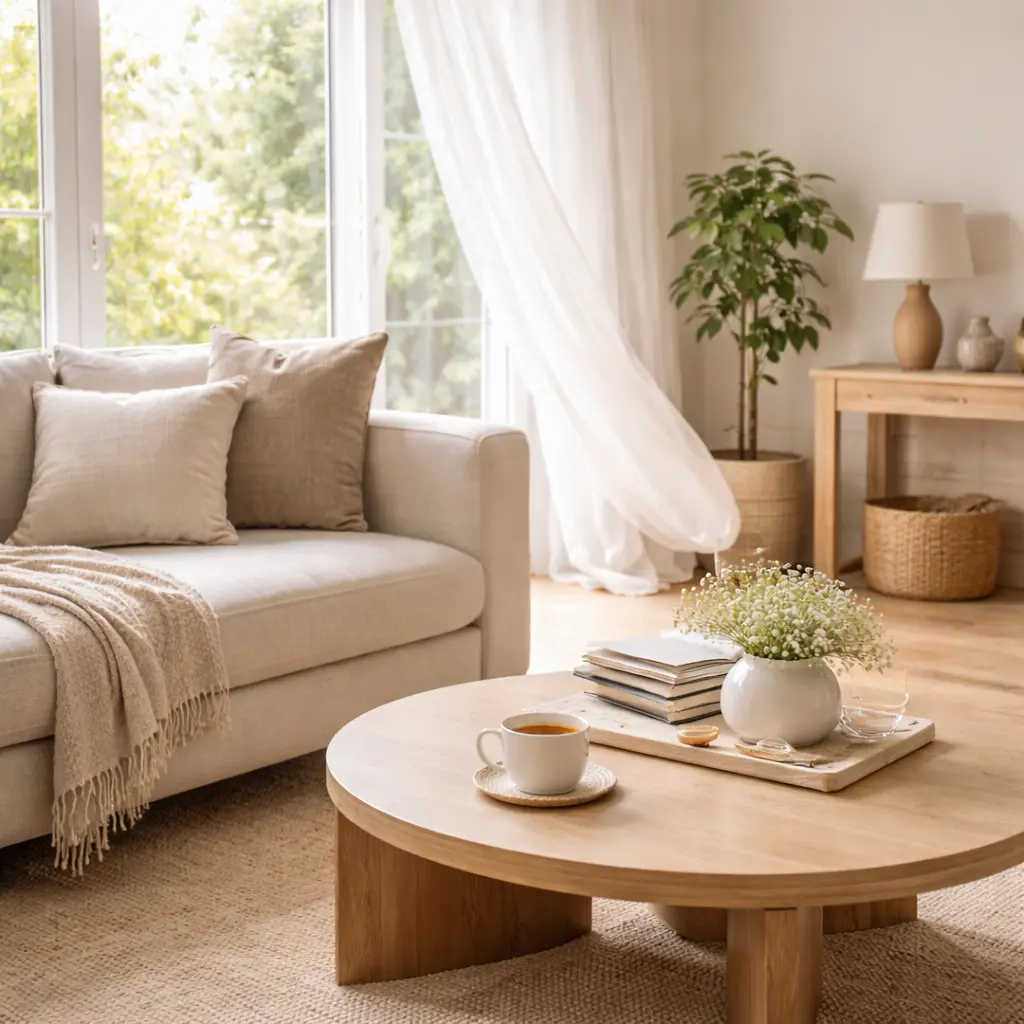
10 Simple Ways to Create a Slow Living Home
By Emily | April 07, 2026
Most of us walk through our front door still carrying the mental weight of the day—emails half-answered, conversations unfinished, to-do lists multiplying in our heads. And instead of feeling relief, we’re greeted by visual chaos: the pile of shoes, the stack of mail, the general sense that our home is just another space demanding something from us. I lived this way for years, treating my apartment as a pit stop between obligations rather than a place to actually live.
Slow living isn’t about moving to the countryside or rejecting modern life. It’s a deliberate choice to design your environment in a way that supports presence, calm, and intentional living. The good news: you don’t need to start from scratch. Small, thoughtful changes compound over time into a space that genuinely helps you decompress.
This article is for you if your home feels more stressful than restful, you want to reduce visual noise but don’t know where to start, you’re looking for concrete, actionable ideas—not just aesthetics and you’re interested in sustainable, mindful living
Over the following sections, I’ll walk you through the ten changes that transformed my own space. I’ll share the mistakes I made, the products that actually work, and the mindset shift that helped me understand: your home isn’t just a backdrop. It’s an active participant in how you feel.
1. The Entryway as Transition — Creating an Intentional Threshold
 Save it
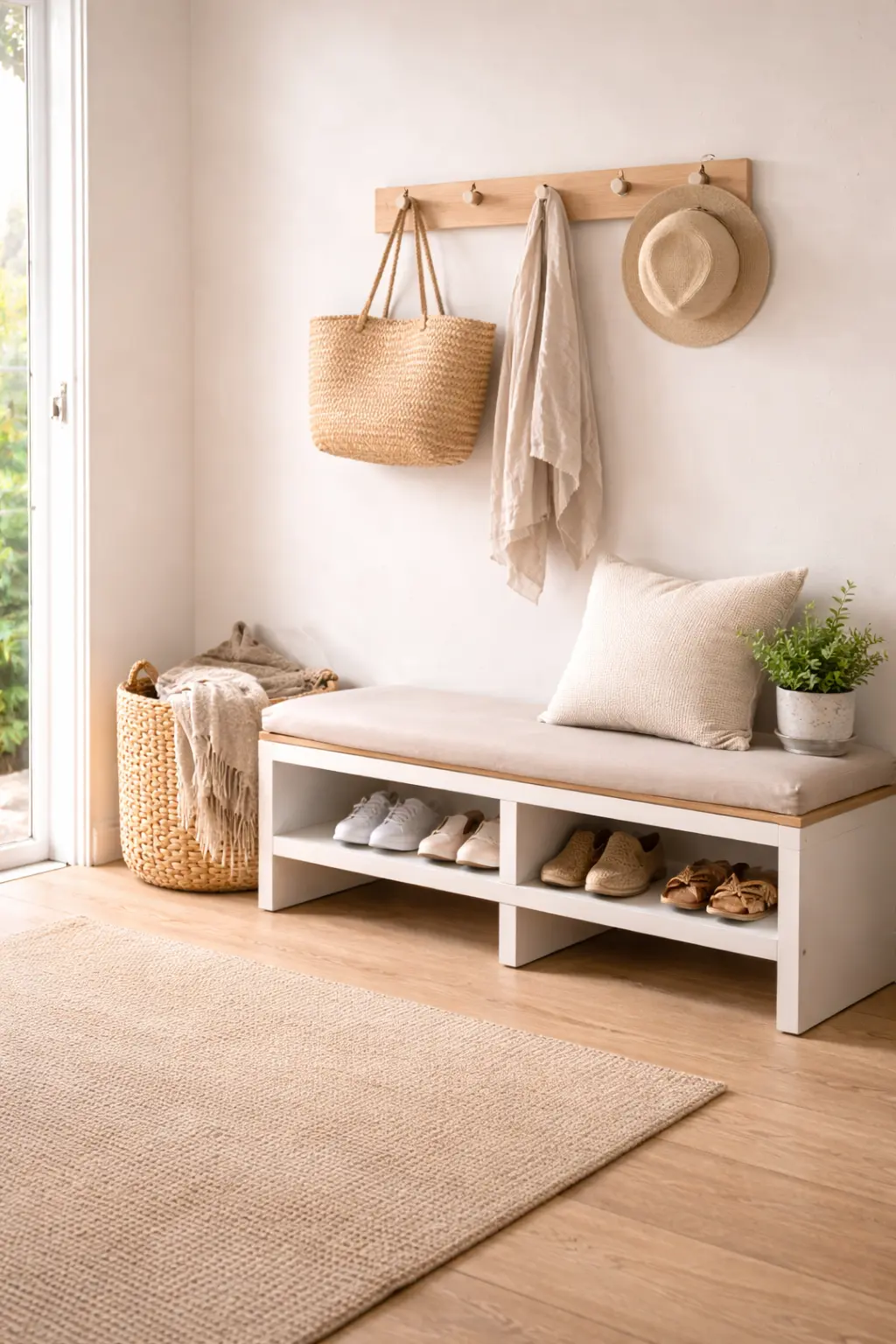
The first few square feet of your home determine the emotional tone of your arrival. In most apartments, the entryway is a dumping ground—keys, bags, coats, shoes in chaotic piles—and that’s the first thing you see when you come home. Your brain gives up on relaxation before you’ve even taken off your jacket. I approached this problem by treating the entryway as a transition zone. Physically and mentally, this is where I put down the day. First, I removed everything that didn’t serve a specific purpose. The coats I hadn’t worn in three years, the “might be useful someday” bags, the kids’ outgrown shoes—all went.
What remained a simple, low bench where I can sit to put on or take off shoes. This isn’t luxury; it’s ritual. When I come home and sit down, that moment signals to my body that the day is over. Next to it, a small tray for keys and wallet—nothing else goes in. On the walls, I avoid clutter. A single mirror or one calming image is enough. Natural materials—wood, rattan, linen—add immediate warmth. If space allows, add a small plant. Green alone reduces stress.
Lighting matters tremendously: instead of cold, white overhead light, choose warm, dimmable options. Soft light in the evening is far more welcoming than clinical brightness. The goal isn’t a catalog-perfect entryway. The goal is that when you step inside, your body automatically relaxes. That’s the first step toward a slow living home.
If you want to make your living room truly homey, my 9 Entryway Ideas That Make Your Home Feel More Welcoming articles can help you with that.
2. Using Natural Light Intentionally
 Save it
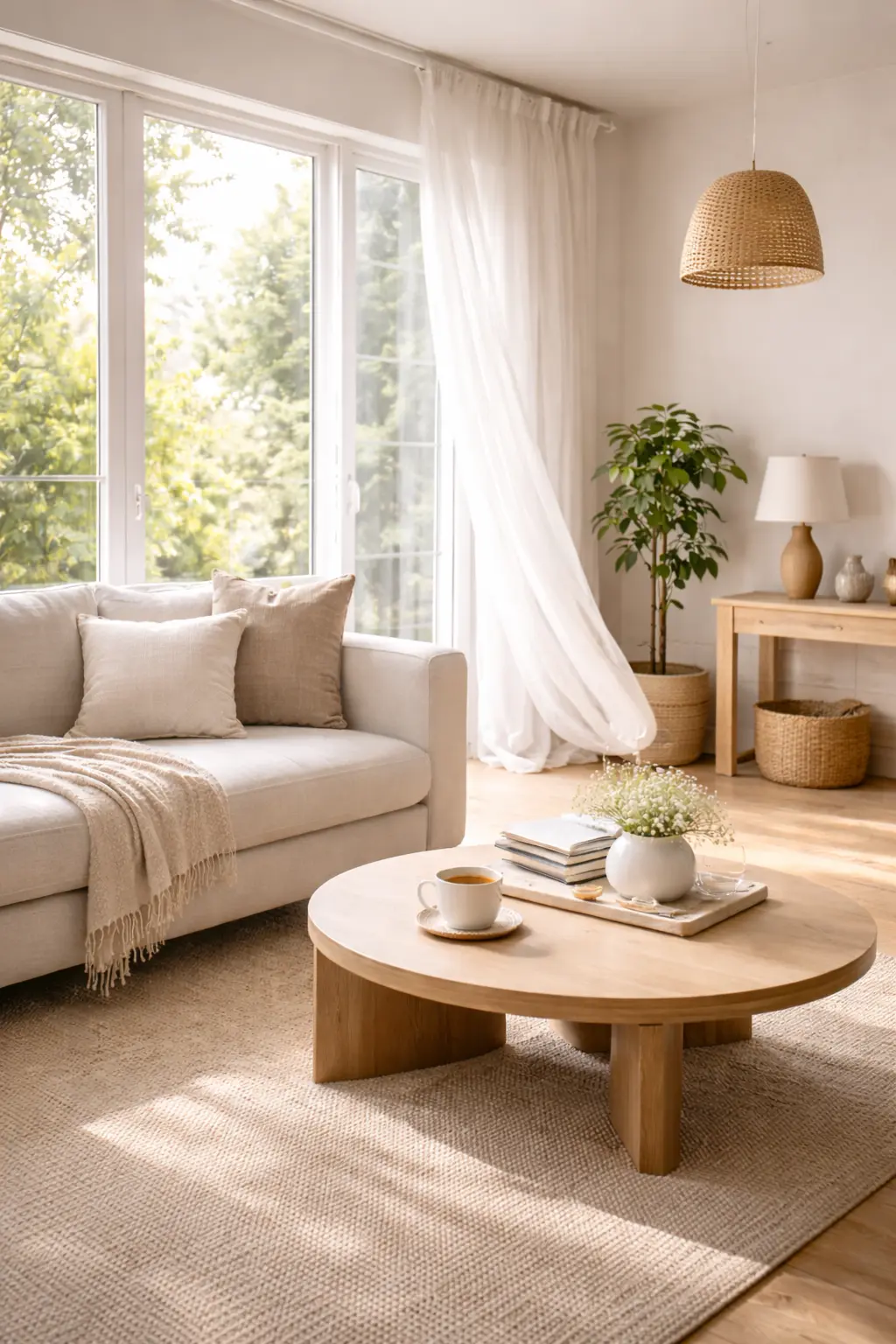
After hours in artificial light, nothing resets our internal clock like sunlight. Yet many of us arrange our homes so that the largest windows are blocked by furniture, curtains, or shelving.
Start by walking through your space and observing how light moves throughout the day. Where’s the best natural light in the morning? Where does afternoon sun come in? This information should fundamentally influence where you place your reading corner, desk, or breakfast nook. For me, the biggest change came from swapping heavy blackout curtains for lightweight linen. Light filters through while privacy remains intact. In winter, when daylight is scarce, those extra hours of natural illumination make a noticeable difference in my mood.
Strategic mirror placement helps too. A large mirror facing a window doubles the incoming light and makes the space feel more expansive. It doesn’t need to be expensive—a simple black metal option works perfectly and fits the slow living aesthetic.
Rethink artificial lighting as well. Beyond the main ceiling fixture, have point sources: a reading lamp, a floor lamp, candles. Layered lighting allows you to gradually dim as the day progresses, supporting your natural circadian rhythm.
3. Managing Sound and Noise
 Save it
Beyond visual clutter, there’s an invisible stressor we rarely address consciously: noise. Traffic, neighbors, humming appliances, a dripping faucet—all of these work on our nervous system even when we no longer notice them.
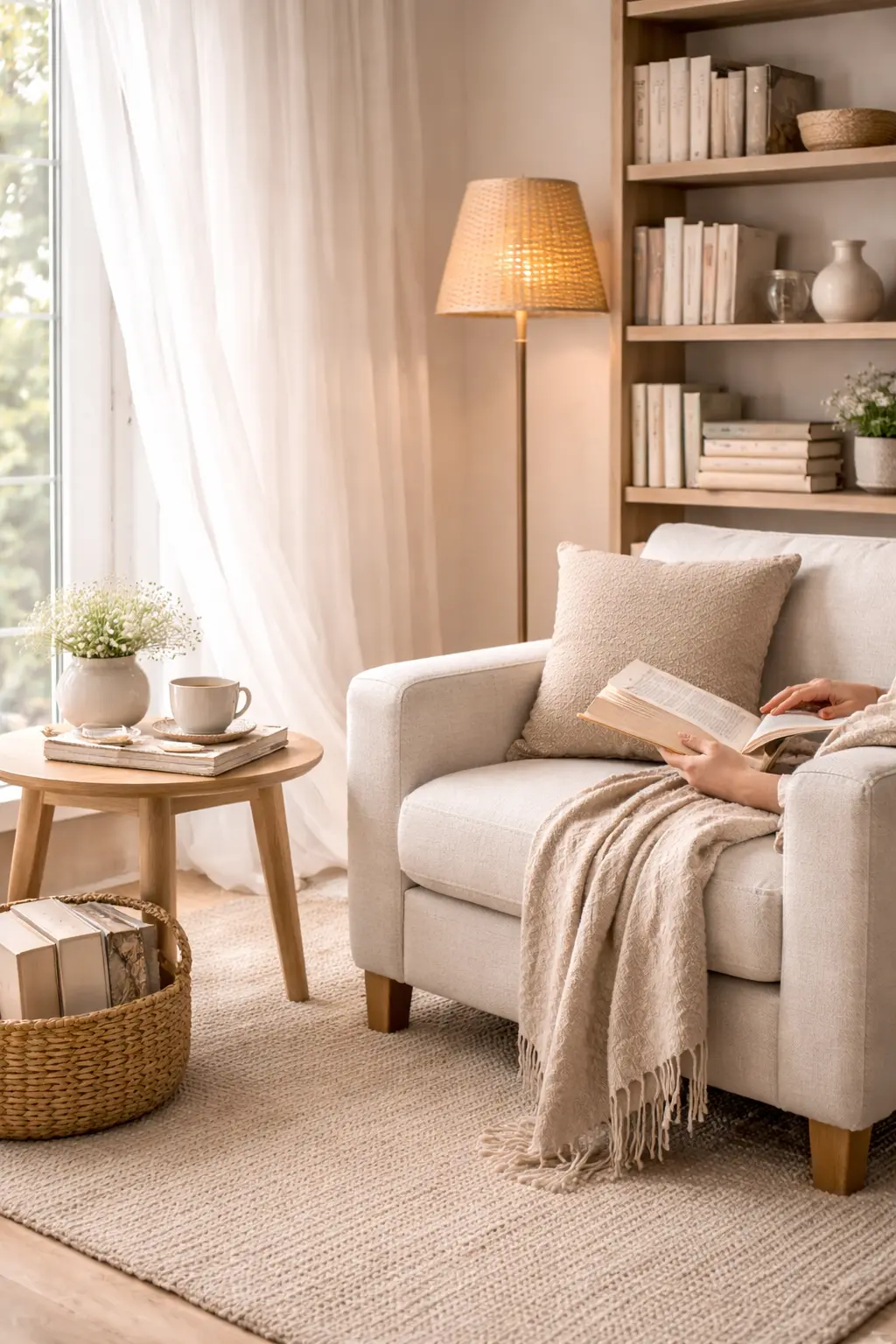
The first step is observation. For a week, pay attention to the sounds surrounding you at home. Which ones actually bother you? Which can you reduce or eliminate? Fixable things—dripping taps, squeaky doors—fix them. These small irritations accumulate. Textiles are natural sound absorbers. If your living room echoes, you don’t necessarily need expensive acoustic solutions. A thick rug, soft pillows, heavier curtains all absorb sound. Bookshelves help too—books are excellent insulators.
What worked for me was creating an intentional “soundscape.” Instead of using the TV or radio as background noise, I consciously choose. Sometimes silence, sometimes nature sounds (rain, birdsong), sometimes soft instrumental music. The point is that this becomes a decision, not a default reaction.
If you struggle with external noise, consider a quality white noise machine. I use one in the bedroom, and the difference in my sleep quality is striking. It’s not about adding more noise to your life—it’s about replacing unpleasant, irregular sounds with a constant, soothing background.
4. The Invisible Influence of Scent
 Save it
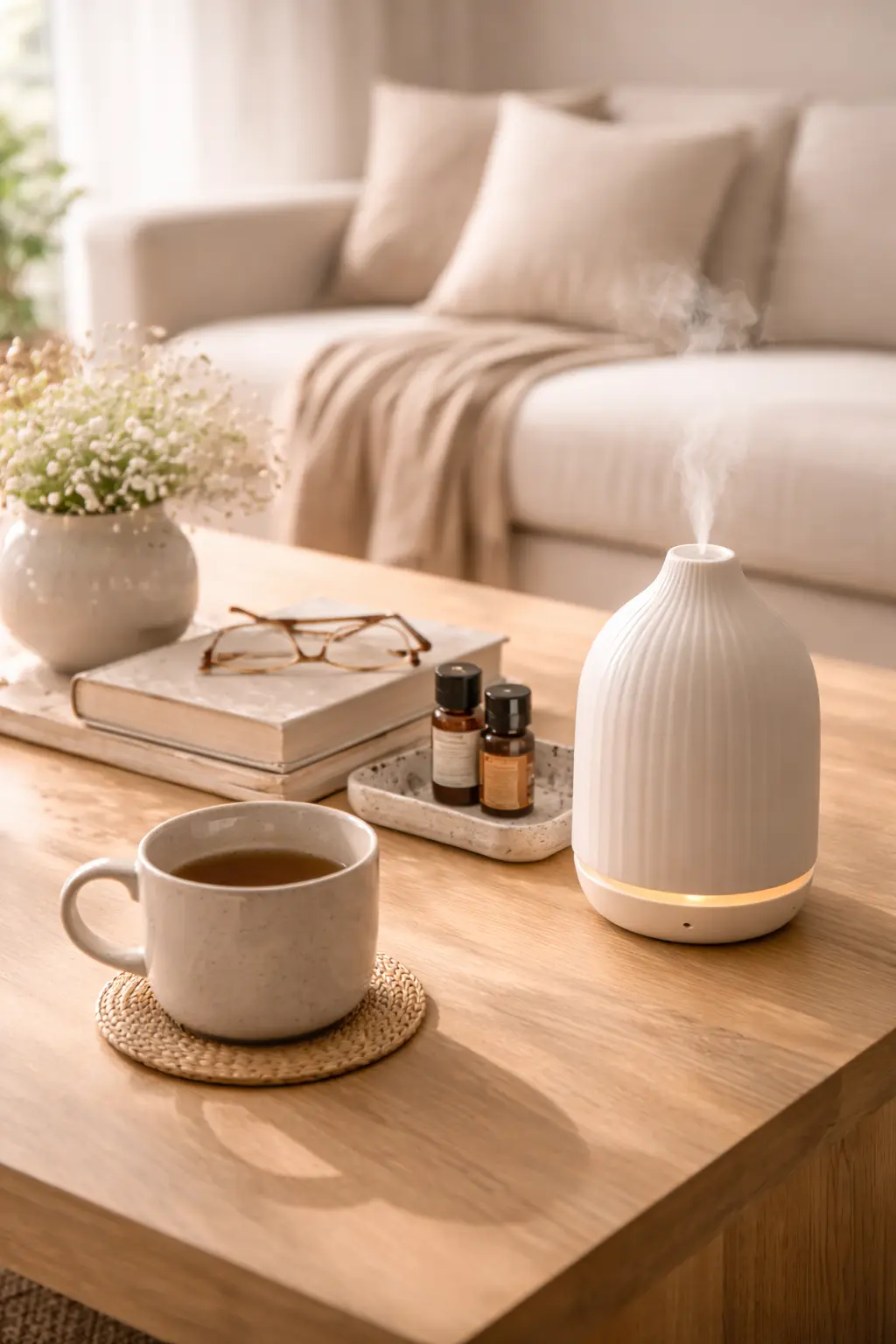
Scents speak directly to our emotional memory. A smell can instantly transport you to your grandmother’s kitchen or unpleasantly remind you of a bad experience. Yet home scents are often accidental—garbage mixing with laundry detergent and yesterday’s dinner. The slow living approach here is also about intentionality. First, remove the sources of unpleasant smells rather than masking them. Ventilate regularly, take out trash more often, clean the drains. Then choose a base “scent palette” for your home. Natural-based options—essential oils, dried botanicals, quality candles—are far more nuanced and less aggressive than synthetic air fresheners. My favorites are lavender, eucalyptus, and cedar, but this is very personal.
A simple diffuser lets you easily control scent intensity. Start with less than you think you need—the goal is subtle presence, not overwhelming fragrance when someone walks in. Add fresh flowers or aromatic plants. Basil, rosemary, or lavender not only look beautiful but provide natural scent. Lavender in the bedroom can help relaxation; citrus in the kitchen refreshes.
Layering scents works too: from cleaning products to fabric softener to candles, a harmonious scent world supports the feeling of calm.
5. Giving Furniture Room to Breathe
 Save it
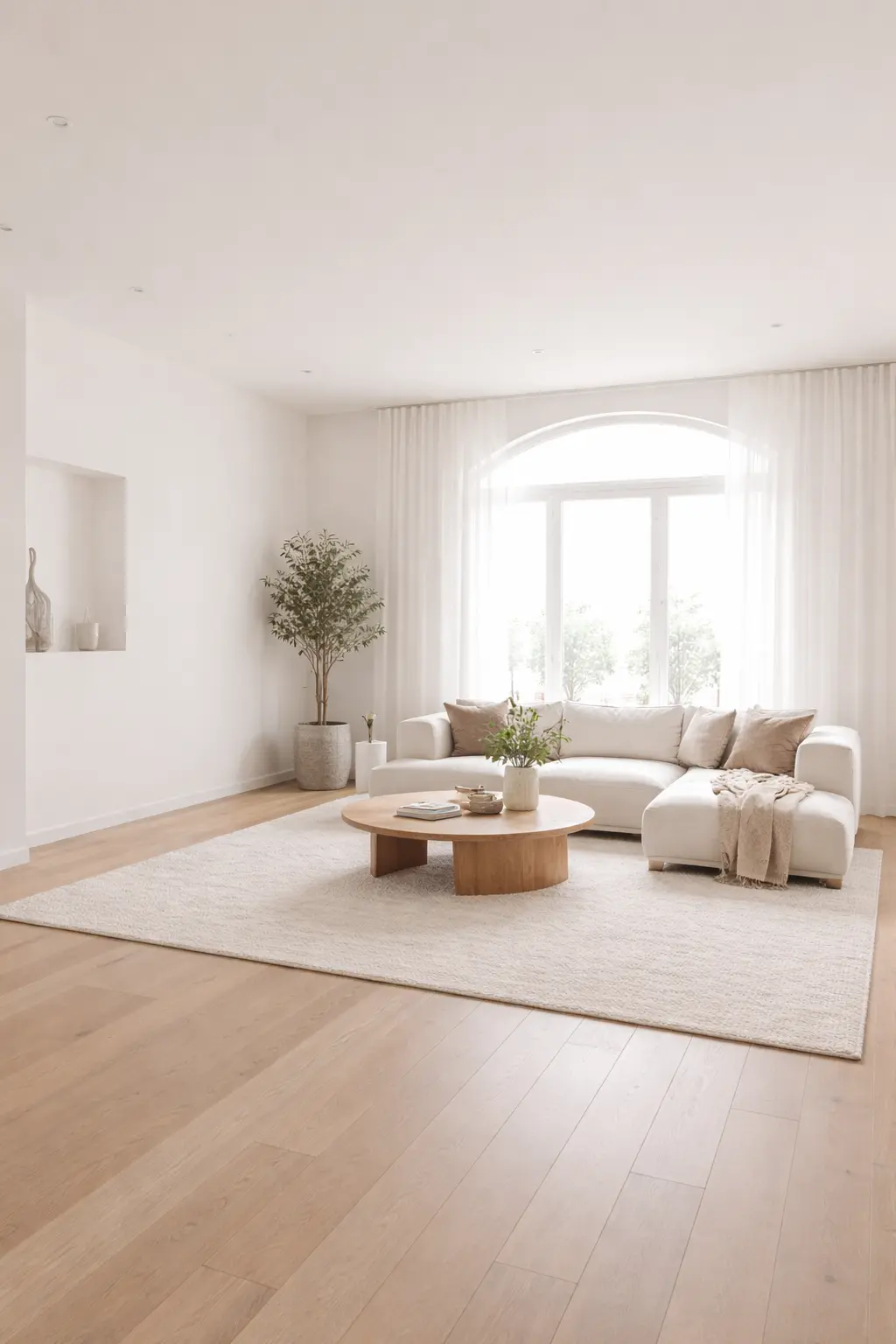
There’s a Japanese aesthetic concept, “ma,” meaning empty space, pause, the in-between. Western interior design often forgets that the space between furniture has a role—not every square foot needs filling. Look around your living room. Are the furniture pieces “talking” to each other, or scattered randomly? Are circulation paths clear, or do you constantly navigate around things? Crowding creates physical obstacles for the body and mental burden for the mind.
The slow living design principle: fewer pieces of furniture, more space between them. This doesn’t mean living in a minimalist cell. Rather, every piece should be justified, have enough room around it, and the eye should be able to rest on empty surfaces.
I started by pulling all furniture away from the walls. I know it sounds counterintuitive, but those few inches between sofa and wall actually make the space feel larger. Corners aren’t crammed, and cleaning becomes easier too. Multifunctional furniture helps if space is limited. An ottoman with storage provides seating while hiding blankets. But be careful: the goal isn’t to be able to accumulate more stuff, but for existing items to have dignified homes.
Think of furniture arrangement as a conversation. Seating should face each other, not just the TV. Natural pathways should stay clear. And allow for “nothing” too—both eye and mind will be grateful.
6. The Bedroom as Sanctuary
 Save it
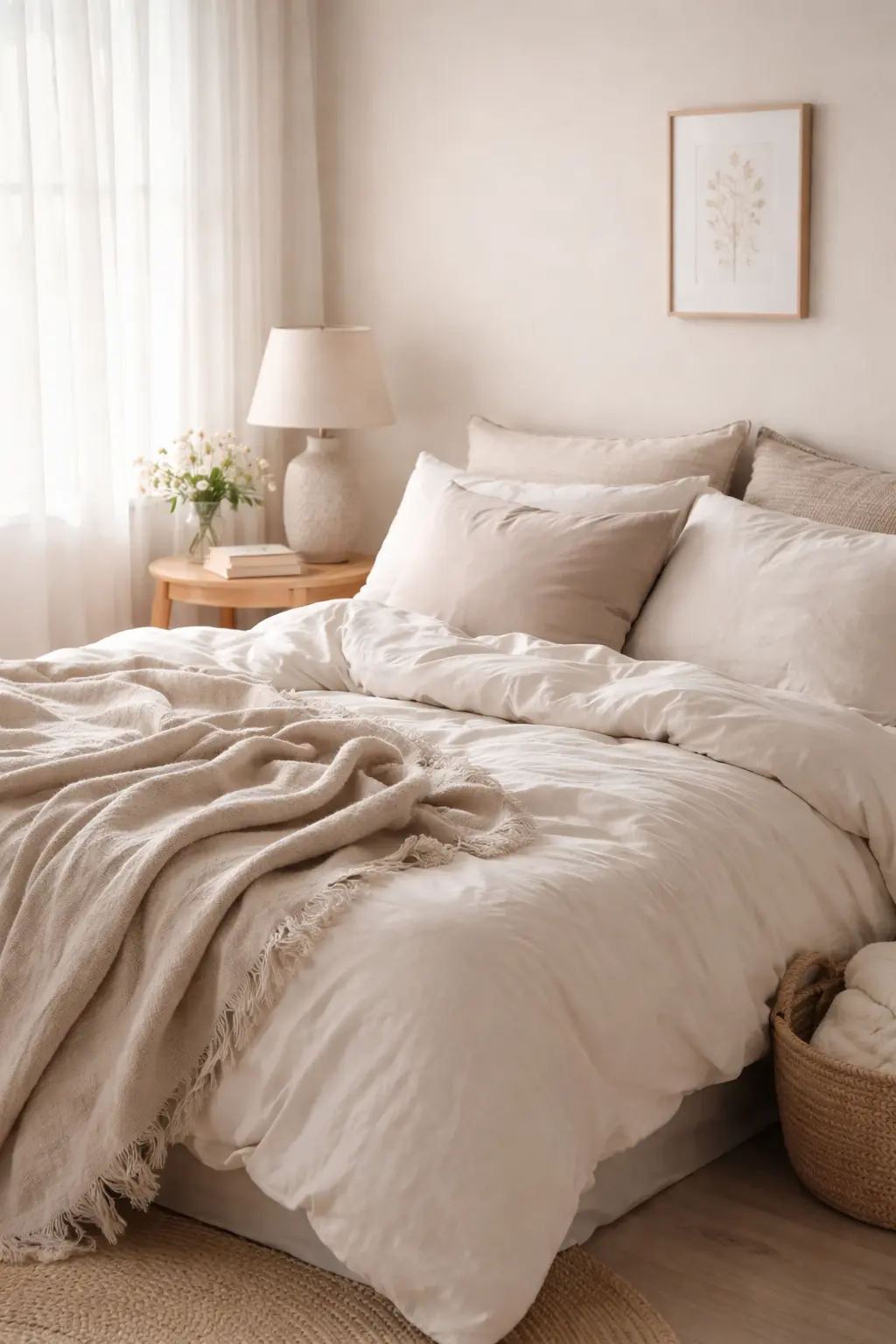
The bedroom is the last place you see before sleep and the first you encounter upon waking. Yet many people solve every storage problem here: clothing piles on the chair, books on the nightstand, exercise equipment in the corner. The essence of a slow living bedroom is clarity: this space is exclusively for sleep and rest. No work, no exercise, nothing else. When your brain learns that this room equals rest, relaxing automatically becomes easier upon entry.
Start with textiles. The quality of materials touching our skin directly affects sleep quality. Natural fibers—cotton, linen, bamboo—breathe and regulate temperature. Quality bedding isn’t luxury; it’s an investment in your recovery. I prefer 100% cotton, percale weave sheets —cool in summer, pleasantly smooth always. On the nightstand, keep only what’s needed for evening and morning rituals: lamp, one book, perhaps lotion. No phone, no work documents, no to-do list.
Keep colors neutral and calming. Earth tones, pale blues, grays, and off-white all support relaxation. Red and orange activate the nervous system—not ideal before sleep. If possible, invest in blackout solutions. Urban light pollution disrupts melatonin production. A simple sleep mask helps, but blackout curtains or blinds are more comfortable long-term.
Regarding bedroom practices—my article on 10 Best Yoga Poses for Better Posture at Home includes some evening stretches that can help wind down before bed.
7. Creating Digital Detox Zones
 Save it
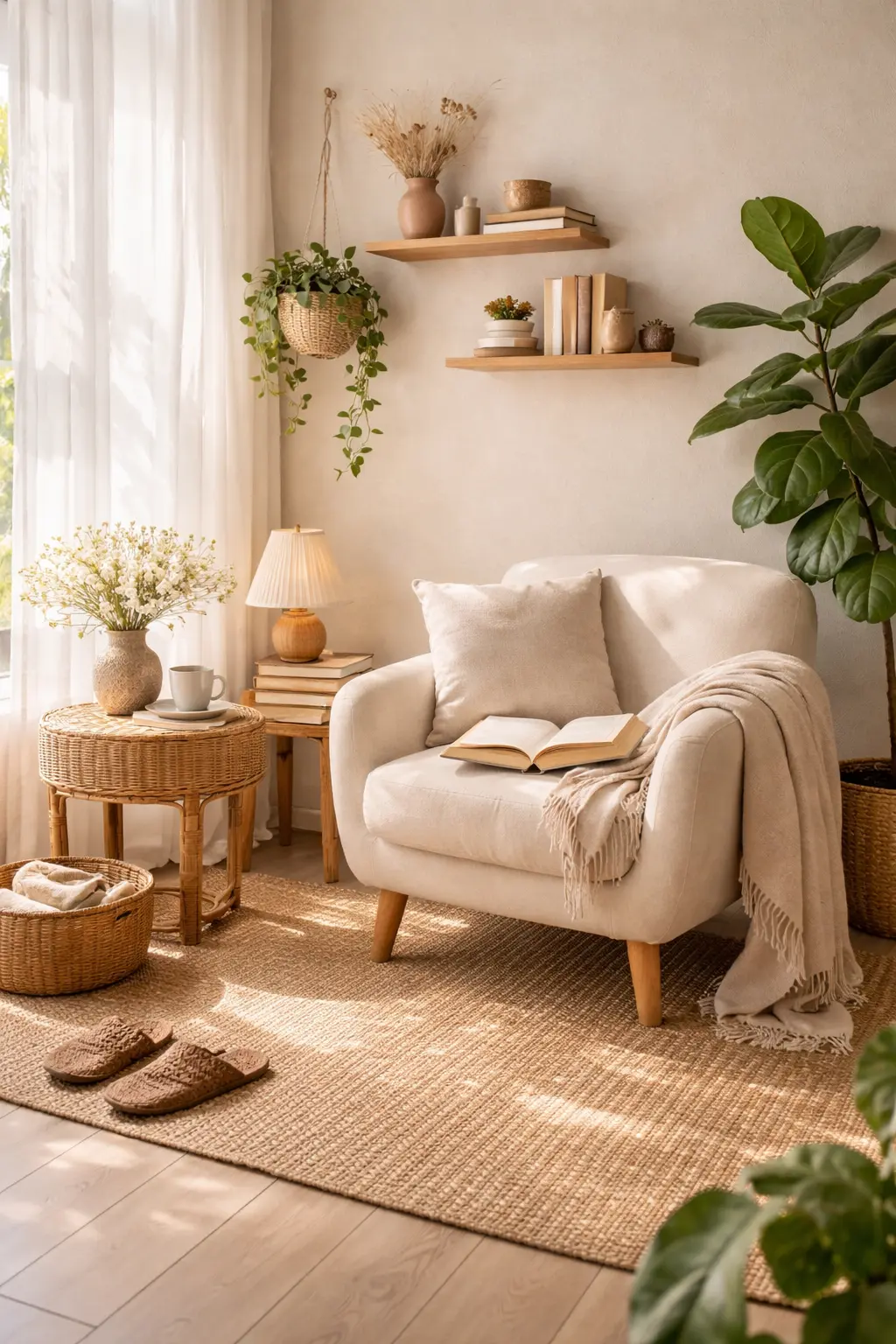
Smartphones, tablets, and laptops permeate every moment of our lives. In a slow living home, it’s not about completely abandoning technology—that’s neither realistic nor necessary. Rather, it’s about consciously designating spaces where screens don’t follow.
First and most important: the bedroom should be a screen-free zone. No phone in bed, no evening social media scrolling. If you use your phone as an alarm, get a traditional alarm clock—it’s worth it. A simple, dimmable model can help significantly with morning and evening routines. The dining table is another key area. Eating is central to slow living: attention, flavors, enjoyment of company. Phone on the table? Your consciousness automatically splits attention.
Designate a “charging station” in your home—a drawer, shelf, or box where all devices go at day’s end. This creates a physical boundary between digital and real space. TV placement matters too. In most living rooms, the TV is the central element that all furniture faces. Try removing it from this starring role: cover it, put it in a closed cabinet, or rearrange furniture so conversation becomes the focus.
The point isn’t rejecting technology, but using it intentionally. Decide when and where you use devices, rather than letting them decide for you.
8. Bringing Nature Inside
 Save it
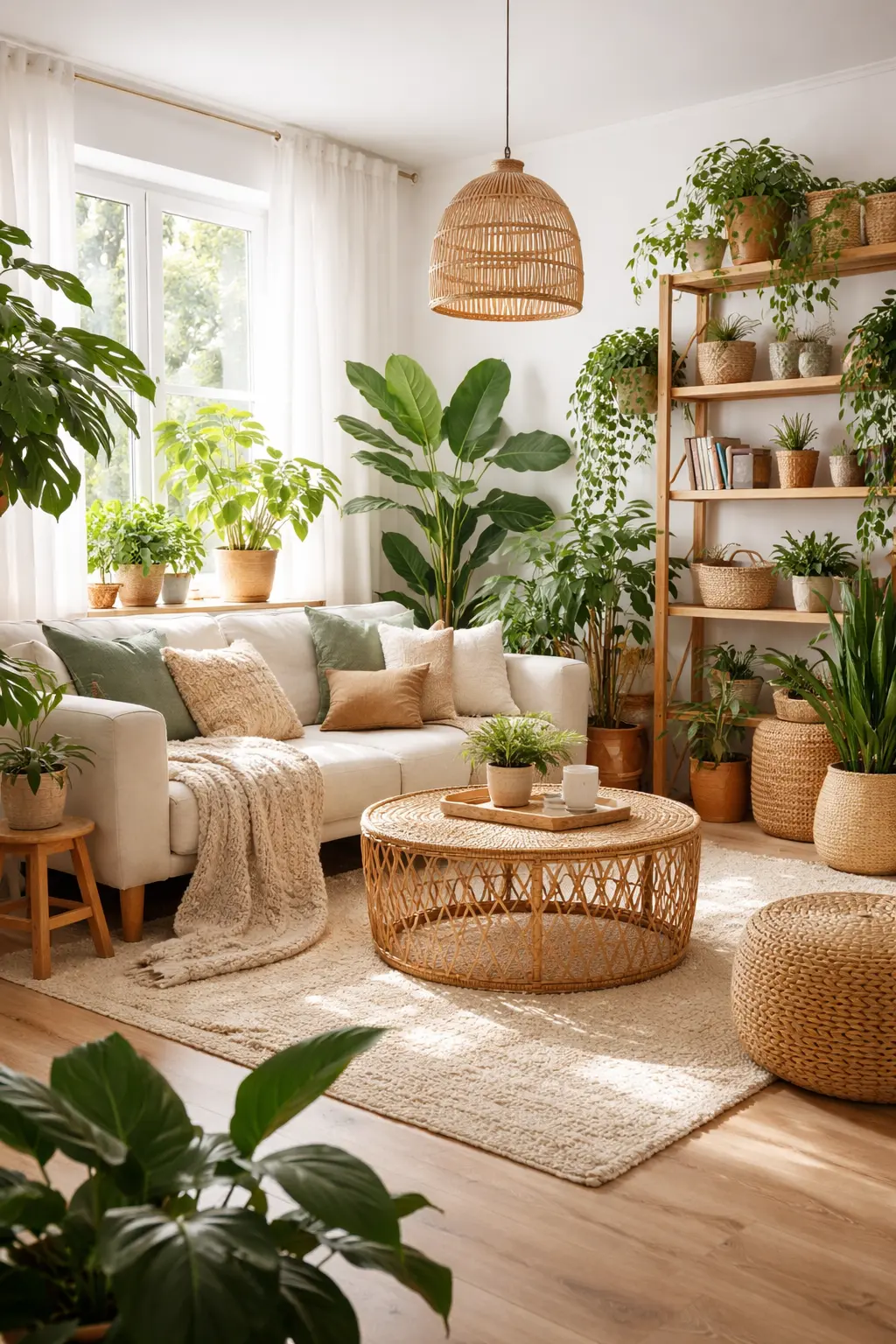
Humans spent most of evolutionary history in nature. Our bodies and brains are still programmed to feel safe in green environments. Yet in urban apartments, we often disconnect from all natural elements. Plants are the most obvious solution, but not the only one. If you lack a green thumb or your space is dark, choose hardy species: spider plants, ZZ plants, or philodendrons are nearly indestructible. Start with one or two and observe where they thrive.
The presence of natural materials is equally important. Wood, stone, rattan, linen, wool, ceramic—these materials are not only beautiful but provide haptic experience. Plastic and metal feel cold, while wood and textile feel warm. Where possible, choose the natural option. A quality wool throw isn’t just functional—it adds texture and warmth to the space. Slow living aesthetics aren’t about perfection but about rich layering of materials and textures.
Natural forms matter too. Ceramic bowls, handcrafted baskets, irregularly shaped vases all bring life to space. Perfectly uniform, factory-produced items are visually boring—small irregularities make a home interesting.
If you have a window with a nature view—even just one tree—arrange the space to capitalize on that view. Seeing nature demonstrably reduces stress and improves mood.
9. Organization That Actually Works
 Save it
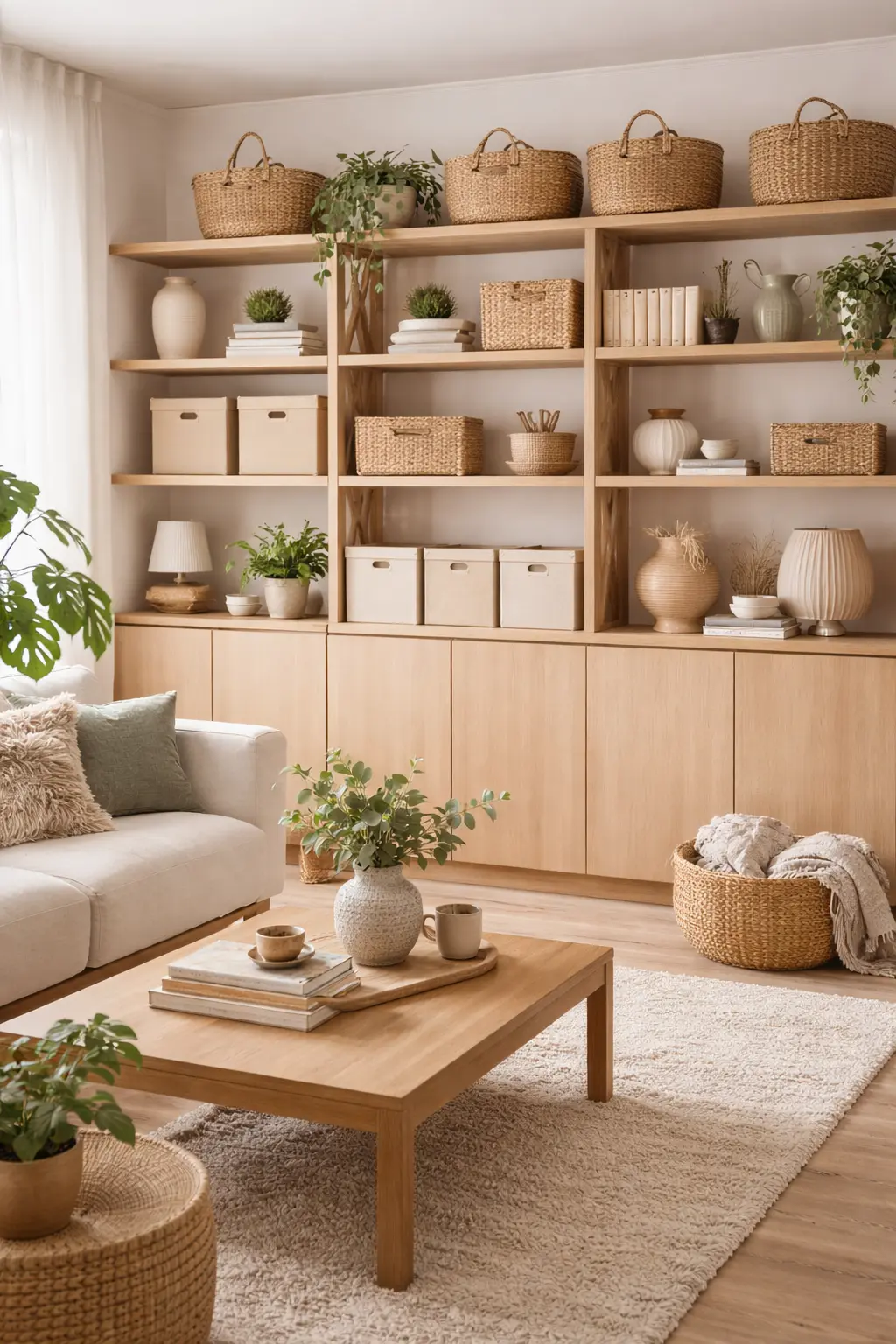
Slow living doesn’t equal minimalism, but chaos is the enemy of calm. The question isn’t how much stuff you have, but whether everything has a place and system. Most people start organizing by buying containers. This usually leads to accumulating more stuff, just now in pretty boxes. Reverse the order: first let go of what you don’t need, then think about storage solutions.
When sorting, the only question worth asking: does this item support the life I want to live? Not when did I last use it, or how much did I spend on it. But does it fit the person I want to be?
Once that’s done, then storage. The principle: everything should have a clear place it always returns to. If it has no place, or doesn’t fit, you probably don’t need it. Open shelves only work if contents are organized and visually unified. What you don’t want to see goes in closed storage—drawers, cabinets, bins. Closed storage reduces visual noise and is easier to maintain.
Daily organization also comes up in my Small Daily Habits That Lead to Big Life Changes article—small, consistent habits can make a huge difference in your home’s overall order.
10. Slowing Down Time — Rituals and Mindfulness

 Save it
Physically rearranging your home is only half the equation. Slow living is really about how you use time within those walls. The most beautifully designed space won’t help if you continue rushing through it. Rituals are the structures of time. I’m not talking about compulsive routine—doing the same thing every day at the same time because you must. Rather, deliberately chosen, enjoyed repetition: the morning coffee you actually drink instead of sipping on the go. Evening reading. Slow Sunday breakfast.
Every evening, I light a candle when I stop working. This physical act signals my brain that the day is over. Nothing special—just a match, a candle, and the decision to rest now.
Meals can become rituals too. Set the table even when eating alone. Use the nice plates, not just for guests. Eating shouldn’t be a side activity you do while doing something else—it should be the thing you’re doing.
A slow living home ultimately isn’t made slow by furniture or colors. It becomes slow because you decide that here, in this space, you stop rushing. Your home is just the frame—you provide the content.
Step-by-Step Additional Tips
Creating a slow living home isn’t a one-day project, nor is it a destination you reach and are done. It’s an ongoing practice that evolves with your life. What works now might not in two years—and that’s okay.
The most important advice I can give: don’t try to implement all ten points at once. Pick the one that resonates most or is easiest to start. Maybe it’s reorganizing the entryway, maybe clearing out the bedroom. Live with it for a few weeks, observe how it affects your daily life, then move to the next.
Slow living’s essence isn’t purchasing but awareness. You might find that what helps most is getting rid of things, not buying new ones.
Style questions are secondary, but if you’re starting out, natural materials and neutral colors are the easiest starting point. Minimalism isn’t the only path—rustic, boho, or even classic interiors can be slow living if consciously composed and if they leave room for rest.
Your home is your most intimate space. It’s worth taking time to make it one that supports who you want to be.
Common Mistakes to Avoid
1. Following trends uncritically
Pinterest and Instagram are full of beautiful homes, but these images are often misleading. A white, empty living room is easy to photograph but unrealistic to maintain. Slow living’s essence is what works for you, not what looks good on a feed. If you’re a mother of four, minimalist white furniture probably isn’t your world—and that’s perfectly fine.
2. Hiding clutter instead of organizing
Most people clean by moving stuff from one place to another, or cramming it into pretty boxes. That’s not organizing, just disguising. Real order comes from everything having a place and system—not from chaos moving behind closed doors.
3. The all-at-once approach
I’ve seen people who in one weekend threw out half their belongings, repainted the living room, and bought ten new pieces of furniture. Three months later, everything they’d thrown out had crept back because decisions weren’t thought through. Slow, gradual change produces more lasting results than radical transformation.
4. Sacrificing functionality for aesthetics
A gorgeous, empty kitchen is wonderful until you start cooking. Slow living doesn’t mean living uncomfortably. If everyday items don’t have practical places, order won’t hold. Form should follow function, not the reverse.
5. The “just one more thing” trap
The opposite of slow living is constantly buying, even with “conscious” labels. Most people don’t feel uncomfortable at home because something’s missing, but because there’s too much. Before buying anything, ask: is this really necessary, or do I just think it’ll solve the problem?
Frequently Asked Questions
How do I start if my partner/family doesn’t support it?
Start with your own spaces—your clothes, your nightstand, your personal corner. Change is attractive, and others often become interested when they see how it affects you. For shared spaces, seek dialogue but don’t force it. Slow living isn’t an ideology to impose on others.
Is slow living the same as minimalism?
Not necessarily. Minimalism is about quantity of things; slow living is more about quality of time and attention. You can have a minimalist slow living home, but a space full of books, pillows, and plants can also be slow living if consciously composed and if it supports slowing down.
How long until I feel the change?
This varies greatly. Some effects are immediate—clearing out the bedroom often results in better sleep the first night. Other changes take weeks or months to integrate. The key is patience and not expecting instant transformation.
Do I need to throw everything out for minimal aesthetics?
Not at all. Keep what adds real value to your life, what makes you happy, what you’re emotionally attached to. Slow living isn’t about deprivation but conscious choice. The goal is that things don’t rule your life—but you can still be a bookworm or collect handmade ceramics.
Final Thoughts
A slow living home isn’t a style you need to buy or a trend you need to follow. It’s a decision about how you want to live—and your home is the physical manifestation of that decision. We’ve walked together from entryway to bedroom, from light through scent to rituals. The path we’ve traveled isn’t a weekend project but a way of thinking. It’s not about creating a perfect-looking space but having an environment that supports slowing down, presence, living in the here and now.
In modern life, speed and productivity are overvalued. Your home is one of the last places where you can push against that tendency. Where slowing down isn’t a disadvantage but an advantage. Where doing nothing is also a meaningful activity.
You don’t need to change everything. Clearing one shelf, introducing one ritual, making one conscious decision is already change. Start where you are, with what you have, and watch how the space around you evolves—and you with it. Your home won’t change you. But it can support you in changing yourself. That’s the real promise of slow living: not a prettier apartment, but a more conscious life.
This post contains affiliate links. I may earn a small commission at no extra cost to you.
Get cozy inspiration delivered to your inbox.
✓ 14-page beautifully designed ebook
✓ Cozy decorating ideas
✓ Practical room-by-room inspiration
You’re in! 🎉
Thanks for joining the NestFlowHome community!
Your free ebook is already on its way to your inbox. If you don’t see it within a few minutes, please check your Promotions or Spam folder.
Join the NestFlowHome community for weekly decorating inspiration.

Timeless home decor ideas and slow living inspiration for a calm, beautiful life.