

14 Stunning Empty Corner Decor Ideas Designers Secretly Love
By Emily | May 11, 2026
You know that feeling when you walk into a room and something feels off, but you can’t quite name it? Often it’s not the furniture, not the colors—it’s those empty corners that quietly drain some of the room’s energy. Most people simply don’t know what to do with corners. Too small for a sofa, too awkward for a cabinet, so they just sit there empty like an unfinished sentence.
But designers know something we don’t: corners aren’t wasted space. Quite the opposite—they’re sweet spots where you can add the most visual value with the least effort. A well-executed corner gives instant depth, draws the eye, and lends a sense of completion to the room. A bad corner? It screams “I didn’t know what to put here, so I left it empty.”
In this article, I’m going to teach you how to think about corners functionally and visually—how to choose what goes there based on the space size, light, and function. You’ll understand why grouping matters more than individual items, how height creates dramatic impact, and when negative space (emptiness) is better than anything else. You don’t need to be a designer—you just need to know a few principles, and corners will become the best part of your room.
Let’s start.
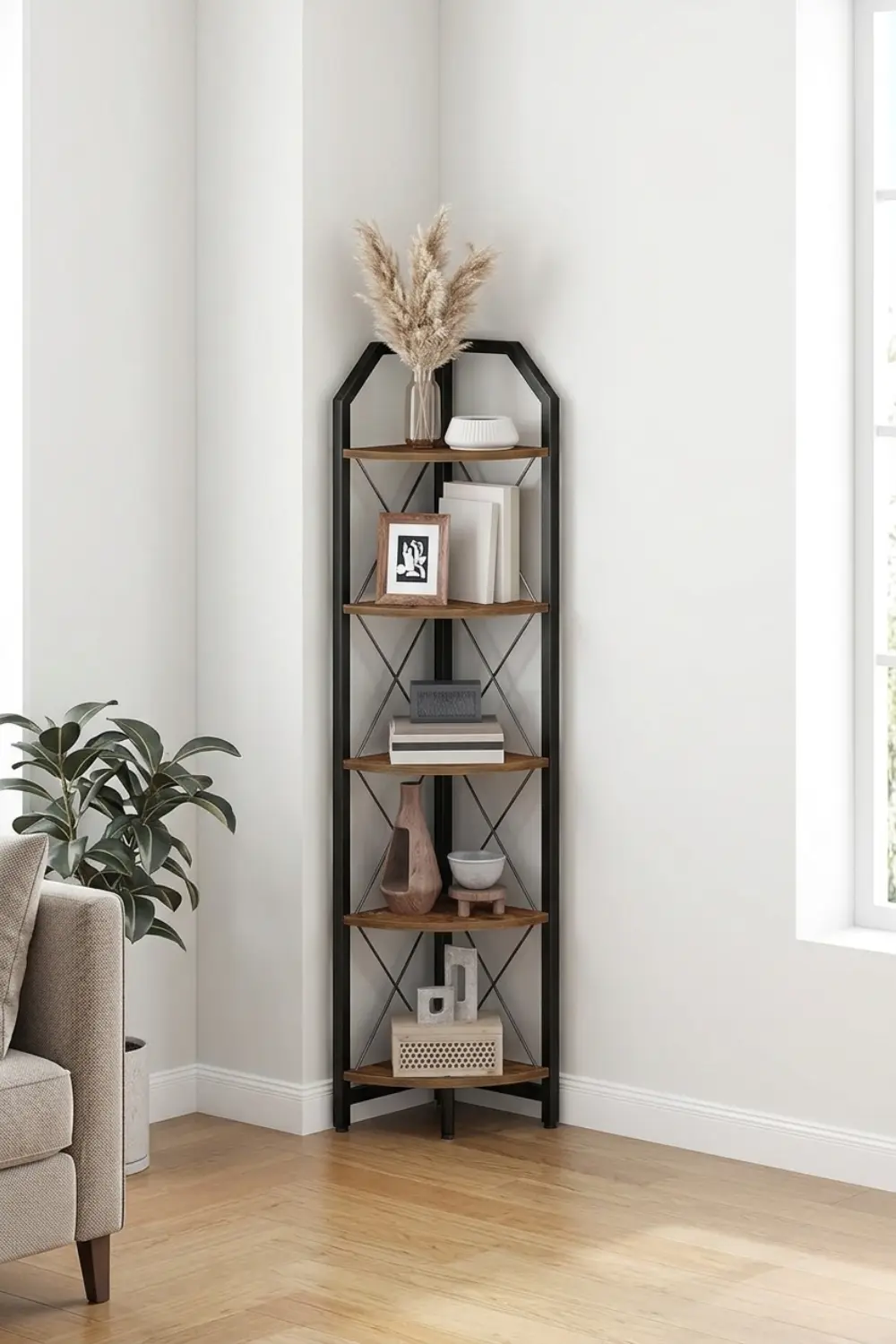
1. Build Vertical Drama With a Slender Shelf System
 Save it
Corners are inherently vertical—two walls meet and point upward. Yet most of the time we think about them horizontally, and that’s a mistake. If you harness the corner’s vertical potential, you give the room an instant sense of height while using far less floor space.
A slender, tall corner shelf is brilliant because it doesn’t steal space—its ladder formmakes it transparent, not a solid block. You don’t need to fill each level—in fact, don’t. Have something on every other shelf, nothing on the rest. This rhythmic emptiness is what gives a modern feel, not the “gotta fill everything” mentality.
Styling tip: put heavier objects on lower shelves (books, heavier vases), lighter ones on top (a small plant, a candle). This is visually stable. If you reverse it—heavy things up top, light below—it looks top-heavy and unsettling.
If you want a modern minimal vibe, choose black or white metal. For warmer, more organic feeling, go with a natural wood ladder shelf. The point: don’t make it too “decorative”—simple lines are key here because the objects will be the decor, not the shelf itself.
The shelf shouldn’t be too deep. Ideal depth for a corner shelf is 7.87 to 11.81 inches—enough to hold things but not so much it juts into the space.
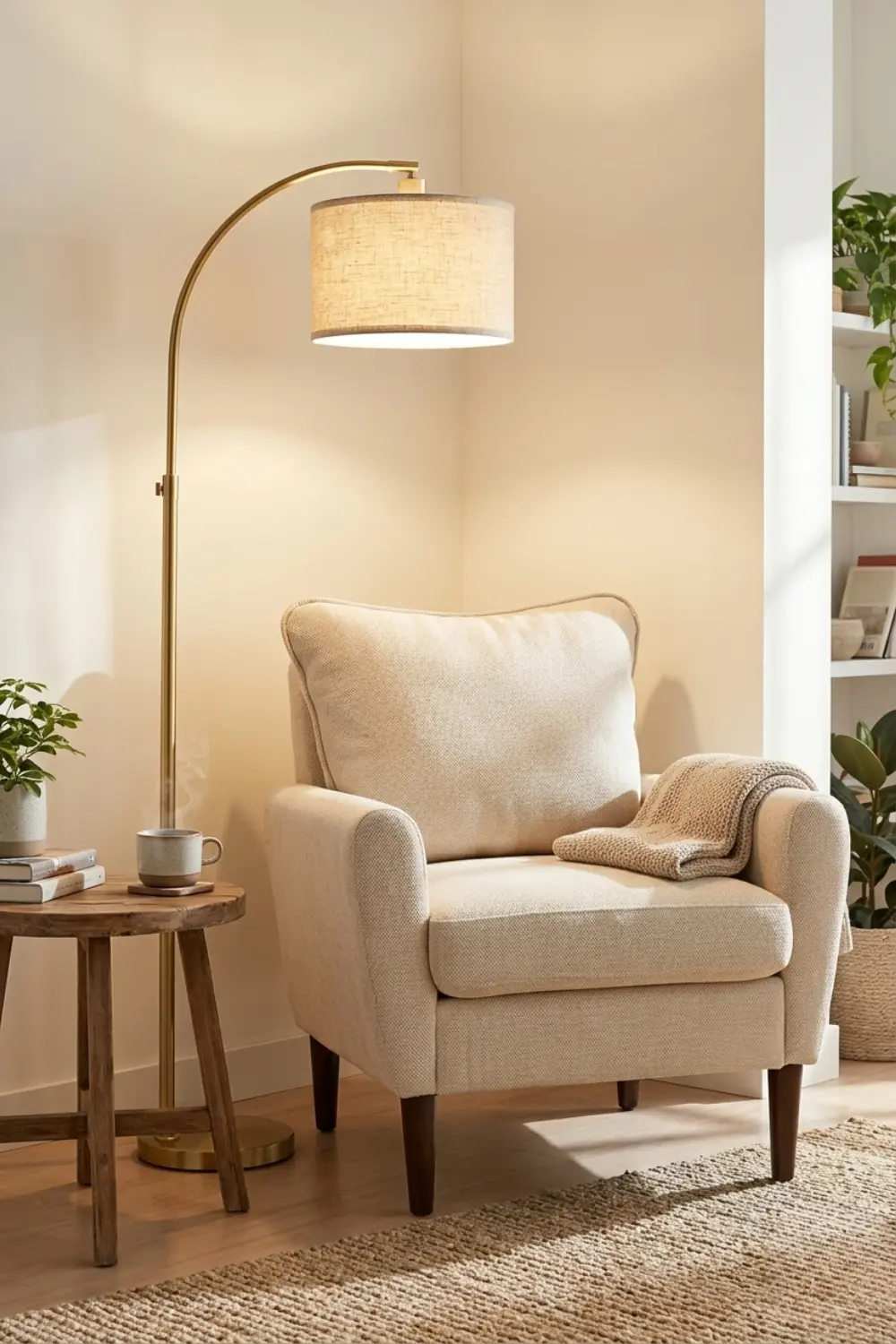
2. Create a Reading Nook With an Armchair and Floor Lamp
 Save it
This is one of the most perfect corner uses because it’s functional, not just decorative. A comfortable armchair pushed into a corner, with a floor lamp beside it—and you’ve got a reading nook that’s actually usable.
The trick here is in proportions. The chair shouldn’t be too large—if the arms are wide and the full seat is huge, it visually crushes the corner and looks like you forced it in. Instead, choose a slimmer, taller-backed chair—this gives verticality and doesn’t spread horizontally.
The floor lamp here is key—but not the usual “straight neck + shade” type. Choose an arc floor lamp where the head curves over the chair. This creates a bit of intimacy, like you’re forming a “bubble” around the corner that’s separate from the rest of the room.
Styling: if there’s also a small side table (about 15.75 to 19.69 inches tall, narrow) where you can set down coffee or a book—that’s perfect. But if there’s no room, the lamp base can be enough for setting a cup.
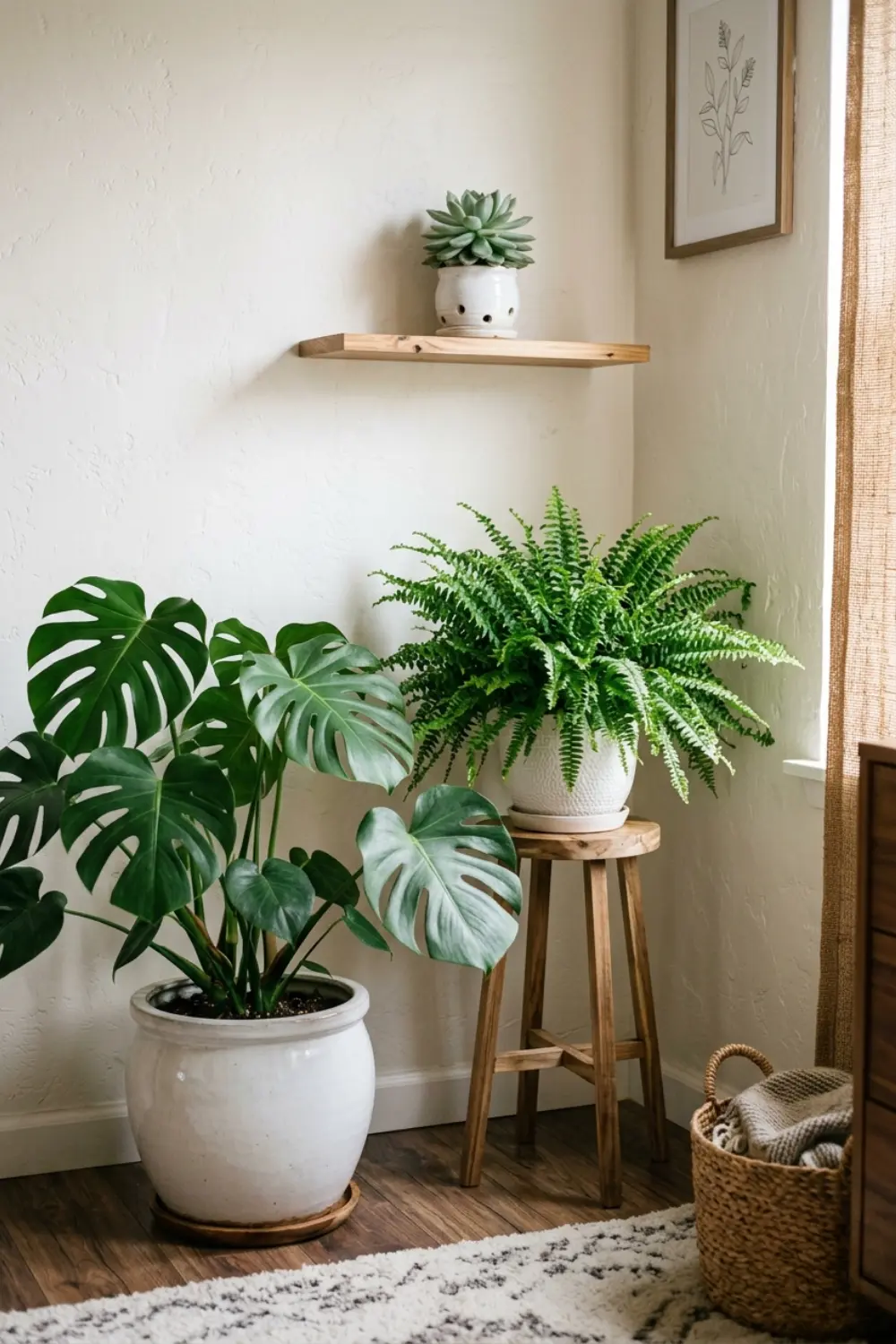
3. Group Plants at Different Heights
 Save it
A single plant in the corner—boring. Three plants at different heights—that’s a composition. And corners are perfect for this because the two walls provide a natural frame that visually holds the grouping together.
Use three different height planters or plant stands. One on the floor, medium height. The second on a plant stand or small table. The third high—either on a tall stand, a wall shelf, or even hanging.
The plants themselves should be varied too—not three identical plants. Mix broad-leaved ones (like monstera if space allows) with narrow-leaved (like snake plants) and trailing plants (like pothos). This gives textural variety.
On planter colors: either stay unified (all white ceramic, or all terracotta), or vary but with logic—like different shades of green or earth tones. Don’t have random colors—that’s chaotic.
And a tip: don’t arrange them in a perfect triangle. Let them be slightly organic, asymmetric—as if they “naturally” grew there. This asymmetry is what keeps it from looking too “staged.”
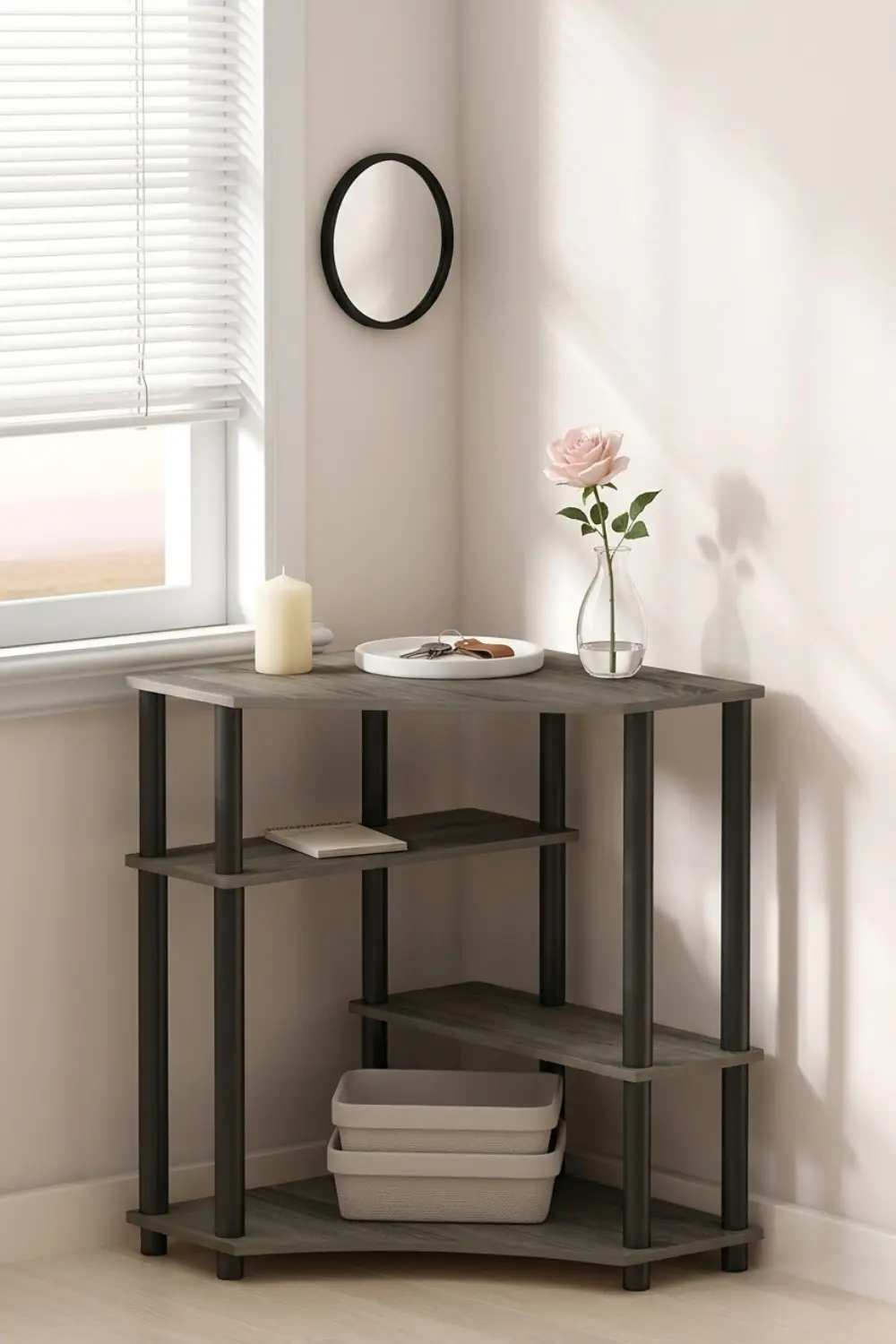
4. Use a Corner Console Table That Doesn't Waste Space
 Save it
Most console tables are straight and pushed against walls. But there are also ones designed for corners—they have two sides and fit exactly into the corner angle. This is a brilliant solution because it utilizes otherwise difficult-to-use space.
A corner console table is perfect for entryways (keys, mail), living rooms (lamp, small decor), or bedrooms (perfumes, jewelry). The table itself should be narrow—max 11.81 x 15.75 inches deep, otherwise it pushes too far into space. The material can be wood, metal, or glass—depending on what fits your room style. In modern spaces, metal + glass combo is clean and transparent. In more rustic spaces, wood adds warmth.
Styling tip: don’t pile everything on it. Choose 2-3 elements—maybe a small tray (where you group small items like keys), a small vase with a dried flower, and a candle. That’s it. The console table is functional, not an exhibition.
If you are interested in how to stylishly place vases in your home, I recommend the article [From Simple to Stunning: Vase Decor Ideas You’ll Love]
I there’s wall above it, hang a small mirror or picture—but not too big. The decor above the corner console should be proportional, not overpowering the table.
5. Put In a Large Floor Lamp That's a Standalone Statement
 Save it
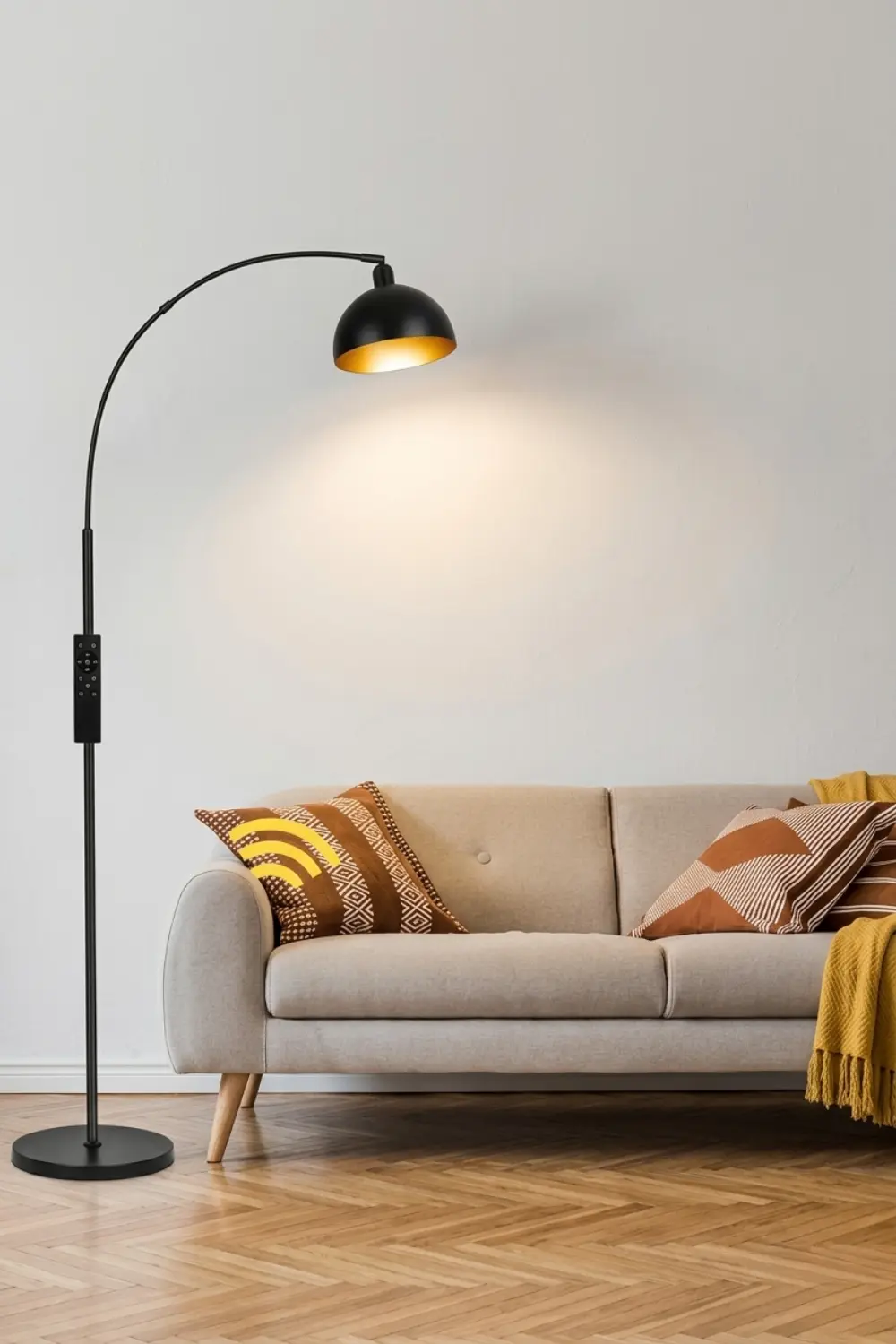
The floor lamp corner is classic, but many people do it wrong—they buy too small, or too “decorative,” which loses impact. Instead, choose a statement floor lamp—one with character that’s interesting on its own.
An arched modern floor lamp works especially well in corners because the head extends out from the corner and lights toward the room’s interior—so it’s not just corner lighting but improves the whole space’s atmosphere. The lamp height should be tall enough—at least 59.06–66.93 inches, so it visually fills the space. A short lamp disappears. A tall lamp pulls the eye upward and makes the ceiling feel higher.
Black is always safe because it’s neutral and elegant. Gold or copper if you want warmer tones. White if ultra-minimal. Avoid overly shiny chrome—that’s cold and feels 2000s.
And styling tip: if the lamp is interesting enough on its own (nice shape, good material), you don’t need anything else in the corner. The lamp is the decor. Don’t overthink it.
6. Create a Mini Gallery in the Corner That Leads the Eye Upward
 Save it
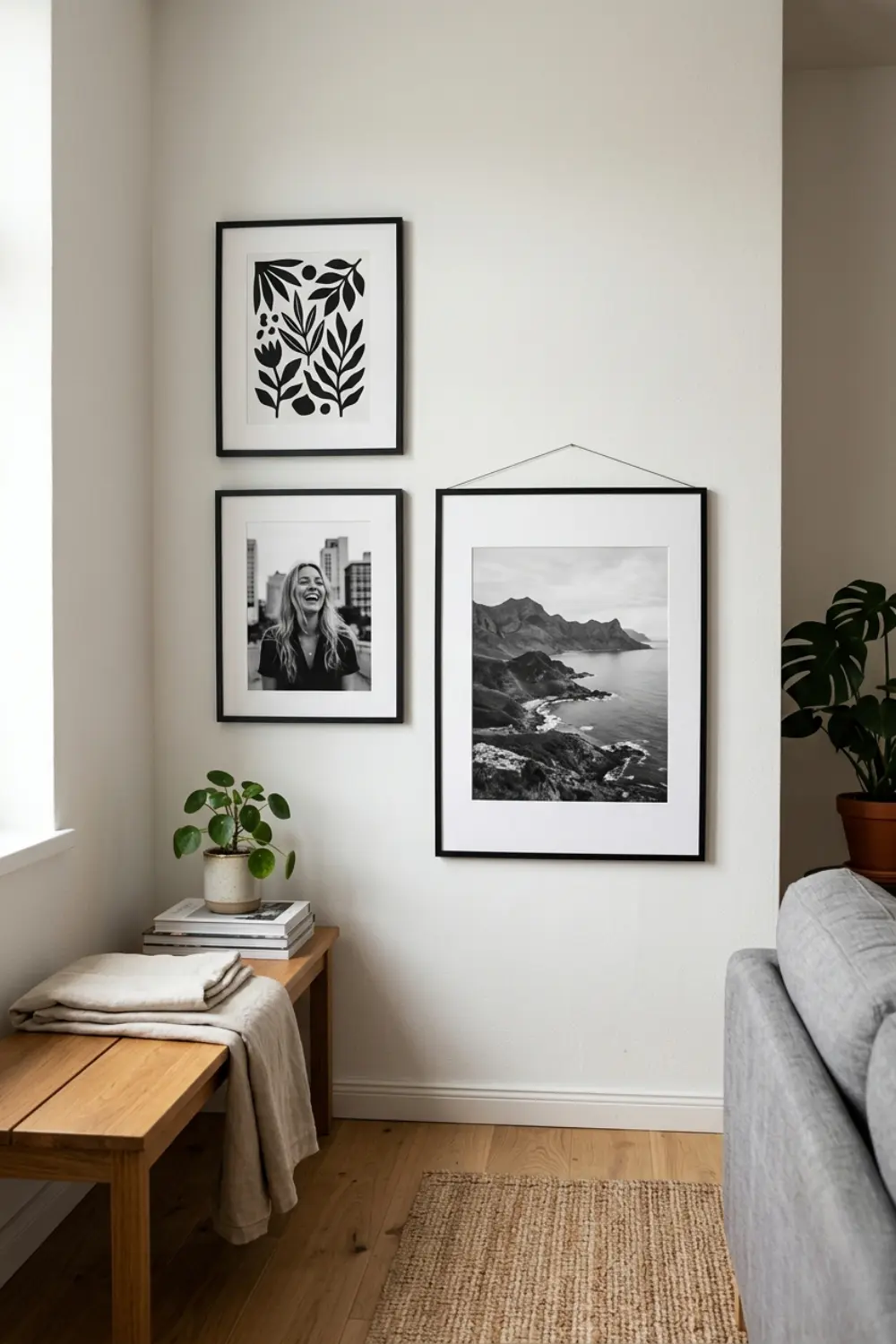
Corners are perfect for small gallery walls because the meeting of two walls provides a natural frame, and the framed pictures visually “sit” in the corner instead of floating meaninglessly.
Two or three smaller frames in varying sizes, asymmetrically placed—this is elegant. Don’t try perfect symmetry because it looks forced when squeezed into a corner. Instead, let it be organic—one larger picture lower, two smaller higher, or vice versa. The frame style should be consistent—either all black, all wood, or all gold. The picture content can be mixed (photo, graphic, print), but the frame consistency is what holds the composition together.
And tip: don’t put the lowest picture too high—about 55.12–59.06 inches from the floor so it’s at eye level when you stand. The higher ones can go up, but the lowest needs to be visually accessible.
If you’re interested in building gallery walls in other spaces too—like living rooms—check this out: [13 Easy Gallery Wall Ideas for Modern Living Room Styling]. Many ideas there translate to corners in smaller form.
7. Install a Desk Corner If You Need Home Office Space
 Save it
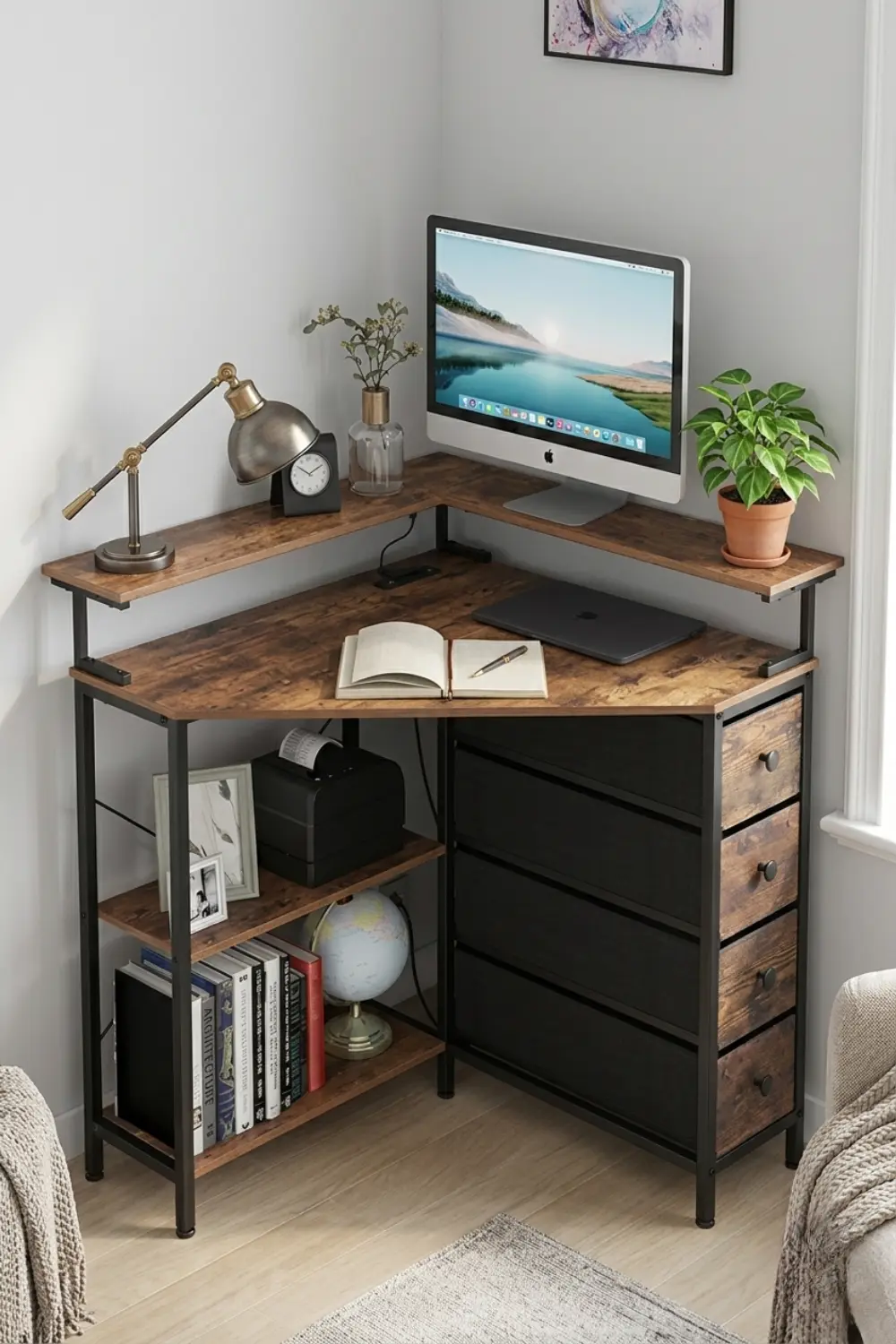
With the rise of home offices, more people are looking for solutions on where to work at home without sacrificing an entire room. A corner desk is a brilliant answer. A small L-shaped or triangular desk fits into an empty corner and provides perfect workspace without occupying the room’s center. This works especially well in bedrooms or living room corners where you don’t want work to dominate the space, just discretely exist there.
The desk should be compact—don’t try to force a huge desk in. Enough that a laptop, notebook, and lamp fit. The point is functionality, not size.
A small desk lamp, a little organizer (pen holder, notebook holder), and maybe a plant—that’s it. If too much stuff is on it, it becomes a “messy corner” instead of a “work corner.”
And if you’re worried the work is always visible and disrupts the room’s calm, consider a small screen or plant in front of the corner when you’re not working—so it’s visually separable.
8. Add a Small Bar Cart or Drink Station That Gives Social Function
 Save it
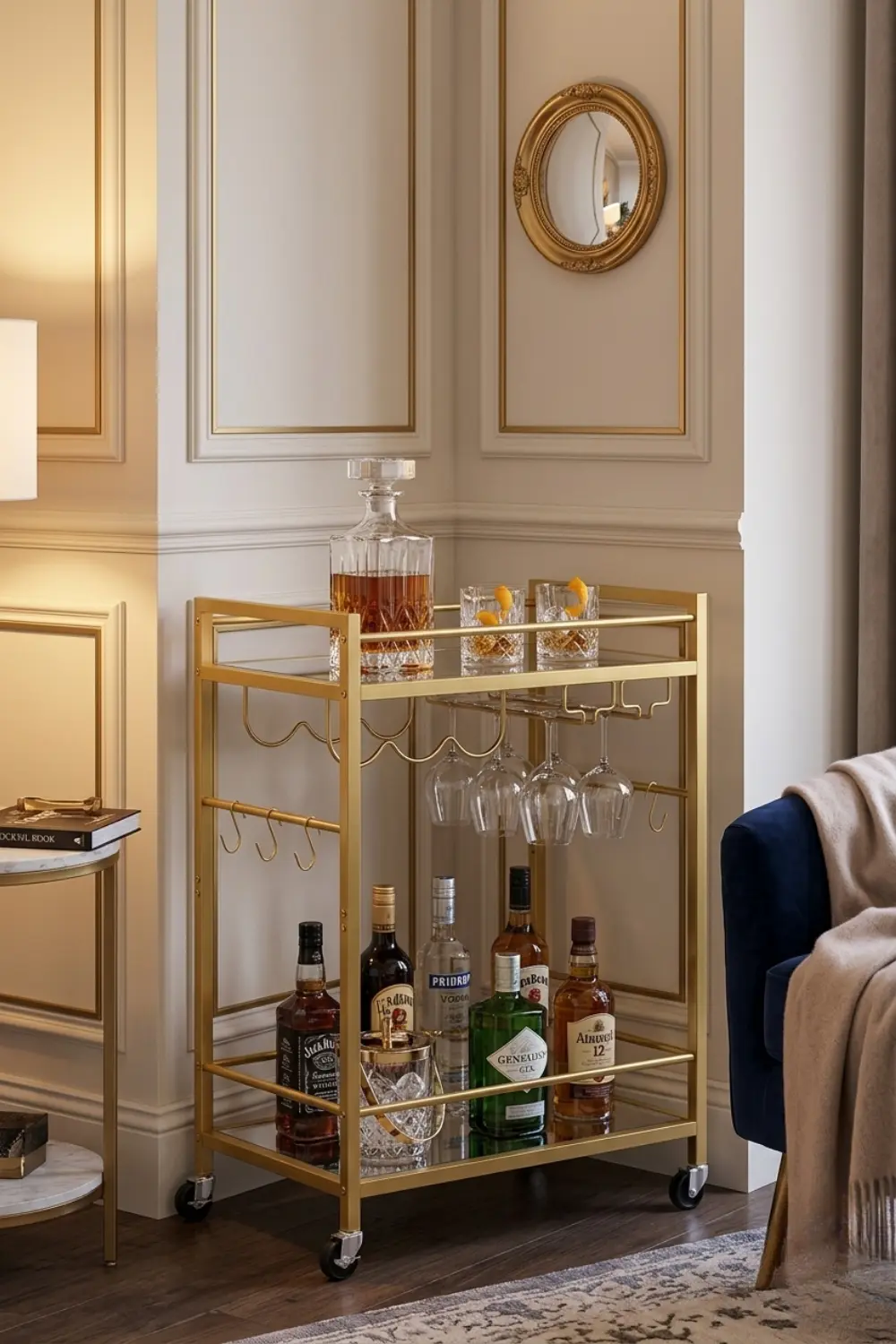
Corner bar carts are cool because they’re functional and decorative. Perfect for living rooms, dining rooms, or even bedrooms (for wine evenings). A two or three tier bar cart fits into corners and provides perfect surface for glasses, bottles, shakers, and other drink accessories. But even if you don’t drink alcohol, the same cart works as a coffee station (coffee maker, cups, sugar) or tea corner.
The material should be gold or copper metal + glass shelves—this gives an elegant, slightly retro feel. Black metal if more modern. Wood if more rustic.
Don’t pile everything on it. Rather, choose nice bottles (decanters with the drinks), 3-4 glasses (unified style), and maybe a small ice bucket or shaker. Lower shelf can have backup bottles, upper shelf the “displayed” pieces.
And tip: if there’s wall above, a small mirror or metal wall decor looks good—reflects light and visually expands space.
9. Build a Built-In Effect Shelf System If You Want Permanence
 Save it
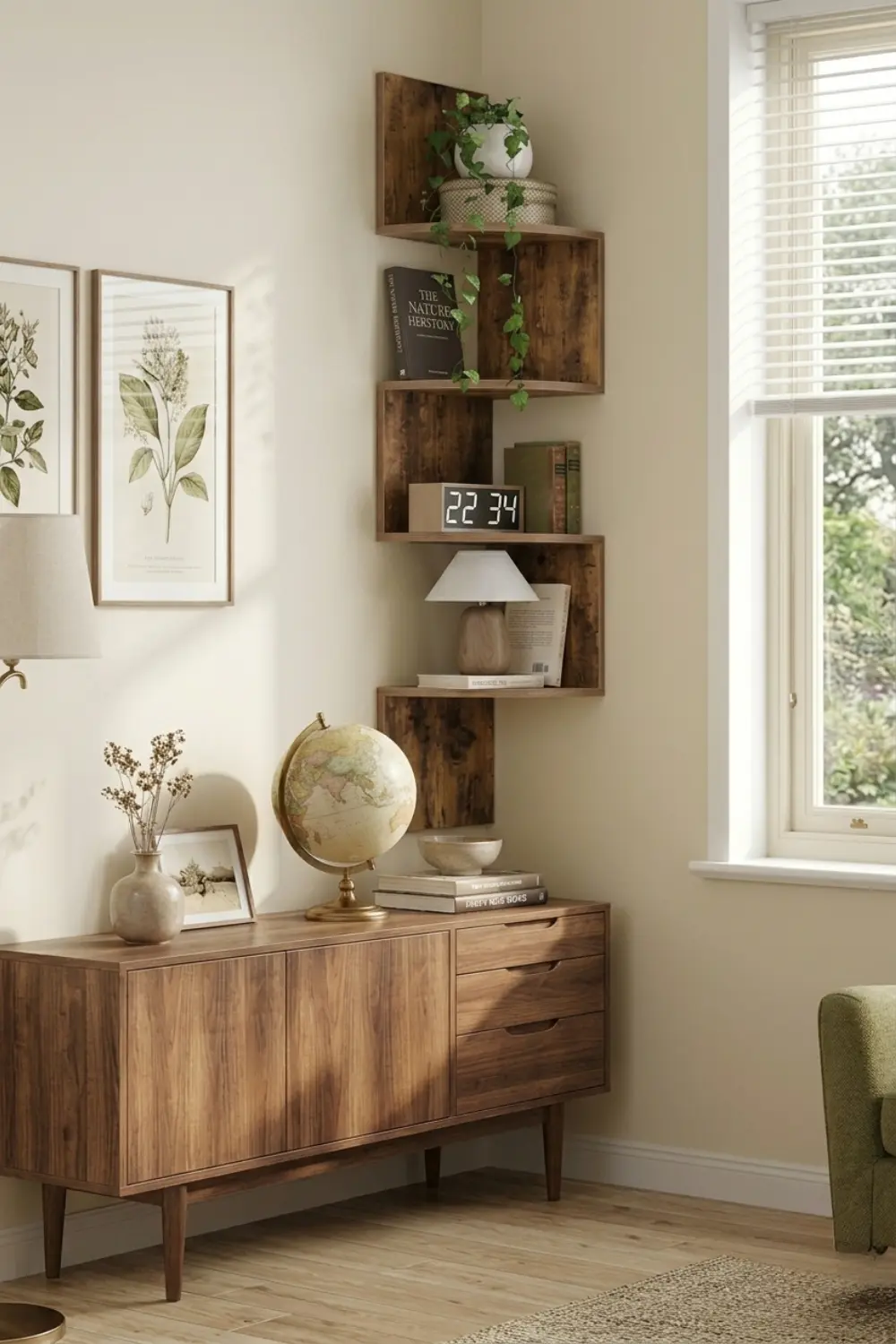
If you own your place (not renting) and you’re thinking long-term, consider installing a built-in effect corner shelf system. These aren’t necessarily built-in shelves (which are expensive and permanent) but modular systems that look like they’re built-in. A floor-to-ceiling corner shelf fully utilizes vertical space and provides tons of storage for books, decor, or anything. The point is it’s customizable—you decide how many shelves, at what heights.
Styling: lower shelves get heavier, more-used items (books, boxes), top gets lighter, more decorative (vases, small frames, candles). Vary the middle shelves—not everything filled, you can leave an empty shelf too.
If there’s enough space, you can add small LED strip lighting between shelves—this beautifully illuminates the shelves in the evening and becomes the room’s mood lighting.
10. Put In a Vintage Cabinet or Small Cupboard for Character
 Save it
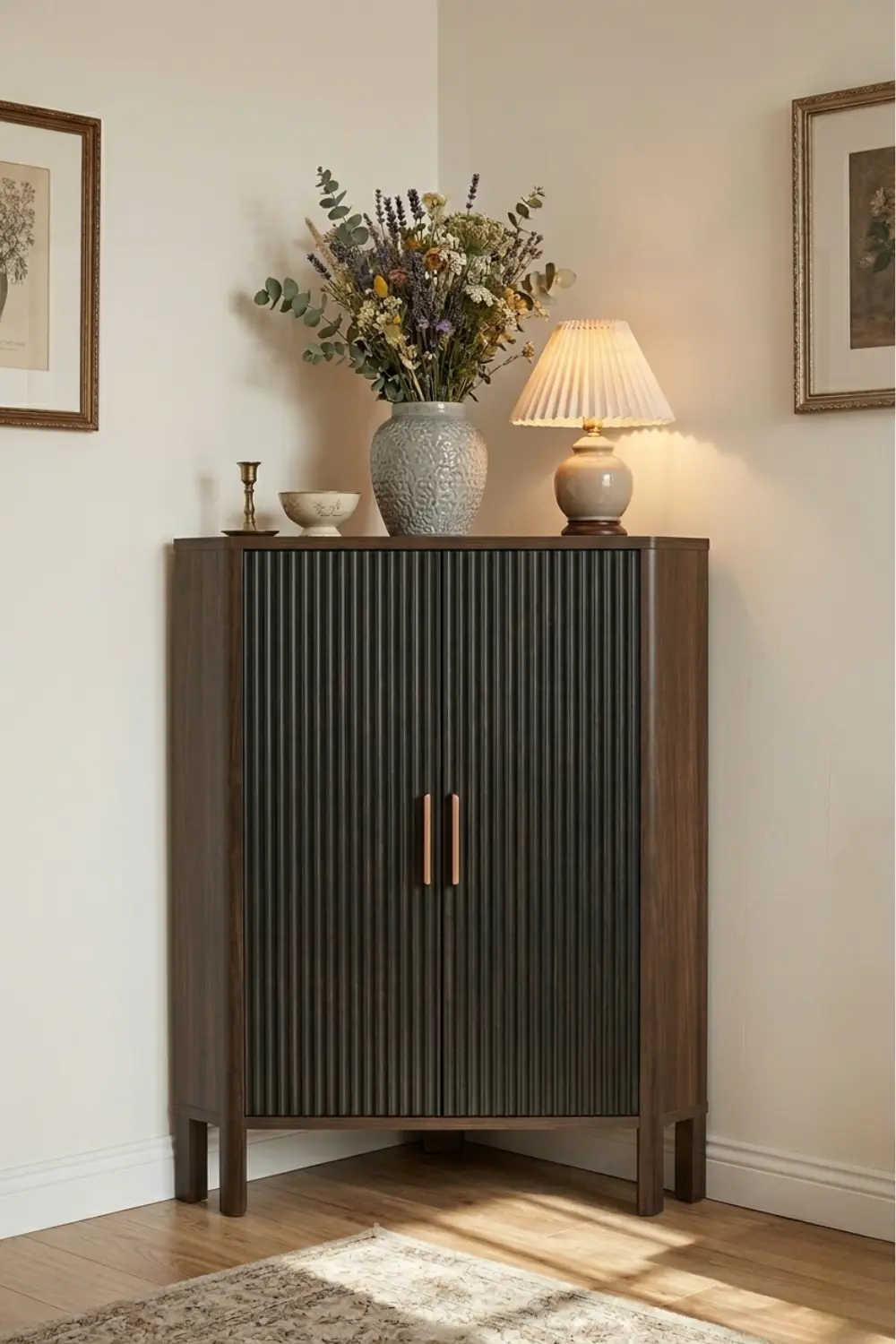
Vintage furniture is having a moment—and a small, old corner cabinet or display case adds incredible character to a modern room. Find one at a flea market, vintage shop, or even your grandma’s attic.
A small corner cabinet—with glass doors or solid—is perfect storage for things you don’t want constantly visible but still need. In a living room this could be toys, books, remotes. In a bedroom, extra linens, towels.
The cabinet doesn’t need to match your modern furniture—in fact, it’s beautiful when it stands out. This gives character. A 1960s wood cabinet in an ultra-modern room—that’s exciting, not disruptive.
Styling: decorate the top—a vase, a lamp, a couple books. But don’t cram it—let it breathe.
11. Use a Corner TV Stand If There's No Other Space
 Save it
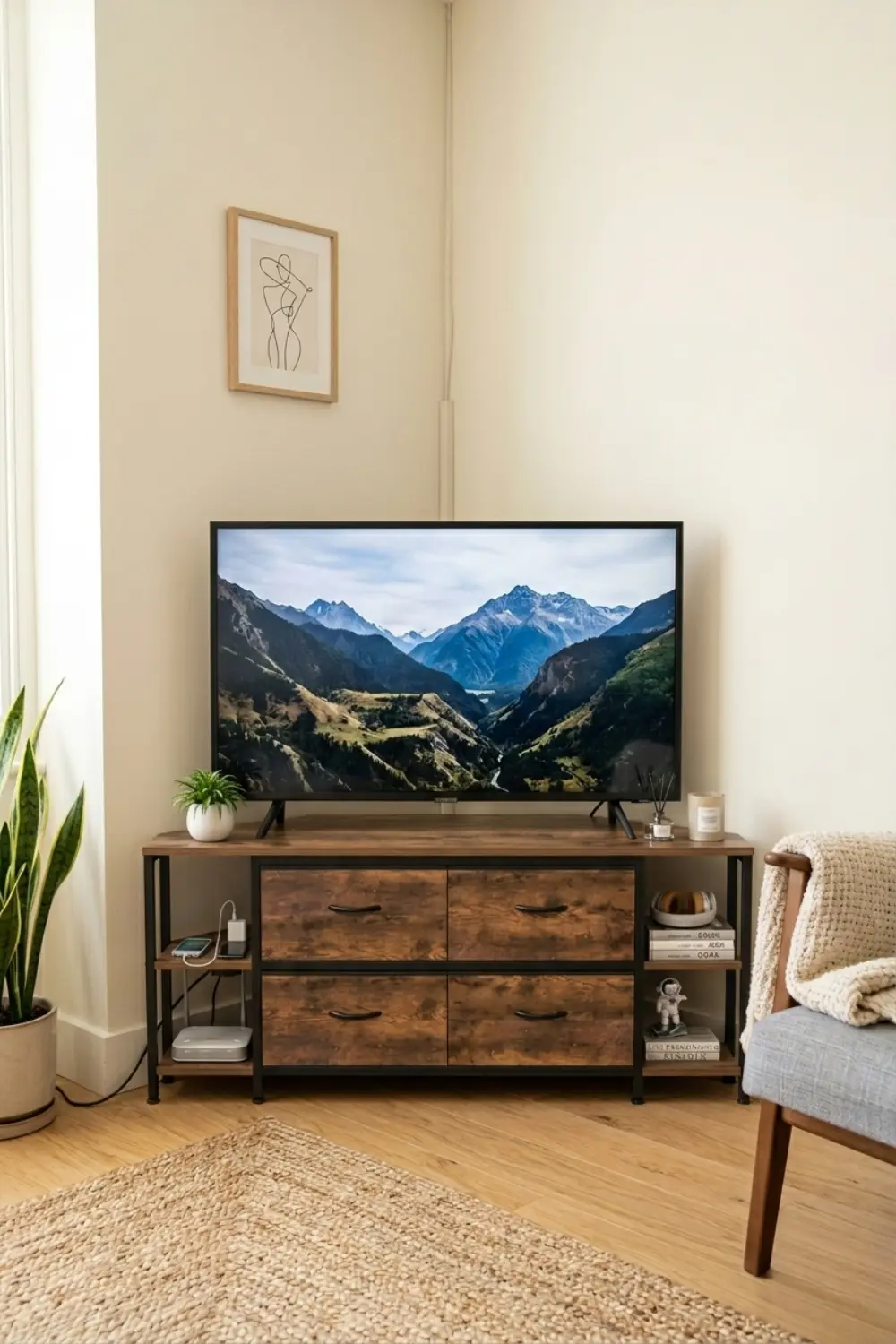
If your place is small and there’s nowhere to put the TV, a corner TV stand can be a solution. It’s not the most elegant, but if done right, it can work.
Choose the simplest, most transparent stand possible. Avoid overly decorated, dark solid blocks. Rather, an open-shelf, light-colored or metal one.
Lower shelves get the console, remotes, cables—but organized, not messy. Use cable organizers so there aren’t snaking cables everywhere.
And tip: if you can, choose a wall-mounted TV instead and leave the corner free for other purposes. But if not, this works too.
12. Add a Hanging Chair or Swing for Playful Element
 Save it
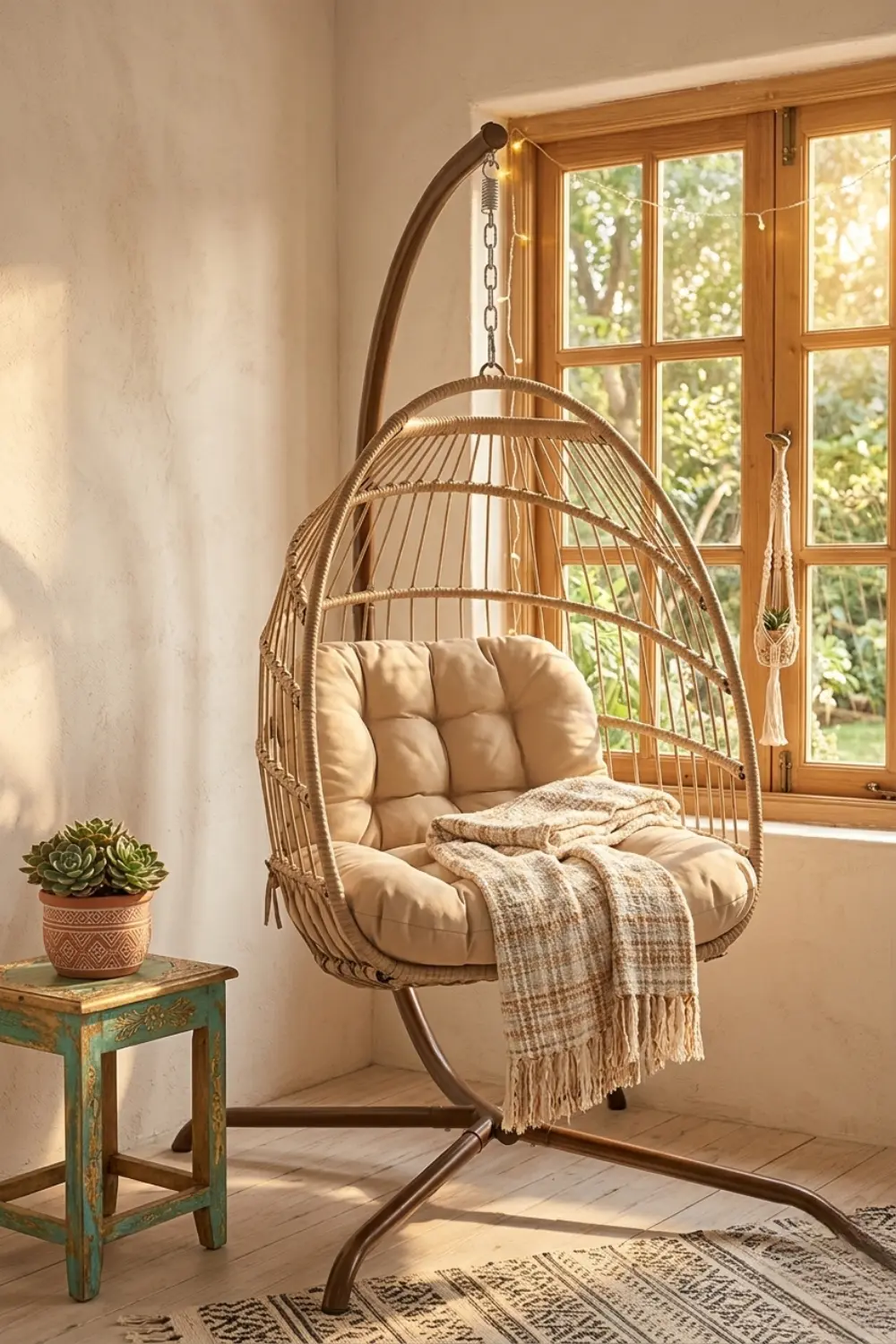
This is unusual, but if you have space and height, a hanging chair or swing in the corner—that’s surprising and great. Works especially well in kids’ rooms or bohemian, eclectic living room corners.
A hanging chair usually comes with a support stand, so you don’t need to drill into the ceiling. Set it up in the corner and done.
Styling: a soft pillow, a blanket—and this is the coolest reading nook you can imagine. Magical for kids, calming for adults.
Choose neutral colors (white, beige, gray), or if you dare, a bright color (mustard, terracotta). Depends how much you want it to stand out.
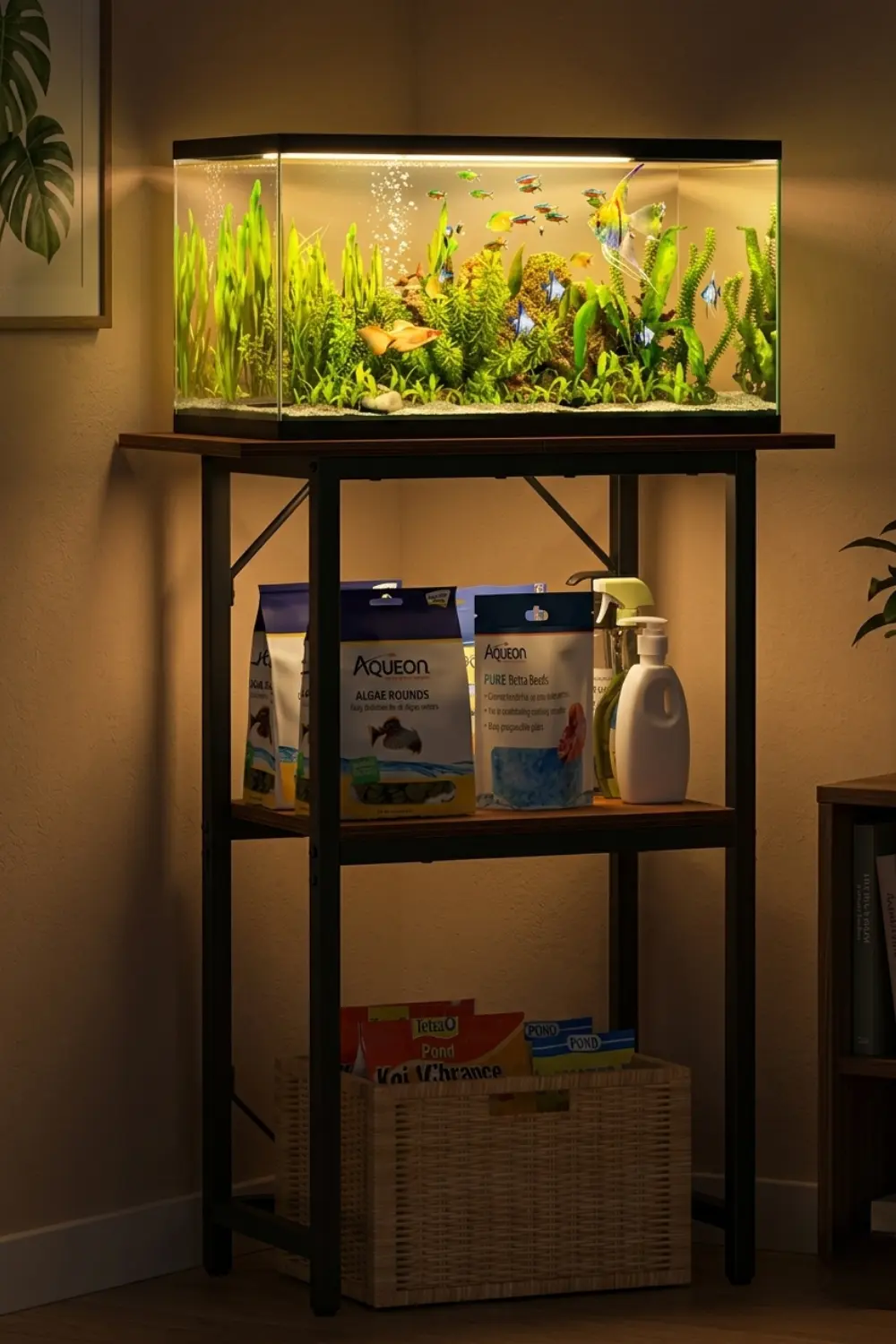
13. Put In an Aquarium or Terrarium Stand If You Love Living Things
 Save it
A corner aquarium stand isn’t just decoration—it’s a living, dynamic element that fills space with life. A small aquarium or terrarium is perfect for corners because it doesn’t interfere with traffic but is still visible.
The aquarium/terrarium lighting in the evening is a beautiful ambient element—soft, warm light that’s calming.
Styling: below the stand you can store fish food, cleaning supplies—but organized. The aquarium itself should be clean, not overcrowded with plants or decor.
Only do this if you’ll actually care for it. A neglected aquarium is a sad sight, not decoration.
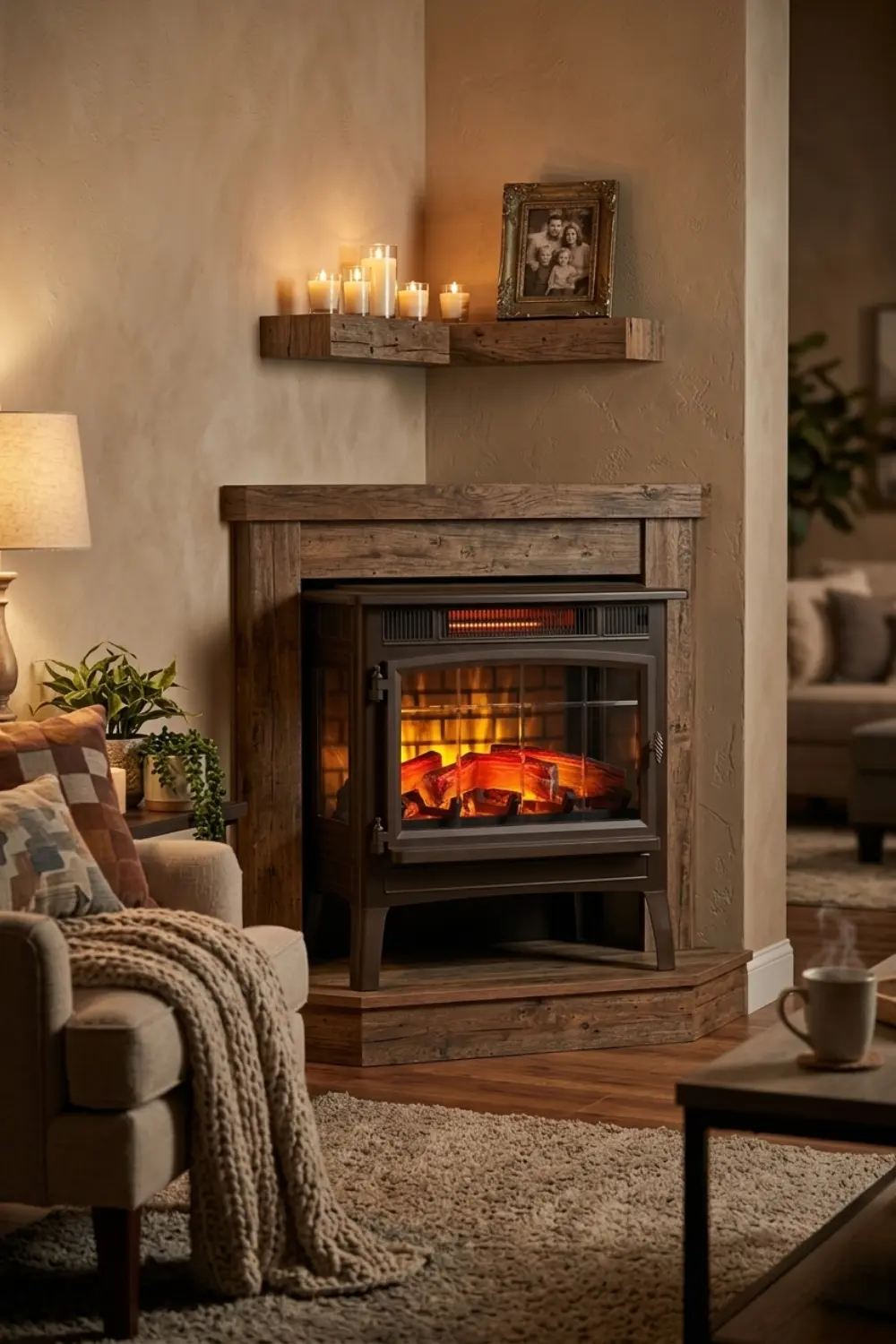
14. Use a Corner Fireplace or Electric Fireplace for Warmth
 Save it
If you don’t have a central fireplace but want the warm, cozy feeling, a corner electric fireplace is a great solution.
These don’t require chimney installation, just plug them in. Some actually provide heat, some only work visually (LED flames).
Above the fireplace you can put a small shelf where you place decorations—candles, frames, plants. This gives a bit of “fireplace mantel” feel even if it’s not a real fireplace.
And tip: in winter this is actually usable for warmth—but in summer you can leave it there, just don’t turn it on. The furniture itself is nice and fills space.
Useful Tips: Small vs Large Room Version
If your room is small, corners are gold—because they occupy minimal floor space but give maximum visual impact. Favor vertical elements—tall shelves, floor lamps, plants layered in height. Avoid wide, sprawling furniture—if armchair, then slim-armed; if table, then narrow. Color should be light—white, beige, pale gray—because this optically opens. A dark corner in a small room makes the space feel even smaller. Plants work here too, but don’t put in three—rather one or two, well chosen. And important: one corner, one function. Don’t try to cram everything into one corner—reading nook orplant corner, not both at once.
If your room is large, corners easily get lost and remain “holes.” Here the goal: fill the corners so they don’t feel abandoned. Be bolder with larger furniture—an armchair + floor lamp + side table + plant—all in one corner won’t be too crowded. In fact, such a fuller corner creates a “mini zone” in the room that adds depth. In colors you can play too—not everything needs to be neutral. A darker corner (like black shelf, dark green plant) in a large room gives dramatic effect, not oppressive. And if there’s a corner you really can’t fill, rather leave it empty—but intentionally. Put a single statement piece there (like a large sculpture, a giant plant) and let it live on its own. Less is more.
Okay, now you know how to build out corner spaces—but what should you not do? Let’s look at the most common mistakes that ruin corners even when you do everything else right.
Common Mistakes to Avoid
1. Too many small items, zero cohesion
The biggest mistake is people treat corners like dumping grounds for random things that don’t have another home. Four different style plants, two non-matching frames, a lamp, a random chair—and nothing belongs together. Result: visual chaos, not decoration.
Instead: choose one theme for the corner. If plant corner, only plants (maximum 3, at different heights). If reading nook, then armchair + lamp + maybe table. Don’t mix ten different ideas in one spot.
2. Everything the same height—zero dynamism
If every element in the corner is the same height, it’s boring and flat. Three 60 cm plants next to each other—why? No visual interest.
Vary heights. If plants, one tall (120 cm), one medium (60 cm), one low (30 cm). If furniture, tall lamp + low table. This gives vertical dynamism and draws the eye.
3. Too deep furniture for small corner—oppressive
A huge, deep armchair forced into a small corner—that’s a disaster. Visually crushes the space and looks like it was shoved in, not organically fitted.
Measure first. If the corner is tight, choose narrower furniture. An armchair doesn’t need to be 90 cm deep—there are 60-70 cm ones that are just as comfortable but take less space.
4. No light—corner stays a dark hole
Many corners are naturally darker because they’re far from windows. And if you don’t add lighting, a dark, unfriendly hole remains that nobody looks at.
Add light. Floor lamp, table lamp, or even small LED strip. Light is what makes the corner alive, not just decoration.
5. Random colors—zero cohesion
A green plant, red pillow, yellow lamp, blue vase—all in one corner. This isn’t eclectic, it’s chaotic.
Choose a color palette—maximum 3 colors—and stick to it. If your room is white-gray-green, the corner should be in that palette too. Consistency is what looks professional.
Frequently Asked Questions
How do I decide what to put in an empty corner?
First determine the room’s function and style. In a living room it could be reading nook, plant corner, or mini bar. In a bedroom it could be dressing corner, makeup area, or meditation spot. See what light you have (sunny corner good for plants, darker corner good for lamp). And check the size—small corner: vertical element (lamp, tall plant). Large corner: armchair + accessories. Don’t force in what doesn’t fit—rather leave empty if nothing works.
How much does a well-furnished corner cost?
This varies, but a basic corner can be assembled for about $50-200. A floor lamp ($40-80), a plant ($15-30), a small table ($30-60). If you need an armchair, that’s pricier ($150-400), but you can find cheaper used. The point: don’t try to buy everything at once—start with basics (lamp or plant) and expand over time. Often the best corners are those that build slowly, not in one shopping trip.
How do I decorate a corner without it feeling cluttered?
The rule: 3 elements maximum in a small corner. For example: one plant + one lamp + one table. Or: three plants at different heights. Don’t try to fit everything. Choose one main element (this is the biggest, most noticeable), and beside it 1-2 smaller accessories. And let there be empty space—this is what breathes. If you feel like something else could fit—stop. It’s probably already enough.
Does corner decor work in rental apartments too?
Absolutely. Most corner decor doesn’t require drilling or permanent installation. Floor lamps, plants in planters, smaller furniture (armchair, table)—all mobile. If you want shelves, use wall shelves with command strips that don’t damage the wall. Avoid built-in solutions and stick with freestanding furniture. When you move, everything comes with you.
Final Thoughts
Look, corners aren’t just “leftover spaces” in a room. These are the points where space gets completion, where depth forms, and where you can show a bit of personality without overloading the room.
What you’ve learned in this article isn’t just about decoration—it’s about thinking differently about space. That verticality matters more than horizontal spread. That grouping and layering gives depth. That light is what makes corners alive. That functionality isn’t the opposite of aesthetics but part of it. And that sometimes the best corner is an empty corner—because negative space is just as valuable as filled space.
Don’t feel you need to do everything at once. Pick one corner, start with it. Try a floor lamp, or a plant, or an armchair. See how it feels. Then if it works, move on. If not, change.
Corners aren’t complicated—they just need attention. And when you pay attention and handle them intentionally, your whole room transforms. Because the details—corners, small spaces—those make the difference between a “looks good” room and a “feels like home, thoughtful, truly lived in” room.
Go look at a corner. And do something with it. It deserves it.
This post contains affiliate links. I may earn a small commission at no extra cost to you.
Get cozy inspiration delivered to your inbox.
✓ 14-page beautifully designed ebook
✓ Cozy decorating ideas
✓ Practical room-by-room inspiration
You’re in! 🎉
Thanks for joining the NestFlowHome community!
Your free ebook is already on its way to your inbox. If you don’t see it within a few minutes, please check your Promotions or Spam folder.
Join the NestFlowHome community for weekly decorating inspiration.

Timeless home decor ideas and slow living inspiration for a calm, beautiful life.