
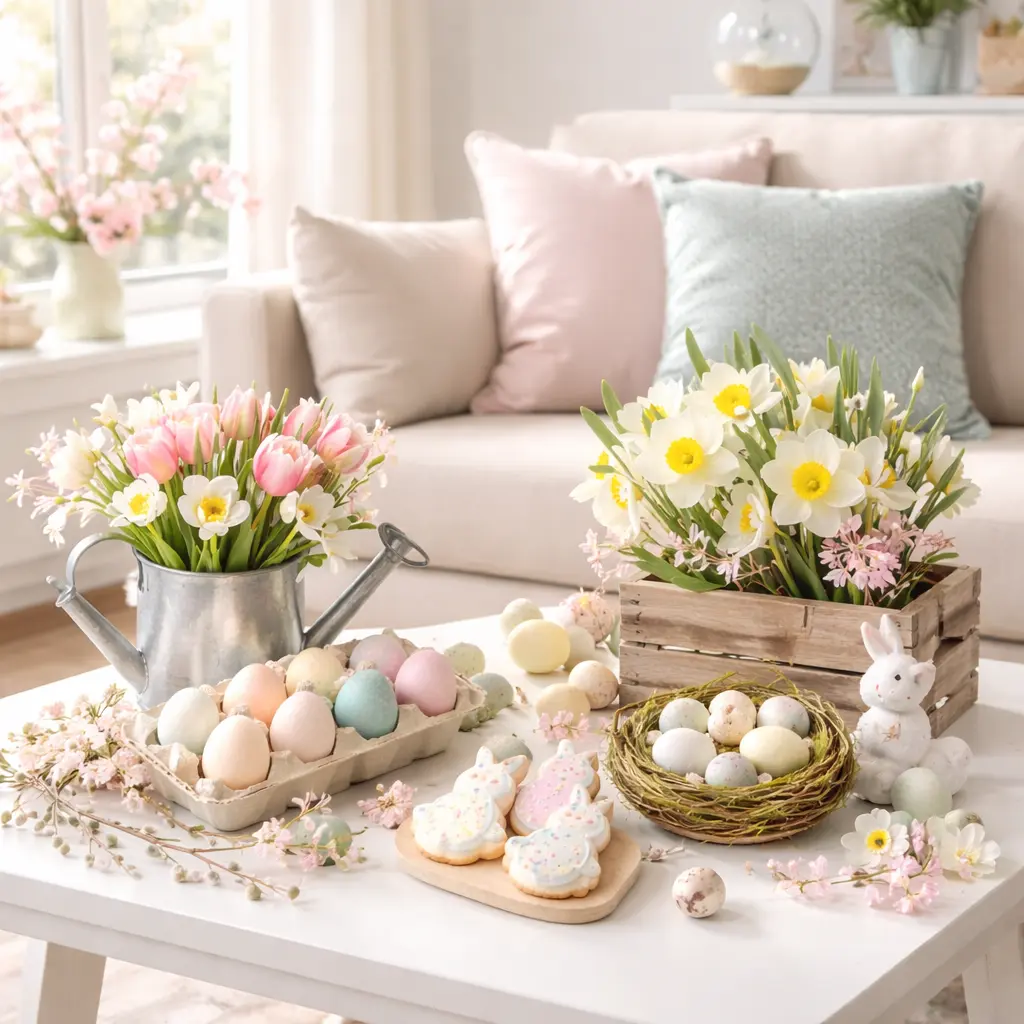
Simple Spring Decorating Ideas for a Fresh Seasonal Look
By Emily | February 2, 2026
Spring decorating isn’t about replacing everything in your home. It’s about small changes that make the space feel lighter, fresher, and more open. Subtle shifts can have an outsized impact. After months of heavy textures and muted tones, even minor updates — light textiles, fresh accent colors, or natural elements — can transform a room. The goal isn’t to overwhelm but to refresh strategically. Too many changes at once create clutter instead of clarity.
I learned this when updating my own home for spring. A few carefully chosen throw pillows, a small arrangement of greenery, and lighter curtains immediately lifted the mood without disrupting existing style. The space felt renewed, inviting, and effortless. Seasonal decorating works best when guided by intention rather than trends. By editing, layering, and emphasizing the right elements, you can create a home that reflects the season while remaining cohesive year-round.
In this article, you’ll find simple, practical spring decorating ideas that refresh your home without stress. You’ll learn how to select accents, work with textures and color, and design small interventions that create a noticeable seasonal shift.
By the end, your home will feel lighter, fresher, and fully alive for spring — all without adding unnecessary clutter.
Declutter and Visually Lighten – Let Go of Winter’s Weight
 Save it
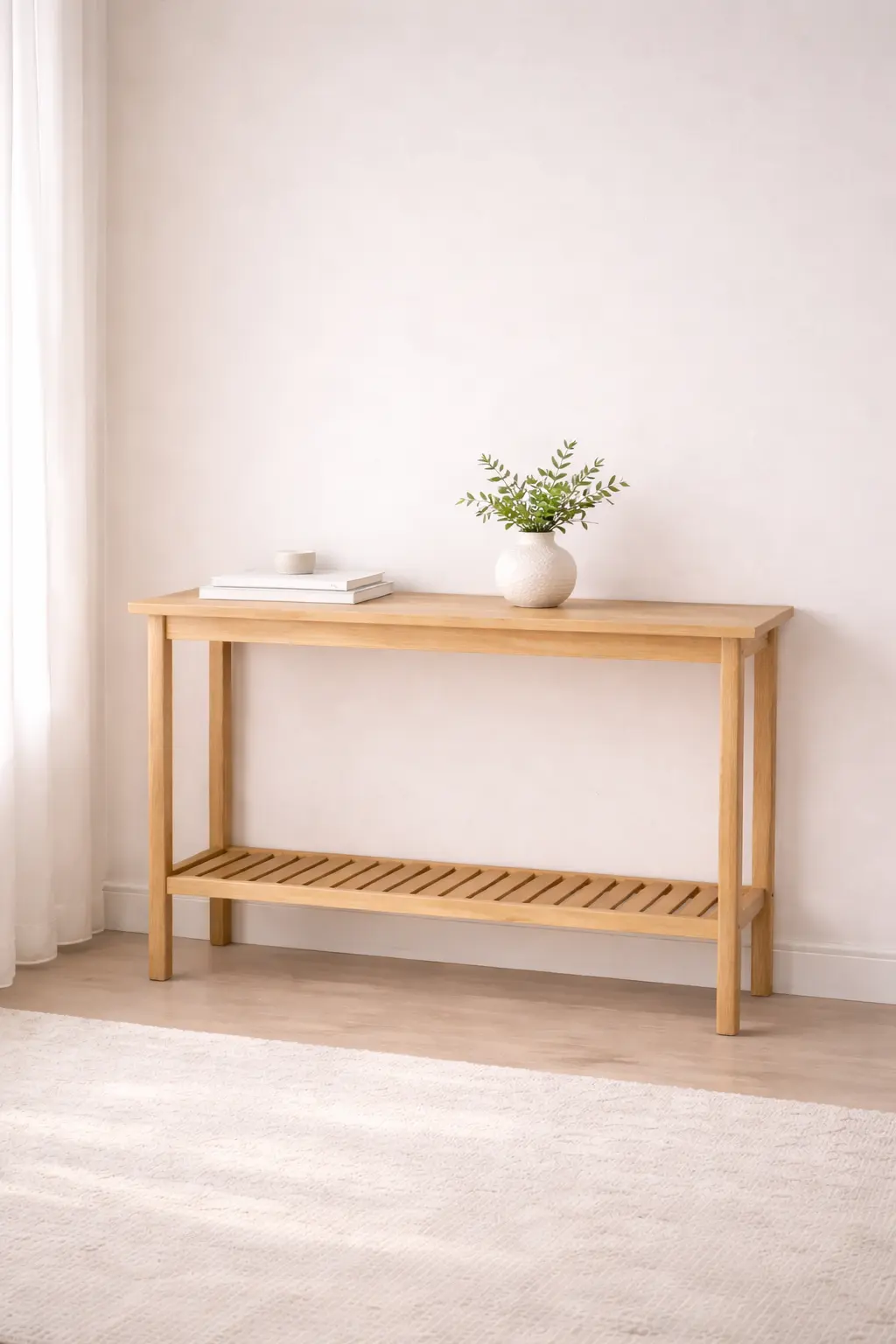
Before you add anything, take something away. One of the most important secrets to achieving a premium look is conscious minimalism.
During the winter months, we tend to surround ourselves with thick textiles, darker tones, and layered textures. In spring, however, the space needs air. Start by removing heavy throws, dark pillows, and overcrowded surfaces.
Visual rest creates the foundation upon which seasonal decor can build elegantly. If you skip this step, even the most beautiful floral arrangement will simply become visual noise.
A Light Color Palette – The Air of the Room
 Save it
One of the most subtle yet powerful tools of a spring refresh is color. I’m not talking about bright, loud tones, but soft shades that almost invisibly lighten the space.
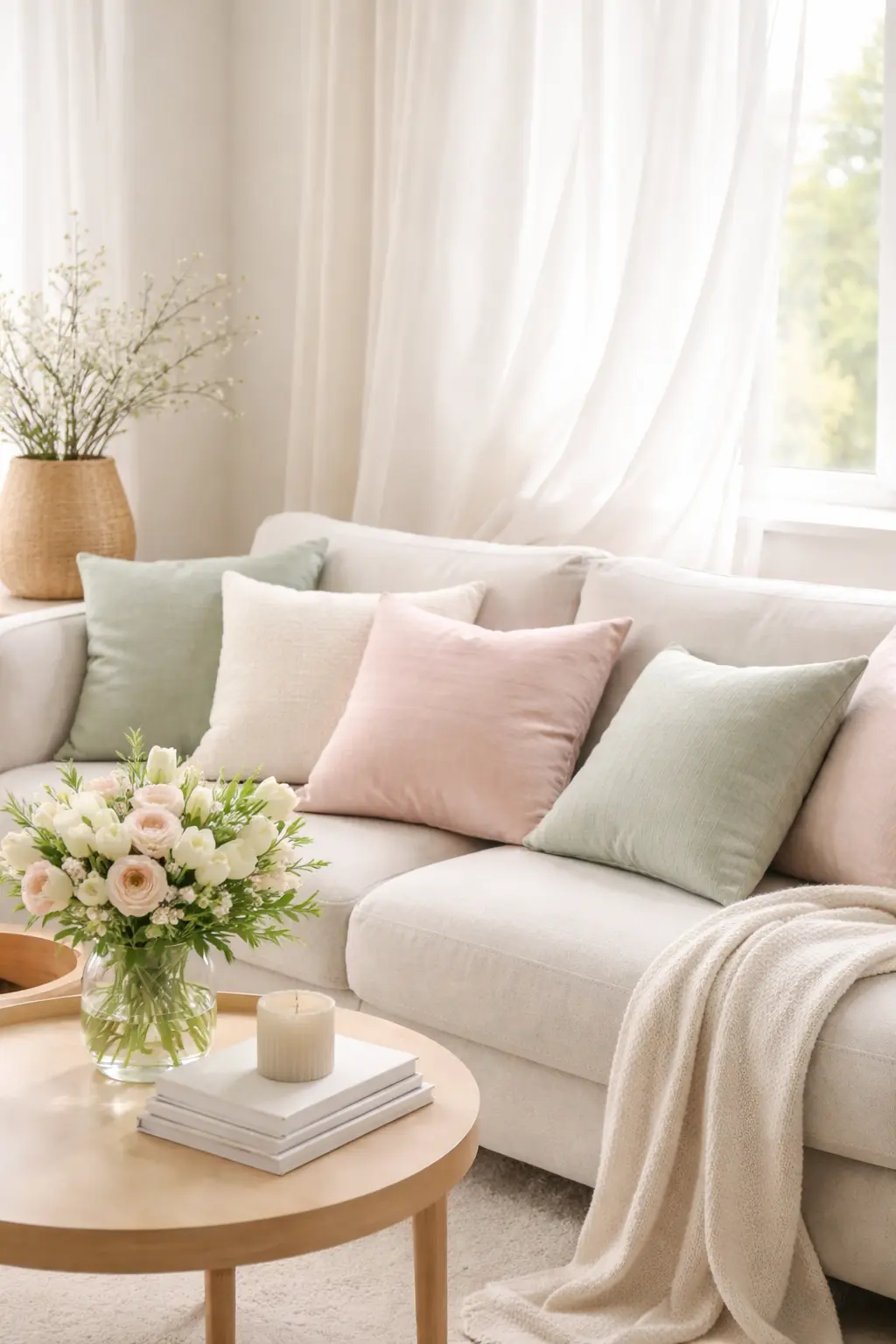
Winter often brings deeper colors: dark brown, burgundy, charcoal gray, heavy textures. In spring, however, our eyes instinctively turn toward light. It’s worth transitioning to off-white, cream, soft sage green, muted peach, or powder pink tones. These shades don’t dominate the space — they gently support it.
The simplest yet most impactful change is switching textiles. Spring Pillow Covers work beautifully when you view them not as bold patterns, but as atmospheric accents. Choose subtle graphics and natural tones. You don’t need bunny motifs everywhere — a refined seasonal hint is more than enough.
When it comes to color, intention matters. Ask yourself:
– Does this shade calm or stimulate?
– Is it in harmony with the wall color?
– Does it connect to nature?
A premium look is always coherent. The goal isn’t to make the room scream “spring,” but to make it feel lighter, brighter, and more open.
Natural Compositions – Lifelike Beauty Without Maintenance
 Save it
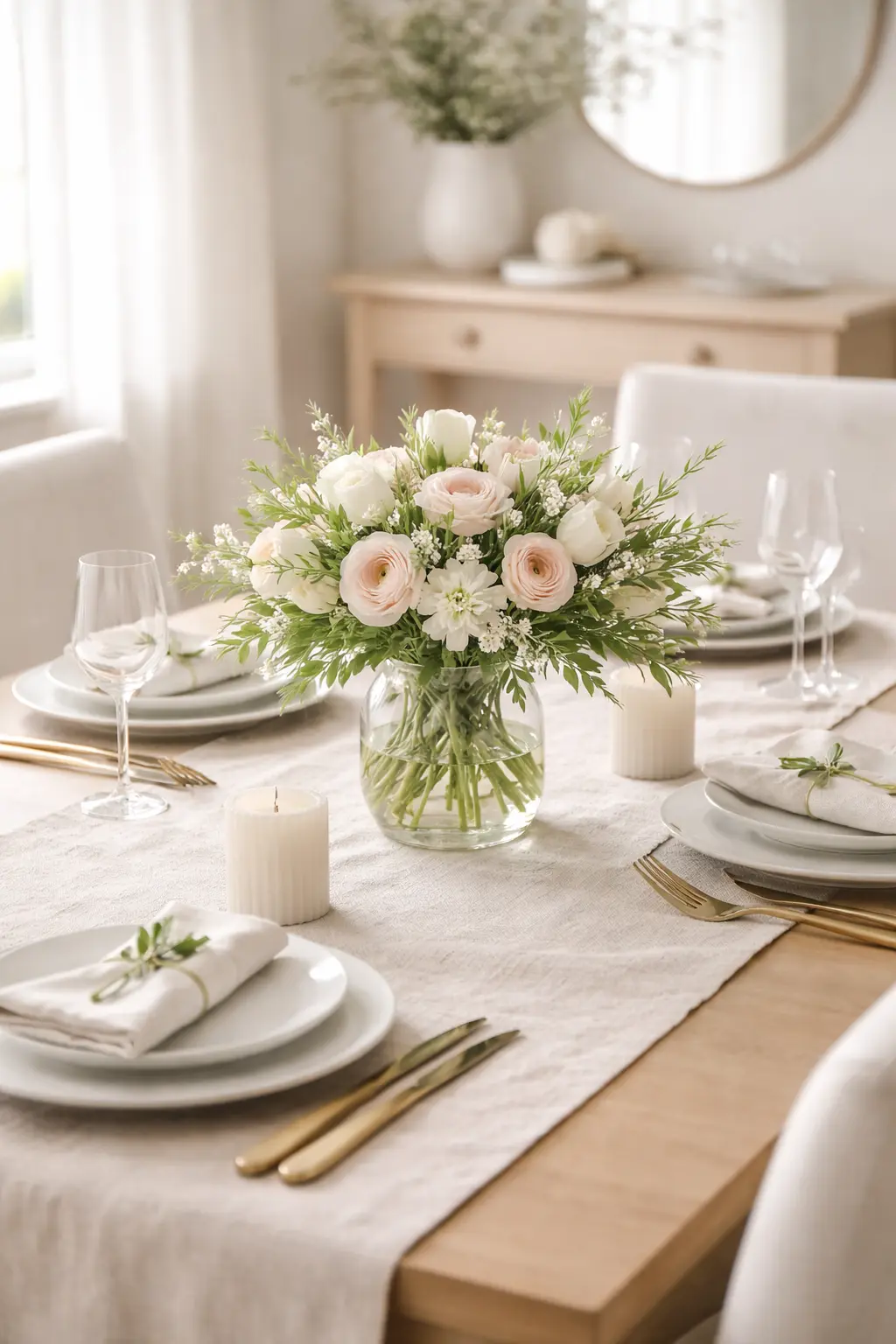
Flowers are the symbol of spring. But it’s worth stepping back and not viewing them merely as decoration. A well-placed Artificial Flower Arrangement is not just an aesthetic element. It structures the space. It defines a focal point. It creates rhythm.
Modern artificial arrangements represent an entirely different level of quality than what many of us remember. The texture of the petals, the subtle color gradients, the detailing of the leaves all contribute to a natural appearance. But the real key is not the object itself — it’s the placement.
Try this mindset:
• One proportional arrangement centered on the dining table.
• In the living room, on the coffee table beside a stack of books.
• In the entryway, on a narrow console so it sets the tone upon arrival.
Don’t over-layer. One arrangement can be enough for an entire room. A premium interior is not about quantity, but balance.
Small-Scale Freshness – Subtle Details, Big Impact
 Save it
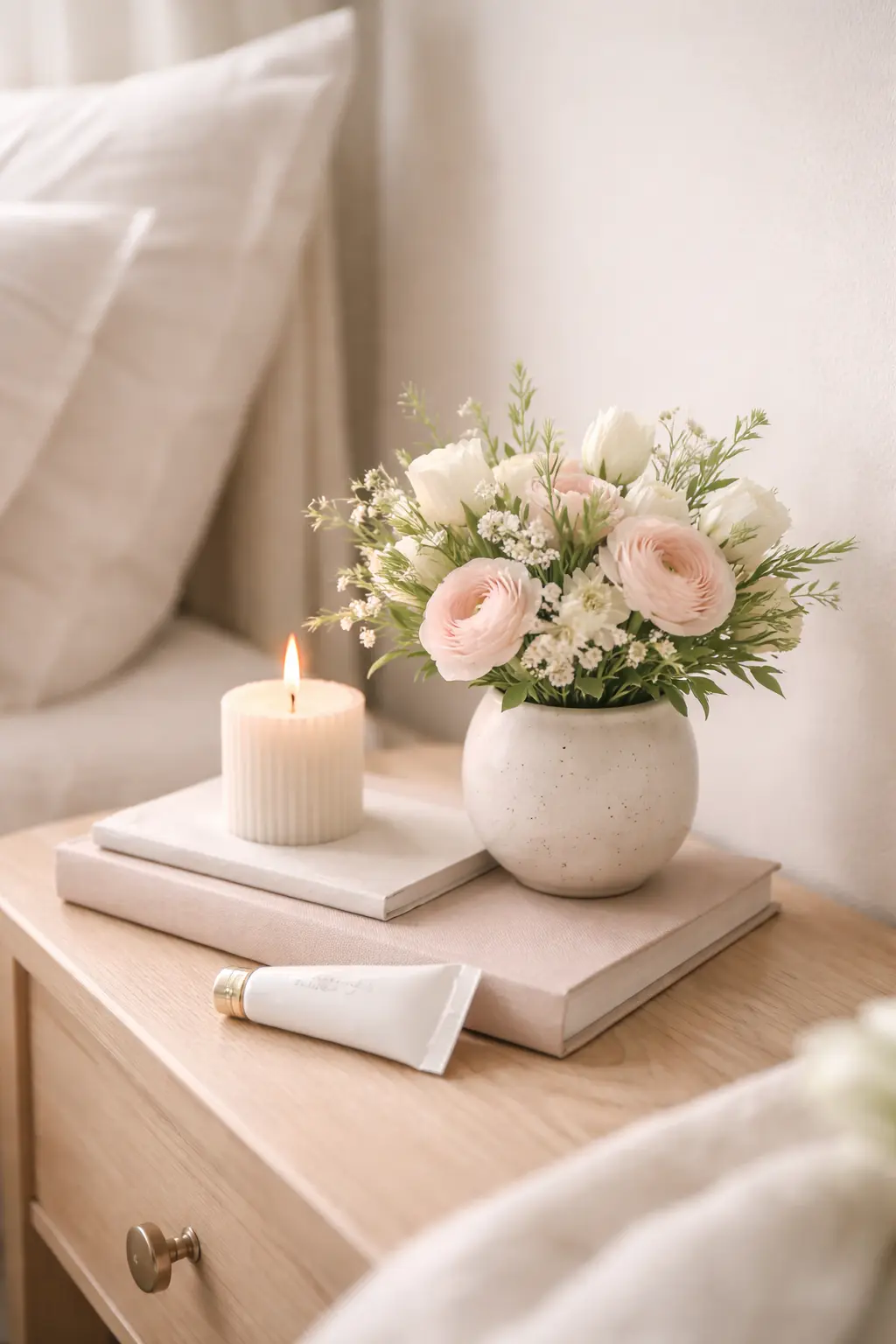
Not every decorative element needs to dominate. In fact, the smallest details often create the most refined effect. Artificial Flowers with Ceramic Pot are a perfect example. These small-scale pieces are not the main characters — they are supporting notes. On a bathroom shelf, a bedside table, or a kitchen windowsill, they quietly bring life into the space.
The ceramic base is important. It evokes the feeling of natural material, even if the flower itself is artificial. This small detail elevates the overall look.
If you use multiple pieces, avoid lining them up in a straight row. Play with height, spacing, and asymmetry. Irregularity feels more organic.
This scale is exciting because it’s not a radical transformation. It’s more like the room quietly beginning to breathe.
Mood and Light – Spring After Sunset
 Save it
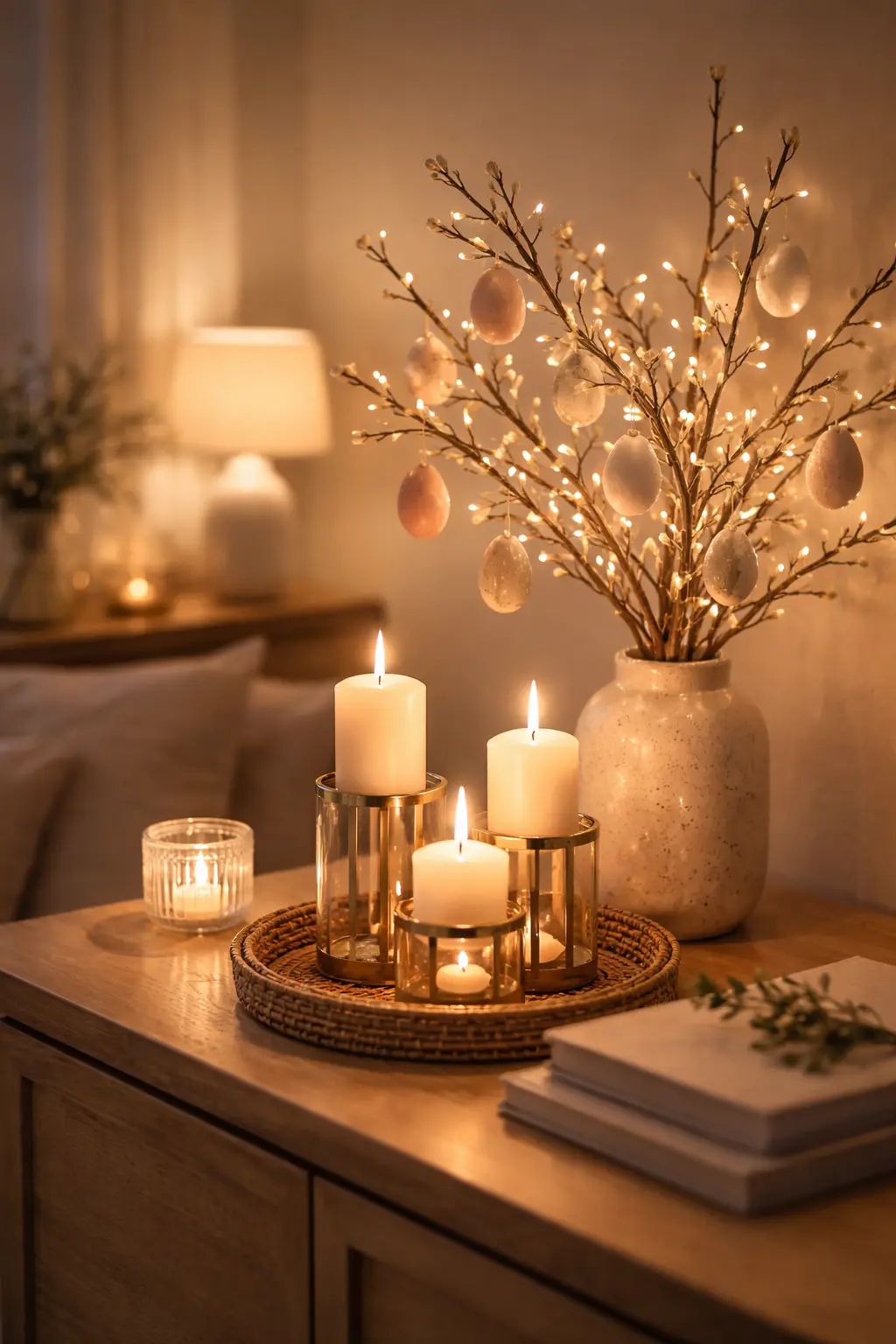
Most people think in daylight when decorating. But the real magic happens in the evening. Warm light sources soften edges, create intimacy, and add depth to a space. Spring Floral Candle Holders are not simply candle accessories — they are textural elements that introduce shadow and layering into a composition. When combined with a neutral table runner, the entire tablescape feels more cohesive and refined.
The Pre-Lit Easter Egg Tree works best when it’s not centered, but placed slightly off to the side. In a corner, on a console, or atop a cabinet, it acts as a subtle light source. It doesn’t need to become the festive focal point — it can simply serve as atmospheric background.
And here’s the important thought: don’t just look at the object itself, but at how it transforms the entire room. Turn off the ceiling light, light a few candles, and observe how the atmosphere shifts.
Spring decor is not purely visual. It’s mood. Intimacy. A gentle transition from winter into lightness.
How to Combine These Intentionally
The key is not to purchase every listed item. The key is to build a story.
Think of your space like a magazine photo:
– Who is the main character?
– What supports it?
– Where is the visual pause?
In a living room, for example, the focal point could be an elegant artificial floral arrangement on the table. This might be complemented by two subtle pillow covers and a candle holder. In the entryway, a wreath and a small ceramic potted flower may be enough.
Less truly is more here. Spring decor works best when it doesn’t dominate the space — but blends into it.
Common Mistakes – What to Avoid in Spring Decorating
1. Using Too Many Themed Elements
Easter decor can easily become childish or overwhelming. If every surface displays eggs, bunnies, and bright colors, the result feels chaotic. Instead, choose one or two themed elements and keep the rest neutral.
2. Cheap-Looking Artificial Flowers
Not all artificial flowers are equal. Low-quality pieces can instantly diminish the elegance of your interior. Instead, opt for fewer but high-quality Artificial Flower Arrangements that look natural.
3. Overmixing Colors
Pastel doesn’t mean every pastel shade must be present. The solution: stick to a maximum of three main colors that harmonize with each other.
4. Ignoring Lighting
Decor may look good during the day, but it comes alive in the evening. Without proper mood lighting, the entire concept loses strength. The warm glow of a decorative egg tree or candle holder instantly creates intimacy.
Frequently Asked Questions
How can I make my living room look more expensive in spring?
The key lies in textures and proportions. Replace pillow covers, use a quality table runner, and choose one focal point — such as an elegant floral arrangement.
How do I decorate without creating clutter?
First minimize, then layer. Always leave empty surfaces. Think in compositions, not individual objects.
Artificial or real flowers in spring?
If you want a long-term, maintenance-free solution, high-quality artificial arrangements are an excellent option. Modern designs look surprisingly natural.
How should I decorate my entryway for spring?
An elegant Easter wreath and a small potted flower can already create a fresh seasonal atmosphere.
Closing Thoughts
Spring home styling is not about filling the space with new objects. It’s about lightening it. Allowing more light, more air, more natural softness.
If you choose intentionally — a wreath on the door, a few elegant pillow covers, a restrained floral arrangement, or cozy candle holders — your home won’t just be seasonal. It will be harmonious.
Remember: a premium feel always lives in the details.
If you’re looking for more seasonal interior inspiration, explore the minimalist living room styling guide, where we dive even deeper into the interplay of textures and light. Spring is already here. Let your home breathe with it.
This post contains affiliate links. I may earn a small commission at no extra cost to you.