
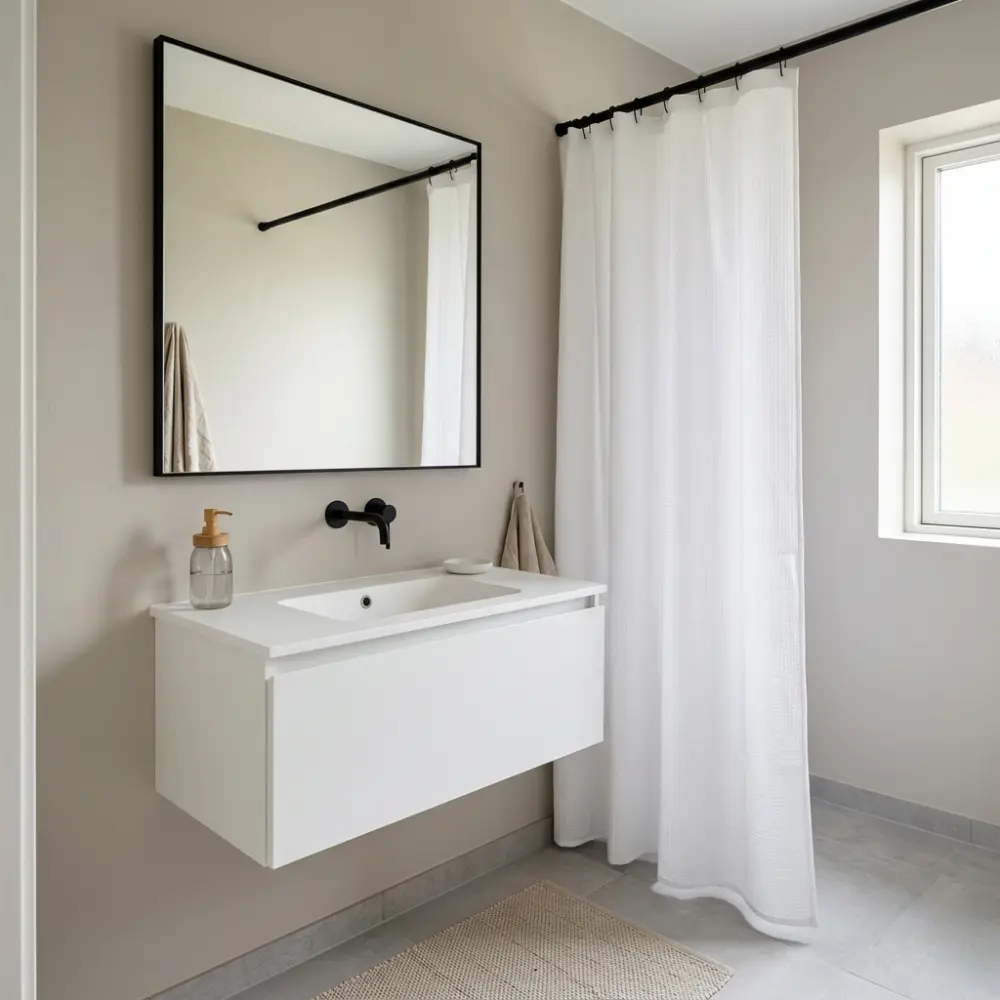
How to Make a Small Apartment Bathroom Look Bigger with Minimalist Decor
By Emily | May 22, 2026
You know that feeling when you step into your bathroom and instantly feel like the walls are closing in? You’re not alone. In most urban apartments, the bathroom is where designers clearly skimmed on square footage, and suddenly you’re there with the shower curtain practically hanging over your sink while you’re trying to catch your breath.
But here’s the good news: your small bathroom doesn’t look claustrophobic because it’s small—it looks that way because it’s visually cluttered, optically compressed, and probably loaded with too many “well-meaning” decorations. The minimalist approach isn’t about giving up style or personality. Quite the opposite: it’s about making sure every single element has purpose and breathing room.
In this article, I’ll show you how to use minimalism not just as a style principle, but as a visual trick that genuinely expands the space—without needing to knock down walls or buy an investment property.
1. Embrace the Power of White and Light Neutrals
 Save it
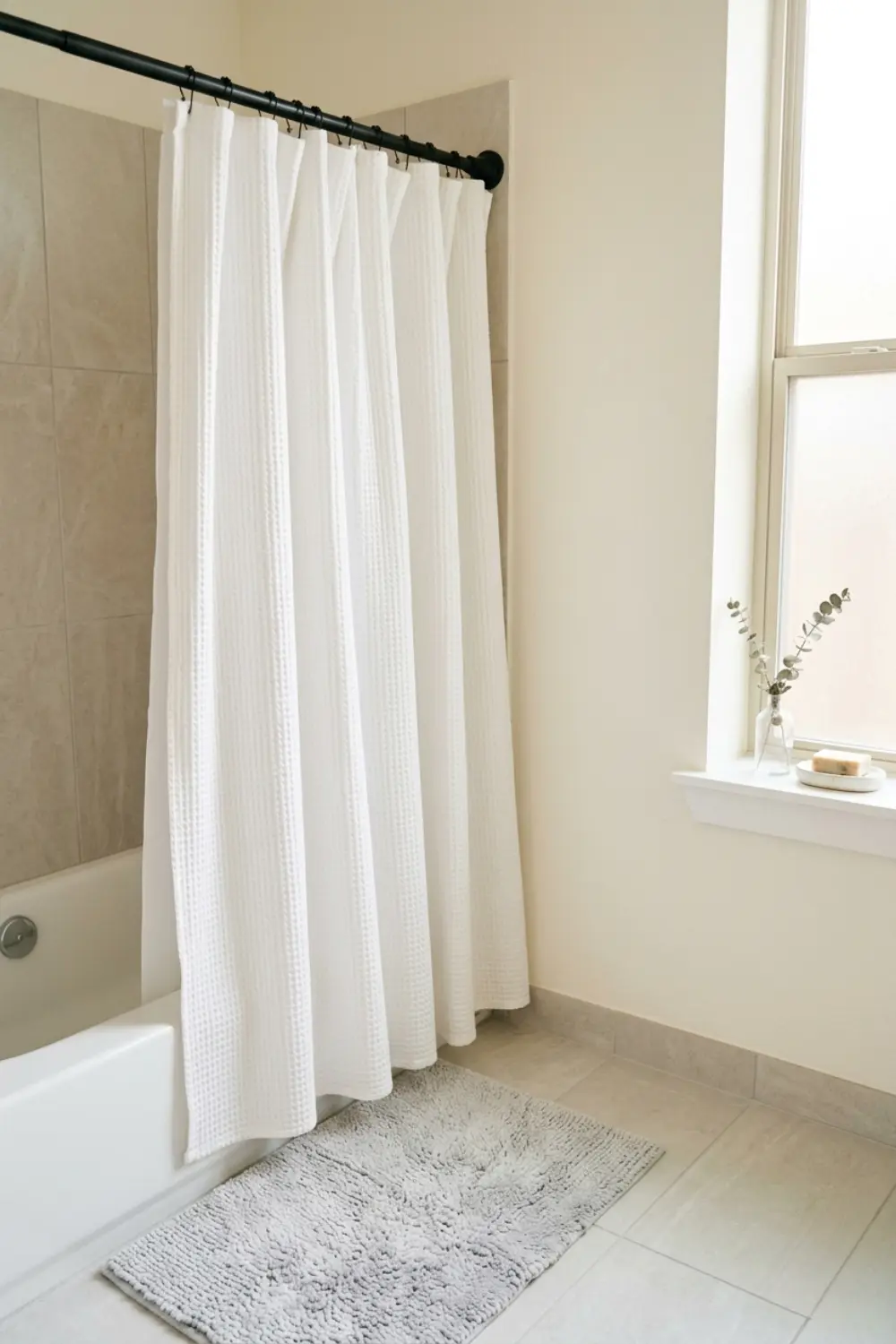
The first and perhaps most radical step you can take is to rethink your bathroom’s color palette. This isn’t about painting everything white and accepting a sterile hospital vibe—it’s about understanding how light, neutral tones manipulate light reflection and spatial perception. When you work with white or cream-colored surfaces, light doesn’t get absorbed; it bounces off the walls, tiles, and creates an atmosphere that feels airy and open.
Start with the walls. If you’re renting and can’t paint, consider using a neutral shower curtain with a light texture—the waffle weave adds enough visual interest without breaking the flow. If you own, choose a soft, warm white (not sterile cold), and if you’re bold, even a very pale greige that gives understated elegance.
On the floor, stick to light tones as well. A light greige or whitish bath mat visually extends the floor rather than interrupting it with dark spots. It’s important to understand that when your eye travels through the space without getting stuck on contrasting changes, your brain perceives the room as larger.
The [How to Achieve a Timeless Neutral Bathroom Decor Style] article dives deeper into how to build layers within a neutral palette without it becoming boring—and that’s a critical point because minimalist doesn’t equal uninteresting.
2. Strip Down to Essentials on Your Counter
 Save it
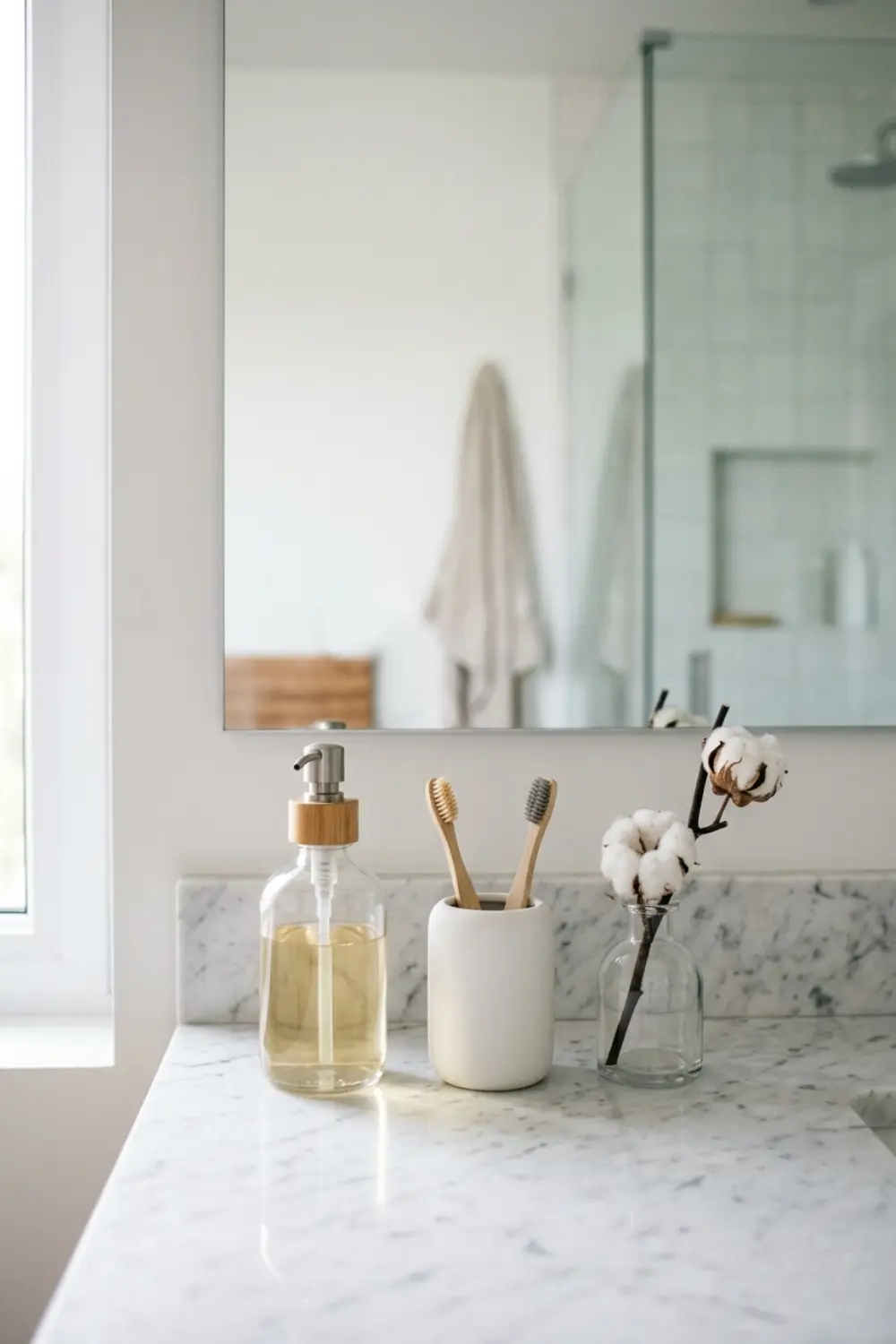
Your counter is not a storage unit—this needs to be your mantra. I know how convenient it is to line up your entire morning routine around the sink, but visually, this is what compresses the space the most. When ten or twelve products are sitting on the counter, your eye constantly jumps between them, and it registers as chaos, as crowding in your brain.
Choose a maximum of three items to leave out, and even those should be stored stylishly. A nice matte white or clear dispenser creates a professional feel and unifies the look. You don’t need your shampoo in its original bright plastic bottle stranded on the tile. Decant into neutral containers, and you’ll immediately see how much calmer the visual space becomes.
Store everything else away. Use drawer organizers or a closed cabinet under the sink. If you don’t have enough storage, a minimal-design shelf system along the wall can also work—but only if you place a few, carefully selected items on it.
The [Affordable Bathroom Counter Decor Ideas That Look High-End] article goes deeper into how to choose pieces that are minimal yet create an elevated feel—because minimalist style doesn’t mean it looks cheap.
3. Choose One Large Mirror Instead of Small Decor Pieces
 Save it
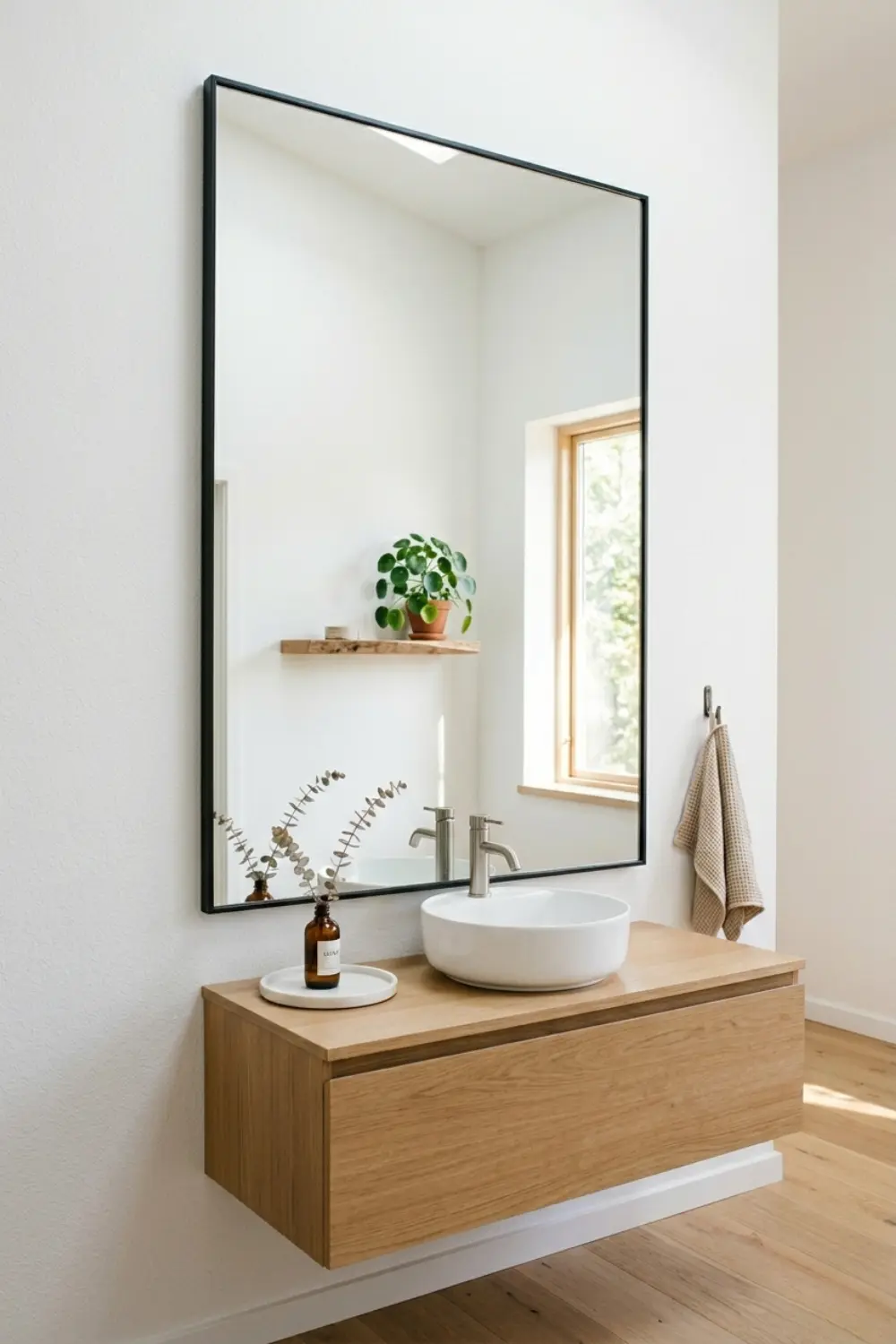
If there’s one thing that gives instant spaciousness to a small bathroom, it’s a well-chosen, large-scale mirror. And yet, many make the mistake of placing small decorative mirrors or crowded wall art around the space, which visually chops up the wall surface.
A large, framed or frameless mirror that covers almost the full width of the wall creates an optical illusion: it doubles the depth, reflects natural light, and creates a unified surface. If possible, choose a thin gold or matte black frame that gives subtle definition without being bulky.
Don’t be afraid to have the mirror start high and extend almost to the counter—the fewer blank wall spots around it, the better the spatial illusion works. If you’re in a rental and can’t swap out the existing small mirror, consider getting a larger overlay mirror that you simply hang over the original.
The [16 Stylish Bathroom Mirror Ideas for a Luxurious Look] article offers even more inspiration on how to choose a mirror that’s not just functional but powerful as a design element.
4. Use Vertical Storage to Free Up Floor Space
 Save it
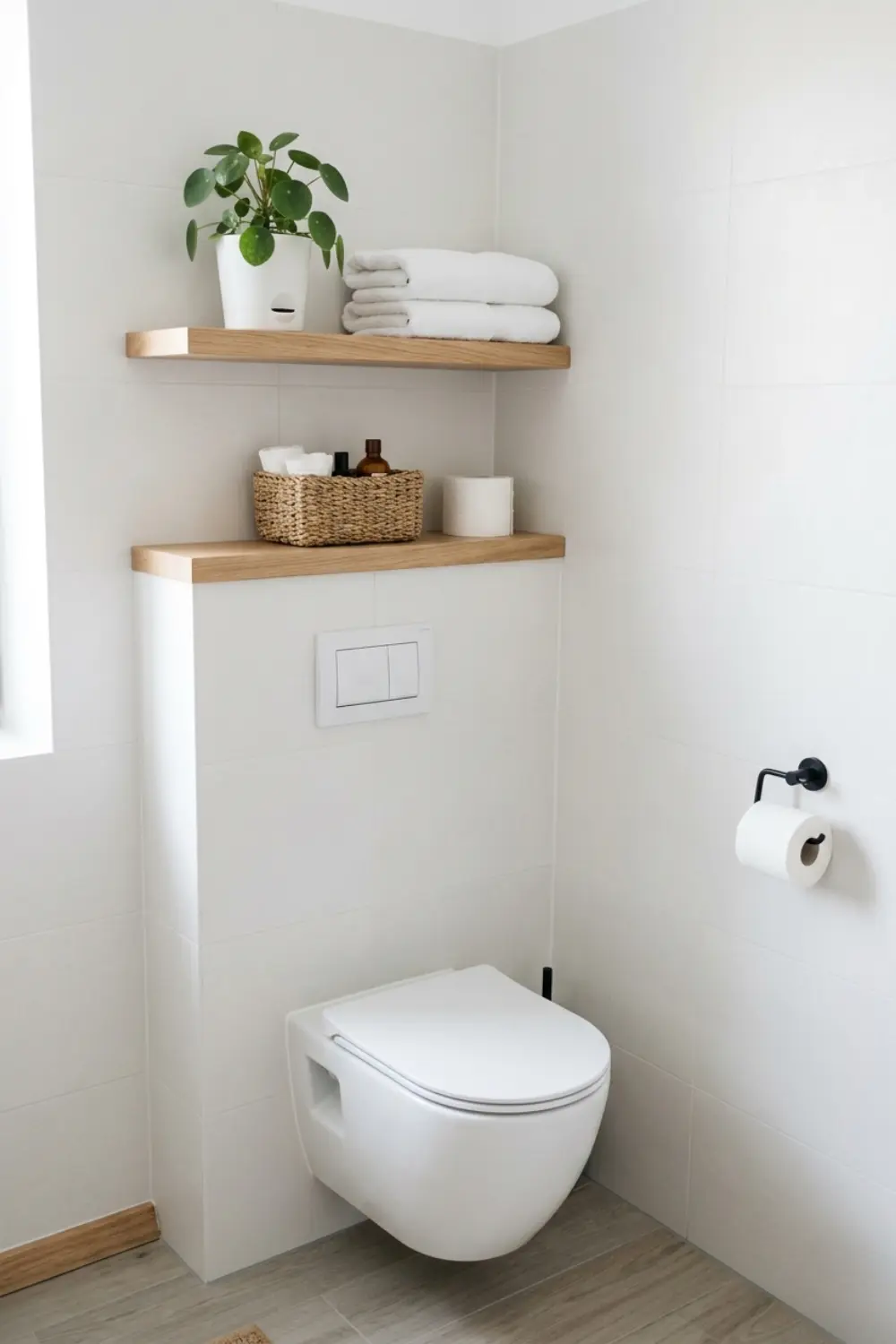
One of the core principles of a minimalist bathroom is that the more floor space is visible, the more spacious it feels. When towels, baskets, and bins are sitting on the floor, the brain immediately perceives the space as cramped. The solution? Think vertically.
Install wall-mounted shelves that go above the toilet or next to the sink and use the available space on a vertical line. Vertical storage is not only practical but also visually lifts the gaze upward, making the ceiling feel higher.
A minimalist leaning ladder towel rack is also a great option: it’s narrow, doesn’t take much space, yet it’s stylish and adds functionality. It’s important that these vertical elements aren’t overcrowded—maximum two towels on them, neatly folded, or else you lose the minimal effect.
The [18 Trending Above Toilet Decor Ideas for a Beautiful Bathroom] details how to leverage this often-neglected vertical space—because the area above the toilet can be the perfect spot for minimal storage or decor without feeling crowded.
5. Choose Slim, Wall-Mounted Fixtures
 Save it
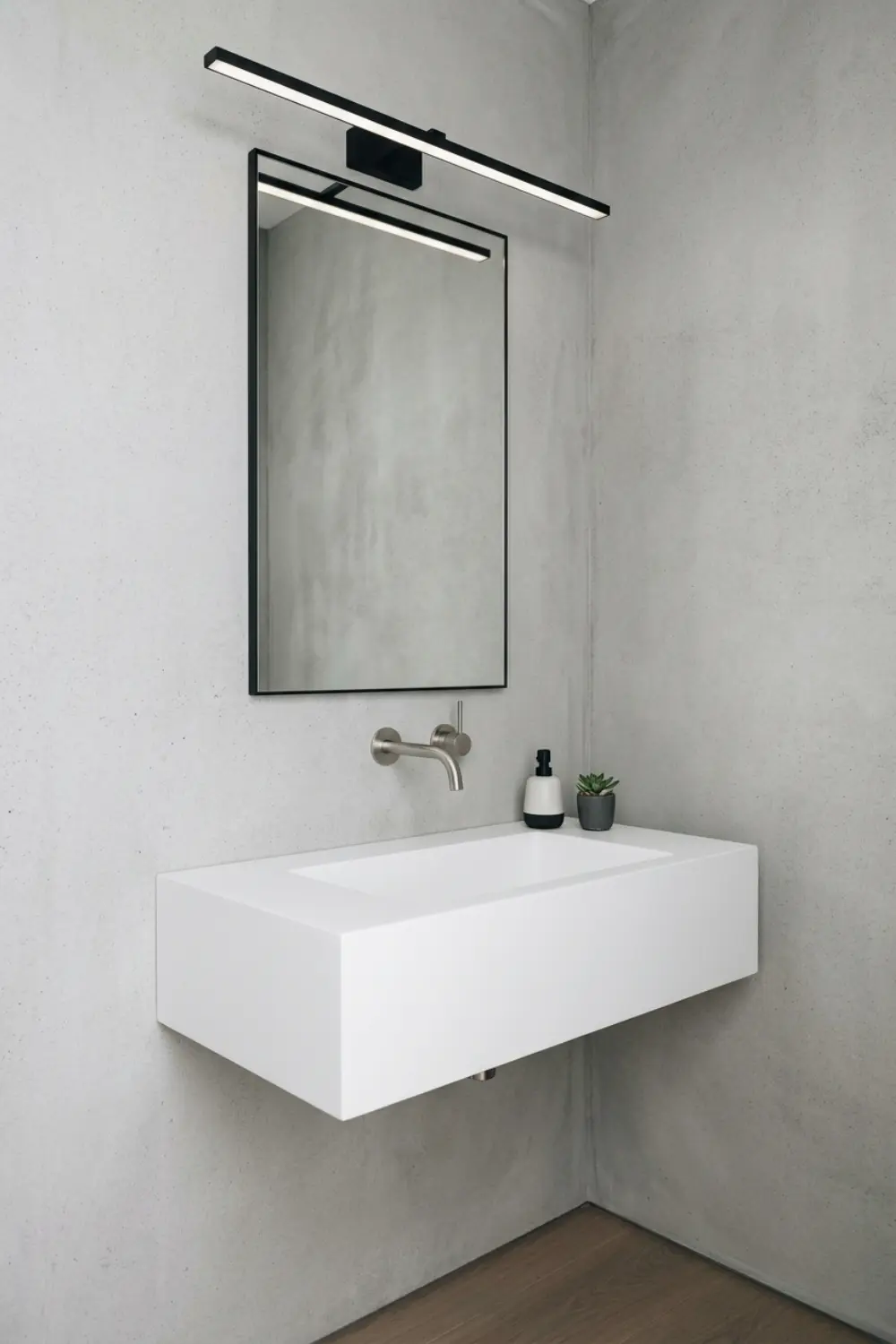
The shape of your sinks, faucets, and light fixtures has a massive impact on spatial perception. A bulky, protruding sink and faucet take up space both visually and physically. A slim-profile, wall-mounted sink (preferably floating, without legs) leaves the floor open, and the whole bathroom feels airier.
Similarly, for faucets, choose sleek, geometric designs that don’t protrude too much. Matte nickel or matte black finishes are modern and understated—avoid shiny chrome, which is visually louder.
In lighting, slim, linear forms work best too. A long, narrow wall sconce above the mirror gives more even light than several tiny bulbs and doesn’t visually chop up the space.
6. Avoid Heavy, Dark Textiles
 Save it
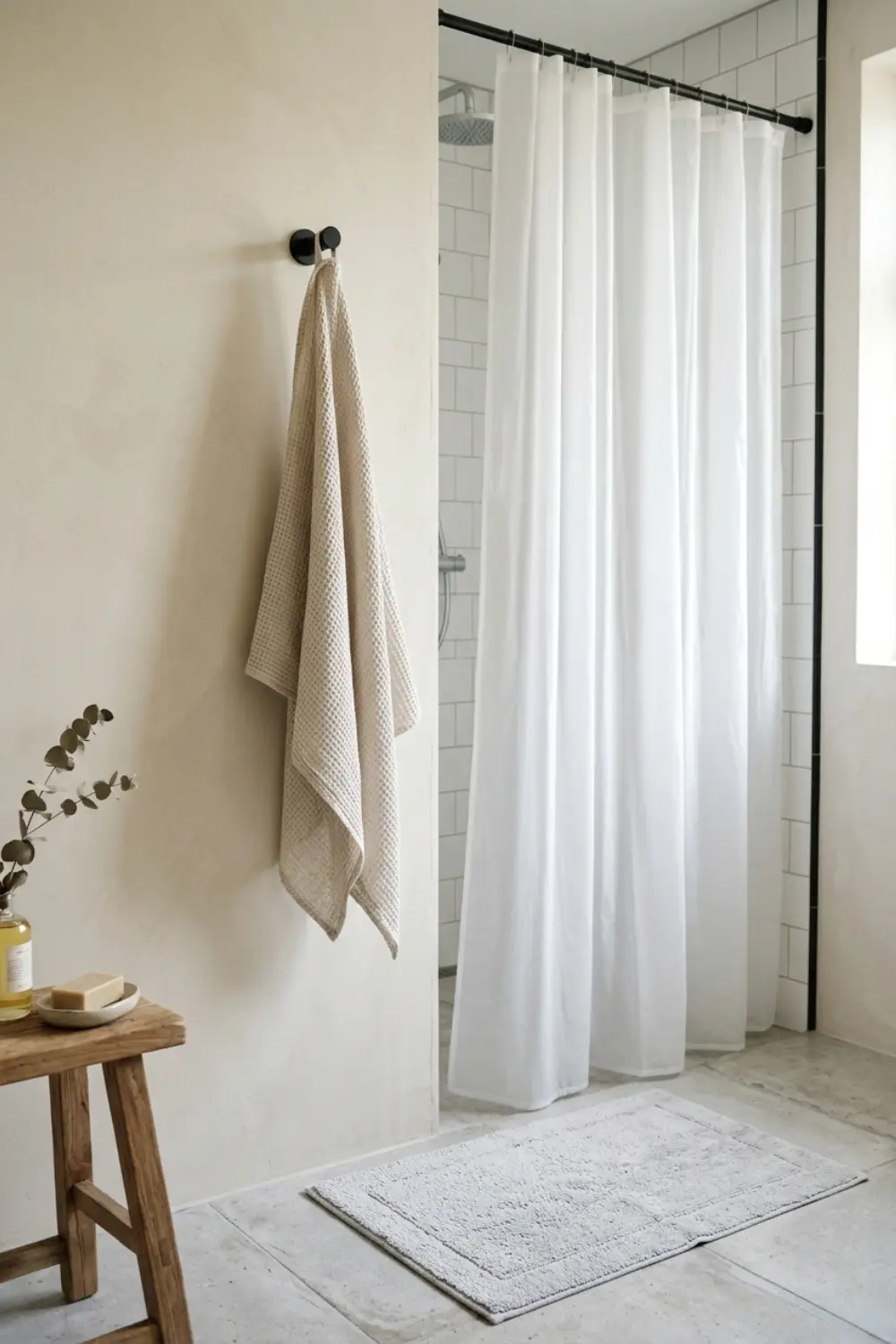
Textiles play a huge role in whether a space feels light or oppressive. Thick, dark towels and bath mats look heavy and visually drag down the space. Instead, choose lightweight, airy materials in light colors.
A thin waffle-weave or linen towel is much more modern than a traditional thick terry cloth, and it looks fresher too. The bath mat can also be thin-profile, maybe a cotton or bamboo piece that dries quickly and doesn’t look bulky.
For shower curtains, avoid heavy, dark materials as well. A white or greige, lightweight textile or EVA liner works much better.
Remember: the more light bounces back and filters through the fabrics, the more spacious the bathroom feels.
7. Use Hidden or Integrated Storage Solutions
 Save it
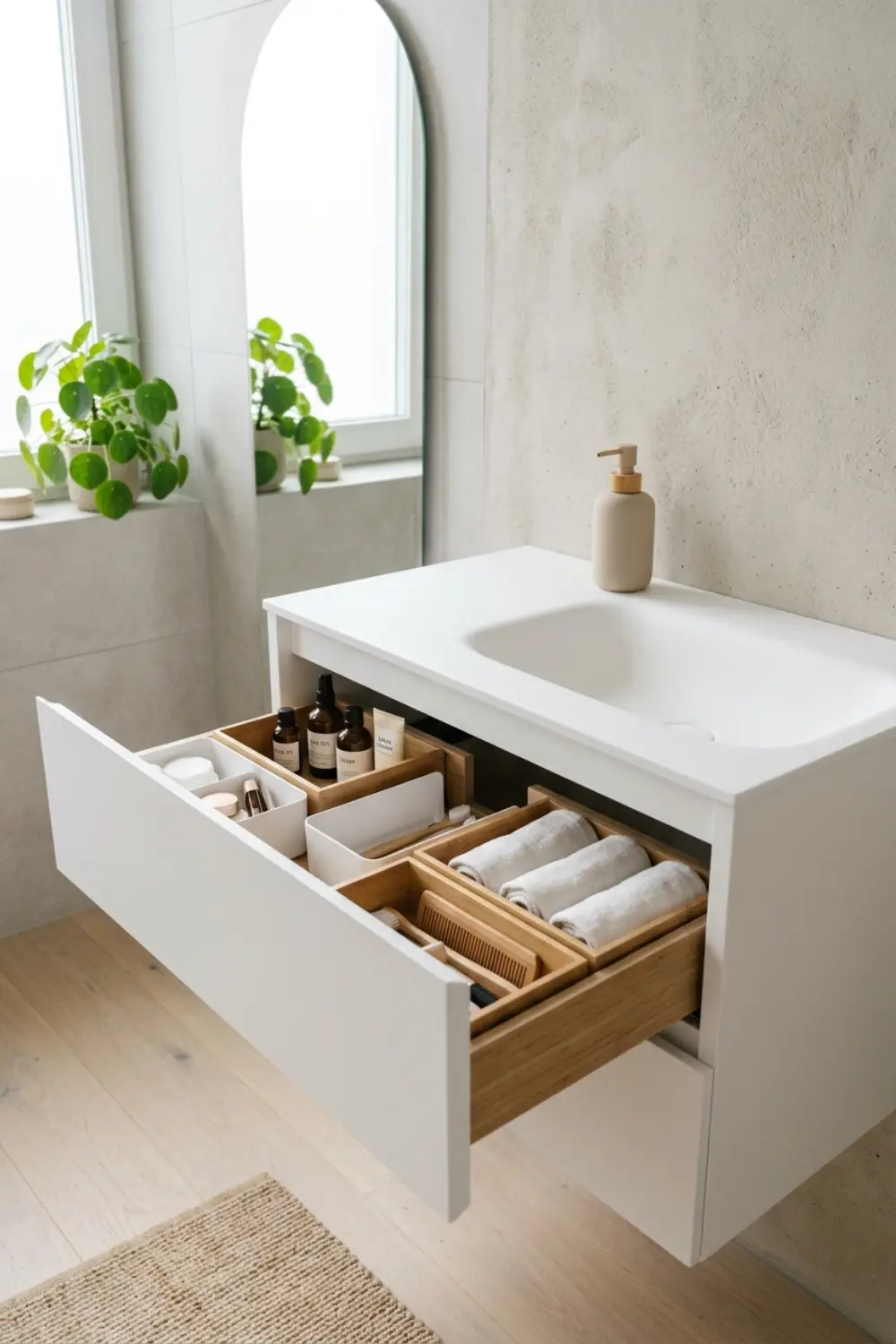
The secret of a minimalist bathroom isn’t that there’s no stuff—it’s that the stuff isn’t visible. Everyone has bathroom products, but they don’t need to sit on top of the counter.
Look for a sink with a built-in drawer, or use storage boxes inside cabinets. The point is to emphasize closed, hidden storage. In a minimalist bathroom, surfaces are clear—everything happens behind them, not on top of them.
Even if you have open shelves, make sure only a few carefully curated items are visible—say, three rolls of white towels, a small plant, and a simple soap dish. Don’t pile up fifteen different things because that’s exactly opposite to the minimalist principle.
The [Beautiful Bathroom Shelf Styling Ideas with Modern Decor Touches] details how to build visual order on open shelves—it’s important to balance function and aesthetics.
8. Choose Minimal, Geometric Decor Pieces
 Save it
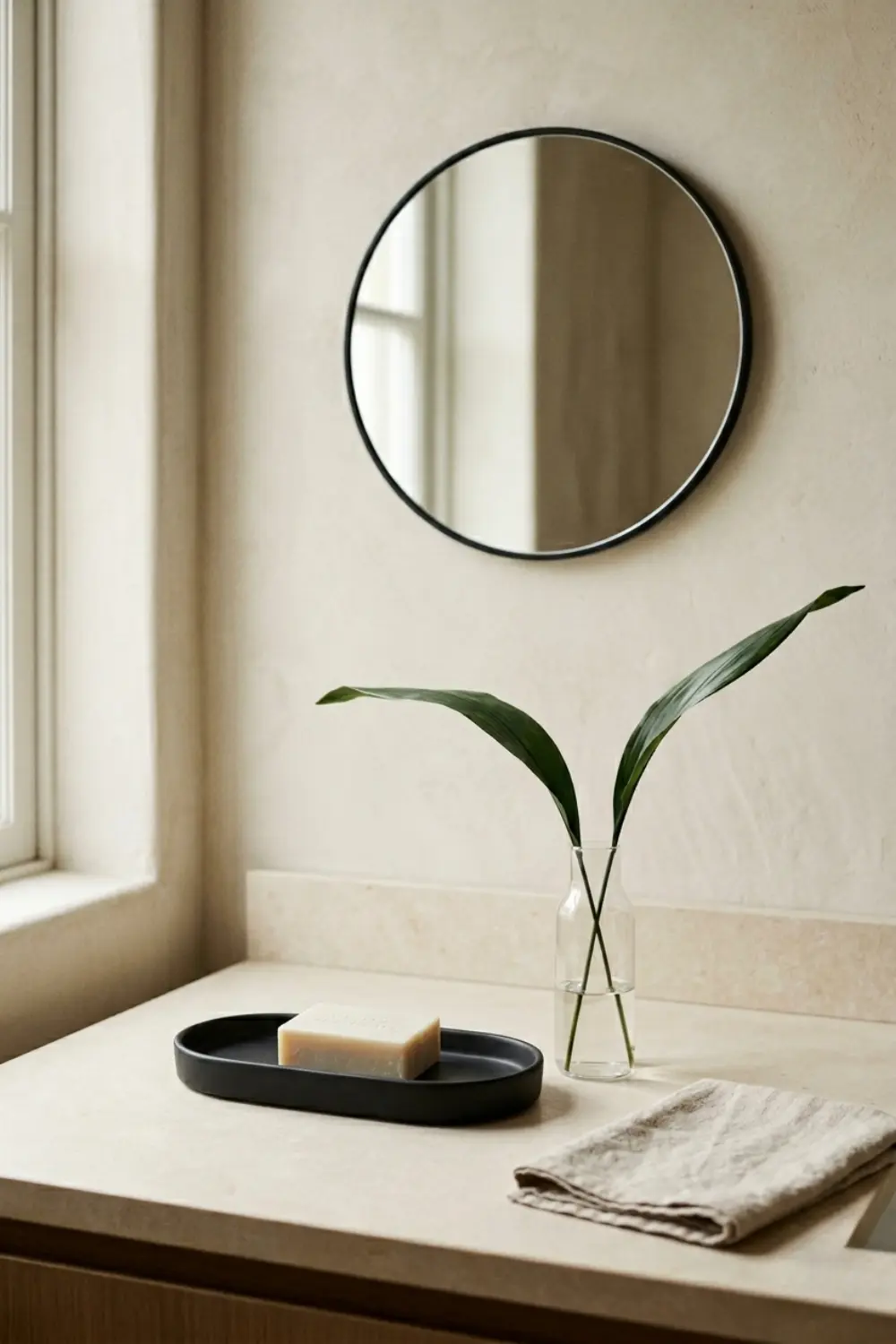
If you decorate, choose strictly minimal forms. Your bathroom doesn’t need to be a gallery—one or two simple, geometric pieces are enough. A matte black ceramic soap dish, a narrow glass vase, maybe a simple round mirror at another point on the wall—these are sufficient.
Avoid too many decorative elements, messy shapes, and crowded shelves. Minimalist decor is about clean lines, geometric simplicity, and intentional placement. Every object should have a purpose, and there should be air around it.
The [20 Beautiful Bathroom Tray Styling Ideas to Elevate Your Vanity] shows how a simple tray can do so much to maintain order—if there’s a defined spot where small items cluster, the whole bathroom feels tidier.
9. Swap Bulky Storage for Sleek, Minimal Baskets
 Save it
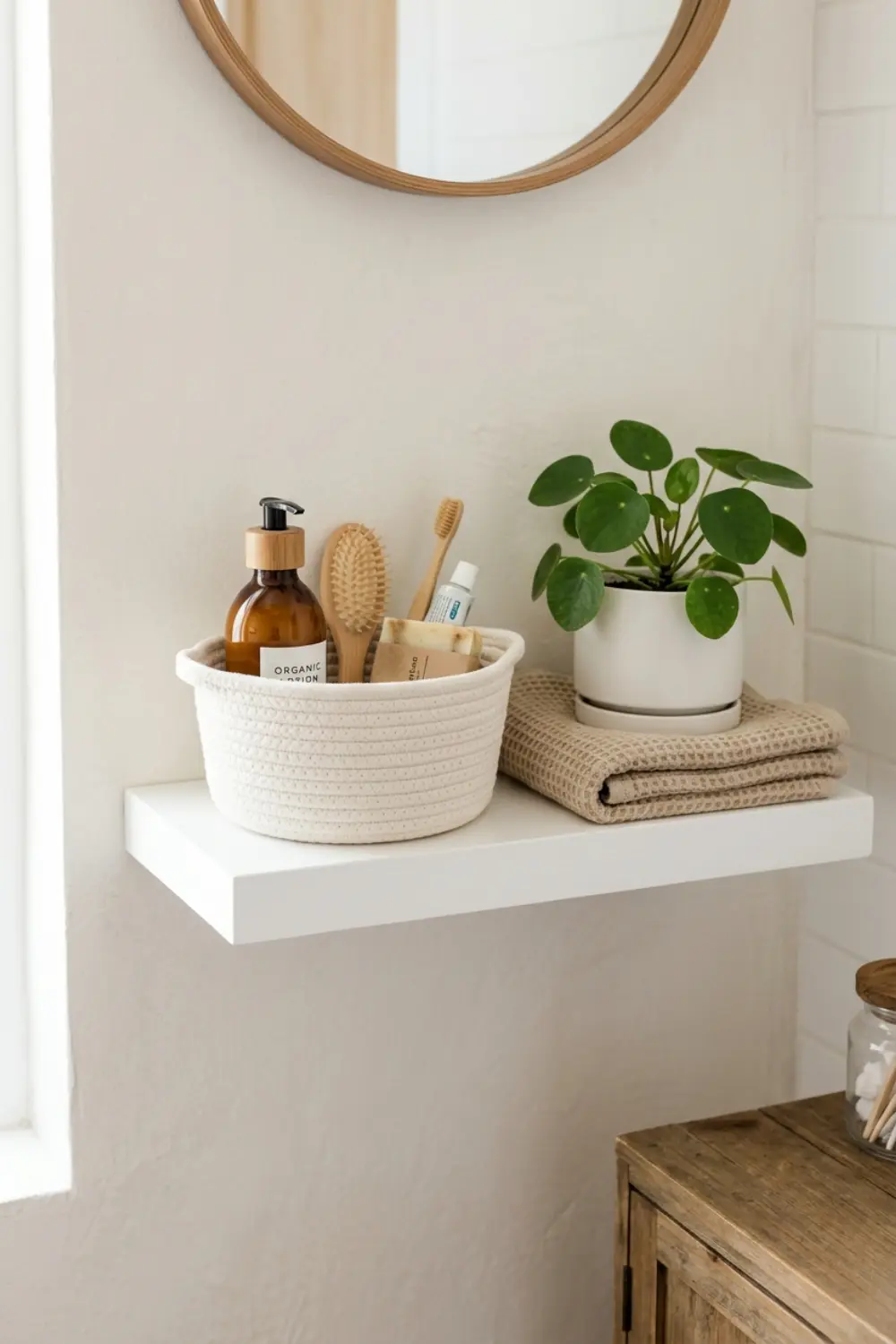
If you have open shelves and need storage, don’t use large, bulky plastic bins. Choose minimal-design woven baskets or textile storage that are discreet yet stylish.
A basket like this fits on a shelf, doesn’t stand out visually, yet you can hide anything in it—from a hairdryer to cleaning supplies. Form and material matter: avoid colorful, patterned pieces; instead, choose natural, neutral textures.
The [Simple Small Bathroom Decor Ideas for a Clutter-Free Look] thoroughly discusses how to maintain order with minimal aesthetics in small spaces—because clutter-free doesn’t mean you have no stuff; it means your stuff isn’t visible.
Helpful Tips for You
Small Bathroom Version: If your bathroom is truly tiny—say, 3-4 square meters—every single inch counts. In this case, apply the minimal principles even more strictly: only one mirror, one sink, one showerhead, and nothing else visible. Storage should be exclusively hidden or wall-mounted. Use a floating shelf above the toilet, but don’t put too many things on it. A tiny plant or two solid-color towels are more than enough.
Rental-Friendly Version: If you’re in a rental, most major renovations aren’t an option. But minimalist aesthetics are achievable under any circumstances. Use no-installation solutions: overlay mirrors, hook-on shelves, mobile leaning towel racks. Swap out shower curtains, textiles, and decorations—these immediately change the bathroom’s vibe without you touching the walls.
Now that we’ve thought through the minimalist principles, it’s worth taking a critical look at typical mistakes to avoid.
Common Mistakes to Avoid
1. Too Much “Inspiration” from Pinterest
One of the biggest traps is scrolling through forty gorgeous bathrooms on Pinterest and then trying to take something from each one. The result? A chaotic mishmash where Scandinavian minimal mixes with industrial wood shelves and bohemian plants. Pick one direction and stick to it. A minimalist bathroom doesn’t mean every trendy element is there—quite the opposite; it means only the elements that harmonize with each other are present.
2. Dark or Bright Patterned Rug in a Small Bathroom
Many choose a colorful or patterned bath mat because they want the bathroom to feel “cheerful.” But in a small bathroom, a dark or patterned rug visually chops up the floor and immediately makes the space feel tighter. Choose a light, simple textile instead that blends into the floor.
3. Too Many Shelves, Too Many Trinkets
Yes, open shelves are a trendy solution, but they only work if they’re styled minimally. If you pile your perfume, creams, jewelry, candles, a book, a plant, and three other trinkets onto a shelf, that’s not minimalist—that’s chaos. Choose a maximum of three elements per shelf, and they should have a unified style. Go back to the grouping principle.
4. Plastic Storage Bins Everywhere
They may be practical, but colorful plastic bins destroy minimal aesthetics. If you use storage, choose natural-material, neutral-colored pieces—woven baskets, textile boxes, or metal containers look much better.
5. Bad Lighting
An overly dark or cold-toned bathroom feels even smaller, even if it’s well-furnished. Invest in warm white, natural-toned LEDs, and if possible, place multiple light sources—above the mirror, possibly on the ceiling too. Good lighting is fundamental for minimalist design to work.
6. Picture and Decor Wall Overload
Many think minimalist design is boring, so they start filling the wall with pictures, signs, or decor boards. But this works against the minimalist principle. One or two carefully chosen pieces, nothing more. If you have a favorite quote, choose a simple framed print, and don’t put five more next to it.
Frequently Asked Questions
How can I make my bathroom look luxurious on a budget?
The luxury feel lies much more in the details and order than in expensive materials. Choose a unified color palette, minimize visible items, and invest in a few good-quality textiles (like a linen towel or a matte ceramic soap dispenser). Keep surfaces clean, and use minimal, geometric forms. Simplicity itself creates a premium feel.
What colors create calm in a bathroom?
Soft, neutral tones—white, cream, light greige, sand beige, pale grey—are all calming and space-expanding. These colors reflect light rather than absorbing it, so the space looks airy and open. If you want some warmth, add terracotta or beige accent colors, but keep those subdued too.
How do I decorate without making the bathroom crowded?
The core rule of minimalist decoration: less is more. Choose one or two intentional pieces—a ceramic tray on the counter, a small plant, a nice textile. Every element should have purpose and breathing room in the space. Don’t pile—curate.
Can I have a minimalist bathroom if I need a lot of towels?
Yes, but the key is in how you store them. Keep the majority in a hidden cabinet and only one or two visible. Use a minimal towel rack or shelf where they sit neatly folded in a uniform color.
Final Thoughts
A minimalist bathroom isn’t a luxury—it’s an opportunity. You don’t need to live in a big apartment, you don’t need to spend on expensive brands, and you don’t need to be perfect either. Just intentional. Every single item, color, and texture should have a reason to be there. Don’t keep your creams out just because it’s practical, but because they visually harmonize with the space. Don’t choose a dark rug because the salesperson said it’s “practical,” but because it genuinely fits the style. Your small bathroom’s biggest enemy isn’t size—it’s visual chaos.
And minimalist thinking is all about this: order, intentionality, and breathing room. When you start thinking in this logic, you realize that your bathroom isn’t small because there’s little space in it—it seemed small because there was too much noise. Now you know how to silence that noise. Start with small steps: put away three products from the counter, swap the dark rug for a light one, and hang a larger mirror. These little things will change how you feel in your bathroom within weeks.
And the best part is that you don’t need renovations, you don’t need a huge budget—just awareness. So take a deep breath, look around your bathroom, and ask yourself: what do I really need here? The answer might be surprising. And liberating.
This post contains affiliate links. I may earn a small commission at no extra cost to you.
Get cozy inspiration delivered to your inbox.
✓ 14-page beautifully designed ebook
✓ Cozy decorating ideas
✓ Practical room-by-room inspiration
You’re in! 🎉
Thanks for joining the NestFlowHome community!
Your free ebook is already on its way to your inbox. If you don’t see it within a few minutes, please check your Promotions or Spam folder.
Join the NestFlowHome community for weekly decorating inspiration.

Timeless home decor ideas and slow living inspiration for a calm, beautiful life.