
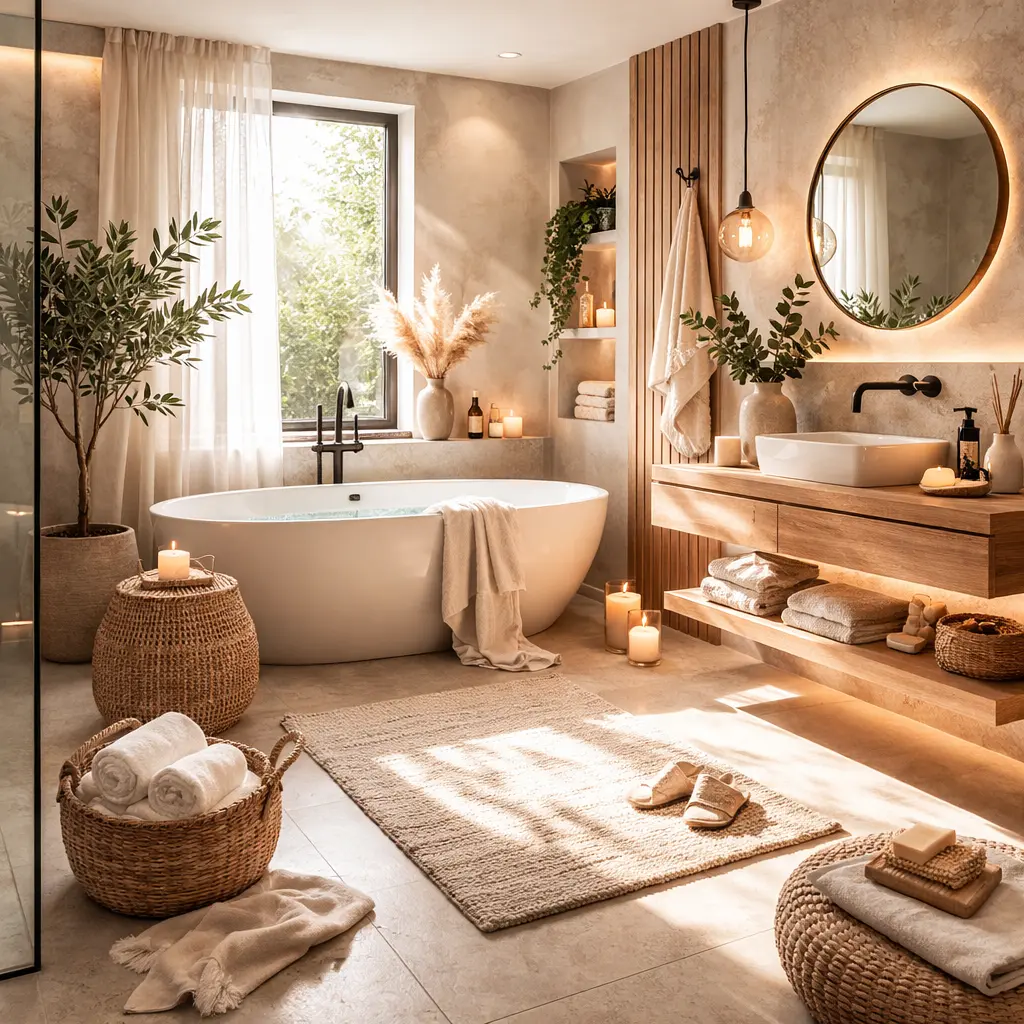
Beautiful Bathroom Decor Ideas to Refresh Your Space
By Emily | July 14, 2025
Your bathroom is one of the most intimate spaces in your home. You visit it multiple times every day, often in moments of transition – waking up, unwinding before bed, preparing for important meetings. Yet most home bathrooms are treated as purely functional spaces, designed to solve logistical problems rather than inspire or comfort. Where does the hairdryer fit? Where should the extra body wash go? What about all those everyday products? This kind of thinking works from a purely functional standpoint, but visually and emotionally, it leaves the space feeling chaotic and uninspiring.
The truth is that your bathroom deserves the same intentional design thinking you’d give to your living room or bedroom. A bathroom that feels beautiful, calm, and well-curated doesn’t require expensive renovations or a complete redesign. It requires understanding fundamental design principles and applying them thoughtfully to the space you already have. The difference between a bathroom that feels like a chore and one that feels like a small luxury comes down to composition, intentionality, and restraint.
A well-composed bathroom acts as a visual sanctuary. It doesn’t show more things – it shows fewer, but intentionally. It creates a sense of calm through careful arrangement rather than product accumulation. It tells a story of someone who cares about their space and, by extension, cares about themselves. When you step into a thoughtfully decorated bathroom, you feel it immediately: the careful balance between form and function, the breathing room between objects, the way light plays across different textures. This is the difference between a space that is merely used and one that is genuinely cared for. Throughout this guide, you’ll discover how to transform your bathroom from a utilitarian necessity into a space that makes you pause and appreciate the small moments – whether you’re brushing your teeth in the morning or unwinding in the evening.
1. The Bathroom as a Mental Reset Space: Why Most Don’t Work
 Save it
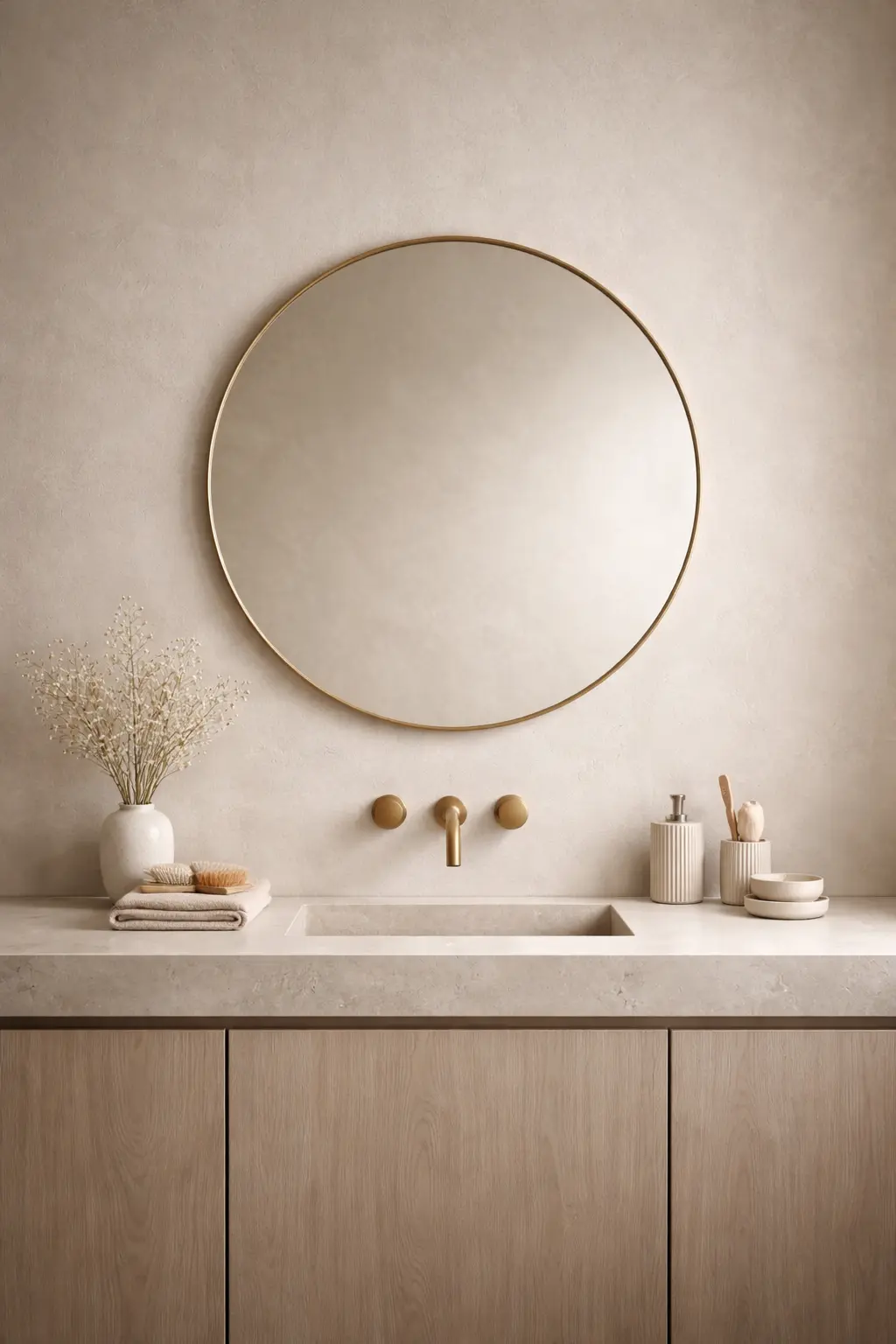
Most home bathrooms struggle with visual organization because they lack clear hierarchy. Every surface becomes equally important, creating what designers call “visual noise” – your eye doesn’t know where to rest, so it bounces around the space without finding anything satisfying. A well-functioning space always has a focal point and a background. The focal point might be a beautifully styled counter, a unique mirror, an architectural detail, or a textured wall feature. Everything else in the room supports this focal point rather than competing with it.
When you apply this one principle – asking yourself “What is the main character, and what is the background?” – the space instantly becomes more readable and visually coherent. Your eye has a destination, which makes the entire room feel more organized, even if the actual number of items hasn’t changed. The focal point might be something you already have – perhaps you have a beautiful mirror that deserves to be the star, so you keep the countertop minimal to support it. Or maybe your focal point is a carefully styled counter arrangement with a few intentional pieces.
The key is making this conscious decision rather than letting the space organize itself by accident. Once you’ve identified your focal point, every other design decision becomes simpler. Colors, textures, and accessories should all support and draw attention toward that central element, not away from it. This might mean keeping the walls neutral so the mirror stands out, or it might mean ensuring the counter styling doesn’t compete with an interesting wall texture.
A well-composed bathroom, by contrast to a chaotic one, acts as a kind of visual filter. It shows fewer things, but each thing shown is there intentionally. That’s the difference between a space that is used and one that is cared for. When guests use your bathroom, they notice not how many products you have, but how thoughtfully they’re arranged. When you use it, you feel the difference every single time you step inside.
2. Texture Layering: How to Add Depth to a Flat Surface
 Save it
A bathroom countertop is fundamentally a flat, cold surface. Whether it’s ceramic, stone, or laminate, these materials reflect light uniformly and can easily appear “flat” and uninviting – even when the materials themselves are expensive or high-quality. This is where texture layering becomes essential, not as an aesthetic game but as a practical way of creating visual and tactile depth in a space that would otherwise feel sterile.
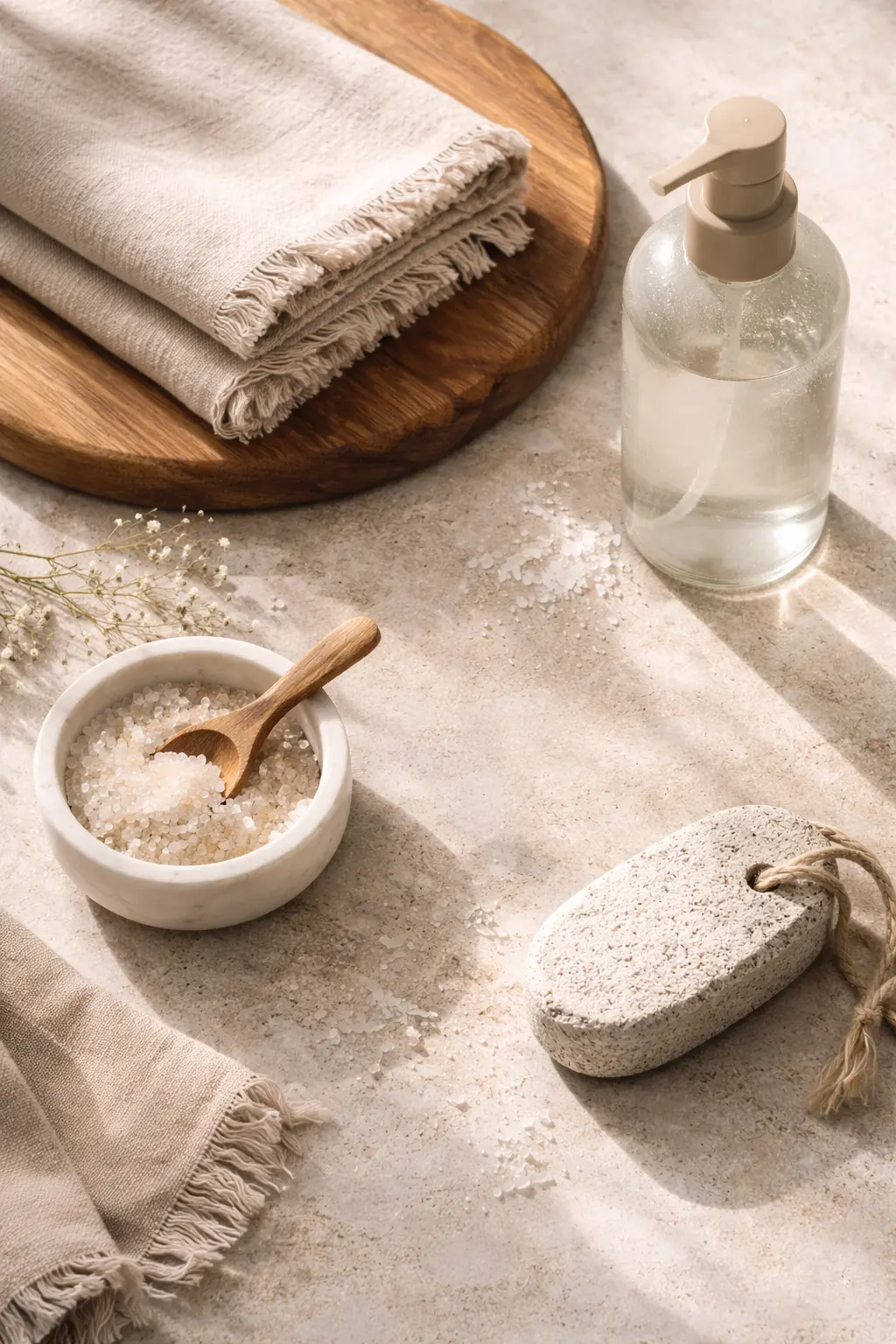
The sense of depth doesn’t come from purchasing new furniture or adding more items to your countertop. Instead, it comes from thoughtfully placing different textures next to each other, creating visual complexity through contrast. When a matte ceramic dispenser sits beside a subtly grained wooden tray, broken up by a smooth glass surface or a soft woven textile, your eye begins to interpret the scene in layers rather than as a flat arrangement. This layering engages multiple senses – sight, and even the phantom sensation of touch as you observe different textures.
This is the point where a well-chosen refillable dispenser becomes not just a “pretty object,” but a light-management tool. Different surfaces together create shadow play that adds movement and life to what would otherwise be a static composition – especially in natural morning light. In the morning, matte surfaces soften incoming light gently, while glass and stone surfaces catch and reflect it slightly. In the evening, warmer lighting gently appears in the grain of wood or the subtle fibers of a textile, creating an entirely different visual mood.
Together, these textural combinations create that “put-together” feeling many people mistakenly associate with expense or luxury. It’s not about cost – it’s about intentional combination. It’s also worth noticing how the presence of water changes the character of textures daily. A wet stone tray becomes darker and more dramatic, a cotton towel takes on a deeper, richer tone. These small, daily visual shifts bring constant life and interest into the space, reminding you that your bathroom is a living, breathing part of your home.
3. Lighting Design in Small Spaces: The Role of Indirect Glow
 Save it
Direct ceiling light illuminates every surface evenly, which is practical and efficient. But from a design and wellness perspective, this approach is visually sterile and actually works against your nervous system’s natural rhythms. In the evening especially, your nervous system is much more sensitive to cold, bright light. If you rely only on overhead ceiling lighting, your body stays locked in daytime mode, making it harder to relax and unwind.
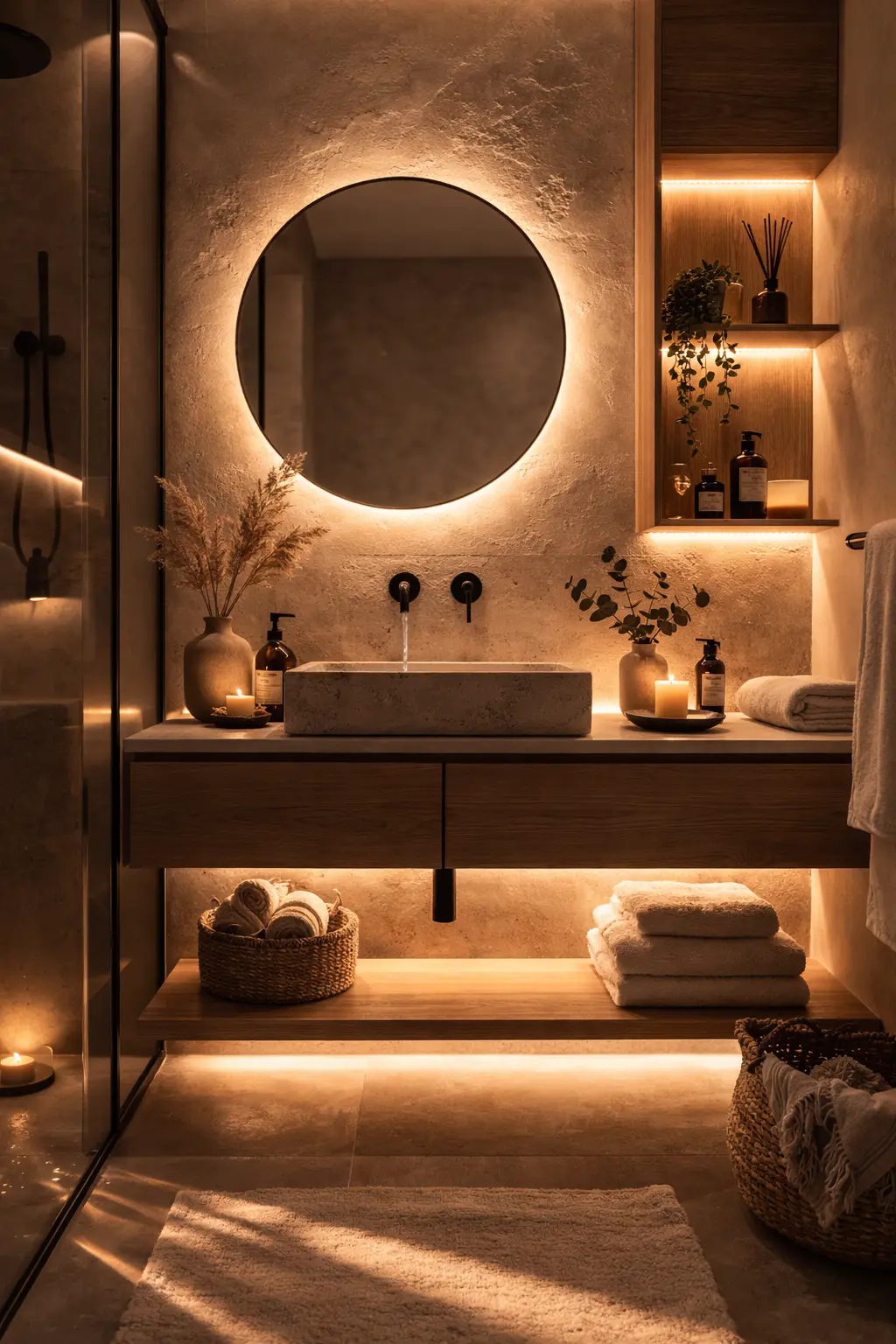
A lower-intensity, warm supplementary light source – separate from your main overhead light – can help you physically and mentally slow down without creating total darkness. This might be a small warm-toned lamp on a shelf, an LED strip hidden behind the mirror that creates subtle backlighting, or even a scented candle in the evening that provides both light and atmosphere. The direction of light is just as important as its intensity. Indirect light creates zones in your bathroom – areas of brightness and areas of gentle shadow – making the space feel both larger and more intimate at the same time.
This is especially effective in smaller bathrooms where every bit of visual and spatial depth matters. Strategic lighting can actually make a small bathroom feel more expansive by creating layers of light and shadow rather than flooding everything uniformly. Consider installing a dimmer switch on your overhead light, allowing you to adjust intensity based on time of day and your needs. This simple addition transforms how you experience the space throughout the day.
If you’re interested in creating a more comprehensive relaxation environment in your bathroom, I wrote about this in detail in Feeling Stressed? Here’s How to Build a Relaxing Bathroom Retreat, which explores how lighting, scent, and texture combine to create a true sanctuary. The goal isn’t just a well-lit bathroom – it’s a bathroom that adapts to your emotional and physical needs throughout the day.
4. Countertop Composition: Creating Visual Rhythm
 Save it
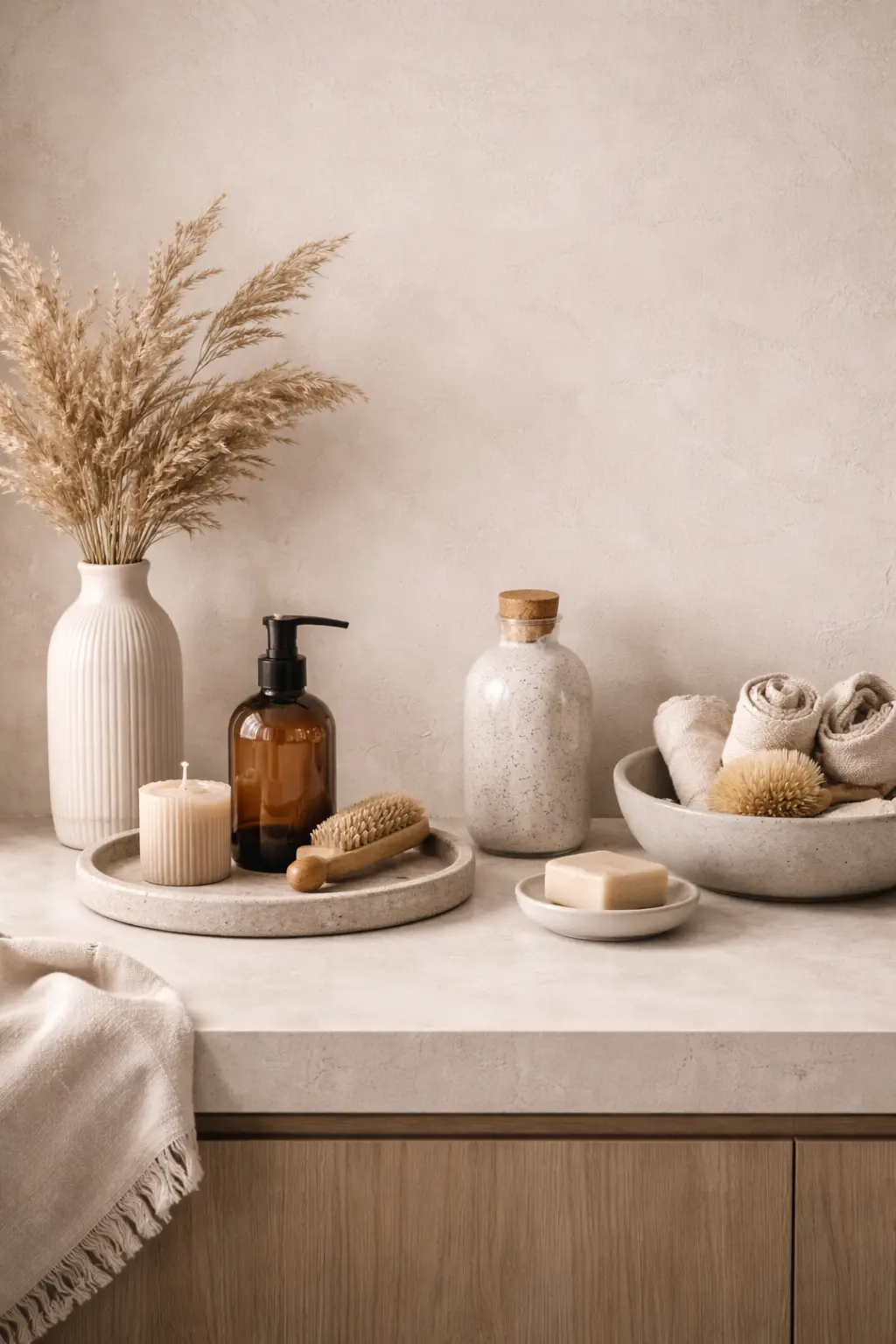
Most countertops feel scattered and chaotic because they lack clear visual hierarchy. When elements on your countertop vary in height, mass, and visual weight, your eye automatically arranges them in sequence and creates a sense of compositional rhythm. A tall vase with pampas grass or a reed diffuser introduces vertical direction and draws the eye upward, while a lower, wider tray adds horizontal stability and grounds the composition.
Together, these varying heights and shapes form a kind of visual triangle or dynamic arrangement that naturally acts as a focal point for your counter. If every element is the same size or shape – all small bottles, all flat trays, all uniform heights – your eye slides over the arrangement without engaging with it. The space feels temporary, transitional, and visually uninteresting. This is why introducing variation in scale and proportion is so important, even if you’re working with a minimal number of objects.
It’s equally important to leave breathing room between objects. When people are first learning to style a space, they often arrange things too tightly together, thinking that density creates abundance or visual interest. In reality, arranging items with too little space between them creates a sense of clutter and visual chaos, even when there are only a few elements present. Intentionally leaving empty space isn’t wasted – it’s a deliberate design choice that acts as a visual buffer, highlighting and enhancing the rest of the composition.
Think of it like punctuation in writing. The spaces between words make the words readable. The spaces between objects on your counter make those objects visible and appreciated. A well-arranged counter might have only three or four items, but they’re positioned with intention, separated by breathing room, and arranged with varying heights to create visual interest. This approach transforms your countertop from a catch-all surface into a curated display that reflects thoughtfulness and care.
5. Color Palette: Tone-on-Tone Calm
 Save it
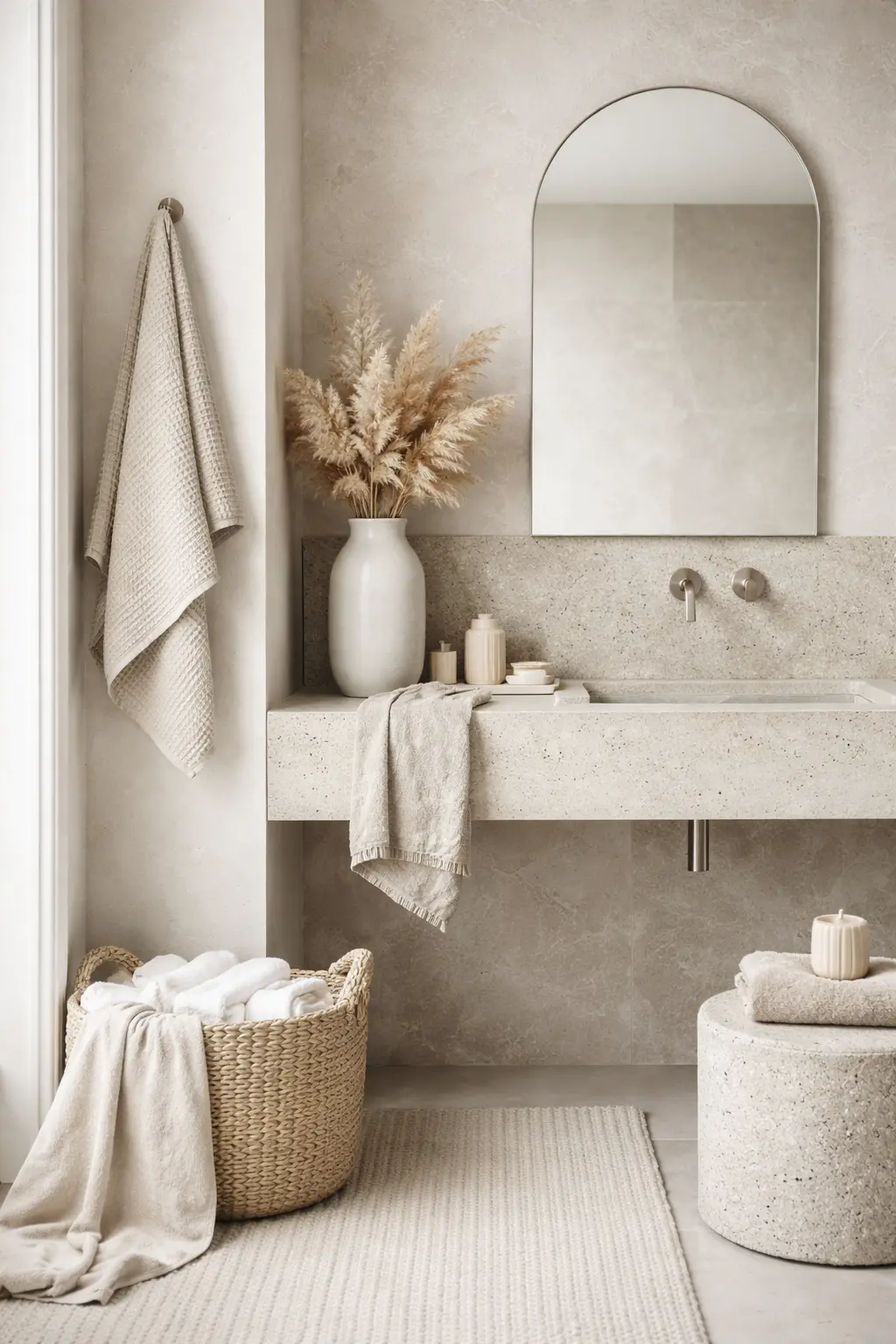
In a bathroom, where most surfaces are already hard, reflective, and visually cold – tile, porcelain, metal – a tone-on-tone color palette is strategically important. A tone-on-tone palette allows differences in visual interest to come from material texture rather than from color variation, which helps maintain calm while still avoiding monotony. This is especially important in a space where you want to create a sense of peace and order rather than visual stimulation.
The variations come from how light plays across different surfaces, not from competing colors demanding attention. This is the point where a simple, minimalist ceramic dispenser or a neutral-toned cotton hand towel becomes more than just a functional tool – it becomes a visual “silencer” that creates calm rather than visual noise.
You can add subtle dynamism within this tonal harmony by combining slightly different shades within the same color family – such as pairing a warmer beige with a cooler, greyish shade, or combining cream with soft taupe. These variations add enough visual interest to avoid the space feeling flat or boring, while keeping the overall aesthetic calm and cohesive. The key is ensuring that all these tones work together rather than against each other.
This approach is particularly effective because it allows you to create a sophisticated, designer-curated look without requiring bold color choices or high contrast. Your bathroom becomes a space of subtle sophistication – the kind of space that feels expensive and intentional because of how thoughtfully the pieces work together, not because of how much you’ve spent. Neutral, tonal palettes are also timeless; they won’t feel dated in a few years because they’re based on principles of visual harmony rather than trend-driven color choices.
6. Storage That’s Also Aesthetic
 Save it
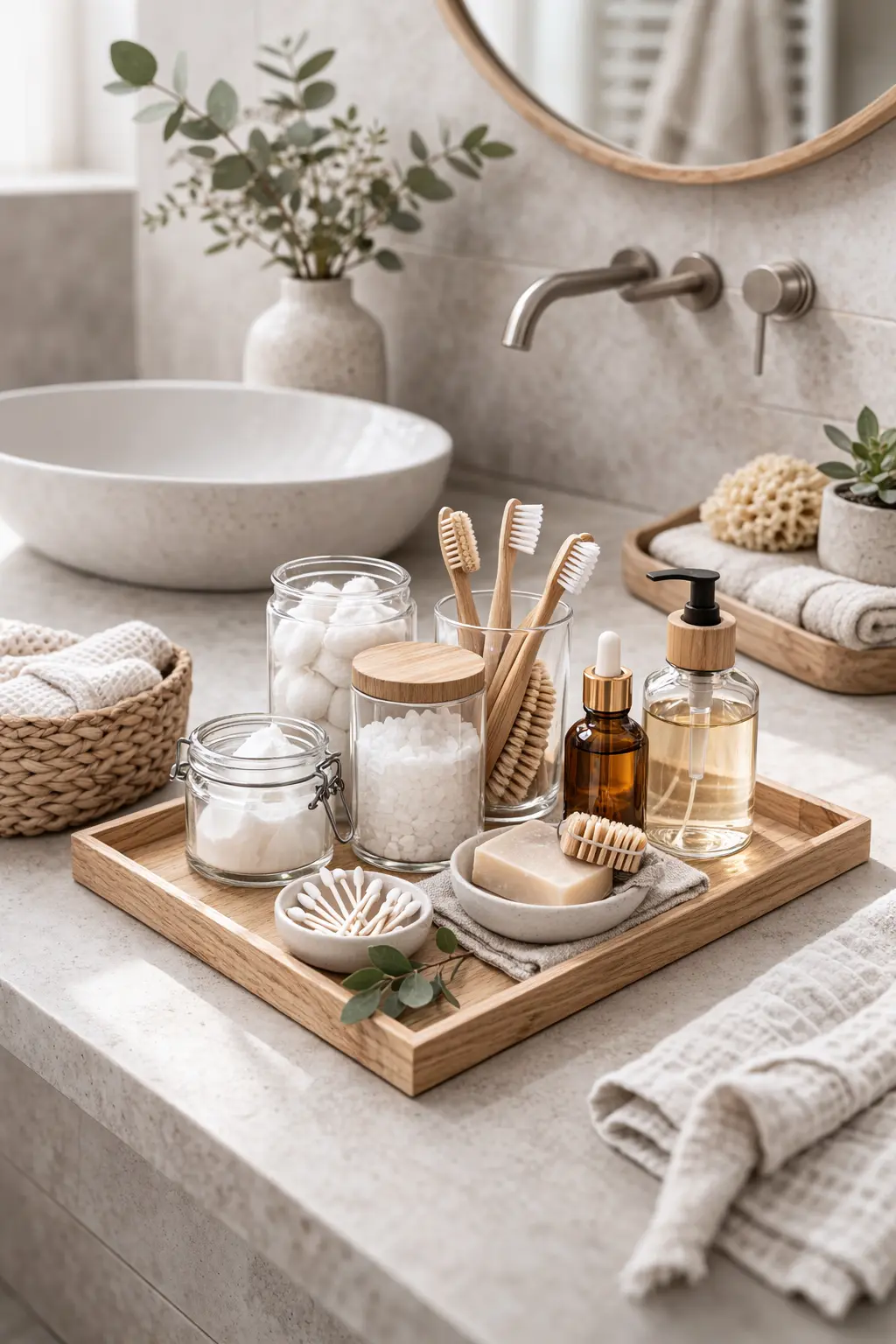
Open storage in a bathroom is not the same as clutter – if it’s structured thoughtfully. The key to making open storage work is ensuring that what’s visible is intentionally curated and visually coordinated. Uniform, decanted containers allow everyday items and necessities to appear visually coordinated rather than chaotic. For example, a transparent acrylic organizer box or a lidded glass jar for cotton pads, swabs, or other small items immediately reduces the visual noise caused by branded packaging with competing colors and typography.
Apothecary-style glass jars work especially well for this purpose because they allow you to see what’s inside – suggesting their contents through visibility – without adding graphic design, color information, or text to your countertop. This kind of thoughtful visual softening helps maintain a sense of order and calm even with open storage. The items are accessible and visible, but they’re presented in a way that feels intentional rather than scattered.
The arrangement of these containers also matters significantly. If you place them on a unified tray or bamboo base, separate elements suddenly appear as a single, cohesive composition. This visual grouping is powerful – it transforms storage from scattered items into an integral part of your bathroom styling. Instead of looking at six separate containers, you see one organized system.
I explored this concept in more depth in the article Affordable Bathroom Counter Decor Ideas That Look High-End, which focuses on how strategic styling and thoughtful container choices can make even functional storage elements feel curated and luxurious.
How Does This Come Together in Practice?
One of the least discussed, yet most powerful tools is “visual cleaning” around the mirror. Try styling the surfaces reflected in the mirror as well. What’s visible in the mirror counts twice. If there’s chaos there, it doesn’t matter how tidy your counter is.
Another trick is “limited rotation.” You don’t need to use all your decor at once. Keep 3–4 alternative elements (textiles, trays, branches) in a small box and rotate them seasonally. This keeps the space fresh without overloading it.
Pay attention to scent as a design tool. Scent and visuals together shape atmosphere. A minimalist diffuser can work visually while activating another sensory channel.
And finally: think in terms of noise reduction. Soft textiles dampen not only visual but also acoustic reflections from hard surfaces. This is the detail that makes a space feel truly “softer.” Before changing too much, though, it’s worth knowing what to avoid.
Common Mistakes
1. Cramming Too Many Items on the Counter
An overloaded countertop creates visual overwhelm, not luxury. Limit yourself to 5-7 items maximum, and store everything else in drawers or cabinets. Less visible stuff actually makes the space feel larger and more intentional.
2. Ignoring the Background Elements
People focus on styling the counter but ignore the walls, mirror frame, or shelf styling. If your walls feel chaotic or your mirror frame competes with your counter styling, the entire composition falls apart. Make sure your focal point stands out by keeping supporting elements calm.
3. Mixing Too Many Styles and Materials
Combining modern minimalism with rustic wood with industrial metal creates confusion, not character. Choose a cohesive aesthetic and stick with it. If you like minimalist design, keep accessories minimal and modern. If you prefer natural materials, let wood and stone be your dominant textures. Consistency creates calm.
4. Forgetting About Lighting Until It’s Too Late
Many people style their bathrooms beautifully, then realize the lighting makes everything look sterile or wrong. Plan for both task lighting (mirror lighting) and ambient lighting (mood lighting) before you start decorating.
Frequently Asked Questions
How do I style my bathroom if it’s very small?
Small bathrooms actually benefit from the principles discussed here even more. Limiting visible items, using vertical space strategically, and creating a focal point make small bathrooms feel larger and more intentional. Stick to a cohesive color palette, use mirrors to reflect light and create depth, and choose items in varying heights to add visual interest without taking up much space. Every object should earn its place by being both beautiful and functional.
Can I style a bathroom without spending a lot of money?
Absolutely. The most expensive element in good bathroom design is usually thoughtfulness, not cost. Rearranging what you have, adding better lighting with affordable LED strips or bulbs, decanting items into simple glass jars, and creating a cohesive color story costs very little.
How often should I change my bathroom decor or styling?
This depends on your preference. With a timeless, tone-on-tone approach, your bathroom can stay beautiful for years without needing changes. The advantage of this design strategy is that it’s not trend-dependent. That said, you can easily refresh the mood by changing scents, swapping in seasonal textiles like different colored towels, or rotating decorative elements.
Summary
A beautiful bathroom is one of the simplest ways to transform how you feel throughout your day. The space doesn’t need to be large, expensive, or magazine-worthy. It needs to be intentional. It needs to reflect thoughtfulness about color, texture, light, and composition. It needs to support both the practical functions you perform there and the emotional experience of being in the space. This is what transforms a bathroom from a logistical necessity into a place you actually want to spend time in.
Refreshing your bathroom isn’t a weekend project — it’s a mindset shift. Once you start thinking in terms of composition, lighting, and materials, the space gradually transforms.
You don’t need to replace everything. It’s enough to be intentional about what stays out, why it stays out, and how it relates to everything else.
The goal isn’t a photo-ready interior, but an environment that supports you in slowing down. One that doesn’t overstimulate you in the morning and helps you wind down at night. Start with a single surface. Notice how you respond to it. And let that guide your next decision.
This post contains affiliate links. I may earn a small commission at no extra cost to you.
READ FOR THE NEXT STEP?
KEEP READING
Continue with another helpful idea.

The Ultimate Guide to Scandinavian Bathroom Design Everyone Is Obsessed With
SHOP MY FINDS
Discover my favorite products for this place

My Favorite Bathroom Finds

Get cozy inspiration delivered to your inbox.
✓ 14-page beautifully designed ebook
✓ Cozy decorating ideas
✓ Practical room-by-room inspiration
You’re in! 🎉
Thanks for joining the NestFlowHome community!
Your free ebook is already on its way to your inbox. If you don’t see it within a few minutes, please check your Promotions or Spam folder.
Join the NestFlowHome community for weekly decorating inspiration.

Timeless home decor ideas and slow living inspiration for a calm, beautiful life.