
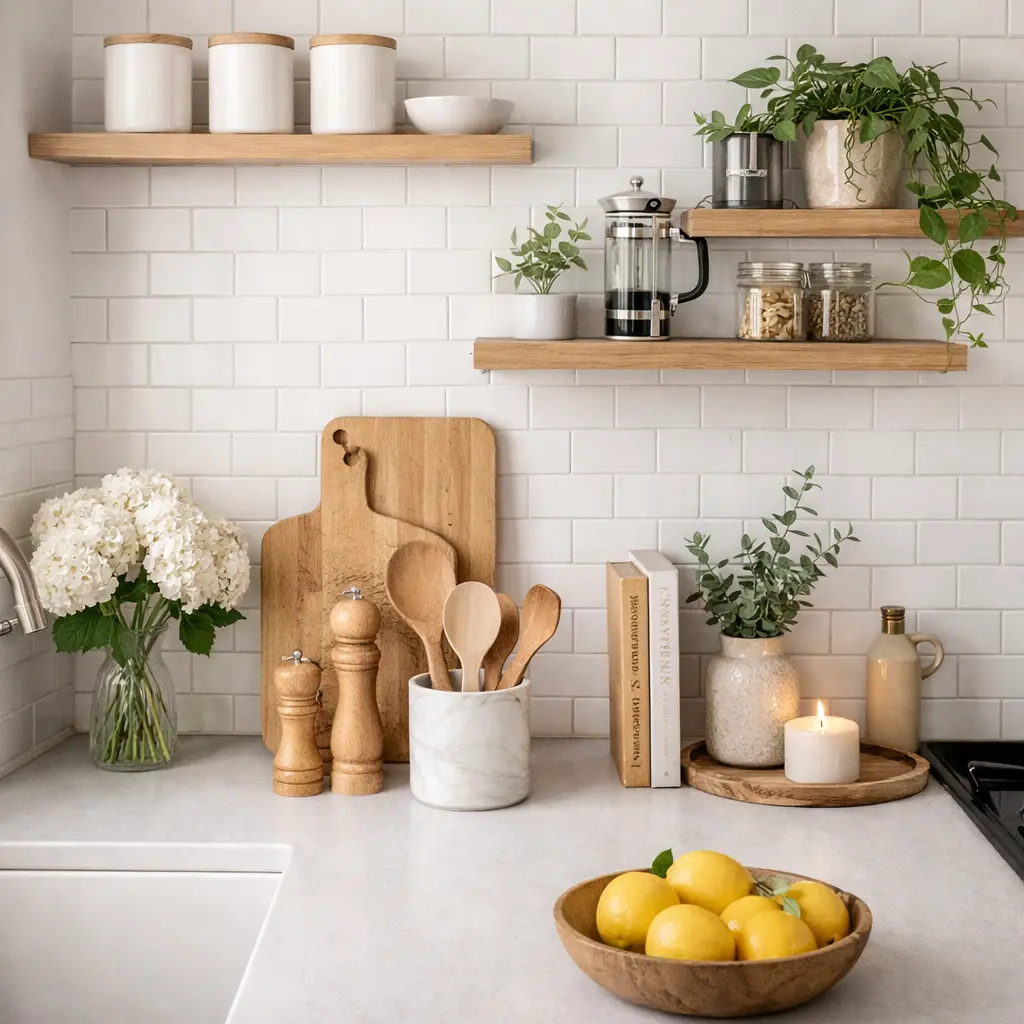
The Secret to Beautiful Yet Functional Kitchen Counter Decor
By Emily | January 5, 2026
Kitchen counters are among the hardest spaces to style. Leave them empty, and the kitchen feels cold; overcrowd them, and it looks chaotic. The balance between beauty and function is subtle — but entirely possible. Well-designed kitchen counter decor reflects how you actually use your space. It highlights essentials while maintaining visual calm, keeps frequently used items accessible, and prevents surfaces from feeling cluttered. Style and function must coexist.
When I first tried styling my own counters, I made the mistake of layering decor on top of functional items. The result looked curated in theory, but in practice, it felt disorganized. The shift came when I prioritized intention over quantity, grouping items strategically and leaving breathing room around key pieces.
In this article, you’ll learn how to select pieces that enhance your space, organize items for easy access, and design layouts that stay functional. By the end, your kitchen counters won’t just look stylish — they’ll feel effortless, organized, and thoughtfully designed, making cooking and daily routines a pleasure instead of a chore.
Counter decor isn’t about adding more; it’s about editing wisely. Each element should serve a purpose, whether practical or aesthetic. The right balance creates a kitchen that’s enjoyable to use and beautiful to look at.
Clear It – But With Strategy
 Save it
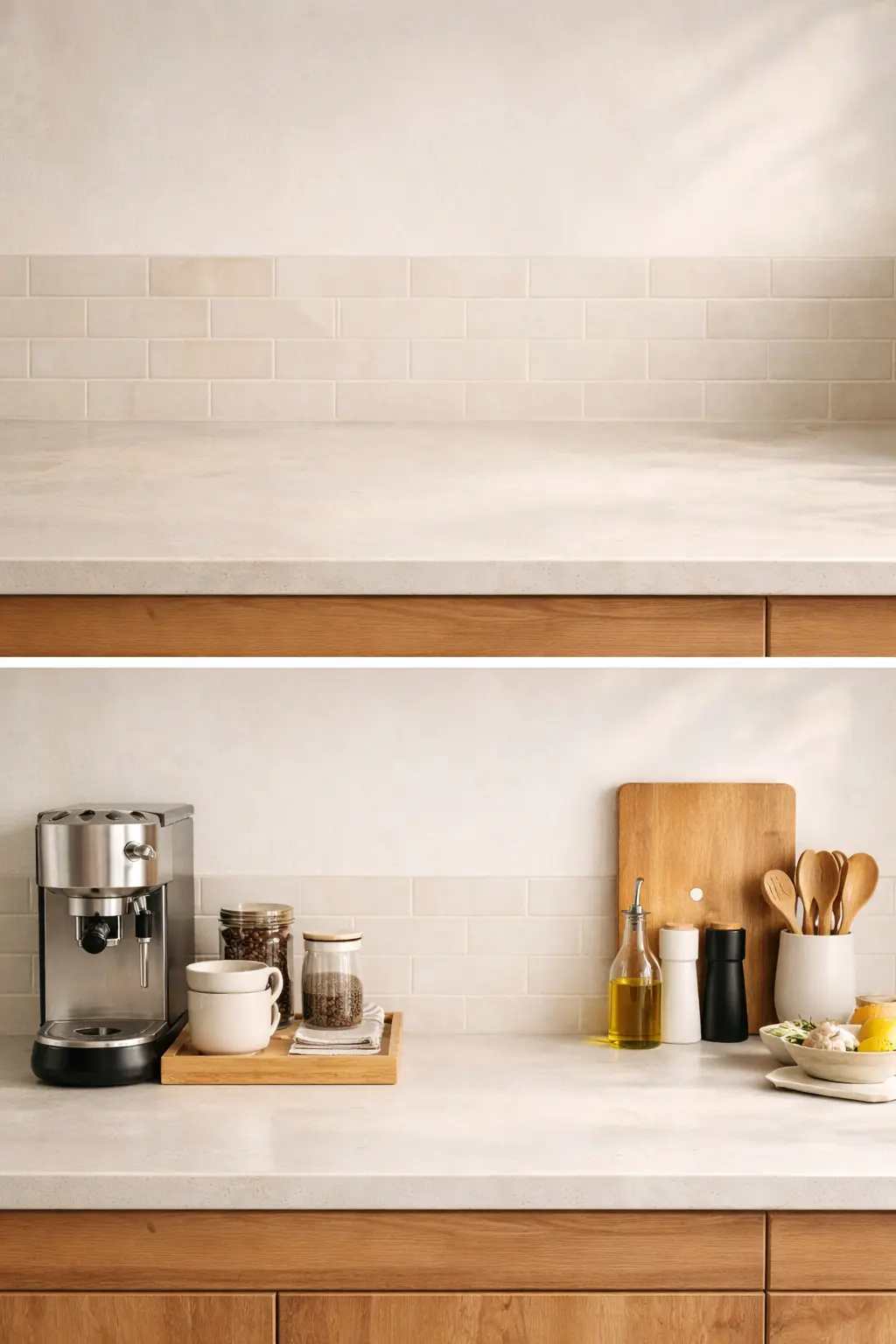
When I reset my kitchen counter, I never start with decorating. I start with radical clearing. I remove everything. The bread box, the kettle, the coffee machine, the olive oil bottle, the spice jars – everything. An empty surface helps you think clearly.
Then I ask myself:
What do I truly use every single day?
If coffee is part of your morning ritual, then yes – your coffee machine can absolutely have a permanent place. But do you really need the entire box of capsules next to it? Or would a smaller, aesthetic container with just a few days’ worth be enough?
The same goes for the cooking zone. A beautiful salt and pepper grinder can stay out. But your entire spice collection? Probably not.
I always think in zones:
• coffee/tea corner (coffee machine, mugs, sugar bowl)
• cooking zone (oil, salt, pepper, utensil holder)
• prep area (cutting board, knife block)
• and maybe one small decorative focal point
If your back-end system is not in order, your counter will always be cluttered. So if you feel like this is a perpetual cycle for you, read my article How to Create a Clutter-Free Kitchen You Actually Enjoy – there I walk you through in detail how to create a sustainable system for your entire kitchen.
Upgrade What You Already Use – Not More, Just Better
 Save it
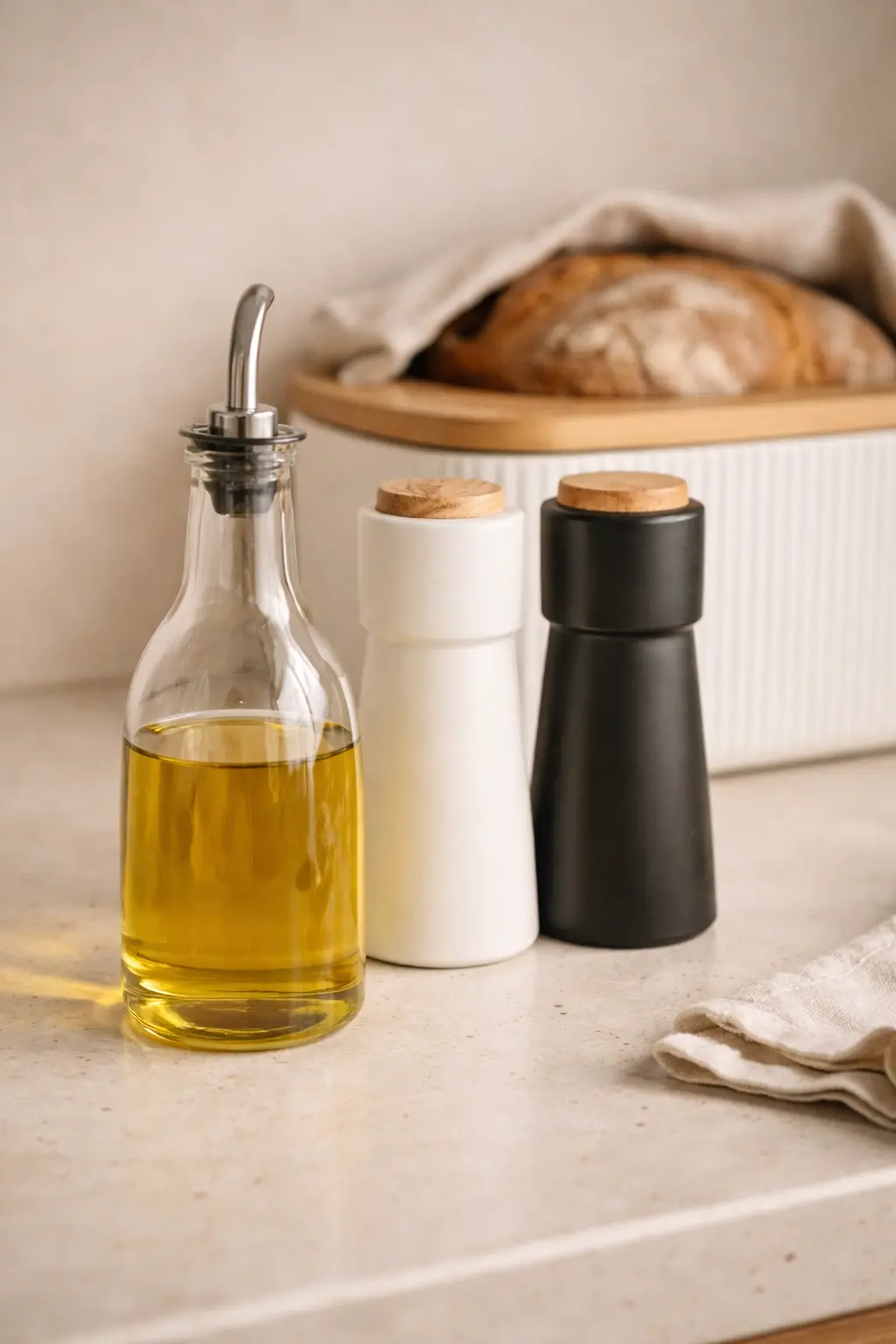
One of the biggest mistakes, in my opinion, is trying to buy decorations for the kitchen. Your counter already has objects on it. The key is to choose those objects intentionally. Take olive oil, for example. If it sits in a plastic bottle, it will always look temporary. If you pour it into a clean glass dispenser, it becomes part of the composition. Not an extra item – just a more thoughtful version.
The same applies to bread. A simple bread box in a cohesive material doesn’t just store it – it visually anchors an area. A crumpled bag will always feel chaotic, no matter how neatly you fold it.
Salt and pepper grinders, a utensil holder, a knife block – these are permanent elements. If they harmonize in material or color (for example, wood combined with black metal), the entire space instantly feels more cohesive.
You don’t have to replace everything at once. I personally wait until something wears out, then choose the new version more consciously. Over time, the overall look becomes unified without feeling forced.
Layer With Intention
 Save it
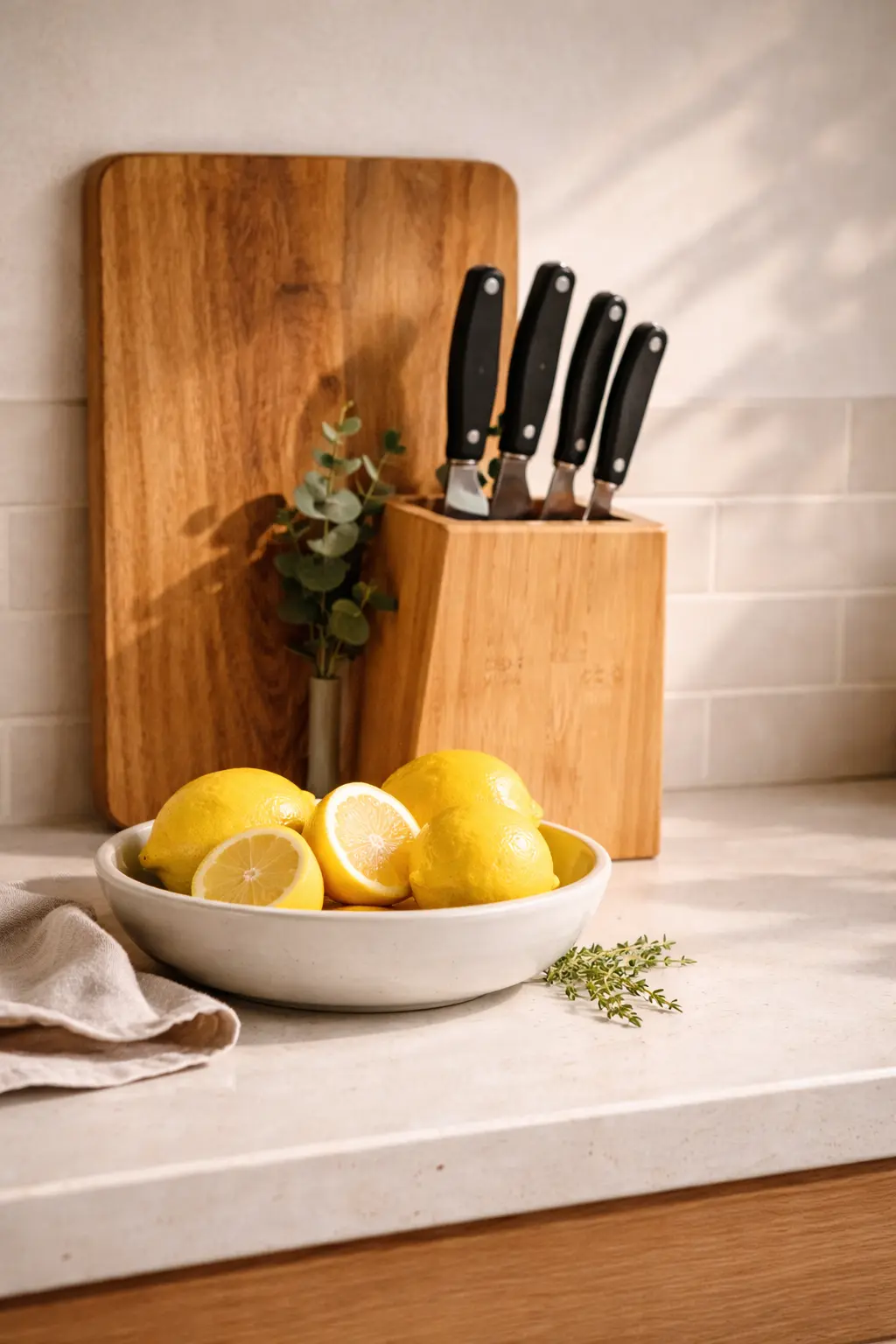
When a counter feels flat, it’s usually because everything sits on the same visual level. That’s when I start layering. I often lean a large wooden cutting board against the wall. In front of it, I might place a smaller marble or ceramic board. A knife block adds verticality. Differences in height immediately make the space feel more dynamic.
The rule of three is almost a foundation for me:
• one taller element (cutting board or plant)
• one medium-height element (oil bottle, grinder, coffee machine)
• one lower element (bowl, textile, small container)
But they shouldn’t be crammed together. Negative space is just as important as the objects themselves. For example, in a coffee zone, a coffee machine with a small mug holder and a sugar jar already creates a mini interior moment. Add three tiny decorative items next to it, and the elegance disappears instantly.
Layering doesn’t mean adding more. It means arranging what you already have with intention.
Living Elements and “Usable Decor”
 Save it
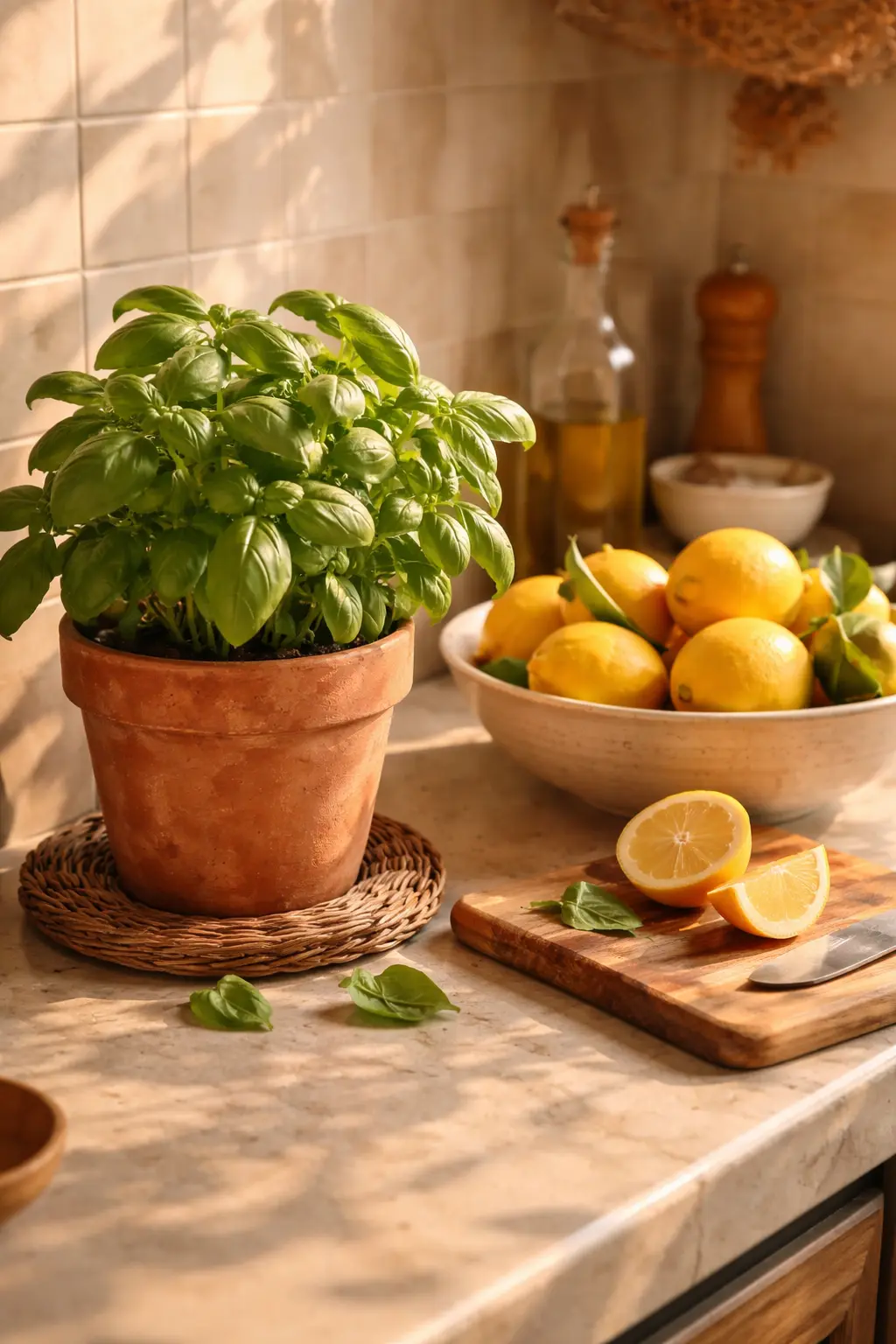
My favorite trick: choose decor you can eat or use. A bowl of lemons. A basket of garlic. Fresh rosemary in a glass of water. These aren’t static decorations. They move, change, and live.
If you have space, a small pot of basil or thyme is both beautiful and practical. You don’t need an entire herb garden on the counter – one well-placed plant is more than enough as a focal point.
Alongside living elements, I love natural materials. A linen kitchen towel casually draped over a cutting board. A ceramic bowl in the prep area. These soften the hard surfaces of a kitchen.
Proportion is key here, too. One plant feels elegant. Three can start to look chaotic. One fruit bowl is a focal point. Two compete with each other. The goal is for the counter not to look like a staged photo – but like a living, functioning space.
Fine-Tuning Visual Balance
 Save it
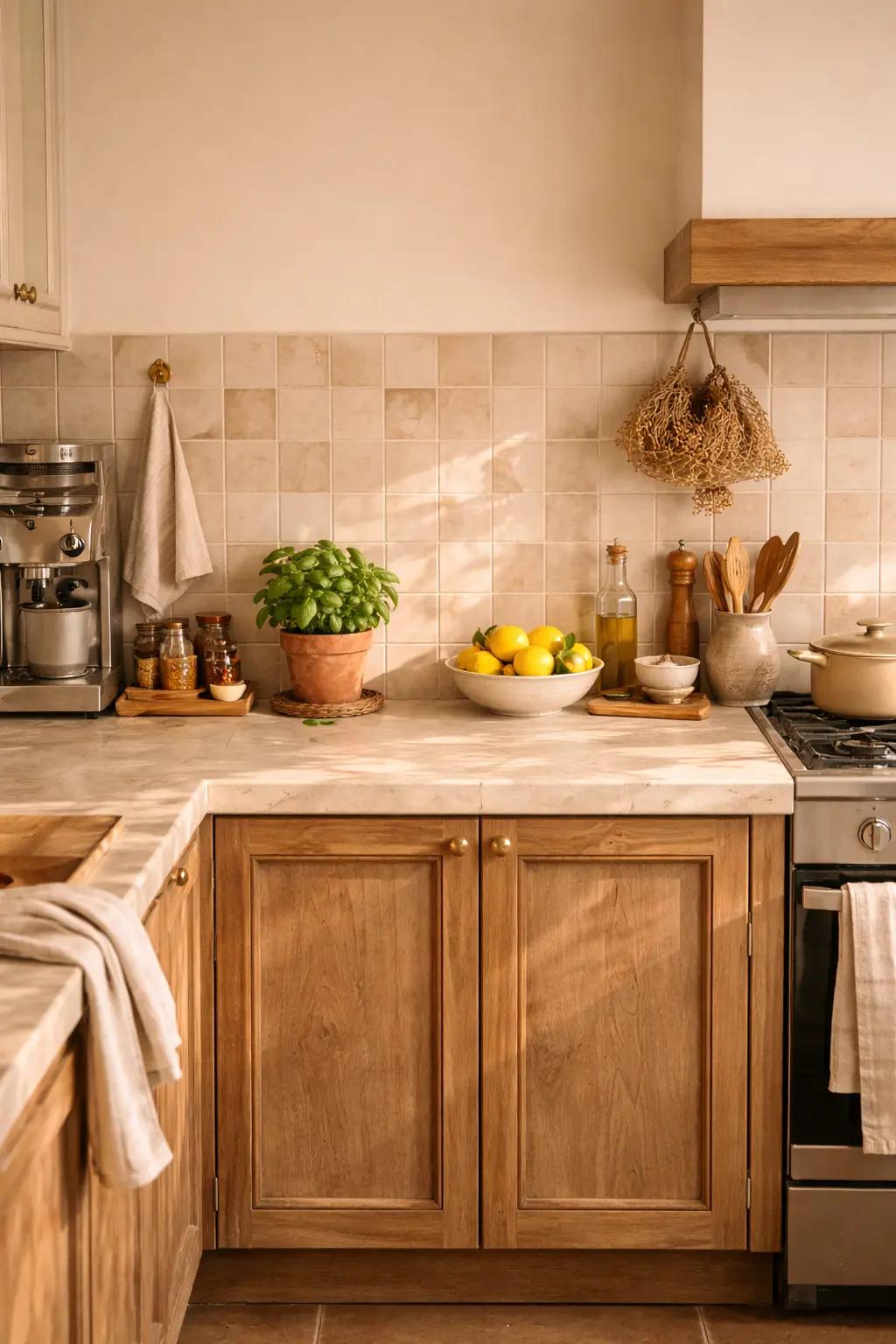
Once the main elements are in place, I fine-tune. I literally step back and look at the counter from a distance. If the kettle and coffee machine sit on one side, the other side shouldn’t be completely empty. It doesn’t need symmetry – but it does need visual balance. A large cutting board or a more substantial bread box can create that counterweight.
I also pay attention to color. If every object is in a different shade, the eye gets overwhelmed. They don’t need to match perfectly – but they should relate to each other.
Often, the best decision is simply removing one item. A premium feel frequently comes from what isn’t there.
Sustainable Function – How to Keep It Beautiful Long Term

 Save it
Even the most beautiful counter will slip back into chaos without a system behind it.
I introduced one simple rule: The counter is not temporary storage.
Groceries don’t stay there after shopping. Mail, keys, bags – they don’t belong there either. If they don’t have a dedicated place, the counter will “receive” them.
Once a week, I do a quick reset. I wipe everything down, rearrange if needed, remove one element if it feels too much. It takes ten minutes, but it prevents buildup.
Don’t be afraid to refresh seasonally. Darker textiles in winter, lighter in summer. A bowl of apples in autumn, fresh greens in spring. Not dramatic changes – just subtle shifts.
But the real secret is this: your counter reflects your life. If you love baking, let there be a cutting board that shows use. If coffee is your passion, give it an intentional place.
Common Mistakes to Avoid
1. Too Many Small Decorative Items
Small objects add up quickly. A tiny bowl, a figurine, a candle, a sign – and the visual unity falls apart. The eye can’t rest. Choose fewer, more impactful pieces instead.
2.Sacrificing Function for Aesthetics
If you have to move decorations every time you cook, your system isn’t working. The kitchen counter is first and foremost a functional surface. If you sacrifice that for looks, frustration will follow.
3.Mixing Styles Without a Concept
Everything can be beautiful on its own. But together, they may not harmonize. If your kitchen is modern, an overly rustic element may feel out of place – unless you’re using it as a deliberate contrast. Concept is key.
4.Leaving Every Tool Out “Just in Case”
The “what if I need it” mindset quickly leads to clutter. If you don’t use it daily, it can go in a cabinet. Editing isn’t loss – it’s freedom.
FAQ
How can I make my kitchen counter more elegant without spending much?
Start by reducing. Decreasing the number of items creates an instant upgrade. Then unify materials and colors. Even that alone makes a huge difference.
How do I decorate without making it feel cluttered?
Only keep items out that you truly use. Think in zones, and leave free surface space.
What color palette works best?
A neutral base plus one or two accent colors at most. Too much contrast feels restless.
What if my kitchen is small?
Then intentional selection matters even more. One well-composed corner is worth more than a fully crowded surface.
Closing Thoughts
A beautiful yet functional kitchen counter isn’t a decorating project. It’s a series of decisions.
It’s about what you keep. What you let go of. What you choose intentionally. A premium feel doesn’t depend on the price of objects – but on the system behind them.
When you look at your own counter now, don’t ask: “What else should I add?”
Instead ask: “What do I have too much of?”
The goal isn’t a perfect kitchen. It’s walking in and feeling calm. And that always starts with intentional simplicity.


This post contains affiliate links. I may earn a small commission at no extra cost to you.