
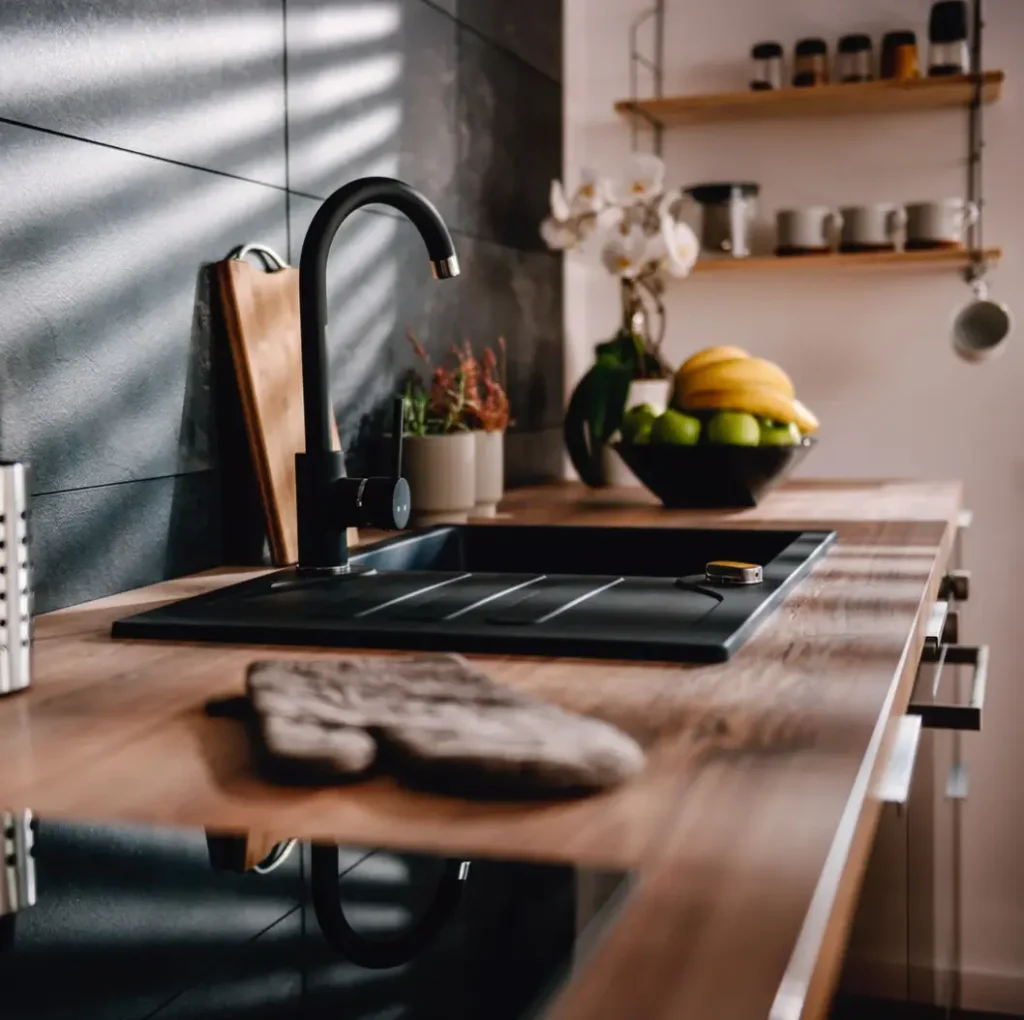
How to Create a Clutter-Free Kitchen You Actually Enjoy
By Emily | November 24, 2025
If your kitchen feels messy no matter how often you reset it, the issue usually isn’t cleaning — it’s structure. A clutter-free kitchen isn’t about chasing minimalism or hiding everything in matching containers. It’s about designing systems that quietly support how you actually live.
When I redesigned my own small kitchen, I realized something surprising: nothing was technically “out of control.” The cabinets closed. The counters were wiped. But the space still felt visually crowded. Everyday items kept migrating back to the surface. Appliances competed for attention. Decisions — what to keep out, what to store, what to donate — created constant low-level friction. That’s when I stopped decluttering randomly and started thinking in zones, flow, and frequency of use.
A well-organized kitchen reduces decision fatigue. Clear counters make the room feel larger. Strategic cabinet organization saves minutes every single day. And when storage reflects your real habits — not a showroom ideal — clutter stops returning.
The shift doesn’t require a renovation or a full minimalist overhaul. It starts with rethinking what deserves counter space, how your cabinets are structured, and why certain items keep resurfacing no matter how often you tidy up.
Let’s break it down step by step.
Declutter With Intention – Don’t Just Tidy, Decide
 Save it
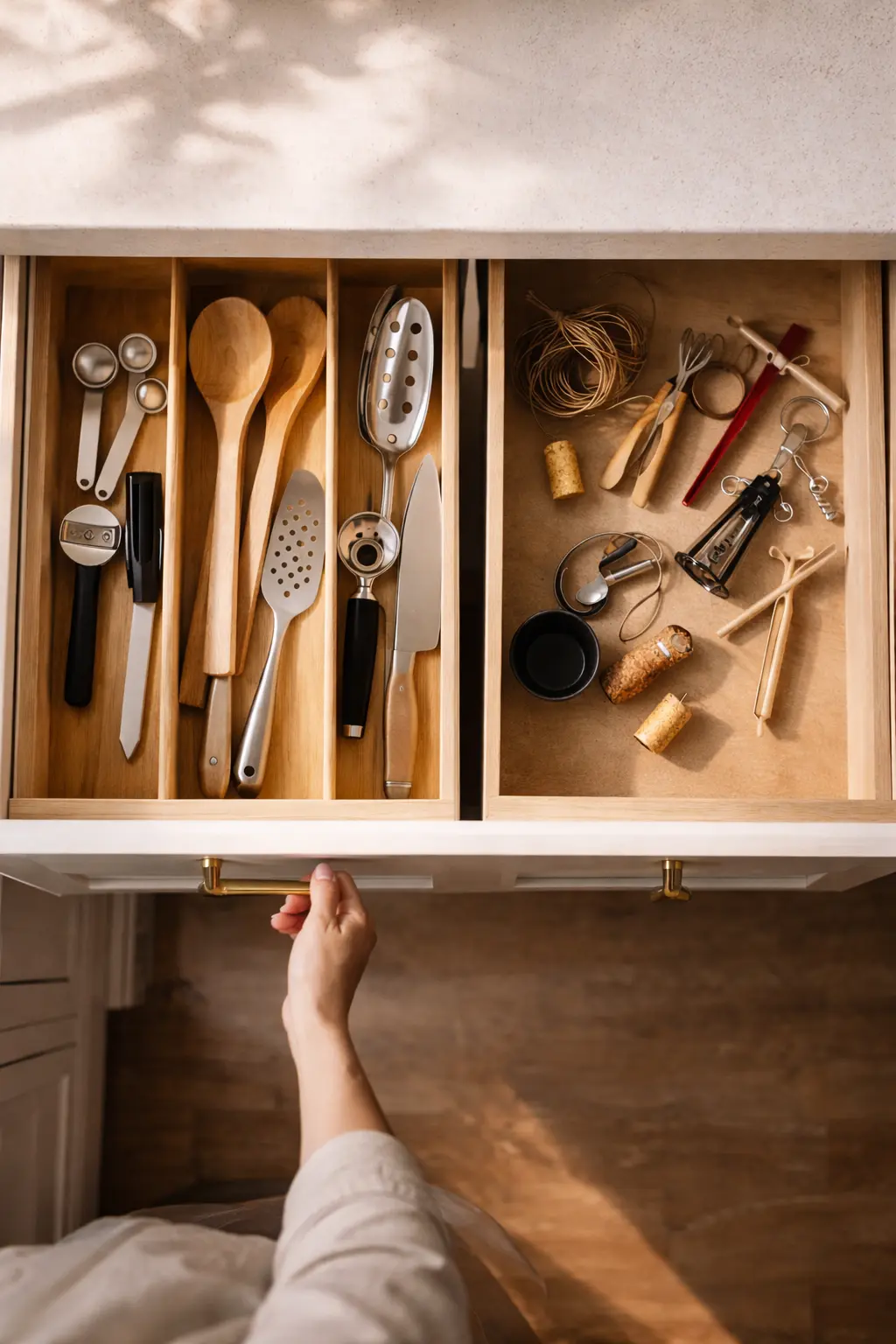
My first real breakthrough came when I realized that tidying alone isn’t the solution. Until you make concrete decisions about what you keep and why, clutter simply changes location.
When you begin, the question shouldn’t be, “Can I store this somewhere?” but rather, “Does this object serve me in my current life?” That shift in thinking elevates the entire process. Everyday essentials stay easily accessible, rarely used items receive structured storage, and unnecessary pieces simply don’t return to the system.
I apply three filters:
Do I use it regularly?
Does it bring me joy?
Does it have a clear function?
If the answer to any of these is no, it’s time to let it go. The decision-making can be tiring, but it’s incredibly freeing. Once the excess disappears, the kitchen suddenly feels more spacious and brighter—even if nothing physically changed.
Redefine Your Counter – The Countertop’s New Role
 Save it
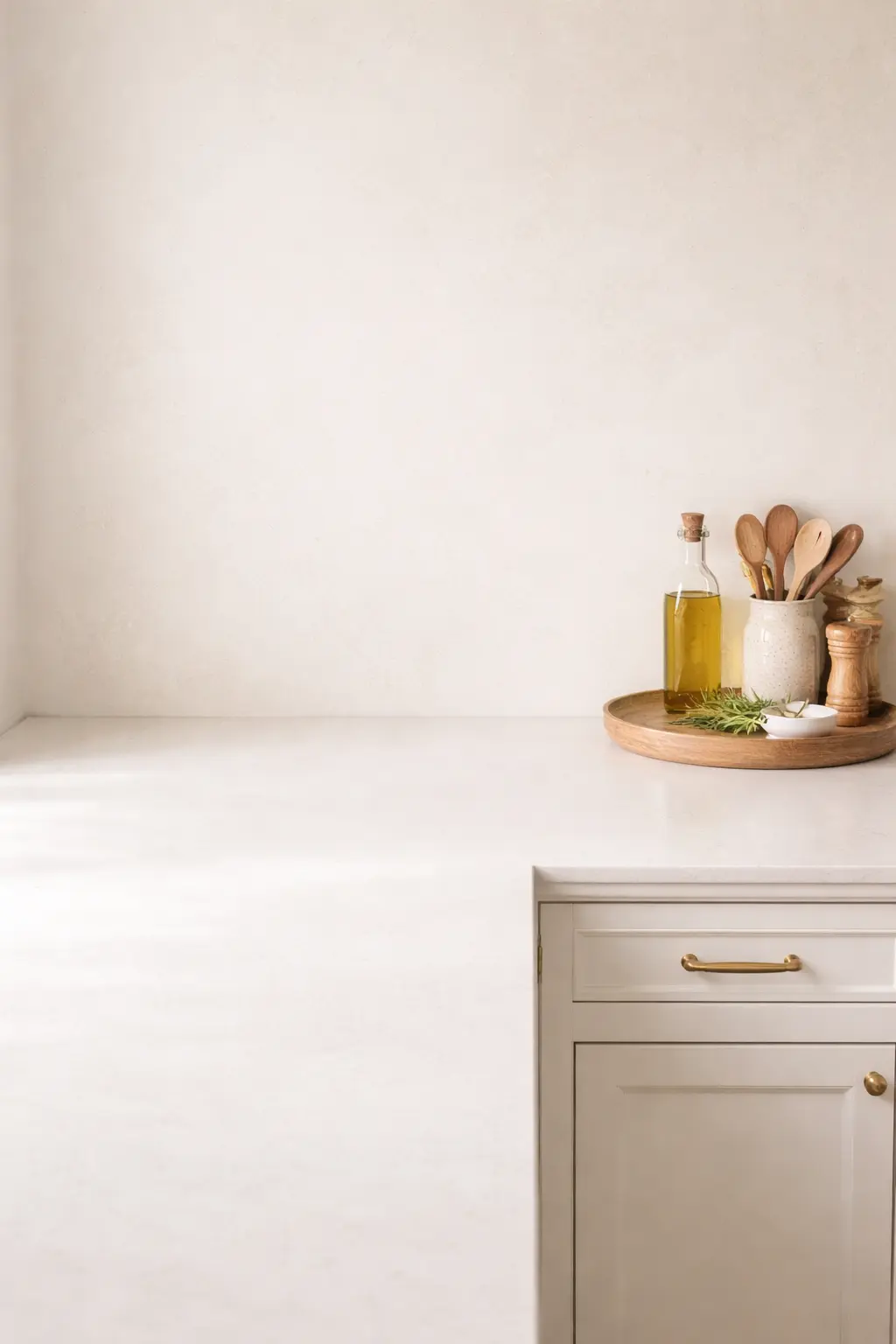
The kitchen counter is the soul of the space. When it’s crowded, the entire room feels disorganized. When shaped with intention, the character of the whole kitchen shifts.
In the past, everything “important” lived on my counter because I wanted it within reach. In reality, too much visual stimulation created constant background noise. Now, I leave most of my counter intentionally empty and only allow objects that are both functional and aesthetically pleasing.
In my article The Secret to Beautiful Yet Functional Kitchen Counter Decor, I go deeper into how to arrange everyday essentials in a way that creates structure rather than clutter. When the counter stops functioning as storage and becomes a composition, cooking flows more naturally.
Design Your Storage Around Your Habits
 Save it
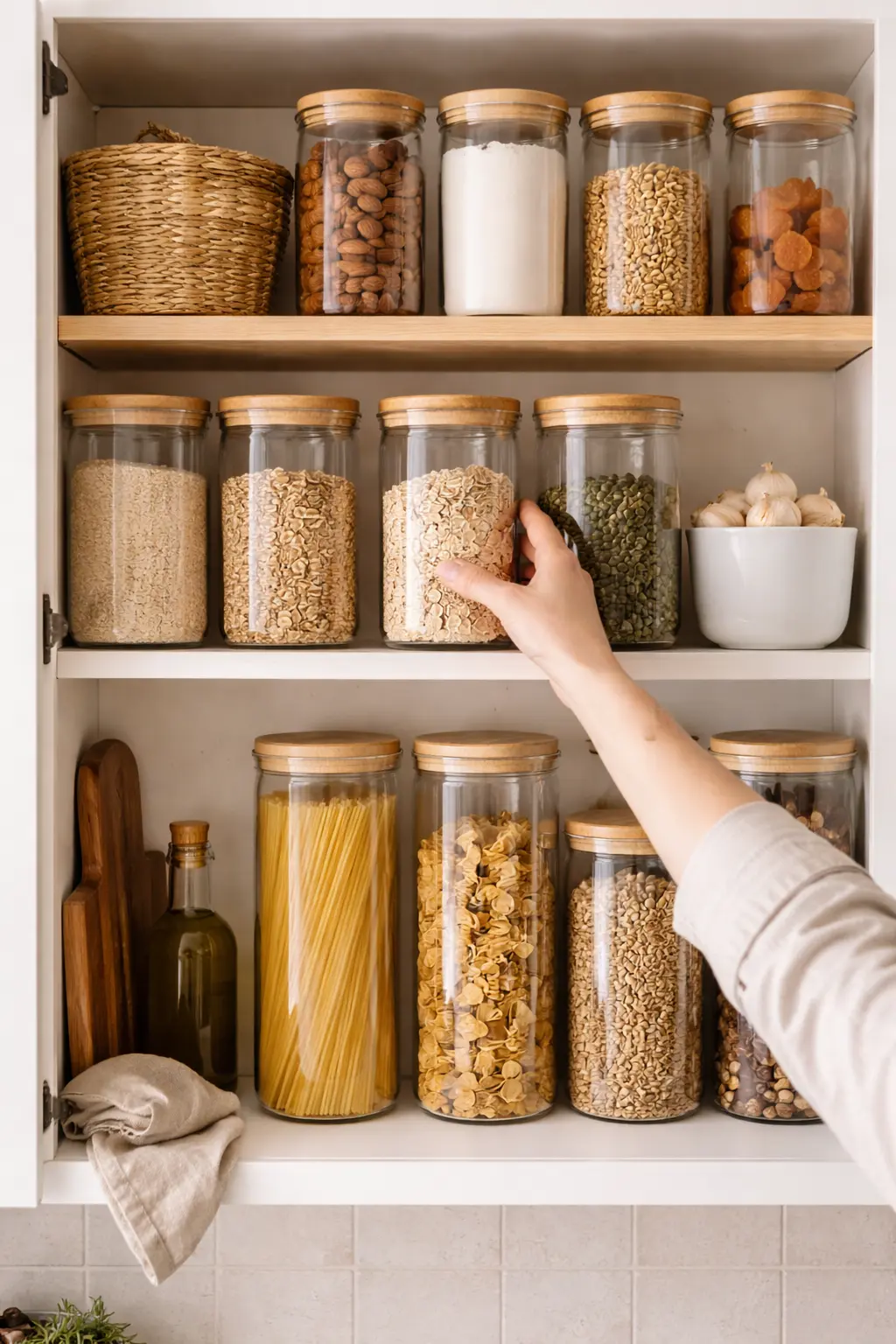
Most organizing advice fails long term because it isn’t built around your real habits. The goal isn’t to create a perfect Instagram moment—it’s to build a storage logic that fits seamlessly into your daily rhythm.
Observe yourself in the kitchen for a week.
- Where do you prep ingredients?
- Which drawer do you instinctively reach for?
These observations reveal the true structure of your space. For example, I keep my most-used tools near my prep zone so I’m not searching when I’m in a rush.
Uniform storage containers create visual calm, but the most important principle is this: every object needs a fixed home. If something doesn’t have a designated place, it will eventually land on the counter—and the clutter cycle begins again.
Introduce Warm Materials to Soften the Space
 Save it
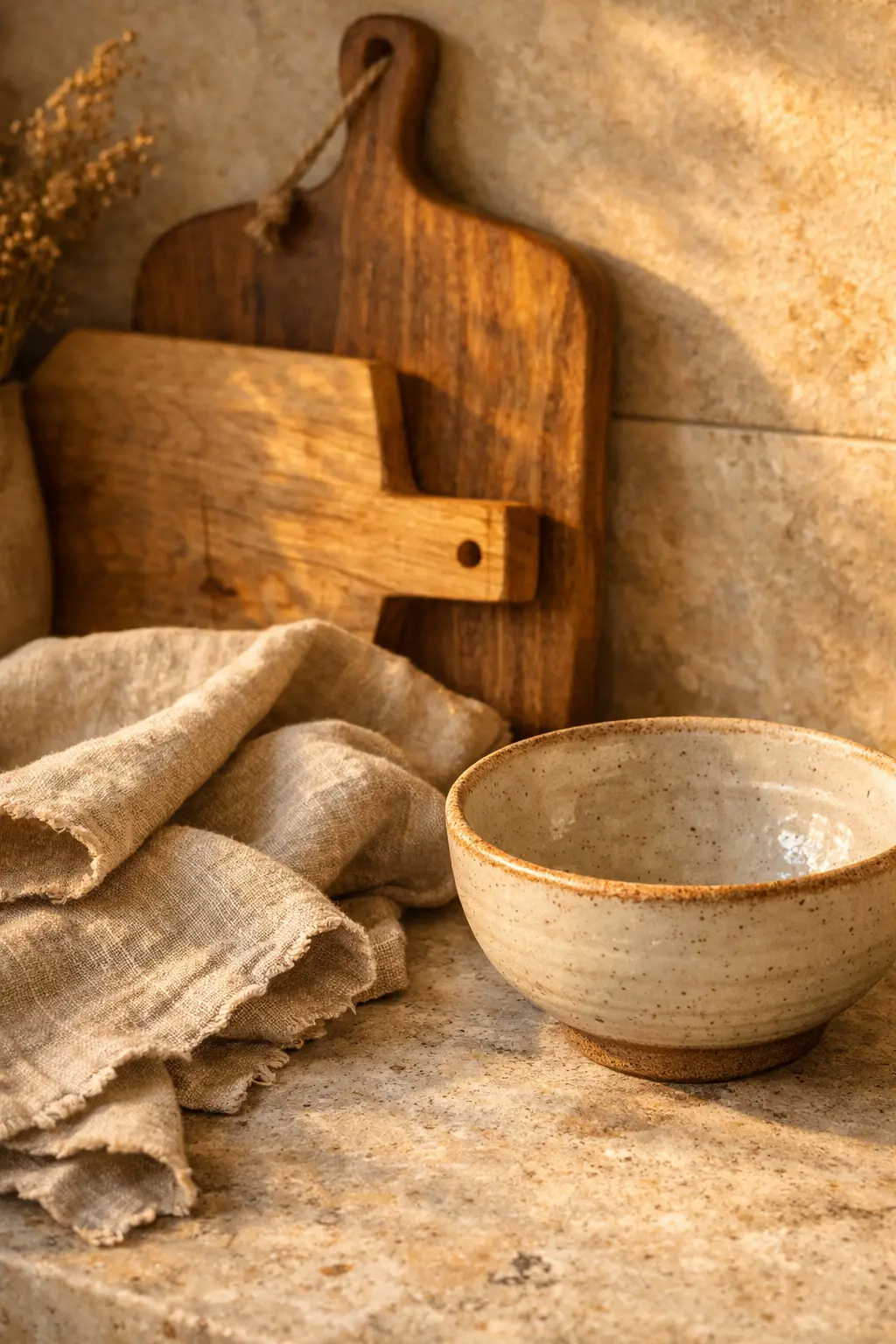
A clean kitchen can easily become too cold if only hard, glossy surfaces dominate. True premium atmosphere comes from subtle material choices.
Natural textures—wood, stone, linen, ceramic—bring life into the space. A thoughtfully chosen cutting board that adds character while remaining practical, or a handmade ceramic bowl holding fresh fruit, both contribute to making the kitchen feel not just functional, but intimate.
The goal is balance: structured order meets warm details, so the space feels harmonious rather than sterile.
Create Rituals, Not Just Systems

 Save it
A clutter-free kitchen isn’t sustained by storage boxes—it’s sustained by habits. Without built-in routines, even the most beautiful system eventually falls apart.
Every evening, I take a few minutes to reset the space. I wipe down the counter, return objects to their designated spots, and scan for anything left out unnecessarily. This short nightly reset prevents clutter from quietly rebuilding.
When order becomes part of your daily rhythm rather than an occasional overhaul, the kitchen remains stable and predictable.
Curate, Don’t Accumulate
 Save it
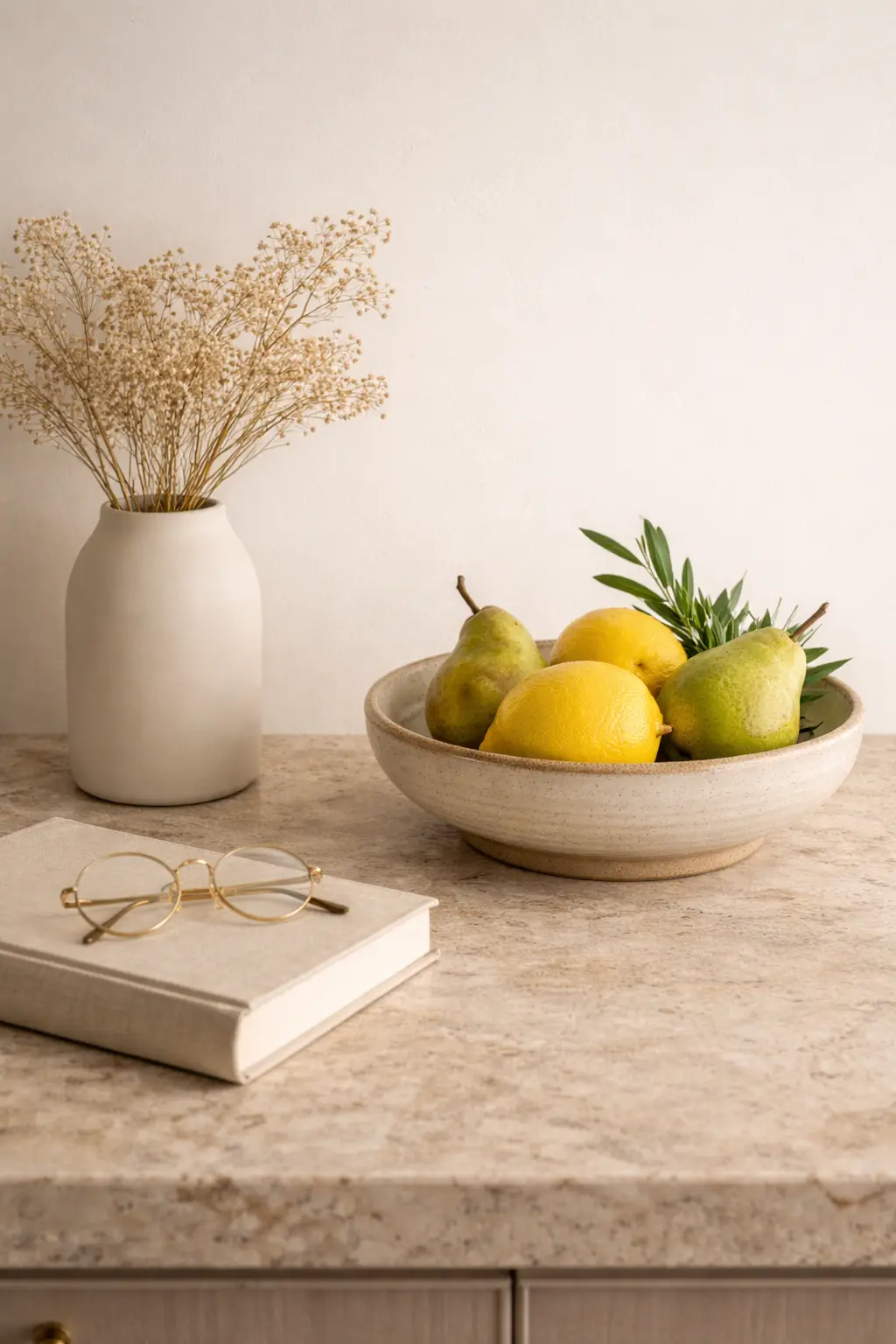
The biggest mindset shift for me was starting to see myself as a curator of my kitchen rather than a collector.
Before allowing anything into the space,
I ask: Does it fit the overall aesthetic? Does it support functionality? Does it add to the atmosphere?
This way of thinking ensures the kitchen doesn’t slowly become crowded again, even as I occasionally refresh details.
Practical Advices
 Save it
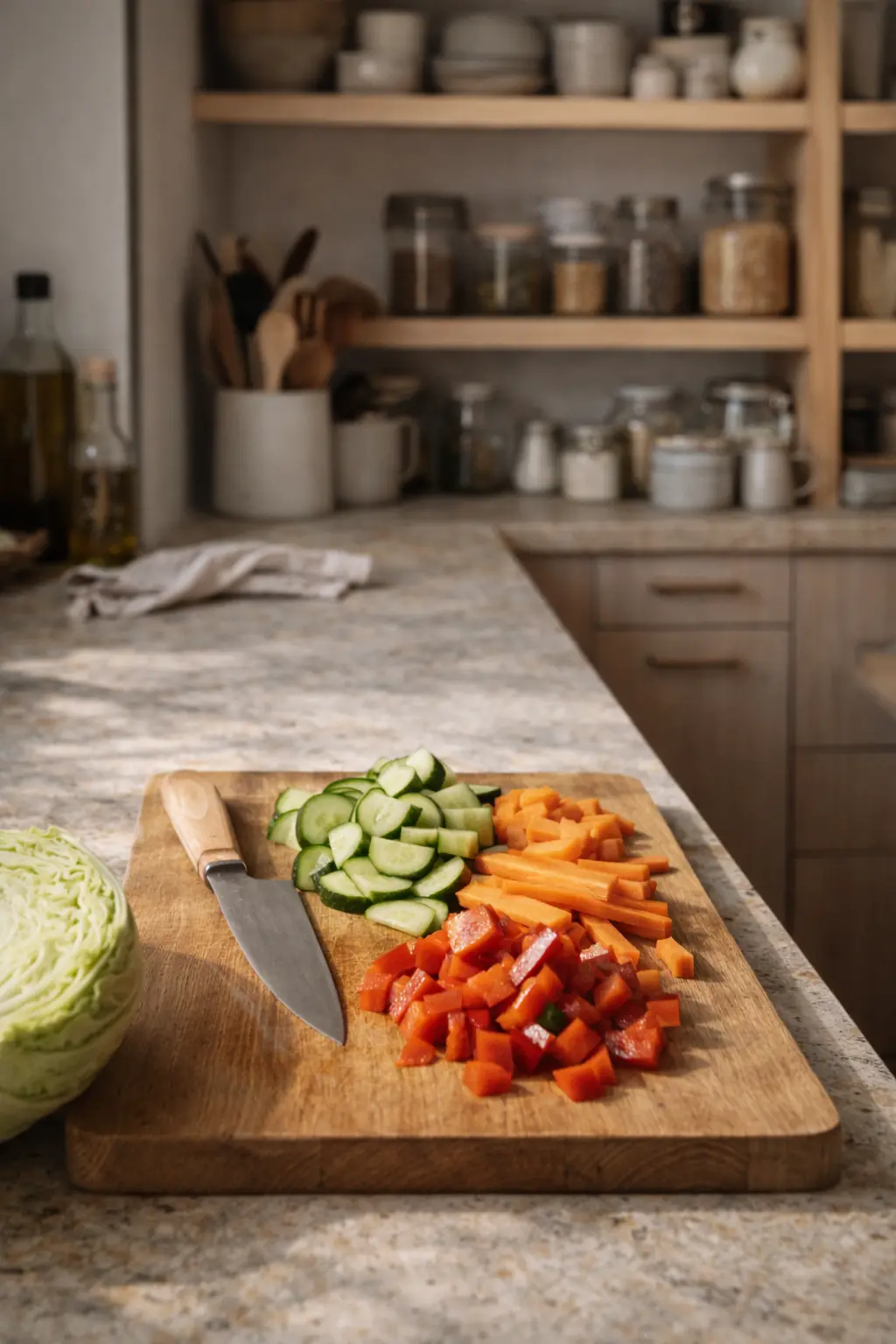
A clutter-free kitchen is also a mental space. When visual noise decreases, decision fatigue decreases. You’re not searching, navigating around objects, or getting frustrated by small obstacles. Think in zones: prep, cooking, storage, serving. Assign specific tools and surfaces to each zone. Your movements will become logical, and the space will support rather than hinder you.
It’s equally important to edit based on practicality, not just aesthetics. If you own three tools with similar functions, keep the one that truly performs well and feels high quality in your hand. Fewer but better tools not only free up space—they elevate the experience of using them.
Visual consistency matters as well. When storages, textiles, organizers and accessories harmonize, the kitchen feels more organized even during active use. This isn’t about perfection; it’s about intentional editing.
Ultimately, the goal isn’t a flawless showroom kitchen, but a livable one. A clutter-free kitchen works when it supports your daily life rather than forcing you into an artificial system of order.
Common Mistakes When Creating a Clutter-Free Kitchen
1.Moving too fast with radical minimalism
Many people attempt a complete transformation overnight. It looks impressive at first but becomes unsustainable if it doesn’t align with real life.
2.Prioritizing aesthetics over function
Beautiful containers and clean surfaces are not enough. If they’re inconvenient or impractical to use, frustration builds—and clutter follows.
3.Not assigning fixed homes
If an item doesn’t have a designated place, temporary solutions become permanent. Consistent return-to-place habits are foundational.
FAQ
How do I make my kitchen look expensive without renovating?
Visual cohesion, empty surfaces, and natural materials instantly create a premium feel. It’s about quality over quantity.
How can I maintain a clutter-free kitchen long term?
Establish a short daily reset routine and periodically reassess whether each item still deserves its place.
What colors make a kitchen feel calm and cohesive?
Warm whites, soft beiges, earthy tones, and gentle grays help create a harmonious and grounded atmosphere.
Conclusion
A kitchen you truly enjoy is never accidental. It’s the result of intentional decisions layered over time: what you keep, what you let go of, what remains visible, and how you integrate order into your daily rhythm.
A clutter-free kitchen isn’t about hiding everything—it’s about making sure every object has purpose. When the space feels clear and harmonious, cooking shifts from obligation to experience. Order doesn’t restrict you; it frees you by creating space for creativity and calm.
You don’t have to change everything at once. Start with a decision, a drawer, a section of the counter. What matters most is direction and consistency. When you curate your kitchen with intention, you eventually create a space that not only looks beautiful—but genuinely supports the rhythm of your life.

This post contains affiliate links. I may earn a small commission at no extra cost to you.