

How to Build a 5AM Morning Routine That Actually Works
By Emily | February 14, 2026
Honestly? Most of us think too big. New year, new goals. Gym membership, radical diet, 5 a.m. wake-ups, digital detox, a complete lifestyle overhaul – starting Monday. Then two weeks later we slip back into our old patterns and quietly conclude, “I just don’t have enough discipline.”
But discipline isn’t the problem. The real issue is that we underestimate the power of small, repeated actions. Real change isn’t explosive. It’s not flashy. It’s not Instagram-friendly. It’s quiet, almost invisible – and that’s exactly why it works. Simple daily habits shape our thinking, our energy levels, our relationships, our finances, and ultimately, our identity.
This article is for those who aren’t looking for another hit of motivation, but for a sustainable system. For those who want to be more balanced, focused, healthy, and intentional – without turning their entire life upside down.
I’ll show you which simple daily habits lead to real, long-term transformation. Not in checklist style, but with magazine-level depth and a personal tone. We’ll talk about mornings, your body, focus, sleep – and how to integrate all of this into everyday life with an elegant, premium feel.
1. I Wake Up — But I Don’t Move Immediately
 Save it
The biggest shift in my routine wasn’t adding something.
It was removing urgency.
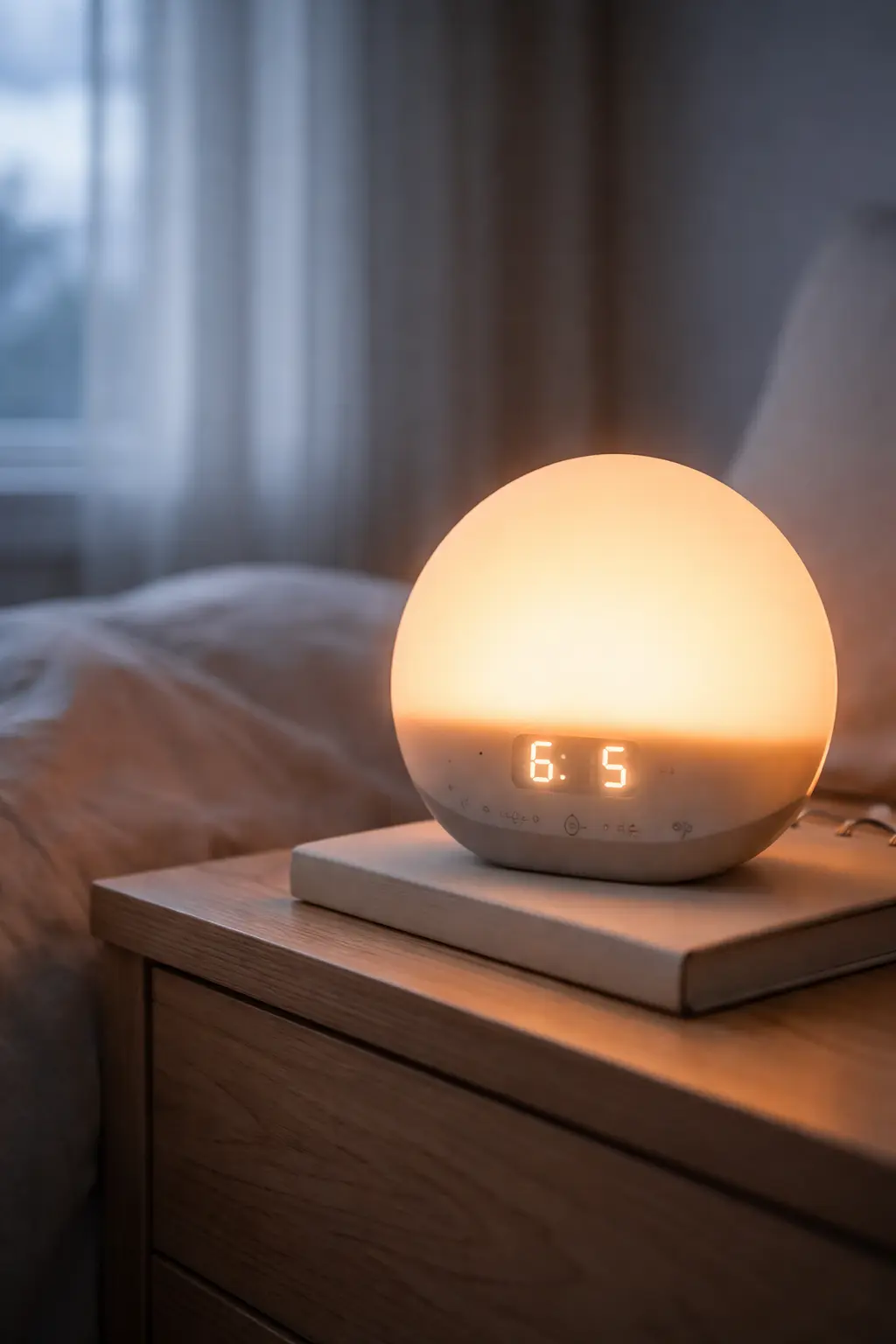
When my alarm goes off at 5:00AM, I don’t reach for my phone. I don’t sit up. I don’t negotiate with the day. I let myself exist in the in-between for two or three minutes — awake, but not yet performing.
There is something powerful about not beginning the day in reaction.
The phone used to live on my nightstand. Now it charges across the room. A simple sunrise alarm clock — similar to this one — has replaced the default phone alarm. The light gradually increases before the sound begins, which feels less like an interruption and more like an invitation.
This small environmental shift eliminated the scroll reflex entirely. And without that reflex, the morning feels longer — even though the time hasn’t changed.
The first minutes of the day set the tone for how efficiently everything else unfolds. Calm beginnings reduce friction later.
2. Water Before Anything Else

 Save it
I used to think hydration advice was exaggerated.
It isn’t.
Before coffee, before movement, before conversation — I drink water. Not dramatically. Not ritualistically. Just consistently.
A simple glass lives on my nightstand every evening. In winter, I sometimes use an insulated bottle to keep it cool but not cold. Something understated and stainless — like this insulated water bottle — works without visual clutter or branding overload.
The point isn’t the object.
It’s removing decision-making.
At 5AM, the brain is still negotiating with sleep. The fewer micro-choices required, the smoother the transition into clarity.
Hydration first stabilizes everything else. Energy feels more even. Coffee becomes optional instead of essential.
And optional is powerful.
3. Movement — But Only Enough to Wake Up

 Save it
For years I thought 5AM meant an intense workout.
What I discovered instead: intensity drains the rest of the day.
My morning movement now lasts 15–20 minutes. It’s quiet, controlled, and predictable. Sometimes mobility. Sometimes light strength work. Occasionally just a slow walk if the weather allows.
I keep a minimal yoga mat permanently rolled in the corner of my bedroom. Nothing aspirational. Just accessible. A high-quality, non-slip mat like this one removes excuses — it feels good underfoot, stable, and visually calm.
The goal is not transformation.
It’s activation.
When movement is framed as maintenance rather than achievement, it becomes sustainable.
The body wakes up. The mind follows.
4. Planning — But Not Overplanning
 Save it
This is where I used to lose time.
Color-coded planners. Productivity systems. Three different apps.
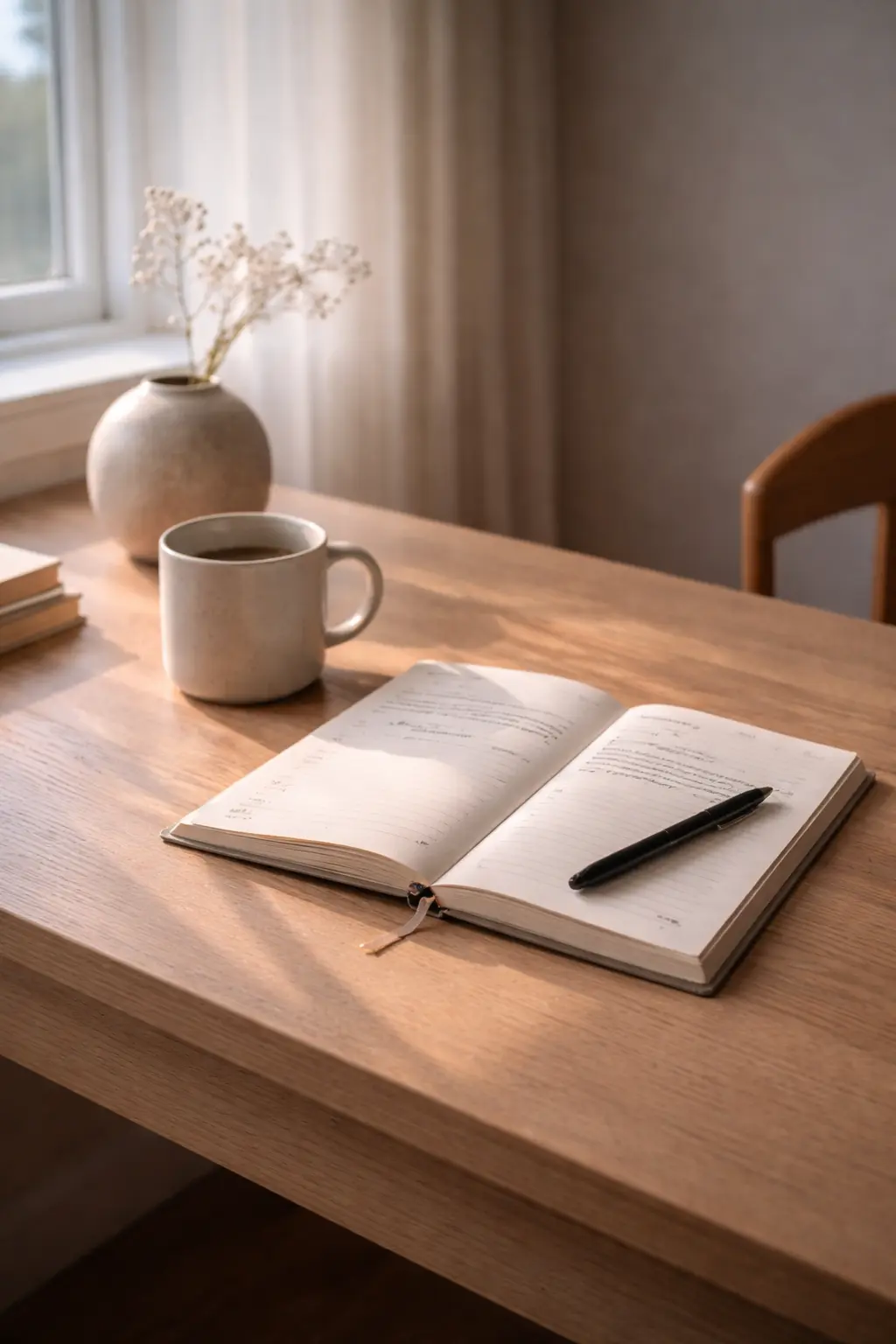
Now, I use one notebook.
A simple linen-bound daily planner — similar to this minimalist daily planner — stays open on my desk. Each morning, I write three things:
• One priority that moves something forward
• One administrative task
• One small personal commitment
That’s it.
Five AM is not for building an empire on paper. It’s for setting direction.
When the list is short, execution becomes realistic. And realistic execution compounds faster than ambitious avoidance.
5. Deep Work Before the World Wakes Up

 Save it
This is the anchor.
By 5:40AM, the house is silent. Messages haven’t started. The day hasn’t fragmented.
I give myself 60–90 minutes of uninterrupted work on something that requires thinking — not responding.
Writing. Strategy. Creative development.
A small environmental upgrade made a difference here: noise-canceling headphones. Not for music — often I play nothing — but for creating a psychological boundary. Something like these over-ear noise-canceling headphones signals to my brain that this is protected space.
The goal isn’t output volume.
It’s depth.
Even one focused hour in the morning replaces three scattered ones later.
6. Coffee That’s Already Waiting for Me
 Save it
I stopped romanticizing coffee when I realized I was spending more time preparing it than drinking it. At 5AM, I don’t want another decision. I don’t want a ritual that requires precision. I want continuity.
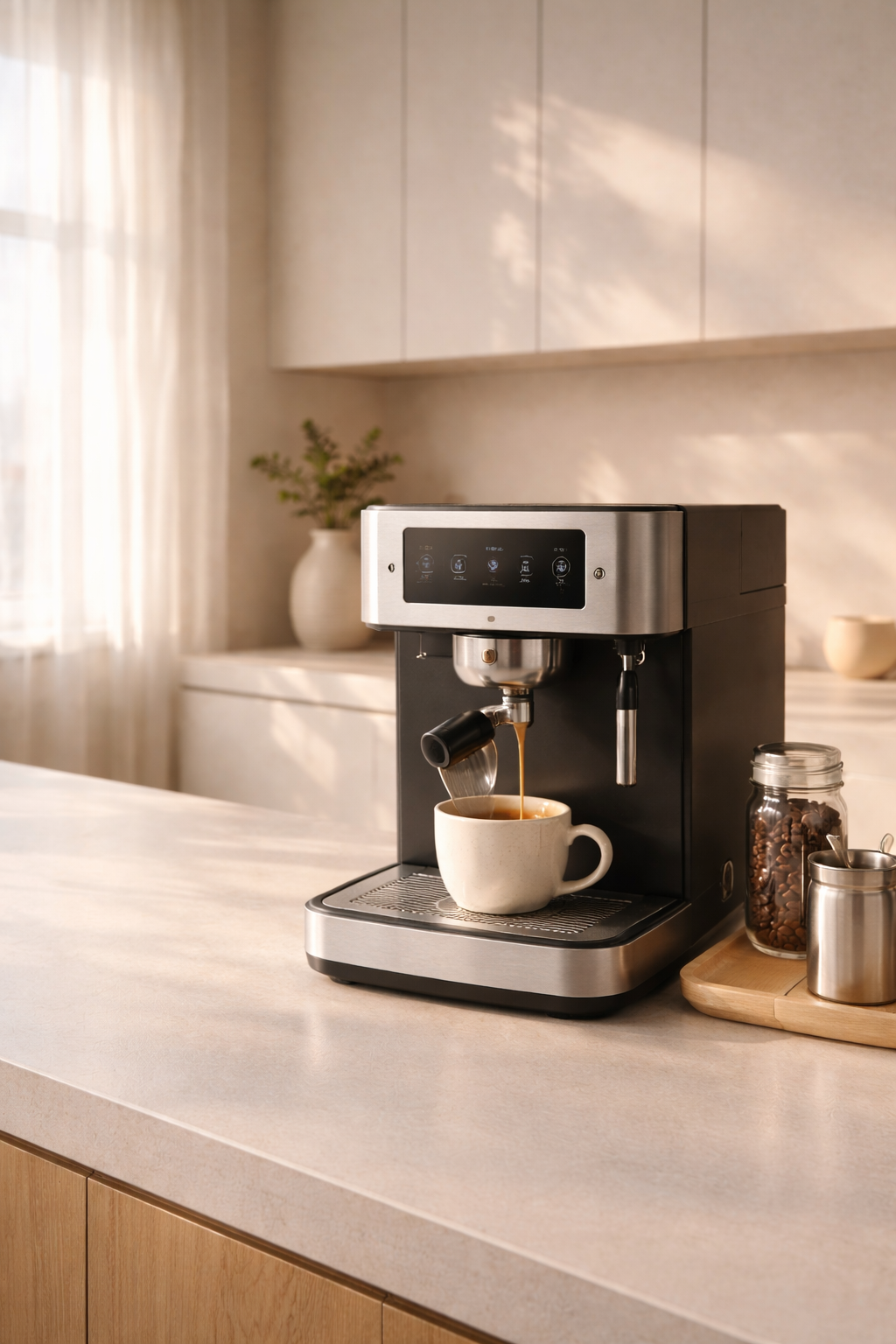
Now my coffee is scheduled. A smart, app-controlled machine — starts heating a few minutes before my deep work session ends. By the time I walk into the kitchen, it’s ready. No measuring. No waiting for temperature. No standing around.
The shift seems small, but it changed the texture of my mornings.
Instead of interrupting focus to “go make coffee,” I transition naturally. I close my laptop. I stretch. I step into the kitchen and the machine is already humming softly, finishing its cycle. It feels less like preparation and more like a quiet handoff from solitude to the outside world.
Automation, when used intentionally, protects attention.
The app lets me adjust strength and timing without thinking about it in the moment. I decide once — not daily. That’s the difference between ritual and system.
The goal of a 5AM routine isn’t to add impressive habits. And sometimes, that means letting technology do the repetitive part so your mind can stay where it matters.
Coffee, now, is not a ceremony.
Common Mistakes I Made With 5AM
The first mistake was thinking earlier meant better.
Waking at 5AM only works if you protect sleep. Without consistent bedtime discipline, early rising becomes self-sabotage disguised as ambition.
The second mistake was overloading the hour. Productivity culture glamorizes stacking habits — meditation, journaling, workouts, language learning — all before sunrise. The result isn’t growth. It’s friction.
And friction kills consistency.
The third mistake was measuring success by aesthetics. A routine doesn’t need to look impressive. It needs to be repeatable.
If a habit requires willpower every morning, it won’t survive stress.
The version that lasts is the one that feels almost boring.
Boring scales.
FAQ
Is 5AM necessary for productivity?
No. It’s useful only if it creates uninterrupted time. The hour matters less than the isolation it provides.
How long should a 5AM routine be?
Mine lasts about 2 hours total, but the structured portion is closer to 90 minutes. Efficiency matters more than duration.
What if I’m not a morning person?
Start by protecting sleep first. Shift gradually. If your energy peaks at night, optimize that instead. Time is neutral — consistency isn’t.
Does this routine work on weekends?
Mostly. The structure softens, but the wake time stays close. Rhythm protects momentum.
Closing Thoughts
5AM stopped being about discipline when I stopped trying to impress anyone with it.
It became a quiet negotiation with my future self.
A way to move one meaningful thing forward before the world begins asking for pieces of my attention.
The routine works not because it is intense — but because it is efficient.
And efficiency, when layered daily, becomes freedom.



This post contains affiliate links. I may earn a small commission at no extra cost to you.