
Brighten Your Bedroom the Modern Minimalist Way: Expert Lighting Ideas
By Emily | January 27, 2026
Lighting has extraordinary power to transform a bedroom – perhaps more power than any other single element. Even the most carefully styled, minimalist bedroom with perfect furnishings, thoughtful color palettes, and intentional design choices can feel flat, lifeless, and uninviting if the lighting is wrong. Conversely, a bedroom with mediocre furnishings but exceptional, thoughtfully layered lighting feels sophisticated, inviting, and genuinely restful. Lighting shapes not just how we see our rooms, but how we feel in them.
Modern minimalist lighting isn’t about installing a single dramatic, statement-making fixture – the kind of sculptural chandelier or architectural piece that becomes the room’s focal point. Instead, it’s about understanding light as a layering system. Ambient lighting, task lighting, and accent lighting work together synergistically to highlight design elements, enhance comfort, support functionality, and create mood. The right layered lighting makes a minimalist space feel inviting, balanced, and even more spacious than it actually is.
I discovered this while redesigning my own bedroom. When my room had only a single overhead light, the space felt flat and one-dimensional. Corners remained dark. Textures disappeared. The carefully chosen bedding and thoughtful décor couldn’t shine. By introducing a floor lamp in one corner, bedside task lighting, and soft accent light sources that highlighted specific walls, the room transformed immediately. It felt more spacious, genuinely relaxing, and unmistakably intentional. The impact was dramatic – yet I hadn’t added clutter, complexity, or visual confusion. I’d simply understood how to use light strategically.
In this article, you’ll discover how to layer lighting effectively in a minimalist bedroom, choose fixtures that complement rather than compete with your aesthetic, and enhance both the room’s visual appeal and its functionality. By the end, you’ll be able to create a bedroom that feels bright, modern, and meticulously designed – all while maintaining the calm, uncluttered minimalist ethos that makes the space genuinely restful.
Define Your Room's Lighting Zones
 Save it
When most people plan bedroom lighting, they automatically think in functional terms: lighting for sleeping, lighting for reading, lighting for getting dressed. This functional approach isn’t wrong, but it’s incomplete. The real breakthrough comes when you start thinking in terms of lighting zones – distinct areas with different light requirements and different functions. Your bedroom isn’t a homogeneous, single-purpose space. It’s a collection of different functional areas that require different lighting approaches.
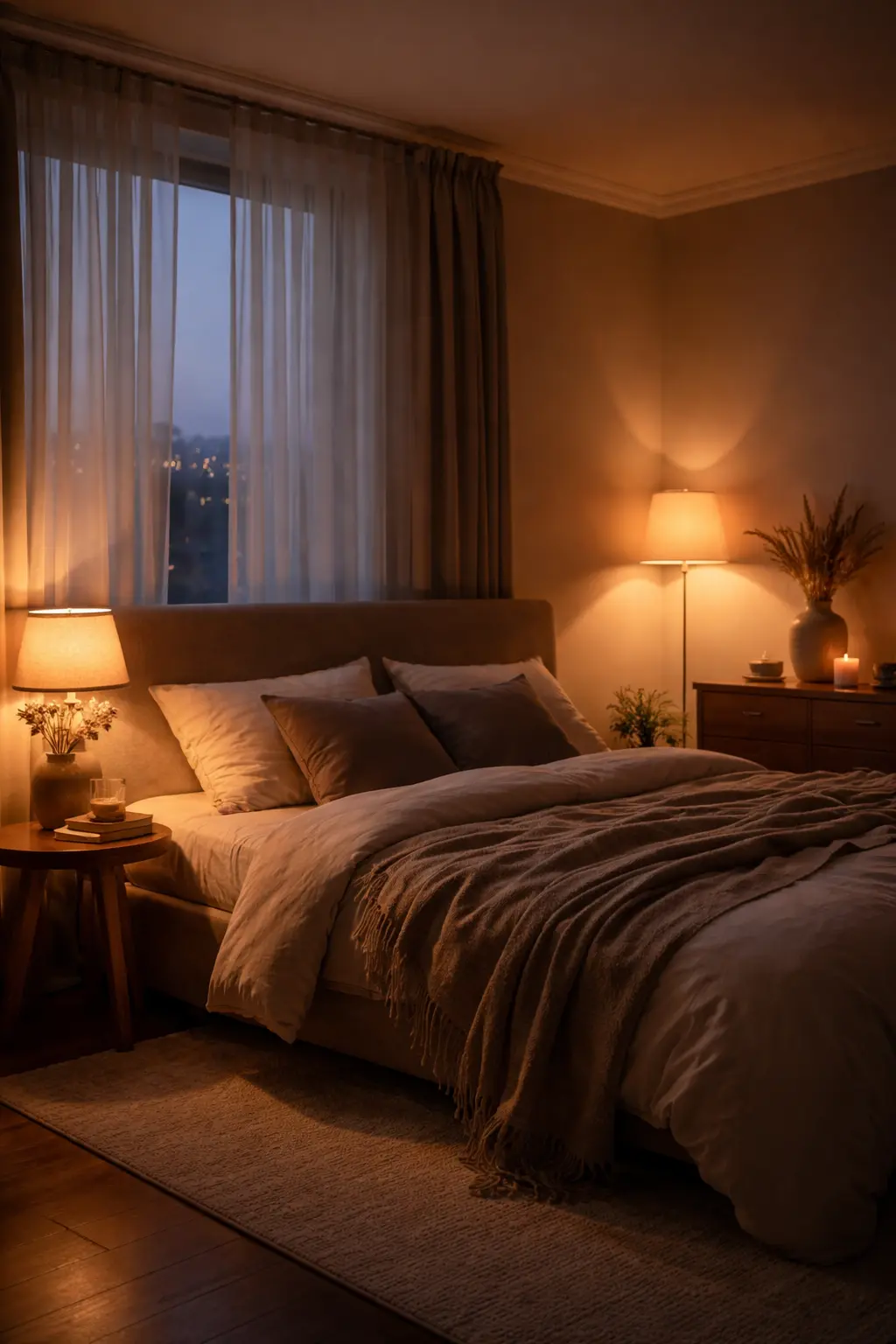
Within your bedroom, you typically have a rest zone – the area immediately surrounding the bed where you sleep and wake. You have a transition zone – the pathway and space between the bed and the door where you move during evening and nighttime. You have an active zone – your wardrobe, mirror, and dresser where you prepare and get ready. Each zone requires fundamentally different lighting. In the resting area around your bed, low-intensity, diffused lighting works best. This doesn’t overstimulate your nervous system. It creates calm. It supports sleep preparation. In transition zones, a floor-level light – perhaps motion-activated – can be practical without blinding you when you move through the space at night. In active zones like your dresser, you need functional task lighting that allows you to see clearly without being harsh.
Once I started lighting these zones separately – creating distinct light environments for the wall behind the bed, the bedside area, and the wardrobe section – my bedroom became a kind of visual “map” in the evening. I no longer had to switch on full brightness to use the space. Different zones provided the light I needed for different activities. The result was a calmer, more intuitive space where light supported my actual nighttime behavior rather than fighting against it.
Use Light as Architectural Design
 Save it
In modern minimalism, light is one of the strongest architectural tools you can use – perhaps even stronger than physical changes like moving walls or installing new finishes. Soft, strategically directed light can highlight wall planes, add depth to otherwise flat surfaces, and create visual interest through shadow play. Light becomes a design element itself, not just a functional necessity.
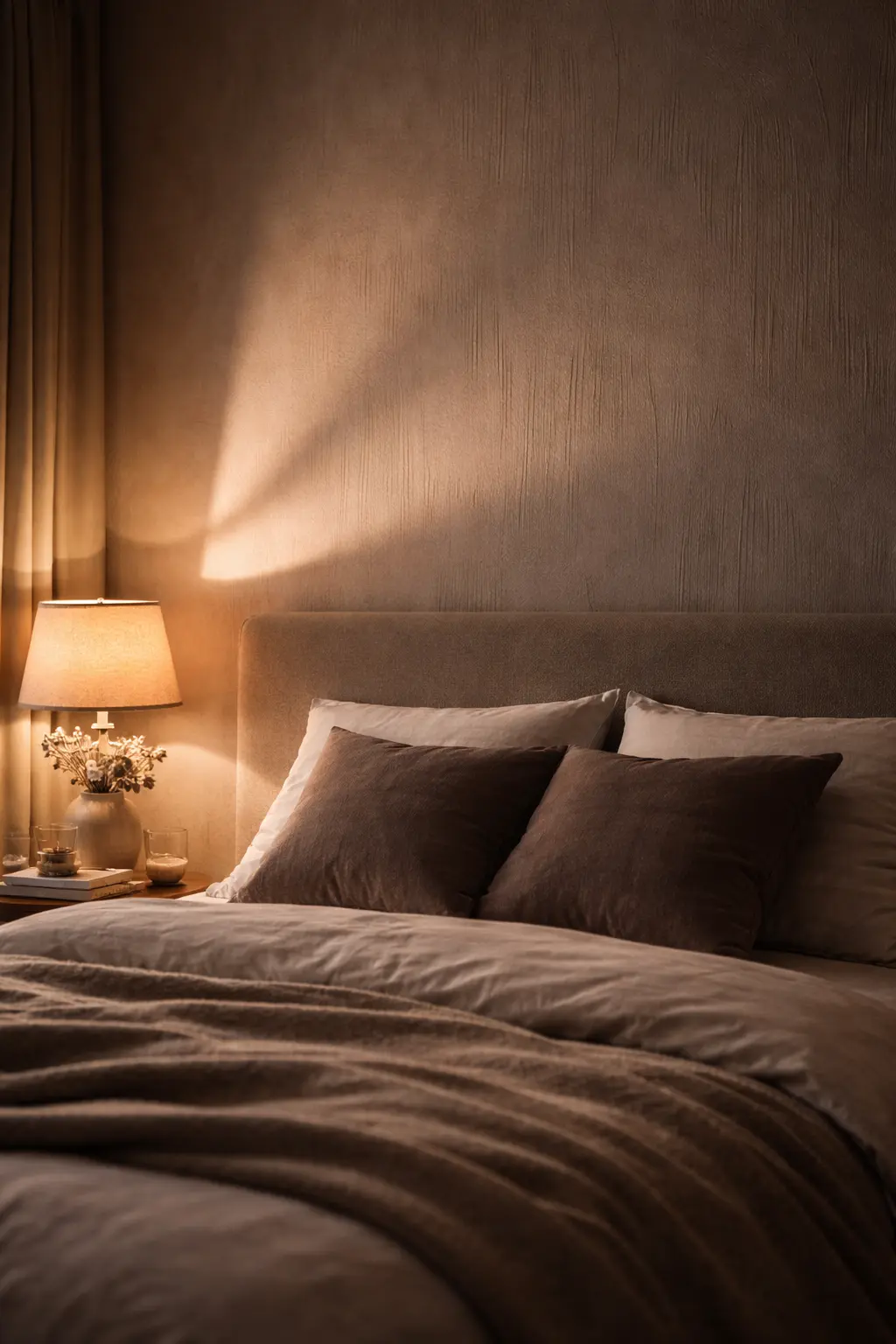
When I began lighting the wall behind my bed from the side rather than front-on, something remarkable happened. What looked completely flat and featureless during daylight hours suddenly developed subtle shadows and dimension at night. The wall acquired character and depth. The furniture didn’t change. No new décor was added. Yet the entire spatial composition felt more structured, more architectural, more intentional. This approach works especially well if you have textured walls, plastered finishes, or stone and wood-effect surfaces. With these materials, light doesn’t simply illuminate – it reveals character. It transforms flat surfaces into dimensional, interesting compositions. Light dances across texture, creating movement and visual richness that can’t exist in uniform, bright, overhead illumination.
This principle transforms how you think about light. Rather than lighting a room evenly and uniformly you use light selectively to highlight certain surfaces while letting others recede. This selective approach is deeply minimalist. It’s about emphasis and intention rather than uniform illumination. It uses light to direct attention, to create visual hierarchy, and to communicate design intentionality.
Position Light Below Eye Level
 Save it
One of the biggest differences between a bedroom that feels restful and one that feels tiring lies in a simple detail: where the light sources are positioned. Ceiling lighting – coming from above, flooding downward – is practical during daytime, but often overstimulating and tiring in evening hours. When light comes from above, it creates distinct shadows underneath objects, sometimes harsh contrast between light and dark areas, and a visual hierarchy that feels top-heavy.
Lights positioned below eye level don’t glare into your vision. They create more natural shadows. They visually “anchor” the space by grounding light sources at a human-centered level. When I replaced my traditional bedside lamp with a wall-mounted fixture positioned lower on the wall, the evening lighting environment immediately became less contrast-heavy. Shadows softened. The light felt warmer and more diffuse. The entire room felt visually calmer. Movement through the space felt more natural because the light came from where your eyes naturally look, not from above where it can cause glare and discomfort.
Lower-level, indirect light sources also make nighttime movement and functionality easier without requiring you to switch on full, harsh brightness. You can navigate the room, perform necessary tasks, and move between zones without triggering the alertness that comes with bright overhead lighting. This practical consideration connects directly to sleep quality and nervous-system health. When your bedroom lighting respects natural eye level and avoids harsh overhead illumination, your body receives the signal that it’s appropriate to rest and relax.
Consider How Light Interacts With Textiles

 Save it
Much of the light in your bedroom – more than most people realize – doesn’t reflect off walls. It reflects off textiles. This means that what matters tremendously isn’t just the light itself, but how that light interacts with the materials surrounding it: what your bedding is made of, how thick and opaque your curtains are, what texture your rug has, what finish your pillows have. These textile choices affect how light diffuses, reflects, and creates the room’s overall lighting character.
Linen and cotton surfaces scatter light, diffusing it across their texture rather than reflecting it sharply. Silkier, smoother materials tend to reflect light more directly, sometimes creating shine or brightness. When I switched to thicker, matte-finish curtains, the incoming evening light became less contrasty and harsh. The light diffused across the textile’s surface rather than creating sharp shadows. The entire room took on a warmer, more diffuse tone. The interaction between light and textile created a softer, more luxurious feeling than the light source itself.
Lighting becomes almost tangible in these situations – not just something you see, but something that seems to interact with and dance across surfaces. A glossy-finish bedspread will create different light patterns than a matte cotton duvet. A thin, translucent curtain will allow light to pass through differently than heavy blackout fabric. Understanding these interactions allows you to use textiles as part of your lighting strategy rather than treating them as separate design elements. Light and material should work together, not against each other, to create the atmosphere you want your bedroom to embody.
Create One Subtle Focal Point
 Save it
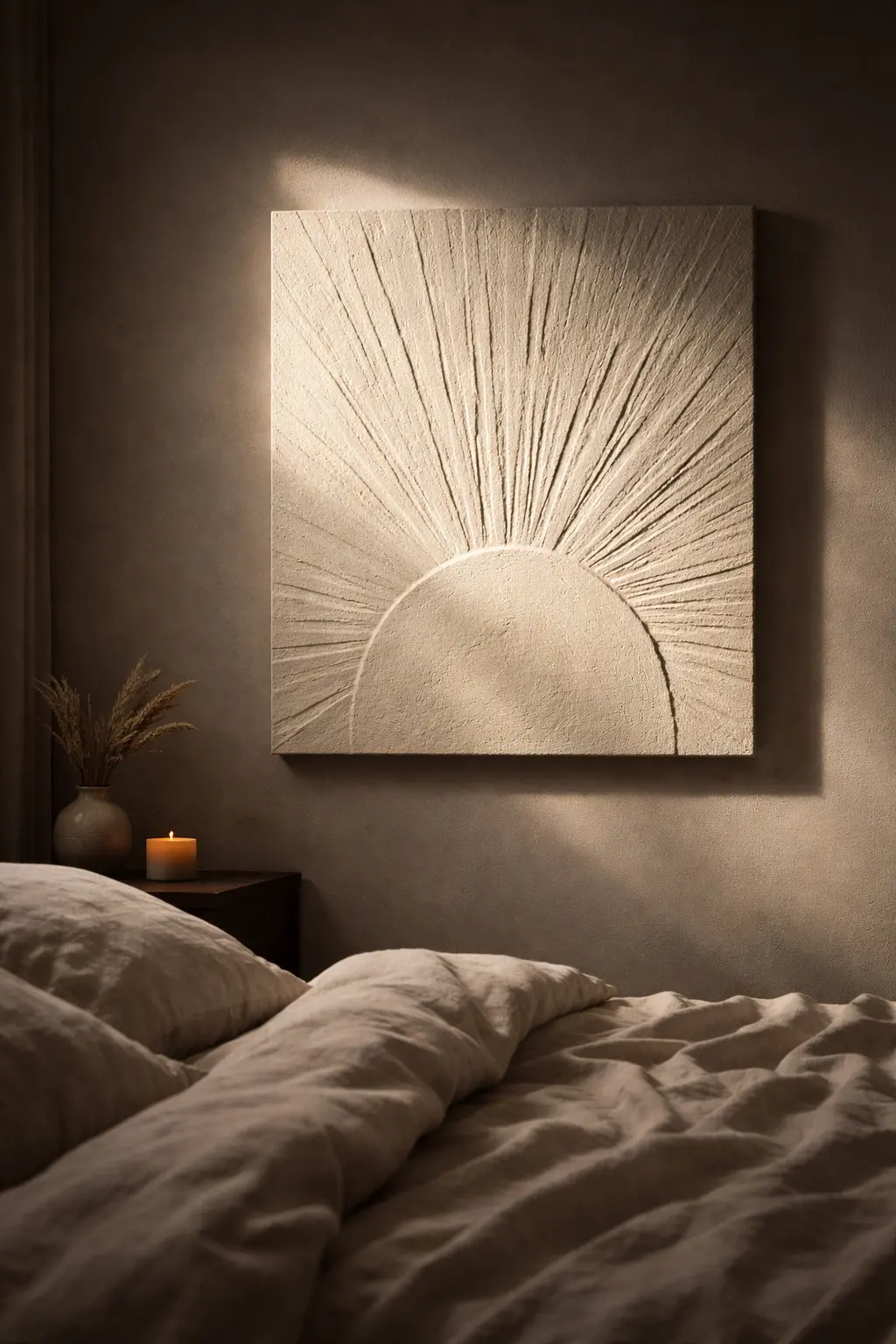
In a purely minimalist bedroom with even, uniform lighting everywhere, the space can paradoxically feel flat and characterless. There’s nowhere for the eye to rest. There’s no visual focal point. Instead of creating interest, uniformity creates monotony. A smart minimalist lighting strategy includes one subtle focal point that you gently highlight – perhaps a piece of wall art, the architectural panel behind your bed, or the surface above your dresser.
In my bedroom, a narrow, downward-facing light was installed above one bedside table. It doesn’t illuminate the entire room. It doesn’t create harsh contrast. But in the evening, it creates a gentle visual anchor. This prevents the space from feeling homogeneous or visually flat while maintaining the clean, uncluttered overall aesthetic. The focal point is subtle enough that it doesn’t fight with the minimalist ethos, but present enough to give the space character and visual depth.
This principle is crucial for modern minimalism: you’re not creating drama or visual excitement through lighting. You’re creating enough subtle interest and intentionality that the space feels curated rather than austere. A focal light is the difference between a minimalist bedroom that feels cold and empty versus one that feels calm and intentionally designed.
Reduce Direct Light Wherever Possible
 Save it
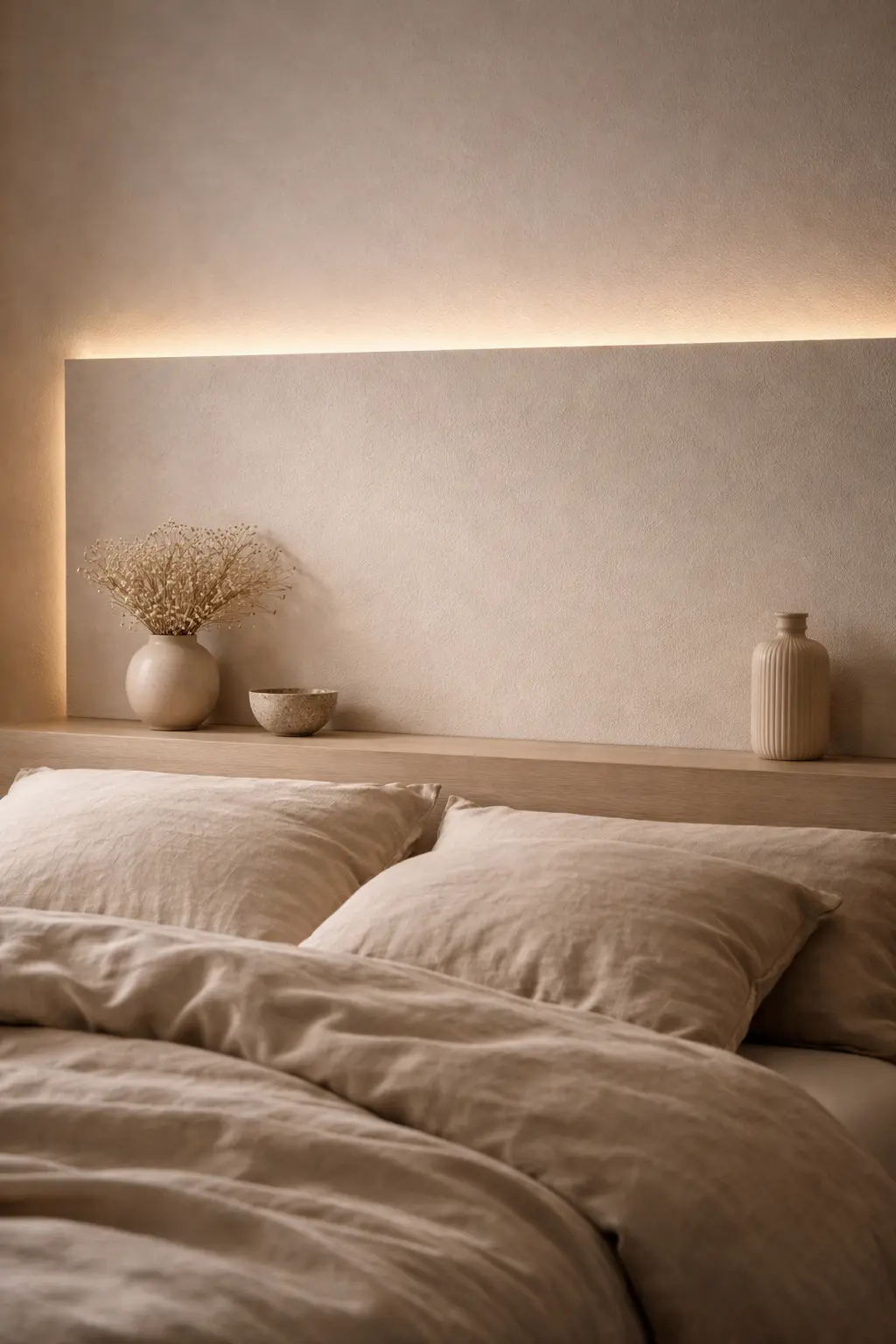
Direct lighting – light sources that shine directly onto surfaces – often creates harsh shadows that interrupt the visual continuity that minimalist spaces depend on. For this reason, incorporating at least one or two indirect lighting solutions dramatically improves the overall effect. An indirect light source – perhaps hidden behind the bed, along a shelf edge, or within architectural recesses – illuminates without being seen. The light source itself disappears, leaving only the beautiful effect of illuminated surfaces.
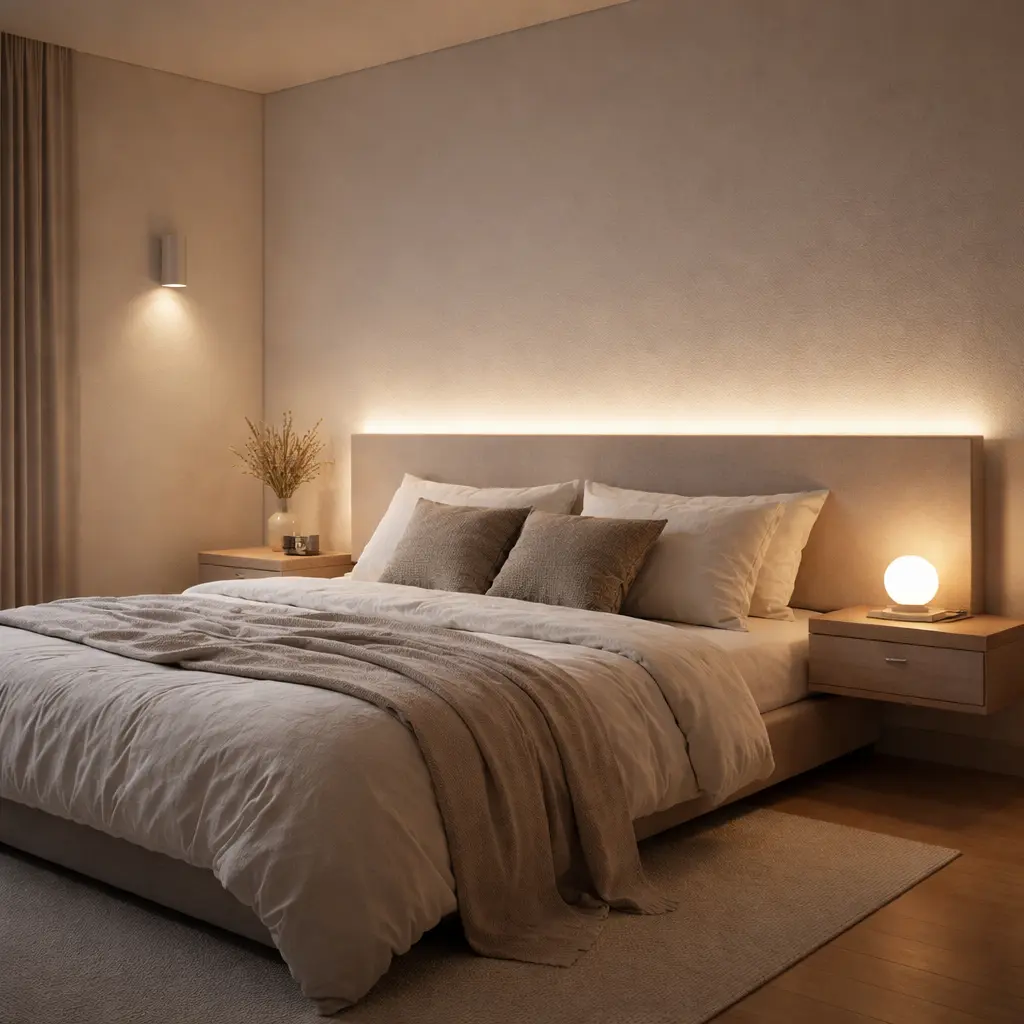
A discreetly placed LED strip can remain completely invisible as a light source while still providing functional illumination and creating atmosphere. When I first used an indirect LED strip hidden behind my headboard, the wall began to softly glow in the evening, adding subtle depth and dimension to the space. No new decorative elements were introduced. The light source remained hidden. Yet the effect was transformative – the wall acquired presence and character without any visible light fixture. This is indirect lighting at its most sophisticated: the effect is visible and meaningful, but the source is invisible and unobtrusive.
Indirect lighting is fundamentally aligned with minimalist principles. It provides the benefits of light without introducing visual clutter or competing fixtures. It creates atmosphere without demanding attention. It supports the space’s restfulness by illuminating surfaces softly rather than announcing itself through visible fixtures.
Support Nighttime Functionality
 Save it
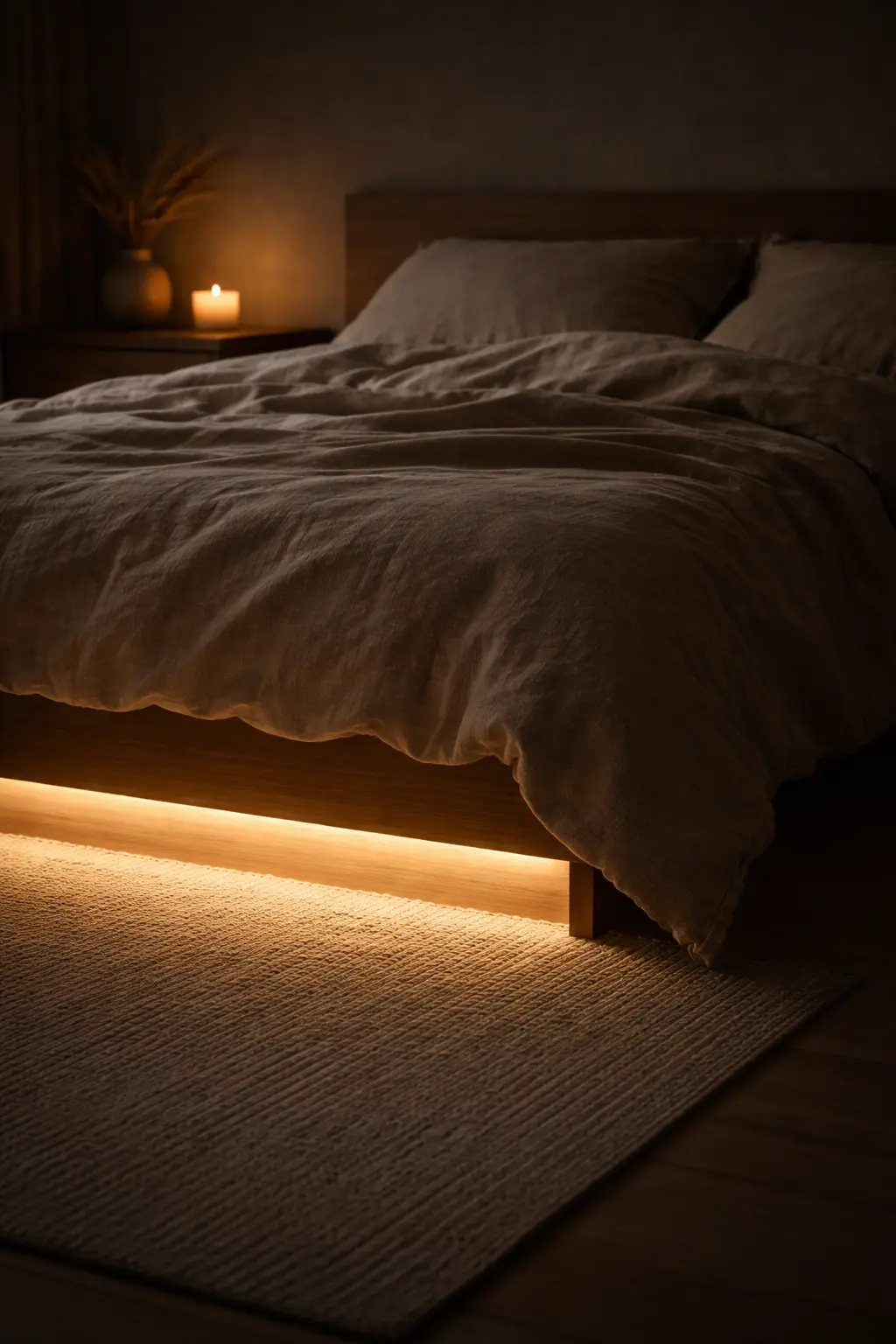
Bedroom lighting is often planned only for the hours immediately before sleep – the time when you’re preparing for bed. But bedroom lighting also matters significantly when you wake during the night, need to use the bathroom, or simply need to move through the space. Poor lighting in these situations forces you to choose between total darkness and harsh, sleep-disrupting brightness.
A low-intensity, floor-level light provides orientation and safety without disrupting your sleep cycle or shocking your nervous system into wakefulness. In my bedroom, a very subtle light source is positioned under the bed frame, activating only when movement is detected. I don’t need to switch on ceiling lights. The subtle illumination allows my eyes to adjust gradually while providing enough light to move safely. After a few minutes, my eyes adjust back to darkness more easily than if I’d experienced harsh overhead lighting. This small detail provides real, long-term comfort and improves sleep quality, even if you don’t consciously notice it during daytime.
Nighttime functionality is often overlooked in bedroom design. Yet it directly affects your experience of the space during the hours you spend there. A well-lit bedroom that supports actual nighttime behavior is far more functional and comfortable than a bedroom designed solely for aesthetic appeal.
Natural Integration & Helpful Tips
Lighting doesn’t work in isolation. It must work in harmony with all the other elements in your bedroom. Matte surfaces scatter light more effectively than glossy ones. Textured bedding adds depth through shadow play. Wood and stone-effect décor warms up the tone of light and affects how it reflects. The lighting you choose should coordinate with and enhance these foundational elements rather than competing with them.
This is why it’s critically important not to think only in terms of lamps and fixtures. My bedroom only began to truly work when I coordinated lighting strategy with foundational elements like bedding material, rug choice, curtain thickness, and wall finishes. Light isn’t separate from these elements – it’s in dialogue with them. A glossy bedspread will interact with light differently than a matte linen duvet. Sheer curtains allow light to diffuse differently than heavy blackout fabric. These material choices should be made with lighting in mind, and lighting choices should be made with materials in mind.
For deeper exploration of how to choose bedding, rugs, and textiles that work with your lighting strategy, see Transform Your Space: The Best Bedroom Essentials You’ll Love, which details how foundational textile choices affect the entire room’s atmosphere and function. Your lighting design is only as strong as its integration with these supporting elements. When everything works together – when light, materials, color, and texture form a cohesive system – your bedroom transcends decoration and becomes genuinely restful.
Common Mistakes to Avoid
1. Relying Solely on Overhead Ceiling Lighting
Overhead lights alone create harsh, unflattering illumination. They’re practical but uninviting. Always layer multiple light sources at different heights. Overhead light should be just one component of a complete lighting strategy.
2. Using Cool or Blue-Toned Bulbs in Bedrooms
Cool light suppresses melatonin and signals alertness. Bedroom lighting should be warm-toned (2700K or warmer). Cool light is appropriate for active spaces but undermines bedroom relaxation and sleep quality.
3. Placing All Light Sources at Eye Level or Above
This creates glare and harsh shadows. Position at least some light below eye level – on walls, under furniture, near the floor. Lower-level light creates more natural shadows and feels less stimulating.
4. Ignoring How Light Interacts With Textiles
Bedroom textiles dramatically affect how light reflects and diffuses. Consider textile finishes when choosing lighting, and consider lighting when selecting bedding and curtains. They must work together.
5. Creating Uniform, Even Lighting Everywhere
Even, uniform lighting throughout makes spaces feel flat and characterless. Create zones with different intensities. Include at least one subtle focal point. Variation in light levels creates interest and intentionality.
Frequently Asked Questions
What’s the ideal color temperature for bedroom lighting?
Warm-toned light between 2700K and 3000K is ideal for bedrooms. These warmer tones support melatonin production and create a relaxing atmosphere. Avoid cool-toned (4000K+) or blue-toned bulbs, which suppress sleep hormones and feel alerting.
How many light sources should a minimalist bedroom have?
Typically 3-5 different light sources work well: overhead/ambient light, bedside task lighting, at least one accent or wall-highlighting light, and ideally one subtle focal point. The exact number depends on room size and layout.
Can I use smart lighting in a minimalist bedroom?
Absolutely. Smart bulbs that adjust color temperature and brightness automatically throughout the evening are excellent for minimalist spaces. They allow you to transition from brighter evening light to warmer, dimmer nighttime light seamlessly – without needing physical adjustments or visible controls.
Closing Thoughts
Lighting is far more than a functional necessity in your bedroom. It’s a design tool that shapes how the space feels, how your nervous system responds, and ultimately, how well you sleep. The difference between a bedroom that feels cold and austere versus one that feels warm and restful often comes down to lighting decisions. Modern minimalist lighting strategy creates the optimal environment for both restfulness and functionality.
Your bedroom is where you rest, recover, and prepare for each day. The lighting environment you create directly affects your sleep quality, your mood, and your overall well-being. By implementing these expert lighting strategies, you’re not just making your bedroom look better – you’re creating conditions that support genuine rest and relaxation. Your bedroom is waiting to become the calm, beautiful, functionally sophisticated space it should be. Start with one change and notice how profoundly it shifts your experience of the space.
This post contains affiliate links. I may earn a small commission at no extra cost to you.
READ FOR THE NEXT STEP?
KEEP READING
Continue with another helpful idea.

The Best Vintage-Inspired Bedroom Decor You Will See Everywhere
SHOP MY FINDS
Discover my favorite products for this place
My Favorite Bedroom Finds
GET THE PLANNER
Get the planner guide and make it easier.

The Ultimate Bedroom Planner

Get cozy inspiration delivered to your inbox.
✓ 14-page beautifully designed ebook
✓ Cozy decorating ideas
✓ Practical room-by-room inspiration
You’re in! 🎉
Thanks for joining the NestFlowHome community!
Your free ebook is already on its way to your inbox. If you don’t see it within a few minutes, please check your Promotions or Spam folder.
Join the NestFlowHome community for weekly decorating inspiration.

Timeless home decor ideas and slow living inspiration for a calm, beautiful life.