
Closet Organization Ideas You’ll Fall in Love With
By Emily | July 2, 2025
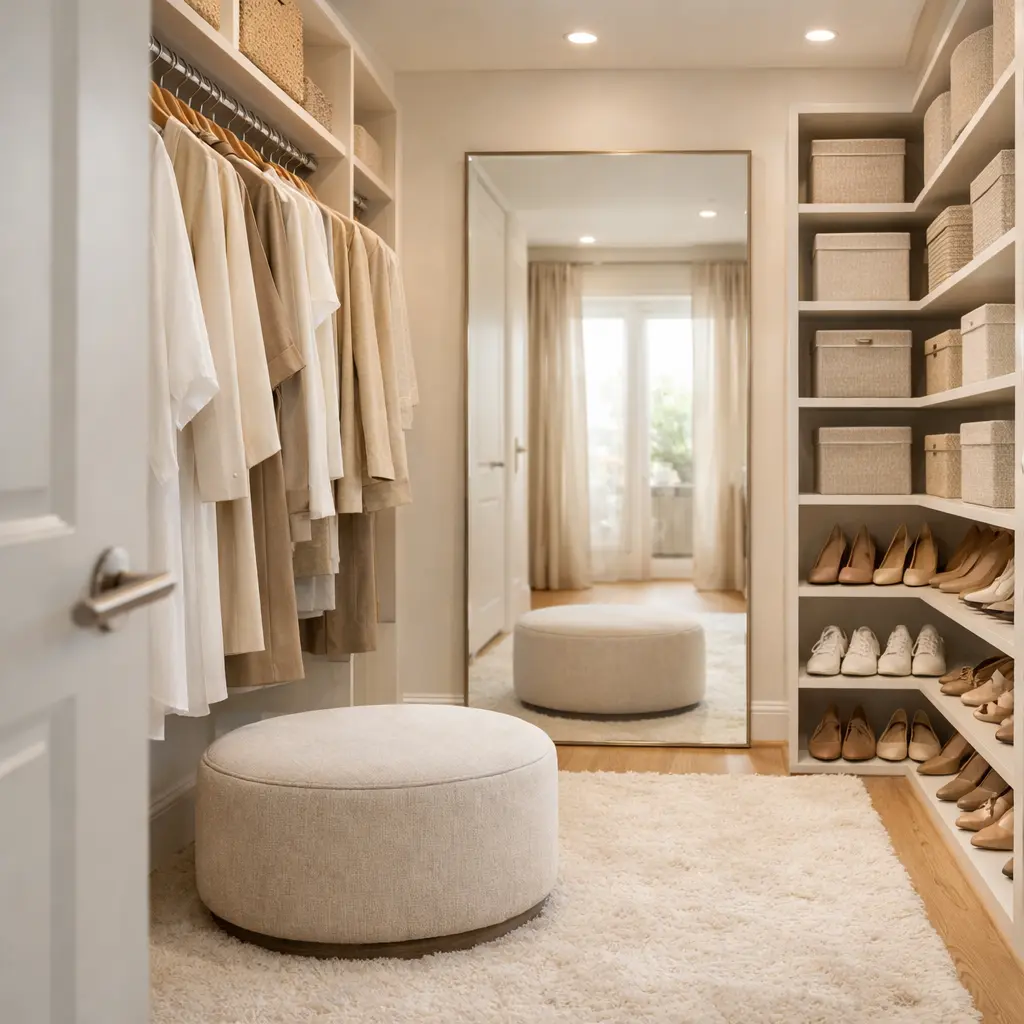
Your closet isn’t a storage problem waiting for a solution. It’s a reflection of how you move through your day, and it can either support that movement or sabotage it. For most people, closets are treated as afterthoughts – spaces where clothes accumulate until panic sets in and you buy organizing supplies that promise transformation. But real closet organization isn’t about buying bins or maximizing square footage. It’s about understanding yourself: how you actually dress, what you truly wear, and what life situations demand from your wardrobe.
When I began restructuring my closet, I realized I’d been thinking about it all wrong. I was focused on fitting more in, not on making what I had work harder for me. The shift came when I started asking different questions: What do I actually wear? When do I wear it? What prevents me from wearing the things I love? These questions revealed that my closet wasn’t disorganized – it was poorly designed for my actual life.
The process I discovered transformed not just how my closet looks, but how I feel every single morning. Getting dressed stopped being a frustrating search and started being an intentional choice. My wardrobe, which hadn’t changed significantly, suddenly felt larger and more versatile because I could finally see and access everything. This isn’t about minimalism or having less. It’s about having better – better organization, better visibility, better daily experience. A well-organized closet is one of the simplest luxuries you can give yourself, and it starts with understanding that your closet is a tool designed to serve your life, not a space you serve by filling.
Think in Zones, Not Shelves
 Save it
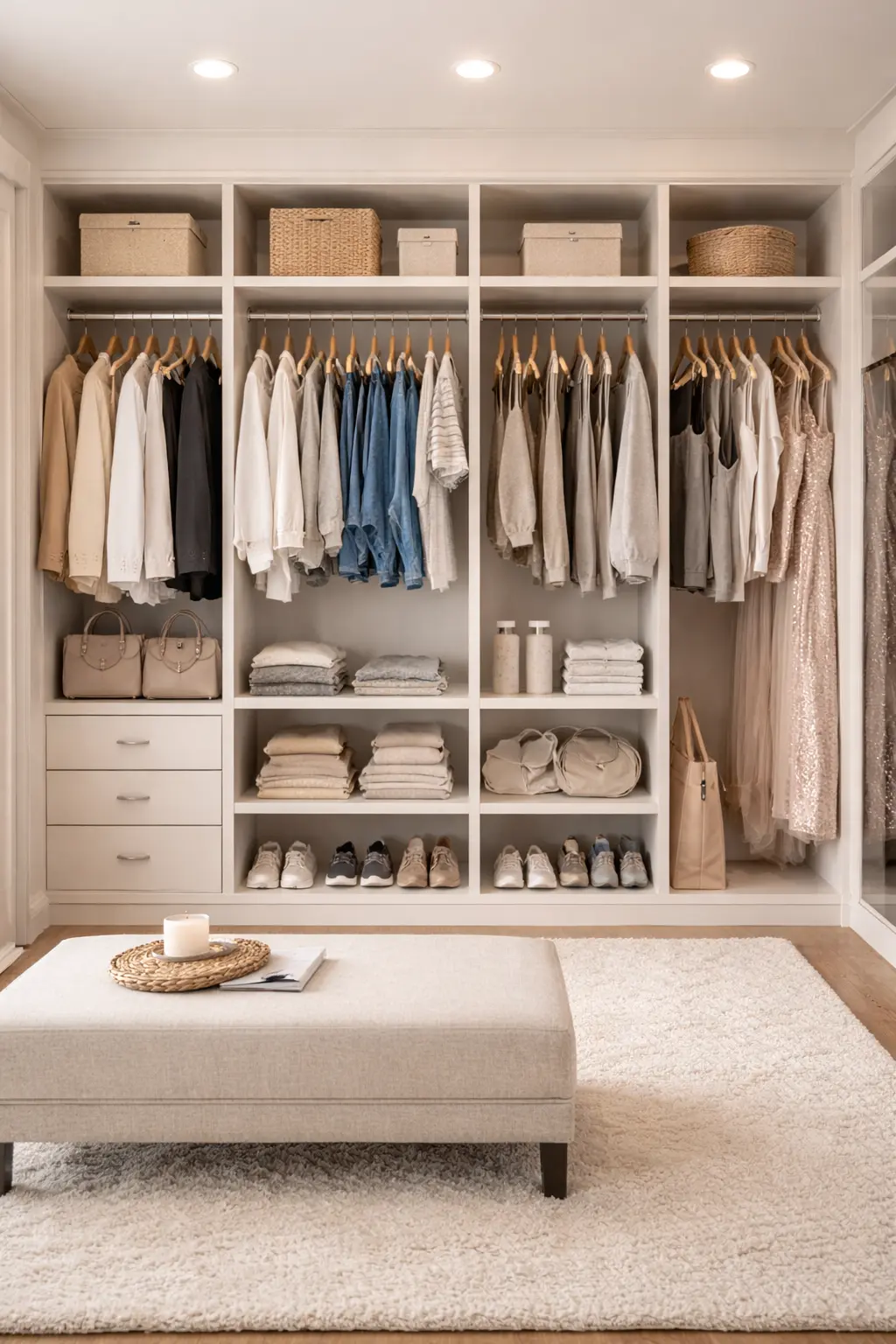
For a long time, I saw my closet as a series of stacked surfaces – top shelf, middle shelf, bottom shelf – with clothes crammed into each one with no larger strategy. But when I started thinking in terms of function and life situation, everything became simpler and infinitely more personal. This wasn’t about being fancy or creating Instagram-worthy zones. It was about acknowledging how I actually live.
My work wardrobe got its own dedicated zone on the left side of my closet, where I could quickly grab pieces that work together and fit the professional environment I’m in. Weekend pieces had another section, clothes that are more relaxed, creative, and meant for ease rather than presentation. Workout clothes had a third zone – functional, accessible, not mixed with anything else. Special occasion outfits were given a slightly separate section of their own, somewhere they wouldn’t get lost among everyday wear.
The transformation happened because I stopped thinking of my closet as “clothes storage” and started thinking of it as “a tool for different versions of my day.” When clothes are organized not just by type – all shirts together, all pants together – but by life situation, choosing what to wear becomes faster, more intuitive, and actually enjoyable. In the morning, I don’t search through eight different blouses wondering which one is appropriate. I simply reach into the zone that belongs to that day. It sounds small, but it frees up an incredible amount of mental energy that would otherwise go toward decision fatigue.
A closet organized by function becomes a visual map of your daily life. When it’s structured well, it quietly supports you without demanding attention. You open the door, you know exactly where to look, and you leave feeling confident and intentional.
If you’re working on building intentional mornings, a well-organized closet pairs beautifully with other morning rituals. Check out How to Build a 5AM Morning Routine That Actually Works (No More Wasted Mornings) to see how a streamlined closet fits into a larger system of morning intentionality.
Give Your Hangers Space — and Unity
 Save it
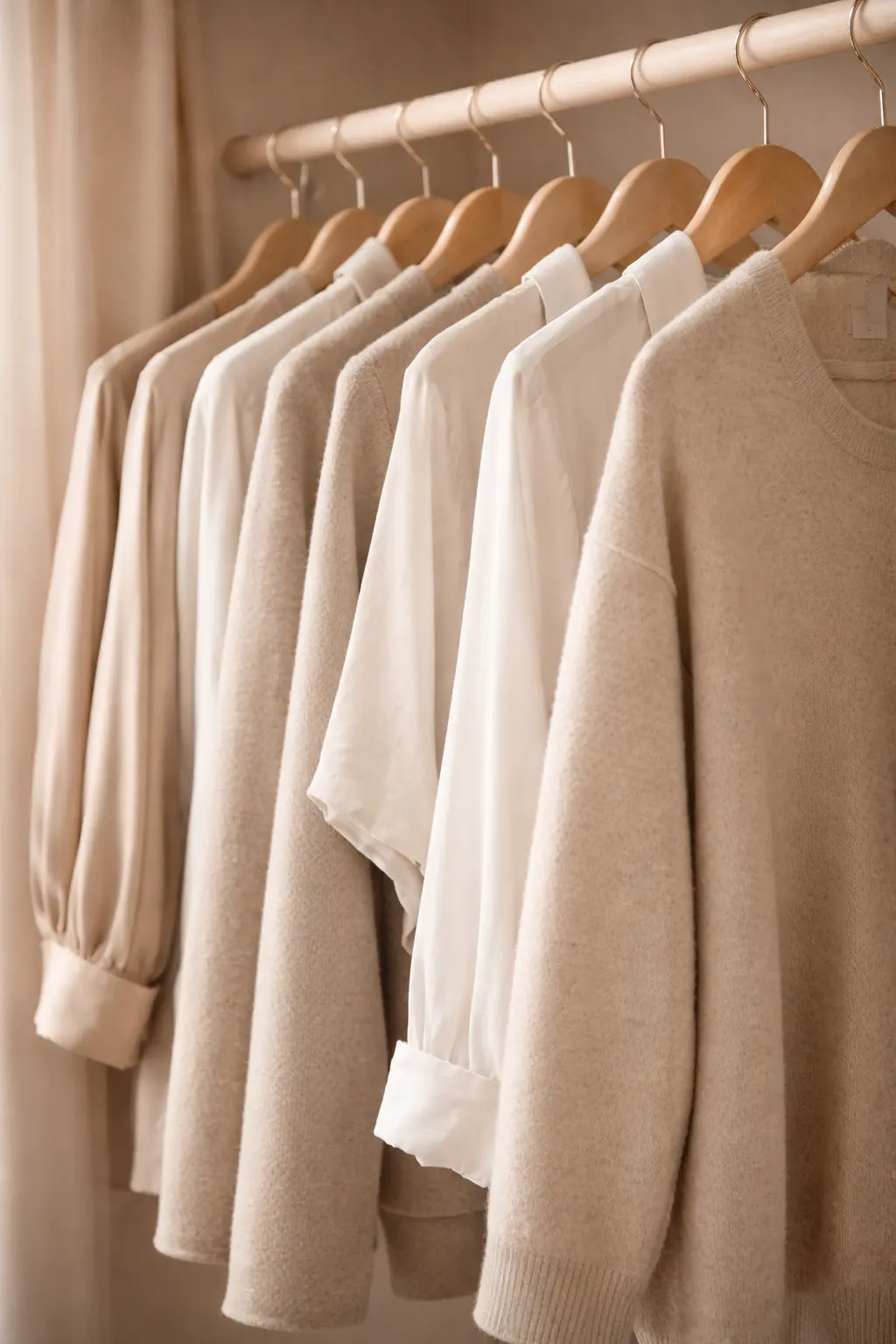
There was a time when every millimeter of my closet felt valuable – and I filled every millimeter. Hangers were pushed tightly together, fabrics sliding into each other, blouses wrinkling against their neighbors. The closet was technically full, but the visual feeling was overwhelming rather than organized. Chaos masquerades as abundance, and I wasn’t seeing my abundance – I was seeing a jumble.
The turning point came when I changed two things simultaneously, and the combination created something unexpected. I gave my clothes breathing room – actually leaving a few centimeters of visible space between hangers – and I replaced my mismatched collection of hangers with matching ones. At first, leaving that empty space felt wasteful, almost irresponsible. Wasn’t the whole point to use the space efficiently? But what I discovered was that efficiency and function aren’t the same thing.
When clothes aren’t pressed against each other, fabrics fall more beautifully, wrinkle far less, and every single piece becomes visible at a glance. Decisions come from clarity, not from chaos. You can actually see the color, the texture, the fit of each garment without having to pull things out and move things around. This visibility changes everything about how you interact with your wardrobe.
The second element – matching hangers – created something I didn’t expect: surprising visual calm. Different shapes, colors, and styles of hangers add visual noise to a closet, even when the clothes themselves are perfectly organized. When every hanger shares the same tone and form, the entire closet instantly feels more harmonious and premium. You’re no longer distracted by mismatched hardware; your eye goes directly to the clothes. You don’t need a minimalist wardrobe to achieve this feeling. You just need space and unity. Together, those two elements already create a premium aesthetic that makes getting dressed feel like a privilege, not a chore.
Use the Lower Closet Area with Pull-Out Systems
 Save it
One of the most common mistakes in closet organization is leaving the bottom of the closet underused or chaotic. Shoes pile up there in a confusing heap. Long garments hang down and hide everything below them. You simply don’t see what’s happening in that lower zone, which means you stop using the pieces stored there. Out of sight genuinely does mean out of mind, and this creates a false sense that you have fewer options than you actually do.
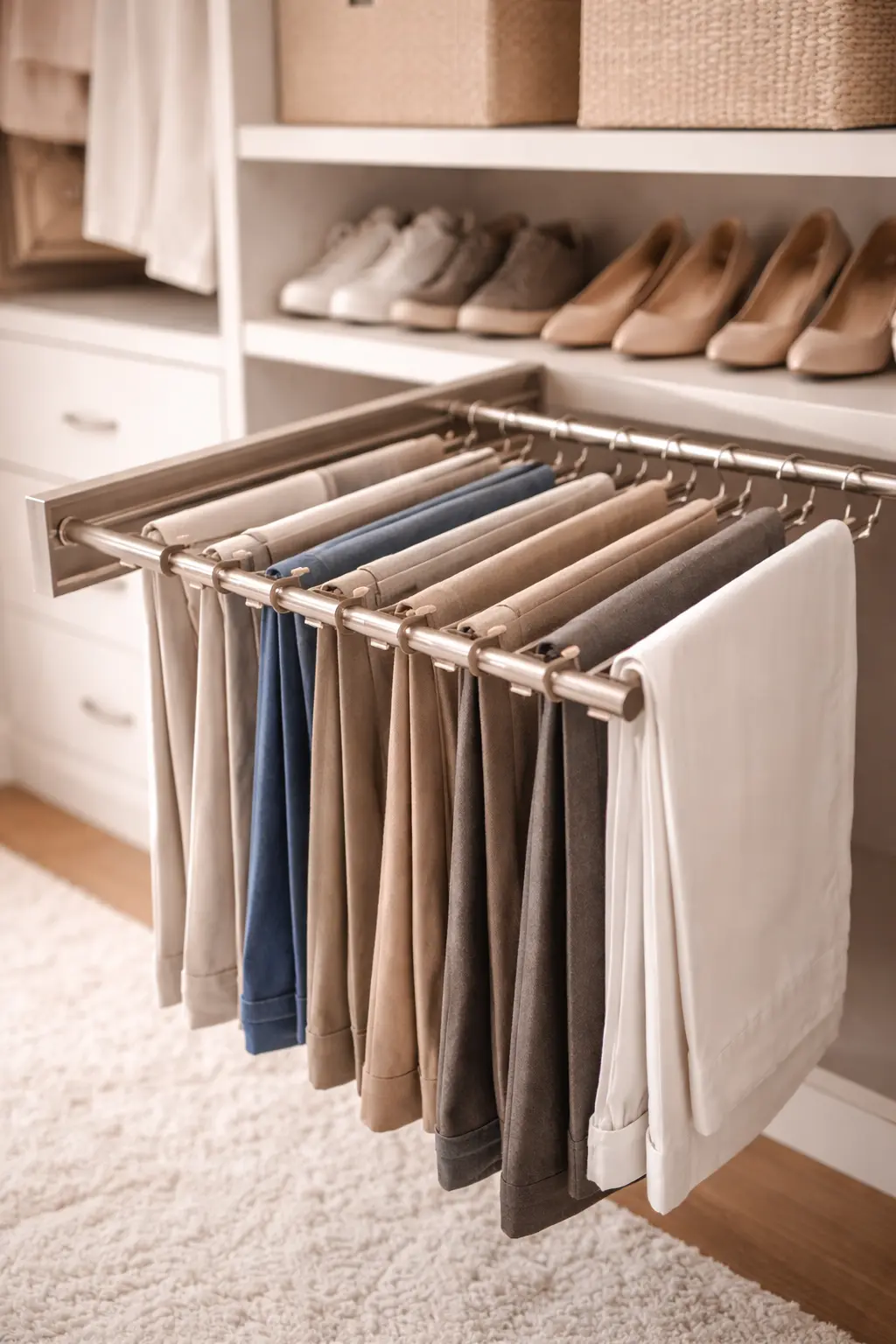
When I installed a pull-out pant rack in the lower section of my closet, it opened up an entirely new dimension to how I used my space. Pants no longer sat folded haphazardly on top of each other or crowded onto already-full hangers. Instead, they hung side by side, clearly visible, each one accessible. With one smooth motion, the entire unit slides out – and you instantly see every option available. It’s the difference between knowing you own black pants and actually being able to find the specific black pants you want to wear.
The same principle works beautifully for skirts, which often wrinkle and become invisible when stored traditionally. Multi-level, space-saving hanging systems also free up significant room without making the closet feel crowded or cluttered. The key to this entire approach is visibility: don’t cram in more clothes in hopes of using them better. Instead, use the space more intelligently by making everything accessible and visible. When you can see something, you wear it. It’s that simple.
Create Visual Calm on Shelves with Smart Storage Boxes
 Save it
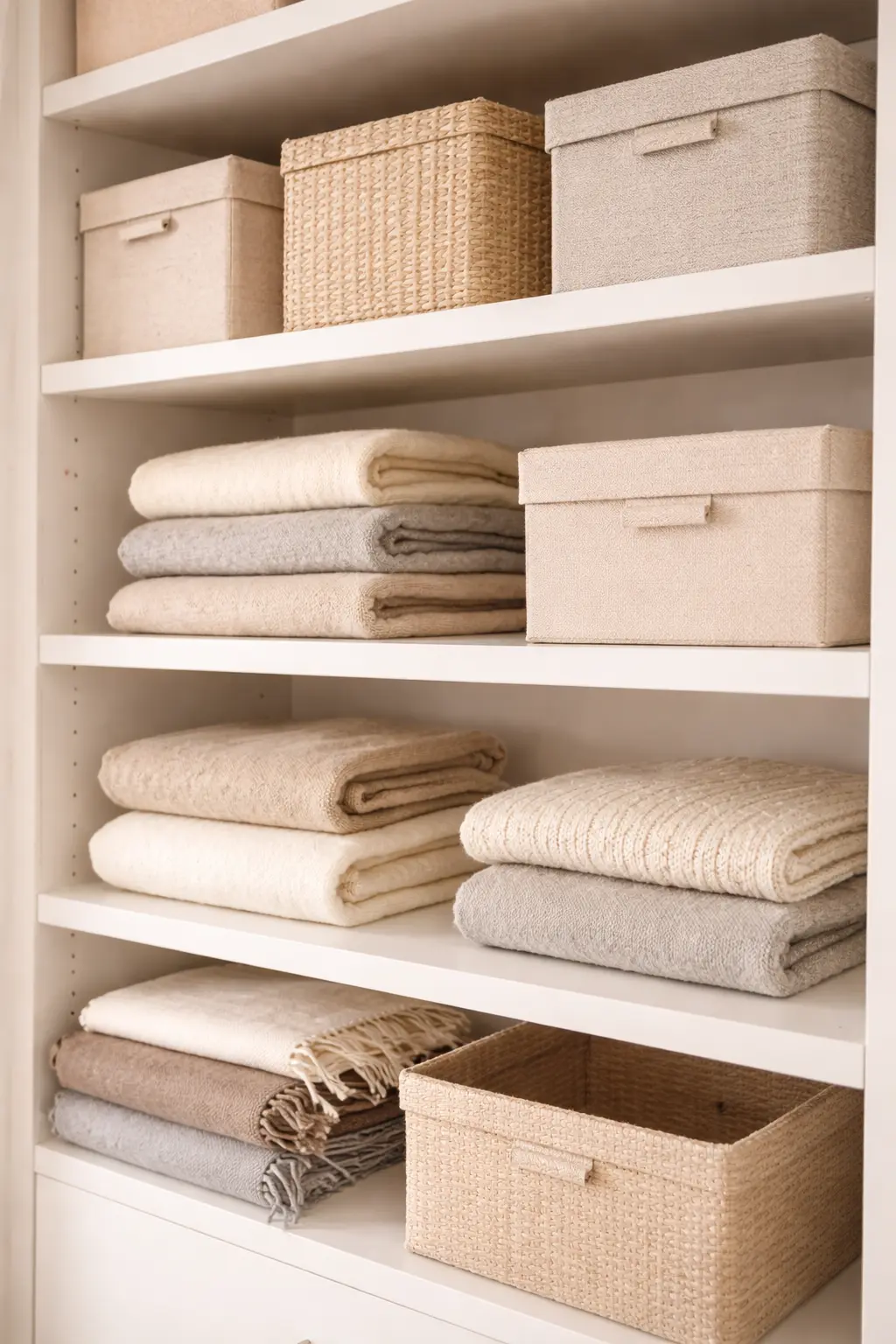
Closet shelves often look like organized chaos – neatly folded sweaters that somehow still slide over each other as soon as you remove one, scarves that are “organized” but still feel vague, small accessories that mysteriously disappear among everything else. There’s a visual sense of being contained, but no real structure underneath. The first time I added collapsible storage boxes to my shelves, the entire aesthetic changed instantly.
These cube-shaped fabric containers aren’t just practical – though they absolutely are. They don’t just create compartments for sweaters that would otherwise slouch and slide, or scarves that need a dedicated home. They also paint a clean, structured picture for the eye. The visual impact is surprising: instead of looking at piles, you’re looking at organized sections. Your brain processes this as “in control” rather than “managed chaos.”
The boxes help you accomplish multiple things simultaneously. They give each clothing category a defined home – this box is for lightweight sweaters, that one is for winter scarves, another holds rarely worn accessories. This prevents shelves from looking like cluttered piles where items get lost. The compartmentalization actually increases how much you use each piece because you know exactly where it lives.
Additionally, you don’t always have to keep the boxes fully opened and visible. When not in use, you can fold them down so they don’t take up unnecessary vertical space. Use them for sweaters, scarves, underwear, socks, or rarely worn accessories. The flexibility is part of their value. One closet organization trick that seems small – adding structure to shelves – actually changes how often you wear the pieces stored there, because they’re no longer invisible.
Think Vertically
 Save it
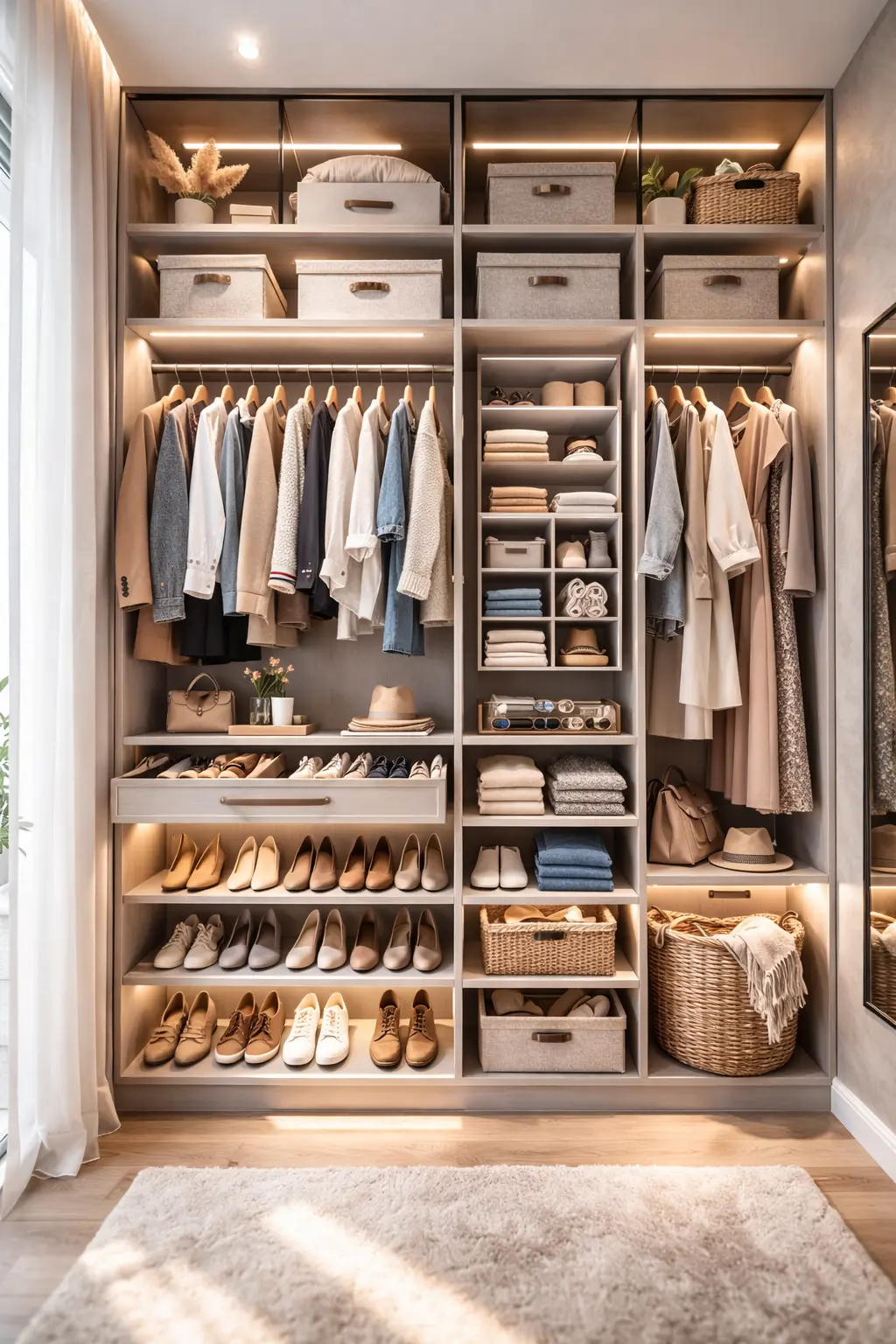
In most closets, height remains stubbornly underutilized. Yet using vertical space intentionally is one of the most effective ways to create genuine order without adding square footage. Hanging organizers, multi-tier shoe racks, shelf dividers, pull-out baskets, and wall-mounted solutions help you stop thinking only horizontally and start using every dimension of the space you have.
Higher areas of your closet are ideal for rarely used pieces or seasonal accessories – things you need to keep but don’t access regularly. By moving these items upward, you free up the prime real estate at eye level and waist level for the clothes you wear constantly. When I started planning upward, the lower shelves were instantly freed from overflow. Shoes stopped stacking on top of each other, creating a Jenga tower that topples when you remove one pair. Bags weren’t crushed together, losing their shape. Folded sweaters stopped collapsing with every movement in the closet.
The remarkable part is that the space didn’t actually get bigger. It just became more structured, more functional, and more intentional. You feel that every single morning when you open your closet and instantly find what you need. Vertical organization transforms not just the physical closet, but your entire morning routine.
Give Accessories the Place They Deserve
 Save it
Closets often focus exclusively on clothes – yet accessories are what truly create character and finish every outfit. The belt that adds structure to a dress. The scarf that brings unexpected color to a monochromatic outfit. The jewelry that frames your entire face and look. These are the pieces that distinguish your style from everyone else’s. And yet, these are the pieces that get lost the easiest.
Chains tangled at the bottom of a drawer. Earrings knotted together, stuck in a mass of metal. Belts thrown on top of each other, wrinkled and forgotten. Scarves folded somewhere in the back, never to be seen again. When accessories aren’t visible, you use them significantly less – not because you don’t love them, but because they’re simply not at eye level. They’re out of your consciousness. You reach for the same three pieces repeatedly while treasures sit untouched.
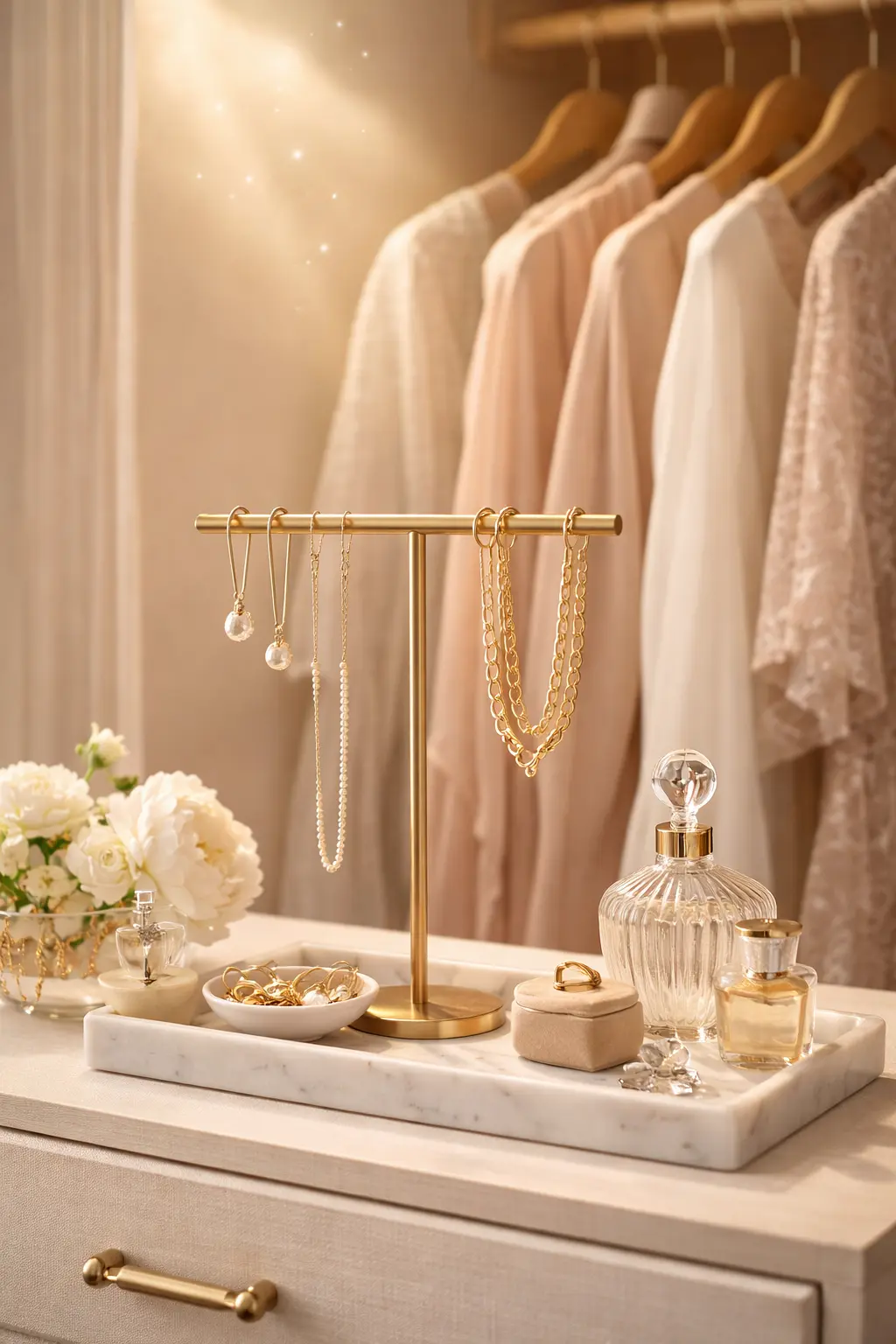
For me, the turning point was discovering a jewelry and accessory stand – the kind with multiple levels of hooks, bars, and small surfaces designed for different types of pieces. It doesn’t take up much space, yet it makes your entire collection instantly visible and accessible. The advantage isn’t just that everything stays organized and untangled. It’s that your options become viscerally, visually apparent every time you get ready.
Necklaces don’t tangle because they hang individually. Earrings stay in pairs because they have designated spots. Bracelets are visible, not hidden. And perhaps most importantly: choosing becomes faster and more creative. Getting dressed in the morning stops being a search through forgotten pieces and becomes an actual decision about what you want to wear. Visible accessories make you use your accessories, which transforms how many outfit combinations feel possible.
Turn Your Closet into an Experience with Lighting and Details
 Save it
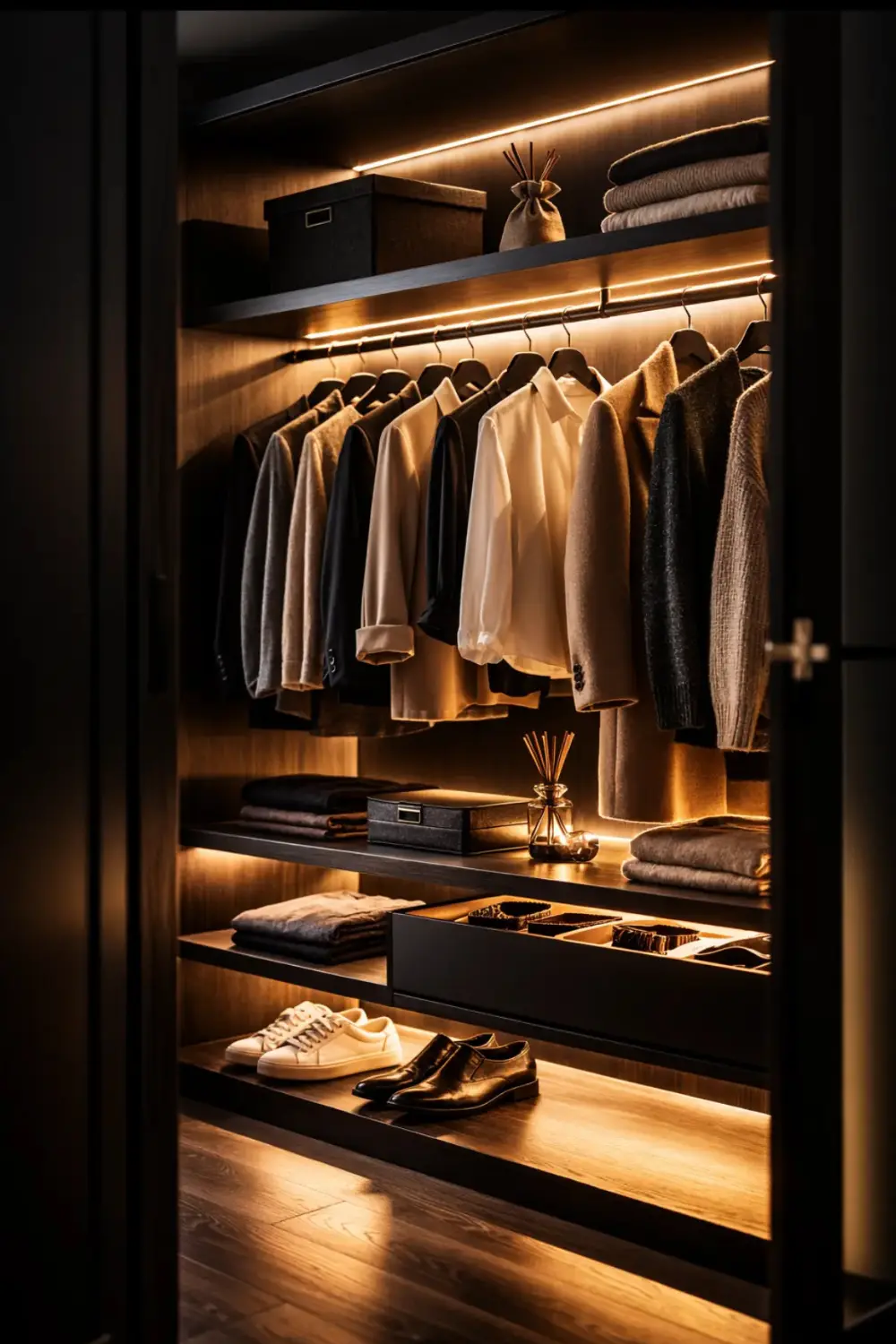
A closet isn’t just functional. It can be an experience – an environment that makes you feel good, premium, and inspired the moment you step inside. One of the biggest transformations in my own closet came when I installed warm, motion-sensor LED lighting inside. When the door opens, a soft, even glow illuminates every piece. No searching in dim corners. No color distortion from poor lighting making you choose something that looked wrong in the natural light. The entire space feels instantly more premium and inviting.
The lighting alone is transformative, but you can add another layer: a subtle scent solution or natural fabric freshener. When your closet smells fresh and is beautifully lit, getting ready in the morning feels less rushed and functional – it feels more like a ritual, a moment of intention before your day begins. This is the moment where you can thoughtfully add a well-chosen product: quality LED closet lighting that doesn’t flicker, elegant garment bags that protect your finest pieces, modular organizers that actually match your aesthetic, or a refined scent solution that makes the space feel luxurious.
The psychological impact of an organized, beautiful closet is profound. You’re not just storing clothes more efficiently. You’re creating a space that makes you feel capable, intentional, and taken care of. A closet can absolutely be practical and purely functional. But it can also be inspiring – a space you look forward to entering because it reflects care, order, and intention.
Practical Tips and Useful Advice
Getting started with closet organization doesn’t require a massive overhaul or expensive products. Here are actionable steps you can implement immediately, regardless of your closet size or budget. First, start small – choose one zone or shelf and organize that completely before moving to another area. Small wins build momentum and prevent overwhelm. Second, invest in matching hangers; this single change creates surprising visual harmony without breaking the bank. Wooden or velvet hangers are durable and look premium.
Third, maximize vertical space with simple tools: shelf dividers cost almost nothing but transform how your folded items look. Pull-out baskets or bins don’t require installation and instantly organize shelves. Fourth, create a “seasonal rotation” system: store off-season clothes in labeled boxes on higher shelves, freeing up prime closet real estate for what you actually wear right now. This keeps your closet feeling curated rather than cramped.
Fifth, use the one-year rule wisely: if you haven’t worn something in a year and it doesn’t have sentimental value, remove it. This isn’t about being harsh – it’s about respecting the space and letting go of guilt about pieces that don’t serve you. Finally, set a monthly 15-minute maintenance session. Spend time putting things back, checking that zones are still functioning, and removing anything that’s migrated or outlived its usefulness. Consistent small maintenance prevents needing a complete re-organization. These practical steps work because they’re sustainable and build on each other over time.
Common Mistakes to Avoid
1. Organizing Without First Editing Your Wardrobe
Many people try to organize a closet full of clothes they don’t actually wear. Before buying bins or installing racks, first remove pieces that don’t fit, don’t flatter, or don’t make you happy. Organizing everything means organizing waste. Start with pieces you genuinely love, and organization becomes exponentially easier.
2. Ignoring Actual Usage Patterns
Avoid organizing based on what you think you should wear rather than what you actually wear. If you work from home, your work wardrobe doesn’t need prime real estate. If you never wear dresses, stop trying to create a dress zone. Organize around your real life, not an imagined ideal version.
3. Using Too Many Different Organizing Systems
Mixing pull-out racks, hanging organizers, boxes, baskets, and multiple shelf dividers creates visual chaos and makes maintenance harder. Choose 2-3 organizing systems maximum and stick with them. Consistency is what makes a closet feel calm and functional.
4. Overcomplicating Accessibility
Some organizing solutions look beautiful but make clothes hard to access. If you have to move five boxes to get to what you want, you won’t do it regularly. Prioritize accessibility over aesthetics – beautiful closets are useless if they’re also frustrating to use.
5. Neglecting Regular Maintenance
A perfectly organized closet will slowly drift back to chaos without ongoing maintenance. Spend 10 minutes weekly putting things back, removing items that migrated, and keeping zones clear. Prevention is easier than starting over.
Frequently Asked Questions
How do I start if everything feels chaotic?
Don’t buy organizers first. Take everything out and categorize. Decide what you wear regularly, what’s seasonal, and what’s simply taking up space. Structure always comes before tools. Once the system is clear, you can choose storage solutions intentionally.
How do I maintain order long term?
Maintenance is key. Once a month, do a quick reset: return misplaced pieces, refresh for seasonal changes, review accessories. A system stays functional when you fine-tune it regularly.
What’s the most common mistake in closet organization?
Creating a system that’s too complicated. If putting something away takes multiple steps, you won’t maintain it. The ideal system is intuitive. Everything returns to its place in one easy motion.
Do these principles work in small closets?
Especially there. In small spaces, zoning, vertical thinking, and visual unity matter even more. Limited space isn’t a disadvantage — it’s an opportunity to organize more intentionally.
Final Thoughts
A closet organized with intention changes more than just how you find your clothes. It changes how you feel every single morning. It changes the energy of getting dressed – transforming it from a frustrating search through confusion into a calm, confident selection of options. It changes how many pieces you actually wear, because visibility creates usage. It changes your relationship with the clothes you own, because you can finally see them, access them, and appreciate them.
The most transformative part isn’t the organizing supplies or the new hangers. It’s the shift in perspective: seeing your closet as something that can be elegant, functional, and inspiring all at once. It’s understanding that you deserve a closet that feels good to open, that supports your daily choices, and that makes you feel capable before your day even begins.
Start with one area. Maybe it’s creating zones by life situation, or maybe it’s adding matching hangers and creating breathing room. Notice how small changes in structure create noticeable changes in how you feel. Build from there. Your closet is waiting to become not just organized, but genuinely useful – a space that quietly, beautifully supports the person you are every single day.
This post contains affiliate links. I may earn a small commission at no extra cost to you.
Get cozy inspiration delivered to your inbox.
✓ 14-page beautifully designed ebook
✓ Cozy decorating ideas
✓ Practical room-by-room inspiration
You’re in! 🎉
Thanks for joining the NestFlowHome community!
Your free ebook is already on its way to your inbox. If you don’t see it within a few minutes, please check your Promotions or Spam folder.
Join the NestFlowHome community for weekly decorating inspiration.

Timeless home decor ideas and slow living inspiration for a calm, beautiful life.